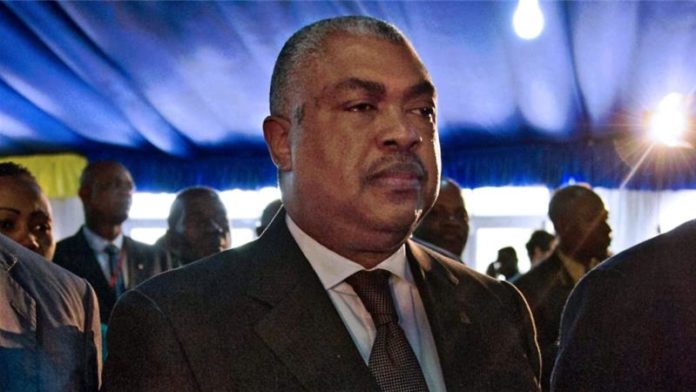
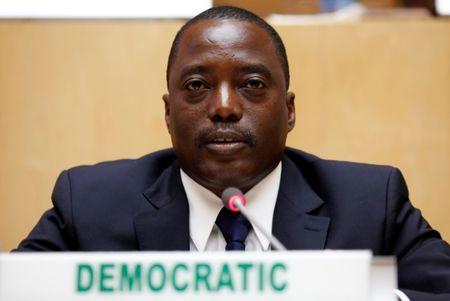
DUAL CITIZENSHIP QUERIES? New Democratic Republic of Congo Prime Minister Samy Badibanga
Newly appointed Prime Minister of the Democratic Republic of Congo Samy Badibanga is at the centre of controversy, after it emerged that he holds both Belgian and Congolese nationalities.
According to a document published on the internet by a member of the opposition, Badibanga attained Belgian citizenship through naturalization in 1992.
The country’s Minister for Parliament Affairs Tryphon Kin-Kiey said that dual citizenship poses legal and moral issues.
“The Prime Minister’s appointment is perhaps the right choice for those in the presidential majority camp. He is a friend, an affable man but there was a problem. I can predict a heated debate in parliament. He would have to first renounce his acquired foreign nationality. It will not be easy to pass the nomination stage if this prerequisite is not resolved,” he said.
What the Constitution says
The Congolese Constitution stipulates that Congolese nationality ‘can not be held concurrently with any other nationality’ and that to occupy an official position in government, one has to be a Congolese citizen.
From the opposition camp, José Makila, president of the Workers Alliance for Development believes that this debate is needless, as there has been a moratorium approved by the national assembly since 2007, which says that people with foreign nationality can still hold official government positions in the DRC.
But Christophe Lutundula, the deputy vice-president of the G7 opposition coalition who has refused to take part in the debate begs to differ, saying that there can never be possible derogation and that there has never been a moratorium that allows someone to cumulate Congolese nationality with that of another state.
Further opposition
Badibanga’s nomination on November 16, 2016 to head the new government of national unity came as a surprise as another opposition leader Vital Kamerhe, a former Kabila ally, had been widely expected to take up the post.
The power-sharing agreement was signed in October by the ruling party and some opposition parties endorsing the 2018 presidential election date proposed by the electoral commission and for President Joseph Kabila to remain in office till then.
The political agreement signed under the watch of the African Union-appointed facilitator Edem Kodjo, was endorsed by the United Nations Secretary-General Ban Ki-moon who called for a ‘peaceful transition for peaceful elections’.
However, the agreement was opposed by the major opposition coalition which described it as non-inclusive and promised to protest till Kabila steps down when his mandate originally ends in December.
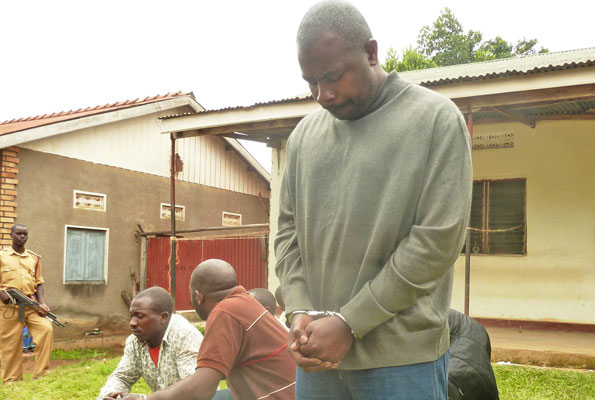
END OF THE ROAD: Embattled Pastor William Muwanguzi aka Kiwedde
Fugitive Pastor William Muwanguzi aka Kiwedde has been arrested.
According to the Director of Uganda Police Interpol Asan Kasingye, the fugitive preacher who escaped from prison in Kalisizo Rakai and fled Uganda about three years ago, was arrested in Harare, Zimbabwe.
At the time the flamboyant pastor was charged with impersonation and imprisoned for 23 months. He had earlier also been also after being found in possession of a stolen vehicle, a Toyota Land Cruiser.
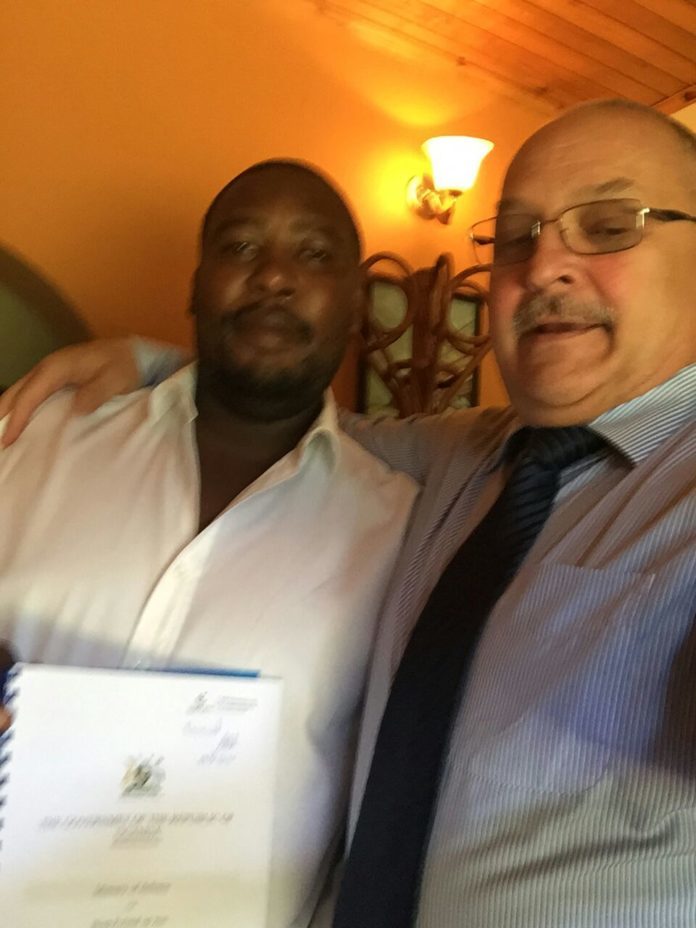
ADMITTED TO FRAUD? The man allegedly at the centre of the fraud, Sam Ssimbwa with the Polish national after 'signing the deal'.
A Ugandan team of investigators has arrived in Warsaw, Poland to inquire into a ‘fake arms deal’ that saw Polish entrepreneurs conned of 500,000 Euros.
The team comprising of officials from External Security Organisation (ESO), Chieftaincy of Military Intelligence (CMI) and Police’s Special Investigations Unit (SIU) are to hold meetings with officials from BMP Poland SP Z.o.o Company as investigations zero in on the shadowy transaction.
Sources say the investigators are to meet the BMP Poland officials who traveled to Uganda and reportedly engaged in a series of meetings with ‘top army officials’ in a purported arms transaction at Bombo army barracks.
Meanwhile, EagleOnline has learnt that whereas the team is yet to conclusively get the much needed information from the officials in Warsaw, here in Kampala, the investigators have made a breakthrough as both suspected fraudster Sam Ssimbwa and a one army Captain David Muhoozi, have cooperated with SIU and revealed how the deal was transacted.
“We are on progress and we have made great breakthrough as both suspects acknowledged the transaction of the deal. However, we are waiting for our colleagues to return from Warsaw before a report is made to the authorities,” a source at SIU told EagleOnline.
According to the sources, Capt. Muhoozi, said he only transported the BMP Poland SP Z.o.o company officials to Bombo while Ssimbwa said he knew and partook of the deal right from the start.
According to sources, in September last year, conmen disguising as Ministry of Defence procurement team invited officials of BMP Poland SP Z.o.o for a meeting in Bombo, the headquarters of Land Forces.
The organisers, some of them dressed in military uniform, assured the top managers of the Polish company that government was planning to procure a big cache of weapons in a deal worth Euros 71 million, the sources added.
After the meeting, the Poles allegedly came out contented, knowing they would get the deal and were to pay Euros 7,000 for bidding documents.
Sam Ssimbwa, the alleged lead negotiator, who said he was using his company Prima Investments Uganda, later assured the Poles that he was going to negotiate and ensure they get the deal.
BMP Poland SP Z.o.o later gave powers of Attorney to Prima Investments to negotiate the deal. Ssimbwa later went to Equity Bank and secured a bank guarantee and BMP later wired over Euros 500,000 to the company’s bank account in Equity Bank to cover bond security for the deal.
All is set for the 6th Annual PRAU Excellence Awards that will be held this Friday at the Golf Course Hotel in Kampala. The awards, organised by the Public Relations Association of Uganda (PRAU), will award top PR agencies, professionals and corporations that have excelled in the execution of PR, digital and communications functions over the last one year.
THE AWARDS: The PRAU Awards to be given out on Friday.
This year the PRAU Excellence Awards have been organised under the theme ‘PR Excellence in a Competitive & Digital World’. The theme captures the current reality facing many public relations professionals and agencies that have found themselves in a very competitive environment given the harsh economic times companies are operating in as well as the fight for more customers by these same companies.
“We have witnessed increased competition in the public relations industry with more and more companies keen to sustain a good image in the eyes of their stakeholders. However company resources to support this has not come easily with more professionals citing budget cuts forcing them to scale back on public relations activities or cancel them all together,” said PRAU president Cynthia Mpanga.
Digital media has also been on the rise affecting the way the public relations industry operates. With the proliferation of social media, a bad customer experience can turn into a full blown public relations crisis thanks to citizen journalism that has given more power to the public.
However digital media has also provided faster and cheaper alternatives in promoting various brands in a positive light and therefore this has worked in the favour of public relations professionals.
“Social media has been a double-edged sword within the public relations industry. It has been a challenge balancing the positives and the negatives that comes with new technology. However it is here to stay and the public relations industry needs to come to terms with that so that they can make the most out of it,” Paul Mwirigi, the PRAU PR director, said.
This year the PRAU Excellence Awards has received enormous support from a host of companies with twenty corporations providing in kind and cash support.
“In a special way I want to thank all PRAU members who have ensured their companies participate in the awards in one way or the other. You are heroes and our association needs each one of you. Please let’s all ensure we participate and attend the Awards Gala” Ms Mpanga said.
The 2016 PRAU Excellence Awards will be presented in the following categories: Category A: PR Campaign Category which includes Best Media Management Campaign, Best Event, Best Crisis Management Campaign, Best Corporate Social Responsibility Campaign, Best Public Sector Campaign, Best Not for Profit Campaign and the coveted Best PR Agency.
Category B: Supplementary Category which includes Best Corporate/Online Publication, Best Social/Digital Media Campaign and the Best Young Communicator of the Year. Finally the Category C which is an Honorary Category (awarded by the PRAU Governing Council) includes the PRAU Golden Honors & PRAU Sheppard Honors. The People’s Choice Award is an open category where the winner is voted through the public.
The 2016 PRAU Excellence Awards submissions, which were opened on 1st October and closed on 11th November, 2016, will be judged by an independent panel of senior practitioners who will deliver the results with clear explanations for each winner, making it one of the most credible professional awards in the region.
A host of artistes are also expected to perform on the night.
BACKTRACKING ON ELECTIONS? DRC President Joseph Kabila
Civil society activists in the Democratic Republic of Congo have launched the ‘Bye Bye Kabila’ campaign aimed at forcing President Joseph Kabange Kabila to step down.
President Kabila is serving the last of his two constitutionally-allowed terms and the DRC was set to hold elections in December this year.
However, just like most of his African counterparts, in 2015 Kabila tried to alter the Constitution to allow himself stay in power perpetually, sparking off protests that rocked the entire country.
He then changed tack, and in October signed a frivolous deal with fringe opposition parties under the ‘national dialogue’ that will see him stay in power until April next year.
It is this development that is now the precursor to the current demos in the DRC. And recently, while addressing Parliament, Kabila vowed to crash any form of resistance against the deal.
“The deal currently represents the only roadmap put in place by the Congolese themselves,” Kabila told the legislators last week.
He added that he was ready to defend against any attempt to take over the country by force, pledging that elections would be organised ‘in the ‘coming months.
'NO FREE BOOZE": Socialite Sulamain Kabangala Mbuga did not buy 'free drinks' during his Kasiki as most revellers at Guvnor had been made to believe
“Indeed this is a century wedding…..get ready for SK Mbuga’s kasiki tonight at Club Guvnor again. All are welcome. You don’t need any invitation card. Just dress smartly and boom, you are in. There is gonna open bar tonight. I repeat, entrance is just by dress code. Bring friends of your friends,” Henry Ndugwa popularly known Kakensa wrote on social media on Tuesday.
Ndugwa aka Kakensa has been behind the publicity for the much hyped wedding of city socialite SK Mbuga and a one Vivian.
And who would look back after hearing entrance to one of the city’s premium club is free in addition to free drinks of your choice? Our guess is as good as yours; people thronged the venue as early as 7pm and by 10pm, the number of people in the club had swollen.
However, things didn’t work in favour of the revellers; getting a drink in the club was in direct contrast to what they had been told. There was no open bar as earlier communicated as each individual had to pay for one’s drink.
If you are not a foreigner, you obviously know how the economy is fairing at the moment. Majority of the people are broke and so were majority of those who had turned up for free drinks.
Majority turned to their phones, literally ‘drinking’ mbs (internet bundles) with hope an ‘open bar’ was to open as soon as the ‘big’ man arrived.
Some took to social media to air out their plight.
Kaj Stella: Oba I’m at a wrong Guvnor. There is no open bar here…
Their wish, though, didn’t materialise and one by one, they started vacating the spot in disappointment and while cursing the socialite.
Mbuga’s wedding alleged to cost over Shs3 billion is scheduled for this Saturday.
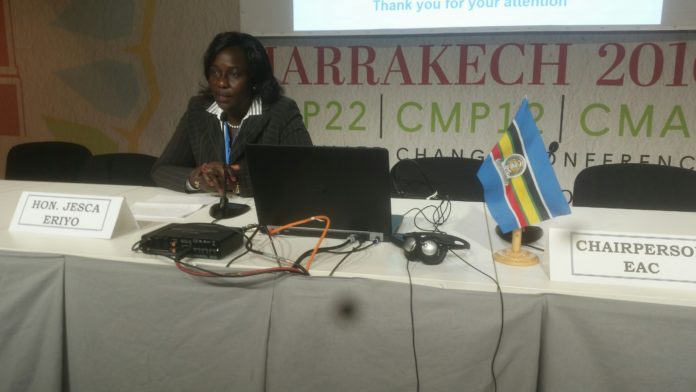
EAC ON CLIMATE CHANGE: Hon. Jesca Eriyo highlighting the region's Disaster Risk Reduction Initiatives
The EAC Climate Change Adaptation Specialist, Mr. Dismas Mwikila has said that all the EAC Partner States have signed the Paris Agreement and that they were at different stages in the ratification processes. He said what was needed now was to review climate change policy documents to accommodate the outcomes of the 22nd Session of the Conference of Parties (COP22) to the United Nations Framework Convention on Climate Change (UNFCCC) held in Bab Ighli in Marrakech, Morocco.
The Climate Change Adaptation Specialist, who was making a presentation on EAC Road Map for Implementation of the key Resolution of the Paris Agreement (PA) at a side event organized by the EAC and Partners at the Climate Change Conference, said there was need to make adequate preparations for effective implementation of the Paris Agreement.
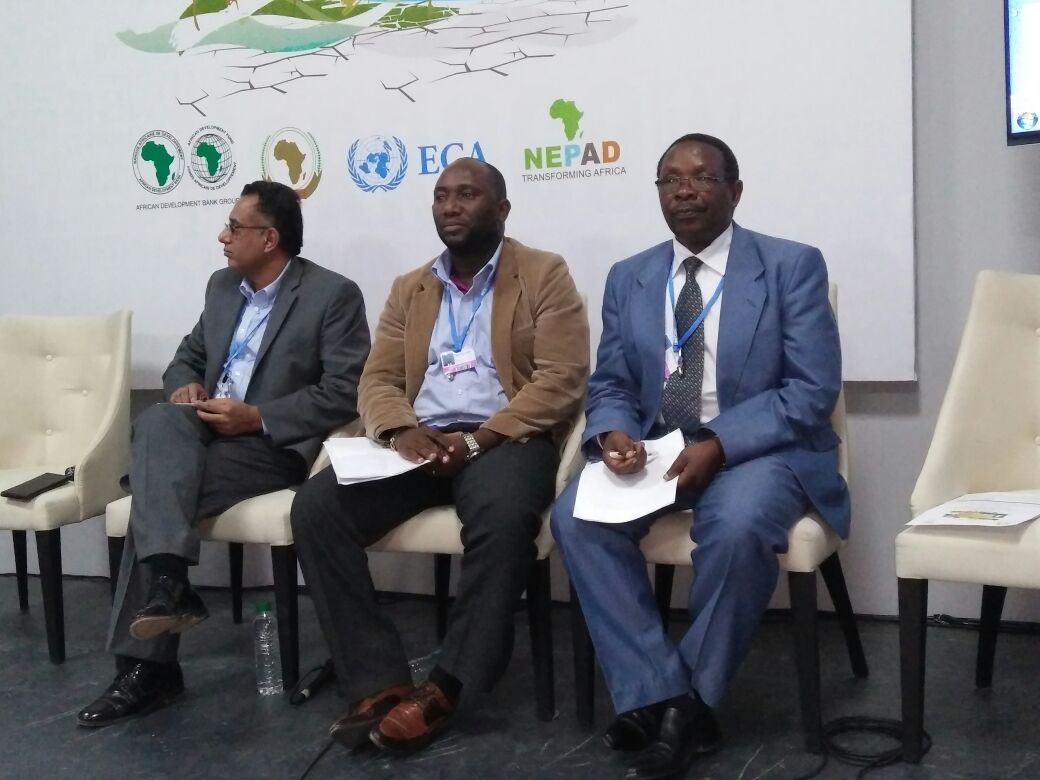
Panelists at the EAC side event: Ali Raza Rizvi of IUCN, Dismas Mwikila the EAC Climate Change Adaptation Specialist, and Fredrick Mngube the Environment and Natural Resources Officer at the Lake Victoria Basin Commission, ready to take questions from the audience after the presentations
Mr. Mwikila disclosed that the EAC Secretariat had developed a road map to implement key resolution of the Paris Agreement and that the road map had several elements that include; showing how to approach the Nationally Determined Contributions (NDCs) implementation; and translation of the Paris Agreement into concrete steps for the Partner States; and how to take the work forward.
He said the implementation of the road map would involve several interventions, including, among others, identification of the resolutions of the Paris Agreement which are more relevant to the EAC Partner States; assisting policy makers in Partner States dealing with climate change in internalizing the Paris Agreement to come up with country specific implementation framework; identification of common actions across NDCs and develop NDCs Implementation Plans; review of the EAC’s existing Regional Climate Change Policy (2011), Climate Change Strategy (2011/12-2015/16) and Climate Change Master Plan (2013-2033) to mainstream the Paris Agreement.
He noted that there will be need to support the capitalization of the EAC Climate Change Funds through pioneering the accreditation as Regional Implementing Entity (RIE) under the Green Climate Fund (GCF) and Adaptation Fund (AF); and support Partner States to develop capacities for accreditation of their NIE; as well as support Partner States to develop credible projects that may attract funds from AF and GCF.
Other interventions include; promoting the continental climate resilient and low carbon development initiatives such as the Climate Smart Agriculture; promoting the African Adaptation and Loss and Damage Initiative; and lastly; promoting renewable energy and other sustainable development initiatives in a bid to attain global goal of reducing Green House Gas Emissions (GHGEs).
The EAC Climate Change Adaptation Specialist affirmed that implementation of the Paris Agreement must be guided by the principles and objectives of the Convention and that Developed countries should provide adequate, direct and predictable funding to enable Least Developed and Developing Countries to implement their NDCs. There is also the need for Partner States to ensure adequate stakeholders involvement in the implementation of Paris Agreement.
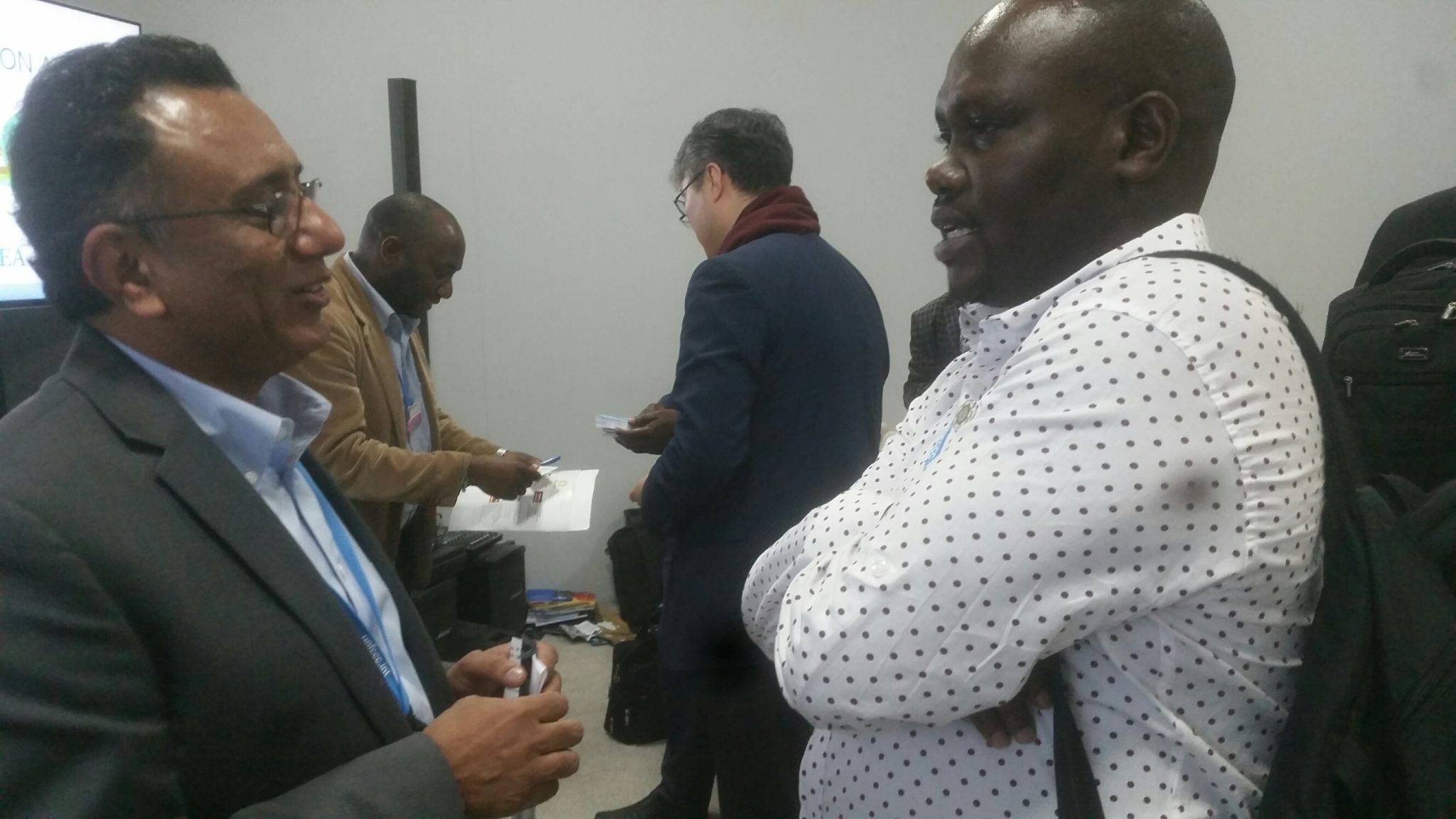
Mr. Ali Raza Rizvi, Programme Manager of Ecosystem Based Adaptation at IUCN (left) chats with Gideon Sanago (right) of Pingos Forum Tanzania at the end of the the EAC side-event at COP in Marrakech.
At the same side-event, the Programme Manager, Ecosystem based Adaptation (EbA) of the International Union for Conservation of Nature (IUCN), Mr. Ali Raza Rizvi highlighted key issues on Ecosystem management and affirmed that IUCN promotes the use of diversity and ecosystem services as part of an overall climate adaptation strategy both at the policy and practice level. He said ecosystem-based adaptation involves a wide range of ecosystem management activities to increase resilience and reduce the vulnerability of people and the environment to climate change.
Addressing climate change impact on water in the EAC region, the Environment and Natural Resources Officer at the Lake Victoria Basin Commission, Mr. Fredrick Mngube outlined some of the water climate change adaptation initiatives that have been put in place in the region. They include water catchments management, water allocation plans, wastewater management, sanitation and hygiene management.
Mr. Mngube reiterated that limited resources and technical support; and population increase by human, wildlife, and livestock were the key challenges the region was facing in addressing adaptation to climate change.
In another side-event organized by the EAC and Partners on Tuesday, 15 November 2016, themed: ‘Climate Smart Agriculture, Disaster Risk Management and Mitigation Actions in the EAC Region’,the East African Community showcased Climate Change Initiatives sharing with participants, achievements and lessons learnt from Climate Smart Agriculture, Disaster Risk Reduction and Management, and Climate Change Mitigation Initiatives.
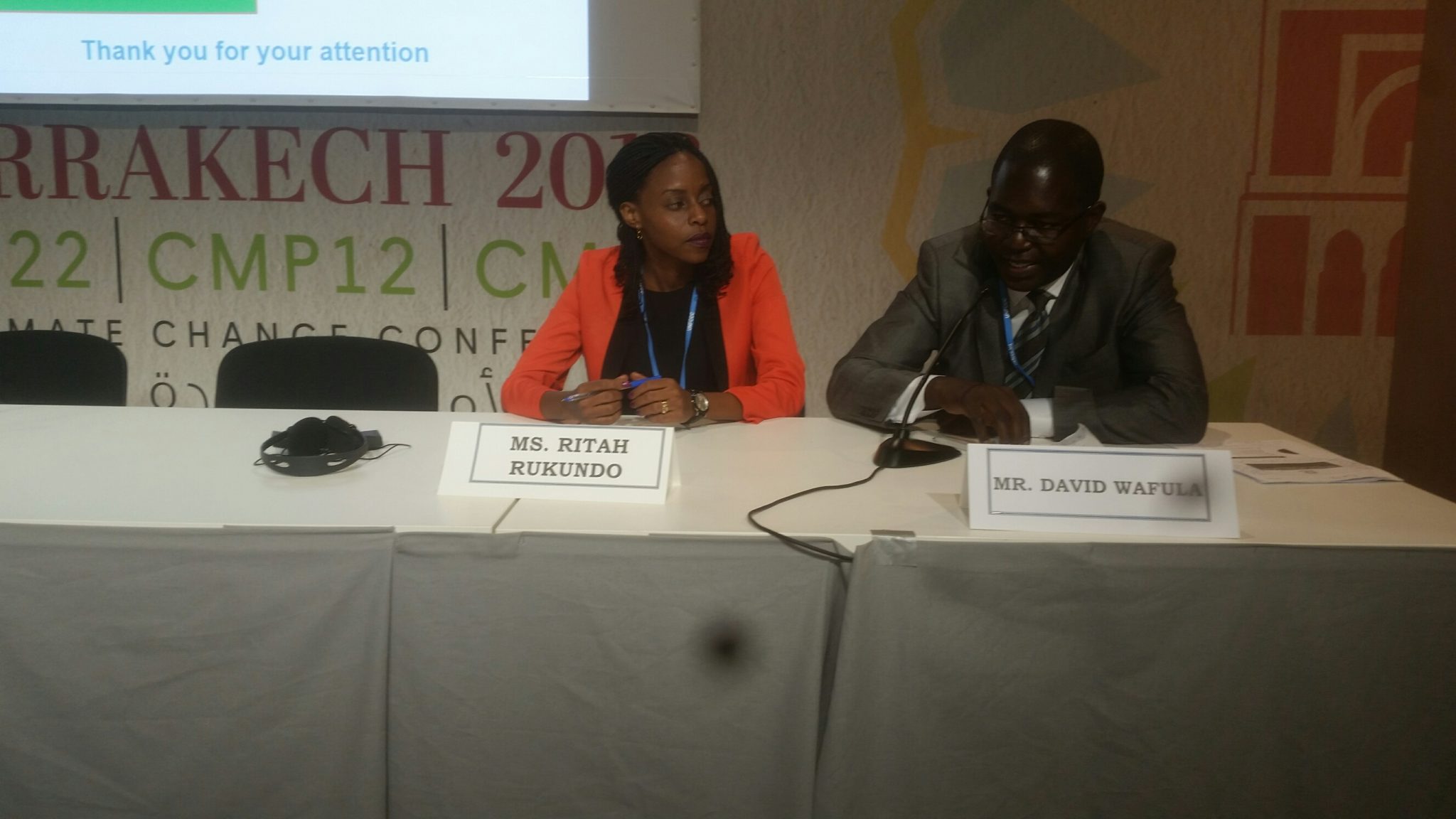
Ms. Ritah Rukundo from GiZ, UFCCC and EADB Coordination Office in Kampala and David Wafula respond to questions after their preentation at the EAC side-event
At the side-event, the EAC Deputy Secretary General in charge of Finance and Administration, Hon. Jesca Eriyo highlighted the region’s Disaster Risk Reduction Management, while the EAC Agricultural Specialist, Mr. David Wafula, discussed the Climate Smart Agriculture in the context of Comprehensive Africa Agriculture Development Progranmme (CAADP) Agenda. Ms Ritah Rukundo, the Technical Officer at the Regional Collaboration Centre of the GiZ, UNFCCC and EADB based in Kampala, Uganda, addressed the Green House Gas Emissions and the EAC.
Signed in December 2015 and entered into force on November 4, 2016, the Paris Agreement brings all nations into a common cause to undertake take ambitious efforts to combat climate change and adapt to its effects, with enhanced support to assist developing countries to do so.
Its central aim is to strengthen the global response to the threat of climate change by keeping a global temperature rise this century well below 2 degrees Celsius above pre-industrial levels and to pursue efforts to limit the temperature increase even further to 1.5 degrees Celsius.
PARTNERSHIP SEALED: MultiChoice Uganda General Manager Charles Hamya (R) with the CEO Stanbic Uganda Mr Patrick Mweheire (L) after inking the partnership.
MultiChoice Uganda and Stanbic Bank Uganda have endorsed a partnership that will enable their subscribers to pay subscription.
Through Stanbic’s uniquely tailored Mobile and Online banking solutions, the bank believes its new system will make it easier and more convenient for DStv & GOtv customers to pay their subscriptions.
This new partnership will enable Stanbic clients to continue enjoying their DStv and GOtv experience by making instant, easy payments through the bank’s digital solutions like the Stanbic App, Online Banking and Stanbic Mobile Banking *290#.
Addressing the media at a joint press conference held at the MultiChoice Head Office, Charles Hamya, the General Manager of MultiChoice Uganda, said: “As a technology-driven company, MultiChoice is continuously looking at utilising the latest digital platforms for the benefit of our clients and the partnership with Stanbic allows us to achieve this objective.
The biggest advantage now is the versatility of the Stanbic digital banking platforms that interface directly with our billing system which customers can access at no extra cost,” Mr Hamya said.
“This means our clients get instantly reconnected once they have made the mobile or online payment without the need to queue up at our offices or line up at a banking hall,” Mr Hamya said and added: “These are the easiest and most affordable ways to pay for all your favourite entertainment, sports channels and documentaries.”
Speaking at the same event, Patrick Mweheire, the Chief Executive – Stanbic Bank Uganda said the bank will create more innovative banking solutions that provide customers with greater convenience and flexibility.
“By using the Stanbic digital solutions, customers will enjoy the ability to instantly renew their subscriptions and will not incur any extra charges for this service,” Mr Mweheire said.
Demonstrating how payments on Stanbic’s mobile banking platform are done, Veronica Sentongo – Stanbic’s Head, Digital Banking explained, “To enjoy this opportunity, the Customer will need to be registered for either our Mobile or Online banking platforms.
She added: “Once you confirm that the transaction has been successfully completed, you will receive a notification alert from the bank to inform you that a deduction has been made from your account.”
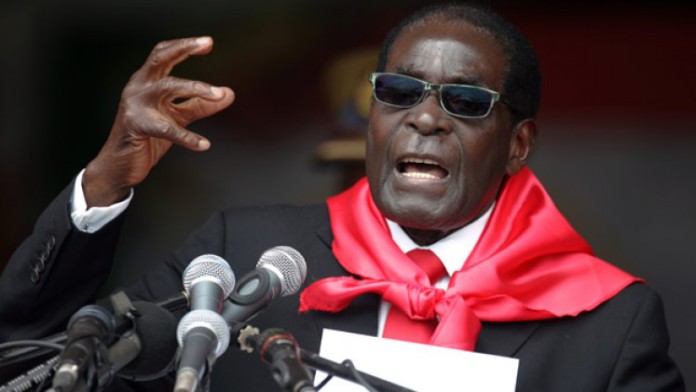
I AM STILL AROUND! Zimbabwe President Robert Mugabe
Zimbabwean President Robert Mugabe, who has ruled the country for 36 years, has hinted at his possible retirement, but said he would leave office on his own terms.
The 92-year-old, who took charge of Zimbabwe following its independence from colonial rule in 1980, has faced widespread protests in 2016 as the country continues to suffer from high unemployment and economic woes.
At a meeting with a group of independence war veterans in the capital Harare on Sunday, Mugabe said that he was aware of factions within his Zanu-PF party aimed at succeeding him.
“If I have to retire, let me retire properly,” said Mugabe at the meeting, according to Zimbabwean newspaper. The Zimbabwean president put no timeframe on any proposed retirement.
Mugabe’s comments were significant since he has consistently indicated that he wants to stay in office. The veteran leader said in March that he planned to live to be 100 years old and that he had no intention of retiring. Zanu-PF has nominated Mugabe as its candidate for the 2018 presidential election.
Zanu-PF is reportedly split between backers of the president’s wife, Grace Mugabe—known as the G40 faction—and those supporting Vice-President Emmerson Mnangagwa, who are collectively termed the Lacoste faction.
Zimbabwe’s war veterans, who hold considerable influence in society, have traditionally been among Mugabe’s core support. But that support was thrown into doubt in July when the Zimbabwe National Liberation War Veterans Association issued a statement accusing Mugabe of adopting ‘dictatorial tendencies’. Zimbabwean security forces arrested several prominent war veterans in the wake of the statement.
Mugabe also acknowledged that Zimbabwe was in the midst of a financial crisis and said the country was in a ‘critical time… for regime change’, according to the African News Agency.
Zimbabwe, which had at least nine currencies in circulation as of February, is experiencing a massive shortage of US dollars that has seen people queuing for hours to withdraw money from banks. The Zimbabwean central bank is planning to introduce a new pseudo-currency, known as bond notes, which it says will serve as an equivalent to the US dollar.
But some fear that bringing bond notes into circulation could herald the return of the Zimbabwean dollar, which was dispensed with after undergoing massive hyperinflation in 2007-08. A group of Zimbabwean lawyers has made a High Court application to have the presidential order authorizing the move to bring in bond notes repealed.
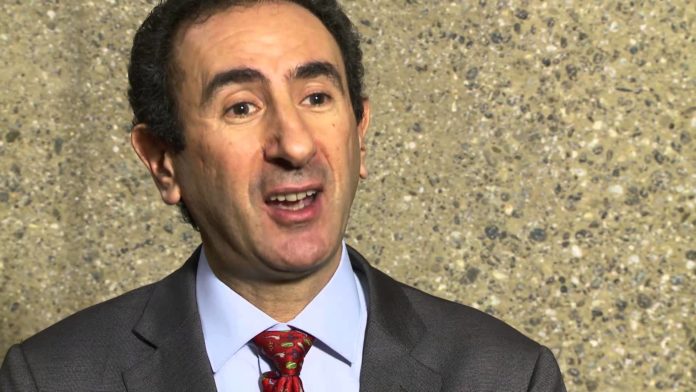
REJECTED BY BURUNDI: UN Commission of Inquiry into rights violations in Burundi Chairman Fatsah Ougergouz
Following a decision of the United Nations Human Rights Council, in which it setup a commission of inquiry to investigate human rights violations and abuses in Burundi, including whether they may constitute international crimes, the President of the body has appointed the Commission’s Chair and members.
The Commissioners appointed include Fatsah Ouguergouz (Algeria), Reina Alapini Gansu (Benin) and Francoise Hampson (United Kingdom). Mr. Ouguergouz will serve as the Chair of the three-member Commission.
According to a news release, the Commissioners will ‘provide the support and expertise for the immediate improvement of the situation of human rights and the fight against in impunity’.
Established for a period of a year at the Human Rights Council’s 33rd session (September 2016), the Commission has also been mandated to identify the alleged perpetrators of violations and abuses, since April 2015, with a view to ensuring full accountability.
In discharging its duties, the Commission has been authorized by the Human Rights Council to engage with national authorities, UN agencies, the Office of the UN High Commissioner for Human Rights (OHCHR) field presence in the country, as well as other stakeholders, including the civil society, refugees, authorities of the African Union (AU) and the African Commission on Human and Peoples’ Rights.
The Commission will be present an oral briefing to the Human Rights Council at its 34th and 35th sessions, in March and June 2017, respectively, and a final report at an interactive dialogue at the Council’s 36th session in September 2017.
Burundi was thrown into fresh crisis more than a year ago when President Pierre Nkurunziza decided to run for a controversial third term that he went on to win. To date, it has been reported that hundreds of people have been killed, more than 250,000 have fled the nation, and thousands more have been arrested and possibly subjected to human rights violations.