UTAMU GRADUATION: UTAMU Chancellor Dr Stephen Kalonzo Musyoka presided over the university's second graduation ceremony. Photo/ Pius Enywaru.
The Uganda Technology and Management University has held its second graduation ceremony today, presided over by the University’s Chancellor, former Kenya Vice President, Dr Stephen Kalonzo Musyoka.
Speaking at the function held at Silver Springs Hotel in Bugolobi, Dr Musyoka lauded the university administration for the good standards exhibited.
“The excellent completion rates of graduate students as exhibited by the number of Master’s and Post Graduate Diploma students presented today and the number of PhD students reported by the Vice Chancellor to have completed their studies on record time,” Dr Musyoka said.
WE MADE IT: Chancellor Kalonzo Musyoka poses for a group photo with some of the graduates. Photo/Pius Enywaru.
According to Dr Musyoka, the quality of education attained by the graduates meets international standards.
“I have no doubt the graduates amidst us today can testify that the rigour and quality they have been subjected to meet international standards,” he said.
The number of graduates doubled that of the first graduation, rising from 80 last year to 190 graduates this year.
“The University Council has continued to effectively steer the
university in the right direction. I appeal to them and other
governance organs of the University to continue working for the
achievement of the strategic goals of the university,” Dr Musyoka said and also thanked the Uganda government for the continued provision of a conducive environment for the private university education.
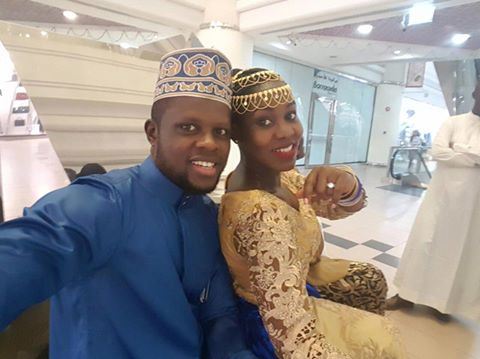
THIS SELFIE! Some of the UTAMU graduates. Photo/Pius Enywaru
To the fresh graduates, he urged them to use the skills that they have
acquired to tackle the challenges that lie ahead of them.
“Our graduates of 2016, you are part of a generation faced with
significant global challenges. Today, the world is struggling with
unemployment, poverty, population pressure, disease, high levels of
corruptions, etc. However, with the attained knowledge, skills and the
use of technology at your disposal, I am sure that you are well
prepared to tackle these challenges and more that may come your way,” he said.
Present at the graduation ceremony was the University’s founding
Chancellor, Prof Venansius Baryamureeba; Prof Fredrick Kayanja, the
Chairperson University Council and Prof Benon Basheka, the Vice
Chancellor.
In his speech the Vice Chancellor lauded Dr Musyoka for his contribution towards UTAMU.
“Mr Chancellor Sir, we take pride in having a personality of your caliber
and stature at the top in our governance structure. I thank you for
your unwavering commitment towards UTAMU and on behalf of my fellow Board of Trustees, I honour you for your contribution
towards this young but promising university,” Prof Basheka said.
Singer Bigeye’s neglected kid, Diamond Britton is having breathing problems and spent most of Tuesday in a US hospital.
“Attacks are worse now and doctors want a surgery to enlarge his throat and that his congestion in his respiratory system will become better. I don’t sleep, have to watch him when sleeping so that he doesn’t stop breathing while he is in sleep. I am terrified, is there any treatment I can use without surgery we need your prayers Aboluganda hate seeing these helpless in pain,” Bigeye’s ex, Sheila, who now doubles as the kid’s mother and father cried out to her fans.
Together with all her kids, he is back to her ex-husband, the father of her first children and it’s him who is taking care of all of the family.
It’s against that background that Zella went back at the ‘self-contained’ singer.
“When you are a true parent it doesn’t matter what colour you are, what nationality and what age you are? What matters is being responsible for the family and real men exits. Daddy is smiling after seeing his son doing better after 24hours being in hospital,” she added.
NEW RATE: The new NSSF rate for members' savings for FY 2015/16
Savers with the National Social Security Fund will be paid Shs 606 billion shillings for the financial year 2015/2016, at a rate of 12.3 percent, down from 13 percent for the previous financial year.
According to finance minister Matia Kasaija, the new rate announced by is 0.7 percent less than the previous rate owing to turbulences that affected economies across the East African region including Uganda’s, which grew by only 4.6 percent.
However, according to the Minister, the Fund’s financial portfolio has grown form Shs 5.6 trillion to Shs 6.5 trillion, an increment of Shs 900 billion, representing an 18% increase in the FY 2015/2016. Mr Kasaija also noted that the new rate is above the 10-year average rate of inflation now at 8.85%, and called upon the Ugandan business community to raise their ante.
“I look forward to coming back next year to see better things,” Mr Kasaija said, urging the media to disseminate useful information to the public and to also protect the reputation of Uganda.
NSSF Board Chairman Patrick Byabakama Kaberenge noted that members’ savings are secure and that the Fund will continue to seek viable investment.
PROMISING: NSSF Managing Director Richard Byarugaba
NSSF Managing Director Richard Byarugaba was optimistic the Fund would grow and serve its members better and said that benefits paid out to qualifying members had also increased by 28%, from Ushs 187 billion to Ushs 239 billion.
Mr Byarugaba also said that the Fund registered a profit after tax of Ushs 491 billion, noting however that the Fund’s performance was mainly affected by stock markets.
According to NSSF, the speed at which it will pay members claims in FY 2015/16 is eight days, and several savers, posting on their Facebook and Twitter platforms, expressed satisfaction with the Fund’s performance.
U.S. President Barack Obama touches the casket of former Israeli President Shimon Peres after speaking at his funeral at the Mount Herzl cemetery in Jerusalem, September 30, 2016. REUTERS/Kevin Lamarque
The US president, Barack Obama, evoked the ‘unfinished business’ of the Israeli-Palestinian peace process as he delivered a pointed and moving tribute at the funeral of the former Israeli president and Nobel peace prize laureate Shimon Peres in Jerusalem today.
LONG TIME! A still image taken from a video shows Palestinian President Mahmoud Abbas shaking hands with Israel’s Prime Minister Benjamin Netanyahu
Speaking in front of almost 80 world leaders gathered at the city’s Mount Herzl cemetery, including Israel’s Prime Minister Benjamin Netanyahu and Palestinian president Mahmoud Abbas, Obama insisted that Peres had understood that ‘the Jewish people weren’t born to rule another people’.
Obama delivered his address shortly before Peres – who was regarded as the last of Israel’s founding generation – was buried between two other Israeli prime ministers, Yitzhak Rabin and Yitzhak Shamir.
A still image taken from a video shows Israel’s Prime Minister Benjamin Netanyahu and U.S. President Barack Obama sitting next to each other at the funeral of former Israeli Prime Minister Shimon Peres.
Friday’s funeral was Israel’s largest gathering of international dignitaries since the funeral of Rabin, Peres’ partner in peace, who was killed by a Jewish nationalist in 1995.
Obama’s intervention during his whistle stop visit to Israel for the commemoration was the most political at a sombre occasion where the ghost of the failed Middle East peace process loomed large, referred to as well by former US president Bill Clinton and the Israeli novelist Amos Oz.
And in an event heavy with reminders of the collapsed peace process, perhaps the most striking was the presence of Abbas who told Netanyahu as the two men shook hands: “Long time, long time.”
Referring to Abbas’s presence as he began his eulogy, Obama said the presence of the Palestinian leader was “a gesture and reminder of the unfinished business of peace” adding that Peres: “never saw his dream of peace fulfilled…And yet he did not stop dreaming, and he did not stop working.”
“Even in the face of terrorist attacks, repeated disappointments at the negotiating table, he insisted that Palestinians must be seen as equal in dignity to Jews and therefore equal in self-determination.”
“He believed that Israel would be best protected when Palestinians had a state of their own.”
He concluded, “The last of the founding generation is now gone,” adding: “Toda rabah haver yakar,” Hebrew for “thank you so much dear friend.”
Other dignitaries who attended at the funeral for Peres, who died aged 93 on Wednesday, were Prince Charles and the British foreign secretary Boris Johnson, as well as the French leader, François Hollande, along with other heads of state and 15 foreign ministers.
Abbas’s attendance, leading a Palestinian delegation, sparked anger in some Palestinian quarters reflected in a cartoon circulated on social media, showing Abbas in Israeli military uniform with his name altered to sound Israeli, weeping over Peres’s grave.
The funeral, which saw foreign figures fly from across the globe, saw an unprecedented security operation to protect the commemoration which saw roads closed, including the main Tel Aviv to Jerusalem highway, and thousands of police deployed.
The morning began with Peres’s coffin carried out of the Knesset, the Israeli parliament, at just after 8.30am by eight military pall bearers, followed by his family, with the procession led by another member of Israel’s armed forces reciting the kaddish – the Jewish prayer for the dead.
The coffin was loaded into a hearse to travel to Mount Herzl cemetery shortly after Obama’s jet set down at Ben Gurion airport in Tel Aviv. Obama was accompanied on Airforce One by the vice-president, Joe Biden, and the secretary of state John Kerry.
Others attending the funeral included former British Prime ministers Tony Blair and David Cameron and the foreign secretary, Boris Johnson.
GREAT MAN: Former US President Bill Clinton eulogises former Israeli Prime Minister/President Shimon Peres
Clinton, who was president when Peres negotiated a historic interim peace accord with the Palestinians in 1993, praised Peres as a “wide champion of our common humanity.”
Describing their 25-year friendship Clinton dismissed critics who described Peres as a naive dreamer. “He started life as Israel’s brightest student, became its best teacher and ended up its biggest dreamer,” said Clinton.
Clinton has now attended the funerals of all three of the figures who signed the Oslo peace accords and shared the Nobel peace prize – Rabin, former Palestinian leader Yasser Arafat, and now Peres.
In his own appreciation of Peres, his former fierce political rival Netanyahu called Peres: “A great man of Israel. He was a great man of the world. Israel grieves for him. The world grieves for him.”
Oz, who had known Peres for 40 years, described Peres’s “capacity to change” and called him “a trailblazer who had been ridiculed, who seemed a big dreamer until the future came and proved him right.”
“When some say peace is not possible it is possible,” he added, “and it is necessary and inevitable because we are not going anywhere.”
He continued: “That is why we have no option but to divide this house into two apartments. Where are the leaders the brave leaders who will make this dream come true and continue his vision?”
Peres’s death led to an outpouring of tributes worldwide for Israel’s last remaining founding father.
In a career spanning seven decades, Peres held nearly every major office, serving twice as prime minister and as president, a mainly ceremonial role, from 2007 to 2014. He was also an architect of Israel’s undeclared nuclear programme and defence industries.
While those in the west and within Israel have hailed Peres as a peacemaker, many Palestinians and those from Arab nations have questioned his record, citing his involvement in successive Arab-Israeli wars, the occupation of Palestinian territory and his support for settlement building before his work on Oslo.
He was also prime minister in 1996 when more than 100 civilians were killed while sheltering at a UN peacekeepers’ base in the Lebanese village of Qana when it was fired upon by Israel.
Despite his reputation as a statesman, Peres never managed to outright win a national election. Many in Israel opposed to the Oslo accords also blamed him for what they saw as their failure.
But in later life, especially during his time as president, he came to be widely embraced.
South Sudan refugees getting food aid at Bidi Bidi camp in Yumbe District, Uganda. Photo credit/WFP/Henry Bongyerirwe
Authorities in the Democratic Republic of Congo (DRC) have handed over 300 South Sudanese refugees who lacked humanitarian needs to the government of Uganda for better management.
The South Sudanese had sought refuge in DRC, but lack of resources and poor governance systems prompted Congolese authorities to hand them over to Uganda, under the care of the United nations High Commission for Refugees (UNHCR).
Famed for her compassionate refugee policy, currently Uganda reportedly receives about 4,000 South Sudanese refugees a day, and the country is today home to over half a million refugees, most of them from South Sudan, Burundi, the DRC and Rwanda.
In a related development, over 15,000 South Sudanese refugees arrived in Faradge and Aru in Haut-Uele and Ituri provinces of the Democratic Republic of Congo, following a resurgence of violence in South Sudan, aid agencies said.
The DRC has been experiencing an influx of refugees into Aru territory in Ituri, close to the border with South Sudan, since October 2015.
Currently there are 27,250 registered South Sudanese refugees in the territories of Faradge and Aru in Haut-Uele and Ituri provinces, according to aid agencies.
Much as the new arrivals of South Sudanese refugees have received little humanitarian assistance, those in Ituri reportedly lack food, shelter, and medicine.
There are also fears that the security situation in South Sudan could remain volatile over the coming months, amid reports that fighting could intensity between government and opposition forces across the country, including across parts of Central and Western Equatoria states thus forcing people to flee into the DRC.
Aid agencies, including the United Nations, say refugees would be in need of psychosocial support as grave human rights abuses, including a high incidence of sexual violence, have been reported in South Sudan since conflict escalated in July.
The violence in South Sudan, aid agencies say, has forced more than 195,000 people to flee the country since 8 July, bringing the number of South Sudanese refugees in neighboring countries to over 1 million. In South Sudan, over 1.6 million people are internally displaced and another 261,000 are refugees from Sudan, DRC, Ethiopia and CAR, according to latest figures from the UN refugee agency.
SEEKING RE-ELECTION: Somali President Hassan Sheikh Mohamud. Photo credit/radiosahan.org/
Somalia has sought for an explanation from the United States after officials said a US ‘friendly fire’ air strike killed at least 22 soldiers and civilians in the Horn of Africa nation.
Officials in the semi-autonomous, northern region of Galmudug said a US air strike killed members of its forces this week and accused a rival region, Puntland, of duping the Americans into believing those targeted were Islamist rebels.
Washington said the United States carried out a ‘self-defense air strike’ after Somali troops faced fire from militants. It said nine al Shabaab militants had been killed but that it was looking into reports others may also have died.
“The cabinet requests the US government give a clear explanation about the attack its planes carried out on the Galmudug forces,” the government statement, signed by Mohamed Omar Arte, said.
It also urged both Galmudug and Puntland, which have often clashed over territory in the past, to mend fences. Protests erupted in Galkayo after the U.S. strikes, with demonstrators burning US flags and chanting anti-American slogans.
The United States, a major donor to Somalia’s government in Mogadishu, has often bombed al Shabaab militant positions and commanders in its bid to support the government and help the nation rebuild after two decades of war.
In a separate statement, Somali General Ali Bashi said the Somali military had confirmed that members of the Galmudug forces and civilians were killed in the strike, describing it as a case of ‘friendly fire’.
The General also said al Shabaab was not in the area, confirming the al Qaeda-affiliated militants’ earlier claim that they had no forces there at the time of the attack, which occurred overnight from Tuesday to Wednesday.
HAPPIER TIMES? President Salva Kiir (in hat) with former First Vice President Riek Machar Teny
South Sudan has made a formal protest to Khartoum, against hosting the former First Vice President Riek Machar, who has since declared war against his country led by his political nemesis Salva Kiir Mayardit.
According to South Sudanese Deputy Head of Mission to Khartoum Kau Nak Maper, the Embassy on Thursday handed a protest letter to the foreign minister over the conditions of Machar’s hosting in Khartoum.
“The protest came on the background of the political activity carried out by Machar, and through which he declared the armed resistance against the government of Juba,” Maper said.
Following a three-day meeting in Khartoum, the SPLM-IO Political Bureau under the leadership of Riek Machar announced they opted for the armed struggle in order to establish a democratic regime in Juba.
Juba had been reassured by the Sudanese authorities that Machar is in Khartoum for humanitarian reasons, indicating he was receiving medical care.
The South Sudanese diplomat said the embassy has not yet received a response from the Sudanese government to the protest note. However, he pointed out that the lack of response would not lead to escalation or a crisis in the bilateral relations.
“The issue will be discussed during the meetings of the joint security committee between the two countries, which is taking place in Juba nowadays,” he revealed.
Last Monday, South Sudan’s Ambassador to Khartoum Mayan Dut Waal, said he was surprised to see the Sudanese government allowing Machar to declare war against his government, and called for a ban to his political activities against Juba.
ANNOUNCED MACHAR WOULD LEAVE SUDAN: Sudan foreign minister Ibrahim Ghandour
On the same day, Sudan Foreign Minister Ibrahim Ghandour stressed that Sudan wouldn’t serve as a launching pad for any armed opposition activities against South Sudan.
Twenty four hours later he said that the rebel leader would leave Sudan in the near future without further details.
“The hosting of former South Sudanese First Vice President Riek Machar in Sudan is temporary, as he is now admitted to a Khartoum hospital and will leave the country soon,” he said.
KILLED: Ugandan Alfred Olango who was killed by police in the US. Photo credit/heavyeditorial.files.wordpress.com
The government of Uganda over the years twice refused to avail travel documents for Alfred Olango, the Ugandan man who was felled by a policeman’s bullet on Tuesday in El Cajon, southern California, USA.
According to US Immigration and Customs Enforcement (ICE) the 38-year old Olango, who arrived in the US as a refugee in 1991, was supposed to be deported after he was convicted for transporting and selling narcotics in the US.
However, ICE says the Uganda government refused to avail Olango with the travel documents needed for his deportation, forcing the US government to imprison him. He was later to be released in 2003 and placed under an order of supervision that directed him to report to the agency regularly, ICE western regional communications director Virginia Kice said in a statement.
According to Kice, Olango was again arrested in 2009, after serving prison time for a firearms charge conviction in Colorado. That time ICE tried to deport him for the second time but allegedly failed after the Uganda government once again refused to grant him travel documents necessary to effect the deportation, Kice said, adding that the last time Olango was in contact with ICE as required was in February 2015.
By press time efforts to contact Ugandan internal affairs ministry spokesperson Pamela Ankunda over the US government’s allegations were futile.
Olango was killed on Tuesday after his sister dialed 911, asking police to help because he was ‘not acting like himself’. His killing has since sparked off protests from mostly black protestors in El Cajon who accuse the US police of carrying out racially-instigated killings.
El Cajon police Chief Jeff Davis said Mr Olango died after one officer fired an electronic stun gun and another officer simultaneously fired his firearm several times.
Police, who had already acknowledged that the object was not a weapon, confirmed on Wednesday that the object Olango possessed was a three inches (7.6cm) long silver vaping cigarette.
By press time it was not possible to ascertain whether Olango’s body would be returned to Uganda. However, yesterday the US Embassy in Uganda sent a message of condolence to the family of the deceased.
“We are aware of reports that on September 29, Alfred Olango was shot and killed during an incident with law enforcement officers in El Cajon, California. We extend our deepest condolences to Mr. Olango’s family and friends,” reads the statement posted on the embassy Facebook page on Thursday.
BEREAVED: Alfred Olango’s mother Pamela Benge (C) addresses a news conference following her son’s killing in the US. Photo credit/media.10news.com
Meanwhile, at a news conference organised by the Rev Shane Harris, the president of the San Diego Chapter of the National Action Network (NAN), Olango’s mother Pamela Benge denied the deceased was ‘mentally-ill’.
According to Ms Benge and the family lawyer Dan Gilleon, the deceased was ‘grief-stricken’ after losing a close friend.
“Alfred was not mentally ill. He was going through a mental emergency – a mental breakdown – because he had lost someone he loved dearly. We all go through a bad day,” Gilleon said at the news conference.
With the Kampala City Festival just around the corner, preparations by organizers Kampala City Council Authority (KCCA) and sponsors are in high gear. At a press conference held at City Hall this morning, KCCA Executive Director and sponsors announced the arrangements underway for the festival.
Bell Lager, who has been a platinum sponsor of the annual event since inception, announced that they would give away a brand new van to a lucky winner at the festival. The announcement was made by Juliana Kagwa, Marketing and Innovations Director, Uganda Breweries Limited (UBL).
“We have worked closely with KCCA this year to deliver an unforgettable and exciting experience for our customers. We have taken up the space at the National Theatre and will have a special stage there with exciting entertainment. We have also doubled our selling points to make sure that they can be conveniently accessed by our customers,” she said.
The brewery has been running an under the crown promotion called Tubbaale which will come to an end at the city festival. “We intend to give away a brand new van at the National Theatre. To stand a chance to win, all you need to do is visit any of our selling points and buy a Bell Lager. You will automatically be entered into a raffle,” Kagwa said.
During the event, an opportunity was given to two lucky people to spin the Tubbaale wheel and win. Ms. Musisi who volunteered to take part, ended up the winner of a beer which she politely turned down, to the amusement of the crowd.
In her remarks, Ms. Musisi thanked the sponsors of the festival for their continued support and pledged that given the experience gathered by the organizing team over the years, Sunday’s fete would be more colorful and fun for those who attend.
She also announced that this time, the festival would have pre-event activities to lead up to the big fete that include a rally on Saturday which will be flagged off at Naguru.
“The last time we had a rally in Kampala was in Amin’s era. This time we will have a rally right here in Kampala which will be graced by all the big rally race car drivers. It will also be a family event and we have a special race for the children,” Musisi said.
UBL has also promised to have their full range of products from beer to spirits available for sale. From favored beer brands Bell Lager, Tusker Malt, Guinness to renowned spirits like Uganda Waragi, Johnnie Walker, Baileys and single malt whiskies.
Acting President of Seychelles, Danny Faure who is a Ugandan born.
Danny Faure, has been named acting President of Seychelles after President James Alix Michel announced on Tuesday that he was stepping down from office.
Mr Alix exist follows a constitutional amendment earlier this year that meant he had exceeded his term in office.
Mr Danny has been Vice President since July 2010 and was born in 1962 in Kasese district at Kilembe.
In a televised State address and whose speech was posted on the country’s Statehouse website, Michel, 72, said he will leave office on October 16 to be replaced by Vice-President Danny Faure.
“After 12 years as president, the time has come to hand over the reins of power to a new leader”. Adding “A new leader who will take Seychelles to the next frontier of its development, to face and overcome the challenges of this century, without abandoning our principles,” he said in the address initially delivered in Seychellois Creole but later translated to English.
Michel, a former teacher, came to power in April 2004 after serving as VP to his predecessor France-Albert René between 1996 and 2004.
Who is Danny Faure?
Danny Faure was born on May 8, 1962 to Seychellois parents in Kilembe, Uganda. He is married and has four children.
He completed his primary and secondary education in Seychelles and continued in Cuba where he graduated with a Degree in Political Science.
Upon his return to Seychelles in 1985, He worked as an Assistant Curriculum Officer with the Ministry of Education and Lecturer at both the National Youth Service and the Seychelles Polytechnic. In June 1989, he was appointed Director of the National Youth Service.
As a young man, Danny Faure worked with the SPPF organization. He became the Chairman of its Youth Wing and was elected as a member of the Central Committee of the Party. In June 2009 he was appointed Secretary General of the Party.
With the return of Multi-Party in Seychelles in 1993, Danny Faure was appointed Leader of Government Business of the majority Party in the National Assembly, a post he served for 5 years (from 1993 to 1998).
Danny Faure was first appointed as Minister in April 1998 when he became Minister for Education, in 2001, he assumed the role of Minister for Education and Youth, which he held until July 2006. In 2006, Mr Faure was appointed Minister for Finance.
He was assigned portfolio responsibilities for Trade in July 2007 and Industries in August 2009.
Danny Faure was appointed Designated Minister in April 2004 up to June 2010.
He has overseen the implementation of the first generation of reforms under the macro economic reform programme which started in October 2008. He continues to direct the second generation of reforms as part of the on-going economic programme.
In July 2010, Mr Faure was appointed Vice-President holding Ministerial portfolios for Finance and Trade, Public Administration, and Information Communication Technology.
Today the Vice-President holds the portfolios of Administration, Youth and Information Communication Technology.
Vice-President Faure is also Governor of the International Monetary Fund, the World Bank and the African Development Bank.