Stanbic Bank
Stanbic Bank
24.7 C
Kampala
Stanbic Bank
Stanbic Bank
Home Blog Page 2027

Top Kiir General resigns over Machar fallout

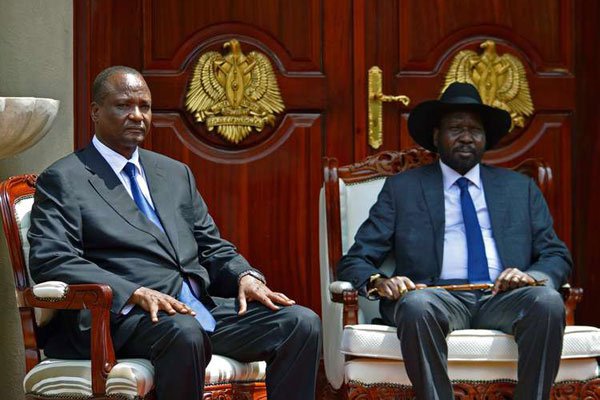
South Sudan President Salva Kiir with his deputy General Taban Deng Gai.

A top army General in the South Sudan’s national army, the Sudan People’s Liberation Army (SPLA), has resigned from the government, accusing President Kiir and his inner circles of violating the peace agreement and wanting to take the country back to war over the creation of illegal 28 states.

Lt. Gen. Bapiny Mantuil Wichjang, the Deputy Chief of General Staff for Moral Orientation in the South Sudanese national army and also a brother to the current Governor in the oil rich Unity state, Nguen Mantuil Wicjang, declared his resignation in a press statement he issued from the Kenyan capital, Nairobi.

“With heavy heart, I have decided to tender to your Excellency my resignation as SPLA D/COGS [Deputy Chief of General Staff] for Moral Orientation…,” said Lt. Gen. Bapiny in the statement.

The army General who was the most trusted top army commander representing the forces of Bul Nuer allied to President Kiir’s government and control most of the government-held areas in the oil rich state, said he was accused by his own brother, Governor Nguen, and the President of rejecting the creation of the 28 states.

In his statement, Lt. Gen. Bapiny said he clearly stated his opinion to the president in the past that the creation of the 28 states was a clear violation of the August 2015 peace deal signed with the opposition group led by Riek Machar.

He accused the president and the Jieng [Dinka] Council of Elders (JCE), an informal Dinka tribal advisory body composed of Dinka intellectuals and senior politicians from across the Dinka inhabited states, of taking lands away from other communities and giving it to the Dinka communities in Upper Nile and Bahr el Ghazal regions.

As a result, while on a trip to Germany for medical treatment in March this year, he said the Chief of General Staff, Paul Malong Awan, ordered that his residence be searched and bodyguards disarmed.

“On the 24th of March 2016, the Chief of General Staff ordered a search into my private residence and a force comprised of military police and MI [Military Intelligence] personnel came and disarmed my bodyguards and the security of the residence was reduced to zero because all the guns were taken away,” Lt. Gen. Bapiny narrated in the statement.

“He [Malong] did that because on the 14th of March 2016, Nguen the Governor of Unity state lied to them that I was going to declare my intention to join the opposition or SPLM-IO once in Nairobi. I was already in Nairobi on my way to Germany before the 24th and the declaration never happened because it was a wild lie fabricated by both Tut Gatluak [Presidential Advisor on Security Affairs] and Nguen [Governor],” he said.

‘PLANNED ASSASSINATION OF VP TABAN DENG GAI’

The resigned General Bapiny, who was also an insider in the security plans also revealed that there was a suggested plan by the government to assassinate Taban Deng Gai, the newly appointed First Vice President while he was leading opposition’s advance team to Juba in February this year.

He revealed that he personally received a copy of a joint written recommendation from his brother, Governor Nguen Mantuil and the presidential advisor on security affairs, Tut Gatluak, to President Salva Kiir to assassinate Taban Deng.

He also said the leaked document recommended that he, General Bapiny and General Stephen Buay Rolnyang and another General Manyuat, all from Bul Nuer, be arrested.

“On the 29th of February 2016, I obtained a report that was written to the President by the Presidential Advisor Tut and Governor Nguen with the recommendation that Taban Deng Gai (who had just come to Juba with the advanced team of SPLM in Opposition) should be assassinated and Maj. Gen. Buay, Maj. Gen. Manyuat and myself to be arrested,” he revealed.

In March, a month after the leaked report, he said the two Generals Buay and Manyuat were actually arrested by the government, while he [Gen. Bapiny] was in Germany for the treatment.

However, there was no assassination attempt on the life of Taban Deng, probably because the President did not act upon the alleged recommendation.

General Bapiny in the statement said he would from now on join ‘his people’ to free them from the regime of President Salva Kiir without indicating if he would join the armed opposition or not.

General Peter Gatdet Yak, another opposition General, is also from the Bul Nuer clan.
He defected from the opposition led by Machar, but he is purportedly considering rejoining Machar’s opposition faction to topple the government.

Also opposition officials claim that General Bapiny, may join them.


Stories Continues after ad

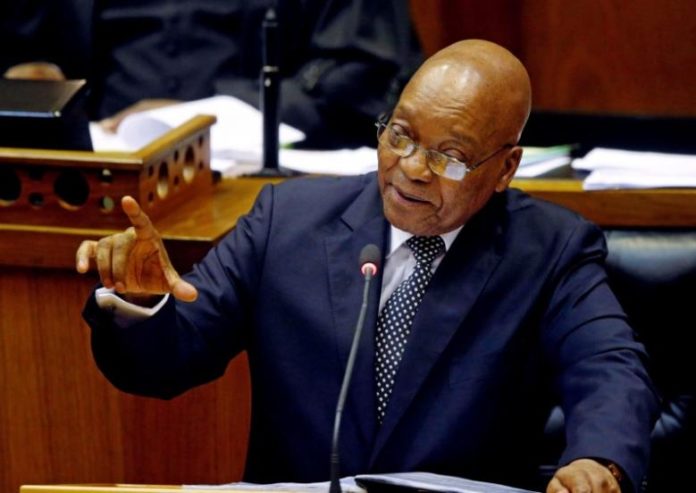
Zuma asks watchdog to delay report on his business ties

WANTED OUT: President Jacob Zuma

South African President Jacob Zuma, under scrutiny for his friendship with a wealthy business family, has asked an anti-corruption watchdog not to report her findings until he has had a chance to question other witnesses, his office said on Monday.

Public Protector Thuli Madonsela is due to release her findings by Friday, the day before her seven-year term comes to an end. She questioned Zuma for four hours last Thursday over allegations his business friends, the Gupta family, had influenced political appointments.

Despite denials by Zuma and the Guptas, the affair has damaged the president, who was separately forced to repay part of the cost of a lavish upgrade to his private residence as a result of an investigation by Madonsela.

The presidency said in a statement that Zuma had asked Madonsela’s office to confirm by Tuesday that it would not conclude the current investigation and issue any report until he was given a chance to question the witnesses involved.

“The President would want to exercise his right to question some of the witnesses before responding to the written questions and adducing evidence,” it said, adding that Zuma wanted to be assisted by a legal representative.

Zuma will testify after speaking to witnesses and reviewing any evidence that implicated him in the matter, the presidency added.

The Public Protector’s office said in a statement that Zuma was given copies of the evidence implicating him on Oct. 1 and that a letter has been prepared to advise the president to submit any questions to be put to witnesses on his behalf.

Madonsela’s office also queried why Zuma had still not testified.

“It is of concern to the Public Protector that the President has on two occasions undertaken to answer questions and when the time rose, he changed his mind,” the statement said.

“She … believes it is in the interest of public trust that the matter be concluded expeditiously.”

The anti-corruption office said Zuma had been free to provide his evidence since March 22.

Madonsela spoke to Zuma and his lawyers behind closed doors last week about the allegations that the Guptas had played a role in selecting cabinet members and used their relationship with the president to gain favor in terms of government tenders, payments and licenses.

Her office said that for most of the four hours of questioning, the president’s lawyers argued that the probe should be deferred to her successor, Busisiwe Mkhwebane.

The Guptas, who moved to South Africa from India after apartheid fell in 1994, run businesses ranging from uranium and coal mining to media and information technology.


Stories Continues after ad

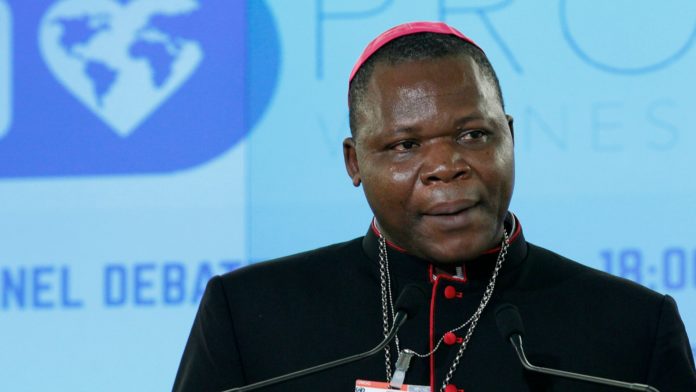
Pope Francis names three African Cardinals

YOUNGEST CARDINAL: Dieudonne Nzapalianga of the Central African Republic.

Pope Francis has promoted 17 Roman Catholic prelates from around the world to the high rank of cardinal, including 13 who are under 80 years old and thus eligible to succeed him one day. Among those named Cardinal are three Africans: 49-year Dieudonne Nzapalianga from the Central African Republic (CAR), 87-year old Sebastian Koto Khoarai from Lesotho and 75-year old Maurice Piat.

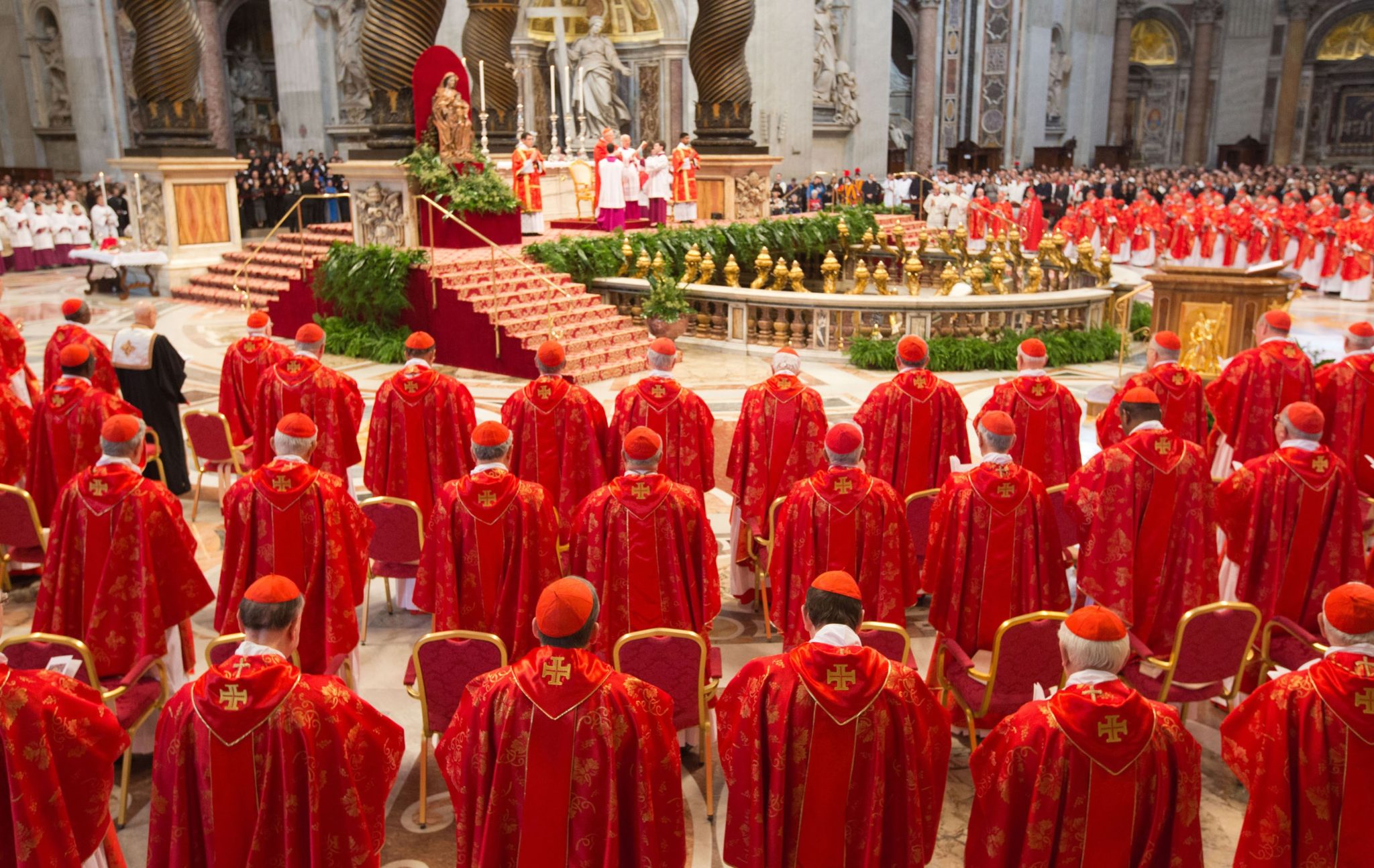
PRINCES OF THE CHURCH: Catholic Cardinals at the Vatican
PRINCES OF THE CHURCH: Catholic Cardinals congregate at the Vatican

Cardinals, who wear red hats and are known as “princes of the Church,” are the most senior members of the Roman Catholic hierarchy after the pope and serve as his principal advisers around the world and in the Vatican.

Naming new cardinals is one of the most significant powers of the papacy, allowing a pontiff to put his stamp on the future of the 1.2-billion-member global Church.

Cardinals under 80, known as cardinal-electors, can enter a secret conclave to choose a new pope from their own ranks after Francis dies or resigns. Francis, the former cardinal-archbishop of Buenos Aires, was elected in a conclave on March 13, 2013.

The new cardinal-electors come from Italy, the Central African Republic, Spain, the United States, Brazil, Bangladesh, Venezuela, Belgium, Mauritius, Mexico and Papua New Guinea.

Significantly, Francis said the current Vatican ambassador in Syria, Italian Archbishop Mario Zenari, would be elevated but remain in his post to show the Church’s concern for “beloved and martyred Syria” – an allusion to the devastating civil war there.

It was believed to be the first time in recent history a Vatican ambassador, known as a nuncio, would have the rank of cardinal.

The pope has made numerous appeals for an end to Syria’s war and last month he urged forces to stop bombing civilians in Aleppo, warning them they would face God’s judgment one day.

The four new cardinals over 80, who get the position as a symbolic honor to thank them for long service to the Church, include Father Ernest Simoni, 88, an Albanian priest who spent many years in jail and forced labor during the communist dictatorship of Enver Hoxha, who died in 1985.

Francis, making the surprise announcement during his weekly Sunday address, said the ceremony to elevate the prelates, known as a consistory, would be held on Nov. 19.

With the current batch, Francis has named 44 cardinal-electors, slightly more than a third of the total of 120 allowed by Church law.

It will be his third consistory since his election in 2013 as the first non-European pontiff in 1,300 years and he has used each occasion to show support for the Church in far flung places or where Catholics are suffering.

The Central African Republic, Bangladesh, Papua New Guinea, Malaysia and Lesotho will have a cardinal for the first time, underscoring Francis’ conviction that the Church is a global institution that should become increasingly less Euro-centric.

Last year the pope visited Bangui, capital of the Central African Republic. Amid some of the tightest security ever seen on his trips, he preached reconciliation in the nation racked by bloodshed between Muslims and Christians.

Only one of the 13 cardinal-electors will take on a Vatican job. The others would remain in their posts around the world.

Three are from the United States: Archbishop Blase Cupich of Chicago, Archbishop Joseph William Tobin of Indianapolis and Bishop Kevin Farrell of Dallas, who was recently appointed to head a new Vatican department on family and life issues.

In addition to Simoni, the Albanian priest, the other three cardinals over 80 come from Malaysia, Italy and Lesotho.


Stories Continues after ad

Burundi blocks UN investigators

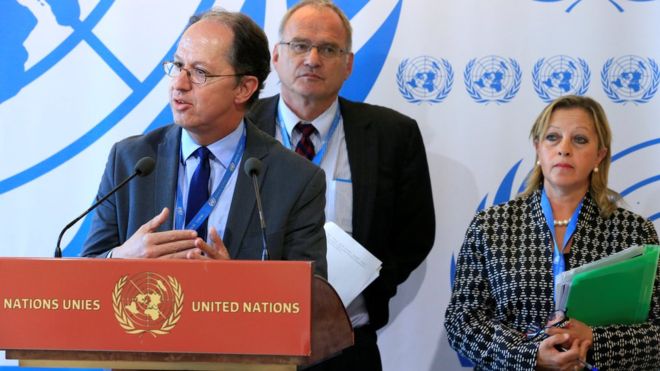
BARRED ENTRY: UN investigators Pablo de Greiff, Christof Heyns and Maya Sahli-Fadel delivered their final report on Burundi in September

Burundi has banned three UN investigators from entering the country after they accused the government of gross human rights violations.

The investigators said in a report last month that thousands of people had been tortured, suffered sexual abuse or disappeared during political violence.

They also warned of the danger of genocide from the escalating violence.

The decision to ban the investigators comes days after Burundi announced plans to withdraw from the International Criminal Court (ICC).

A letter signed by Foreign Affairs Minister Alain Aime Nyamitwe said Pablo de Greiff of Colombia, Christof Heyns of South Africa, and Maya Sahli-Fadel of Algeria were no longer welcome in Burundi.

Their investigation, published in a UN report, had described ‘abundant evidence of gross human rights violations’ possibly amounting to crimes against humanity, by the government of Burundi and people associated with it.

Speaking in New York, UN spokesman Stephane Dujarric urged Burundi to co-operate with the investigators.

“It’s critical that Burundi and every other country co-operate fully with UN human rights mechanism and that is including working with those representing it,” he said.

Burundi’s announcement to withdraw from the ICC came six months after the Hague-based court said it would investigate ongoing violence in the country.

The African Union (AU) has repeatedly complained that the ICC treats Africans and Africa unfairly.

Burundi descended into political turmoil in April 2015 when President Pierre Nkurunzinza began his bid for a third term.

Since then, more than 500 people have died and at least 270,000 have fled the country.


Stories Continues after ad

Samsung halts Galaxy Note 7 sales

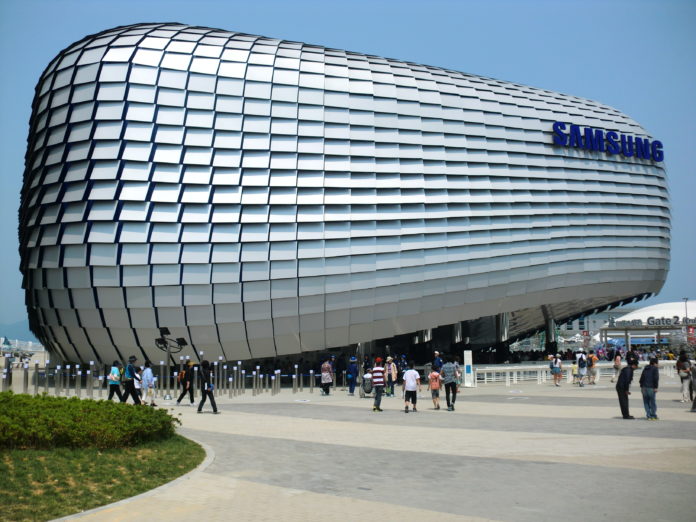
Samsung offices in South Korea

Samsung Electronics Co Ltd has halted sales of its Galaxy Note 7 smartphones and told owners to stop using them while it investigates reports of fires, fuelling expectations the tech giant will scrap the flagship device.

Top US and Australian carriers on Monday suspended sales or exchanges of the Note 7s, while aviation authorities banned passengers using the phones, after smoke from a replacement device forced the evacuation of a passenger plane in the United States last week.

The world’s top smartphone maker said it had asked all global carriers to stop sales of the Note 7s and the exchange of original devices for replacements, while it worked with regulators to investigate the problem. The company is offering to exchange Note 7s for other products or refund them.

Samsung’s decision to pull Note 7s off the shelves for the second time in less than two months not only raises fresh doubts about the firm’s quality control but could result in huge financial and reputational costs.

Analysts say a permanent end to Note 7 sales could cost Samsung up to $17 billion and tarnish its other phone products in the minds of consumers and carriers.

Investors wiped 15.4 trillion won ($13.8 billion) off Samsung Electronics’ market value in afternoon trade on Tuesday as shares down as much as 7.3 percent to a two-week low.

The premium device launched in August was supposed to compete with Apple Inc’s latest iPhone for supremacy in the smartphone market. Well received by critics, its first problem was a shortage as pre-orders overwhelmed supply.

But within days of the launch images of charred Note 7s began appearing on social media, in the first sign that something was seriously amiss with the gadget. Samsung has since recalled 2.5 million Note 7s due to faulty batteries.

South Korea’s Hankyoreh newspaper reported the firm planned to end Note 7 sales permanently. The company did not immediately comment on the report.

A person familiar with the matter said that Samsung had temporarily halted production of Note 7s. It was not clear when production would resume.

The South Korean firm did not immediately comment on whether it had identified the cause for the fires in replacement devices, although officials in Seoul said it was looking at several possibilities including the batteries.

The US Consumer Product Safety Commission said Samsung was making the right decision by halting sales and exchanges of the device.

The US Federal Aviation Administration and South Korea’s transport ministry added their voices to concerns from the aviation industry, saying no Note 7s should be used or charged inside airplanes.

Verizon Communications Inc , the largest US wireless carrier, said it may shift marketing away from the Note 7 heading into the critical holiday selling season.

Shares in Samsung were down 6.7 percent as of 0520 GMT, compared with a 1.1 percent fall for the broader market, after touching their lowest level since September 28.

Apple shares, in contrast, hit their highest in 10 months on Monday on expectations the iPhone maker would benefit from its rival’s woes.


Stories Continues after ad

Besigye arrests: Human rights commission sets date for hearing

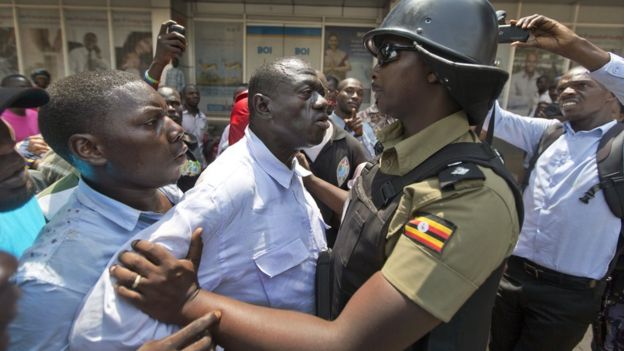
INDEPENDENT? Opposition FDC flag bearer Dr Warren Kizza Besigye being arrested by police.

Uganda celebrated its 54 Independence day yesterday. However, some of the opposition leaders spent the day behind bars. Among these included Kampala Lord Mayor, Erias Lukwago and former FDC presidential candidate, Kizza Besigye, who were arrested as they tried to leave their homes.

The two are not new to being arrested from their home. In fact, Besigye has been arrested over 100 times in the last four years.

Early this year, March 11 Besigye filed a complaint to the Uganda Human Rights Commission over the same.

And according to a response dated October 5 by the human rights body, it informed Besigye that the date for hearing the case is to be set soon.

“The foregoing allegations if proved constitute a violation of your rights to personal liberty, freedom from torture cruel inhuman or degrading treatment or punishment, privacy, property, fair hearing, freedom of conscience, expression, movement, assembly and association and economic rights contrary to articles 23, 24, 26, 27, 28, 29, 40 and 44 of the Republic of Uganda, 1995.

It further reads “Be informed that the matter has been set down for hearing against the Attorney General’s office in its vicarious capacity and we shall duly notify you of the hearing date,” reads the letter that is signed by G.T Mwesigye, the Secretary of the Commission.

Among the complaints that Besigye raised to the commission include his arrest on February 19, shortly after the presidential elections. He complained that while attending a meeting at the Forum for Democratic Change (FDC) party headquarters at Najjanankumbi, he was arrested by policemen and detained at Nagalama Police Station on allegations that the meeting was a threat to national security.

He also complained that he had been forcefully taken out of the police cells and driven to his home without his property that had been taken from him and recorded on the acknowledgement of Prisoners property slip.

He further complained that at the time of the lodging the complaint, he was subjected to numerous arrests by police whenever he tried to leave his home and he would often be detained at various police stations including Kasangati police station, Kiira police division headquarters and Nagalama police station until he was eventually subjected to house arrest.


Stories Continues after ad

Museveni hails Sudan on historic dialogue, pact

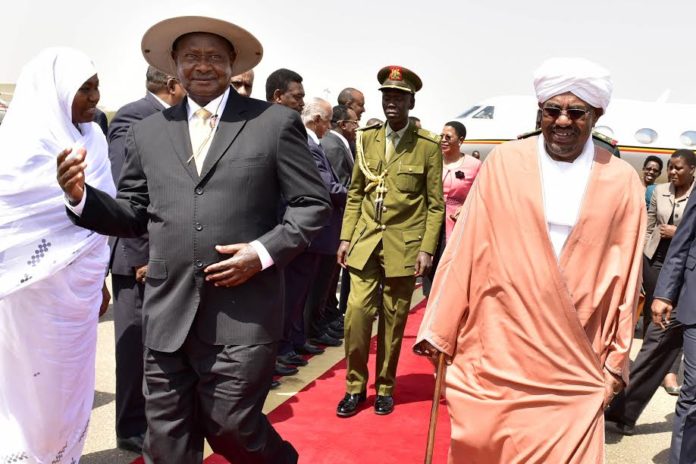
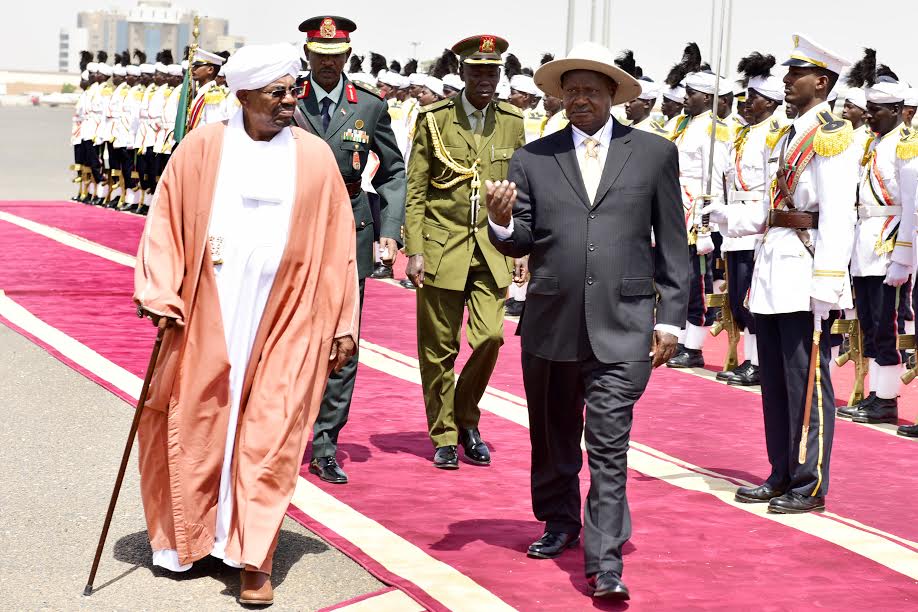
President Museveni being received by Field Marshal Bashir in Khartoum.

President Museveni has congratulated the people of Sudan upon conclusion of a historic national dialogue that places the country on a new political path.

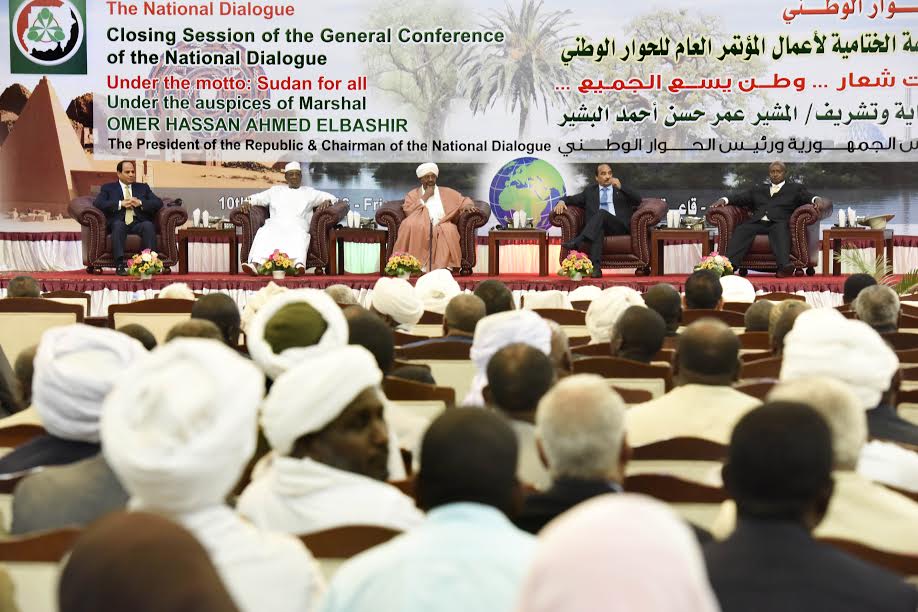
The President made the remarks yesterday at the National Friendship Hall in Khartoum, where he was among the four heads of state invited to witness the conclusion of the dialogue and signing of a historic pact.

The other heads of state present were Idriss Deby of Chad, Egypt’s Fatah Al-Sisi and Mohammed Abdul-Aziz of Mauritania.

“I came here to salute Bashir and the people of Sudan for after 60 years of trouble, sitting down in a national dialogue and finding out what the problem is,” said President Museveni.


TiCk


Adding “You have come to good consensus and I congratulate you on that achievement. It’s good for the political class in Sudan,” he added.

Museveni said the African political class had been responsible for the continent’s many problems by lacking humility and putting identity at the forefront.

“I am this, I am that. I am an Arab, I am an African, I am a Muslim, I am a Christian, I am pagan. So what if you’re that?” Museveni said.

“Ask yourself the next question; how will you achieve prosperity? Will identity give you prosperity? Will it take your children to school, build a better house, defeat poverty? Stressing “Identity is important but it’s not everything. You must also talk about prosperity.”

Museveni also revealed that the frosty relationship between Kampala and Khartoum was no more.

“I had not come to Sudan for a long time because we had misunderstandings. You know the story,” he said.

“But I linked up with some people who linked me to Field Marshal Bashir and we spoke. I came here a few months back and I am back.”

Sudan’s unity and stability, the Museveni said, directly impacts on Uganda’s prosperity.


m7-sudan2


“Uganda is losing opportunities by wars in the Sudan. You have heard us being called land-locked. We’re not land-locked,” he said.

“We have a highway called the Nile that leads us to the Mediterranean but it can’t be used because of problems in the Sudan. Uganda will do everything possible to support Sudan in peace-making.”

The national dialogue was held under motto “Sudan for All”.

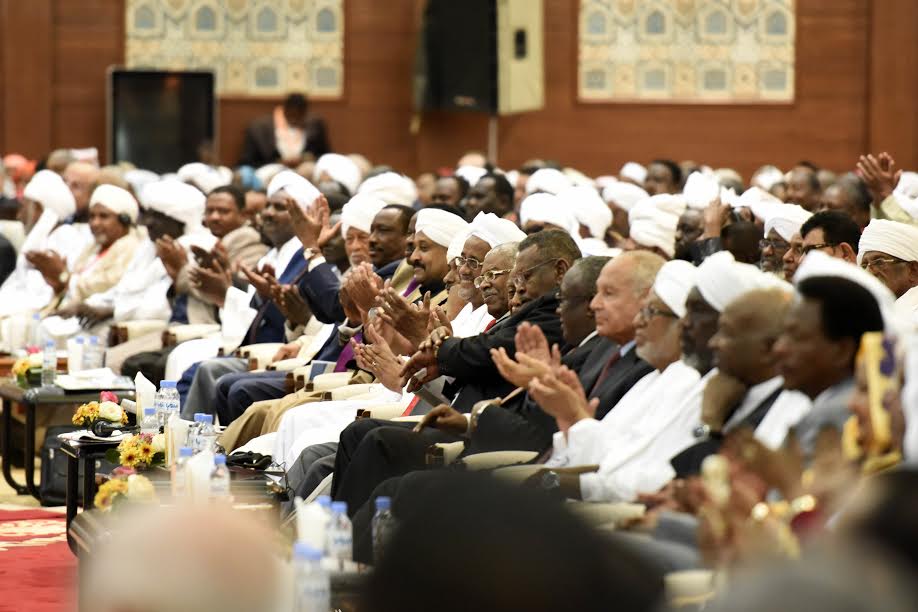
Yesterday’s colourful meeting, punctuated with music and dance, was the climax of over a year-long activity sponsored by the African Union and the US government.

The dialogue brings together over 90 political parties and armed groups which signed the agreement yesterday.

It’s key tenets are respect of human rights, political accountability and transparency, unity even with ethnic diversity and empowering women.

Others are equal distribution of national income, free role of civil society, conserve the environment, create employment, well-balanced foreign policy, elections based on presidential system, among others.

On his part, President Bashir said the initiative will cause political stability based on good governance and democratic process.


m7-sudan3


“There’s no chance after this for violence to characterize our politics. This national document is for all Sudanese people, built on consensus and is open to other groups yet to sign to do so when they can,” he said.

Presidents Al-Sisi, Deby and Mohammed all congratulated Sudan on the historic move, each promising their countries’ support for the process.

Other delegates who addressed the dialogue were from China, Russia, Ethiopia and the Arab League.


Stories Continues after ad

Generals Tumwine, Kyaligonza clash over medals

COOPTED ON NSC: Gen. Elly Tumwine,

Two prominent Generals yesterday clashed over medals awarded to officers who fought in the 1981-86 Bush War.

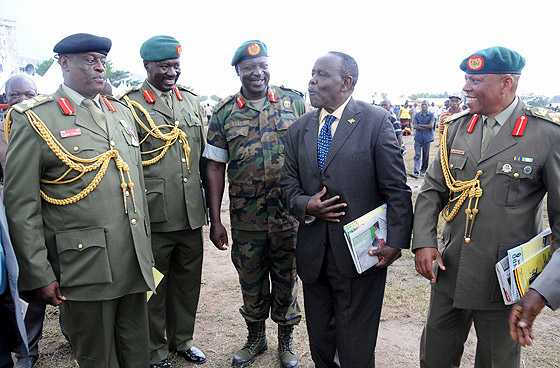
According to sources, Major General (rtd) Matayo Kyaligonza reportedly accosted General Elly Tumwine, the chairperson of the National Presidential Awards Committee, demanding to know why he was not one of those recognized for his efforts during the war that brought President Yoweri Museveni and the National Resistance Movement/Army (NRM/A) government to power in 1986.

“Where did you fight that I didn’t fight? And can you even recite one incident where you fought, I am tired of being sidelined and you should stop this nonsense of under looking people’s contribution” Gen. Kyaligonza fumed as he went for Gen. Tumwine.

Kyaligonza said this in full view of the other recipients of the medal and the local leaders  but as the charged Kyaligonza could reach him, other senior soldiers rushed to separate the two

Gen. Kyaligonza talking to his colleagues after the function.


The two Generals, Tumwine and Kyaligonza, Uganda’s Ambassador to Burundi, were in Luuka where the celebrations for the 54th Independence Day anniversary presided over by President Yoweri Museveni, where held. Among other Generals awarded yesterday were the Inspector General of Police Gen. Kale Kayihura and the former Commander of the Airforce Lt. Gen. Jim Owoyesigire,and Security Minister, Lt.Gen.Henry Tumukunde.


By press time it was not possible to contact any of the two Generals, historicals whose contribution to the NRA Bush War is public knowledge.

Since 2012 when the award of medals was initiated, several men and officers of the NRA/UPDF have been awarded with medals that include Luwero Triangle, Katonga and Damu.

At the rank of Major General in 1987, Gen Tumwine was the first post-Bush War National Resistance Army (NRA) Army Commander, while at the time Kyaligonza aka Black Bomber, was a Brigadier, a rank lower and one of the seven topmost officers of the NRA.

By 1987 the eight topmost NRA officers were Lt Gen Yoweri Museveni, Maj Gen Elly Tumwine, Maj Gen Fred Rwigwema Gisa, Maj Gen Caleb Akandwanaho aka Salim Saleh Rufu, Brig Matayo Kyaligonza, Brig Tadeo Kanyankole, Brig David Sejusa aka Tinyefuza and Brig (Honorary) Eria Tukahirwa Kategaya (RIP).

Stories Continues after ad

Bigeye’s Ex, Don Zella given Hummer as birthday gift

MONSTER CAR: Don Zella's new car, a Hummer bought by her Mzungu boyfriend

As Uganda celebrated her 54 Independence Day yesterday, singer Bigeye’s ex, Nalongo Don Zella, was celebrating her birthday.

And it wasn’t a mere celebration involving cutting the cake and enjoying drinks; this one saw her receive one of those rare birthday gifts.

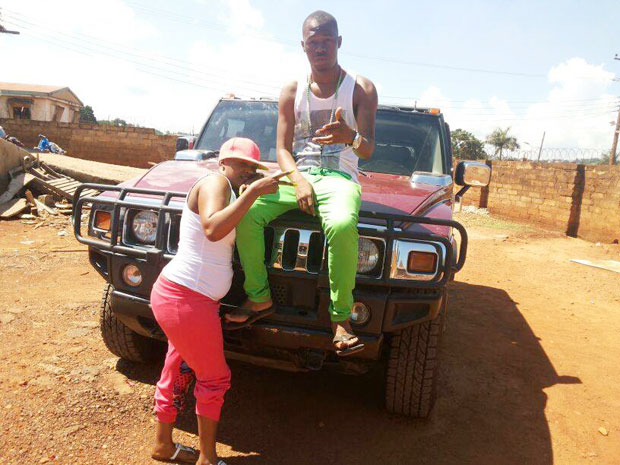
Her white boyfriend reportedly gave her a new ride, a Hummer for a birthday gift and she is all over the moon and couldn’t miss taking a swipe at her former boyfriend.

“A weak man can’t love a strong woman coz he wont know what to do with her neither how to handle her walayi thanks Allah another new.” Apparently, the monster car is already on its way to Uganda.

OLD: Don Zella's old Hummer
OLD: Don Zella’s old Hummer

Don Zella already has another Hummer in Uganda, the red monster in which Nigerian musician, Timaya rode during his stay in Uganda.

“Great birthday gift happy independence day to all ugandans all over the world temumpita illuminate nanaba lweza just who wants to ride with me on 27th dec?”
Zella re-united with her white boyfriend a few months back after falling out with Bigeye and the couple is staying in the US with all her kids.


Stories Continues after ad

Four Kampala schools qualify for National Spelling finals

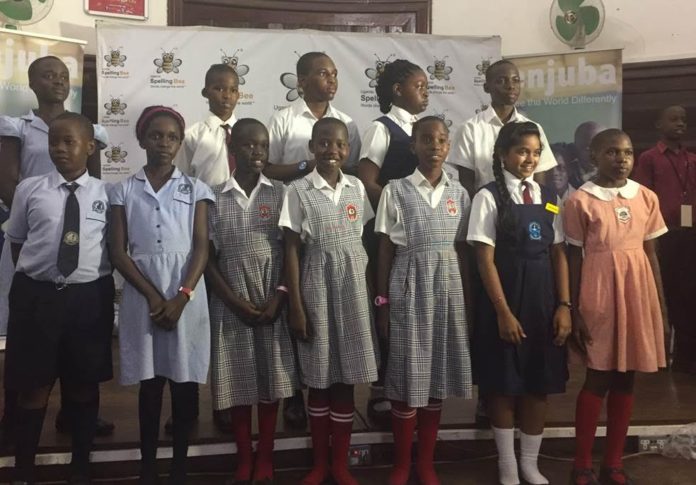
WINNERS: Some of the pupils who will represent Kampala in the National Spelling Bee competition.

The regional finals for Kampala for the National Spelling Bee took place on Saturday at KCCA’s home, City Hall, thanks to the organisers, Enjuba and sponsors DStv.

Four schools made it through to the finals to represent Kampala, and these are Daffodils Primary School, Victorious Primary School, City Parents School and Hillside Primary School – Naalya.

The four Kampala finalists will tussle it out alongside other regional finalists from Bunyoro Region, among them Masindi Barracks Primary School and Masindi Army Day Primary School.

Busoga Region will be represented by Narambayi Primary School and St. Patrick Kigulu Girls Primary School.

“After 3 months of intense teacher training, school competitions, regional competitions I am pleased we are nearing the conclusion of this very important project. We set out to make a difference in the education sector by enhancing literacy and comprehension among these children. This project has enlisted so much interest throughout the country and we can’t wait to see who will emerge victors at the national finals on 30th October 2016” said Aaron Kirunda, CEO of Enjuba.

Phoebe Nakabazzi, DStv Marketing Manager added: “We are so proud to be affiliated with the national spelling bee and enjuba in this important initiative. We are certain as DStv that not only through our educational channels but also through this partnership we are positively influencing the lives of our future leaders”.

The national finals will be held at Serena Hotel Kampala on October 30, 2016, when all regional finalists will converge to determine the National Spelling Bee champions.

The winners from the National Championship will go on to represent Uganda at the African Spelling Bee in Addis Ababa, Ethiopia in July 2017.


Stories Continues after ad