Stanbic Bank
Stanbic Bank
24.5 C
Kampala
Stanbic Bank
Stanbic Bank
Home Blog Page 203

Gov’t issues list of illegal online lending Apps traumatizing Ugandans

The Uganda Microfinance Regulatory Authority (UMRA) has issued a list of online money lending applications (apps) operating illegally and traumatizing Ugandans with abnormal interest rates ranging from 28% to 37% and questionable practices of threats and blackmail.

UMRA, which is mandated to license, regulate and supervise Tier 4 Microfinance Institutions and Money Lenders in Uganda, says the online credit/loans are operating in contravention of the Tier 4 Microfinance Institutions and Money Lenders Act, 2016 and the Tier 4 Microfinance and Digital lending guidelines 2024.

Some of the apps include; iKash, Flypesa, banana app, Loango, Nile, gloan app, Boom loan, Mpacash, Cashpulse, Credit lab, Flowerloan, Wind-money, Lever credit, Cashmate, Ezee loan, Kasente, Sunlit, Wind money, Cashflow, Moji, Ozzy money, Mumu money, Kasquick, More Pesa, Muno, My loan, Real Cash, Star Loan, Get Cash.

“These unauthorized entities mostly employ the use of mobile applications and social media platforms to lure the public into borrowing from them,” UMRA said in a statement.

“The activities of these unauthorised entities further amount to non-adherence with the Consumer Protection requirements of UMRA and are an abuse of consumer data privacy. They also violate the recently issued Tier 4 Microfinance Institutions and Money Lenders Digital lending guidelines 2024. The purpose of this public notice is therefore to caution the general public to desist from transacting with unauthorized loan providers,” it added.

One victim of iKash narrates that his photo and national ID were recorded in a tiktok video which circulated alleging that he is a serial thief of motorcycles and when found should be reported to the nearest police station.

The recording came out after him delaying to pay back a debt of Shs100, 000 having been given a loan of Shs50.000 and had to give them a profit of Shs50,000 within one week.

Like other Apps, iKash stretched to the next of kin/emergency contacts of the borrower without their knowledge and consent, harassed and tormented them using their unprofessional loan recovery agents and tagged them as the dealers in the theft of motorcycles in the suburbs of Kampala.  

Unlike banks and other financial institutions that ask for collateral to acquire a loan, the instant loan app requires the applicant to have a national identity card and two guarantors.

These apps are also accused of charging exorbitant interest rates ranging from 28% to 37%.

Online lenders generally source clients either through sending out unsolicited bulk text messages with tempting offers of quick-fix unsecured loans or unregulated social media advertising, or by word of mouth.

Money is wired directly to an applicant’s mobile money account. No face-to-face contact ever occurs.

Loans between Shs30,000 and Shs150,000 must be paid within eight days, and anything between Shs160,000 and Shs290,000 in 21 days, while Shs300,000 and more are given 30 days.

There is also use of unregistered mobile phone numbers during the recovery process, which could be aided by unscrupulous individuals within the security services.

Stories Continues after ad

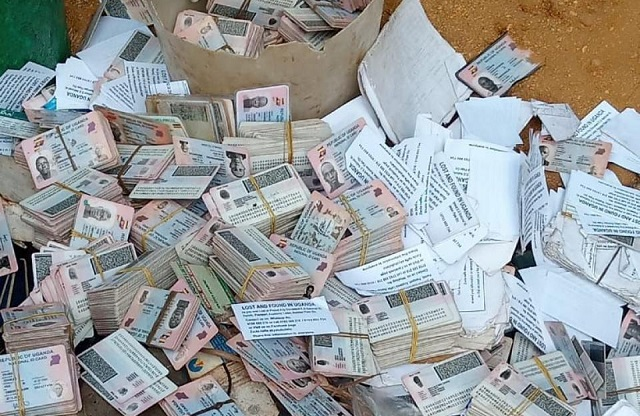
Gov’t extends validity of expiring national IDs by one year

The government has extended the validity of about 15.8 Million National IDs that were set to expire between August, 2024 to December, 2025 for one year in order to allow the continuity of business within Uganda.

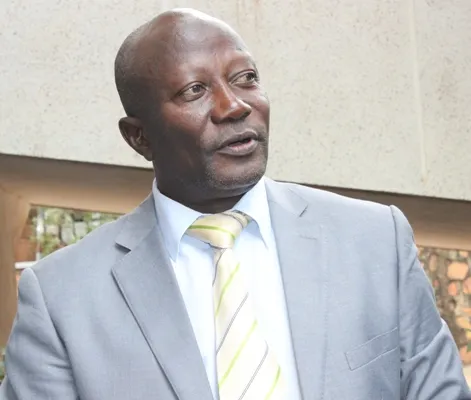
The revelation was made by David Muhoozi, Minister of State for Internal Affairs while appearing before Parliament’s Defence and Internal Affairs Committee, where he had appeared to provide an update on the mass enrollment and renewal and registration of the new National IDs planned by the National Identification and Registration Authority (NIRA).

Minister Muhoozi informed the Committee that unregistered citizens are recorded as 17.2million, while the cards expiring by January 2025 are 3.7million and the cards expiring beginning August 2024 to December 31, 2025 are 15.8 million.

NIRA is also required to deliver data to Electoral Commission by November 30, 2024, that will be used as the national voters’ register ahead of the 2026 general elections, but the June 2024 scheduled mass enrollment exercise faced delays occasioned by the due diligence that had to be conducted on the company that was meant to deliver the national security system that was meant to be used in the exercise, but the contract was finally signed on July 8, 2024.

Wilson Kajwengye (Nyabushozi County) asked NIRA to explain how it will ensure that the exercise isn’t delayed by the numerous closure of business whenever there are ceremonies taking place at Kololo Independence Grounds, which also hold the headquarters for the Authority.

“You reported to us that NIRA lost 30 working days by occupying Kololo. When you have these tight deadlines, when you don’t even miss a single hour for you to deliver, we would like you to allay fears of the nation that continued occupancy of Kololo ceremonial Grounds and subsequent ceremonies as they come, will not affect delivery of timeline,” said Kajwengye.

Joel Ssebikaali (Ntwetwe County) wondered if Ugandans with expired IDs will be in position to enter East African Nations that allow Ugandans without valid National IDs entry.

He remarked, “If you say you are continuing with the IDs that are expired in Uganda, you are using the law of Uganda internally, how about outside Uganda because we are obliged to observe international treaties, and once my ID is expired, can I go to Rwanda, can I go to Kenya using the ID that is expired?”

Christine Kaaya (Kiboga DWR) decried the poor planning and execution of public projects within Government, saying this has led public agencies to normalizing the practice of extending deadlines for activities they fail to implement on time.

“We are concerned about the extension of expired issues in Uganda. LCI, LCII, Women Councils are expired but we are moving on, now IDs. There are even some leaders who have expired, although they continue to be in service,” said Kaaya.

Last month, Internal Affairs Ministry spokesperson, Simon Mundeyi explained that Ugandans can still use the National IDs whether expired or not to East African countries, with whom Uganda has a tripartite agreement.

“Some of these countries like Kenya and Rwanda specifically we have a tripartite agreement to allow the citizens of these countries to travel to each other’s country using the National ID. There has been confusion recently especially for those who are carrying expired National IDs,” Mundeyi said.

Mundeyi added that Ugandans can still process passports or open bank accounts using their expired national IDs. 

Stories Continues after ad

Why does the Sudan peace process flop each time?

Sudan war generals.


By Dr. David Matsanga in Geneva


I write this article about Sudan crisis with huge grief -Why does it flop each time it is started? Why would the parties in Sudan Peace process choose to disregard the invitation and reject an invite from a mediation process in Geneva? 

There are very many underlying reasons. These are the reasons that we must find out and expose as peace lovers in the world. The selection of biased mediators or biased envoys to this noble cause.

Additionally, the mediation venues that are threat to both generals of the two sides, the inclusion of countries that have taken sides, the ICC factor of General Bashir that Americans are perusing and lastly the cheap rivalry of the Gulf States.

I have been a regular critic of the mediation process of Sudan conflict that is influenced by the same countries that have invested interests in Sudan. I have now been vindicated by events that are unfolding in Geneva since August 14, 2024.

I have criticized the AUC, AU plus IGAD for their failure to understand the conflict of Sudan. It should not be a surprise to these bodies as to why the parties just don’t show up at a peace process? They are the obstacles. Take IGAD for example that seems to have little faith in itself about the conflict.

It is mind boggling to any scholar of conflict resolution in the world as why a conference can go on without those who are beneficiaries not attending?  This must ring a bell to those who are bent on holding this conference for their countries political expediency the case of USA elections in November 2024.

I believe that the Sudan question betrays a severe lack of depth and an inability to deal with the slightest complexity where the real world is concerned. Some countries in Geneva think conflicts are like economic investments where you pick a money to support winning and losing teams. No. It is more than that.

In the minds of those who support some of the Sudan parties at such a peace conference, they think offering strident peace to Sudan without criticism would bring peace in the region. The problem of most of those calling these conferences is that they have picked on them for criticism. Again No.

My criticism is not that I have picked the “anti-peace process ” side, like I’m supporting football team of Liverpool or the other. No. I’m supposed to do something that will help the peace process progress. We are dealing with political economics and geopolitics of the region where Sudan finds itself in.

First of all, my criticism of the Sudan peace process started way back before the 2022. I have regrets for what I have said about the conduct of the peace process that does not have participation from the suffering groups .

I have written several letters to both the Sudanese Generals Mohamed Hamdan Dagalo and Abdel Fattah al-Burhan, UN Secretary General António Guterres, the AUC Chairperson  HE Dr  Moussa Faki Mahamat, to the Executive Secretary of IGAD Dr. Workneh Gebeyehu  expressing deep concerns about the vested interests of the Gulf States.

The entire record of the peace process from ceasefire is wrongly done . It has not always been about the delivery of peace but delivery of interests to the extent that countries like UAE and Saudi Arabia have taken sides that makes it difficult for peace to come yet people are dying on the ground in Sudan.

The dangerous “Gulf state politics” that has thrown the entire region in war mood is slowly shifting toward the entire Red Sea in the last two years. Mine remains an entirely valid criticism.

I have offered criticism that has revolved around concerns of monopoly of knowledge of war by Gulf states that divided Libya and that have failed to bring Unity in Libya.

The Same countries mentioned by both sides as stumbling blocks to the peace in Sudan are not ashamed of being catalysts of the conflict. They are on table here. They are doing business using the plight of the people of Sudan who face a huge humanitarian crisis and potentially turning Sudan into an arms market – This is also my very valid concern as a Pan African.

The truth is that the peace process is a saga. Ideally, the arms dealers should not attend the peace process because they are interested parties that want to control the sale of arms to warring parties in the process. That is the reason why it has failed.

This is one of the sticking point that has made peace talks impossible. The UN knows the truth but the UNSC members themselves embroiled in the conflict of Sudan have not be useful in stopping this malaise. 

However, where the choices presented are between foreign potential supporters of both sides and the imposition of dependence on foreign external arms racketeers that have killed millions in Africa while operating in air-conditioned offices in Gulf States, I have chosen to support neutrality. 

This is our continent and if we don’t speak out and call out those who want to export war to our continent we shall be the ones to be blamed. I will never campaign for the continued poverty of my continent for the benefit of some rich states in the Western Hemisphere and the Gulf States. That is why today we call them out to stop selling arms to the both sides.

I have done my best as an African to point out the flaws in the Sudan Peace Process so as to find a solution for the suffering masses of Sudan who are on the run from the fighting groups. That is the situation here.

Remember the men, women and children that are trapped by war in Sudan.


God bless

Stories Continues after ad

Alcohol bill failed to address real-sector challenge of illicit alcohol and trade- Parliament 

A report on the proposed 2023 Alcohol Bill tabled by Sylvia Nayebare, the Chairperson Trade and Tourism Committee of Parliament, has been dismissed following findings of the joint committees on Trade and Tourism that observed that the bill fell short of addressing the real challenges like illicit trade in alcoholic drinks, alcohol abuse, quality control, enforcement mechanisms, personal freedoms, economic impact, and efficacy of such controls, among others in the alcohol industry.

Whereas the Bill was expected to fill the gaps that were created by the repeal of the Enguli (Manufacture and Licensing) Act, Cap. 86, and the Liquor Act, Cap. 93, regarding the regulation of the manufacturing, sale, and consumption of native alcohol, to the contrary, the Bill sought to exempt the manufacture and consumption of illicit or native alcoholic drinks for domestic use from the application of the law.

MPs have asked the government to put in place a robust legal and regulatory framework with specific provisions to curb illicit brews, including native brews, which are increasingly becoming commercialized in Uganda.

This, was said during the discussion on the Alcoholic Drinks Control Bill 2023, in a session presided over by Deputy Speaker Thomas Tayebwa on August 13, 2024. The bill was rejected by Parliament after Attorney General Kiryowe Kiwanuka advised that it violated the 1995 Constitution. 

MPs said illicit alcohol creates an unfair playing field for legitimate alcohol players since it does not pay related taxes. 

“It is therefore critical that the government applies the right level of focus to curb significant problems of illicit alcohol trade in Uganda by putting in place a robust legal and regulatory framework with specific provisions to prohibit illicit alcohol, including native brews,” said Nayebare, who also doubles as Gomba Woman MP. 

Quoting the 2021 Euro Monitor study on the illicit trade of alcohol in Uganda, she said that the regulated alcohol industry only accounts for 35% of all alcohol consumed in Uganda, while illicit alcohol accounts for 65%.

According to the report, commissioned by NiIe Breweries to assess the market size of alcohol beverages in Uganda, of the 110.6 million liters of alcohol in Uganda, 67.7 million are illicit, accounting for 52% of the alcohol beverage market share. Informal alcohol in Uganda is estimated at Shs2 trillion but is not monitored by the Uganda National Bureau of Standards (UNBS) or the alcohol content. 

This presents a risk of increased illicit trade and an unleveled playing field for the legitimate or formal sector, which contributes over 30% to the total government revenue.

Illicit alcohol is any alcohol that does not fulfill official requirements, including payment of relevant taxes, necessary health standards and permits, and compliance with local laws and norms. In Uganda, illicit alcohol consists of three categories, illicit homebrew, illicit or illegal imports, and the sale of counterfeit and surrogate alcoholic beverages. Illicit alcohol homebrew is popularly known as Waragi, Malwa, and Tonto, and surrogate alcohol includes pharmaceutical alcohols such as ethanol. Illicit alcohol is a danger to society and the economy in many ways. 

While presenting the report from the joint Trade and Health Committee, Nayebare said illicit alcohol not only poses serious health risks to its consumers but also denies the country much-needed revenue in the form of unpaid taxes. 

“The Committee observes that under the Memorandum of the Bill, the Bill does not clearly state the problem that it is trying to cure. It is important to identify what mischief the bill intends to cure. The other question is whether the proposed regulation is the best course of action in the circumstances. The bill also does not indicate how it intends to eliminate illicit trade in alcoholic drinks.” 

According to the Euro Monitor report, Ugandans shifted towards illicit homebrew, with the highest volume growth over 2017–2020 recorded due to low prices. The report also indicated 18.3% compound annual growth rate value market size of illicit alcoholic drinks increased from $77.8 million in 2017 to $56.8 million in 2020.

Impact of the bill on the tourism sector 

According to the World Travel and Tourism Council (WTC), the tourism sector contributed $2 billion to the economy of Uganda in 2022. This is equivalent to 4.7% of the country’s GDP. In 2023, this contribution will increase to 5.5%. This is still $400 million less than what was contributed during pre-#Covid 2019.

The committee recommended that the tourism sector requires all the support it can to recover from the effects of #Covid-19, and the legal framework should support and not hurt the recovery of the sector.

The bill seeks to regulate the manufacture, importation, sale, consumption, and advertisement of alcoholic drinks; the time allowed for the sale of alcoholic drinks; the prohibition of the online sale of alcoholic drinks; the prohibition of the selling of alcoholic drinks packed in sachets and plastic bottles; and the stipulated places for the sale of alcoholic drinks. 

The Alcoholic Drinks Control Bill was read for the first time on Tuesday, November 14, 2023, by Opendi Sarah Achieng, Woman Representative, Tororo District, and it was referred to the Joint Committee on Health and the Committee of Tourism, Trade, and Industry for consideration in accordance with Rule 129(1) of the Rules of Procedure of Parliament.

Attorney General’s Advice 

The Attorney General, Kiryowa Kiwanuka, said that from the onset, the private member did not get the benefits of the assistance from the Attorney General’s Chambers as required by Article 94(4). 

He said that the bill, in our view, offends Article 93(a)(2) of the Constitution, which provides that you shall not proceed with the bill that has a financial implication on the consolidated fund on an alteration of the same.

“That’s why Article 94 (4c) and Rule 121 of the Rules of Procedure require a member to get assistance from the department that manages the bill that is before the house. And from the reading of the majority report, you can actually clearly see that the implementation of this bill, if passed by the house, will have an effect on the consolidated fund,” said Kiryowa. 

He added, So, for that reason alone, I will be moving that the bill be rejected by the House.” However, I wish to add that clause 1B of this bill actually contradicts the very purpose of this bill. This bill also creates another challenge, which is that it offends a number of laws that have been passed by this house.

Stories Continues after ad

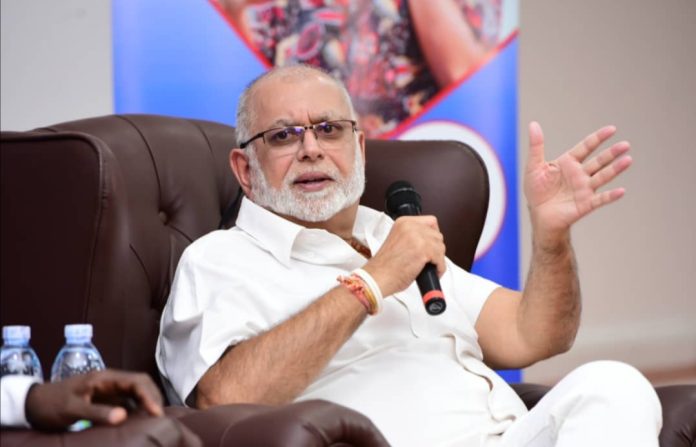
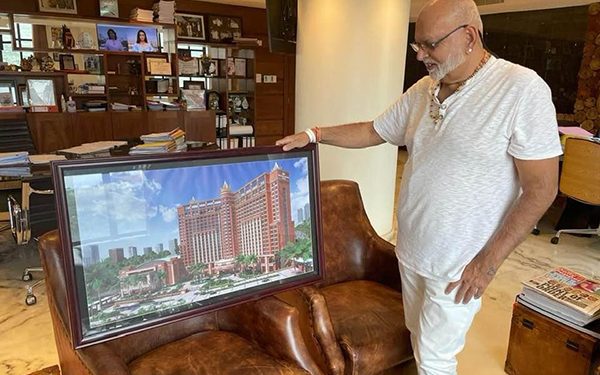
India@78: Sudhir Ruparelia’s transformative impact on Uganda’s real estate business is unmatched

Tycoon Sudhir Ruparelia, whose work in real estate speaks volume on the Ugandan Market.

Today Thursday August 14, 2024 marked 78 years since it attained freedom from the British Raj.

The Indian Independence Movement was a series of historic events in South Asia with the ultimate aim of ending British colonial rule. It lasted until 1947, when the Indian Independence Act 1947 was passed.

The first nationalistic movement for Indian independence emerged in the Province of Bengal. It later took root in the newly formed Indian National Congress with prominent moderate leaders seeking the right to appear for Indian Civil Service examinations in British India, as well as more economic rights for natives. The first half of the 20th century saw a more radical approach towards self-rule.

So as India celebrates her 78th Independence, Indians across the global do so for the success story not only home but that come along with them.

In Uganda, we commemorate with the Indian Association that has been key in Uganda’s economic transformation.

 However, we particular pick on City Tycoon Sudhir Ruparelia alias “Kampala’s Landlord” is the top-most Indian investor who has changed the face of the Ugandan real estate business. As the proprietor of the Ruparelia Group of companies his influence has been pivotal in shaping the sector. 

Sudhir Ruparelia’s enduring success in real estate business is a testament to his unwavering commitment to quality, innovation, and strategic foresight and he stands as a beacon of excellence, setting the standard for real estate ventures in Uganda’s dynamic capital city.

Ruparelia owns prime residential and commercial properties in Kampala which have employed several Ugandans. His investments are mainly in real estate, education and broadcasting with other assets such as the Landmark Crane Towers and City House.

Ruparelia also owns the most prestigious hotels including the Speke Hotel, Kabira Country Club and 5-star Resort and Conference Centre in Munyonyo which hosted the Commonwealth Conference in 2007 and also the recently concluded G77 and NAM summits.

Ruparelia’s ideal in real estate is at its peak because he says whenever he thinks of real estate, he sources and procures the finest and most durable building materials.

“As Ruparelia Group, we are committed to delivering the highest quality leaving no detail untouched,” he notes.

He adds that many people want to invest in real estate business but the amount of money required to invest in the sector scares them away and yet success in the real estate sector only comes if one does not borrow money from banks and other lending institutions.

“It is a good business, but if one makes a mistake and over-stretch themselves it will cause their downfall,” he reveals.

The Ruparelia Group assembles a project management team that boasts significant experience in the construction industry and can give a project a long-lasting life.

“To ease life for our tenants, the development includes the fitted modern sprinkler fire suppression systems, fire pumps with back-up generators among others,” Ruparelia expresses.

There are lifts and CCTV cameras in most of Ruparelia’s buildings for safety and the Group wants their clients to be happy for a long time and they are sure that all of the buildings in Kampala offer that.


“For example, in some seasons, high-end luxury property is the catch. However, that could change in a year and the momentum could shift to affordable entry-level rentals,” he says.

Ruparelia also suggests that one should regularly seek professional input from lawyers, engineers and accounts when it comes to construction rather than using shortcuts.


Other companies that have greatly contributed to Uganda’s economy include Meta Group of companies, Mukwano Group of companies among others.

Kamya, a special hire driver, says that when Ruparelia discusses enterprises or real estate business, many people will recognize him as a major investor because he employs a large number of people in Uganda.

“We love such business people who give Ugandans jobs and they also advise others on how to start their businesses,” Kamya appreciates.

Stories Continues after ad

Former Kyambogo don sent to High Court for trial over defilement of visually impaired girl

Dr. Eron Lawrence.

Former Kyambogo University lecturer, Dr. Eron Lawrence, has been committed to the High Court for trial over allegations of defiling a 16-year-old visually impaired girl.

The state presented a summary of evidence to the Nakawa Chief Magistrates court presided over Ms Christine Nantege, alleging that Dr. Lawrence sedated the girl with a tablet and water before defiling her.

Last week, Kyambogo University Vice Chancellor dismissed Dr. Eron from the institution over this obnoxious issue and revealed that the decision was made during the 196th meeting of the Appointments Board Disciplinary Committee on July 24 and assured that he will not be reinstated even if his sentence is complete.

According to the evidence, the victim and three other girls attended a conference in Nairobi with Dr. Lawrence. Upon their return, he offered to drop each girls home, but instead took the victim to a secluded area where he allegedly defiled her.

The victim reported feeling thirsty, and Dr. Lawrence gave her a bottle of water, which made her black out. When she regained consciousness, she found herself in the back seat of the vehicle, with her knickers wet and feeling pain in her genitals.

The state alleges that Dr. Lawrence, who was HIV positive and in a position of authority over the victim, committed the crime on October 12, 2023.

The evidence includes a DNA report matching Dr. Lawrence’s DNA to the victim’s clothing, a toxicological analysis report showing he had taken a male dysfunctional drug, and CCTV footage.

The court document also reveals that Dr. Lawrence denied the allegations but admitted giving the victim water. His vehicle was impounded, and items including handkerchiefs, a silver pack containing a tablet, and plastic containers were recovered.

The presiding Chief Magistrate committed Dr. Lawrence to the High Court for trial, citing the completion of investigations.

According to the charge sheet, it is alleged that on October 12,2023 between Kyambogo University and Namugongo Nsawo village in Wakiso District performed a sexual act with a 16-year-old with a disability when he is HIV positive and also a person in authority over her.

Dr Eron committed the crime while he was a Dean of the Faculty of Special Needs and Rehabilitation and the victim was a student in a secondary school in Mukono District.

Stories Continues after ad

Equity Bank sends 113 EPL scholars to top global Universities         

The Equity Group Foundation has sent 113 Equity Leadership Program (ELP) scholars who have secured admission and scholarships to join 71 global universities.

The scholars, eight of them Ugandans and some of them refugees, have secured scholarships valued at $21,497,646 for the 4-year duration of their undergraduate studies in 22 different countries. The 113 scholars are drawn from the Equity Leaders Program in four countries – Kenya (82), Rwanda (21), Uganda (8) and the Democratic Republic of Congo (DRC) (2).

Speaking at a dedication and flag- off ceremony to celebrate the scholars before they travel outside the country for their studies, Dr. James Mwangi, Equity Group Foundation Executive Chairman challenged the students to be agents of change, leveraging the knowledge, values and skills they will acquire to address Africa’s development challenges.

“As you embark on this journey, remember to stay adaptable and embrace every challenge with integrity. Embrace the journey ahead and be open to different cultures and perspectives and let your unique qualities shine. Build strong networks and innovate to create lasting solutions for your community and invest in your ability to overcome challenges and find new approaches as this will be your greatest asset,” he said.

Dr. Mwangi emphasized the role of the scholars in driving Africa’s socio-economic growth, particularly within the framework of the Africa Recovery and Resilience Plan (ARRP) a multi-pronged, private sector driven and holistic solution to achieve social and economic transformation of Africa championed by the Equity Group.

“By establishing your networks and contributing ideas and solutions on how to bolster Africa’s economic potential, you can grow trade and investment on the continent, you can expand markets and accelerate technology adoption to elevate our potential,” he said. “Your contributions will be instrumental in creating a more prosperous future for our continent.”

The Equity Group leadership led by Equity Group Foundation Executive Chairman, Dr. James Mwangi (centre) together with the Equity Leaders Program (ELP) scholars who will be joining 71 global universities in 22 Counties.

The scholars will be joining universities in different continents across the globe including North America, South America, Europe, Asia, and Africa.

Under EGF’s Education and Leadership Development pillar, the scholars who were also on boarded into Equity Bank’s paid-internship program, benefited from a comprehensive two-month College Counseling program where scholars received expert guidance on essay writing, university selection, and exam preparation. Additionally, a week-long boot camp equipped them with the necessary skills to navigate the transition to university life and thrive as global scholars.

Speaking during the Airlift Ceremony, Jackie Bakku, an ELP Scholar joining European University Viadrina to study Bachelor of Science in International Business Administration, noted, “The support network I found within Equity during my ELP journey has been instrumental to my success.”

ELP Scholars display their congratulatory letters at Uganda Church House today

She grew up at Ayilo I Refugee Camp, later Studied at St Mary’s Assumpta Girls School in Adjumani, where she scored 13 points.

“There were times I gave up and didn’t believe in myself. The Equity team’s encouragement was like a steady hand guiding me through challenging moments and it’s incredible to think about how my life has transformed from the adversity of a refugee camp to securing my place at a world-class university. This journey would not have been possible without the support system that Equity has provided,” Bakku said.

Trevor Paul Egaru, an ELP Scholar who hails from Gulu, is joining Moscow Aviation Institute, Russia USA, to study Aeronautical Engineering,

“In 2022, I sat for my UACE, emerging as the top boy in my district and joined the Equity Leaders Program. I was interning at Equity Bank Kajansi Branch. My advice to fellow scholars: let’s use our brains to help our communities. This opportunity should inspire us to do more for our country and people,” Pegaru said.

Francis Ocen, an ELP Scholar, joining the University of Georgia, USA, to study for a degree in Poultry Science said, “I must say the application process was tough, requiring endless dedication and a firm belief in my goals. But the love and firm hands of Equity staff kept pushing me to do my best. I am glad I didn’t give up because I would have missed studying a course that I am passionate about. I love farming and I want to change my community by setting up modern poultry farms.”

With this year’s admissions, a total of 970 students have successfully been admitted to prestigious universities on fully funded scholarships. This intake includes 13 students who will be joining Ivy League Universities including: Brown University (1), Columbia University (1), Harvard University (4), Princeton University (2), Cornell (1), and University of Pennsylvania (4).

The Equity Leaders Program (ELP) is an initiative of the Equity Group Foundation, established in 1998 to cultivate a new generation of future leaders. The first ELP scholar is today the Equity Group Chief Operating Officer. By identifying and nurturing top-performing students nationally from within Equity Group’s subsidiaries, ELP has become a catalyst for transformative change.

Stories Continues after ad

How Masaba Cooperative Union was overpaid but also got milling, printing machines

Fredrick Gume Ngobi, State Minister for Cooperatives.

The controversy surrounding the theft of billions of shillings meant for compensation of cooperatives that lost properties during the previous wars in Uganda continues to take different angles and shapes.

According to documents from the Internal Auditor General seen by Eagle Online, Masaba Cooperative Union was overpaid over and above the amount the original verified claim.

The report showed that the Cooperative was paid Shs9, 762, 500,000 which was above the verified amount of Shs7, 838, 499,100.

But even after getting overpaid, the Cooperative was given money to buy a flour milling and processing machine and commercial printing equipment.

The former Permanent Secretary Ministry of Trade, Industry and Cooperative Grace Choda and Eng Jacob Lumonya allegedly influenced the process to pay the cooperative.

According to the letter written by Eng. Lumonya on behalf of Ps Choda dated August 2, 2021, he said a market comparative survey was done and put the figure of flour milling and processing machine at shs1.3b. Eng Lumonya who works with the ministry of Works and Transport was a member of the Inter-Ministerial Committee to do verification of the cooperatives’ claims. 

“By Comparative analysis and inflation, the fair market value of the plant and machinery of M/S SIMU MILLS is in the region of Shs1,300,000,000” he wrote

The same Cooperative was also given additional shs5b for commercial printing equipment. But according to a dossier done by one of the investigative bodies shows Eng Lumonya single handedly without the knowledge of other members of the Inter-Ministerial Committee that was formed to do verification of these claims.

“This was done without the inter-ministerial with the Inter-ministerial committee but again single handedly by Eng Lumonya signing for the PS,” the document reads.

With this information, questions are being asked why the investigations by the Criminal Investigations Department (CID) and the State House Anti-Corruption Unit shouldn’t investigate these cases.

The Internal Auditor General report in three versions done on the cooperatives dated September 1, 2021 also raises questions why it has no signatories and has different stamps.

Strangely the same report also shows how West Nile Cooperative Union which had been paid “miraculously replaced” by West Acholi Cooperative whose balances had been cleared.

“Suddenly West Acholi whose balances had all been cleared is re-introduced and now owns a claim of Shs4.952 billion,” the document says

More stories on this saga to come

Stories Continues after ad

Lawyer Matovu’s claim of Shs30b legal fees award from ex-UPTC staff causes contention

Embattled city lawyer who is embroiled in another payout scandal. He is currently on remand in prison.

The claim of 20% legal fees by city lawyer John Matovu from former Uganda Posts and Telecommunications Corporation (UPTC), Uganda Communications Commission and Post Bank Limited staff has caused contention.

The contention arose from questions of fairness, agreed-upon terms, and the legal basis for the fee structure where Mr. John Matovu, a lawyer representing over 1600 former employees of the above companies demanded 20% onto his personal account to cater for his “legal fees” and “administrative costs incurred during the procurement of the benefits.

The ‘smart lawyer’ wants Shs30 billion out of the released Shs64 billion meant for part settlement of the pensioners.

Matuvo wants the money to be deducted before the government through the Ministry of ICT and National Guidance disburses the 80% to the individual accounts of the beneficiaries.

According to documents seen by Eagle Online from Court of Appeal, Justice Muzamiru Mutanga Kibeedi, noted that Matovu and the claimants have been struggling with the case for over twenty years since 2003 and that any postponement of the fruits of a 20 years’ struggle would be anywhere near fair and he granted the application in the terms sought by the applicant. However, it has been established this ruling was ex-party.

“I have taken into account the fact that the dispute which is the subject of the matter revolves around mode of payment. Ordinarily once counsel is instructed by the client, then he is the one legally mandated to represent the clients at all phases including at the payment stage. Further, that once payment is made to one’s advocates, it is in law as good as payment to the client himself with the consequence that the debtor becomes discharged upon effecting the payment to the advocate,” he noted. Nevertheless, majority of the claimants have rejected this allegation stating that Matovu didn’t consult them as he forged the consent of a few who signed the Ministry of ICT letter headed papers.

Matovu also wrote to the Attorney General alerting that the issue of fees legal payment was first brought to the attention of the Court of Appeal in 2018, 2020 and was determined and disposed off on December 22, 2021 in a ruling by Justice Stephne Musoota of the Court of Appeal in which he ordered that the lawyers’ fees payable in HCCS No.135 of 2003 was 5.6 billion representing 2.4% of the then decretal sums in percentage terms.

However, in a consent order between Uganda Posts Limited and Benard Mweteise plus Attorney General did not indicate payment of the 20% to Matovu but to engage government through its stakeholders to take up and settle the entire claim and the costs arising.

Government owed pensioners Shs320 billion and has been paying in phases. However, with the release of Shs64 billion in this quarter, Matovu is demanding for Shs30 billion as legal which has left the pensioners disenfranchised and objecting the figures. Government has so far in total released Shs176 billion out of the Shs320 billion. Figures from Ministry of Finance indicate that 55% of the pension has been settled.

In a letter dated December 8, the Ministry of ICT sought guidance from the Attorney General whether lawyers, Matovu and Matovu Advocates should be paid the 20% of the award of the pensioner.

The Ministry had also been advised that the government should not get involved in enforcing any agreements that may have been executed between the lawyers representing the beneficiaries and the pensioners.

The lawyer did not appeal Justice Musota’s ruling to prove his dissatisfaction instead he later in June 2022 went back to the same court and filed a new application which has come with a different ruling. This is tantamount to asking the court that the law firm be paid twice for the same services. In view of the state, we request for your guidance on the interpretation of the two rulings” read part of the letter.

Matovu claimed that his application is supported by the Affidavits of Rosemary Birungi and Justus Ampaire which the Ministry of ICT averted that the two pensioners have no mandate to represent the pensioners on this matter and therefore, their affidavits are not binding to other pensioners.

Matovu further claimed that several pensioners signed individual forms on the headed paper of the Ministry of ICT by which the signatories consented to the 20% deduction from their lump sum pension.

“The question is ‘since when did a government working in the capacity of payment for pensioners become a debt collection agent of a private law firm to use their headed paper?’ We aver that we find this arrangement very odd and not binding,” The Ministry inquired.

The Ministry further inquired that in a view of the more than 20 years pensioners waiting period to be paid taking into account the ailing and aging situation of the pensioners, any pre-condition by the ‘Paymaster’ to sign the consent form before payment is tantamount to signing under duress.

On contrary, other pensioners wrote on September 19, 2022 to the Permanent Secretary of Ministry of ICT and copied to the Speaker of Parliament, Attorney General, Prime Minister and Finance Ministry desisting with reasons the 20% deduction from pensioners’ dues.

In response, the Deputy Auditor General, Jackson Kafuuzi said that the office of Attorney General is bound by court decisions regardless of whether they like them or not. However, he clarified that beneficiaries in such cases should be paid directly and so that they settle their indebtedness to whoever they owe personally.

Kafuuzi guided that if any of Matovu and Matovu Advocates’ clients are dissatisfied and disapprove of the decreed 20% deductions should seek to have the Court Order set aside in any way varied to their advantage.

The same law firm and its lead partners were cited in another case and this time, the Anti-Corruption Unit together with the Criminal Investigation Department and Office of Director of Public Prosecution yesterday arraigned Mr. Matovu, before the Anti-Corruption Court on charges of theft by an agent and conspiracy to defraud government of over Shs4 billion.

The accused, while entrusted as one of the advocates for Busoga Growers Cooperative Union to pursue war loss compensation claims from the government, conspired and stole the funds.

Stories Continues after ad

Court halts the hearing of corruption charges against MPs Namujju, Mutembuli and Akamba

Legislators, Mutembuli, Akamba and Namujju in the dock.

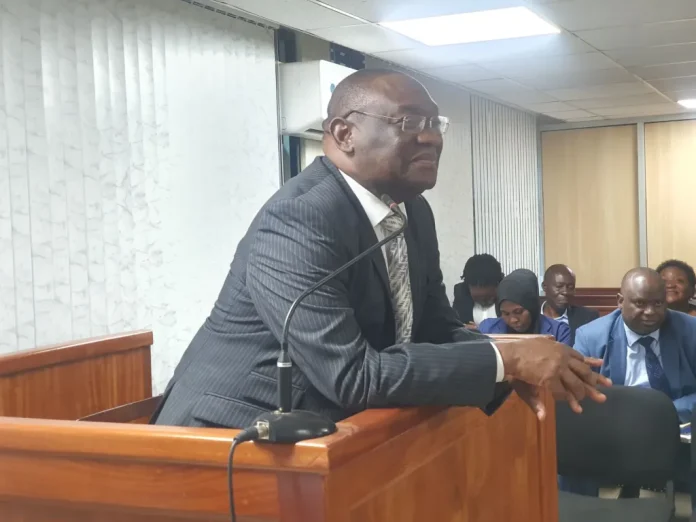
The Anti-Corruption Court has temporarily suspended the trial of Lwengo District Woman MP, Cissy Namujju, Busiki County MP Paul Akamba, and Bunyole East County legislator Yusuf Mutembuli. 

The decision follows an application by Akamba’s lawyer, Jude Byamukama, citing rights violations. The MPs are accused of soliciting bribes from Mariam Wangadya, the chairperson of the Uganda Human Rights Commission (UHRC).

Justice Lawrence Gidudu ruled that it will first consider an application filed by Akamba, who seeks to have the charges against him dismissed.

Through his lawyer, Jude Byamukama, Akamba avers that his human rights were violated before, during, and after his re-arrest. Akamba was rearrested on July 14, shortly after he was released by the court.

He claims that he was detained in an ungazetted place and later charged with six others, including MPs Michael Mawanda and Mudimi Wamakuyu, Trade Permanent Secretary Geraldine Ssali Busuulwa, Ministry of Trade official Leonard Kavundira, and Lawyer Julius Kirya Taitankonko, who are equally still on remand.

Since the Attorney General is the respondent in the matter, Gidudu directed that he be served and set August 23 as the date for hearing the application.

Earlier this month, the Chairperson of Uganda Human Rights Commission, Mariam Wangadya told court that Mutembuli told her that all Ministries, Departments, and Agencies (MDAs) give MPs a 5% budget cut before their budgets are passed. This was amidst pleas to have the commission’s budget increased.

The prosecution alleges that while at Hotel African on May 13, 2024, the three solicited a bribe from Wangadya, to enhance the commission’s 2024/25 budget. The group would take 20% of the enhanced budget.

The trio pleaded not guilty and were subsequently remanded to Luzira Prison. Their arrest followed President Yoweri Museveni’s remarks revealing that there is a racket of people in the ministry of finance and parliament taking bribes to approve the budgets of various government agencies.

Stories Continues after ad