Stanbic Bank
Stanbic Bank
17.6 C
Kampala
Stanbic Bank
Stanbic Bank
Home Blog Page 204

Money lenders association pledge to clean-up industry after Museveni’s roar

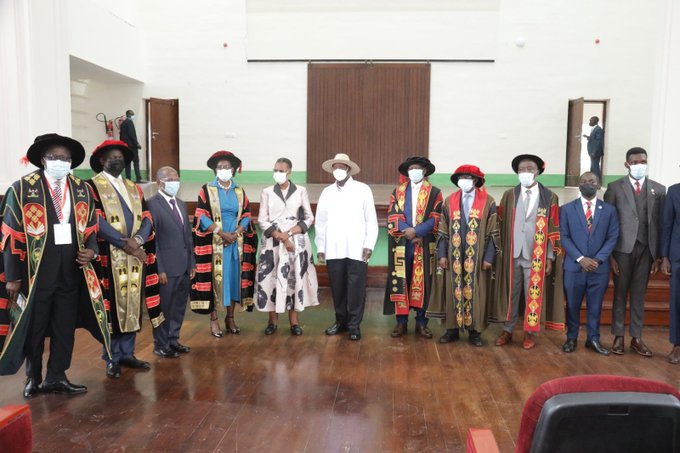
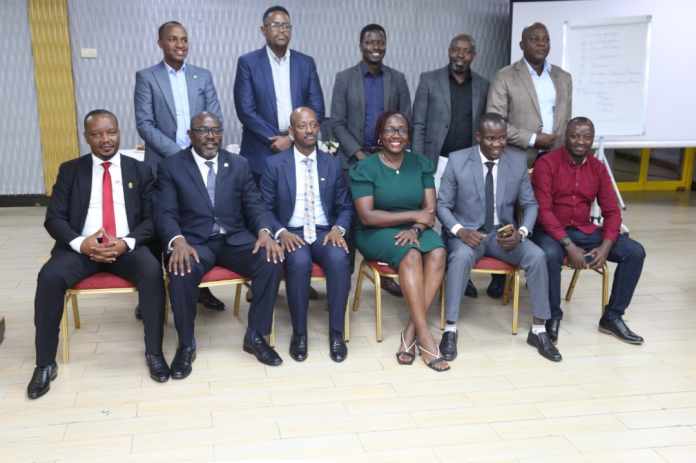
Members of the Uganda Money Lenders Association.

Some of the notorious money lenders include; iKash, Flypesa, banana app, Loango, Nile, gloan app, Boom loan, Mpacash, Cashpulse, Credit lab, Flowerloan, Wind-money, Lever credit, Cashmate, Ezee loan, Kasente, Sunlit, Wind money, Cashflow, Moji, Ozzy money, Mumu money, Kasquick, More Pesa, Muno, My loan, Real Cash, Star Loan, Get Cash, Quick Sente, Ok Loan and Fair Credit. 

The Association of Money Lenders in Uganda (AMLU) has pledged to eliminate unlicensed money lenders, following President Yoweri Kaguta Museveni’s recent roar to punish them for charging high interest rates on Ugandans. This move aims to enhance the integrity of Uganda’s financial system.

AMLU brings together legitimate and ethical money lenders, providing essential financial services to sectors where traditional banking may be limited or inaccessible.

On Monday, Museveni announced plans to introduce a law aimed at regulating extortion by money lenders. Noting, “I want to bring a law to fight money lenders. Money lenders are becoming a problem, they go to our villagers and cheat them, charge them extortionately yet our inflation rate is very low at 3% or even lower but you find these people charging them 240%” he said.

According to the Uganda Microfinance Regulatory Authority (UMRA), by September 2023, 1,302 licensed money lenders had extended loans to approximately 2.5 million customers, with an outstanding portfolio of Shs1.2 trillion. This significant figure underscores the sector’s substantial contribution to economic activity.

Money lenders provide crucial capital for farmers to purchase seeds and fertilizers, shopkeepers to stock their shelves, and transport operators to maintain their vehicles. By offering financial services to those who might otherwise be excluded from the formal banking sector, AMLU members promote financial inclusion, driving economic growth and poverty reduction.

The association acknowledges public concerns about exploitative money lenders and is actively addressing these issues. 

“We understand the concerns surrounding exploitative lending practices and are committed to eradicating them,” said Jonan Akandwanaho, AMLU Chair. Adding, “Our goal is to work closely with regulators and stakeholders to ensure our services continue to support economic growth while protecting borrowers’ interests.”

To address these concerns, AMLU proposes strengthening its working relationship with UMRA. This collaboration will identify non-compliant actors and reinforce the legitimacy of licensed money lenders.

Regular engagement sessions with UMRA will focus on enforcing minimum ethical standards. AMLU will also offer its platforms for skills development and awareness programs to promote good lending practices.

“The money lending sector has a critical role in providing financial access to millions of Ugandans,” said Ben Kavuya, founding Chairperson and Member of the Advisory Council. “We are dedicated to improving our practices, enforcing ethical standards, and ensuring our members operate responsibly.”

Through constructive dialogue and cooperation with regulatory bodies and the government, AMLU believes it can address concerns, improve industry standards, and continue to serve Ugandans responsibly, safeguarding the country’s financial future.

Stories Continues after ad

74 percent of Uganda’s population is literate—2024 census results

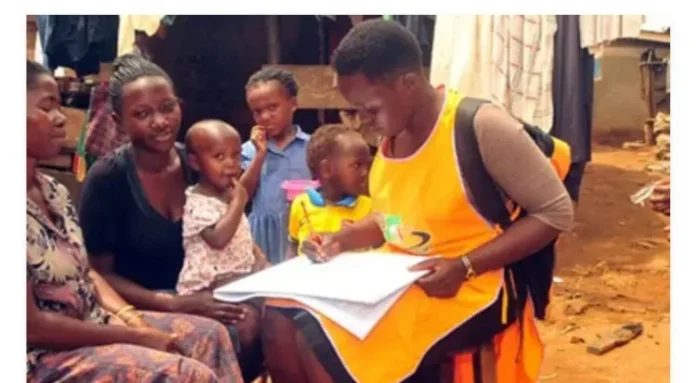
Enumerator conducting the census.

At least 74 percent of Uganda’s population is literate, the just released 2024 national census results indicate.

On May 10, the Uganda National Bureau of Statistics kicked off the technologically driven National Population and Housing Census (NPHC). The first day of enumeration, May 10, 2024, was approved a Census Public Holiday by the Cabinet and declared by the President to ensure easy recall of the Census Night during the period of enumeration.

The National Population and Housing Census was last conducted in 2014. At that time, Uganda had a population of 34.6 million people. The census is carried out every 10 years, and this year’s exercise was expected to take place on August 24 and 25, but it was postponed due to the delayed procurement of tablets.

According to the results, the total population for Uganda as of May 2024 based on the National Population and Housing Census 2024 stands at 45,905,417 persons from 10,698,913 households. Male population is recorded at 21,566,736 while the female population is 24,338,681 persons.

It further shows that children comprise 50% of the total population in Uganda. Youth (18-30 years) are 23.5%, and older persons (above 60 years) are 5%. Those aged 31-59 years are 21.5%.

Kampala toped all the regions with 11.1 million people, followed by Busoga with 4.4 million, West Nile with 3.9 million, Ankole with 3.6 million, Tooro with 3.4 million, Bunyoro with 2.8 million, Lango with 2.6 million, Teso with 2.5 million, Bukedi with 2.4 million, Elgon with 2.2 million people, and others.

The report says that the Buganda region has the highest number of literates, with 85.5%, followed by Ankole with 78.9%, and Karamoja with the least number of literates, 25.4%.

“74.2% of the children in Karamoja aged 6–12 years, 32.2% in West Nile, and 27.9% in Acholi are out of school,” the report highlighted. Buganda, however, had the least number of children who are out of school, with 18.4%.

The report highlighted that in the line of religious affiliation, Christians form the biggest portion of the population. Eight out of 10 Ugandans are Christians. Catholics form the largest percentage at 37.4%, followed by Anglicans at 30.0%. Pentecostals have increased to 14.7% from 11.1% and Muslims at 13.6 percent.

It also showed that more than 13 million people migrated in the last five years. Of those, 7.6 million were female, while 5.8 million were male. 

Stories Continues after ad

Speaker Among calls for intensity in awareness campaigns on dangers of corruption

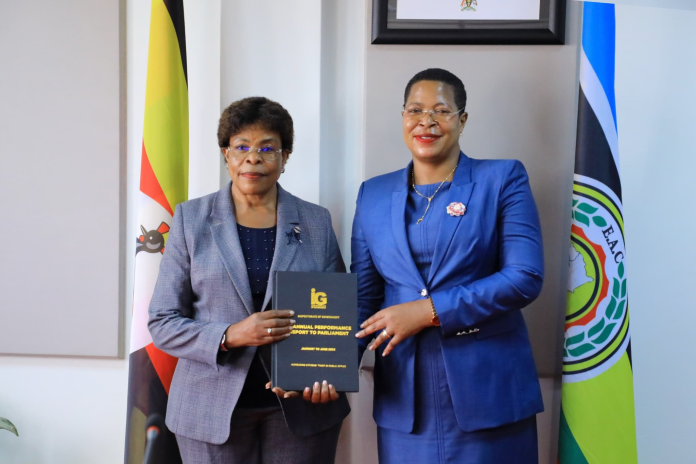
IGG Beti Kamya handovering the report to Speaker of Parliament Anitah Among.

Speaker of Parliament, Anitah Among has urged the Inspector General of Government (IGG), Beti Kamya intensify awareness campaigns on the dangers of corruption in order to fight the vice in the country.

She made the call while receiving the Bi-Annual Performance Report of the Inspectorate of Government, after Kamya reported an increase in the number of complaints filed between January-July 2024 totaling to 1657 complaints, compared to 1276 reported between July-December 2023. Kamya attributed the increment to the increased engagement with the public on the need to report corruption cases.

Submitting the report, Beti Kamya, revealed that only Shs2.3 billion was recovered from corrupt individuals between January to June 2024, out of the Shs15.7 billion that had been recommended for recovery. She also said that about Shs10 trillion is lost annually to corruption which accounts for over 44% of the annual revenue collections being lost to corruption.

“I know you create awareness to the public about corruption and about misuse of Government funds, I want you to increase that awareness outside there. Create friendship with these people, when you create friendship with these people, they will be able to tell you, so and so took this, and that will be a starting point. So, when you create awareness, it will reduce some kind of corruption that is outside there,” said Among.

The Speaker also thanked the IGG for consistently handing over her performance reports to Parliament as required in the Constitution, saying there are complaints amongst some MPs that some agencies aren’t handing in their reports to Parliament as required.

“We want to thank you for the good work you are doing, we do appreciate the work you are doing for this country and it is you and us to bring change in this country and we will always give you our unwavering support as Parliament towards that. And I want to ask the Chairperson Legal and Parliamentary Affairs Committee that when the IGG comes to knock on your door, I want you to accord them the highest support that they will always need because they do a great job which we appreciate as a country. We as Parliament, we know what you are doing and the country knows what you are doing,” remarked

Kamya also decried the widespread corruption in recruitment for Government jobs, revealing that the Inspectorate conducted research on the cost and extent of corruption in recruitment of staff by district service commissions in 20 districts and results showed rampant corruption in the recruitment process.

“We also conducted a cost benefit analysis of outsourcing private recruitment firms, by Government departments and agencies. The research was undertaken as a result of various complaints received on issues of irregular recruitment, by Commissions and preliminary findings confirm, widespread corruption in recruitment process in Government, especially, the district service commissions,”

Kamya noted that if the Inspectorate of Government was adequately funded, the corruption figures could drop down.

“A scientific study was done and this country is estimated to lose up to Shs10Trn per year to corruption. If the Inspectorate of Government was adequately funded, this figure could significantly come down. Shs10 trillion per year is nearly 44% of our domestic revenue. So, when 44% of our generated domestic revenue is lost to corruption and nothing much is done to stop that, I think it is overlooking a much important sector,” said Kamya.

The IGG also urged Ugandans to join the war on corruption noting that during the reporting period, the Inspectorate of Government prioritized prevention of corruption as the main approach in the elimination of corruption and promotion of strict adherence to the rule of law. Adding, “Through this prevention method, we have opened up the Inspectorate of Government to the public, so we are inviting the public to join the war against corruption and to recognize themselves as victims of corruption.”

Stories Continues after ad

Tropical Bank in crisis over Shs21b Sudhir loan default amidst leadership infighting and court battle

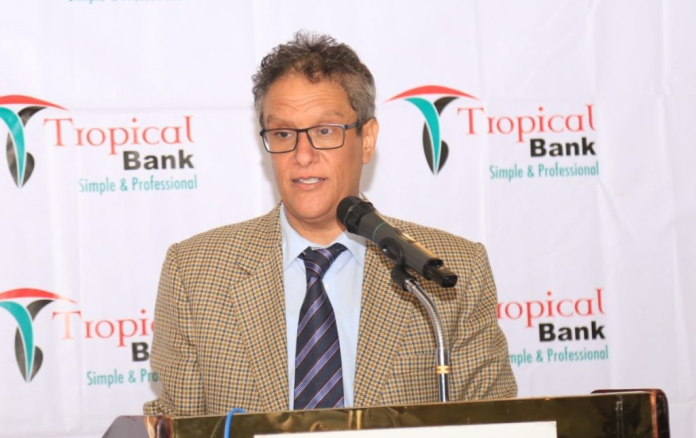
World Bank’s Country Director for Uganda, Kenya, Rwanda, and Somalia, Mr. Qimiao Fan.

Tropical Bank Uganda Limited and its client, IT Office [U] Limited, find themselves at the center of a scandal after failing to repay a loan of over Shs6.84 billion to Prime Finance Company Limited. The debt has since risen to over Shs21 billion, shaming the local banking sector and causing panic within both institutions.

Prime Finance Company Limited is owned by city tycoon Sudhir Ruparelia

On March 13, 2020, Prime Finance Company Limited extended a Shs5.7 billion loan to IT Office [U] Limited, with Tropical Bank Uganda providing a written guarantee to repay the loan if IT Office [U] Limited defaulted. The loan, which came with a hefty 5% monthly interest, was to be fully repaid by July 9, 2020. However, four years have passed, and not a single payment has been made, leading to the significant accumulation of the debt.

In February 2020, IT Office [U] Limited requested the loan from Prime Finance Company Limited to settle outstanding debts it owed to Tropical Bank. In exchange, Tropical Bank agreed to an irrevocable undertaking, binding both itself and IT Office [U] to repay the loan and any accrued interest. The funds from the Prime Finance loan were intended to help IT Office [U] Limited pay off its Shs5.7 billion debt to Tropical Bank and secure an even larger loan of Shs10 billion.

Despite these assurances, Tropical Bank now refuses to honor its commitment. The bank’s board claims that the transaction was fraudulent; an allegation dismissed by the bank’s senior staff, including the Executive Director, Head of Credit, and Legal Manager. These officials assert that they followed all internal procedures, signing the undertaking to benefit the bank, not themselves personally.

The bank’s staff claims that after signing the irrevocable undertaking on behalf of the bank they sealed the same irrevocable undertaking with the official bank seal, meaning all was okay, and therefore the bank had to pay over Shs6.840 loan to Prime Finance Company Limited.

Under the irrevocable undertaking, Tropical Bank Uganda as the undertaker guaranteed that the debt was recoverable against them with 5 percent interest per month until full repayment, regardless if their client IT Office [U] Limited was able or unable to repay the debt.

IT Office [U] Limited’s loan of Shs5.7 billion from Prime Finance Company Ltd helped the bank to recapitalise as demanded of it by the Bank of Uganda [BoU], the regulator of the banking industry in the country. This money from Prime Finance Company Limited would enable IT Office [U] Limited to secure another Shs10 billion from Tropical Bank Uganda since the bank still held the company’s collateral including various pieces of land, and a motor vehicle worth billions of shillings.

Indeed, staff of the bank confirm that IT Office [U] Limited started overdrawing its account after paying the Shs5.7 billion debt to Tropical Bank Uganda, making the bank a beneficiary of Prime Finance Company Limited’s money.

However, despite several reminders that Tropical Bank Uganda pays the debt to Prime Finance Company Limited, the former has not been cooperative. The bank in a bizarre move shifted goal posts, running to BoU, claiming that the Shs5.7 billion loan transaction was a result of fraud, but the response from Prime Finance Company made Bank of Uganda advise Prime Finance Company that it seeks remedies available to it under the Contract Act 2010, BoU having recognised that there was an irrevocable undertaking on the side of Tropical Bank Uganda to repay the loan and interest at the time of signing the agreement.

Following BoU advice, Prime Finance Company Limited, through its lawyer, would on December 4, 2022, file a suit against IT Office [U] and Tropical Bank Uganda, and on August 30, 2021, court ruled in favour of Prime Finance Company Limited for recovery of Shs6.84 billion, repayable at interest rate of 5 percent per month on the decretal sum till payment in full and costs in the main suit and application be borne by the respondents. But since the ruling, no repayment has been made by Tropical Bank Uganda.

In a meeting at Tropical Bank Uganda when the Shs5.7 billion was being sought, its officials assured Prime Finance Company Limited that the bank would personally repay the money guaranteed by July 9, 2022, yet the bank officials also agreed to pay interest on principal sums in case the bank failed to pay the money on an agreed date.

From the documents in possession of this website, it appears Tropical Bank Uganda Board of Directors want to use the excuse of not authorising their senior staff to transact loan business to defraud Prime Finance Company Limited, especially under the influence of the current Executive Director, formally heading the Recovery Department of the bank at the time of this transaction.

At the time top managers threatened to tear each other into pieces to rise to the top. It’s such internal strife and the bank’s financial struggles that became unbearable for Former ED, Head of Credit department, and of operations, prompting them to hand in their resignation letters.

The infighting, knowledgeable sources say sharply divided management into two rival gangs, with Managing Director Abdul Aziz Mansul, Head of Compliance Caroline B Ogwang and then Head of Recovery Joweria Mukalazi teaming up to throw out ED and his allies in the bank owned by Libyan government through the Libyan foreign bank. Ogwang and Joweria were cited as those who ruthlessly fought off the former Executive Director so that they could take up his position. Indeed Joweria Mukalazi was elevated to the position of bank’s Executive Director in acting capacity.

It’s against this background that most of the bank’s sensitive transactions that were carried out under Former ED’s stewardship were allegedly queried as result of his rivals’ biased actions, something that affected both clients and general bank operations.

Stories Continues after ad

Gov’t lost Shs10b in revenue from gold export levies- Cosase report 

Gold miners in Mubende Uganda.

Government lost Shs10.6328 billion in revenue from gold export levies in the financial year ending June 2023, the Committee on Commissions Statutory Authorities and State Enterprises (COSASE) report indicates.

Last year, URA recorded exports of various mineral products and ore. These included other Portland cement, whether in the form of clinkers, other hydraulic cement, Quicklime, salt and pure sodium chloride, raw salt, plasters of calcined gypsum, limestone flux, limestone and other calcareous stone used in the manufacture of lime, cement clinkers, Portland white cement, other clays, sandstone, natural barium sulphate, slaked lime, pebbles, gravel, broken or crushed stone, and others.

Extracts of other minerals exported except gold during the period under review established that 6,469 instances worth a total of Shs72.49 billion, whereby 22 mineral categories were exported without any assessment and payment of the resultant taxes on exportation.

The committee stated that the tax body noted that despite several requests and correspondence with the Ministry of Energy and Mineral Development aimed at ensuring that the enabling law is passed to facilitate the collection of export levy on processed gold and other minerals, there has been no enabling law to date.

“Information provided to the Committee indicates that lack of assessment and payment of the resultant taxes on exportation hindered tax collection, leading to a loss of over Shs10.632 billion in revenue from gold export levies alone,” the committee stated in the report.

MPs observed that whereas it was within the ambits of the Minister to issue statutory instruments or regulations as a remedial intervention measure to facilitate revenue collection on mineral exports, she failed to do so, resulting in a colossal loss of a combined Shs72 billion during the period under review.

“Inability by URA to assess and subject the exporters of the affected minerals to tax was caused by the absence of legislation, thereby exposing the government to the loss of revenues that could have been realised on mineral exportation,” MPs said in the report.

Stories Continues after ad

Gen. Otafiire re-establishes NGO Bureau as department in Internal Affairs Ministry

Internal Affairs Minister Gen. Otafiire.

The Minister of Internal Affairs, Maj. Gen. Kahinda Otafiire has signed the Statutory Instrument 2024 No. 73, officially dissolving the National Bureau for Non-Governmental Organisations (NGO Bureau) as a semi-autonomous entity.

This move re-establishes the NGO bureau as a department within the Ministry of Internal Affairs with key implications such as centralized control, increased scrutiny, and alignment with government priorities. The change aims to streamline and increase efficiency.

The instrument, titled The Non-Governmental Organisations (Amendment) Act, 2024 (Commencement) Instrument, set the commencement date of the act for September 30, 2024.

“n exercise of the powers conferred upon the Minister responsible for internal affairs by section 1 of the Non-Governmental Organisations (Amendment) Act, 2024 this Instrument is made this 4th day of September, 2024.This Instrument may be cited as the Non-Governmental Organisations (Amendment) Act, 2024 (Commencement) Instrument, 2024. The 30th day of September, 2024 is appointed as the date on which the Non-Governmental Organisations (Amendment) Act, 2024 shall come into force,” read in the letter.

The NGO Bureau, which had operated with some level of independence since its creation, will now be fully absorbed into the ministry’s structure and be headed by the secretary and will be reporting to the Permanent Secretary of the Ministry of Internal Affairs.

The Bureau’s mandate is to register, regulate, coordinate, inspect, monitor and oversee all NGO operations in the country.

Stories Continues after ad

Ithuba Uganda wins 3 awards at African marketing confederation awards 2024

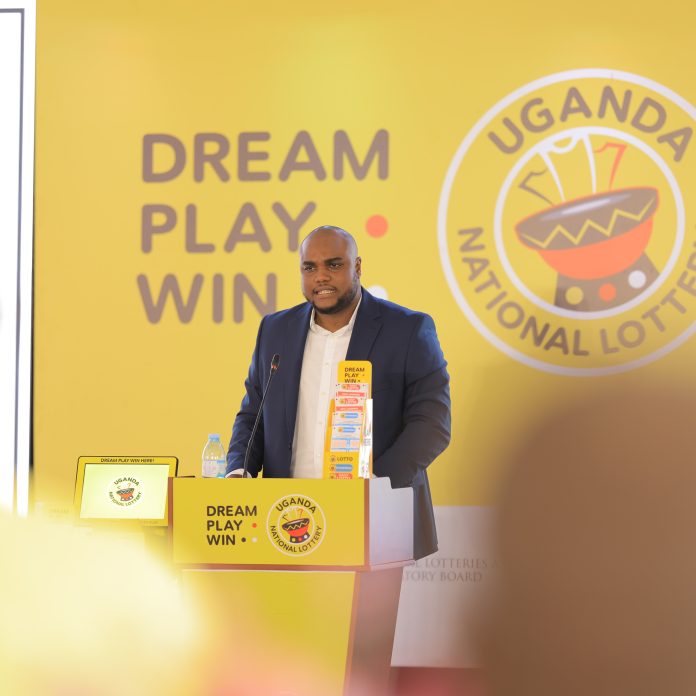
ITHUBA Uganda, the official operator of the Uganda National Lottery, is proud to announce its outstanding achievement of winning three prestigious awards at the African Marketing Confederation Awards 2024. The company’s innovative “Billionz Zizino” thematic campaign was recognized for its creativity and effectiveness, reinforcing ITHUBA Uganda’s commitment to engaging with its audience.

Held over the weekend in Mombasa, the awards ceremony celebrated the top marketing teams and brands from across Africa. ITHUBA Uganda’s PowerBall Billionz Zizino campaign secured the following accolades:

  • SILVER – Best Social Media Campaign of the Year: Acknowledging the campaign’s impact and engagement on social media platforms, this award cements ITHUBA Uganda’s digital marketing prowess.
  • BRONZE – Campaign of the Year: This coveted award recognizes the most exceptional marketing effort of the year, showcasing ITHUBA’s innovative approach to lottery marketing.
  • BRONZE – Best Use of Local Insights: This award highlights the campaign’s success in leveraging local culture and consumer behavior, creating meaningful connections with audiences.

Michelle Van Trotsenburg, Head of Marketing and Corporate Affairs at ITHUBA Uganda, expressed her excitement: “We are honored to receive these recognitions, which reflect our dedication to creativity and setting up a seamless National Lottery. Through dynamic visuals, strategic partnerships with local influencers, and engaging activations, we’ve created a campaign that speaks to Ugandans. The results speak for themselves, with over UGX 2.5 billion paid out to winners across all divisions and an increase in retailer acquisition from 350 to over 820 agents. This campaign has truly transformed the landscape of our lottery operation considering we have just been in operation for four months.”

The “Billionz Zizino” campaign captivated audiences with dynamic visuals and a robust go-to-market strategy. Key components included strategically placed billboards, partnerships with local influencers, engaging below-the-line (BTL) activations, catchy jingles, and compelling winners’ stories that fostered trust and excitement. This versatile campaign also adapts seamlessly across different lottery games, such as “Millionz Zizino” for SPORTSTAKE 10 and DAILY LOTTO.

The African Marketing Confederation Awards celebrate excellence in marketing across the continent, and this year, brands from Kenya and Uganda stood out among the finalists. ITHUBA Uganda’s achievements are a testament to the hard work and dedication of its marketing team.

For more information about the Uganda National Lottery, upcoming draws, and how to play, please visit www.nationallottery.go.ug or follow us on our social media channels. For inquiries, please contact the toll-free Player Helpline at 0800 334433.

Winnings are tax-free. Players must be 18 years or older. Play responsibly.

About ITHUBA UGANDA

ITHUBA Uganda is the newly appointed official operator of Uganda’s first National Lottery, authorised and regulated by the National Lotteries and Gaming Regulatory Board (NLGRB). With a licence that spans a decade, our mission is to operate and transform the National Lottery into prosperity for Ugandans.

Finance Minister Matia Kasaija awarded the National Lottery operating license to ITHUBA UGANDA LIMITED for a tenure of 10 years.

The National Lottery offers numerous benefits, including the generation of funds for public projects, the creation of job opportunities, and direct contributions to the economic and social sectors. At the heart of our operations is the commitment to responsible play. ITHUBA Uganda is devoted to fostering a safe and responsible gaming environment, implementing measures to prevent problem gaming and ensure the welfare of our participants.

ITHUBA Uganda is determined to set the standards of ethical and efficient conduct in National Lottery operations. We strive to be the gold standard for lottery operations in Uganda and to serve as a model of excellence on a global scale.

Stories Continues after ad

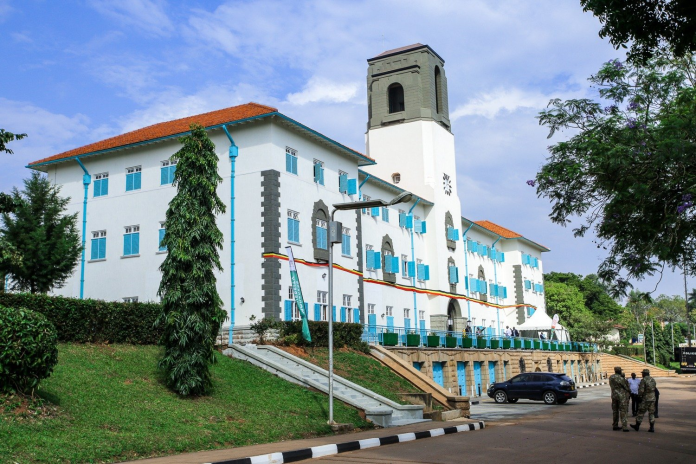
Museveni inaugurate restored Makerere University iconic ivory tower building

Restored Makerere University main building.

President Yoweri Museveni and his wife who doubles as Minister of education and Sports Janet Museveni have inaugurated the newly reconstructed ivory tower building at Makerere University.

In September 2020, the country woke up to sad news of a fire that gutted the Ivory Tower building. According to the university, the fire started on September 19, 2020, destroying the top floor before the second floor, which left the left wing housing the human resources and records department razed down.

In August 2021, cabinet passed a resolution directing Ministry of Finance, Planning, and Economic Development to releases Shs21 billion for the reconstruction building.

Speaking earlier today, Mrs. Museveni said the memory of September 20, 2020, when the iconic ivory tower was engulfed in flames, remains vivid. Makerere’s main building is more than just infrastructure; it symbolizes the history and evolution of higher education in Uganda and is a masterpiece of architecture.

“We celebrate its restoration and the newly ignited hope for the future. The restoration of the Main Building symbolises a rising again of Makerere University. The restoration design undertaken by our academicians from the Makerere University College of Engineering, Design, Art, and Technology (CEDAT) is even more fulfilling,” she said.

She said the restoration exemplifies how the academic expertise can be practically applied to deliver public goods and services. We hope to see more initiatives where academicians directly support government projects, extending beyond the gates of Makerere.

Museveni congratulated Makerere upon restoring the main building which had been burnt. “I am truly happy to take part in commissioning this building. I participated today as a tour guide, showing the new guests today, where we used to host our students’ debates,” he said.

“My main issue was the students’ records, which, thanks be to God, were safe when Prof. Barnabas Nawangwe told me that the records were safe. I told him, all is well; we shall build another building,” he said.

Prof. Nawangwe said September 20, 2020, was probably the saddest day in the history of Makerere University. In the early morning of that fateful day, our iconic main administration building was gutted by fire. When I arrived at the scene with my wife Susan a few minutes after midnight, it seemed like the end of the world.

“That night, it seemed like all Makerere, including the then Chancellor Prof. Ezra Suruma and Council Chair Mrs. Lorna Magara, woke up and surrounded their beloved iconic building. I recall the sad faces of the Makerere community and the brevity of some of our staff, particularly my Personal Assistant Gordon Murangira and Prof. Eria Hisali, who braved the heat and led groups of volunteers to rescue some important items from the burning building, including the Chancellor’s mace, academic regalia and the University seal.” he stated.

He said Prof. Suruma and my wife Susan were praying hard to God to save the building. Maybe that is why only the offices of the Chancellor and Vice-Chancellor survived the fire. Early the following day, Maama Janet visited the site and comforted us.”

He said the just opened iconic Main Administration Building of Makerere University, designed and built by Ugandan architects and engineers trained by Makerere University and funded entirely by the government of 

Stories Continues after ad

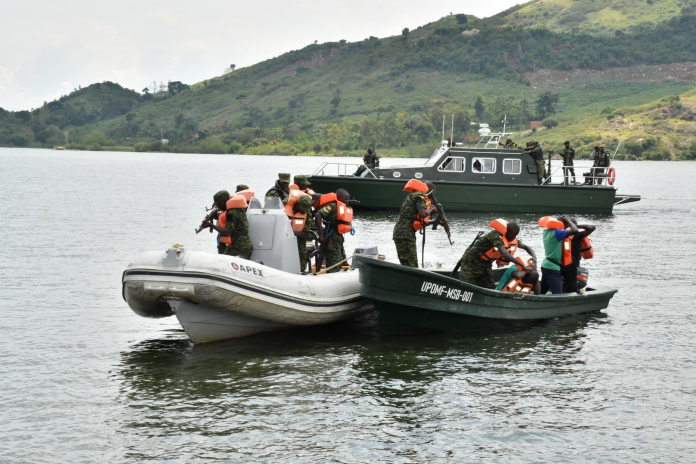
UPDF graduates 30 officers in Coxswain marine course

Thirty soldiers from the Uganda Peoples’ Defence Forces (UPDF) Marine unit have successfully graduated from a rigorous three-month Coxswain Marine course at the Ntokolo Marine Base in Magamaga Town Council, Mayuge district.

Speaking at the graduation ceremony, Brig Gen Alex Olupot, Joint Staff Training and Doctrine, underscored the importance of continuous training in line with the UPDF’s professionalisation efforts, a commitment made by the President of Uganda and Commander-in-Chief, H.E. Yoweri Kaguta Museveni.

“The Commander-in-Chief promised a professional UPDF to Ugandans that is capable of operating in all aspects like on Land, in Air, and on the water to guarantee Uganda’s security, what you are witnessing today is a manifestation of that pledge,” Brig Gen Olupot remarked.

He encouraged the graduates to remain committed to lifelong learning, highlighting the expectation of further courses to sharpen their skills for enhanced service delivery.

Brig Gen Olupot also commended the positive feedback from local communities, a reflection of the UPDF’s adherence to its core values as outlined in its doctrine.

He further emphasised the vital relationship between the UPDF and civilians, drawing an analogy: “You civilians are the water, and we, the UPDF, are the fish. Just as fish cannot survive without water, we cannot survive without you.”

Brig Gen Michael Nyarwa, Commander of the Marines Brigade, hailed the strategic importance of the newly acquired skills, noting that this foundational course would pave the way for more advanced training in marine operations.

He expressed his appreciation for the ongoing guidance from the Commander-in-Chief in shaping a professional military force.

Resident District Commissioner Thomas Matembe commended the marines for their exemplary relations with the local community, praising their skillset as evidence of UPDF’s readiness to protect Uganda.

The top performers of the course were recognised: Pte Ogoi Michael (Best Coxswain), Pte Abuzireki Martine (Best in Academics) and Pte Waligo Stephen (Best Leadership). 

Stories Continues after ad

Toward global standards for menstrual products: SHF allocates grant to Swedish Institute for Standards to bolster participation of emerging economies

Menstrual Products.

Global UN fund awards $250,000 grant for the development and adoption of global menstrual product standards. Supporting Low- and Middle-Income Countries (LMICs) in their participation in the SIS-led process will contribute to the removal of one of the biggest barriers to access quality, affordable menstrual products for hundreds of millions of women and girls.

GENEVA/STOCKHOLM October 2, 2024 – The UN’s Sanitation and Hygiene Fund (SHF) is announcing a grant of $250,000 to the Swedish Institute for Standards (SIS) to support the participation of Low- and Middle-Income Countries (LMICs) in the development of global quality standards for menstrual products. As the secretariat of the technical committee of the International Organization for Standardization (ISO) Menstrual Products – SIS will use the funding to provide National Standards Bodies (NSBs) from LMICs with training, partnering with more experienced NSBs and supporting up to 10 countries to fully participate in all aspects of the standardization work and encourage subsequent national adoption.

Today, more than 600 million women and girls in Low- and Middle-Income Countries (LMICs) – a staggering one in three – rely on toilet paper, rags and other non-purpose-made materials to manage their menstruation, impacting their health, education, socio-economic participation and ultimately their future. While single-use pads or tampons are prohibitively expensive for many, more affordable menstrual product innovations face an important barrier to be imported and sold in LMICs: the lack of global product standards which are fundamental to manufacturing, retail and trade. The ISO Technical Committee led by SIS, is presently working to develop global menstrual product standards in four categories: single- and multi-use products worn externally or internally, covering everything from pads and tampons to period-underwear and menstrual cups, by mid-2027. The resulting standards will become the global framework but national adoption depends on each country. Currently, a little over 15% of LMICs are represented in the technical committee, while their needs are the greatest.

“It is hard to believe that the process to develop global quality standards for products used by almost 2 billion people every month has only just started recently and it is up to us now to ensure that this process is truly global,” said Sue Coates, Deputy Executive Director SHF and Lead for Capital M, SHF’s market-led moonshot for menstrual health.

“Global quality standards will have direct impacts on the menstrual product choices available to the millions of women and girls in LMICs currently relying on non-purpose-made materials. By ensuring an inclusive, global process, we can level the playing field, for countries to participate in the process and adopt the standards nationally, for markets and businesses to grow and scale, and most importantly, for women and girls and the choices they make,” Coates added. 

Stories Continues after ad