Stanbic Bank
Stanbic Bank
18.6 C
Kampala
Stanbic Bank
Stanbic Bank
Home Blog Page 2052

Bayimba2016 announces BELL sponsorship, second round of acts

L-R: Roy Tumwizere, National Promotions Manager, Uganda Breweries Limited (UBL), Anja Gobel, Director Goethe Zentrum Kampala/ Uganda German Cultural Society, Alexander Aheebwa, Bayimba Head of productions and Herman Kabubi, Bayimba Artists Coordinator unveil Bell Lager as a partner of the 9th Edition of the arts festival.

In this second round of acts for the 9th BAYIMBA International Festival has announced that Bell Lager has taken on the festival as a sponsor.

Bayimba of the arts has grown from humble beginnings to provide a platform for the arts and culture to shine.

In a manifestation of how much the arts in Uganda have grown, the festival was a celebration of everything from photography, theatre, film, music to poetry and fashion.

This year brings more than 700 artistes from more than 14 countries, with up to 120 performances around the theatre space.

“As an authentic Ugandan brand, we are happy to be partnering with an event such as this one that celebrates and recognizes authentic Ugandan talent. It is our pleasure to enable this great musical experience that will allow people to live and enjoy every moment,” said Roy Tumwizere, National Promotions Manager, Uganda Breweries Limited.

Uganda’s biggest arts and music festival also presented the activities for the three day on:

Second Stage: Located in the theatre upper garden, the space is formerly known for hosting majorly the hip-hop genres, and to look a little different, we’ve diversified the line up of acts that will present at this particular space including; Mbale’s current top hip-hop duo and Sharon Sento and Byg Ben, Hoppy Benny from Gulu, while the Blood Brother’s band will return to do a solo showcase after playing for reggae star Maddox’ set at the 2014/15 Festival, from Germany, we have DJ Wurzelholz, Femme Electronic alongside Ugandan reggae sensation Mighty Son, Jamaica born Anthony Jermaine and the Mataali Group from .

Auditorium: The auditorium will host theatrical groups that include: – Mandragora Circo from Argentina, Zimbabwe’s Lamentations @ 12 and Uganda’s Pride Performers. Other acts announced are; Ugandan Kadongo Kamu maestros Willy Mukabya, Kazibwe Kappo and Fred Ssebbale, a dance piece by dancer and choreographer Faisal Ddamba, along with Vizuri Dance Company, Kanaan Gents and a comedy showcase by the Punchliners. Courtesy of Amakula Kampala Film Festival, a couple of African films will be presented.

Dance Floor: After 8 years of showcasing Fashion at the open space during the Bayimba Festival, at this edition of the – it will be presented as the main voice of this particular space, with a proper catwalk and sitting under Uganda’s fashion mogul Ras Kasozi in a theme dubbed SEED fashion show, Kasozi will be joined by yet another fashion ace Buyi Phil who will be unveiling his Kkolo collection, not forgetting popular highlight activity “Silent Disco” at an extra 5,000 UGX.


Stories Continues after ad
South Sudan’s government, Machar ‘recruit child soldiers’

Both sides in the conflict are heavily armed

More than 650 children have been recruited into armed groups in South Sudan since the beginning of the year, the UN children’s agency Unicef has said.

Supporters of President Salva Kiir and his rival Riek Machar had both intensified their recruitment drives since July, when a new round of conflict broke out, Unicef added.

A senior politician led the recruitment of the boys, some as young as 12, from a village, using intimidation, it adds.

The document indicates that the recruitment of children took place shortly after the UN Security Council approved a resolution about a week ago to send an extra 4,000 troops to South Sudan to protect civilians after a new round of fighting broke out in the capital, Juba, last month, AP reports.

Speaking to the press after visiting South Sudan, Unicef deputy executive director Justin Forsyth said:

“You see child soldiers as you drive along the roads, just in uniforms and who have been recently recruited.”

Mr Forsyth said there was widespread malnutrition and some areas faced a threat of famine: “We have to be honest, we’re doing sticking-plaster jobs. I mean we’re trying to save children’s lives, save mothers’ lives. It’s a sticking-plaster.”

“The only long-term sustainable solution to this problem is if the different parties to the conflict resolve their differences and establish proper governance in South Sudan. And until that happens we’ll continue to be on the brink of this very serious situation, which may tip over.”

Stories Continues after ad

US ready to ‘hand over’ the internet’s naming system

The US is giving up a considerable power over the way the internet functions.

The US has confirmed it is finally ready to cede power of the internet’s naming system, ending the almost 20-year process to hand over a crucial part of the internet’s governance.

The Domain Naming System, DNS, is one of the internet’s most important components.

It pairs the easy-to-remember web addresses – like bbc.com – with their relevant servers. Without DNS, you’d only be able to access websites by typing in its IP address, a series of numbers such as “194.66.82.10”.

More by circumstance than intention, the US has always had ultimate say over how the DNS is controlled – but not for much longer.

It will give up its power fully to Icann – the Internet Corporation for Assigned Names and Numbers – a non-profit organisation.

The terms of the change were agreed upon in 2014, but it wasn’t until now that the US said it was finally satisfied that Icann was ready to make the change.

Icann will get the “keys to the kingdom”, as one expert put it, on 1 October 2016. From that date, the US will lose its dominant voice – although Icann will remain in Los Angeles.

If anyone can, Icann?

Users of the web will not notice any difference – that’s because Icann has essentially being doing the job for years anyway.

But it’s a move that has been fiercely criticised by some US politicians as opening the door to the likes of China and Russia to meddle with a system that has always been “protected” by the US.

“The proposal will significantly increase the power of foreign governments over the Internet,” warned a letter signed by several Republican senators, including former Presidential hopeful, Ted Cruz.

Whether you think those fears are justified depends on your confidence in the ability of Icann to do its job.

It was created in 1998 to take over the task of assigning web addresses. Until that point, that job was handled by one man – Jon Postel. He was known to many as the “god of the internet”, a nod to his power over the internet, as well as his research work in creating some of the systems that underpin networking.

Mr Postel, who died not long after Icann was created, was in charge of the Internet Assigned Numbers Authority (IANA). Administration of the IANA was contracted to the newly-formed Icann, but the US’s National Telecommunications and Information Administration (NTIA), part of the Department of Commerce, kept its final say over what it was able to do.

It’s that final detail that is set to change from October. No longer will the US government – through the NTIA – be able to intervene on matters around internet naming.

It rarely intervened. Most famously, it stepped in when Icann wanted to launch a new top-level domain for pornography, “.xxx”. The government wanted Icann to ditch the idea, but it eventually went ahead anyway.

From October, the “new” Icann will become an organisation that answers to multiple stakeholders who want a say over the internet. Those stakeholders include countries, businesses and groups offering technical expertise.

Best option

“It’s a big change,” remarked Prof Alan Woodward from the University of Surrey.

“It marks a transition from an internet effectively governed by one nation to a multi-stakeholder governed internet: a properly global solution for what has become a global asset.”

Technically, the US is doing this voluntarily – if it wanted to keep power of DNS, it could. But the country has long acknowledged that relinquishing its control was a vital act of international diplomacy.

Other countries, particularly China and Russia, had put pressure on the UN to call for the DNS to be controlled by the United Nations’ International Telecommunication Union.

A treaty to do just that was on the table in 2012 – but the US, along with the UK, Canada and Australia, refused, citing concerns over human rights abuses that may arise if other countries had greater say and control over the internet and its technical foundations.

Instead, the US has used its remaining power over DNS to shift control to Icann, not the UN.

In response to worries about abuse of the internet by foreign governments, the NTIA said it had consulted corporate governance experts who said its the prospect of government interference was “extremely remote”.

“The community’s new powers to challenge board decisions and enforce decisions in court protect against any one party or group of interests from inappropriately influencing Icann,” it said in a Q&A section on its website.

As for how it will change what happens on the internet, the effects will most likely be minimal for the average user.

“This has nothing to do with laws on the internet,” Prof Woodward said.

“Those still are the national laws that apply where it touches those countries.

“This is more about who officially controls the foundations of the Internet/web addresses and domain names, without which the network wouldn’t function.”


Stories Continues after ad
Ultimate Guide to Uganda Premier League matchday one

The most bizarre and anticipated season in Uganda football toptier’s history, the first league game at now artificial Lugogo pitich, an aging scoring specialist in Bokota Kamana to take aim and the West Nile territory newcomers Onduparaka dreaming of victory.

Uganda Premier League 2016 starts in a few hours at 4:00pm live on Azam TV. Here is your ultimate guide to the matchday one!

azam

Sponsorship deals have been signed, and season and club membership cards launched. Some coaches and players, too, have since changed loyalties.

KCCA, who also launched a season ticket worth Shs300,000, have led the way in the build-up to the 2016/2017 Azam Uganda Premier League (UPL) season, adding Britam and Prime Media to the list of sponsors that include Star Times.

Onduparaka have also since secured a Shs180m shirt sponsorship deal with Betway, while Bright Stars announced sponsors, Lato Milk, in a two-year pact reported to be Shs130m.As if not to be left out, Hema Water joined a partnership with URA.

SC Villa, who have Star Timers on a five-year deal, managed to keep in the media by snapping musicians Winnie Nwagi, Irene Ntale and Leila Kayondo in an ambassadorial role, something Express did earlier with earlier Bobi Wine, and Vipers with radio presenter Abbey Mukiibi. We could go on and on.

Yet time for all the hype and trash talk in the media must take a break now, if only for 90 minutes.

The trigger to the new campaign goes off with eight fixtures across the country on Friday. Surely that should quench domestic football’s three-month thirst, at least for the start.

Coaches move

The season starts with some changes on the technical benches, with Abdallah Mubiru taking over at Vipers and Mujib Kasule returning to the Proline dugout due to Baker Mbowa lack of the required topflight qualification.

It is the same coaching qualification story at Onduparaka, where veteran Leo Adraa has replaced Allan Kabonge, the man who brought the Arua side to the Premier League.

Paddy Kintu, formerly of relegated Maroons, has also since moved to Lweza, where ex-SC Villa coach Ibrahim Kirya is the technical director.

Former SC Villa striker and URA coach, Alex Isabirye, has taken over at newly promoted Kirinya-Jinja SS, while Frank ‘Video’ Anyau assumes the former’s role at Bul.

Ex-Proline and KCCA Coach Abdallah Mubiru is now in charge of Vipers assisted by his former boss, George ‘Best’ Nsimbe.

Morley Byekwaso, the ex-SCVU and Simba coach, also joined his former club KCCA as manager Mike Mutebi’s assistant, replacing Sam Ssimbwa, who was sacked mid-way last season.

Cameras, lights, action

Much attention will inevitably be at the Phillip Omondi Stadium, Lugogo, where champions KCCA begin their title defence against JMC Hippos.

League newcomers, Onduparaka, at home to Soana in Arua should provide an electric atmosphere. You don’t expect less from a side that were synonymous with filling stadiums last season. They also filled their Green Light Ground duering a pre-season friendly against Maroons.

But it is not just about KCCA and Onduparaka. Eight matches are lined up on the day, with all 16 clubs in action. Below we break it down for you.

KCCA vs JMC Hippos

Knowing that pressure will be on him to both defend the title and impress in the Caf Champions League, manager Mike Mutebi went for youth and experience in his recruitment. He brought back Brian Majwega from Simba in Tanzania and Denis Rukundo (Maroons), as well as the tested legs of Vincent Kayizzi (Express) and Geoffrey Sserunkuma (Lweza). It is these and Muzamir Mutyaba in the midfield that he will rely on to hold off a James Odoch-coached JMC Hippos at Lugogo. Odoch added in his ranks Herbert Kakande, a defender acquired from Kakamega in Kenya. He will need that defence.

Bul vs Proline

Anyau has beefed up his Bul squad with prospects like Paul Mujampwani from Bugembe Junior and Tibita Hamisi from his junior side. But the experienced coach also knows that experience will come in handy, the reason he brought Edgar Lusige from Sadolin, Andrew Kalule (SCVU) and Hassan Musana from Bright Stars among others. On the other hand, Mujib Kasule has promoted a big number of youngsters from the Proline academy. He has also brought on board Farouk Musisi (Lweza), Sam Kintu (Express), defender Yusuf Mukisa (Vipers) and former KCCA striker Nelson Ssenkatuka among others. Kasule will want to secure early points to avoid early jitters when Proline travel to Kakindu in Jinja.

Express vs Lweza

The Red Eagles have an outlook of a collection centre of sorts. Coach Wasswa Bbosa’s Express have four rejects from KCCA including striker Herman Wasswa, midfield player Sam Ssenkoomi, Emmanuel Opio and Isaac Sserunkuma. Vipers’ trio of John Semazzi, Mike Mutyaba and Allan Kyambadde also form part of the otherwise experienced party that should be able to fashion a result off Lweza in the Wankulukuku derby. Yet Lweza also ooze promise having brought in veteran coach, Kintu, and Kirya from Villa. Kintu has since boosted his squad with Owen Kasule (KCCA), Karim Ndugwa and James Kasibante (all SC Villa) among others.

Kirinya Jinja vs URA

Coach Kefa Kisala’s URA take a shot trip to Bugembe Stadium to face newcomers, Kirinya-Jinja SS, knowing anything less than a trophy this season will have his employers’ heads turning. With last season’s marksman Robert Ssentongo all but out, Kisala went foreign; bringing in Bokota Kamana (Rwanda) and Nigerians Emmanuel Ibe Obina (Mathare Utd) and Harry Gentle Frank (Sofapaka) among others. URA will hope to contain the pressure that normally comes with teams braced for relegation skirmishes. Jinja have indeed braced themselves for the fight by bringing in experience in Edward Kakembo (Soana), John Wakalayita, David Kiiza, Mike Kawooya (all Bul) and Caesar Sapeo (SCVU) among others.

Police vs SC Villa

With a new man, Deo Sserwada, at the helm, SC Villa will hope to hit the ground running. The 16-time league champions have struggled to add to the tally since 2004, and club president Ben Misagga has changed coaches six times in his three years in charge. He has also changed players in the same fashion. Hardly impressive! Alex Kitata (Saints), Bernard Muwanga, Joseph Nsubuga (Bright Stars) and Vitali Tabu (Onduparaka), are some of the new names at Villa and should have a runout when Sserwadda takes his team to Kavumba to face Police. Coach Sam Timbe’s Police have had a quiet transfer activity up until now, with ex-Bright Stars striker Anthony Bongole the only noticeable acquisition. But having lost few, Police should give Villa some shove.

Vipers SC vs Bright Stars

 Abdallah Mubiru begins his reign at Vipers knowing club owner and former Fufa president, Lawrence Mulindwa, will accept nothing but the league title and a sustained run in the Caf Confederations Cup. Assistant coach, George Nsimbe’s shortfalls both in the league and on the continent last season saw him lose the job to his former junior at KCCA. Now they will have to pull together to keep in the boss’ good books. The two-time league champions open their account at home to depleted Bright Stars. With last season’s lead scorer (16 goals) Erisa Ssekisambu abroad for greener pastures, Mubiru has turned to former Soana striker Musa Esenu to address the goal-scoring question. Ibrahim Kayiwa (Express) and Brian Kakaire (Vaxjo Football – Sweden) have also since been added on. In the same vein, Mubiru has released Mike Mutyaba, Allan Kyambadde and John Ssemazi (all Express) among others. Fred Kajoba’s Bright Stars, who have lost most of their experienced stars like goalkeeper Mathias Kigonya (Sofapaka), Anthony Bongole (Police), Bernard Muwanga and Joseph Nsubuga (all SC Villa), could struggle to get out of the blocks despite bringing in Nicholas Ssebwato (from SC Villa), Andrew Kaggwa (Saints).

Onduparaka vs Soana

Last season’s biggest story for reaching the Uganda Cup for final, earning promotion and filling stadiums with huge crowds, Onduparaka start the season as the people’s darling. Whoever visits Arua will surely find out how intimidating the home side can be.  Soana, whose coach Charles Ayiekoh resigned last Friday, are the first to visit coach Leo Adraa’s men. Onduparaka have managed to maintain almost their entire team, only losing out Vitali Tabu (SC Villa) and Nafian Alionzi. The Northern side have since added Dickens Okwi, Mahad Kisekka, Emmanuel Olinga, Peter Duzman and Simon Olema to their ranks. Soana have lost marksman Esenu to Vipers but have brought in Cameroonian Oliviere Akono, Emma Kalyowa (Lweza) and experienced striker Frank Kalanda from URA.

The Saints vs Sadolin Paints

The Saints have since been bought by relegated Simba but will most likely maintain the same for at least a season. Coach Moses Basena remains coach, for now, and will have to get a way of picking 25 players from Saints and Simba squads. They host their first match at Bombo Barracks against Sadolin, who will hope the home side are still be in disarray. Coached by Abdul-Samadu Musafiri, Sadolin have only goalkeeper Franco Oringa, from Bul, as the main acquisition.

@UPL

Stories Continues after ad

Touch my electricity and feel the heat, Museveni tells Besigye

President Yoweri Museveni

President Yoweri Museveni has challenged his political nemesis Kizza Besigye to touch on electricity wires and see if he isn’t electrocuted.

President Museveni told a rally of National Resistance Movement (NRM) supporters in the recently created Omoro district that the opposition and more so Forum for Democratic Change (FDC) kingpin Kizza Besigye should test his achievement by touching on electricity wires.

Mr Museveni is currently in Omoro to campaign for the NRM Candidates for both Woman Member of Parliament and chairman LCV seats. Opposition has often times contested programmes initiated by President Museveni as non-viable.

“Opposition and Besigye (Kizza) say government has done nothing. Let them touch these electricity wires and if they survive, vote them” the president said.

In reply to President Museveni, Dr.Besigye said Museveni should be ashamed that under his administration of 30 years, it is only 7 per cent of the population that can afford power, meaning majority are poor.

“Let him show houses that use electricity in those areas? Homes that use power (electricity) are a mere 7 per cent meaning that our people cannot afford the price of power. Anyway, Mr Museveni is like a hunter who goes hunting and has never captured any animal and if he kills a bird, the whole world will know” Dr. Besigye said.


Stories Continues after ad

Besigye urges citizens to arrest elusive police officer Baguma

CLEARED OF MURDER CHARGES: Former CPS DPC Aaron Baguma

Who will ‘police the police’ is the question on many people’s lips as several people bay for the blood of a senior police officer accused of complicity in murder?

Opposition Forum for Democratic Change leader Dr Warren Kizza Besigye seems to have an answer; the four-time presidential challenger has called upon Ugandans to stand up for their rights and arrest Superintendent of Police (SP) Aaron Baguma, who is wanted by court in connection with the murder of city businesswoman Donah Katushabe.

And Dr Besigye’s clarion call to Ugandans comes in the wake of police failing to produce SP Baguma, a former District Police Commander (DPC) at the Central Police Station in Kampala, who has since become rarified specie, holed up at a police training college on the outskirts of Kampala city, a place where he was loathed and respected in equal measure.

“Since the police has neglected the directives of another arm of government (judiciary), the citizens of Uganda can now take up the matter and arrest Baguma; in any case, the case is Uganda versus Baguma,” Dr Besigye said of Baguma’s case that has elicited a lot of anxiety since the killing of Ms Katushabe in 2015.

He added: “It is a very silly precedent, people who should be in law enforcement are the ones breaking it and this means that the State is a failure.”

Ms Katushabe was reportedly killed by a group of people led by city businessman Muhammad Sebuwufu, a dealer in second hand cars and owner of Pine car bond on Lumumba Road,  after the deceased failed to clear a debt of Shs9 million.

Following the killing, Katushabe’s relatives swung into action and ensured Sebuwufu was arrested and remanded to Luzira prison. However, Baguma, most probably using his powerful connections and influence, has since evaded arrest, prompting Katushabe’s relatives to protest to the Director of Public Prosecutions (DPP) Mike Chibita wa Duallo, who in turn wrote to the police asking them to ensure Baguma faces the law. But in the midst of all the hullabaloo, police chief General Kale Kayihura reshuffled his officers in the Kampala Metropolitan Police (KMP) area, in the process sending Baguma for a six-month ‘refresher’ course at the Police Senior Command and Staff College (PSCSC), Bwebajja, along Entebbe Road.

Meanwhile, as the behind-the-scenes cat and mouse game ensued the judiciary set in motion, summoning Baguma to the Buganda Road magistrate’s court, which he has failed to do. And today, the court issued an arrest warrant for the now elusive police officer.

By press time, the Eagleonline was not able to establish whether the police would react to Baguma’s arrest warrant, or whether the force would wait for option ‘B’, Dr Besigye’s call to citizens to arrest Baguma.


Stories Continues after ad
Museveni meets EALA Speaker Kidega

President Yoweri Museveni addresses a previous EALA session sitting in Kampala, Uganda. Seated right is the EALA Speaker Rt. Hon. Dan Fred Kidega.

President Yoweri Kaguta Museveni says the region is committed to full regional integration and wants the East Africa Legislative Assembly (EALA) to sensitize citizens on the benefits.

Meeting the EALA Speaker Dan Fred Kidega at State House Entebbe last night, Museveni said the EAC would arrive at the political federation as the ultimate pillar of integration.

In his submissions the Speaker urged President Museveni to enhance efforts to ensure stability and normalcy resumes in Burundi, and gave a detailed account of EALA’s involvement in seeking for solutions in troubled East African country.

“I and the Assembly request you to intensively focus on Burundi to restore normalcy,” Speaker Kidega implored Mr Museveni, who is also the mediator of the Burundi peace process.

The Speaker also told Mr Museveni that EALA was demanding for an independent inquiry into the death of former EALA member Hafsa Mossi, who was killed in Bujumbura on July 13, 2016.

On South Sudan, the Speaker sounded the Assembly’s concern over recent developments, while affirming that resolving challenges in the sister Partner States was part and parcel of enhancing the spirit of integration.

On the precarious funding situation at the EAC, Rt Hon Kidega said it was now time for the bloc to embrace sustainability mechanisms as a key survival strategy.

“The Summit has agreed in principle that EAC adopts an alternative funding strategy and that such be pursued to ensure sustainability.  The Council of Ministers is reviewing the options – but the pace is indeed slow. Excellency, we plead that the matter be fast tracked”, Rt Hon Kidega said.

At its meeting in Arusha last week, the EAC’s Finance and Administration Committee urged Uganda, Burundi and Tanzania to settle their arrears and the instalments of the contribution for the current financial year to ease the liquidity challenges.

The Speaker further urged the region to review its stance on the Economic Partnership Agreements (EPAs) given the recent developments in global trade.

“Excellency, the region is seized of the matter of the EPAs given a number of recent developments.  The main one concerns the Brexit and its implications which we as a region need to take cognisance of.  The other concerns the decision by the EU to embargo/blockade the Republic of Burundi from enjoying the benefits of trade.  EALA has enacted Trade Negotiations Act, 2008 that among other things calls for joint negotiations of Treaties that are of benefit to the bloc”, the Speaker said.  

He remarked that the region would be unable to favourably compete if the subsidies on Agriculture on EU products.

As part of ensuring investor confidence in the region, the Speaker informed President Museveni that EALA was keen on enacting legislation that safeguards interests of investors and provides for compensation in event of damage.  On the other hand, such a law should ensure safeguard of local content in terms of use of materials, manpower and technology transfer among other areas.

Responding to the Speaker’s submissions on regional economic development, President Museveni said the EAC region was on verge of economic take-off and that a breakthrough would be realised by extending exports and diversification of products beyond the EU markets.


Stories Continues after ad

RIO 2016: 3,000 Olympic steeplechase champ disqualified

DISQUALIFIED: Former Olympic champion Ezekiel Kemboi

The immediate former 3,000 steeplechase Olympic champion Ezekiel Kemboi of Kenya is out of contention for the third gold in the discipline after the IAAF ruled he had breached race rules by stepping off the track.

‘Under race rules, runners cannot step off the inside edge of the track when running around bends,’ the IAAF appeal jury ruled in respect to a complaint lodged by Frenchman Mahedini Mekhissi against the double Olympic gold medalist Kemboi. Mekhissi was elevated, earning a bronze medal in the race that was eventually won by Kemboi’s compatriot Consenslus Kipruto.

Meanwhile, on Sunday, August 21 Ugandan marathon Olympic champion Stephen Kiprotich will take to the streets of Rio de Janeiro to defend his title, won in London in 2012. The Olympic and World champion leads a three-man team that includes Jackson Kiprop and Solomon Mutai.


Stories Continues after ad

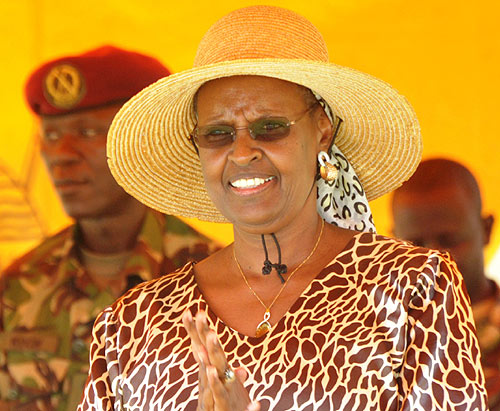
Sixty ‘Bridge’ schools to be closed – Janet Museveni

First Lady and Minister for Education and Sports, Janet Museveni.

Sixty three nursery and primary institutions run by Bridge International Academies (BIA), a ‘for profit’ educational network operating in Uganda, are to be closed by September.

The announcement made recently in Parliament by education minister Janet Kataha Museveni, will affect about 12,000 children, who have to look for new schools beginning next term. According to Ms. Museveni, the schools, where pupils pay about US$5, are not following the guidelines as set by the Ministry of Education and Sports.

According to Ms. Museveni, the lives of the 12.000 pupils at the BIA schools had been ‘endangered’, with most of the schools operating under poor sanitary and infrastructural conditions. Further, the schools reportedly employ ‘unqualified’ teachers, ostensibly to cut down on operating costs, and that they also offer an obscure curriculum, not in tandem with the official one followed by other public schools.

The schools, all operating in areas where access to education is a thorny issue, are being funded and supported by among others the US government, the World Bank and, billionaires Bill Gates of Microsoft, Mark Zuckerberg of Facebook and eBay auction Chairman, Pierre Omidyar.

In Africa BIA operates schools in Uganda, Kenya and Liberia, and in a statement by Michael Kaddu, the BIA head of corporate and public affairs in Uganda, the decision will also affect about 800 workers in the country.

Education inspection in Uganda is questionable and just a week ago ministry authorities established that pupils at the Greenhill Academy Buwaate campus had been exposed to erogenous material, prompting reaction by infuriated parents.

A teacher by profession, Janet Museveni was appointed education minister by her husband President Yoweri Museveni in June this year, and her appointment elicited mixed reactions, with some saying she would realign the ministry for better results. Others however, criticized her appointment, saying the job should have been given to a seasoned teacher with practical professional experience.

Meanwhile, this is not the first time BIA schools run into trouble with authorities in the East African region; previously the network has had problems with the Kenyan government which issued new guidelines under which the schools, that enroll about 100.000 pupils in the EA giant economy, can operate.


Stories Continues after ad

Machar flees South Sudan

EVACUATED: The statement announcing Dr Riek Machar's departure from South Sudan.

South Sudan’s former vice president and opposition leader Riek Machar has left the country for an unspecified ‘safe’ neighboring state, opposition officials have said. The move comes several weeks after he withdrew from the capital, Juba, during fierce fighting with government troops.

South Sudan rebel leader Dr Riek Machar

“He has now been safely evacuated to a safe country within the region. He will hold a press conference within the next 24 hours,” Mabior Garang de Mabior, a spokesman for Machar’s SPLM-IO party, said in a statement.

ISSUED STATEMENT: Mabior Garang de Mabior. Photo credit/upperniletimes.net

Gatdek Dak, Machar’s personal spokesman, said opposition fighters had “successfully relocated our leader to a neighboring country where he will now have unhindered access to the rest of the world and the media,” a statement posted on Facebook said.

Civil war broke out in South Sudan in late 2013 when President Salva Kiir accused Machar, his former deputy, of plotting a coup. The fighting split the country along ethnic lines and drove it to the brink of collapse. Conflict flared up against last month when a power-sharing agreement collapsed.

During last month’s deadly violence, men in military uniforms rampaged through Juba, attacking local civilians and foreign aid workers. UN peacekeepers have been criticized for not intervening to protect civilians and foreigners and the UN says it is investigating the claims.

The UN Security Council approved a US-drafted resolution last week to strengthen the 12,000-person peacekeeping mission with 4,000 additional troops drawn from the regional armies and equipped with more aggressive mandate.. But the South Sudan government has so far not accepted them,

Machar has previously said he would not return to Juba until the extra peacekeepers are deployed.


Stories Continues after ad