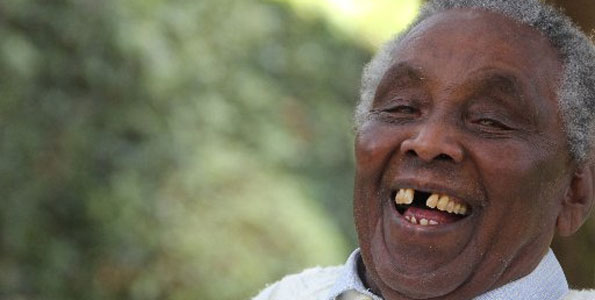
THE MASAAI 'COLOSSUS': Kenya's longest-serving politician William Ole Ntimama
Kenya has lost one of its long-serving politicians, William Ronkorua Ole Ntimama, who has passed on early this morning at his home in Narok in Masaailand, aged 86.
Family sources say he died of natural causes and by press time the cortege carrying his remains was headed for the Lee Funeral Home in Nairobi.
A revered Masaai elder, Mr Ole Ntimama served as the Narok Member of Parliament for over 20 years and also served as Minister, holding different portfolios during the better part of former President Daniel Toroitich arap Moi’s regime from 1977 to 2002.
Controversial to the hilt when challenged on Masaai issues, Mr Ntimama started off his political career as the chairman of the Narok County Council, where he served for 15 years before joining mainstream politics.
Meanwhile, another Kenyan prominent personality, lawyer-cum-businessman Horatius Da Gama Rose, the Managing Director of Muchanga Investments has also passed on early today, aged 72.
At the time of his death Mr Da Gama was embroiled in a dispute over a 134-acre piece of land in the upscale Nairobi outskirt of Karen worth about Kshs8 billion (appox. Ugshs 267bn).
A lawyer, Mr Da Gama Rose hailed from a prominent Kenyan-Goan family that was a close to the Kenyatta family even before Kenya gained Independence in 1963.
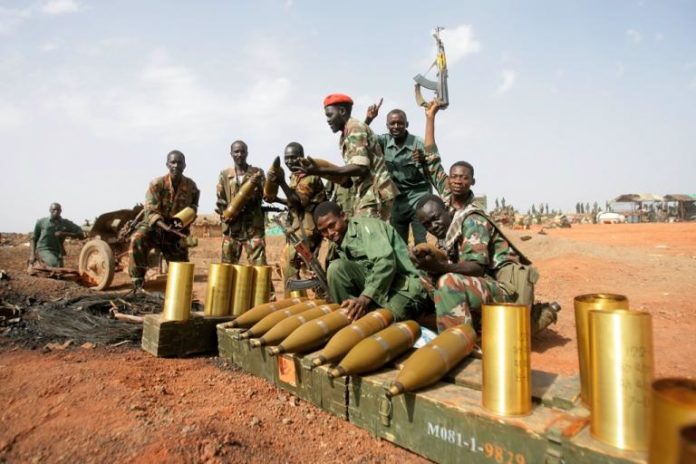
South Sudan has deployed a huge force along Juba-Nimule road that leads to the Ugandan border at Elegu after security officers were killed on the road by unknown gunmen believed to be allied to the former First Vice President, Riek Machar.
The Sudan People’s Liberation Army (SPLA), the official army of South Sudan, has been ordered to deploy troops in response to the new situation on the road connecting to Uganda that serves as the lifeline for the government.
Police spokesperson, Brigadier General Daniel Justin Boulo said at least two officers have been confirmed dead with others sustaining injuries when they were attacked on the road by the gunmen.
“The army will help track down the bandits so that law and order is restored immediately,” said Boulo.
Residents of Nesito, an area along Juba-Nimule road said on Thursday that they had seen a convoy carrying a large police team, which included the regular police, members of criminal investigation department and paramilitary officers. Later a line of government forces followed.
Security officers who survived the attack claimed the attackers were not ordinary criminals because they used sophisticated weapons such as anti-personnel bombs and rocket-propelled grenades in the attack.
South Sudan’s National Security Council, which was chaired by President Salva Kiir with membership of his two deputies, security ministers including interior, national security and defence convened an urgent and closed meeting on Thursday during which the leadership decided to order the army’s deployment and condemned “the heinous act of killing of members of the national services who were on patrol.”
“Everything will be done to ensure the culprits are apprehended and dealt with in accordance with the law,” police spokesman told reporters on Thursday.
The council also said it wanted “peace, reconciliation and disarmament exercises” to be carried out in the affected areas.
Hundreds of people have been fleeing the remote area fearing revenge attacks. The two national security officers were killed in an ambush in Jebelain area, a remote valley where people from ethnic Madi community live in separate villages.
A legislator from the area at the national legislative assembly in the capital, Juba, who did not want to be named said that residents in the area feared they may feel the wrath of the security forces, as those behind the killings had disappeared.
“The information we are getting now is worrying. The area could be devastated. The security forces are annoyed and they will turn this anger on innocent civilians. Because of this the civilians have now started fleeing their homes. Some have started coming to Juba and others have started going towards the Uganda-South Sudan borders,” the legislator said on Thursday.
A Local administrative officer in Pageri area claimed he counted houses where up to 1,500 people are believed to have fled into the bushes after gunmen opened fire on a commercial vehicle at Loa area near Pageri town on Tuesday.
Police spokesman denied the force will target civilians but warned that in future the police will defend themselves from gunmen. He also called on the civil population to cooperate with the security forces and provide them with necessary information.
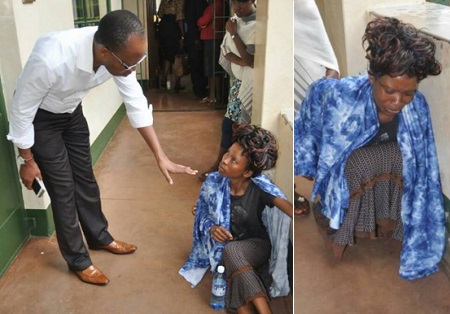
Brenda Nalubega, the lady who dragged renowned Pastor Augustine Yiga to court for child neglect and, raping and infecting her with the deadly Aids virus, has passed on.
According to sources, Ms Nalubega died yesterday evening, after prolonged suffering ostensibly because of her ailment and thoughts about her baby. Little is known about the whereabouts of her son, but at the time of her she was reportedly living with a relative in one of the city suburbs.
Brenda Nalubega (seated on floor) talks to city ‘businessman’ Frank Gashumba. Photo credit/youtube.com
According to the deceased’s narrative given at the height of their troubles, Ms Nalubega said then that she first got in contact with Pastor Yiga aka Abizaayo at his Christian Revival Church in Kawaala, while seeking ‘blessings’ for her imminent give away and marriage around 2007.
It was during the subsequent ‘blessing meetings’ that the Pastor allegedly raped Ms Nalubega, resulting in a pregnancy which would later give rise to a baby boy named (names withheld because he is a minor), the subject of a protracted legal battle for child neglect.
The two then fell out after pastor Yiga denied fathering the child, prompting Ms Nalubega to report a child neglect case against him to FIDA. With the heat now turned on, the Pastor was ordered to take a DNA test, something he declined and instead opted to care of both the child and mother.
However, according to sources, after sometime the Pastor reneged on his commitment, forcing Ms Nalubega to drag him to the Nabweru court, where the magistrate ordered Yiga to pay a monthly upkeep of Shs150.000.
But last year Ms Nalubega’s lawyers sought to have that figure revised upwards to Shs800.000, a prayer that was granted by High Court Judge Muse Musembi.
Who is Pastor Augustine Yiga aka Abizaayo?
Pastor Yiga ‘Abizaayo’ emerged on Uganda’s religious following claims that he had powers to exorcise bad omen and cast it unto the ‘sender’, a claim that helped him attract a large congregation of followers who believe in the effectiveness of a fusion between religion and cultism.
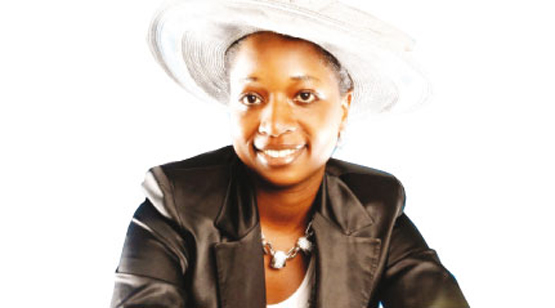
Pastor Yiga’s fiancee Julie Namutebi, who recently introduced him to her parents.
NABBI OMUKAZI ACCUSED PASTOR YIGA OF HOLDING ‘CARPET INTERVIEWS’: Singer Maggie Kayima aka Nabbi Omukazi. Photo credit/oops.ug
Over the years the flamboyant Pastor who cruises a white Toyota Land Cruiser with customized number plates tagged ‘ABIZAAYO’, has been linked to several women but was reportedly secretly introduced to his fiancée Juliet Namutebi’s parents in March this year, allegedly throwing a spanner in the wheels for the other women in his life, including singer Maggie Kayima aka Nabbi Omukazi and her sister Betty Namisinga, a duo that once accused the Pastor of having ‘carpet interviews’ with his female flock.
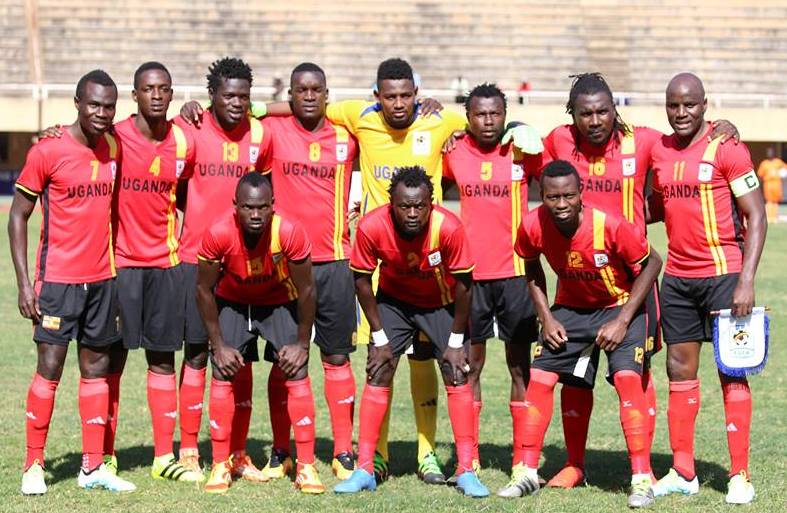
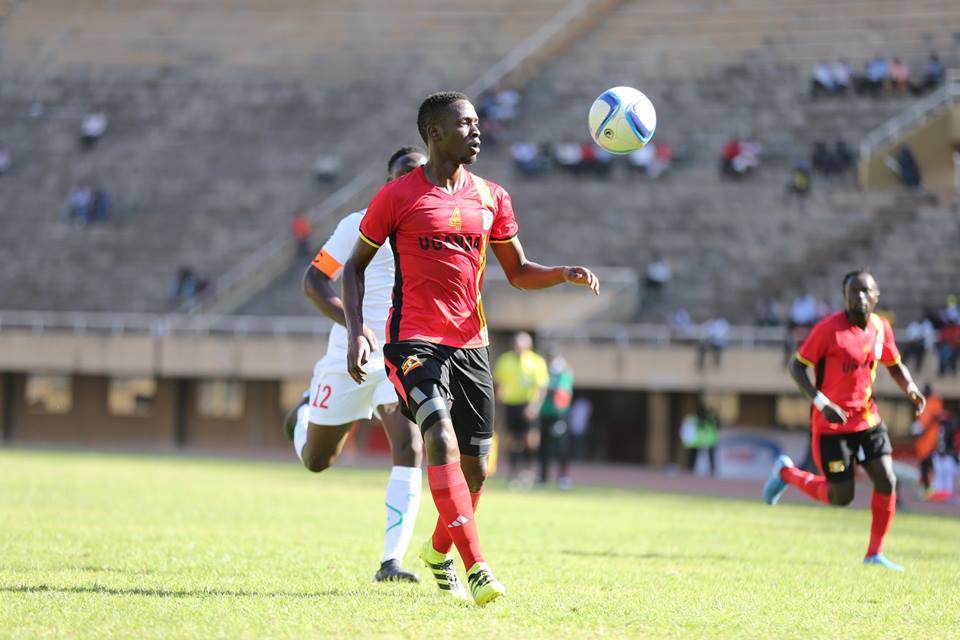
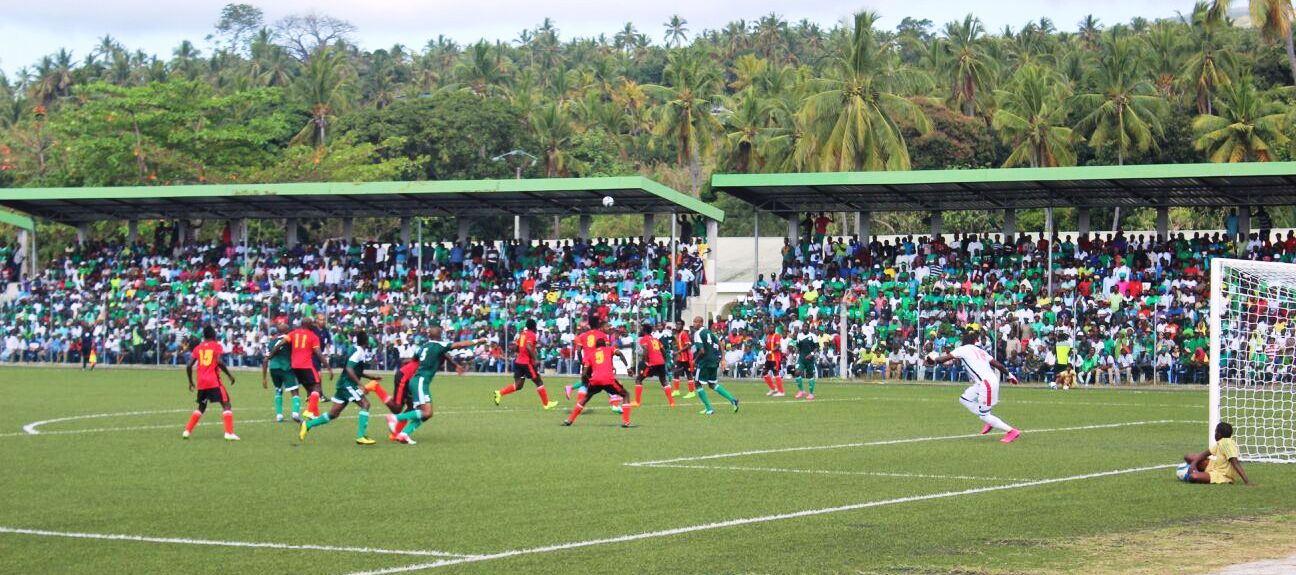
Uganda Cranes skipper Geofrey Massa remains optimistic for a brave home performance in Sunday’s AFCON 2017 final group D against Comoros at the Nelson Mandela National Stadium, Kampala.
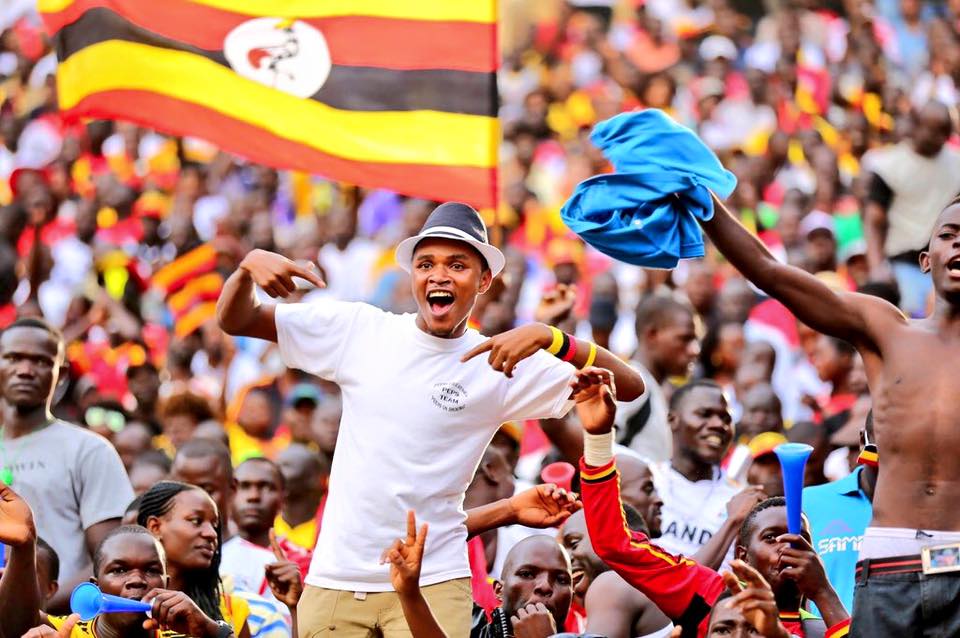
The hopes of a nation rest on young shoulders, especially captain Geoffrey Massa who has admitted the atmosphere in the camp is right as the Cranes seek a win over Comoros on Sunday to end their 39-year absence from the Nations Cup due January in Gabon.
Massa remains optimistic for a brave home performance with all the players aware that the job at hand is outscore Comoros and Uganda will be in Gabon next year.
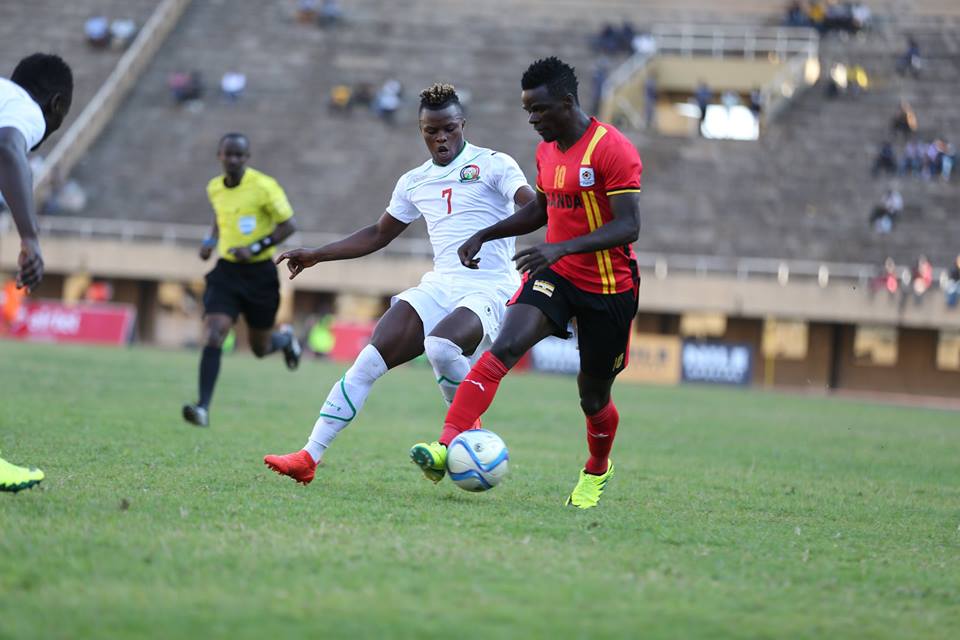
Micho’s side managed a goalless draw with Kenya ahead of the critical and final 2017 Afcon qualifier against Comoros on Sunday.
The destiny is fully in Uganda’s hands and once again, the country is high on expectations.
And Massa told Fufa’s official website: “After a long wait of 38 years, I believe that we shall write the history on 4th September 2016.”
“Everyone has played their respective roles. Right from the Federation, technical team and now it’s the fans and players to partake their share of responsibility against Comoros.
“Let us focus on this current game against Comoros where we have a slight advantage compared to the past games.
TZ based Murushid Jjuuko will be at the heart of defence at Namboole
TEAM NEWS
Uganda
Cranes coach Micho Sredojevic has a slight selection problem in defence with Denis Guma his usually reliable right back is suspended for the Sunday game.
The first choice goalkeeper Denis Onyango is nursing a hamstring injury but likely to start ahead of Al Merrikh’s Salim Jamal Magoola who manned the posts during Tuesday’s friendly game vs Kenya.
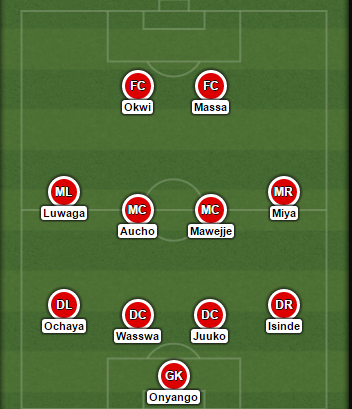
In although there have been calls for him to include Nicholas Wadada from the start but Isaac Isinde, Murushid Juuko, Hassan Wasswa and Joseph Ochaya will man Uganda’s defence to thwart the fast Comorians.
Micho will most probably go with a midfield of Khalid Aucho, Tony Mawejje, Kizito Luwagga and Farouk Miya, with Massa and Emma Okwi up top.
That may be tough on Yunus Sentamu but someone has to miss out.
He will always find a way to get a goal – he has to be in the final line-up against Comoros.
Comoros
It is not the time to discount Comoros, however, especially with team captain Nadjim “Jimmy” Abdou who plays at English League One club, Millwall lurking. They could rain on Uganda’s much waited Nations Cup parade. Uganda fetched maximum points in Moroni courtesy of Iceland based midfielder Tony Mawejje’s solitary strike earlier this year.
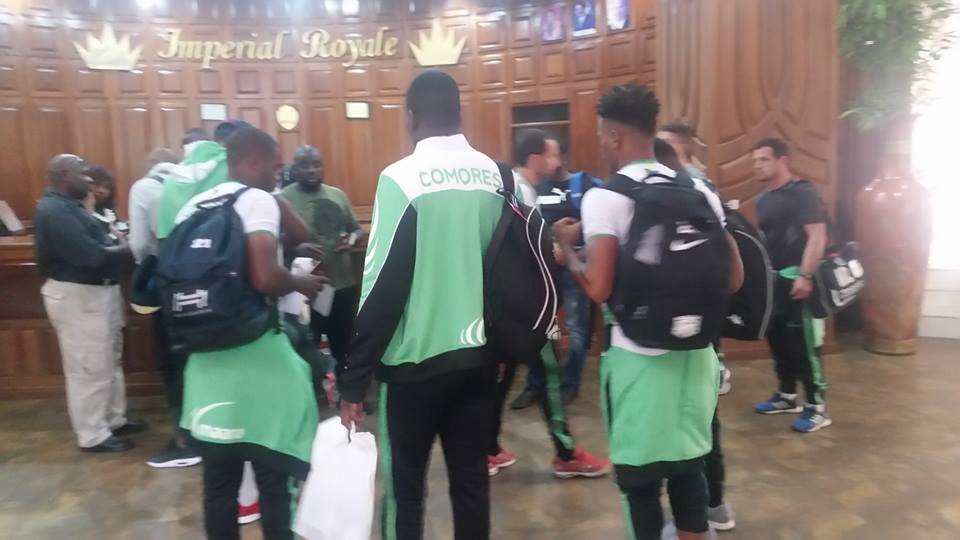
The first bunch of Comoros players and officials arrived in Uganda on Thursday while the contingent arrives on Friday afternoon and are accommodated at Grand Imperial Hotel in Kampala.
The Islanders are expected to have a light training session on Thursday evening at the Phillip Omondi stadium, Lugogo.
Namboole security
Kampala Metropolitan Police commander Emilian Kayima assured the media at Mengo yesterday that an expansive security plan has been drawn to combat theft, violence and terrorism during the crucial game.
Head-to-head
Uganda and Comoros have no storied history and have played each other competitively on one occasion and never met in any major international friendly.
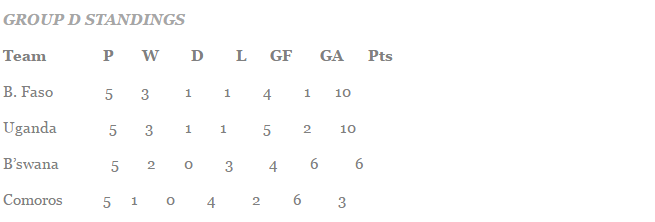
Uganda are joint top in Group D on 10 points with Burkina Faso.13 group winners and best two runners-up from 11 four-team groups qualify for 2017 Cup of Nations with hosts Gabon
Personal verdictUganda 3-0 Comoros
Against Kenya, Micho’s Cranes charges lacked punch, they didn’t get enough crosses in and lacked bodies in the box.
Uganda was trying to make the perfect move all the time and never really looked like scoring.
After a two weeks preparing for this game I expected a lot more understanding because Cranes looked like a team that didn’t know how they were going to score a goal.
Hopefully that can start to happen now and we can get on a roll. My money is on a Massa brace given his decent strike rate for Cranes at Namboole over the years and by the third goal from Joseph Ochaya, the momentum for the AFCON party will have kicked in.
In fairness to Uganda and Micho, the attitude of the players has been first-class all campaign.
Portugal based Kizito Luwaga and teammates will have no excuses for not ending a jinx that stands since 1978.
2017 AFCON QUALIFIERS (SUNDAY)
Uganda vs. Comoros, 5pm
Mandela National Stadium, Namboole
Burkina Faso vs. Botswana, 5pm
Stade du 4 August, Ouagadougou
Namboole charges: Shs25,000 (Ordinary), Shs60,000 (VIP- Blue seats) and Shs150,000 (VVIP- Orange seats)
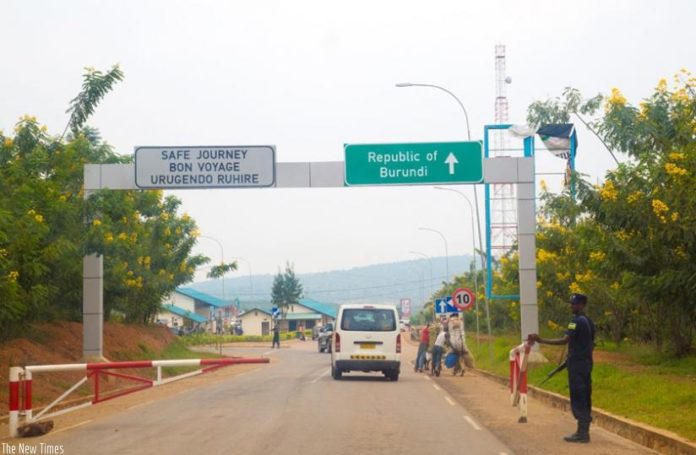
NO LONGER AT EASE: The Nemba post at the Rwanda-Burundi border. Photo credit/newtimes.co.rw
Relations between Rwanda and its neighbor Burundi continue waning and yesterday Rwandan armed forces reportedly shot dead two Burundian food smugglers who were trying to cross the border between the two countries, Burundi police has said.
Pierre Nkurikiye, Burundi’s national police spokesperson, said Niyonkuru Fidèle, 25, and Nyabenda Jérémie, 23, were killed on the Rwandan side of the border near Ruhwa in Cibitoke province in the northwest of Burundi, as they tried to smuggle sacks of eggplants and tomatoes across the border into Rwanda.
According to Nkurikiye, the victims were neither armed nor dangerous. He added that the two men had been part of a group of nine persons encountered by Rwandan troops while trying to cross the border.
“Seven of them succeeded in getting away from the place before they were shot. They are now detained at the police jail in Cibitoke province for investigation reasons,” he said.
In July, this year, the Burundi government banned the export of all food commodities as well as public transport from Burundi to Rwanda.
The decision severely affected farmers of tomato and eggplants in Cibitoke province because they were selling much of their produce to Rwanda.
Rwandan authorities have not yet confirmed the incident.
Relations between Burundi and Rwanda have been deteriorating since last year especially from May when a group of Burundi army and police officers tried unsuccessfully to topple Burundi President Pierre Nkurunziza’s regime.
Burundi accused Rwanda of backing the coup and later attempts to destabilise the government, and early this year, a former Rwandan Minister and diplomat Jacques Bihozagara, died in a Burundi prison under mysterious circumstances, after he was arrested and accused of spying for his home country.
The government is set to re-orient the face of media advertising in the country, with online media now set to become a strategic beneficiary.
Meeting the online media managers earlier today, Information, Communication Technology and National Guidance Minister Frank Tumwebaze said the new initiative will ensure that dissemination of information is effective, positively impacting on the target audience.
“Government is now considering outsourcing entire media buying function to competent advertising agencies and I can assure you a policy on this is coming,” the Minister told the managers, who met him under the auspices of their umbrella organization, the Online Media Association of Uganda.
The Minister made the remarks after presentations by the managers indicated that despite being a platform that reaches out to very many Ugandans advertisers including government, which is the biggest advertiser, had overlooked the importance of online media.
Mr Tumwebaze reiterated government’s commitment to the use of online media as a channel for communication, valuable in raising public awareness. He, however, warned against complacency in reporting, saying that would tarnish the image and confidence of would-be advertisers.
He also urged online media to be instrumental in marketing the country’s image abroad.
On their part, the managers called for cooperation, arguing that access to information should not face limitations by those entrusted with the responsibility of dissemination.
Giving an example of constraints to the flow of information, Richard Wanambwa of Eagleonline told the minister that he recently called a Minister for an update on a government policy on a certain matter to no avail.
Association chairperson Giles Muhame said there was need for partnerships with government agencies to promote campaigns.
In that respect the two parties resolved to schedule a meeting with senior government officials including Permanent Secretaries and government spokespersons to hammer out modalities of possible partnerships.
The association members will also have another meeting with the Minister after one month.
TO BE CLOSED: The Sameer tyre manufacturing factory in Kenya
Regional manufacturing conglomerate Sameer Africa Limited, which had previously invested heavily in Uganda’s diary industry, is set close its tyre plant in Kenya at the end of this month, citing ‘unfair competition’ and high operational costs.
According to Sameer, manufacturers of the Yana brand tyres, their market segment in Kenya has declined from 62% to 25% over the last 10 years, beginning 2005.
In the last year alone the company reported a loss of Ksh 66 million (approx. Ugshs2.3bn), and it also estimates to fork out Kshs 725 million (Approx. Ugshs22.4bn) in winding up costs that primarily include severance payment for employees, Managing Director Allan Walmsley said.
Sameer is also the distributor of Bridgestone tyres in Uganda and other countries in the region including Rwanda, Tanzania, Kenya and Burundi, and by press time it was not possible to establish how the closure would affect the company’s operations in Uganda.
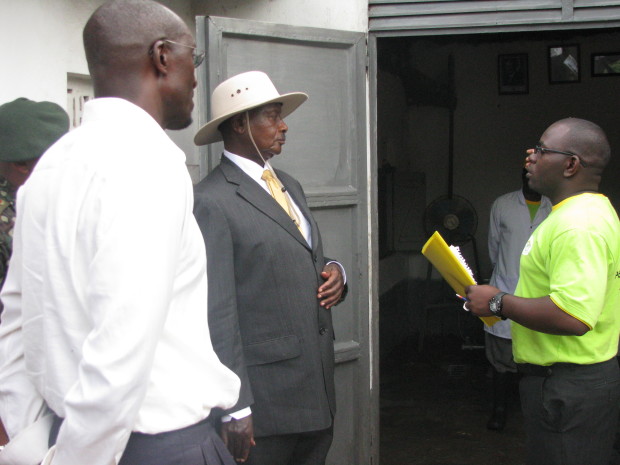
President Yoweri Museveni on a visit to the original Dairy Corporation in 2010.
Sameer kicked off its operations in Uganda in 2007, acquiring the then Diary Corporation from Thailand-based firm, Malee Sampran plc, which had also earlier acquired the corporation from the Uganda government in 2004 at one dollar during the privatization process.
A Brookside milk delivery truck. Brookside is the biggest milk products firm in East Africa
Since then Brookside Diary, a huge investment of Kenyan President Uhuru Kenyatta’s family, has acquired the former Diary Corporation from Sameer.
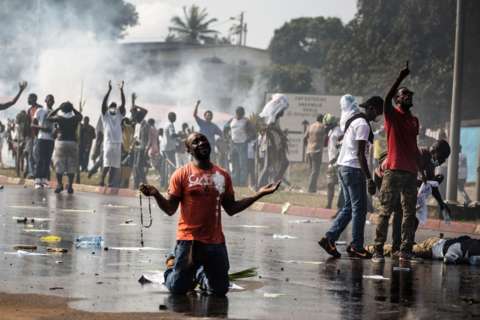
People in Gabon have been unable to access social media and internet access has been cut off according to reports.
Sarah Crozier from the European Union election observer mission, told the BBC it was hampering their communications as well: “It’s a little bit difficult for us to get information as well because the internet has been cut off.”
According to this graph from an Internet tracking site, internet access has been severely disrupted since Thursday evening, when protests broke out after the announcement of Ali Bongo’s presidential election victory.
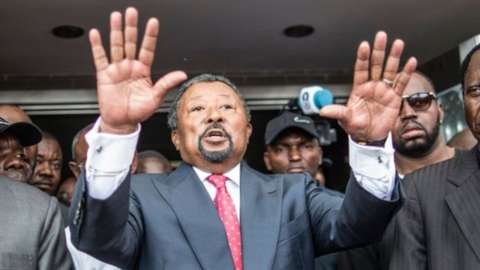
defeated presidential candidate, Jean Ping, has told French media that he fears for his safety and could be arrested at any moment.
Mr Ping told private French radio station RMC that he had effectively gone into hiding following the violent storming of his party headquarters overnight:“I am not leaving the place where I am. I believe they thought I was at the party headquarters with the other leading opposition figures.
“I could be arrested at any moment. They’re probably trying to find me so they can arrest me… Half an hour from now, my safety could be undermined, or I could perhaps risk physical harm.”
Jean Ping had declared his victory before official results were announced
He also called for international support, singling out former colonial power France, which appeared to back his candidacy: “We are calling for the intervention of the entire international community, the European Union, the United States, but especially France due to its historical links to Gabon… Otherwise, it will look like a failure to help a people in danger.”
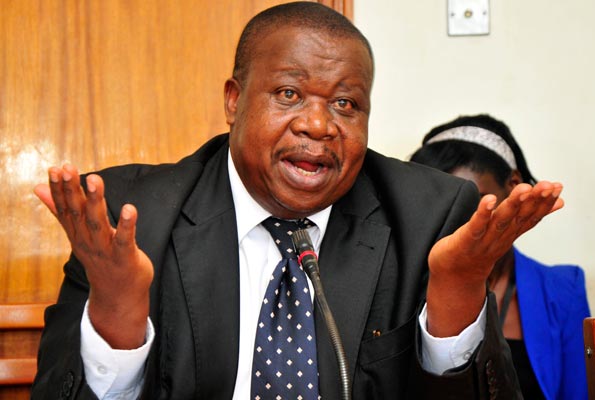
The Uganda National Examinations Board has said the embattled Ruhinda County MP Donozio Mugabe Kahonda does not appear in their records as a person who sat for both O-Level and A-Level.
According to the examinations body, details of Captain (rtd) Kahonda’s academic pursuits at different times are not reflected in the UNEB records of the said periods.
‘NO COMMENT’: Former Ruhinda MP Kahinda Otafiire.
A retired Uganda Peoples Defence Forces officer, Kahonda contested for the National Resistance Movement (NRM) party primaries for the 2016 elections and defeated long-serving MP Major General Kahinda Otafiire in a hotly contested race for party flag bearer.
After losing, Otafiire stood as an Independent but again lost to Kahonda. But this was not before the ‘ghosts’ of Kahonda’s academic past resurfaced to haunt him, exposing the retired Captain to multiple court summonses and appearances in Jinja and Luwero.
In Jinja magistrate’s court Kahonda is facing charges of forgery and impersonation, while in the Luwero Magistrate’s court he is responding to accusations by a one Godfrey Kiweewa, that he does not possess a degree in counseling obtained from Ndejje University, as he claims. In court Ndejje University will also testify as to whether Kahonda attained the said degree.
But contacted at the time, Kahonda told EagleOnline that it was a witch hunt ‘like another ongoing case’ brought against him by his former employer, the army.
“You cannot try a case which is ongoing in another court (Jinja); it is unfair and it is all intended to curtail me from performing my duties,” Kahonda told this news Website on phone.
His political nemesis Maj Gen Otafiire has variously refused to comment on Kahonda’s travails, arguing that the issues daunting the MP are before court.
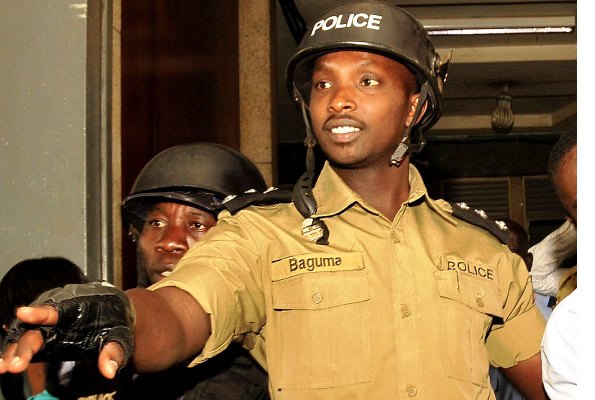
COMMITTED TO HIGH COURT: SP Aaron Baguma is accused of murder.
Embattled former Central Police Station Commander Aaron Baguma who is facing murder charges has today failed to appear before the Buganda Road Chief Magistrate’s court for mention of charges against him.
According to sources Superintendent of Police (SP) Baguma, who is currently on remand at Kigo Prison, is sick and cannot appear before court.
Baguma, businessman Muhammad Sebuwufu, owner of Pine car bond on Buganda Road and others allegedly tortured and killed city businesswoman Donah Katushabe after she reportedly failed to pay a debt of Shs9 million owed to Sebuwufu. The said money resulted from the purchase of a car, where Katushabe allegedly paid Shs10 upfront, remaining with the balance that resulted in her killing.
Since her death, accusations linking Baguma to Katushabe’s death surfaced variously, but the police officer continued with his routine duties at CPS, undeterred.
This prompted the family of the deceased to seek the intervention of the Directorate of Public Prosecutions (DPP). The DPP then swung into action and demanded that the police arrest Baguma, a development that was futile because the police officer allegedly went into hiding.
Subsequently, the court issued a warrant of arrest for the elusive Baguma, till two days ago when he resurfaced and handed himself over to police.
DISMISSED FAMILY REQUEST TO ABSOLVE BAGUMA: Director of Public Prosecutions Mike Chibita wa Duallo
At about the same time, relatives of the deceased wrote to the DPP Mike Chibita wa Duallo, saying they had absolved Baguma of any complicity in the murder of Katushabe and asked the DPP to drop the charges.
However, the DPP dismissed the request by the deceased’s relatives saying ‘criminal justice is not driven by the victims’, a decision that has now led to the prosecution of Baguma, against who a production warrant of September 6 has been issued by Buganda Road Court Chief Magistrate Jameson Karemani.