Stanbic Bank
Stanbic Bank
20.7 C
Kampala
Stanbic Bank
Stanbic Bank
Home Blog Page 2061

Machar in Sudan for ‘treatment’

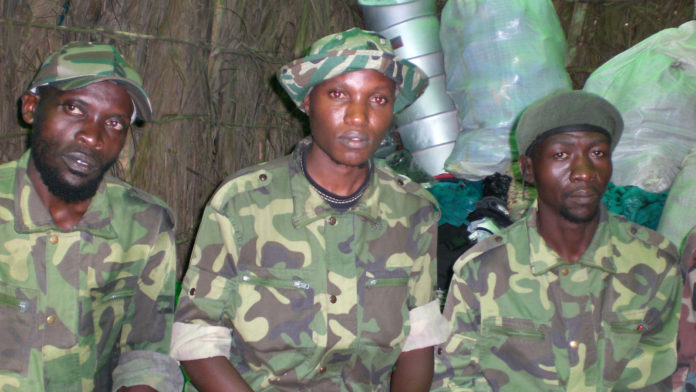
Rebel leader Riek Machar with his top commanders.

South Sudan rebel leader Riek Machar is in Khartoum for medical treatment, days after fleeing to the Democratic Republic of Congo (DRC) following deadly clashes last month.

“Sudan has received, lately, Dr Riek Machar, for pure humanitarian reasons, especially his need for treatment and medical care,” Sudan’s Information Minister Ahmed Bilal Osman said.

“Dr Riek Machar’s health is stable currently and he will remain in the country under comprehensive healthcare until he leaves for a destination of his choice,” Osman told state media.

Hundreds died last month – and tens of thousands were displaced – when forces loyal to Machar clashed with President Salva Kiir’s government troops in South Sudan’s capital, Juba.

Following the fierce fighting, Machar withdrew to the bush with his forces and was later replaced as vice president by party rival Taban Deng Gai.

Sudan’s announcement of Machar’s presence in the Sudanese capital on Tuesday comes just a day after Deng wrapped up his first official visit to Khartoum.

Aides of Machar confirmed last week that he had left South Sudan and was in the neighbouring Democratic Republic of Congo. It was also reported that Machar had a leg injury, though it was not believed to be serious.

South Sudan was founded with optimistic celebrations in the capital on July 9, 2011, after it gained independence from Sudan in a referendum that passed with nearly 100 percent of the vote.

Two years later, a brutal civil war broke out between supporters of newly-formed South Sudan’s President Kiir and Machar. The two sides reached a peace deal in 2015, under which Machar returned to Juba to resume his role as vice president, but last month’s fighting threatened to send the country back to all-out civil war.

The UN Security Council voted on Friday to authorise sending an extra 4,000 troops to the country to bolster the existing UN mission.

South Sudan officials said they were considering the UN proposal.


Stories Continues after ad

Eight arrested in Burundi over defamation on social media

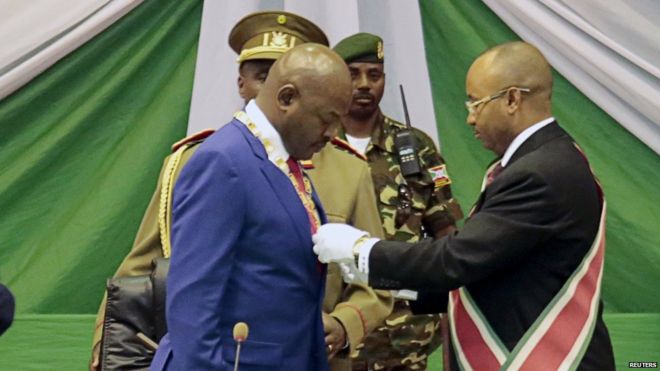
President Pierre Nkurunziza at his swearing in last year

Eight people have been arrested in Burundi for ‘defaming’ government leaders and institutions on Facebook and Twitter.

According to police spokesman Pierre Nkurikiye the eight were arrested on August 20 in the capital, Bujumbura, while meeting to write messages to spread via social media sites.

Burundi’s President Pierre Nkurunziza has survived protests and a coup attempt since he announced last April that he was seeking to extend his decade-long rule.

He subsequently won elections, which were rejected by his critics as a sham.

More than 400 people have been killed in unrest since April 2015.

The use of social media to spur dissent has sent shock waves to several governments in Africa, with many including Uganda incapacitating platforms like Twitter and Facebook during elections.

Stories Continues after ad

US imposes sanctions on Kony’s sons

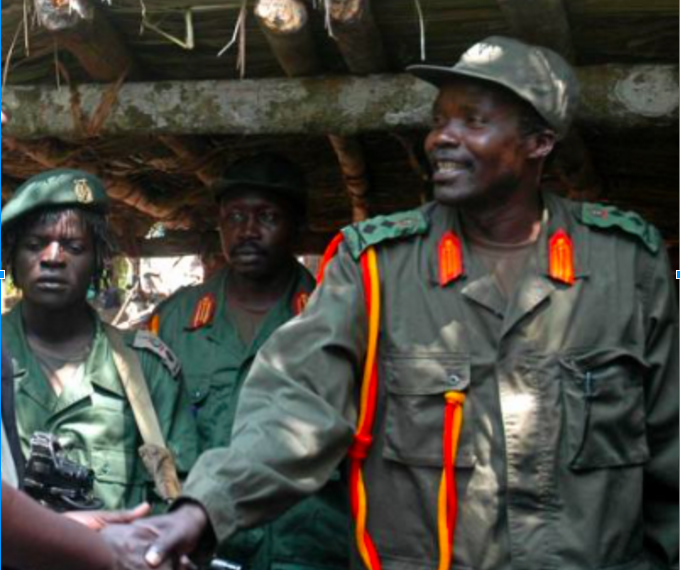
George Okot Odek, , The late Okot Odhiambo, Joseph Kony (Left to Right)
WARLORD JOSEPH KONY: His two sons Salim Saleh Kony and Ali Kony have been slapped with sanctions by the US.


The Lord’s Resistance Army (LRA) has yet been dealt another blow after the US announced it had imposed economic sanctions on rebel leader Joseph Kony’s two sons, accusing them of trafficking ivory.

Salim Kony and Ali Kony, both top LRA commanders, are said to have played ‘critical roles’ in trafficking of ivory from Garamba National Park in northern Democratic Republic of the Congo (DRC) through the Central African Republic (CAR) to Sudan’s disputed region of Kafia Kingi for sale or trade with local merchants, the US treasury said in a statement.

The Treasury statement indicates that Salim coordinates the transport of ivory, while Ali is responsible for negotiating ivory prices and either selling the ivory for US dollars or Sudanese pounds, or for trading the ivory for weapons, ammunition, and food with merchants in Kafia Kingi.

The statement further states that any assets that the two men have in the US will be frozen and that US citizens are ‘generally’ prohibited from doing business with them.

‘Today, the U.S. Department of the Treasury’s Office of Foreign Assets Control (OFAC) designated Salim Kony and Ali Kony, sons of the Lord’s Resistance Army (LRA) leader Joseph Kony, pursuant to Executive Order (E.O.) 13667 for acting for or on behalf of the LRA and/or Joseph Kony.  On March 8, 2016, OFAC designated the LRA and Joseph Kony pursuant to E.O. 13667 for engaging in the targeting of civilians in the Central African Republic (CAR) through the commission of acts of violence, abduction, and forced displacement.  Today’s action freezes any of Salim or Ali Kony’s assets within US jurisdiction and generally prohibits U.S. persons from engaging in transactions with them,’ the statement, signed on August 23 by OFAC Acting Director John E Smith states in part.

The statement adds: ‘OFAC remains committed to taking aggressive actions that will further diminish the capabilities of the LRA and its affiliates; today’s action, which targets the finances of the LRA and its leaders while also combatting their participation in the global illicit ivory trade, is the latest in a collaborative international effort to address the widespread violence in the Central African Republic’.

The Executive Order imposing the sanctions against the Kony sons was signed by President Barack Obama on May 12.

In 2014, Salim Saleh Kony, then aged about 22 was named deputy by his father, Brig Sam Kavuma, the Uganda People’s Defence Forces (UPDF) top commander pursuing the rebels, said then. The young Kony was named Salim Saleh reportedly after President Yoweri Museveni’s young brother; a man who played a key role in ensuring the then guerilla out, the National Resistance Army (NRA) captured state power in Uganda in 1986. It is resistance against the NRA offensive in the North that gave rise to the LRA, an outfit that was preceded in rebellion by the Holy Spirit Movement (HSM) of Alice Lakwena, now deceased.

The LRA was formed in Uganda, but was driven out by government forces and its fighters now roam the vast jungles in the region.


Stories Continues after ad

China about to complete ‘first’ foreign military base in Djibouti

MILITARY EXPANSION: An aerial view of the Chinese military base in Djibouti. Photo credit /US Army

China is building its first overseas naval base and military outpost at the small port town of Obock in the Republic of Djibouti on ground originally intended for use by the US Army.

The Chinese base on a 364,000 square meter (90 acre) plot will house supply stores; barracks for a small force of Chinese marines or Special Forces; maintenance facilities for aircraft and ships and weapons sites.

Obock or Obok is located on the northern shore of the Gulf of Tadjoura, where it opens out into the Gulf of Aden.

China refers to the Obock naval base as a ‘support facility’ and said they don’t have plans of building large bases such as those the US military favors. It also denies the base is ratcheting up tensions with the US whose Camp Lemonnier, the largest US military base in Africa, is located only eight miles away.

Camp Lemonnier currently houses over 4,000 US troops and is used for Special Forces and drone operations against jihadist groups in the region.

The Ministry of National Defense of the People’s Republic of China claims its Obock base will ‘better uphold international responsibilities and duties, and to protect China’s legal interests’.

China’s push into the world stage starting in Africa is part of President Xi Jinping’s foreign-policy priorities, based on the strategy of ‘steadily advancing overseas base construction’.

As part of this strategy, the People’s Liberation Army Navy (PLAN) first used commercial ports that were built or financed by Chinese companies for resupply and recreation. The Obock naval base is the first departure from this standard model.

Ironically, the base was first developed by the US in 2009 under the government of then Djiboutian Prime Minister Dileita Mohamed Dileita. In 2014, however, the new government led by pro-China President Ismail Omar Guelleh kicked-out the Americans and welcomed the Chinese.

The increasingly despotic Guelleh, who is relentlessly suppressing dissent, has received billions of dollars from China for Djibouti’s development. China is also financing a two proposed airports, a railroad, a port terminal expansion, fuel and water pipelines, a natural gas liquefaction plant and highway upgrades.

Some media reports claim China also funded Guelleh’s campaign for an unprecedented fourth term in office after he amended the Constitution that previously limited a President’s service to two terms.


Stories Continues after ad

Tekkwo, Yayo and Senkoomi out – URA confirm status for unwanted players

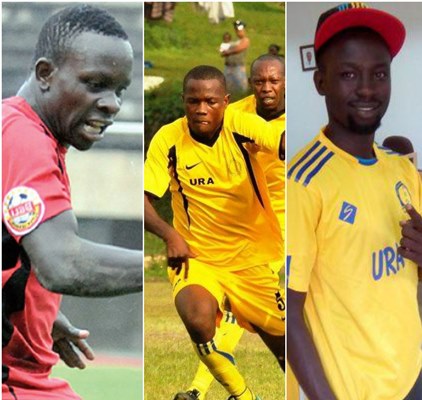
Lutimba, Ssenkoomi and Tekkwo are all set to feature on loan for Express FC in the 2016-17 season

What is it with Express Football Club and discarded former Uganda Revenue Authority FC players?

We are talking about the today’s confirmation by the tax collectors that their two midfielders Tekkwo Derrick and Yayo Lutimba plus defender Senkoomi Samuel have been sent on a one year loan ending 30th June 2017 to Express.

This development came after an hour meeting between Express officials lead by Vice Chairman Administration Serunjogi Erias and URA club Chairman Mr. Ali Ssekatawa this morning in Nakawa.

After the said players put pen-to-paper on one-year deals, Ssekatawa immediately told them not not play against URA during the loan period.

It was also agreed that URA FC also holds the commercial rights of the said players during the loan period.

Express is yet to agree personal terms with the players. The six-time champions face Proline today at Lugogo, kickoff 4pm.

Stories Continues after ad

Getting the groove on at the Jinja Nyege Nyege festival

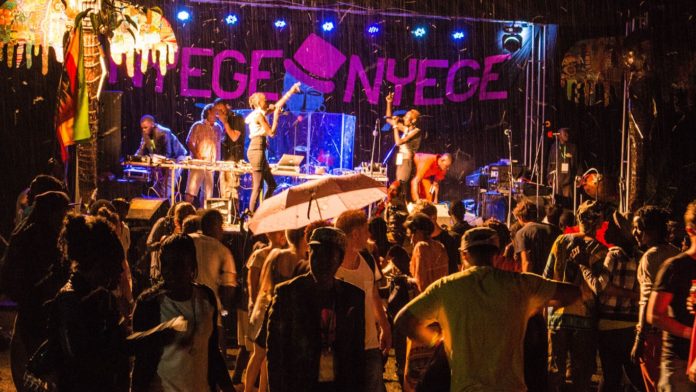
Performances at the Nyege Nyege Festival

There is a growing trend in the events section right now, a sort of ripple effect that keeps people busy almost every weekend with a festival here and there.

Over the past few months, there have been festivals ranging from food related, fashion and music. You will not fail to find one that fits in your niche for weekend related plans.

The Nyege Nyege festival is however different from the rest and this is not just about the name; the festival itself is about blending a fusion of several different artists, people and art into one colorful and beautiful show that lasts three days.

Nyege Nyege can be loosely translated to “The feeling of a sudden uncontrollable urge to move, shake or dance.”

The festival is organized and curated by the Boutiq Foundation, a community based organization in Kampala Uganda, that aims to develop the local arts and culture industry by creating platforms and opportunities for upcoming artists. The festival also aims to connect underground musicians from around the continent with one another and with producers and musicians working with African music outside the continent. This helps bring diversity to what most Ugandans rarely see in other festivals, experience and feel rhythms and tunes from Europe, USA, West, South and North of Africa; whilst listening to hidden gems of the East.

Last year, the festival was held with a throng of thousands showing up to not only enjoy the music that was being showcased but at the same time, discovering different forms of art from the artists that had gathered in Jinja.

The setting for this year’s Nyege Nyege festival is not going to be any different from 2015. Right on the lush banks of the Nile in the gardens of the Nile Discovery Beach hotel, a little distance from Jinja town and partnering with Jumia Travel gives most of the revellers discounted prices for their hotel bookings in Jinja throughout the festivals. A number of acts from countries such as the Kenyan and Ugandan underground scene with performances from Blinky Bill, The Dons, EA Wave, Lady Slyke, Albert Ssempeke, Otim Alpha, Tetuni Shani, Yellow Light Machine, Cosmic Homies, Kaya Collective and Shoeshine Bwoy, Blessed San, Undercover brothers and Lawrence Okello. Many acclaimed international artists renowned for their work with African sounds will also be joining the lineup including Tropical Bass pioneer Daniel Haaksman from Germany, Dub Morphology from the UK, DJ Zhao from China, Tropikal Camel from Israel, Schlachthofbronx also from Germany and the legendary MC Zulu will grace the two fully decked stages with state of the art sound systems.

Arlen Dilsizian, one of the organisers says, “In Luganda, Nyege Nyege means ‘irresistible urge to dance’. The idea of the festival came up because we felt that existing festivals in the region were not paying enough attention to new exciting genres of music that were emerging from across the continent, like Kwaito, Balani, Kuduros, coupe decale as well as to recent trends to fuse African sounds with European dance aesthetics.” According to Arlene, whilst there were many urban festivals in the region, what was missing was a festival in Nature where music lovers get away and let loose for 3 days of music, art and culture in an intimate setting. The festival is also a chance for different producers from different parts of Africa and Europe to meet, interact and collaborate.

“We find it crazy that legends of African music like Mamman Sani, the godfather of Electronic music in this continent have in their 30 years’ career played all over the world but not in another African country other than his native Niger,” she adds, noting that the same can be said for young Balani star Luka Productions and afro-futurist Ibaaku from Senegal. They are all playing at this year’s festival.”

The festival happening from the 2nd to 4th of September will also feature a daily screening program of films and documentaries about music, art installations, food from some of the best restaurants in Kampala at great prices and a kitenge corner where tailors will modify people’s clothes. A fun packed weekend for 120,000 UGX and you can buy your tickets on Jumia.

Evelyn Masaba is the Public Relations Manager at Jumia Travel Uganda an online hotel booking service with offices in Kampala (Uganda) Lagos (Nigeria), Nairobi (Kenya) and Dakar (Senegal)

Stories Continues after ad

2016 Kwita Izina commemoration beckons

Nineteen baby gorillas will be named this year at a ceremony on September 2 at the Volcanoes National Park, the oldest having been born just after last year’s ceremony, and among them a set of twins.

Now in its 12th year, Kwita Izina, a uniquely Rwandan event, is not only a celebration of newly born mountain gorilla babies, but also serves to raise awareness of the importance of the protection of species and their habitats at community, national, regional and international levels.

Rwanda’s Volcanoes National Park is home to an estimated two-thirds of the Virunga Massif population of 500 mountain gorillas, which spans Rwanda, Uganda, and the Democratic Republic of Congo. An additional 400 mountain gorillas live in the forested “island” of Bwindi Impenetrable National Park in Uganda.

Last year’s Kwita Izina saw almost 500 international and 20,000 Rwandan attendees.

These activities, which will take place from August 27 to September 2, include the naming Ceremony, a ‘Conversation on Conservation’ Conference, a Conservation and Tourism exhibition, community project launches, a fundraising gala dinner and unique to only this event; Kwita Izina Scientific tours.

Stories Continues after ad
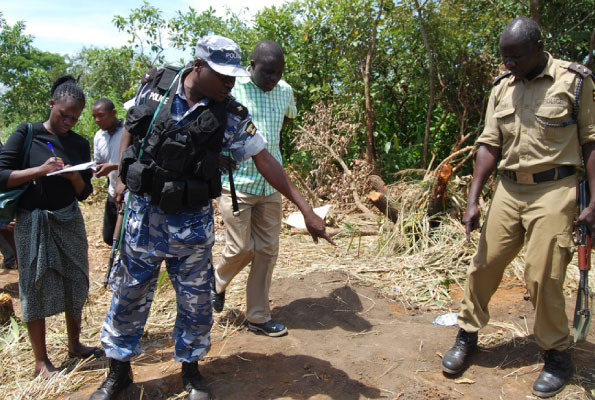
Ugandan ADF rebels tried in DR Congo over massacre

Four Ugandan nationals were among the six suspected members of a Ugandan rebel group, Allied Democratic Forces (ADF) who the DR Congo government has opened case against suspected perpetrators of Beni massacre

The North Kivu military court over the weekend unwrapped a case against six suspected members of a Ugandan rebel group, accused of carrying out the recent massacre of civilians in Beni, eastern DRC.

The suspected members of the ADF, were equally being sought by the military for participating in an insurgency and committing crimes against humanity through killings, terrorism, rape and looting.

The suspects include Ugandans Sempela Muswabo Toyota, Jackson Muhindo Kababo, Saka Muhindo Kitswamba and Jean-Baptiste Kasereka as well as one Tanzanian Kaiyagi Djuma, Congolese Kasereka Djuma.

During their identification, suspect Muswabo is said to have been recruited in Uganda and enrolled in ADF about five months ago. He was charged with mounting and dismantling weapons for this Ugandan rebel group.

On the request of lawyers of the suspects, the North Kivu military court postponed the hearing of the cases to Monday. They said they had made the request to prepare for the defense of their clients.

The case began just a week after suspected members of ADF massacred about 50 civilians in Beni town.

Immediately after the massacre by these rebels in Beni, DR Congo President Joseph Kabila termed the attack as “pure terrorism” and urged DR Congo’s partners across the world to help end the ongoing terrorism in the east of the country.

The United Nations and humanitarian organizations have accused ADF rebel group of killing over 600 people in Beni territory, North Kivu province, since October 2014.

Stories Continues after ad

Uganda hosts top Africa ICT meet

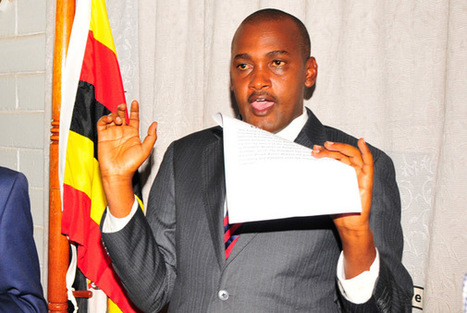
Gender, Labour Minister Frank Tumwebaze.

Uganda is hosting the 7th African Summit on Free and Open Source (FOSS) and the ‘Digital Commons’ (IDLELO) conference at the Speke Resort, Munyonyo.

The Conference that began on August 22 is organized under the auspices of the Free Software and Open Source Foundation Africa (FOSSFA) in conjunction with the Ministry of Information, ICT and Communications under Minister Frank Tumwebaze and the National Information Technology Authority (NITA-U) under James Saaka.

The main objectives of the summit include appraisal of Government Policy support of FOSS and Local Digital Content development, and promote the integration and adoption of FOSS and Local Digital Content in National Policies for countries in Africa, and to share experiences from other countries on how to promote, utilize and sustain the use of FOSS and Development of Local Digital Content in the country.

The conference comes in the wake of the President Yoweri Museveni’s recent visit to the US, where he made a commitment to evaluate the proposal that Uganda like her neighbours, consider using the cheaper yet equally efficient Open Source Software as an alternative to using Proprietary Software which is far too expensive. As a follow up, the President directed the Ministry of Foreign Affairs to follow up implementation of the commitment with the responsible Ministry.

‘The Government Uganda through the Permanent Secretaries Forum in 2013 decried the huge expenditure on licenses government spends on propriety software and their negative impact towards the implementation of the Information Technology (IT) Services Rationalization Strategy and subsequent roll out of e-government services

The Ministry of ICT was subsequently directed to analyse the situation and come up with informed recommendations for expediting of use of free open Source Software (FOSS) as an alternative to propriety software,’ a statement from the foreign affairs ministry reads in part.

According to the release, the Ministry of ICT developed a draft Free and Open Source Software (FOSS) Policy and Strategy that is pending presentation and approval by Cabinet. Some of the constituent strategies in the FOSS Policy and strategy include collaboration and partnerships in regard to FOSS Initialization and sustenance of awareness, education and training to build Competitive FOSS Capacity, and to promote FOSS usage in Government Ministries, Departments and Agencies (MDAs).

In March 2015 the Secretary General of COMESA issued a communique on Open Source Guidelines adopted at the Eighth Meeting of the Ministers of Infrastructure responsible for Transport, Communications, Information Technology and Energy held in Djibouti, Republic of Djibouti in October, 2014 adopted the guidelines on Free and Open Source Software (FOSS).

The earlier IDLELO summits were held in Nairobi (2014), Abuja (2012), Accra (2010) and Dakar (2008) and Johannesburg (2006).

The conference is being attended by officials from Office of the President – Uganda, Prime Minister’s Office – Uganda, Government Delegates and Innovators from African Countries, COMESA Secretariat, Lead MDAs for the development of FOSS and Digital Content in Uganda Government, Policy Makers in MDAs/LGS – Uganda.

Others are Government MDAs – beneficiaries of FOSS Solutions and Digital Content, Private Sector – beneficiaries of FOSS Solutions and Digital Content; Local Innovators and Digital Content Developers and Researchers and Academia.


Stories Continues after ad

Amuru-Adjumani border wars resume, Police on alert

The Uganda Police Force says it is currently monitoring the security situation in Apaa on the borderline between Amuru and Adjumani districts, where violence and resistance have resurfaced over who owns the disputed land.

According to reports, the Joint Security team in Adjumani has intensified security operations so as to avoid a security breach.

People in the two districts have for years been at loggerheads with those in Amuru claiming that its border is at Zoka River while those in Adjumani claim its border is at Apaa Junction.

Outgoing police deputy spokesperson Polly Namaye on Monday said this land and border dispute poses a considerable threat to post conflict recovery and local development. According to Ms Namaye, it underscores that the changing land conflict dynamics may have critical impact on the Peace Recovery Development Plan (PRDP).

In 2015, the government forcefully demarcated the contentious boundary, leaving in its wake teargas, injuries, broken limbs and mark stones. Then, women from Apaa undressed before ministers Aronda Nyakairima (RIP) and Daudi Migereko, to protest a planned demarcation of the border.

However, the border conflict has persisted despite the boundary re-demarcation that put the Apaa area under the management of Adjumani District.

For instance, on 13th Aug 2016, the local community in Apaa clashed with leaders of Adjumani District led by the District Chairperson, Mr Leku James Pili, who had gone to assess illegal timber cutting in the area.

The border was mapped using a Global Positioning System (GPS); a space-based satellite navigation system that enables the identification of the original boundary between the two districts before putting a mark stone.

But in opposition, Amuru locals argue that they don’t know what the government wants in Apaa, because the British demarcated the border in 1962 and they know their boundary thus there is no conflict between them and Madi with whom they usually intermarry.

Stories Continues after ad