Stanbic Bank
Stanbic Bank
18.1 C
Kampala
Stanbic Bank
Stanbic Bank
Home Blog Page 2084

Entebbe Airport to host German, EU South Sudan evacuees

IN THE NEWS FOR THE WRONG REASONS? Entebbe International Airport

Entebbe International Airport will from today become a holding stopover for hundreds of Germans and other European Union evacuees airlifted from the troubled South Sudan.

In a message sent to German citizens, the German Ambassador in Juba Johannes Lehne said that several German air force flights will evacuate German and EU nationals today from Juba.

“The departures are expected to take place in the afternoon. Target is Entebbe / Uganda. Please ensure that you are starting at 11:00 at the airport and bring the following: your passport and two copies of the passport; hand luggage with a max of 10 kg,” Lehne said.

Lehne said that the embassy will arrange exit formalities, which may suggest that immigration systems are not operating as normal at the airport.

In a related development, Japan and the United States will offer help to evacuate their citizens today and in the coming days, for those who wish to leave.

Evacuations will rely on chartered aircraft or military aircraft because commercial flights into and out of Juba have been suspended.

The US State Department sent messages to citizens in Juba on Tuesday that over the next few days it will organize flights from Juba Airport for all US citizens wishing to leave the country ‘in light of the recent unrest and insecurity’.

Further details on timing and logistics will be provided separately. For planning purposes, please promptly provide the names of all US citizens in your party who wish to depart.  We will follow up.

The US Embassy on its Facebook page declared that it was ‘not evacuating’, describing its partial evacuation instead as an ‘ordered departure’ of certain non-essential personnel.

“Planning for departures is underway and the Embassy will update as appropriate. Due to ongoing security concerns, please remain vigilant when moving about the city.”

Japanese military aircraft have also been dispatched to Juba to evacuate about 70 Japanese nationals. They left their base in Japan late Monday and were reported to be heading first to Djibouti for staging.

The Japan International Cooperation Agency, a government-funded organization, said its more than 40 staffers would be evacuated together with other Japanese nationals, citing concerns about security in Juba.

An official at the Canadian embassy did not respond to a request for information about evacuation plans for Canadian nationals. Uganda’s government announced an evacuation for its citizens will take place from Nisitu junction by land.


Stories Continues after ad

Three in line to succeed Kenya CJ

Former Kenyan Chief Justice Willy Mutunga. Photo credit/the-star.co.ke

Two judges of the Court of Appeal and a High Court judge are frontrunners for the top judiciary job in Kenya.

According to available information, CA Judges Alnashir Vishram and David Maraga and, High Court Judge Msagha Mbhogoli, are topping the Judicial Service Commission (JSC) list of those set to replace former Chief Justice Willy Mutunga.

Others shortlisted to replace Justice Mutunga include Supreme Court Judge Smokin Wanjala, former Law Society of Kenya boss Nzamba Gitonga and Lady Justice Roselyn Nambuye.

Formerly an ear pin-donning legal practitioner, Justice Mutunga became CJ in 2011 after a tough screening process.

In 2013 he presided over the Supreme Court coram that heard the election petition filed by the Coalition for Reform and Democracy (CORD) of Raila Amollo Odinga against the Jubilee coalition of Uhuru Kenyatta, winner of the Kenyan 2013 presidential elections.

Stories Continues after ad

DP urges Museveni not to involve UPDF in South Sudan fighting

Democratic Party Spokesperson, Kenneth Paul Kakande (R) address the media at the head quarters during the party’s press conference on April 21, 2015. PHOTO BY ISAAC KASAMANI
Democratic Party Spokesperson, Kenneth Paul Kakande (R) addresses the media at a past function

The Democratic Party has implored President Yoweri Museveni not to involve the Uganda Peoples Defence Forces (UPDF) in the South Sudan conflict.

“Uganda has been known for sending her army to different countries in the name of creating sanity and peace in war torn countries in Africa that include Somalia, the Central African Republic and Sudan,” DP Publicity Secretary Mr Kenneth Paul Kakande said at a press briefing.

He however, added that there was need to engender a cautious approach while offering a helping hand.

“Lending a helping hand to neighbouring countries is a good gesture but the continued loss of lives of innocent soldiers during these operations is also painful and needs to stop,” Kakande said, while expressing concern over the deteriorating levels of security in the neighboring South Sudan where many people including Ugandans have been caught up in the fighting.

“We call upon the government of Uganda to invoke its diplomatic responsibility to ensure safe passage of the Ugandan people who would like to get a safe passage back home”, he said.

Kakande also noted that the continued fighting in South Sudan had greatly affected business in Uganda and led to losses for many traders since Juba, the capital city and centre of fighting, is a big market and business hub for Ugandan traders.

Kakande also said there was need for all the EAC member states to ensure that bloodshed ends in South Sudan.

“As a member of the EAC South Sudan is governed by Article 6 (b) of the East African Community protocol on good governance,” Mr Kakande said and urged the two leaders, Salva Kiir and Dr Riek Machar, to put the lives of the citizens ahead of their personal interests.

Stories Continues after ad

US troops deployed to protect American embassy in South Sudan

A US Marines guides US citizens during a previous evacuation from Juba

About 40 American service personnel have been rushed to the US Embassy in Juba, South Sudan, as the country teeters on the verge of another civil war.

The troops will bolster security at the embassy and help non-emergency personnel leave, said Samantha Reho, a spokeswoman from US Africa Command.

“This contingent brought in several vehicles solely for use in protecting the embassy,” Reho said. She declined to provide any information about what military service or units the troops come from, citing operational security concerns.

“We do not discuss the specific forces involved or the specific capabilities the Crisis Response Force has available,” she said.  “What I can say is the CRF is a flexible and ready force that has all the tools it needs to respond to any crisis in AFRICOM’s area of responsibility.”

Hundreds of people have reportedly been killed in resumed fighting between rival factions loyal to South Sudan’s president and vice president. Both leaders reached a tentative truce on Monday.

In response to ongoing violence, the State Department on Sunday ordered the non-emergency personnel to leave the US Embassy in Juba. Any US citizens in South Sudan have been advised to take precautions to enhance their personal security since the embassy’s ability to provide emergency services to Americans is extremely limited, State Department spokesman John Kirby said Sunday.

In 2013, the Marine Corps added a security guard detachment at the embassy in South Sudan. Marines guard embassies’ access points and safeguard classified material. They are also equipped with weapons and nonlethal tools to deal with emergencies or security breaches at embassies.

This is not the first time the US has had to send troops to Juba. In January 2014, Marines from the Special Purpose Marine Air Ground Task Force—Crisis Response—Africa helped to evacuate staff from the embassy.

The Marines used MV-22B Ospreys and KC-130s to fly nearly 4,200 miles from their base in Morón, Spain, to Juba, successfully evacuating more than 20 embassy personnel.


Stories Continues after ad

The dinosaurs at the heart of opposition politics in Africa

Raila Amollo Odinga

Africa is viewed by many as a continent that has failed to progress at a rate that is commensurate with its resources, and all this thanks partly to leaders who seem to have their priorities inverted.

Over fifty years after most of its countries attained Independence, several current African leaders (with the probable exception of Botswana president Ian Khama) seem lost at sea on how to change the lives of their respective citizenry, with almost a billion Africans wallowing in poverty and living on less than a dollar a day.

Indeed, enumerating the failures of the post-Independence African leaders can easily turn into a lucrative career opportunity for political historians telling the African leadership crisis in its true perspective.

‘The Stone Age did not come to an end because stones had been finished on the face of earth; it came to an end because of the ever-changing innovations,’ a scholarly friend once told me, when I asked about his rating of the performance of African leaders over the last five decades.

Indeed, it is apparent that what most of our leaders, past and present, lack is the innovative mind to turnaround the continent’s fortunes through harnessing its resource purse; what with the billions of dollars that have been sunk into the bottomless abyss that is Africa through aid.

As a result of the mostly unforgivable failures, alternative political voices and schools of thought have sprung up in different countries, trying to cause change to the status quo, with claims of providing ‘better leadership’. Unfortunately, most of the opposition figures that have castigated sitting regimes in Africa have failed to take the mantle of state, in order to give the respective citizens an insight in their ‘better leadership’ claims.

Uganda president Yoweri Museveni

In Uganda, the National Resistance Movement/Army (NRM/A), a political organization that has been in power for 30 years, has faced different shades of opposition since coming to power in 1986. First was the military opposition of defeated groups like the Uganda National Liberation Army (UNLA); the Holy Spirit Movement (HSM) of Alice Lakwena and the Lords Resistance Movement/Army (LRM/A) of Joseph Kony among many others. Then, at around the same time there was the political opposition mainly orchestrated by the old political parties among them the Uganda Peoples Congress (UPC); a splinter group of both the Democratic Party (DP) and the Conservative Party led by led by Michael Kaggwa and maverick politician John Ken Lukyamuzi, respectively.

FDC leader Maj Gen (rtd) Mugisha Muntu

But as the NRM/A hold onto power gained tract, dissenting voices emerged from within the organisation’s ideologues and these included among others Eriya Kategeya, Augustine Ruzindana, Amanya Mushega, Miria Matembe, John Gregory Mugisha Muntu, David Sejusa and Dr Warren Kizza Besigye Kifefe. Of the NRM/A dissenters, Dr Besigye, a retired Colonel, has since put up the most spirited pursuit of the change in the political status quo in Uganda over the last 20 years. Since 1991 when he authored a dossier castigating the NRM/A government for allegedly deviating from the principles that led its ideologues to wage a five-year ‘liberation struggle’, Dr Besigye has increasingly given the state a restless time, with his actions leading him on a collision course with the authorities on several occasions.


Dr Besigye has contested against the NRM and its leader Yoweri Museveni for four times now, the first being in 2001, in which said he was cheated of victory, later petitioning the Supreme Court. In its ruling then, the SC noted that there were ‘irregularities’ but that they were ‘not substantial to alter the results of the elections’. Notably, in all the three subsequent elections Mr Besigye, running under the banner of the Forum for Democratic Change (FDC), has contested against the same Museveni, with repeated claims of his victory being stolen through electoral malpractices including vote-rigging, intimidation and voter-bribery. Well, Besigye is yet to become president so that he practically shows us how differently he would carry on with affairs of state.

Kenyan opposition leader Raila Amollo Odinga

But Besigye is not alone in this thinking that he can change the course of political events in the respective Africa countries. In neighbouring Kenya Raila Amollo Odinga has over the years earned himself the tag ‘The best President Kenya never had’. Currently the leader of a political organization called the Orange Democratic Movement (ODM), Raila Odinga, the son of Kenya’s founding Vice President Jaramogi Oginga Odinga, has for the last four decades strived to ensure that the political history in Kenya changes. His foray into Kenyan politics began to take shape in 1982 when he was linked to a coup against Daniel Arap Moi. Since then, even when serving in government, he has severally run into trouble with the authorities, doing lengthy exile and jail time, the longest stint being over six years served at Kamiti Maximum Security Prison.

Odinga has contested for the Kenyan presidency thrice, the first in 1997 when he run under the banner of the National Development Party (NDP) against Arap Moi of the Kenay African Union (KANU); Democratic Party (DP)’s Emilio Mwai Kibaki and Michael Kijana of the FORD-Kenya. Ten years later, this time under the umbrella of the ODM Odinga contested against DP’s Mwai Kibaki and lost. He contested the results, a stand that saw Kenya descend into chaos in 2007/8, culminating in the death of over 1000 people. Consequently, Mr Odinga was to join a coalition government, serving as Executive Prime Minister under President Kibaki. The ‘convenient political alliance’ was prickly.

And, in 2013 Mr Odinga contested against current President Uhuru Kenyatta and lost but claimed he had been cheated of victory. He petitioned the Supreme Court but his petition was dismissed, sealing his place as the de facto Kenyan opposition leader up to 2017.

But since the failures in Africa seem to resonate from country to country, it is not surprising that there will always be rubble rousers spread across the continent, all claiming they want to offer ‘better leadership’.

DRC OPPOSITION GURU: Perennial politician Etienne Tshisekedi wa Mulumba

In neighbouring Democratic Republic of Congo, perennial contestant Etienne Tsishekedi Wa Mulumba has once again declared his interest in the DRC presidency, to run against incumbent Joseph Kabila and millionaire Moise Katumbi. A five-decade-serving politician and three-time Prime Minister under Dictator Joseph Desire Mobutu Sese Seko Ngbendu Wazabanga between 1991 and 1997, Mr Tsishekedi’s quest to become DRC president began in 2006 when he campaigned under the banner of the Union for Democracy and Social Progress (UDPS), challenging incumbent Joseph Kabila. He was, however, to withdraw from the elections, saying they had been rigged even before the voting took place. Mr Tshisekedi was to stand again in 2011, lose the election but declare himself the ‘elected president’ of DRC, sending the security forces in an overdrive that culminated in his being restricted at home (unofficial house arrest).

Zimbabwean opposition leader Morgan Tsvangirai


Then enter Morgan Richard Tsvangirai, a trade unionist-turned politician who made his first foray in politics in 1995. In 2002, Tsvangirai of the Movement for Democratic Change (MDC) challenged long-serving Zimbabwe President Robert Gabriel Mugabe for presidency and claimed he lost after Mr Mugabe stole the election.

Tsvangirai was to contest for elections again in the first round in 2008, garnered a ‘majority vote’ that was contested, setting the ground for a run-off, participation in which he snubbed, saying it was not going to be ‘free and fair’. However, under pressure of the international community, Mr Mugabe, the Zimbabwe leader since Independence in 1980 was to concede and name Tsvangirai Prime Minister in 2009, a position he held till 2013.

Zimbabwe liberation war hero and on-and-off Mugabe political nemesis Joshua Nkomo

Earlier, the late Zimbabwean liberation war hero Joshua Nqabuko Nyongolo Nkomo, an on-and-off political colleague of then Prime Minister Mugabe, thrice rejected becoming a ceremonial president, a decision that catapulted the late Reverend Canaan Banana to the presidency. And in 1983, precisely three years after Independence Mr Nkomo was to flee to exile in the United Kingdom, from where he penned a 117-point missive to Mr Mugabe, detailing the ills of his government.

However, after a series of such political disagreements, in 1987 Nkomo’s party, the Zimbabwe African Peoples Union (ZAPU) merged with the Zimbabwe African National Union (ZANU) of Mr Mugabe to form the ZANU-Patriotic Front, a temporary alliance of convenience that saw Mr Nkomo, fondly referred to as ‘Father Zimbabwe’, become Vice President for 12 years, from 1987 to 1999.

Meanwhile, as other opposition political activists were busy keeping their respective governments on their toes, Jonas Malheiro Savimbi, the leader of the National Union for the Total Liberation of Angola (UNITA), one of Angola’s liberation war factions waging war against the Portuguese, was also another restless soul in Angola, who felt that the Peoples Movement for the Liberation of Angola (MPLA’s), Agostino Neto, the first president of independent Angola who served up to his death in 1979, was not doing enough to steer the country in the right direction.

Late Angolan warlord Jonas Savimbi

And following Neto’s death, Savimbi was to turn his guns against his successor Jose Eduardo Dos Santos, fighting a lengthy guerilla war that claimed several tens of thousands of lives. Savimbi was taken out in a fierce battle with Angolan government troops in 2002, bringing to an end a ‘psuedo military-politico and opposition career’ that spanned over 30 years.

Mozambican opposition leader Afonso Dhlakama

Then there is another Alfonso Dhlakama, the leader of the Mozambican National Resistance (RENAMO). Born in 1953, Dhlakama was involved in the pre-Independence liberation struggle in Mozambique and, after the country gained independence under the leadership of Samora Marcel’s Freeddom Liberation Movement (FRELIMO) in 1975, he continued fighting the government. And today, 41 years since Mozambique gained independence Dhlakama is still viciously opposed to the FRELIMO government of President Armando Guebuza.

Also, notable among the other opposition gurus that have straddled the African continent over the years is Laurent Desire Kabila, the father to current DRC president Joseph Kabila, who fought a guerilla war against the government of Mobutu Sese Seko. A pro-Lumumba supporter of long standing, dating back to the 1960s, Kabila toppled the long-serving dictator Mobutu in 1995 but was himself to be assassinated six years alter in 2001.

General Emeka Ojukwu

Then there is also chief Chukwuemeka Odumegwu Ojukwu, the Nigerian politician and military officer who led the war of secession of the Republic of Biafra for three years, from 1967 to 1970. He died in London in 2011 before realizing his ‘dream’ of an independent Biafra State.

Stories Continues after ad

Fufa set to de-register after FIFA-Gov’t meeting

Fufa head Moses Magogo and federation spokesman Ahmed Hussein

The impasse between domestic football governing body Fufa and the government regulator National Council of Sports (NCS) over clauses of its new Act seems over.

A meeting between, Fifa, NCS, Sports Ministry, Solicitor General and Fufa yesterday resolved that the local soccer body registers as under a Trusteeship and should register without fail by August 10.

EagleOnline understands that state Sports minister Charles Bakabulindi also ordered It Fufa Limited Company – hitherto the business arm of Fufa – be abolished with immediate effect.

According to a party privy to the meeting, Fifa have now  given the Moses Magogo led Fufa a green light to register as a Trust as the government of Uganda had decreed includes asking national associations to incorporate under the Trustees Incorporation Act.

Fufa had highlighted to NCS that registration for the local soccer governing body under the Trusteeship Act contravened with the FIFA statutes.

Analysts say any threat of a FIFA ban on account of government interference as been claimed by Fufa which is registered as private company limited by guarantee has been quashed.

Fufa now has to de-register (it still is a private company limited by guarantee) and incorporate under the Trustees Incorporation Act.

It is not understood how Magogo and his administration will convince the breakaway Fufa faction of former footballer Dan Walusimbi to offer them the certificate of incorporation which is the biggest document they need to be registered.

“Fufa has been cleared by FIFA to register with the NCS under the current regulations with guarantee from the Government of Uganda that there will never be third party interference in the governance of the game of Association football in Uganda.The deadline for registration has also been extended to Wednesday 10th August, 2016,” federation spokesman Ahmed Hussein said in an official communication to the matter.

“Fufa is confident that there will be uninterrupted and continued development of the game of football in Uganda and national focus will now shift to the Uganda v Comoros 2017 AFCON qualifier match slated for Saturday 3rd September 2016 at Mandela National Stadium Namboole,” Hussein added.

Stories Continues after ad

ICC refers Uganda to Security Council over failure to arrest Bashir

Al-Bashir welcomed by Museveni at his swearing-in ceremony early this year.

UGANDA has been referred to UN-Security Council by International Criminal Court over failure to arrest Sudan President Omar Al-Bashir.

Djibouti is another   African country that has as well been referred to the Security Council also over same reasons. Both countries failed to comply with the ICC indictment to have Al-Bashir arrested over the Darfur conflict

Stories Continues after ad

Six Ugandan truck drivers also killed in South Sudan

The fighting claimed the lives of more than 200 people.

The death toll of Ugandans who have perished in the recent violence in South Sudan has reached 13.

Fresh reports reveal that six truck drivers of Ugandan descent were among the over 20 shot dead the capital, Juba, during the weekend fighting. The other 16 were Kenyans.

Without revealing their identities, an official of a truck driver’s association in Kenya, Nicholas Mbugua, says he had spoken to a driver who had witnessed the killings.

This comes just a day after five Ugandan businessmen were Monday evening reported killed in an ambush following the continued clashes. According to eye witnesses, the incident happened at Aruu junction inside South Sudan.

Bodies of two more Ugandans; Dr Ben Chandinga, a 35-year-old a pharmacist and Batele, a 39-year-old driver with United Nations were handed over by the South Sudanese Police to their Ugandan counterparts on Saturday.

The Ministry of Foreign Affairs has released a hotline the many Ugandan traders and business people living in the war ravaged nation.

State Minister for Foreign Affairs Henry Okello Oryem says the hotline +211 9283 020 44 will help citizens in different parts of the country to seek consular services and support. The number is available for call, text of WhatsApp.

Ugandans troops are returning to the South Sudan capital Juba to evacuate traders.

“UPDF to facilitate safe evacuation of Ugandans in Nisitu, East of River Nile South Sudan by road,” said army spokesman Lt Col Paddy Ankunda.

In December 2013, UPDF entered Juba and secured key installations facilitating the evacuation of foreigners.

However government Spokesperson Ofwono Opondo says Uganda is barred by the 2015 agreement from deploying in South Sudan.

“According to the 2015 Addis Ababa Peace agreement between Uganda, Norway, USA, UK and EU, Uganda is a guarantor to the agreement meaning it can’t be an enforcer. Unless this is reviewed, Uganda can’t be part of peace keeping in South Sudan,” he told journalists on Tuesday.

The fighting claimed the lives of more than 200 people.

Stories Continues after ad

Don’t involve Ugandan army in South Sudan, DP tells Museveni

Democratic Party Spokesperson Kenneth Kakande.

THE Democratic Party has urged President Yoweri Museveni no to involve Ugandan forces in the ongoing conflict in South Sudan between Salva Kiir and his Deputy, Riek Machar.

DP, appeals to the President Yoweri Museveni not to involve the Ugandan Army in the South Sudan conflict” Kakande said.

He said Uganda has been known for sending her army to different countries in the name of creating sanity and peace in war ton countries in Africa that include Somalia, Central African Republic and Sudan.

He said lending a helping hand to neighbor countries is a good gesture but however the continued loss of lives of innocent soldiers during these operations was also painful and needed to stop.

The Democratic Party has expressed its utmost concern over the deteriorating levels of security in the neighboring South Sudan.

DP says regrettably many people both foreigners and nationals have been caught up between the fighting parties.

“We call upon the government of Uganda to invoke its diplomatic responsibility to ensure safe passage of the Ugandan people who would like to get safe passage back home”, said Mr. Kenneth Kakande, the party’s publicity secretary.

He also revealed that the continued fighting in South Sudan had greatly affected business in Uganda and led to losses for many traders since Juba the capital city and which is the centre of fighting is a big market and business centre for Ugandan traders.

Kakande pointed out that the government has a right and responsibility to protect every Ugandan that was in juba and asked the government to bring them back home safely.

Kakande also said South Sudan being part of the East African Community, there was need for all the member states in East Africa to sit down on a round table and forge away out on how to stop the spill of blood in the world’s young nation.

“South Sudan is also governed by Article 6 (b) of the East African Community protocol on good governance and urged the two leaders Salva Kiir and Riek Macheer to put the lives of the citizens ahead of their personal interests and selfish benefit

Stories Continues after ad

MoFA opens hotline for trapped Ugandans in South Sudan

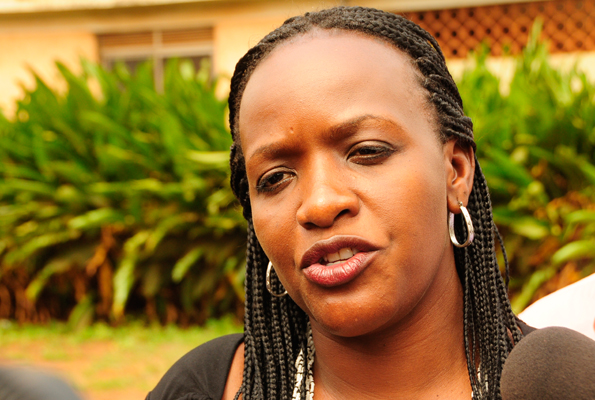
ACCUSED FINANCE MINISTRY OFFICIALS OF CREATING GHOSTS: Minister of Trade and Cooperatives Amelia Kyambadde.

Following on from the call by President Museveni to evacuate Ugandan citizens from South Sudan, the country has now opened a special phone line.

The Ministry of Foreign Affairs has released a hotline the many Ugandan traders and business people living in South Sudan.

State Minister for Foreign Affairs Henry Okello Oryem says the hotline +211 9283 020 44 will help citizens in different parts of the country to seek consular services and support. The number is available for call, text of WhatsApp.

South Sudan

The hotline came moments after government ordered the evacuation, by road, of Ugandan citizens trapped in South Sudan from Nisitu, an area located east of the River Nile. The evacuation will be undertaken by the Uganda Peoples Defence Forces.

Stories Continues after ad