Stanbic Bank
Stanbic Bank
21 C
Kampala
Stanbic Bank
Stanbic Bank
Home Blog Page 2084

England based Mugabi replaces Denis Guma for Uganda vs Comoros

Now suspended Denis Guma dons a worried face in a previous Uganda international engagement. His spot has been taken over by London born fullback Bevis Mugabi now at Yeovil, who finished 19th in League Two last season

The timing couldn’t have been better. A few hours after putting up a spirited performance for his new club Yeovil Town FC against Premier League club Everton at Goodison Park, defender Bevis Mugabi has earned his maiden call up to the Uganda national football team.

Cranes head coach Milutin ‘Micho’ Sredejovic on Wednesday announced Mugabi and a team of 31 other players for the two upcoming matches involving Kenya and Comoros. Cranes, who last appeared at Afcon in 1978, are tied on 10 points with Burkina Faso and can progress as either Group D winners or as best runners-up.
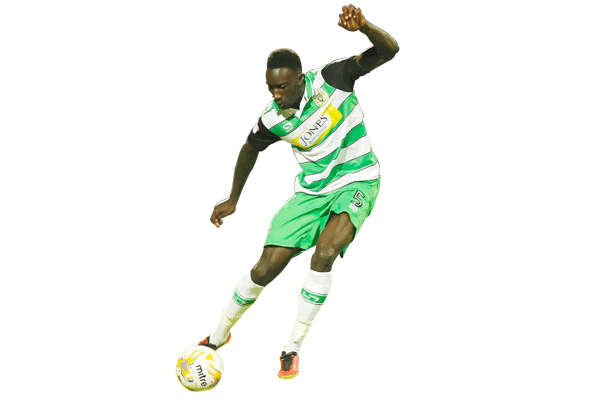
Mugabi turns out for League Two club Yeovil Town and was previously on the books of Southampton.

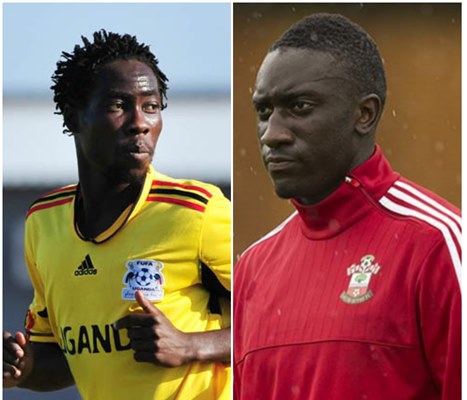
Mugabi who a few weeks was transferred from his childhood club Southampton FC to Yeovil, is anticipated  to be a direct replacement of Lebanon based defender Dennis Iguma who has been suspended for the game for accumulating cautions.

Now at his third top club, Mugabi joined Southampton in July 2011 after being let go by Fulham, with whom he had progressed through the ranks. His form for the Under-18 side saw him named on the standby list for two England Under-17 squads.

The 21 year-old who can play at right-back or centre-back, is expected to accept the Uganda national team call up and EagleOnline understands that Cranes coach Micho has been holding extensive talks with the Mugabi and his family.

Mugabi was also named man of the match in Yeovil’s previous game, a 1-0 loss against Morecambe in their league opener.
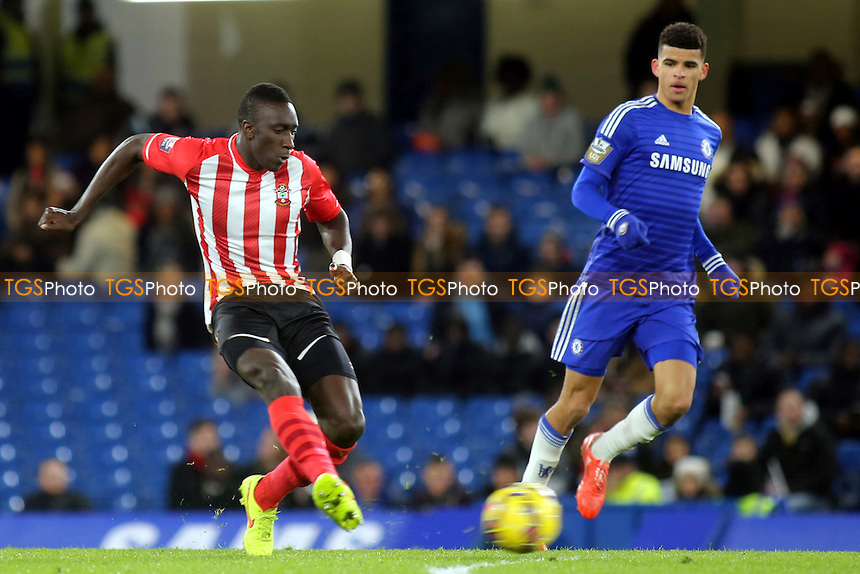
Bevis Mugabi while still at Saints passes the ball upfield against the Chelsea U21. Internet Photo
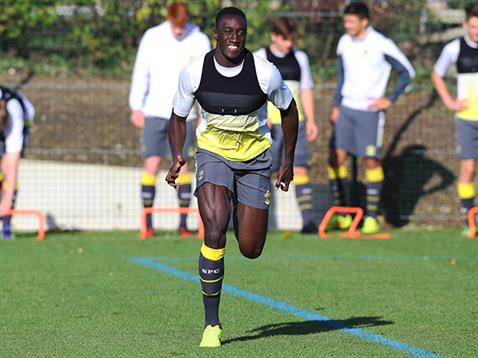
Bevis Mugabi in training

On the provision Cranes squad, there are 16 professionals and 16 locally based players. Official training starts on Thursday at Paradise Fitness Gym, Acacia Mall.

Match day tickets for Kenya and Comoros games go officially on sale by Wednesday, 24th August 2016.

Uganda Cranes will play Kenya on Tuesday, 30th August 2016 at Nelson Mandela National Stadium in an international friendly match.

The match will be used to fine tune the squad in preparation for the crucial AFCON 2017 qualifier against Comoros.

Uganda Cranes Team summoned:

Goalkeepers: Dennis Onyango (Mamelodi Sundowns, South Africa), Salim Jamal Magoola (El Merriekh, Sudan), Benjamin Ochan (KCCA, Uganda), Ismail Watenga (Vipers, Uganda)

Defenders: Nicholas Wadada (Vipers, Uganda), Joseph Nsubuga (SC Villa, Uganda), Bevis Mugabi (Yoevil Town, UK), Hassan Wasswa Mawanda (Al Shorta, Iraq) , Murushid Jjuuko (Simba, Tanzania), Isaac Isinde (St George, Ethiopia), Timothy Denis Awanyi (KCCA, Uganda), Rashid ‘Mertasacker’ Toha (Onduparaka, Uganda), Halid Lwaliwa (Vipers, Uganda), Joseph Benson Ochaya (KCCA, Uganda), Godfrey ‘Jajja Walu’ Walusimbi (Gor Mahia, Kenya)

Midfielders: Khalid Aucho (Baroka, South Africa), Tonny Mawejje (Knattspyrnufélagið Þróttur, Iceland), Geofrey ‘Baba’ Kizito (Than Quảng Ninh, Vietnam), Moses Oloya (Kuban Kransndor, Russia), Kezironi Kizito (Vipers, Uganda), Ivan Ntege (KCCA, Uganda), William Luwagga Kizito (Feirense, Portgual), Vincent Kayizzi Walugembe (KCCA, Uganda), Abdulmalick Vitalis Tabu (Sports Club Villa Jogoo, Uganda)

Strikers: Geofrey Massa (Baroka, South Africa), Farouk Miya (Standard Liege, Belgium), Yunus Sentamu (F.C Ilves, Finnland), Emmanuel Arnold Okwi (SønderjyskE, Denmark), Geofrey Sserunkuma (KCCA, Uganda), Edrisa Lubega (Proline, Uganda), Muhammed Shaban (Onduparaka, Uganda), Erisa Ssekisambu (Vipers, Uganda)

Stories Continues after ad

Barclays, Stanchart face storm over doing business with BIDCO

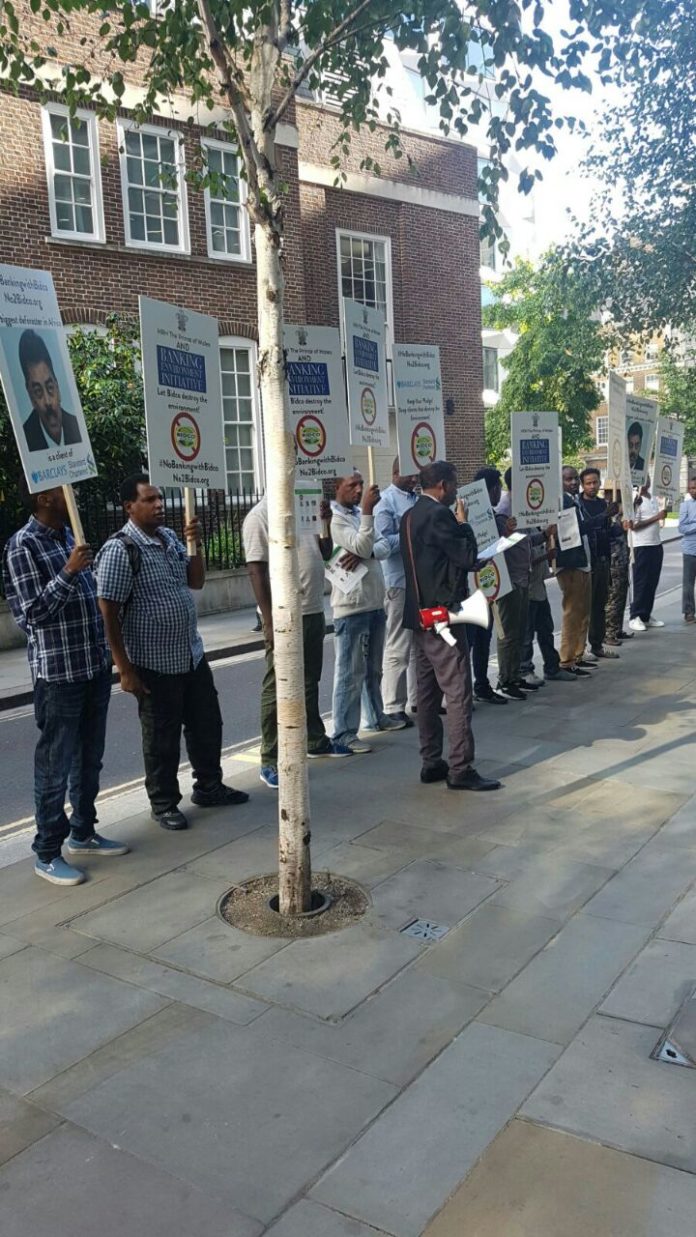
PROTESTORS: East Africans demonstrate in London, UK against BIDCO Africa. APO Photo

East African protesters have taken to the streets of London to demonstrate against banks that do business with Bidco Africa, which has reportedly deforested 18,000 acres in Uganda, highlighting the connection between global financial institutions, the Prince of Wales and widespread deforestation in Africa.

Barclays and Standard Chartered saw their London headquarters picketed due to their funding of Nairobi-based Bidco, a company that cuts down thousands of acres of pristine rainforest in Uganda, and engages in human rights and tax violations in Kenya and Tanzania.

The Bidco Truth Coalition, an activist alliance, has revealed that the Banking Environment Initiative (BEI), based at Cambridge University’s Institute for Sustainability Leadership under the patronage of The Prince of Wales, is failing in its mission to lead the banking industry in collectively directing capital towards environmentally and socially sustainable economic development.

The BEI’s nine member banks are Barclays, Standard Chartered, Deutsche Bank, Goldman Sachs, Lloyds, Northern Trust, RBS, Santander and Westpac.

By signing up to BEI’s ‘Soft Commodities’ Compact, the nine banks have committed to only direct capital towards sustainable business models and achieve zero net deforestation among their client companies.

Under BEI guidelines, member banks must drop clients that don’t measure up to socially and environmentally responsible policies.

Bidco Africa, which has engaged in multiple human rights, labour, tax and environmental violations, has publically stated that it does business with Barclays, Standard Chartered, Citibank, Equity Bank and Kenya Commercial Bank.

Bidco owns an oil palm plantation that has deforested 18,000 acres of rainforest in Uganda, and the company has also reportedly grabbed land from over 100 smallholder farmers.

The environmental impact of the palm oil project has led activists to call on the UN Global Compact to eject Bidco from its roster of members.

In 2004, the World Bank pulled out of Bidco’s Uganda project, citing violations of the World Bank’s anti-deforestation policies.

But BEI has remained silent, and Barclays, Standard Chartered and other banks continue to do business with Bidco Africa.

The Bidco Truth Coalition calls on BEI, its patron, The Prince of Wales, and BEI’s nine member banks to publicly state that they will no longer do business with Bidco and other companies that destroy the environment.

Stories Continues after ad

Kenya revisits decision on Dadaab refugee camp closure

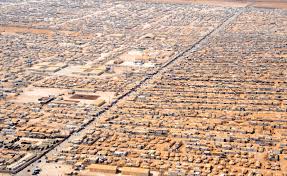
HIGH COURT BLOCKS CLOSURE: The Dadaab Refugee Camp in Kenya

Kenya has backed down yet again on its decision to close Dadaab, the world’s largest refugee camp. Interior minister Joseph Nkaissery announced the government’s decision, stating the repatriation process would not be completed until there is stability in Somalia.

The East African nation announced late May that it will close the camp in November, citing security concerns and economic burden. It also disbanded the department of Refugee Affairs, the government agency tasked with overseeing the Dadaab camp. The camp is home to 338.000 refugees from 13 different countries, majority of who are Somalis.

The Kenyan government’s decision coincided with US secretary of state John Kerry’s two-day visit to Nairobi this week. Kerry held talks with the Kenyan government regarding the situation in Somalia, besides the escalating crisis in South Sudan. President Uhuru Kenyatta also announced that his country’s troops will begin withdrawing from Somalia in 2018.

During his visit, Kerry said the US government’s decision to provide more than $146 million in humanitarian assistance to support the victims of droughts in Kenya and Somalia. Some of the funding will be donated to the United Nations High Commissioner for Refugees to support the refugees and the implementation of the voluntary repatriation process. The UN agency had in July appealed for $115.4 million funding to support the voluntary return and integration program.

The Kenyan government has threatened to close Dadaab numerous times in the past, calling the camp a ‘breeding ground’ for terrorists. With more than 600,000 refugees, Kenya is among the top 10 refugee hosting countries in the world, and the second to Ethiopia in Africa. Since the voluntary repatriation program was started in December 2014, more than 22,000 Somali refugees have returned back to Somalia. This hasn’t stopped the flow of refugees into the country, as as 8,500 more refugees arrived in Kenya from South Sudan following recent clashes.


Stories Continues after ad

Nigeria army says Boko Haram leader Shekau ‘fatally wounded’

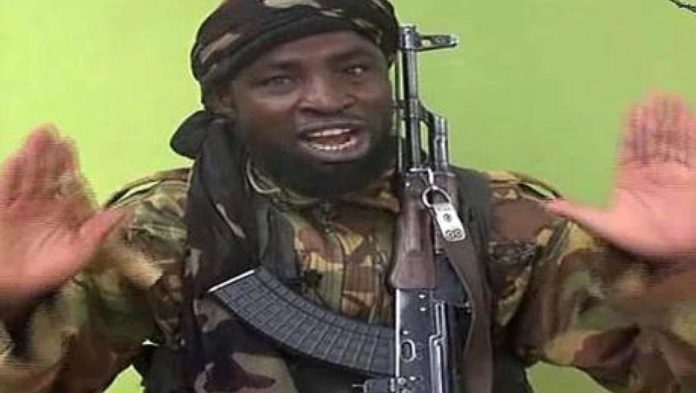
FATALLY WOUNDED: Boko Haram leader Abubaker Shekau

The Nigerian army says it has killed high-value target commanders of terrorist sect, Boko Haram, ‘fatally wounding’ leader Abubaker Shekau.

In a statement Sani Usman, the army’s spokesman, said after ‘interdiction efforts’ by the Nigerian Air Force on Friday, August 19 “some key leaders of the Boko Haram terrorists have been killed.” Usman also said that a number of other terrorists, including Shekau, former leader of the group, were ‘fatally wounded’.

The air force strike targeted a village within Sambisa forest, a long known Boko Haram stronghold. According to media reports the terrorist group’s commanders had gathered for ‘some sort of celebration.’

“For the army, successfully locating and killing such high-value targets my’s brutal tactics in the area have seen it accused of mass violation is a triumph for its intelligence gathering efforts which have often been overshadowed by its seeming adoption of excessive force against locals in the troubled northeast as part of efforts to fight Boko Haram.

But while news of a major airstrike killing Boko Haram’s leaders follows the recent trend as the army has gained ground on the sect, it’s not the first time Nigeria’s army has claimed to have killed Shekau. In the past, the Boko Haram leader has often come out weeks later to debunk claims of his death through video and audio messages. As a result, the latest claim has been received with some skepticism.

If true, the army’s announcement signals an end to a long chase. Shekau has been hunted for years since Boko Haram, under his leadership, notably became more violent, killing over 20,000 people. In 2012, he was added to the US State Department’s specially designated global terrorists list with a bounty of about US$ 7 million placed on him.

His influence in the group was undercut at the start of August after Islamic State announced Abu Musab al-Barnawi as the new leader of Boko Haram. In response, Shekau is believed to have led a breakaway faction of Boko Haram.


Stories Continues after ad

Machar in Sudan for ‘treatment’

Rebel leader Riek Machar with his top commanders.

South Sudan rebel leader Riek Machar is in Khartoum for medical treatment, days after fleeing to the Democratic Republic of Congo (DRC) following deadly clashes last month.

“Sudan has received, lately, Dr Riek Machar, for pure humanitarian reasons, especially his need for treatment and medical care,” Sudan’s Information Minister Ahmed Bilal Osman said.

“Dr Riek Machar’s health is stable currently and he will remain in the country under comprehensive healthcare until he leaves for a destination of his choice,” Osman told state media.

Hundreds died last month – and tens of thousands were displaced – when forces loyal to Machar clashed with President Salva Kiir’s government troops in South Sudan’s capital, Juba.

Following the fierce fighting, Machar withdrew to the bush with his forces and was later replaced as vice president by party rival Taban Deng Gai.

Sudan’s announcement of Machar’s presence in the Sudanese capital on Tuesday comes just a day after Deng wrapped up his first official visit to Khartoum.

Aides of Machar confirmed last week that he had left South Sudan and was in the neighbouring Democratic Republic of Congo. It was also reported that Machar had a leg injury, though it was not believed to be serious.

South Sudan was founded with optimistic celebrations in the capital on July 9, 2011, after it gained independence from Sudan in a referendum that passed with nearly 100 percent of the vote.

Two years later, a brutal civil war broke out between supporters of newly-formed South Sudan’s President Kiir and Machar. The two sides reached a peace deal in 2015, under which Machar returned to Juba to resume his role as vice president, but last month’s fighting threatened to send the country back to all-out civil war.

The UN Security Council voted on Friday to authorise sending an extra 4,000 troops to the country to bolster the existing UN mission.

South Sudan officials said they were considering the UN proposal.


Stories Continues after ad

Eight arrested in Burundi over defamation on social media

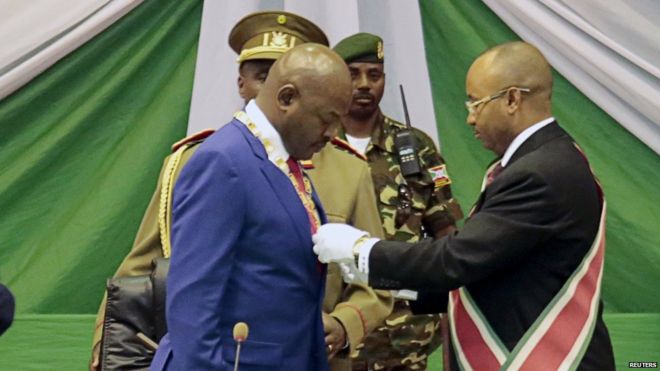
President Pierre Nkurunziza at his swearing in last year

Eight people have been arrested in Burundi for ‘defaming’ government leaders and institutions on Facebook and Twitter.

According to police spokesman Pierre Nkurikiye the eight were arrested on August 20 in the capital, Bujumbura, while meeting to write messages to spread via social media sites.

Burundi’s President Pierre Nkurunziza has survived protests and a coup attempt since he announced last April that he was seeking to extend his decade-long rule.

He subsequently won elections, which were rejected by his critics as a sham.

More than 400 people have been killed in unrest since April 2015.

The use of social media to spur dissent has sent shock waves to several governments in Africa, with many including Uganda incapacitating platforms like Twitter and Facebook during elections.

Stories Continues after ad

US imposes sanctions on Kony’s sons

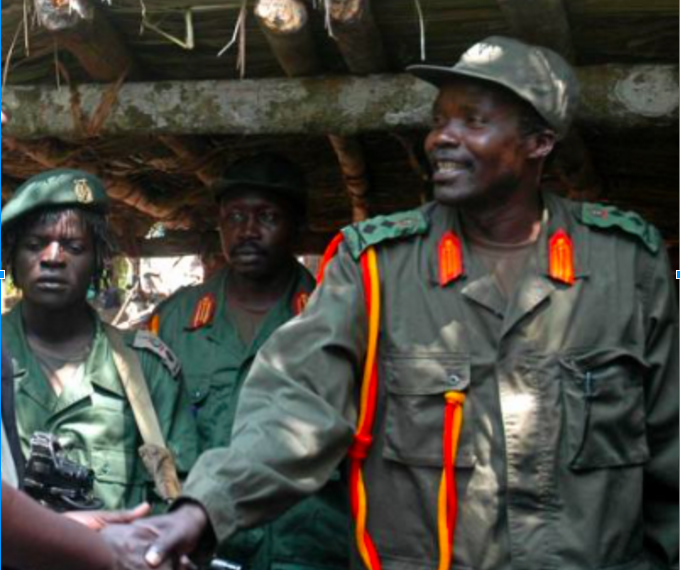
George Okot Odek, , The late Okot Odhiambo, Joseph Kony (Left to Right)
WARLORD JOSEPH KONY: His two sons Salim Saleh Kony and Ali Kony have been slapped with sanctions by the US.


The Lord’s Resistance Army (LRA) has yet been dealt another blow after the US announced it had imposed economic sanctions on rebel leader Joseph Kony’s two sons, accusing them of trafficking ivory.

Salim Kony and Ali Kony, both top LRA commanders, are said to have played ‘critical roles’ in trafficking of ivory from Garamba National Park in northern Democratic Republic of the Congo (DRC) through the Central African Republic (CAR) to Sudan’s disputed region of Kafia Kingi for sale or trade with local merchants, the US treasury said in a statement.

The Treasury statement indicates that Salim coordinates the transport of ivory, while Ali is responsible for negotiating ivory prices and either selling the ivory for US dollars or Sudanese pounds, or for trading the ivory for weapons, ammunition, and food with merchants in Kafia Kingi.

The statement further states that any assets that the two men have in the US will be frozen and that US citizens are ‘generally’ prohibited from doing business with them.

‘Today, the U.S. Department of the Treasury’s Office of Foreign Assets Control (OFAC) designated Salim Kony and Ali Kony, sons of the Lord’s Resistance Army (LRA) leader Joseph Kony, pursuant to Executive Order (E.O.) 13667 for acting for or on behalf of the LRA and/or Joseph Kony.  On March 8, 2016, OFAC designated the LRA and Joseph Kony pursuant to E.O. 13667 for engaging in the targeting of civilians in the Central African Republic (CAR) through the commission of acts of violence, abduction, and forced displacement.  Today’s action freezes any of Salim or Ali Kony’s assets within US jurisdiction and generally prohibits U.S. persons from engaging in transactions with them,’ the statement, signed on August 23 by OFAC Acting Director John E Smith states in part.

The statement adds: ‘OFAC remains committed to taking aggressive actions that will further diminish the capabilities of the LRA and its affiliates; today’s action, which targets the finances of the LRA and its leaders while also combatting their participation in the global illicit ivory trade, is the latest in a collaborative international effort to address the widespread violence in the Central African Republic’.

The Executive Order imposing the sanctions against the Kony sons was signed by President Barack Obama on May 12.

In 2014, Salim Saleh Kony, then aged about 22 was named deputy by his father, Brig Sam Kavuma, the Uganda People’s Defence Forces (UPDF) top commander pursuing the rebels, said then. The young Kony was named Salim Saleh reportedly after President Yoweri Museveni’s young brother; a man who played a key role in ensuring the then guerilla out, the National Resistance Army (NRA) captured state power in Uganda in 1986. It is resistance against the NRA offensive in the North that gave rise to the LRA, an outfit that was preceded in rebellion by the Holy Spirit Movement (HSM) of Alice Lakwena, now deceased.

The LRA was formed in Uganda, but was driven out by government forces and its fighters now roam the vast jungles in the region.


Stories Continues after ad

China about to complete ‘first’ foreign military base in Djibouti

MILITARY EXPANSION: An aerial view of the Chinese military base in Djibouti. Photo credit /US Army

China is building its first overseas naval base and military outpost at the small port town of Obock in the Republic of Djibouti on ground originally intended for use by the US Army.

The Chinese base on a 364,000 square meter (90 acre) plot will house supply stores; barracks for a small force of Chinese marines or Special Forces; maintenance facilities for aircraft and ships and weapons sites.

Obock or Obok is located on the northern shore of the Gulf of Tadjoura, where it opens out into the Gulf of Aden.

China refers to the Obock naval base as a ‘support facility’ and said they don’t have plans of building large bases such as those the US military favors. It also denies the base is ratcheting up tensions with the US whose Camp Lemonnier, the largest US military base in Africa, is located only eight miles away.

Camp Lemonnier currently houses over 4,000 US troops and is used for Special Forces and drone operations against jihadist groups in the region.

The Ministry of National Defense of the People’s Republic of China claims its Obock base will ‘better uphold international responsibilities and duties, and to protect China’s legal interests’.

China’s push into the world stage starting in Africa is part of President Xi Jinping’s foreign-policy priorities, based on the strategy of ‘steadily advancing overseas base construction’.

As part of this strategy, the People’s Liberation Army Navy (PLAN) first used commercial ports that were built or financed by Chinese companies for resupply and recreation. The Obock naval base is the first departure from this standard model.

Ironically, the base was first developed by the US in 2009 under the government of then Djiboutian Prime Minister Dileita Mohamed Dileita. In 2014, however, the new government led by pro-China President Ismail Omar Guelleh kicked-out the Americans and welcomed the Chinese.

The increasingly despotic Guelleh, who is relentlessly suppressing dissent, has received billions of dollars from China for Djibouti’s development. China is also financing a two proposed airports, a railroad, a port terminal expansion, fuel and water pipelines, a natural gas liquefaction plant and highway upgrades.

Some media reports claim China also funded Guelleh’s campaign for an unprecedented fourth term in office after he amended the Constitution that previously limited a President’s service to two terms.


Stories Continues after ad

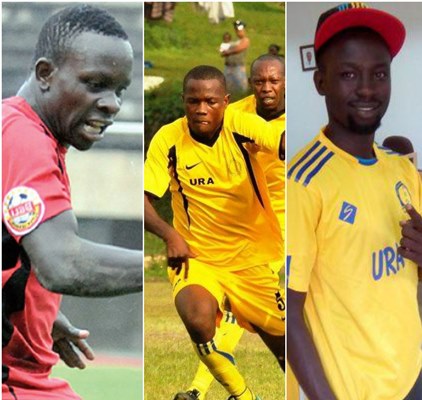
Tekkwo, Yayo and Senkoomi out – URA confirm status for unwanted players

Lutimba, Ssenkoomi and Tekkwo are all set to feature on loan for Express FC in the 2016-17 season

What is it with Express Football Club and discarded former Uganda Revenue Authority FC players?

We are talking about the today’s confirmation by the tax collectors that their two midfielders Tekkwo Derrick and Yayo Lutimba plus defender Senkoomi Samuel have been sent on a one year loan ending 30th June 2017 to Express.

This development came after an hour meeting between Express officials lead by Vice Chairman Administration Serunjogi Erias and URA club Chairman Mr. Ali Ssekatawa this morning in Nakawa.

After the said players put pen-to-paper on one-year deals, Ssekatawa immediately told them not not play against URA during the loan period.

It was also agreed that URA FC also holds the commercial rights of the said players during the loan period.

Express is yet to agree personal terms with the players. The six-time champions face Proline today at Lugogo, kickoff 4pm.

Stories Continues after ad

Getting the groove on at the Jinja Nyege Nyege festival

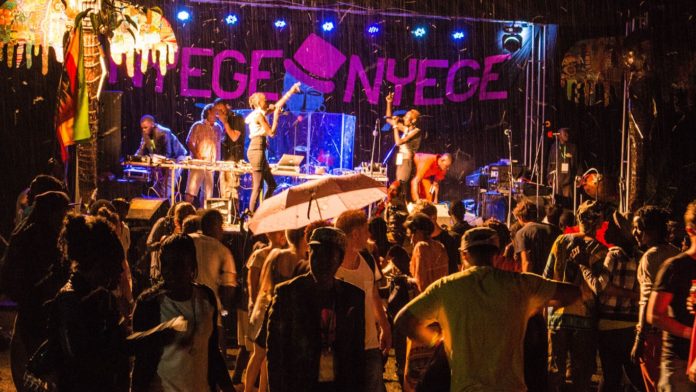
Performances at the Nyege Nyege Festival

There is a growing trend in the events section right now, a sort of ripple effect that keeps people busy almost every weekend with a festival here and there.

Over the past few months, there have been festivals ranging from food related, fashion and music. You will not fail to find one that fits in your niche for weekend related plans.

The Nyege Nyege festival is however different from the rest and this is not just about the name; the festival itself is about blending a fusion of several different artists, people and art into one colorful and beautiful show that lasts three days.

Nyege Nyege can be loosely translated to “The feeling of a sudden uncontrollable urge to move, shake or dance.”

The festival is organized and curated by the Boutiq Foundation, a community based organization in Kampala Uganda, that aims to develop the local arts and culture industry by creating platforms and opportunities for upcoming artists. The festival also aims to connect underground musicians from around the continent with one another and with producers and musicians working with African music outside the continent. This helps bring diversity to what most Ugandans rarely see in other festivals, experience and feel rhythms and tunes from Europe, USA, West, South and North of Africa; whilst listening to hidden gems of the East.

Last year, the festival was held with a throng of thousands showing up to not only enjoy the music that was being showcased but at the same time, discovering different forms of art from the artists that had gathered in Jinja.

The setting for this year’s Nyege Nyege festival is not going to be any different from 2015. Right on the lush banks of the Nile in the gardens of the Nile Discovery Beach hotel, a little distance from Jinja town and partnering with Jumia Travel gives most of the revellers discounted prices for their hotel bookings in Jinja throughout the festivals. A number of acts from countries such as the Kenyan and Ugandan underground scene with performances from Blinky Bill, The Dons, EA Wave, Lady Slyke, Albert Ssempeke, Otim Alpha, Tetuni Shani, Yellow Light Machine, Cosmic Homies, Kaya Collective and Shoeshine Bwoy, Blessed San, Undercover brothers and Lawrence Okello. Many acclaimed international artists renowned for their work with African sounds will also be joining the lineup including Tropical Bass pioneer Daniel Haaksman from Germany, Dub Morphology from the UK, DJ Zhao from China, Tropikal Camel from Israel, Schlachthofbronx also from Germany and the legendary MC Zulu will grace the two fully decked stages with state of the art sound systems.

Arlen Dilsizian, one of the organisers says, “In Luganda, Nyege Nyege means ‘irresistible urge to dance’. The idea of the festival came up because we felt that existing festivals in the region were not paying enough attention to new exciting genres of music that were emerging from across the continent, like Kwaito, Balani, Kuduros, coupe decale as well as to recent trends to fuse African sounds with European dance aesthetics.” According to Arlene, whilst there were many urban festivals in the region, what was missing was a festival in Nature where music lovers get away and let loose for 3 days of music, art and culture in an intimate setting. The festival is also a chance for different producers from different parts of Africa and Europe to meet, interact and collaborate.

“We find it crazy that legends of African music like Mamman Sani, the godfather of Electronic music in this continent have in their 30 years’ career played all over the world but not in another African country other than his native Niger,” she adds, noting that the same can be said for young Balani star Luka Productions and afro-futurist Ibaaku from Senegal. They are all playing at this year’s festival.”

The festival happening from the 2nd to 4th of September will also feature a daily screening program of films and documentaries about music, art installations, food from some of the best restaurants in Kampala at great prices and a kitenge corner where tailors will modify people’s clothes. A fun packed weekend for 120,000 UGX and you can buy your tickets on Jumia.

Evelyn Masaba is the Public Relations Manager at Jumia Travel Uganda an online hotel booking service with offices in Kampala (Uganda) Lagos (Nigeria), Nairobi (Kenya) and Dakar (Senegal)

Stories Continues after ad