Stanbic Bank
Stanbic Bank
21.4 C
Kampala
Stanbic Bank
Stanbic Bank
Home Blog Page 2092

Museveni appoints Bashasha as director manifesto implementation at NRM

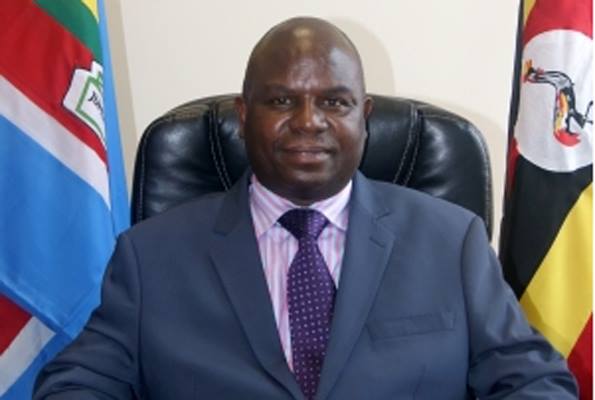
Mr Willis Bashasha.

President Yoweri Museveni has appointed former Bushenyi district Local Council five (LCV) chairman, Willis Bashasha as the Director Manifesto implementation of the ruling party.

EagleOnline has learnt that Mr Bashasha’s appointment takes immediate effect.

Mr Bashasha was Bushenyi LCV between 2011and 2015 and unsuccessfully contested for the same seat but lost in the National Resistance Movement (NRM) party primaries.

According to sources,Mr Bashasha will be charged with implementing the party ideas that are contained in the 2016 party manifesto.

Prior to joining active politics, Mr Bashasha worked with Uganda Revenue Authority for over a decade.

His appointment comes at a time when the NRM party is faced with multiply challenges and most being the promise from President Museveni’s 2016 manifesto. The appointment of Mr Bashasha is in line with the restructuring of the party to meet needs of its support base.


Stories Continues after ad

A sojourn into the wild Lake Mburo

Uganda, a beautiful country nestled in the middle of East Africa with the abundance of everything you would love to explore; it has the biggest part of the Victoria, several mountains that are worth climbing and beautiful creatures in the wild that will fascinate you.

All this and more, yet several Ugandans are oblivious of the  gem that is our home; we know there are so many tourist attractions in the country, but that is all we see “tourist attractions.”

UG8

There are several Ugandans that have been striving to change our very own outlook on this country’s tourism; they organise trips straight into the heart of our tourism sector. Places that open your eyes to so much more than you thought you knew about this country.


One of those trips is the Roundbob “Cocktails in The Wild”, where the travel company partners with Uganda Waragi to give several people a party themed camping experiencing; celebrating the beauty that is around us and making sure we have a good time while at it.

What Roundbob brings to the table are cheaper group travels to different locations whether in Uganda or South Africa. The charges cater for transportation, food and board, plus the different tours you will experience with the rest of the group during the trip. Over the years, they have made the travel experience seem more appealing to the young generation by creating themes that they can easily relate with.

This edition was scheduled to be held in Lake Mburo National Park, an expansive habitat for wildlife located off of the Masaka- Mbarara highway.

The second edition of the Cocktails in The Wild was very exciting to say the least. The journey started with the campers meeting up in Lugogo to get ready for the actual journey. The expedition from Kampala to Lake Mburo was wonderful, away from all the traffic snull up, hooting, racing bikes and people rushing to get somewhere. You could feel the excitement in the air on the buses, there were vuvuzelas, there was music, jokes and laughter. Several smiles exchanged as new bonds started forming, you could see the joy on everyone’s faces knowing that whatever was coming ahead of us was going to be “epic.” The feeling of freedom as we went past several hills green with leafy gardens, past forests so thick you only see darkness inside.

UG5

The best thing about a road trip out of Kampala is how they refresh your mind about your outlook on Uganda, away from the congestion you start noticing how cool the breeze without dust particles splattering all of your face. Then the roadside muchomo stopover, you can only understand how important this routine is if you are a frequent traveller in Uganda. As Ugandans, we love our meat especially roasted delicious meats and Lukaaya, a town that is half way through our journey has a lot of that. Several vendors will come shoving sticks of delicious looking meat in your face the moment the bus draws to halt till you buy something or they will keep cajoling you to buy. The best meats though can be found away from the [1]roadside, right on the grills where the vendors get it from. You can pick it straight off of the grill, but since the buses only do brief stops you do not have time for selecting it raw so that it is prepared for you there and then.

There amount of selfies that were taken over the weekend would make a Kardashian jealous, from bus to bus; there were cameras snappin away. All over social media with the #CocktailsInTheWild you could follow what was happening in the other buses and also try to out compete them at whatever antics they were up to on the journey. Of course we had special instagram moment when we reached the Equator monument and people went crazy with pictures whilst some were window shopping in the craft shops around the area. Note, the craft shops also accept Visa and Mastercard if you didn’t carry enough money for the indulgence.

On reaching Lake Mburo, almost everyone went silent in anticipation of all the animals we were about to see and of course the long night ahead of dancing and interacting with the many different people that came along for the journey.

UG7

The journey from the main road our campsite took almost an hour, you have to drive slowly within the park just due to the several animals that occasionally cross through the roads and just incase you did you didn’t know that there are several signposts reminding you of that. Speeding in the parks or veering off of the main road is not allowed; if you do, there will be a huge fine to be paid.

The campsite was a wash with the dusk sun and glowing with several party lights showing signs of what was about to happen, several tents were set up all over the place as the lake lay peacefully a stone throw away reflecting the setting sun.

Mburo

We were too hungry to notice all this beauty, first thing was to ask where the food was, find a tent that you would sleep in for the night and get ready for the free flow of cocktails through the night.

An evening boat ride was being offered to any of the willing campers, but it was too dark to see the several schools of Hippopotamus swimming in the lake, we were also cautioned not to go swimming in the lake.

UG4

UG2

UG

Throughout the night there was a DJ entertaining the campers while the bar kept the drinks coming, several circles formed all over the grounds as people got familiar with each other and dancing the night away. The music went through the night, it was up to you to either stay dancing or go to the tent and sleep off the fatigue.

UG6

According to Rhona Namanya the brand Manager, Uganda Waragi, the trip was mainly to encourage Ugandans to venture out and appreciate Uganda before venturing out to other countries to appreciate the beauty there.

“Uganda Waragi is a signature drink for Ugandans that has evolved with Uganda through the years, said Namanya, “Because of that, we have continued to embrace and sponsor Ugandan activities in celebration of the great heritage we all share. It is only natural that we are a part of activities that promote Uganda,” she explained the partnership with Round Bob.

Some of Kampala’s notable faces also made an appearance, for instance XFM’s Siima Sabiiti, Urban TV’s Gaetano Kaggwa and former Big Brother housemate Denzel.

The fun finally wound up on Sunday and just as you could have imagined, Kampala’s energetic youths kept talking about the expedition on the journey back.

Evelyn Masaba is the Public Relations Manager at Jumia Travel Uganda an online hotel booking service with offices in Kampala (Uganda) Lagos (Nigeria), Nairobi (Kenya) and Dakar (Senegal)

Stories Continues after ad

Why Ugandan footballers have failed to make it to the international scene

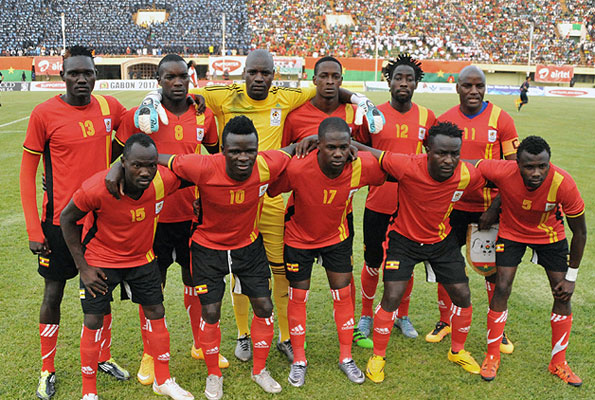
President Museveni inspects the Uganda Cranes team at Namboole ahead of an international match.

Most Ugandan football fans exhibit a lot of loyalty to top European soccer clubs, even when leading teams like Manchester United, Arsenal, Real Madrid, Barcelona and Bayern Munich do not have a Ugandan footballer in their ranks. This begs the question: To what extent would this loyalty manifest if Real Madrid signed Vipers’ Erisa Ssekisambu?

Vipers' Erisa Sekisambu
Vipers’ Erisa Sekisambu

Well, there are numerous examples of players who’ve played in the local league and successfully made it to the national senior team, the Uganda Cranes. The players have a lot of national team experience and most of them dream of playing professional football in Europe.

Uganda prolific striker Majid musisi while at Stade Rennes of France
Uganda prolific striker Majid Musisi (RIP) while at Stade Rennes of France

However, the only Ugandan footballer to have risen to a team in the big five European leagues: the Barclays Premier League, Spanish La Liga, French Ligue 1, German Bundesliga and Italian Serie A, remains Majid Musisi (RIP) who played for French club Stade Rennes.

Former Red Bulls Salzburg defender Ibrahim Sekagya. Photo/empireof soccer.com

Ibrahim Ssekagya of Red Bull Salzburg in Austria’s Bundesliga and David Obua who featured for the Scottish Premier side Hearts of Oak, both never made it to the top 5 leagues in Europe.

Other Ugandans who have made it to Europe include Nestroy Kizito, Eugene  Ssepuya, Tony Mawejje, Andy Mwesigwa, Noah Kasule, among others but these have not gone beyond mediocre teams like FK Vojvodna in Serbia, FC Cuckarick (Serbia), IBV Vestmaneyer in Iceland.

Sepuya Eugene, after signing a contract with Serbian Super league team, FK Mladi Radnik Pozarevac.

Indeed, most of them have failed to make a breakthrough to the top European leagues, leveraging their play on the African continent, after which they end up making a U-turn back to the home based league within a short period; they end up at their former clubs due to numerous factors, both at home and where they attempted professional football.

To get to the cause of the problem, one needs to look at the nature of competition in the local league that would help produce the talent required for top world leagues, as well as poor administration by the local football federations, and the inadequacy of funds, among other issues.

Inexperienced player agents also suggest local players are poorly-marketed; players are not exposed to the international scene through advertising them on the internet by displaying their videos on platforms like YouTube. Agents have got more control over the player and some others involve in bribery.

The absence of strong club foundations has also not helped develop talent, and most clubs don’t follow up the players after selling them to foreign clubs. The exception is Vipers FC, one of the few clubs that has got a foundation for its players, grooming them from St. Mary’s Kitende for competitive football in the league as well as helping them with transfers.

Language is another barrier that affects most Ugandan footballers; some are poor at English and prefer verbal agreements with the clubs. A written agreement is commonly used by most clubs in this era and players find problems negotiating contract terms with the club because they don’t like to read lengthy articles in the contract.

Talking Tactics: Football is played in different styles in most countries, and almost every country believes in its type of football for success. Most footballers will find football played in some countries difficult to adapt to.

Weather conditions: Unfavorable conditions like hot temperatures affect some players’ form because they fail to adapt. This makes up a player’s mind and finds conditions at home easy for him to live in.

Lack of football education and motivation from football federations are other factors that have miserably failed Ugandan footballers to make it to the international level.

Players that keep on coming back from professional stints to the local clubs they played for before at home not only diminishes their profiles but also sends them into oblivion.

Stories Continues after ad

Fourth policeman detained over lawyer Kimani murder

Willie Kimani was representing his client who was trying to sue the police

A fourth policeman in Kenya is in custody in connection with the murder of human rights lawyer Willie Kimani and two others.

Three others appeared in court on Monday.

The charges against the fourth man have not been made public but the prosecution filed an application to detain him for 14 days as they continue investigations.

Protesters took to the streets of Kenya's capital, Nairobi, alleging the three were victims of extrajudicial killings
Protesters took to the streets of Kenya’s capital, Nairobi, alleging the three were victims of extrajudicial killings

Lawyer ‘beaten and strangled to death’

A post-mortem report Kimani’s  death, his client and their driver has showed they were brutally beaten before they were killed.

It reveals that they were beaten and strangled.

The three disappeared after attending a court case and their bodies were recovered a week later from a river near the capital, Nairobi.

The pathologist found that lawyer Willie Kimani was hit on the back of his head repeatedly with a heavy blunt object until his skull fractured.

Taxi driver Joseph Muiruri also had injuries to his head and was strangled.

But it was the lawyer’s client Josphat Mwenda who appeared to have suffered the most.

The report says Mr Mwenda had injuries to his head, his neck and chest. His skull was fractured and blood was also found on his chest cavity.

The brutal murders have sparked national outrage.

@BBC

Stories Continues after ad

Uganda to reconsider Somalia pull out – Museveni

President Museveni, Israel Premier Benjamin Netanyahu and other leaders pose for a group photo during the regional security meeting.

President Yoweri Museveni has said Uganda will reconsider plans to pull its troops from Somalia if the AU stabilization mission there moves in the right direction.

Speaking to reporters at the end of a regional security summit in Kampala Monday, Museveni said the military mission in Somalia has not been working successfully.

“Our main reason for going to Somalia was to help the Somali people to create their own army, but after nine years we have not created the army,” he said, adding: “We cannot support that type of thing; the type of poor planning is something that we don’t support.”

But he said he discussed the issue with AU and UN officials, adding that this time people are serious about building Somalia’s army and if Uganda sees the program is working it will support it.

“We shall not pullout if we are moving the right directions, helping Somali people to build the institutions they need, specially the army,” he said.

Uganda said last month that it plans to withdraw its troops from Somalia at the end of next year.

Uganda deployed troops to in Somalia in 2007, and is the force’s biggest contributor, supplying more than 6,000 of the 22,000 AMISOM troops.


Stories Continues after ad

NRM’s Kalemba kicked out of Parliament

Expansion of the chambers

The ruling party National Resistance Movement has lost yet another Member of the 10th Parliament after Masaka High Court nullified the election of Christopher Kalemba as Kakuuto County legislator.Kalemba Christopher

According to Masaka High Court Registrar Baker Rwatooro, losing independent candidate and prominent city businessman Francis Drake Lubega had in April filed a petition challenging the academic qualifications of Christopher Kalemba.

But Mr Kalemba’s election who polled 14,135 votes to beat Lubega (12,568) to the Kakuuto County parliamentary seat was nullified on grounds that he bribed voters.

Kalemba

He becomes the 12th NRM MP to be ejected after a wave of petitions contesting the outcomes of the February 18 parliamentary elections.

The total of MPs ejected from the August house currently stands at 14.

So far, five of the 11 NRM MPs who have lost their seats in parliament were ejected due to lack of the minimum academic qualification (which is A-level or its equivalent).

They are: Peter Sematimba (Busiro South), Isaac Mulindwa Ssozi (Lugazi municipality), Charles Engola (Oyam North), Rehema Watongola (Kamuli municipality) and Edward Sembatya Ndawula (Katikamu South).

Stories Continues after ad

EU auditors demand accountability for €300 aid to Great Lakes region

The logo for the European Court of Auditors

European Union humanitarian aid to refugees from conflicts in the African Great Lakes area is responding to the challenges but there are some weaknesses in the way the aid is managed, a new report from the European Court of Auditors indicates.

The auditors, who examined the European Commission’s humanitarian support to Uganda, the Democratic Republic of Congo (DRC), Rwanda, Burundi and Tanzania for the period between 2011 and 2015 amounting to about €300 million, said more information is needed from the UN and its partner agencies as to how the money is spent.
‘The budgets examined were not detailed enough and there were no assessments of whether the proposed costs were reasonable. About half of the EU aid was spent through UN agencies and when the UN sub-contracted its activities no data was made available on how much was actually spent on the beneficiaries,’ a release by the Africa Press Organisation (APO) on behalf of the European Court of Auditors states in part.

Karl Pinxten, a member of the European Court of Auditors responsible for the report said: I am concerned that the Commission does not have the figures it needs to check whether the aid is being delivered in the most efficient and economical way.

He added: The more links there are in the chain between the EU taxpayer and those in need, the more difficult it becomes. The Commission should press UN agencies such as UNHCR and the World Food Programme, together with NGOs, for more information on how the EU’s money is being spent. Otherwise, this aid risks being too expensive.”

According to the auditors, there was a lack of documentary evidence to determine geographical priorities and assess project proposals, and as a result, it was not possible to determine whether the projects chosen complied with the relevant criteria and if the most appropriate projects were selected.
On a more global level, the auditors said there is no reporting on the Humanitarian Implementation Plan to provide an overview of results and lessons learnt.
‘While the desirability of linking relief, rehabilitation and development has been widely accepted by the Commission and other donors, there are very few examples of this being applied in practice. Without very actively pursuing this goal, there is a danger that opportunities to move from humanitarian aid to development aid will be missed,’ the auditors noted.

Stories Continues after ad

Kabaka congratulates muslims, Iddi celebrations for Wednesday

A man selects a goat for the Idd Iddi Mubarak festival.

Muslims in Uganda will celebrate Iddi Mubarak tomorrow, the Uganda Muslim Supreme Council (UMSC) has announced.

According to a July 4 release signed by the UMSC Director of Sharia Sheikh Yahaya Kakungulu, the main prayers will be held at the National Mosque of Old Kampala.

‘I (also) take the opportunity to congratulate the entire Muslim fraternity for having peacefully concluded the fasting of the Holy Month of Ramadhan as well as wish you a blessed Iddi El Fitri,’ Sheikh Kakungulu wrote.

In a related development the Kabaka of Buganda Ronald Muwenda Mutebi has also congratulated Muslims in Uganda upon the successful completion of the Holy Month of Ramadhan.

In his message delivered in Luganda the Kabaka wrote: ‘Tubakulisa nnyo okuyita mukiseera kyekisibo nga tumanyi nti eno y’emu ku mpagi enkulu mudini y’Ekiyisiramu. Ebyo byemubadde musaako essira gamba nga okusala Swala ezekiro, okuyamba abo abali mubwetavu obwengeri e’zenjawulo…’ the Kabaka’s message reads in part.

In conclusion the Kabaka urged the Muslims to continue with the exemplary behavior as exhibited during the fasting period.

Twagala empisa ennungi, obuntubulamu n’okukkiriza byemulaze mukisibo mugende nabyo mumaaso,’ the Kabaka wrote.

Kabaka’s full message below.

MUSLIM 1

Stories Continues after ad

Cristiano Ronaldo vs Gareth Bale for King of Euro 2016

Gareth Bale leads Wales into battle against Cristiano Ronaldo and Portugal in the Euro 2016 semi-finals on Wednesday hoping to become the first British side to reach a major tournament final in 50 years.

Wales are have already surpassed all expectations on their first ever appearance at the European Championship finals by reaching the last four with a rousing 3-1 win over the highly-fancied Belgium.

However, the spectre of the Real Madrid teammates, the world’s two most expensive players, going head-to-head adds extra spice to an already dazzling encounter in Lyon.

“It’s not about two players, everyone knows that, it’s about two nations in a semi-final,” insisted Bale on Tuesday in a bid to defuse the billing of he and Ronaldo’s all-star showdown.

“He’s a fantastic player, everyone knows what he can do. We concentrate on what we can do as a team, and not concentrate on individuals.”

Despite winning the Champions League twice in three years with Madrid, Bale has tended to be overshadowed by Ronaldo in the Spanish capital, where the Portuguese is a living legend as the top scorer in Real’s history.

However, of the two Bale has been in better form in France, scoring in all of Wales’ group games and forcing Northern Ireland’s Gareth McAuley into the own goal with a devilish cross which decided their last 16 tie.

By contrast, Ronaldo has look surly, stressed and well off his usually impeccable standards in front of goal.


NO FAVOURITES

The three-time world player of the year scored twice against Hungary to become the only player to score in four separate European championships. But he failed to find the net against Iceland, Austria, Croatia and Poland.

However, Portugal midfielder Andre Gomes defended his captain’s displays.

“He has worked a lot for the group and that is the most important thing. He has given his all,” said the Valencia man.

“Bale is a reference for Wales just as Cristiano is for us.

“Bale knows the Spanish league, but I have also played against British teams before and I know their style. They are strong, aggressive, they attack and counter-attack very well.”

“You can’t talk about favourites in a semi-final. If Wales have got this far it is because they have deserved too. We have to have respect.”

Portugal have reached the last four despite not winning a game in 90 minutes as they were the only side to progress having drawn all three group games before Ricardo Quaresma’s 117th minute extra-time winner saw off Croatia and penalties were needed to oust Poland in the quarter-finals.

Bale, though, refused to be fooled by Portugal’s route to a fourth semifinal in their last five Euros.

“We know what tournament they have had. We have watched all their games on TV. They are a dangerous team. They are ranked very highly and are not in the semi-final for no reason,” added Bale.

“Even if they haven’t won, they’ve got the results needed. We will do our homework as normal. Hopefully on the night we can put in another great performance and make more history.”

Both sides will be disrupted by suspension with Ben Davies and in particular Arsenal midfielder Aaron Ramsey a huge miss for Wales.

Crystal Palace’s Jonny Williams is expected to replace Ramsey, whilst Davies’s absence could provoke a reshuffle in defence with Chris Gunter moving from right wing-back into the back three making way for Fulham’s Jazz Richards to make his first start of the tournament.

Portugal are shorn of the banned William Carvalho, but Gomes and Joao Moutinho are in contention to start after recovering from injury. Danilo is the most obvious option to occupy Carvalho’s holding role in midfield.

@AFP

Stories Continues after ad

Kiswahili made compulsory for O’levels starting 2017

Students of Kololo Secondary School in Kampala sit for an exam. Kiswahili and English have been made compulsory.

The National Curriculum Development Centre (NCDC) has finalised the new O’ level curriculum which will be launched in 2017.

The just concluded overhaul of the curriculum condenses the 43 subjects taught in lower secondary into eight core learning areas.

The new curriculum has replaced the term ‘subjects’ with ‘learning areas’

Learning areas include Creative Arts, Mathematics, Science, Religious Education, Social Studies, Technology and Enterprise, Life education, and Languages.

Kiswahili and English have been made compulsory.

Recently speaking to journalists at NCDC offices in Kampala, Mathias Mulumba, the coordinator of the lower secondary reform programme said Kiswahili will make Ugandans competitive in the fast integrating East Africa.

Students will also choose an additional language out of the approved foreign and local dialects. The optional languages include Luganda, Lugbara, Acholi, Langi, Lusoga, Runyankole-Rukiga, Ateso, Latin, Arabic, French and German.

Henry Adramunguni, the language specialist at NCDC said the other local languages could not be brought on board due to lack of teaching material.

Since the new curriculum is intended to ensure that students acquire practical skills in order to make them productive for the dynamic market, computer studies has been included in all learning areas, according to Gilbert Siima, the specialist for Technology and Enterprise.

The new curriculum is intended to provide a holistic education which can promote critical thinking, creativity, numeracy, interpersonal skills, professional mannerism and innovation among students.

Meanwhile, NCDC has revealed that the in-service teachers will be retooled in 2016 in a bid to prepare them for the implementation of the new curriculum.

The in-service teachers will be trained every holiday, until their colleagues schooled on the new curriculum are graduated by universities and teacher colleges.

Higher institutions of learning have been directed to restructure their curriculum to meet the reform.

Under the new curriculum, summative assessment often manifested in form of examinations has been downplayed in favour of continuous evaluation of learners’ performance.

“The reformed, outcomes-based curriculum requires a revised, competence based approach to assessment that will support learning and reward achievement at all levels,” said Mulumba.

Under the new curriculum, classes will end at 2:40pm as opposed to the current 4:30pm. This, Joseph Kintu (the expert on Science at NCDC) said would give students enough time to reflect on their own learning, carryout self-assessment and experiment with the skills learnt in class.

The overhaul of the curriculum results from a study by NCDC which indicated that the current O’level curriculum is overloaded, outdated and does not adequately address contemporary demands of the job market.

Stories Continues after ad