Stanbic Bank
Stanbic Bank
21 C
Kampala
Stanbic Bank
Stanbic Bank
Home Blog Page 2095

Inside Israel PM Netanyahu’s first official visit to Uganda

Amid unprecedented security arrangements, President Yoweri Museveni will today receive Israel Prime Minister Benjamin Netanyahu here on a one day state visit.

Netanyahu first visited Uganda in 2005, before becoming prime minister for a second time in 2009.

Uganda and Israel enjoy modest relations, especially on matters of security and intelligence.

Police will close and oversee the traffic flow for Entebbe-Kampala Highway during Netanyahu’s visit.  A source at CAA reveals that the airport will be off limit for hours and very busy because the Israel leader’s delegation will come with no less than four planes; one plane will be chartered and hold the Prime Minister’s Bureau, another plane will carry 140 people to Entebbe and will include IDF soldiers who participated in the Entebbe operation and some of the hostages, and two Hercules planes will have the Netanyahu’s motorcade inside of them as well as a field hospital which is to be donated at the end of the trip.

After Uganda, the trip will see the Prime Minister visit Rwanda, Kenya, and Ethiopia.


Entebbe raid

Museveni and Netanyahu will preside over a ceremony to commemorate 40 years since the Entebbe operation. The ceremony will take place in the old terminal where over 100 Israelis and Jews were held hostage by Palestinian and German terrorists.

“The raid at Entebbe was for us a very dramatic national experience. For me, obviously, one of great personal consequence,” Netanyahu said, according to an Israeli English daily, The Jerusalem Post.

“It has always been his (Netanyahu’s ] desire to set foot in Uganda again, especially at Entebbe, where his brother was killed in 1974,” says Mr James Mugume, the permanent secretary in the Ministry of Foreign Affairs.

On July 4, 1976, a group of Israeli commandos covertly raided Entebbe airport on a rescue mission of 248 passengers/hostages aboard an Air France passenger plane that had been hijacked a week earlier by Islamist outfits of the Popular Front for the Liberation of Palestine.

Miriam Eshkol, wife of Prime Minister Levi Eshkol, dancing with then Ugandan foreign minister Sam Odaka and army chief (and later president) Idi Amin on a visit to an army base outside Kampala, June, 1966. (GPO) Courtesy Times of Israel

The then Idi Amin government, which sympathised with the Palestinian cause, had welcomed the hijackers. The hijackers had separated the Israeli hostages from the rest of the group, and moved them to a derelict building at the airport.

In the 90-minute night operation executed by commandos, 102 Israeli hostages were rescued.

About 45 of Amin’s soldiers are said to have been killed during the mission while there were four casualties on the Israeli side, including the unit commander, Lt Col Yonatan Netanyahu, who was also Mr Netanyahu’s older brother.

A C-130 Hercules in front of the old terminal in 1994. Bullet holes from the 1976 raid are still visible.

That bloody hostage rescue mission was condemned by the UN Secretary General as “a serious violation of the sovereignty of a United Nations member state”.


UN Palestine vote

The appropriation of Palestine in 1948 – the year of Israel’s spontaneous foundation – incidentally set the stage for a less amicable period in Israeli-Ugandan relations

As a matter of fact, President Museveni has visited Israel on three occasion while  dozens of African Presidents including Kenyan President Uhuru Kenyatta and Liberian President Ellen Johnson Sirleaf have also frequented the Middle East nation in the recent past.

Consequently Israel is hoping that the visit – the first by an Israeli prime minister to Uganda and sub-Saharan Africa in three decades is very much hinged on attaining Uganda and other African states’ support in international forums.

No doubt Israel wants them to side with it at the UN, where the General Assembly overwhelmingly recognized Palestine as a nonmember observer state in 2012. The Palestinians have used their upgraded status to launch a diplomatic offensive against Israel and its occupation of lands where the Palestinians hope to establish a future state.

EagleOnline understands that the Israeli are talking with Uganda, Kenya, Rwanda, and Ethiopia alongside 41 other countries in sub-Saharan Africa who vote in one bloc at the UN so Netanyahu wants to improve relations with these countries … and wants more countries to not vote against Israel at the UN.

President Museveni addresses the U.N. General Assembly on September 24, 2013. No doubt Israel wants Uganda to side with it at the UN, where the General Assembly overwhelmingly recognized Palestine as a nonmember observer state in 2012.
President Museveni addresses the U.N. General Assembly on September 24, 2013. No doubt Israel wants Uganda to side with it at the UN, where the General Assembly overwhelmingly recognized Palestine as a nonmember observer state in 2012 (Photo/GettyImages)

In general, President Museveni, like several of his like-minded compatriots on the continent, like the flexibility of this ‘aid on demand’ approach, while many the West are at unease with it. They worry that it may enable the aid-receiving countries’ political leaders to site projects according to their personal or political needs, rather than according to the needs of the recipient population.


Military aid

It should be understood that  Israel has a long history of involvement in Uganda, sending experts in agriculture and development, as well as military advisers and mercenaries, over the years.

However Israel’s prominent role in assisting Uganda in the 1960s later crumbled in the 1970s when Arab countries pressured Uganda then under President Idi Amin to limit or cut ties with Israel.

While Israeli military relations are limited, observers intimate that President Museveni  could be looking back to the Jewish nation to help him provide security training and assistance especially breaking ties with the Democratic People’s Republic of Korea (DPRK), or North Korea , and the country is noted for providing training and expertise for the Uganda Police as well as the provision of “non-lethal” equipment.

For Uganda, abandoning ties with DPRK meant deepening ties with South Korea while trying to rekindle a relationship with Israel as well.

While this assistance remains crucial, President Museveni, now in his fifth term in office – the last one under the Constitution – on the other hand is preoccupied with looking for money for ambitious infrastructure projects to complement his legacy.


Terrorism

Cited is Israel’s deployment of a team of security experts following the 2013 al-Shabab attack on a Nairobi mall so Israel, with its vast experience fighting militants, could continue to offer training on terror prevention which fight Museveni has been at the forefront over the years .

Mr Okello Oryem, the state minister for International Affairs, recently said that the regional heads of state summit will “basically discuss ways of how to fight terrorism but that will be after his [Netanyahu’s] private moment.”

Israel’s defence chief of staff Gadi Eisenkot supplemented that their country will continue putting emphasis on fighting terrorism.

Netanyahu, will hold a meeting with invited regional heads of state, to discuss strategies on combating global terrorism


Oil refinery deals

Uganda being an emerging oil and gas frontier in the region, the other under looked component is that back in 2011 during a four-day working visit to Israel, President Museveni met Israeli oil investors and discussed the possibility of them setting up a refinery in the country, a statement from his office said.

Mr Museveni is said to have met officials of Mini Refineries Enterprises Limited, an Israeli oil refinery company and it is believed the same officials are part of Netanyahu’s delegation of Israeli businessmen with him in cooperation with the export institute thus oil business discussions might surface.

Unfortunately South Korea’s SK Engineering and Construction Company are now primed to take charge of the development of the Uganda’s proposed Shs4b Greenfield oil refinery.


Unwanted Jewish/African refugees

A three month investigation in 2014 showed how – covertly – Uganda was receiving Israeli refugees and taking arms in return to keeping them here or transiting them to their home country. Despite numerous government denials, tickets, photos and videos of Israeli refugees expose the grim nature in which the deportations are carried out and accepted by Uganda.

immigrants

When the accusation was first drawn that the Ugandan government was taking Israeli refugees in exchange for arms, government officials were quick to deny the allegations.

Foreign affairs ministry officials, on top of denying the allegation said the deportations from Israel would be in contravention of established International law practices that Uganda ascribes to. But the allegation held and probably might now be true.

A few months after denying the allegation, Israeli government officials would shift their pronouncements from the non-existence of the deal to ‘the deal is not completely unfounded’.  Haaretz, a leading agency in Israel quoted the Israeli Interior minister Gideon Sa’ar, in September last year, saying the deal for the transfer of refuges from Israel to Uganda is not completely unfounded.

But while the Israeli government officials shifted goal posts on the matter, the government back in Kampala stayed firm, assuring the press from month to month that the government wasn’t taking any refugees from Israel.

While the government denied the allegations, they didn’t deny that Israel had approached them to act as a transit country for refugees. Infact, Foreign Affairs minister Okello Oryem in an interview with the EastAfrican newspaper would pronounce that indeed Uganda had been approached to host unwanted refugees of Eritrean and Sudanese origin.

Then, under the deportation agreement, Uganda was enlisted in none other than a mission to secure Israel’s own borders, which are under threat from “infiltrators” apparently so indistinguishable from one another in their blackness that they can be repatriated to any old place in Africa.

Stories Continues after ad
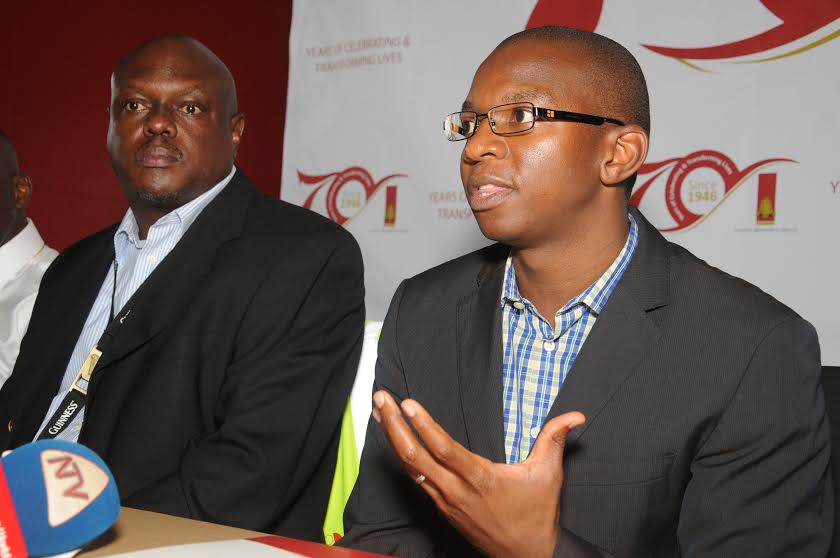
Nakaseke man who claims he’s Jesus reincarnated says hospitals are evil

Emmanuel Solomon Ssemakula, the man son of God and his nine followers, have been detained by police

Happy Sunday!

It was another eventful weekend and yesterday there was a nasty accident involving four vehicles which claimed 20 lives on spot.

It might be Sunday, but Ugandans never rest.

Now a  man who claims to be  Jesus Christ has claimed that he is only preparing people for the end times – and claims he can prove it.

Emmanuel Solomon Ssemakula has built up a following in Ntongo village, Kapeeka Sub County where he has conned several residents money, using his cult, Savannah region police spokesperson Lamech Kigozi told NTV on Saturday.

In addition to conning his followers, the self-proclaimed Jesus Christ instructs his followers not to go to the hospital when ill. All they are to do is to pray to him. Afande Kigozi revealed that the man who claims  son of God, would be taken to court for leading a cult.

“When they fall sick, they only kneel and pray and ask for blessing from this earthly Jesus (Solomon Ssemakula),” he said.

Sensationally, Ssemakula has maintained that he is Jesus and he is not afraid to publicly declare so.“It’s me Jesus Christ, Emanuel, prince of peace, Michael… I was born in Jerusalem,” Semakula said.

“They will hate you for my names’ sake, the name is heavy. You carry it, so that is why you see that true  I am a true Jesus Christ,” he added.

Although many in his place of birth Nakaseke are critical of him, some listen to his speeches in which Semakula claims he is on a mission to select 144,000 people for the second coming.

Ssemakula was orphaned at a tender age but was lucky to get someone who sponsored his education.

His sponsor then took him to Kenya and Tanzania to spread the word of God before coming back to Uganda.His followers, who have been with him for about six years, also believe that he is indeed Jesus Christ.

A concerned man, who lives in Luweero, said his father-in-law has decided to leave behind his wife, children and grandchildren to live with him. He continuously denies his followers access to medication and cooked food.

Stories Continues after ad

Israeli minister says Facebook a ‘monster’, hindering security

Mark Zuckerberg-Facebook CEO.

Israel’s Minister of Internal Security on Saturday accused Facebook (FB.O) and its founder, Mark Zuckerberg, of not doing enough to prevent incitement against Israel and said the social network was “sabotaging” Israeli police work.

Israel has in the past said Facebook is used to encourage attacks and the government is drafting legislation to enable it to order Facebook, YouTube, Twitter and other social media to remove online postings it deems incite terrorism. [L8N19C1NE]

But the comments made by Gilad Erdan, a cabinet minister in Prime Minister Benjamin Netanyahu’s right-wing coalition that oversees law enforcement, were particularly biting.

He said Zuckerberg was responsible for Facebook policy and called on “the citizens of Israel to flood him in every possible place with the demand to monitor the platform he established and from which he earns billions”.

A spokesman for Facebook in Israel said the company was not commenting on the minister’s assertions.

During an interview on Channel 2 television, Erdan said, “Facebook today, which brought an amazing, positive revolution to the world, sadly, we see this since the rise of Daesh (Islamic State) and the wave of terror, it has simply become a monster.”

“Facebook today sabotages, it should be known, sabotages the work of the Israeli police, because when the Israeli police approach them, and it is regarding a resident of Judea and Samaria, Facebook does not cooperate,” he said, referring to the area of the West Bank.

Made the remarks,Israel's Minister of Internal Security, Gilad Erdan.
Made the remarks,Israel’s Minister of Internal Security, Gilad Erdan.


“It also sets a very high bar for removing inciteful content and posts,” Erdan said.

Since October, Palestinians have killed 34 Israelis and two visiting U.S. citizens in a wave of street attacks, mostly stabbings. Israeli forces have shot dead at least 201 Palestinians, 137 of whom Israel has said were assailants. Others were killed in clashes and protests.

Palestinian leaders say assailants have acted out of desperation over the collapse of peace talks in 2014 and Israeli settlement expansion in occupied territory that Palestinians seek for an independent state. Most countries view the settlements as illegal. Israel disputes this.

Israel says incitement in the Palestinian media and personal problems at home have been important factors that have spurred assailants, often teenagers, to launch attacks.

Tensions over Jewish access to a contested Jerusalem holy site, revered by Muslims as Haram al-Sharif (Noble Sanctuary) and Jews as Temple Mount, have also fueled the violence.


Stories Continues after ad
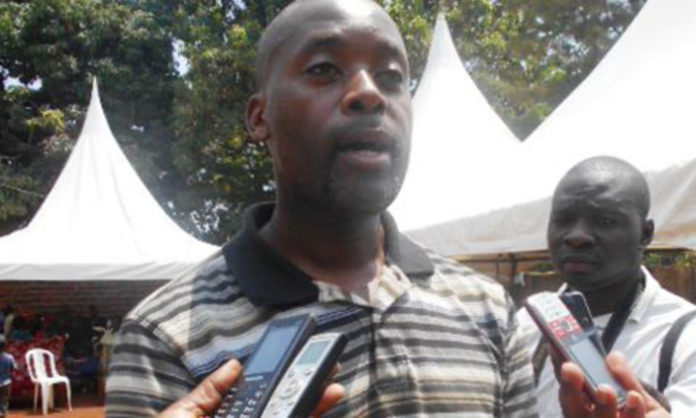
Government sets interviews for new RDCs

President Museveni who is also Commander in Chief of armed forces and consumer of intelligence .

Government has set new rules for incoming Resident District Commissioners indicating that all RDCs must undergo both oral written interviews.

According to sources within the Presidency, the new measures are aimed at streamlining service delivery and enhancing quality.

It means that one can’t attain office of an RDC without going through intrerviews.

It is a new measure introduced in government by new Security Minister Lt. Gen. Henry Tumukunde to fast track Vision 2020 when Uganda is supposed to attain the middle class status.

Previously RDCs have been appointed without verifying their capabilities and with some having their academic credentials questioned. However the new measures seeks to address issues like competence, general understanding of the country and the National Resistance Movement (NRM) party as well.

However, the new measures will not only be limited to the new entrants as it is going to apply even to those around in service.

Uganda has 111 districts and this means that all the 111 RDCs will sit for the interviews.

Role of an RDC

Resident District Commissioners are part and parcel of the executive arm of government as they represent the president in their respective districts. An RDC is a senior civil servant and as such, they are supposed to spread the NRM party ideals to the population as well as those of government. Another role which is paramount is that an RDC is the head of security in the district.

Article 203 of the 1995 Constitution (as amended) provides for the appointment of the Resident District Commissioner and also describes their role, as the representative of the president and central government in a district.

The President is yet to make appointments and reshuffle RDCs and security chiefs since he assumed office after winning the February 18, 2016 general elections


Stories Continues after ad
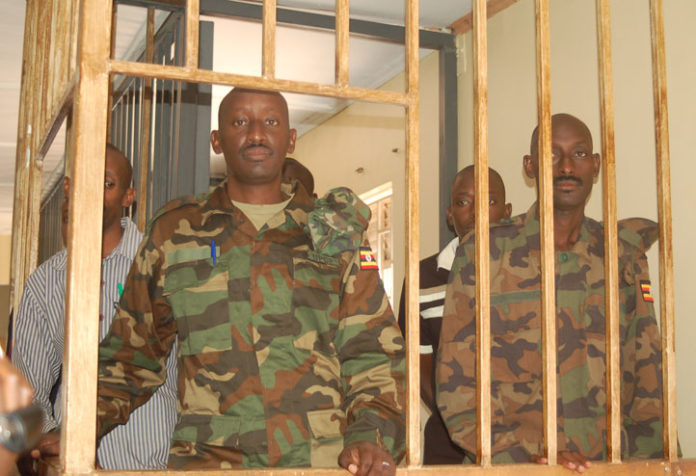
Entebbe pilot Michel Bacos ‘saw hostage murdered’

Capt Bacos (L) turned down the chance of freedom, refusing to abandon his passengers

The French captain of a hijacked plane at the centre of a famed Israeli rescue operation has described how he saw a passenger killed by a hostage-taker.

In a rare interview, Michel Bacos, 92, said a Palestinian opened fire on hostages when commandos stormed the terminal in Entebbe on 3 July 1976.

It was previously understood no hostages were murdered by the captors.

Israeli forces freed 105 hostages in a surprise raid, killing about eight hostage-takers and 20 Ugandan troops.

One hostage, Jean-Jacques Mimouni, was mistaken for a hostage-taker and shot dead by a commando. Another, Pasco Cohen, also died after being accidentally shot by one of the Israeli soldiers.

Speaking from his home in Nice, France, Capt Bacos said the third hostage who lost her life, Ida Borochovich, was killed in front of him by a hostage-taker.

“When the raid started, a Palestinian came and started firing on the hostages. The woman was on the floor next to him by the entrance and he shot her. For sure she was killed.”

Capt Bacos said, earlier in the week, that one of two Germans who, along with two Palestinians, hijacked his Air France plane, had told him: “If anyone tries to save the hostages, we’ll know first and we’ll shoot all of you.”

In the event, the hijacker, Wilfried Boese, did not turn his gun on the hostages when the commandos fought their way into the building. He was shot dead in an exchange of fire.

Entebbe: A mother’s week of ‘indescribable fear’

“The noise was loud but after a few moments somebody said: ‘There are Israeli soldiers here.’

“I lifted my head and I saw a soldier dressed like a member of the Ugandan army with a white hat – and he said in Hebrew: ‘Listen, guys, we’ve come to take you home.’

“I didn’t believe what I was seeing, even now I can’t describe it – seeing the soldier, it was as if an angel had come down from the sky.”

Capt Bacos was awarded France's highest civilian honour for his actions
Capt Bacos was awarded France’s highest civilian honour for his actions

On the third day of the crisis, the hostage-takers separated the Israeli and non-Israeli Jewish passengers from the rest of the passengers, who were allowed to leave.

Capt Bacos and his crew of 12 were offered the chance to go, but refused to leave while people were still being held.

“I was a captain of Air France and before that I was in the Free French Forces under [Charles] de Gaulle during the [Second World] War – it would be impossible for me to leave my passengers, unimaginable,” he said.

“I told my crew that we must stay until the end, because that was our tradition, so we cannot accept being freed. All my crew agreed without exception.”

The Air France airbus was hijacked on 27 June and flown to Entebbe, where at least three Palestinian accomplices were waiting at the airport.

They demanded the release of 54 militants held by Israel and four other countries, and a $5m ransom.

Capt Bacos, his crew and the rescued passengers were flown back to Israel on 4 July, hours after the night-time operation. He was later awarded the Legion d’honneur, France’s highest civilian decoration, for his actions during the crisis.

A fourth hostage, Dora Bloch, who had been taken to hospital before the raid, was murdered on the orders of President Idi Amin the day after the Israeli rescue.

By Raffi Berg for BBC News

Stories Continues after ad

We cannot ignore criminality of Besigye, Sejusa and Kabazikuruka-Museveni

President Museveni interacting with former Democratic Secretary General Matia and Bukoto East MP Florence Namayanja who is also a member of DP.

President Yoweri Museveni has said he has no problem dealing with opposition and other political activists but warned that should one cross the threshold of politics into criminality then they have to be dealt accordingly by government.

Museveni made the remarks today while meeting a section of political parties under their umbrella organization Inter-Party Organisation for Dialogue (IPOD).

Gen. Museveni singled out Forum for Democratic Change strongman Kizza Besigye who is under remand at Luzira prisons on treason allegation, Former coordinator of security agencies who is opposed to his regime and has just been set free by court after a long protected retirement case with government, Gen. David Sejusa and Nakawa Member of Parliament Michael Kabaziguruka who is in jail also over treason allegations as some of the people opposed to his government and are since crossed the threshold of politics and gone into criminality.

However, Gen. Museveni didn’t elaborate on the kind of criminality the three leaders are involved in.

“When we cross threshold of politics into criminality like cases of Kabaziguruka, Besigye and Sejusa, then we cannot ignore it. Besigye issue with accomplices is not opposition matter because I for example have no problem with DP and others.” Mr Museveni warned his guests at State House.

He added “We cannot release Kabaziguruka when we have evidence of plans to commit crime because they could fall or resort to foreign governments for funding which is not good at all”

Museveni informed the political parties’ leaders that for those that are calling for reconciliation, there should be accountability first before reconciliation saying otherwise it would breed impunity. Museveni further revealed to the team that he fully supports the funding of political parties by government.

“If there is anything concerning dialogue, I am ready for dialogue. It is a gift from God, no leader should refuse it”

However, Mr Museveni has in the past rejected calls by opposition for dialogue and more specific on reconciliation that he would dialogue with criminals and reconcile with killers for the case of Uganda Peoples’ Congress (UPC) party and its leadership and Idi Amin whom he sometimes refers to as swine.


Stories Continues after ad

KCCA appoint ex-Simba coach Byekwaso to replace Sam Ssimbwa on two-year deal

Morley Byekwaso, who guided now relegated SC Victoria University to its first and only Uganda Cup trophy in 2013, has been named as the new assistant coach of Kampala Capital City Authority (KCCA) FC.

The Uganda champions said in a statement on Tuesday that Byekwaso has signed a two-year deal, with the option for an extra year.

He is second in command at Lugogo and will supervise the other coaches like John Luyinda aka Ayala, Badru Kaddu who has been in acting role, Nelson ‘Nelly’ Magera, Richard Malinga and Daniel Kiwanuka working under him.

The CAF ‘B’ licensed coach comes with vast experience from various clubs he has managed like Ngege FC, Luzira United, SCVU, Simba FC and Proline FC.

Byekwaso

Byekwaso replaces Sam Simbwa who was handed an eight-month ban by Fufa and eventually sacked from KCCA, where he was assistant manager to Mike Mutebi.

Sam Ssimbwa (R) with former boss Mike Mutebi who is now working with Byekwaso

Ssimbwa was banned for utterances he made last December when he claimed (in audio recorded on WhatsApp) that because he loved to win so much he paid referees to fix a match without the knowledge of the club.

“While I was coaching KCCA FC in 1997, I saw signs of a great manager in him. See, just 19 years later, he is turning out to be one of the best coaches in the land,” manager Mike Mutebi said of Morley Byekwaso, now his auxiliary, at the unveiling ceremony of Friday at Lugogo.

Mutebi says Byekwaso’s veins have KCCA blood running through and he will put the club first in whatever he does.

“He was a top notch player among the KCCA golden generation of 1997 that included Ibrahim Sekagya (now coach in New York), Abdullah Mubiru (former KCCA FC coach) and Willy Kyambadde. He is calm and result oriented!  I don’t need any lecturing on how to work with him,” an animated Mutebi says.

“For sure, KCCA is not only copying the Barcelona FC (Spanish club) playing model but also the recruitment plan. We bring back former players who played for the club to be part of the rebuilding process as we aim to take back KCCA to the top of Uganda football. When you get a former player like Byekwaso, they understand the culture and philosophy which keeps the club tradition moving on for generations. Lest I forget, Byekwaso loves to work with kids and I do and be sure we are going to unearth and develop more exciting players at Lugogo,” he said.

Stories Continues after ad

Villa sign keeper Mugabi

SC Villa have signed goalkeeper Yasin Mugabi from Kampala Capital City Authority (KCCA) for an undisclosed fee.

The 29-year-old goalie has put pen to paper on a two-year contract with Deo Serwada’s side.

Mugabi, who was also reportedly of interest to Uganda Revenue Authority and The Saints were he has spent a whole season on loan.

Mugabi’s arrival will cast doubt over the future of suspended Villa ‘keeper Nicholas Sebwato, with Ashadu Bugembe also on the books.

He joins newly signed defenders Ayub Kisaliita, Joseph Nsubuga and Bernard Muwanga.

Stories Continues after ad

How South Korea president’s visit switched Uganda $4 Billion refinery deal

Museveni walks with South Korean President Park Geun-hye in Entebbe during her May visit. There is speculation that the change is related to her visit.

When President Museveni hosted his South Korean counterpart Park Geun-hye in May, little did the world notice that her country would benefit enormously.

By Thursday, June 30, 2016 it has been revealed  that the the Energy Ministry and government had suspended negotiations with a Russian company, Rostec Global Resources Consortium, which had been offered a deal to build Uganda’s oil refinery.

A government statement released on Friday says the consortium made additional demands after a final agreement had been reached.

The contract has now been offered to South Korean company, SK Engineering, which had come second in the original bidding process.

There is speculation that the change is related to South Korean President’s visit. One senior western diplomat even said the decision to do business with a Russian military contractor whose chief executive is subject to sanctions and then dump them again “sounds typical Museveni”.

A State House insider intimates how during Museveni’s talks with Geun-hye, the man from Rwakitura was convinced that the Russians had given him a poor deal which would leave his government subsidising an inefficient refinery and could be left counting the environmental and social cost. He never thought twice before ordering for the reversal.

During the same talks, Uganda was hard-pressed cutting intomilitary ties with North Korea to comply with U.N. sanctions over North Korea’s nuclear program.

The Russian consortium which had been selected to negotiate the principal agreements had “failed to negotiate in good faith” and had “failed to execute” a shareholders’ agreement.

The Ministry of Energy and Mineral Development’s Permanent Secretary Kabagambe Kaliisa said “If RT Global choses to come back the door are still open, but we are now going to start negotiations with SK Group.” South Korea’s SK Engineering was the alternate bidder.

The 60,000-barrel-a-day refinery project, which the government estimates could cost $4 billion, includes a 205-kilometer (127-mile) oil-product pipeline. It will be fed by oil fields discovered in 2006 and estimated by the state to hold 6.5 billion barrels of crude.

The investor in the refinery will control a 60 percent stake, while the rest is for the Ugandan government, which has an option to sell some interests to partner states in the East African Community.

London-based Tullow Oil Plc, China’s Cnooc Ltd. And Total SA of France are jointly developing the crude finds.

Stories Continues after ad

Frank Gashumba meets, lectures Gen Kayihura

After years of being on social media, TV’s and Radios inspiring Ugandan positively and positive criticism on leadership at all levels, I received a call from the Inspector General of Police Gen. Kale Kayihura.

As an individual, I am open to meeting anyone and in my lifetime, I have had the pleasure of meeting and sharing positive ideas with President Yoweri Museveni, FDC flag bearer Kizza Besigye, Senior Military officers and prison officers at different levels, religious and traditional leaders among others.

So when the IGP’s call came in on Monday, requesting to meet me over the social media and my articulacy on key issues on TV and Radio. I did make some consultations with my friends over the call and they gave me a go ahead.

I drove to Naguru Police headquarters which was our intended place for the meeting but when I reached there, the IGP asked me for some little bit of more time. He proposed we hold a bigger meeting at Police training School in Masindi where he was supposed to pass out police officers who were heading to Somalia for the peace mission.

We boarded the police chopper together and went charting. This was an open meeting, there was no intimidation, no threats and it was cordial. I told the IGP that even if the Government purchased all the teargas in the world and stocked their stores and they don’t address the current issue of unemployment among the youths which stands at 83%, they will be wasting their time. Because of unemployment, our girls have been forced into illegal acts like prostitution while the boys have instead opted to join the Kifeesi group that is causing mayhem on the streets of Kampala. I told Gen. Kayihura that there was an urgent need to change the mindset of the youths. Many of them still thing that the Government must provide them with jobs and yet they can be their own job creators.

My argument was that the current interventions like the Uganda Youth Livelihood Fund are not helpful at all. How do you give youths who have never handled such large amounts of money, have never even bought meat in the lifetime soft loans? The first thing they will do is to buy themselves meat and then go drinking. The Government must change the mindset of the youths before dishing out the loans. The youths must be made to believe in themselves and I was happy that when we shared about this, Gen. Kayihura accepted.

I also told Gen. Kayihura that there was no way a serious investor will think of coming to invest in Uganda when he continuously sees photos of teargas on the streets of Kampala. I asked him to train his police officers on crowd management and that the use of teargas should be the last resort. I told him that at a personal level I have lost 3 businesses because my would be partners were not comfortable with the grim teargas photos they saw on TV.

I also told the IGP that police in Uganda were in their comfort zone and needed to be awakened. When for instance you visit a police station you find the police sleeping at the counter. I told the IGP that the most commendable thing he had done for the force was to uplift them and today they are more facilitated and their presence can be felt but there was need to do much more when it came to fighting crime. I told him that the police morale seems low and that he needs to motivate them to work hard.

I also requested the IGP to propose to the relevant Government department to facilitate some of these established persons who are now entrepreneurs to speak to tertiary institutions students and tell them how the world is out there. Some of these students think the world is a bed of roses.

In the meeting I also told the IGP to restrain his officers from continuing to harass Dr. Besigye. But address the issues he was raising.

Finally I told the IGP that this Country belongs to all of us and nobody owns it more than the other and that if we leaders don’t go out and fight unemployment, problems associated with it will find it at our homes in the form of Kifeesi among others.

The IGP entirely agrees that if we are to solve the unemployment criss in Uganda we must start with the Mindset of the youth.

Frank Gashumba, Chairman Mali Group of companies, founder Sisimuka Uganda

Stories Continues after ad