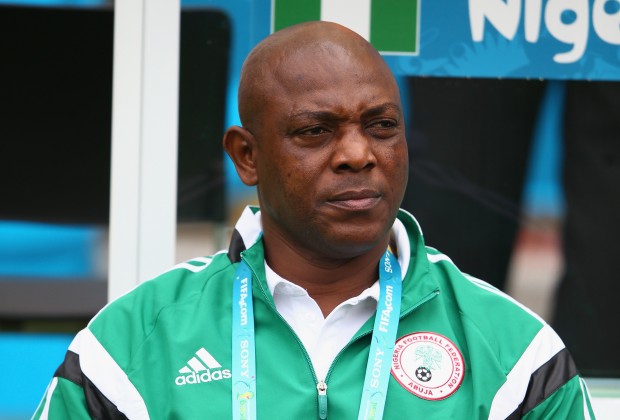
One of African football’s best-known figures, Stephen Keshi, has died at the age of 54, the Nigeria Football Federation has said.
A former captain of the Nigeria national team, Keshi was one of only two men to win the Africa Cup of Nations both as a player and a coach.
He also managed Togo and Mali, and his playing career included a spell for Belgian club side Anderlecht.
He is thought to have suffered a heart attack, local media reported.
As a player, Keshi was part of the Super Eagles team that won the Nations Cup in 1994 and narrowly missed out on a World Cup quarter-final place the same year.
He coached the national side over three spells, leading Nigeria to the 2013 Nations Cup title in South Africa and the last 16 at the 2014 World Cup in Brazil.
His contract was not renewed after the World Cup but he later returned on a match-by-match deal following the team’s failure to reach the 2015 Nations Cup finals.
He was then sacked as caretaker coach but reinstated after intervention from then Nigeria president Goodluck Jonathan. He was sacked for a final time last July.
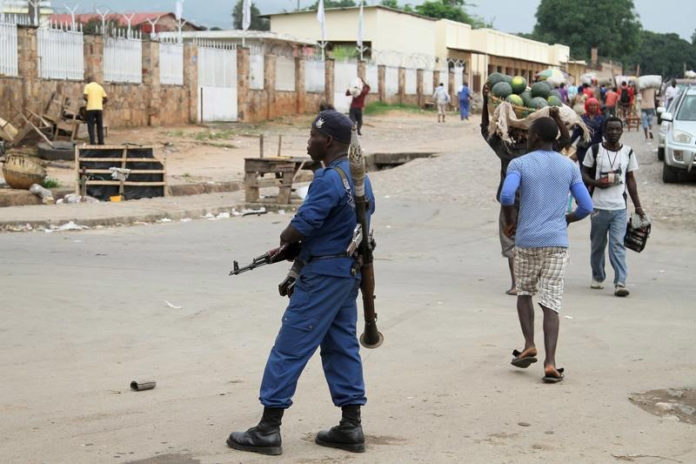
Police in Burundi on high alert during the student protests last week. Photo/citizentv.co.ke
The United Nations Children’s Fund (UNICEF) has said it is concerned about the arrests, expulsions from school and injuries of students in Burundi schools, and has called for all parties involved in the political conflict in the country to fully respect the rights of children to education and to protect them from violence.
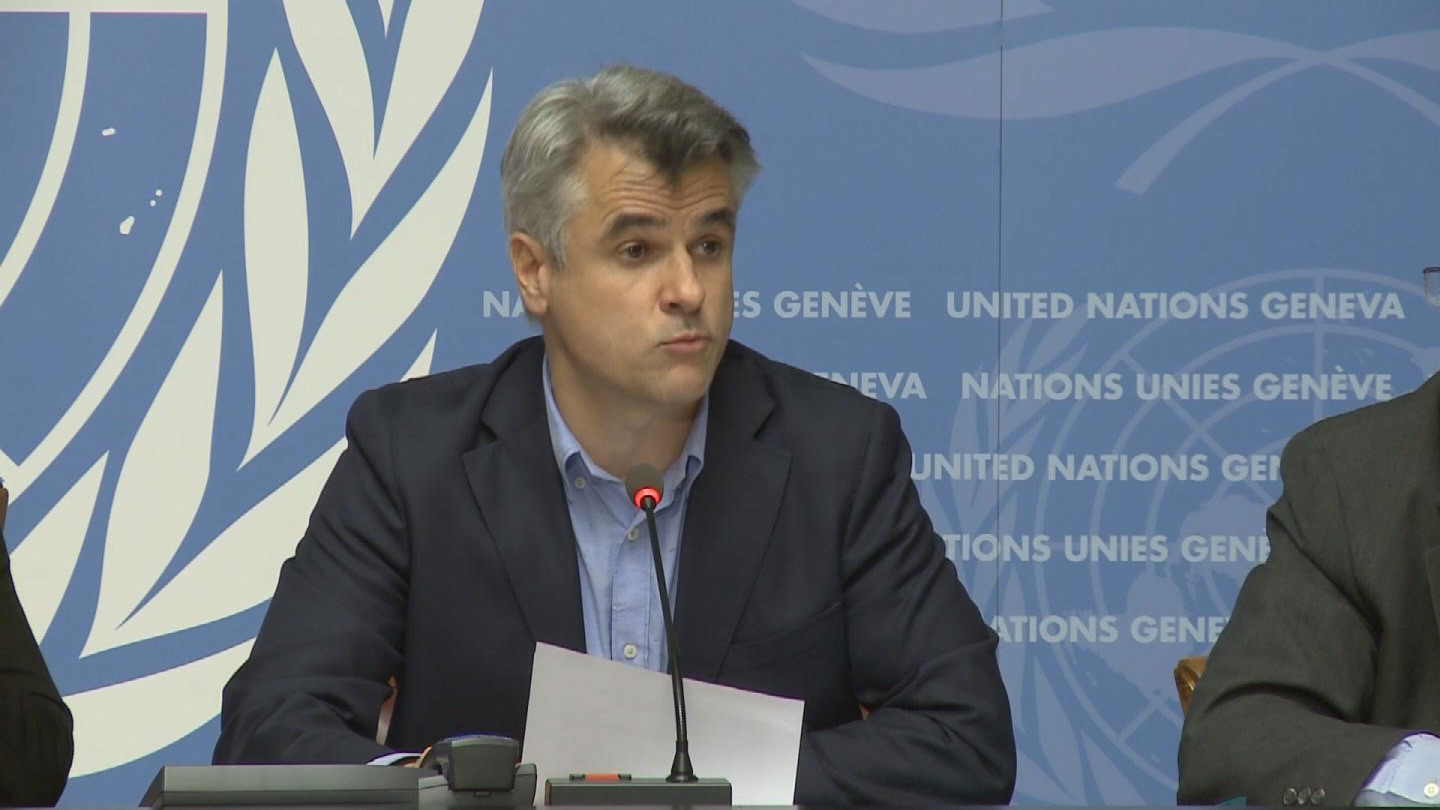
UNICEF spokesperson Christophe Boulierac
Speaking at the bi-weekly news briefing in Geneva today, UNICEF spokesperson Christophe Boulierac noted that on May 26 and 27, 334 students had been expelled from two schools in Ruziba close to Bujumbura, under the pretext of having defaced textbooks. Since then, the children had been invited to go back to school, but many had not gone back.
Following this, on June 3, several high school students between 14 and 17 years old were arrested and interrogated for similar reasons, in three different schools in the Muramvya commune, about an hour east from Bujumbura, the spokesperson said. After the incident, other students from those schools had protested in the streets against the arrests, and two of them had been injured by gunfire.
UNICEF was present on the ground and with its partners and was following developments in those cases directly, Mr. Boulierac said. The agency was deeply concerned by those incidents, which had happened in the run-up to school exams, he noted.
The spokesperson emphasized that all children in Burundi have the right to pursue their studies and to take their exams in a secure environment, adding that schools should be respected as zones where children can find peace and refuge.
Mr. Boulierac said that UNICEF is calling on all parties to immediately ensure the full respect of children’s rights to education in Burundi and their protection from violence.
More than 300 children have been in arbitrary detention in Burundi since the beginning of the crisis in April 2015, with most of them being detained in prisons for adults, in deplorable conditions, he said.
UNICEF and its partners had been continuously appealing for the release of those children, and more than 134 children have already been released to their families. Others have been moved to centres specifically dedicated to children, the spokesperson said.
About one quarter of the children going to Child-Friendly Spaces set up by UNICEF have shown signs of trauma following exposure to scenes of violence, Mr. Boulierac said.
There are more than 25,000 internally displaced people in Burundi, 58 per cent of them children. In addition, there are more than 260,000 refugees in neighbouring countries, 54 per cent of them children. Since the beginning of the crisis, 30 children have been killed, according to the spokesperson.
He also noted that another worrying element was that the national education budget in Burundi has decreased by one third and the health-care budget by more than half.
More than 1,800,000 children under 5 years old in Burundi and 500,000 pregnant women have been affected by the shortage of essential drugs.
UNICEF has stepped in to provide essential drugs to cover immediate needs, but a significant funding gap remains, Mr. Boulierac said, adding that if funding is not secured, health services for children risk being jeopardized across Burundi’s 900 health centres and 46 district hospitals.
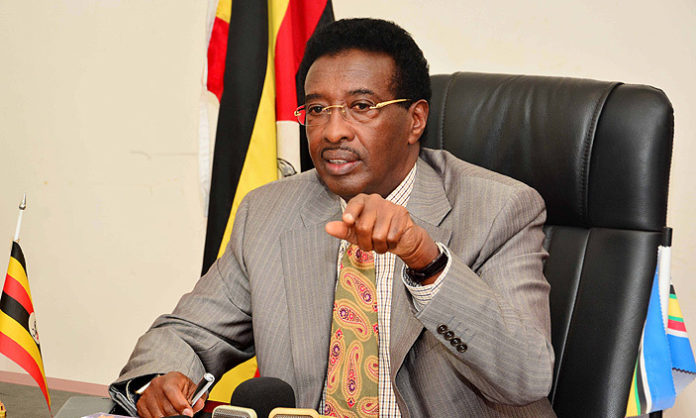
Outgoing Information and National Guidance Minister, Maj. Gen. Jim Muhwezi has questioned why he was left out the recent cabinet reshuffle.
Gen. Muhwezi who appeared on NTV says the people of his Rujumbura county and other parts of Rukungiri are questioning why they were left out of cabinet.
“For the people of Rujumbura, yes they feel they were left out and they are asking questions and they definitely know who put a fight against the opposition given that both Dr. Kizza Besigye and Mr Amama Mbabazi come from the area” Muhwezi said.
He added “So they are asking questions why they didn’t have a share on that cake. However, I wish him well with his new team he has selected to fulfill the manifesto”
Gen. Muhwezi has represented Rujumbura since the 6th Parliament but was thrown out in the last elections when Mr. Fred Turyamuhweza of Forum for Democratic Change. Mr Turyamutunga defeated him with 1, 6859 votes while Gen. Muhwezi got 1, 4587 votes.
Muhwezi said he won’t miss government all that much as he is both a member of National Executive Committee (NEC) and Central Executive Committee (CEC). Nevertheless, Muhwezi said the omission on the cabinet list, will give him hard times to explain to the National Resistance Movement (NRM) party members in the district.
Former Constituent Assembly Delegate for Rujumbura and security operative Charles Rwomushana said Gen. Muhwezi shouldn’t blame anybody for his lose and the eventual exist from cabinet.
“Rukungiri has Gen. Henry Tumukunde but that aside, Muhwezi deliberately built FDC and secondly he was a non-performer. He gave FDC a municipality and also destroyed any political talent in NRM in the district” Rwomushana said.
Adding “He destroyed Sezi Mbaguta, Dr. Alex Kamugisha and instead of building capacity inside the party, he was destroying it and so let him go and die.
Muhwezi defeated Rwomushana in 1996 elections and since then, the two have remain political rivals.
Despite the ‘people of Rujumbura and Rukungiri in general’ questioning Gen. Muhwezi’s omission, the district gained in the entry of Gen. Henry Tumukunde who has come in as Minister of Security.
Rukungiri district since 1986 has produced several ministers in every cabinet and the notables are Dr. Besigye, Mathew Rukikaire, Prof. Mondo Kagonyera, Dr. Alex Kamugisha, Gen. Muhwezi, Gen. Aronda Nyakairima and Sezi Mbaguta
Other high profile public servants from the district include Secretary to the Treasury Keith Muhakanizi, Uganda National Roads Authority boss Allen Kagina, Prison boss, Dr.Johnson Byabashaija and Rural Electrification Agency boss, Godfrey Turyahikayo among others.
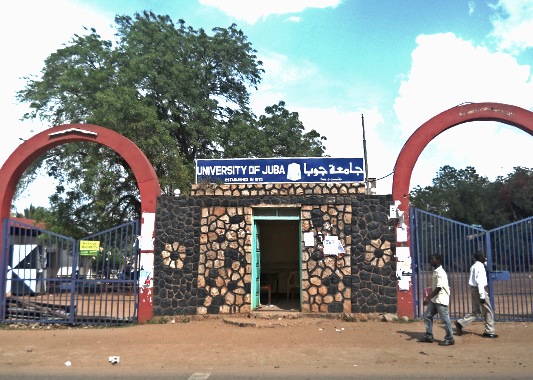
The entrance to Juba University, where the students were abducted from. Photo credit/theniles.org
South Sudanese military intelligence officers collaborating with the national security service have snatched and detained at least two students at Juba University and drove them to unknown location, raising concerns for their safety since Friday, relatives and student union said.
Chan Deng Maror and Peter Angui Bol, according to the students’ union and relatives, were picked up by the military intelligence officers arrival to the university from their hostel.
The motive of the arrest remains largely unclear and no official statement has been released by the administration of the university to clarify circumstances under which the arrest was permitted within the premises of the higher learning institution.
Juba University has been one of the places within Juba where people with critical opinion about the performance of the government have been kidnapped at gunpoint by either security personnel driving tainted cars or military intelligence officers during broad day light and taken to unknown locations, where some ended up being tortured and sometimes badly beaten unconscious after being blindfolded.
Some are often held for more than a month. Others are held in locations that the government has not revealed, without access to lawyers or contact with family, putting them at increased risk of torture.
South Sudanese government under President Salva Kiir has repeatedly and violently targeted critical activists, including political opponents as a way to intimidate and suppress.
Authorities have arbitrarily detained, tortured, and otherwise ill-treated detained suspects.
Youthful political activist Harold Kaija is a man you certainly trust to get you all the news from Gen Mugisha Muntu camp, information on who is snitching who in Forum for Democratic Change and tips on how to get photographed alongside Dr. Kizza Besigye for cheap.
And Kaija also the FDC Deputy Secretary General is pretty reliable on the Luzira Prison blabbermouth too apparently. The business whizz has via social media set out a refreshingly reasonable guide on the thoughts and hope of jailed FDC kingpin and former presidential president Dr. Besigye, like ‘challenging the dictatorship’ and thanking his two sisters.
But even so, Kaija did not mention anything about Dr. Besigye’s reaction to State wanting him to be transferred from Luzira prison to Kabale court to answer charges of inciting violence and malicious damage.
Greetings from our President Dr. Wrn Kizza-Besigye, he is very strong and can still afford to strong smile.
Buwembo Habib asked him why he can keep strong in this distressing situation; he said
“When I set out to challenge the dictatorship, I knew that I will have two homes. One that I built myself and prison”
He implores his supporters to keep firm, focussed and above get organized.
This struggle is about us.
I want to thank all those Activists who climbed the Luzira Hill to visit our Leader.
I also thank his two sisters Dr. Olive Kobusingye and Margaret for keeping besides him. You make him strong.
UGANDA MILITARY ATTACHE TO THE EU: Brig Moses Rwakitarate
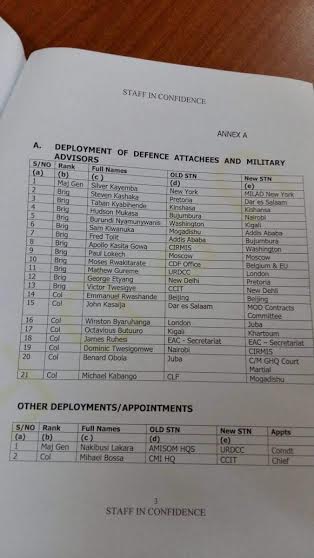
President who is the Commander in Chief of the armed forces has this Tuesday reshuffled over 20 military attaches/ advisors in the latest security changes.
In the latest changes just a day after cabinet, Gen. Museveni, has long last deployed Brig. Moses Rwakitarate who has not been deployed since 2013 when he was suspended over the plane crash incident. Rwakitarate now moves to Brussels and European Union as a military attach while Nakibus Lakara who has been in Somalia is now the new commandant of the East African Rapid Response.
FULL LIST BELOW
Brig Apolo Kasita Gowa from CIRMIS to Washington
Brig Paul Loketch from Moscow to Moscow
Brig Mathew Gureme from URDCC to London
Brig George Etyang from New Delhi to Pretoria
Brig Victor Twesigye from CCIT to New Delhi
Brig Burundi Nyamunywani from Washington DC to Kigali
Brig Sam Kiwanuka from Mogadishu to Addis Ababa
Brig Fred Tolit from Addis Ababa to Bujumbura
Col Dominic Twesigomwe from Nairobi to CIRMIS
Col Bernad Obula from Juba to Court Martial
Col Michael Kabango from CLF to Mogadishu
Col Wilson Byaruhanga from London to Juba
Col Octavius Butuuro from Kigali to Khartoum
Col James Ruheesi from EAC Secretariat to EAC Secretariat
Col Emmanuel Rwashande from Beijing to Beijing
Col John Kasaija from Dar es Salaam to Ministry of Defense’s Contracts Committee
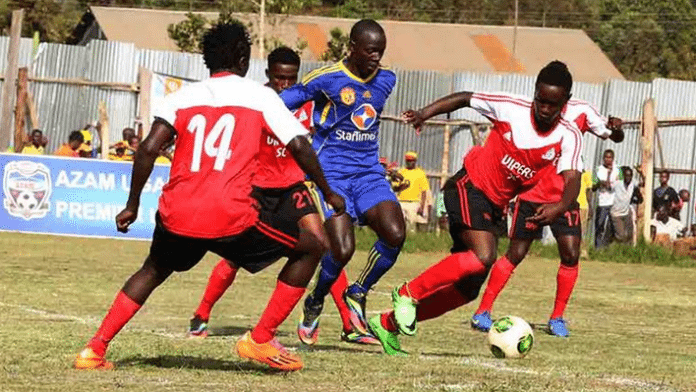
Giants Vipers and KCCA will be seeking a first leg advantage when they clash in the semi-final of the Uganda Cup at Nakivubo stadium on Wednesday.
The two sides drew home and away in the recently concluded Azam Uganda Premier League (UPL) but Wednesday provides a better opportunity for either to get a win over the other.
KCCA come into the game in buoyant mood after winning the league a couple of weeks ago and are aware that edging Vipers will take them closer to a historic double – their first ever.
KCCA midfielder Ivan Ntege who has three league medals to his name already has set a target to grab what is a missing domestic honour in his wardrobe.
“It gives me sheer delight and satisfaction to be part of the winning team but I will not sit on my laurels until I help my club win the unprecedented double,” he told the club’s official website.
Vipers forward Erisa Ssekisambu who has scored five goals in the competition believes his side has what it takes to win the game.
“It’s a tough game for us but we know it’s the only chance for silverware this season,” he revealed. “I believe we have what it takes to get a decent away result and finish the job at home,” he added.
Former Vipers’ forward Ceaser Okhuti is expected to lead the hunt for goals for the league champions alongside Derrick Nsibambi.
At Bugonga play ground in Entebbe, two FUFA Big League sides Entebbe and Onduparaka face off.
Onduparaka, who have so far claimed two top division sides enroute to the stage will be favourites over two legs but will be keen on getting a good result in the first leg.
The aggregate winner over two legs will reach the finals due to be played at Nakivubo in ten days’ time.
Who said traveling has to be very drab and boring? That you cannot put your best foot (boot) forward as you discover new things around the world. As Coco Chanel said “Everyday is a fashion show and the world is your runway!”
Weather Factor: It is very important to checkout the weather in your destination country before you pack your bags and go there, this helps you easily plan your wardrobe for the rest of your journey. You will not have to shop for different outfits when you reach your destination and you packed for the wrong weather.
Packing: After getting done with the weather, of course you head straight to the packing, the moment you know what you need especially if you are going to a sunny place. Everything you carry has to be summer appropriate. Start with packing very light clothing such as cotton, chiffon and some denim just incase you get to areas where you do not have to show so much skin.
Makeup Kit and Skin Exfoliators: Going on vacation does not mean you leave everything to go wild, you have to keep that face still radiant; pack the right makeup for your destination at least just enough to outline all that beauty and still keep you looking fresh. Make sure you have a good exfoliator and shaving kit that is good for your skin type that will make showing off those legs even more fun. Do not forget wipes; they are very essential for hot days and makeup removal, stay fresh.
Shoes and More Shoes: All the pretty shoes you have that make you feel like Cinderella heading for a ball should be packed for vacation, after all a vacation is supposed to bring you back that feel-good element. Make sure you pack for the right weather with the right footwear, feel good and enjoy that holiday with your best foot forward.
Strenuous Activity: You have to go sightseeing when on vacation, no one stays cooped up in the hotel just watching TV and ordering room service; you jump into it, take life by the plums and see what you never expected to see. So why shouldn’t you look your very best as you go mountain climbing or take on that long jungle trail; pick up those beautiful shorts, leggings and pretty sneakers and walk into it with as much positivity as you can. Keep away from wearing dresses or skirts for such activities since they get in the way.
Sunscreen Glasses and Hats: Did you know that regular sunscreen was not made for your face? It clogs up the pores, so be sure to get one that is specifically made for your face such as the En Garde from Votre Vu (choose one for your skin type and color). The biggest essential of all are sunglasses. Sunny places need pretty bright colored aviator glasses and a huge beautiful floppy hat to frame your face in the heat.
Travel Bags: When packing for your journey, avoid bulky luggage because it makes it hard for transition if you are traveling alone; try as much as you can to fit everything you need in two bags and keep the toiletries in your hand luggage for emergencies. Even better, you can tag your bags with cute bright unique luggage tags that can help you easily identify your belongings.
Vacation Shopping: Considering you might have to shop every once in awhile when at your destination, plan for how much you have to set aside for that wee shopping you might end up indulging into. Do not go to the chain stores, pass by the flea markets because they have unique things you might love and put your bargaining skills on display but limit yourself to a certain budget; just incase you see too many pieces that might leave you breathless.
Evelyn Masaba is Public Relations Manager at Jovago.com Uganda an online hotel booking service with offices in Kampala (Uganda) Lagos (Nigeria), Nairobi (Kenya) and Dakar (Senegal)
DENIED SEWDISH INVOLVEMENT: Government spokesperson Ofwono Opondo
Uganda will on Thursday June, 9th commemorate the 35th heroes day. The national celebrations will take place at Ssi Sub county, Buikwe district, on the shores of Lake Victoria.
According to the government spokesperson Ofwono Opondo, says this year’s Heroes Day will be celebrated under the theme; “Concretizing the gains of our Heroes is a duty for every Ugandan.”
The 35 years celebrate a day an NRM supporter, Eddidian Babumba Mukiibi Luttamaguzi was murdered by the fascist second UPC regime. The government decided to use the same day to pay tribute to some of the country’s forbearers.
The chief guest will be President Yoweri Kaguta Museveni who will give out various categories of medals to 650 recipients and will be accompanied by many local and foreign guests.
Since the National Honours and Awards law was enacted in 2001, over 18,000 medals of various categories have been awarded, some of foreign Heads of State.
From the theme, it means that every Ugandan by their contributions however modest is expected to know and take as their duty and obligation to build Uganda through hard and honest works so as to pay vigil and eternal tribute to our heroes and champions and ourselves to strive to be role models to future generations.
According to Ofwono Opondo, Buikwe was chosen to host this year’s festivities because of its historical contribution to the liberation struggle especially hosting another liberation movement (UFM) that was led by the late Lutakome Kayiira.