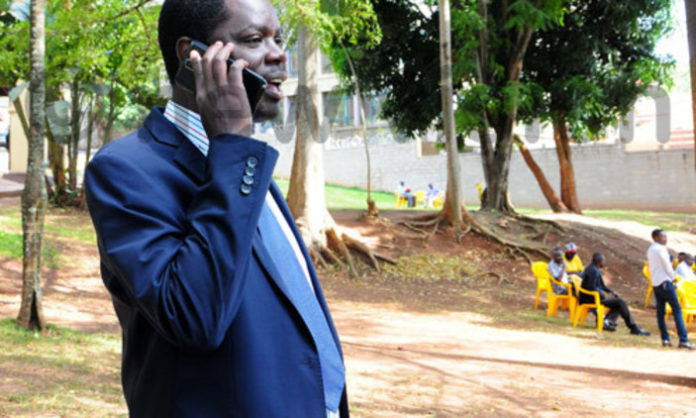
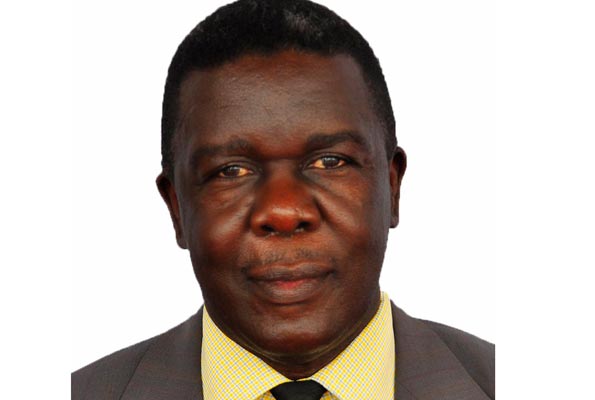
The Tororo North MP Annet Nyaketcho has lost her seat, following a petition filed by Forum for Democratic Change’s Geoffrey Ekanya.
Ms Nyaketcho, who becomes the 10 ruling party MP to lose a seat, was dragged to court over malpractices in the February elections.
In his petition Ekanya said that votes from two villages were not counted a position that was upheld by court, resulting in the nullification of Ms Nyaketcho as MP.
Court has nullified the election of National Resistance Movement’s Katikamu South MP Edward Sembatya over academic qualifications.
Sembatya, a former Accountant in parliament had replaced former Attorney General Kiddu Makubuya who was ejected at last year’s party primaries level.
Presiding Judge Isabirye Kaweesa, held that there were discrepancies in the names of Ssembatya that appeared on several of his academic papers that he presented for nomination of his election to the EC.
Earlier on Tuesday, Rehema Watongola’s election as Kamuli Municipality MP nullified over academic qualifications.
She’s became the 8th NRM MP to be thrown out but by press time the number had risen to 10.
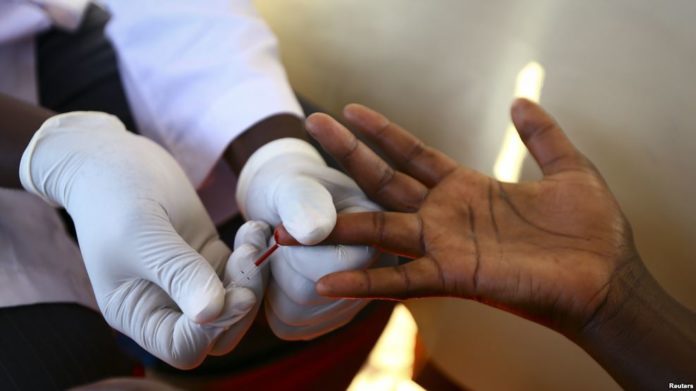
There has been a reduction in number of Uganda’s new HIV infections from 162,000 in 2011 to 83,000 by Dec 2015 according to a new report from Uganda AIDS Commission.
Over the last five years, the Government of Uganda with support from Development Partners like UNAIDS, Irish AID and USAID has made impressive gains in averting the number of new HIV/AIDS infections and reduction of HIV/ AIDS related deaths.
Statistics obtained from projects spearheaded by outgoing UNAIDS Country Director, Musa Bungundu and the Irish AID HIV/AIDS focal person Mary Oduka show that the number of persons on Antiretroviral Treatment has increased from 329,000 in 2011 to 834,931 by the close of 2015.
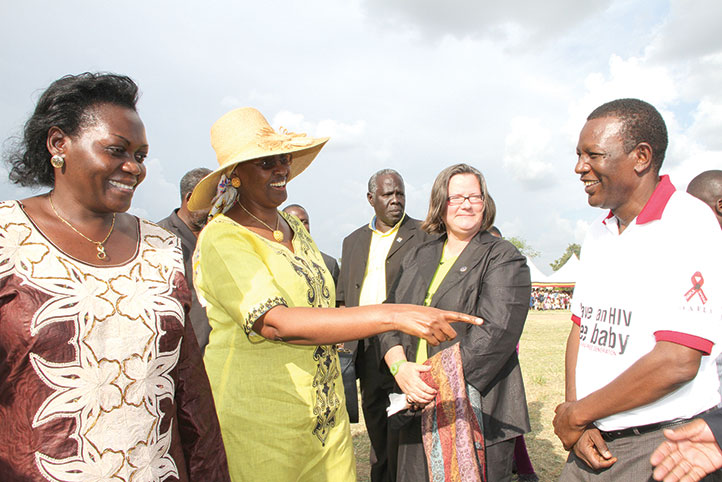
First Lady Janet Museveni, flanked by state minister Sarah Opendi, speaks to Unaids country director Musa Bungudu. This week on Thursday 30th June, Uganda will say good bye to Mr Bungundu.
There has also been a reduction in the number of persons dying from AIDS from 63,000 in 2011 to 28,000 by Dec 2015 while the number of new babies born with HIV reduced from 29,000 in 2011 to 3,200 in 2015.
During the just concluded High Level meeting on ending HIV and AIDS that was held in New York two weeks ago, Uganda was singled out as one of the Sub Saharan Africa that managed to achieve the highest percentage of reductions in new HIV infections.
Between 2011 and 2015, Uganda managed to achieve 86% reduction of all new HIV infections. This impressive gain in reduction has been made possible through a combined strategy spearheaded by the First Lady, Hon. Janet K. Museveni and other partners. The success of the eMTCT campaign is a clear example of some of the immediate approaches that we need to sustain in order to reach our key 2030 global targets of ending AIDS.
We need to continue re-engaging leadership for the response at all levels starting with everyone taking individual responsibility for their actions. “You the individual have the power to protect yourself, your spouse, your child and others”, Uganda AIDS Commission, 2016. Leadership was core to the country’s successes in mid 1990s and is still equally vital today.
Once again, Uganda AIDS Commission would like to remind everyone to be part of ongoing efforts to avert new infections by taking individual responsibility through – knowing your status by taking an HIV/AIDS test today and avoiding risky behavior such as sexual intercourse with people whose HIV status you do not know.
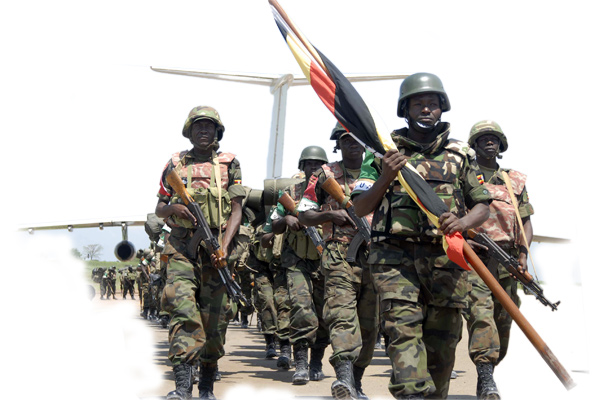
Ugandan soldiers part of the AMISOM force fighting al-Qaeda-linked militants in Somalia have not received any payment from this year. This is after the EU withheld last tranche over accounting issues.
An European Union source told the BBC that last six-month payment was being withheld over “accounting issues”.
The EU provides $1,028 (£700) for each Amisom soldier each month; their respective governments then deduct around $200 for administrative costs meaning the soldiers are supposed to take home about $800.
This deployment allowance is much more than the meagre salaries the soldiers receive from their governments.
The BBC understands there have been delays over the last two tranches – and last year’s June-November payment has only just arrived.
So soldiers are now receiving money owed to them last year but have not received any of it owed to them this year.
EU ambassador to Somalia Michele Cervone d’Urso said he was “concerned about the delay” in the stipend which he said was “essential for the motivation of soldiers”.
In January the EU, a major donor to the Somalia mission, cut its funding by 20 percent saying African countries must bear more of the burden of soldier salaries.
Soon afterwards Kenya threatened to withdraw its 3,700 troops in protest.
Despite the denials by the army, several hungry Ugandan troops have been lined up for prosecution for allegedly selling off weapons to Somali insurgents.
Last week, we reported how Gen Katumba Wamala said the decision to withdraw Ugandan troops by December 2017 was taken because of frustration with the Somali army and military advisers from US, UK and Turkey.
General Wamala said he unable to describe the extent of his frustration over the late payments.
Paddy Ankunda, Uganda military spokesman when contacted declined to give a reason for the planned Somalia withdrawal, however the BBC’s revelation now brings light to the matter.
Uganda deployed in Somalia in 2007, the first of several troop contingents from the region and accounts for about a third of the roughly 22,000-strong AMISOM force.
Amisom has helped push al-Shabab out of most of Somalia’s major towns.
But the militants continue to mount deadly suicide bombings and guerrilla attacks.
EagleOnline security correspondents say Uganda’s decision will surely tilt in regional security balance and also give room for the spread of Islamic extremism and violence.
Uganda will lose over four billion shillings in earnings every month after the Uganda Peoples Defence Forces (UPDF) withdraws from Somalia.
According to sources, foreign troops serving under the auspices of the Africa Union Mission to Somalia (Amisom) to fight the Islamic militant group Al Shabaab, are paid US$1028 per individual every month, of which US$200 is deducted as ‘administrative costs’ for the troop-contributing country.
In 2007 Uganda became the first African country to send peacekeeping troops to serve under Amisom and currently there are about 6000 UPDF men and women in Somalia, all of who collectively contribute about US$1.2 million (approximately Shs4.2bn) in monthly administrative costs.
According to the UPDF Chief of Defence Forces (CDF) General Edward Katumba Wamala, the pull out from Somalia scheduled for December 2017 follows cold relations that separately developed between Uganda and the principal Amisom financiers, the US, UK and Turkey.
By press time it was not possible to talk to the UPDF spokesperson Lt Col Paddy Ankunda.
Meanwhile, in a related development, the Amisom troops fighting against the Islamic militant Al Shabaab, have not received salaries for six months, after the contingent accounting officers allegedly failed to account for the previous tranche disbursed.
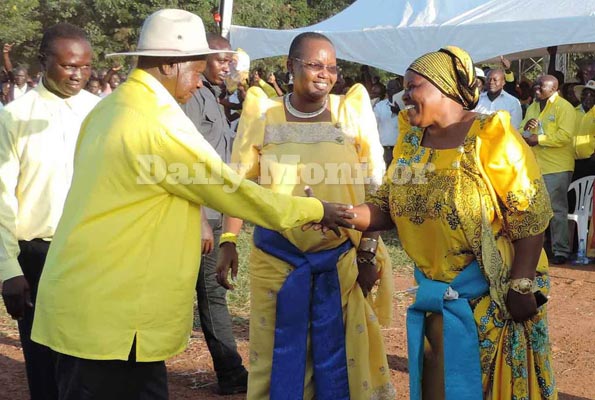
President Museveni greets MP Hajati Rehema Watongola, during election campaigns recently. Looking on is EALA MP Lydia Wanyoto (C). PHOTO BY SAM CALEB OPIO /Monitor
Fresh elections are set to be carried out in Kamuli Municipality after their recently sworn in Member of Parliament Hajjati Rehema Watongola was kicked out by Court over academic qualifications.
Ms Watongola becomes the 8th ruling party National Resistance Movement (NRM) MP to be thrown out.
Following a petition by long-term opposition firebrand Proscovia Salaamu Musumba, Jinja High Court on Tuesday morning invalidated the voting of Hajjati Watongola on grounds that she lacked and or forged the academic requirements for one to contest as a Member of Parliament.
The petition, which was filed on March 29, show the Electoral Commission, Busoga University and the National Council for Higher Education as the other respondents in the case.
In the petition, Ms Musumba argues that the documents from Busoga University, which Ms Watongola used to get nominated, were obtained fraudulently.
For her nomination, Ms Watongola presented a Uganda Certificate of Education from Town Hall in Jinja, diploma and degree certificates in Public Administration and Management from the university.
Judge Godfrey Namundi ruled that the certificate upon which Hajjati Watongola had presented to be admitted to Busoga University to advance in her studies was investigated and found to be false and or a forgery.
Information streaming from Jinja however indicated that Hajjati Watongola has already instructed her lawyers on preparing and filing an appeal, saying all her papers were duly certified by the academic bodies and are legitimate.
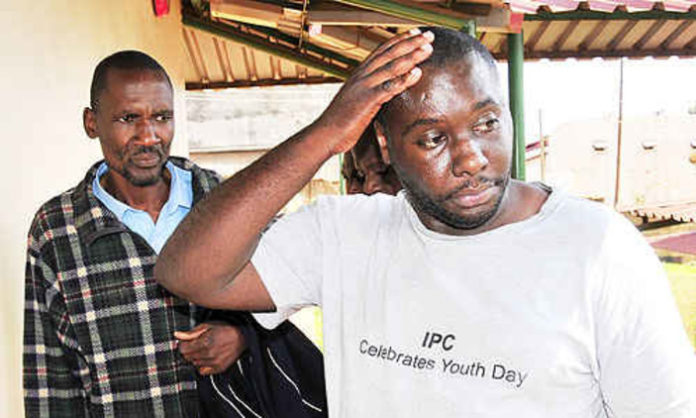
Michael Kabaziguruka (R), MP for the Nakawa Division has been charged over his alleged links to a rebel group
Forum for Democratic Change’s Nakawa MP Michael Kabaziguruka, in and out of police custody, has been charged in an army court with offenses relating to security and treachery.
He was on Tuesday morning produced before new Makindye based General Court Martial Chairman Lt Gen Andrew Gutti on charges of treason.
At the beginning of June Mr Kabaziguruka was arrested from his home and taken to Special Investigations Unit at Kireka for interrogation over alleged subversion, but was released on police bond. However, at the time he said he was still under security surveillance as police maintained presence at his home.
Kabaziguruka has been accused with ‘others at large’ of plotting to assassinate the President. As a result, the UPC mobiliser for northern Uganda, Dan Oola Odiya, is in custody on charges of treason and attempts to subvert the government of Uganda. Also, an Air force Garrison Commander, Colonel Dan Opito Odwee, is in custody. Col Odwee, like 30 other soldiers, are linked to alleged subversive activities.
“Kabaziguruka is helping police with investigations in the same matter and I am sure all the others are helping with investigations. That’s the status,” the Inspector General of Police, Gen Kale Kayihura said recently.
Kabaziguruka’s close friend and political confidant Dr Besigye, who is indicted for also treason, is currently on remand at Luzira prison.
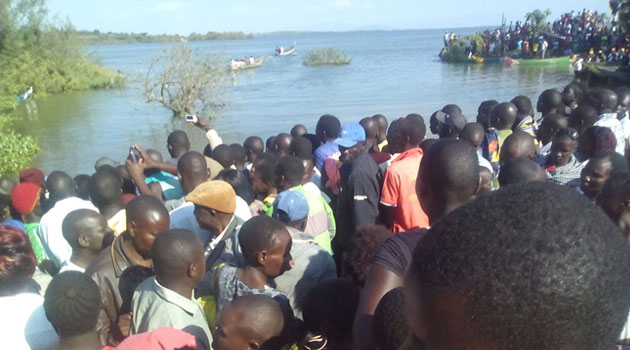
Bodies of four musicians who are among nine who drowned in Lake Victoria at the weekend have been retrieved.
Three of the bodies were retrieved earlier Monday while the fourth was retrieved later in the evening during a search coordinated by Kenya Maritime Authority officials.
Dozens of people – including affected family members – have been camping on the shores of Lake Victoria in Siaya County where the bodies are thought to be and where the search is concentrated.
As the search for the remaining five bodies continued, Sports, Culture and Arts Cabinet Secretary Hassan Wario assured the affected family members that the government will fully support them.
Eight of the band members survived when the boat capsized on Saturday as they headed to an island for a performance.
A Catholic Church leader has condemned the South Sudanese government for its role in violence in the country’s second largest city Wau over the weekend, delivering an impassioned speech to worshippers on Sunday in which he called government leaders ‘devils’ and ‘criminals’ and belittled the new governor of Wau State as a ‘madman’.
Apostolic Administrator Rocco Taban spoke after Wau descended into violence late last week with a series of incidents that eventually led to serious fighting on Saturday morning between armed opposition and government soldiers. Thousands of people have been displaced and dozens killed amid reports of ethnic targeting of civilians.
Wau is a diverse city inhabited by people of many tribes including Balanda, Dinka, Jur, Fertit and others. Ethnic tensions have risen as the political and security situation worsened dramatically last week.
In a speech at St. Joseph’s Catholic Church in Juba, the priest directed his fury at the government for its alleged role in the violence and for removing the recently appointed governor, who last week sought to calm the situation but was removed by presidential decree after a dispute with an army commander.
“More than 100,000 people are in the bush being displaced by their own government. This is the country we have chosen. This is the country we have voted for its independence so that our country displaces us. Our own country. We are ruled really by monkeys. We are ruled by monkeys. We have to be very clear: We are ruled by monkeys,” said Rocco.
“And the governor who was protecting people in Wau, who was loved by the people in Wau, General Elias Waya [was] removed by the presidential decree and being replaced by [a] madman,” he added. He was referring to the new governor Andrea Mayar, who was impeached as speaker of the legislative assembly in Wau last year but appointed governor in a late-night decree on Friday just hours before serious fighting erupted on the outskirts of Wau.
Rocco Taban leads one of the Catholic dioceses in South Sudan. He is apostolic administator of Malakal but he hails from Wau. Under the laws of the Catholic Church, apostolic administrators of dioceses have essentially the same authority as that of a bishop, meaning that Rocco Taban is a senior leader in the church administration.
He further criticized the president for saying nothing about the situation in Wau even as thousands were chased from their homes and many were killed. “Do we love our country? Do we love this nation? And so far the President of the Republic did not say even a word. In Australia three people were killed three days ago. The Prime Minister came out three times a day to make a statement. Because of three Australians.”
“They are eating and drinking and sleeping. Devils! These are devils! We are ruled by devils. And we are very sorry for them,” he said.
The priest concluded, “We don’t want to call fire on them, because we will go against Christ. But they have to understand that they are devils. And they are devils. And they are ruling us with evil powers. They are criminals. Praised be Jesus Christ.”
Sources said that dozens of bodies have been found since this weekend in the open in the city of Wau, which is controlled by the government. One source said that the civilian casualties were the result of cross-fire, while others said they were deliberately targeted on an ethnic basis.
This is not the first time for Rocco Taban to speak out against violence in South Sudan. In a homily in late 2014, during the first year of the civil war, he appeared to suggest to South Sudanese Christians that they should disobey the two war leaders Riek Machar and Salva Kiir, telling them not to act as ‘cattle’, and he slammed politicians for provoking violence and inciting ‘uneducated’ security personnel.
“Who here is a cow of Salva? Or a cow of Riek? I think that we as Christians in the Catholic Church we are people who have dignity because we are creatures made in the image of God and we do not accept imperialism and provocation and insult and insecurity and inequality in the society,” said the priest in November 2014.
FDC’s frustrations could also be aligned to the fact that their kingpin Dr Besigye, who was the runner up in the February 18 presidential elections, is on remand at Luzira prison on separate charges of treason
Uganda must have a UK-style referendum on its membership of the regional integration bloc EAC, the political party which gave President Yoweri Museveni a bloody nose in this year’s general elections insists.
The East African Community, comprising six countries of Burundi, Kenya, Rwanda, Tanzania, South Sudan and Uganda, agreed to an expanded free trade area including the member states of all.
And yet the Forum for Democratic Change (FDC) says ruling National Resistance Movement (NRM) members of the East African Legislative Assembly (EALA) are plotting to adjust the rules of procedure to prolong the term limits.
Speaking at their weekly press briefing, FDC party leaders shared their envy of United Kingdom which last week voted out of the European Union to defend the country’s interests, and confirmed they would be pushing for a similar move in Uganda.
“As a party we are concerned that the character of dismantling the Constitution has become the character of the NRM. The matter we should be looking at is now leaving the EAC; we need to discuss whether Ugandans are actually benefiting from EAC because no one knows how many Ugandans identify with anything about the Community and have ever appreciated its relevance.” FDC’s Deputy Secretary General for Harold Kaija said on Monday.
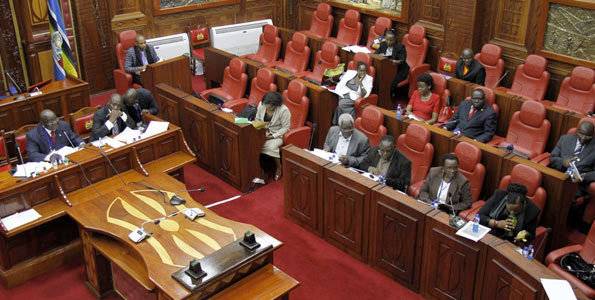
EALA assembly session in progress
FDC maintains that Uganda initially rushed into the East African federation in the early 1960s and failed.
“A referendum is the only way Ugandans can truly express if they want to stay in the EAC, if they want to stay in the unfair trade bloc dominated by Kenyans.”
“Ugandans are not looked at as people who have a stake in deciding their destiny; which shouldn’t be the case. For this we are therefore calling for a referendum. They should be given a voice. They must be asked what they want.If they want to these EALA members to cling longer onto their seats.”
All the current six NRM EALA members are serving their second and last term: Dorah Byamukama, Nusura Tiperu, Dan Kidega, Mike Sebalu, Margaret Nantongo Zziwa and Bernard Mulengani. This means all six NRM slots are up for grabs. And already, several hopefuls have come out to state their intentions.
Old troubles
NRM in 2012 forced Parliament to charge the criteria for selection of EALA representatives, they resolved that members must be based on numerical strength thus leaving the five opposition parties with only three seats.
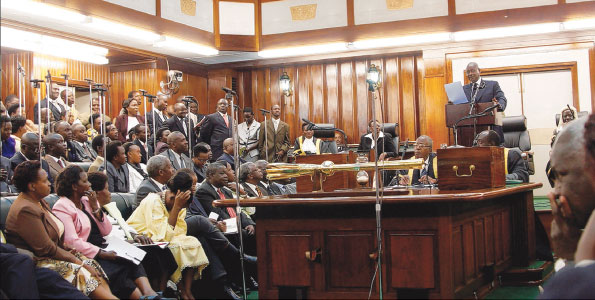
President Museveni addressing Parliament
The regulations provided that the election of members to EALA shall take into consideration the various political parties and organizations represented in Parliament, shade of opinion, gender and other special interest groups.
Elections of Uganda’s representatives had stalled following an order by the East African Court of Justice to the Uganda Parliament to amend its rules to conform to article 50 of the treaty establishing the East African Community.
Members of the Opposition distanced themselves from the decisions made by the house and stormed out of the chamber protesting the failure to adopt proposals made by then Leader of the Opposition Mafabi.
The LoP had indicated they are to petition the East African Court of Justice to reign in Parliament of Uganda to ensure its rules conform to the EAC treaty.
The pace of implementation varying from country to country is slow amongst all; at least not fast enough, according to Kaija. He cites the removal of non-tariff barriers which has taken long to be fully implemented due to unawareness.
Besigye battle
FDC’s frustrations could also be aligned to the fact that their kingpin Dr Besigye, who was the runner up in the February 18 presidential elections, is on remand at Luzira prison on separate charges of treason.
Prosecution claims Dr Besigye and others at large between February 20 and May 11 this year in diverse places in Uganda formed an intention to compel by force or constrain the government of Uganda as by law established to change its measures or counsels as to the lawfully established methods of acceding to the office of president.
Frustrations
Uganda’s opposition insists they don’t know how many Ugandans expected that the EA community would lead to the abolition of national borders, creation of one nation and people would settle anywhere, abandonment of Uganda’s seat at the United Nations and African Union etc; surrender of foreign affairs responsibility; abandonment of all languages in favor of one East African common language.
They say Ugandans were under the impression that they were by and large following the European Union model of building from the bottom, sector by sector and ending up with a political union or federation. European countries would form the United States of Europe similar to the United States of America with state and federal structures. Ugandans thought East Africa would follow the same model.
More importantly, in Uganda, there has been a tendency to view EAC integration in isolation, with no link whatsoever to the country’s development agenda. The sector plans and budgets of most ministries, departments and agencies (MDAs) have not mainstreamed the EAC agenda. Their strategic plans and budgets framework papers do not refer to EAC integration and do not reflect EAC matters, even where decisions have been reached at the EAC council levels.