Stanbic Bank
Stanbic Bank
20 C
Kampala
Stanbic Bank
Stanbic Bank
Home Blog Page 2136

How to master hotel guest etiquette

You will always end up using a hotel on some of your travels or any other lodging arrangements and this means that even if you have paid for your stay, you have to learn some of the proper and necessary etiquette.

Hotels always try their best to give us good service; here are some vital and simple ones to help you do your part.

Be Polite To The Staff

Just because you are paying to stay at the hotel does not mean that you have to be rude and bossy to the staff there; they are people too and are trying their best to do their job. Don’t shout at them in situations when you are displeased with their service, be calm and always be polite.

Tip The Staff

It is important to carry loose notes that you can use to tip the valet, housekeeper, waitress, doorman and concierge for their good job done. It’s not a written rule that you have to do it, but it is a good thing to do.

Call Ahead

Before arrival, call ahead to confirm the booking and be patient upon reaching the front desk, if they are working on other guests who were checking in before you came. Smile at them while asking them questions even if you are tired from your journey from the airport.

Keep An Eye On Your Children

Children are such adorable little angels, but they can be handful especially when they go to a new place and find it very interesting to explore. You do not want to be the parent with the unruly kids shouting and screaming through the hotel hallway for the other guests. It can be uncomfortable for them so you have to find some activities that can keep the children busy but not too noisy.

Be Clean

Being clean is good for you, keep the trash off the room floor, flush the toilets after using them and do not leave hair in the sink for the housekeeping staff to collect. Put the dirty linen and clothes in one part of the room for them to find and keep things off the bed so that the housekeeper can easily make your bed.

Room Service

When done with room service, put your room service tray out of the room so that the staff can pick it up easily.

Guest Numbers

Why hide the number of people that will be staying in the room you are paying for? Opt for a hotel you can afford so that you do not “miscalculate” the number of people that will be stated when making your payment;  it is very unfair to the hotel.

Don’t Hoard The Food

Some hotels provide food in plenty especially the buffet and this can bring out some very unsavory characters in many guests, resist the urge to hoard all the chicken or pastries just because they are in plenty. Leave some for the rest of the guests.

Toiletries

While it is ok to carry certain things from the hotel such as soap and shampoo, do not take the towels, linen or bathrobes. The latter are reusable so that means the hotel can wash them and provide them to other guests who will use the hotel soon after you leave.

Ecofriendly

When not in the room, make sure to switch off the lights and air conditioning. Do not leave the TV on either to save energy. If you do not want the housekeepers to wash your towels and robes, you can reuse them too.

Now go on and be a good hotel guest.

Stories Continues after ad

50 senior Brigadiers who will salute Maj. Gen. Muhoozi

One of the most inspiring marks of recognition in the army is earning a promotion that is a preserve accorded by the Commander-in-Chief as a reward for hard work and diligence, among other qualities and qualifications. As a result, any promotion in the armed forces comes with increased authority and responsibility.

So, with yesterday’s promotion of the First Son Brigadier Muhoozi Kainerugaba to the rank of Major General, he assumes greater responsibilities and several officers he has been at the same rank with will now answer to the Two Star General in one way or the other.

The Brigadiers are:
1. Charles Bakahumura/Chief of Military Intelligence
2. John Mugume/Chief of UPDF shop
3. Dick Olum/Third Division Commander
4. Michael Ondoga/NEC
5. Joseph Musanyufu/Chief of Personnel and Administration
6. Francis Chemonges/Commandant, Kalama Armoured Warfare Training School (KAWTS)
7. Joseph Ssemwanga/Armoured Brigade Masaka
8. Deus Sande/Chief Instructor, Artillery
9. Geoffrey Katsigazi/Artillery Division
10. George Igumba
11. Tom Tumuhairwe/Service Brigade
12. Geofrey Taban Kyabihende/Defence attaché in Congo
13. Joram Kakari
14. Sam Kavuma/Chairman Wazalendo SACCO
15. Peter Elwelu/Second Division Commander
16. Paul Lokech/Defence Attaché in Russia
17. Lucky Kidega/New commander of Regional Task Force hunting LRA
18. Chris Kazoora/Commander Reserve Force, Central region
19. Stephen Kashaka/Defence attaché in South Africa
20. Elly Kayanja/Coordinator NAADS
21. Eric Mukasa/Reserve Force
22. Dennis Asiimwe-Commandant University of Military Science and Technology/Lugazi
23. Stephen Rwabantu/Reserve Force
24. Phinehas Katirima/Member of Parliament and Chief Education and Sports
25. Moses Ddiba Sentongo/Chief of Civil-Military relations
26. Joseph Oracha
27. Jim Willis Byaruhanga/Chief of Training
28. Ramadhan Kyamulesire- Chief of legal services
29. John Lorot/Fifth Division Commander
30. Dr. Emmanuel Musinguzi
31. Dr Ambrose Musinguzi/Director of Medical Services
32. Yowasi Kiiza/Retired
33. Leopold Kyanda/Chief of Staff Land Forces
34. Silver Kayemba/Military Attaché in Washington
35. Ronnie Balya/Director General, Internal Security Organisation
36. Kayanja Muhanga/Fourth Division commander
37. Sabiiti Mutebile/Chief of Construction
38. Jacob Musajjawaza/Chief of Production
39. Gowa Kasiita
40. Mathew Gureme/Chief of Staff of Rapid Deployment
41. John Mateeka/Chairman First Division Court
42. Moses Rwakitarate/Not deployed
43. Proscovia Nalweyiso/Senior Presidential Advisor on Defence and Security
44. James Okidingi/Commander UPDF troops in Somalia
45. Julius Chihanda/ Foreign Affairs
46. Garvas Mugyenyi/Air Defence boss
47. Fred Tolit/Ugandan Defence Envoy at African Union
48. George Etyang/Military Attaché in India
49. Augustine Kyazze/Logistics
50. Charles Otema Owany/Chief of Logistics

Stories Continues after ad

Gen. Guti replaces Karuhanga at Court Martial

NEW COURT MARTIAL BOSS: Lt Gen Andrew Guti

Lieutenant General Andrew Guti has replaced departed Major General Levi Karuhanga as the Chairman of the Military General Court Martial (GCM).

DECEASED: Former Court Martial Chairman Maj Gen Levi Karuhanga

Gen. Karuhanga died last month after serving at the GCM for two years. He replaced Brig. Moses Ddiba Ssentongo. Earlier, he had served as Commander of the Reserve Force and also at the head of  Africa Union Mission in Somalia (Amisom), respectively.

As for Gen. Guti, is a seasoned soldier whose experience, having served in many command positions including Force Commander of the Amisom in Somalia between May 2012 and December 2013.  Gen. Guti served as Commandant of the Senior Command and Staff College in Kimaka.

Stories Continues after ad

Kato Lubwama, Kasibante take Parliament oath

EMBATTLED: Lubaga South MP Kato Lubwama.

Comedian-turned-politician Hon Kato Lubwama has on Tuesday taken the oath of allegiance as Rubaga South Legislator for the 10th Parliament.

Mr. Lubwama who toppled mortar mouthed Ken Lukyamuzi to win the MP post, did not seem to struggle with his command of the Queen’s language and pulled no comedic acts throughout the formality.

 Rubaga South MP Hon. Kato Lubwama with his family after taking oath
Rubaga South MP Hon. Kato Lubwama with his family after taking oath

A total of 85 legislators had taken the oath by press time on day two with 148 MPs already sworn-in on Monday.

Other prominent figures that have already taken the oath on Tuesday include Col. Felix Kulaigye (UPDF), Moses Kasibante (Rubaga North), Johnson Ssenyonga (NRM, Mukono South), Hon. Sam Kutesa (Mawogola North) among others.

Administration of oaths resumed at 2pm.


Stories Continues after ad

NAADS, WFP to build grain stores to benefit 4,000 farmers

Grain farmers supported by WFP dry maize

The National Agricultural Advisory Services (NAADS) and the United Nations World Food Programme (WFP) have signed an agreement to construct community-level grain stores in 10 districts of Uganda over the next four months.

Under the agreement, NAADS will provide US$1 million for WFP to construct and equip the warehouses in the districts of Adjumani, Hoima, Kibaale, Kiboga, Kiryandongo, Kyenjojo, Masindi, Mubende, Nakaseke and Napak.

Each unit will have a storage capacity of between 200 and 300 metric tons and is expected to support up to 4000 small-scale farming households access to quality produce markets.

“NAADS has been focusing on providing seeds and this has helped to increase production country-wide,” the NAADS Executive Director, Dr. Samuel Mugasi said, adding: “However, this partnership with WFP will take us a step higher in the value chain. It will enable NAADS to achieve its purpose of assisting farmers to reduce post-harvest food losses – including through modern storage – benefit from group marketing and improve their household incomes and livelihoods.”

Dr Mugasi maintained there was no better choice of partner than WFP.

“WFP has built a good reputation in grain handling, mobilizing farmers for production and supporting agriculture value chains. It has a good model in place and we are excited to be part of it. Under the MoU, WFP and NAADS will also jointly support small-scale farmer groups with soft skills and other capacity building for group marketing.”

WFP’s Country Director, Michael Dunford, said the agency’s role in Uganda is to primarily support the vision of the government, working with capable entities such as NAADS and Operation Wealth Creation in building agricultural capacity.

“Good infrastructure empowers farmers to access markets, gives them control over when they get to sell their grain and, as such, protects them from hunger,” Dunford said.

NAADS and WFP plan to work together to build another 10 stores next year. WFP has already established 60 storage facilities countrywide – using mainly funding from the United States — and farmers trading through them have been selling their grain more profitably.

WFP is the world’s largest humanitarian agency fighting hunger worldwide, delivering food assistance in emergencies and working with communities to improve nutrition and build resilience. Each year, WFP assists some 80 million people in around 75 countries.

NAADS works with Operation Wealth Creation to transform the lives of Ugandans through improved agricultural production.


Stories Continues after ad

Forty children involved in Boko Haram suicide bombings

A young girl near a tank belonging to the Boko Haram fighters. Photo Credit/thecityreporters.com

The number of children used by Boko Haram as suicide bombers up tenfold from four bombers in 2015 to 44 this year, the United Nations humanitarian wing has reported. More than 75 per cent of them are girls, according to the UN Children’s Fund (UNICEF)).

According to an update issued late last week by the UN Office for the Coordination of Humanitarian Affairs (OCHA), Boko Haram’s gunmen also continue to carry out attacks on civilian and military targets despite the ramped up military operations in the Lake Chad Basin region.

Between January 2014 and February 2016, Cameroon recorded the highest number of suicide attacks involving children at 21, followed by Nigeria with 17 and Chad with two. Over the past two years, nearly one in five suicide bombers was a child, OCHA adds.

In Niger, Boko Haram attacks have increased since January, said OCHA. Intensified military offensives from the regional multinational force and troops from the Lake Chad Basin countries have forced the gunmen to retreat to the border areas between Niger and Nigeria where they attack villages that have little or no military presence.

Meanwhile, OCHA maintains that security remains volatile in many of the region’s conflict-affected areas, complicating aid access to those in need. Some three million people are already food insecure. Many more are expected to face hunger as the lean season progresses.

Already in certain areas, the lean season has begun earlier than usual, while in others thousands of families are in need of immediate assistance. Given the onset of the lean season and rainy season, nutrition outcomes are expected to worsen and food prices will increase as roads become impassable.

OCHA estimates that some 486,000 children in Borno and 242,000 children in Yobe in north-eastern Nigeria are suffering from Global Acute Malnutrition. Moreover, some 73,000 children under two years of age in these communities need to urgently receive ready-to-use supplementary specialized nutritious foods. Food supplements for 27,000 pregnant and lactating mothers are also recommended.

Without interventions an estimated 67,000 children aged six- to 59 months with severe acute malnutrition are likely to die in Borno and Yobe states in 2016. This translates to 184 deaths every day, warns the report.

Finally, OCHA noted that only 10 per cent of the $535 million required to assist the affected populations across the region has been received.


Stories Continues after ad

Benin, Kuwait banned, Uganda next in line?

Geoffrey Massa and Uganda Cranes failed to qualify for the 2015 Africa Cup of Nations in Equatorial Guinea.

The debate of country laws vs Federation of International Football Associations (FIFA) statutes has always been in the news for various reasons. Depending on who forwards it, usually many are left more confused with problems than actual solutions.

Yet in reality the debate starts and ends in FIFA’s mighty favour.

FIFA has never changed any of its statutes to favour a country and ease its way into joining the prestigious soccer association. Many governments, especially in Africa, have erred by omission or commission, in their efforts to influence outcomes of elections and administrative posts, by interfering with the daily running of the local federation using national laws; the outcomes are always the same.

A FIFA ban, normalisation committee and elections using the same general assembly that governments tried to overthrow in the first place.

Why do governments fail to learn from history? Many of the players in this vicious cycle are usually driven by egoistic tendencies rather than reason. Some are totally naive about how the two partners, FIFA and nations relate to each other, due to their lack of basic knowledge about football. And many just ignore all the available evidence of the outcomes of the duels that are littered all over the news in pursuit of reinventing the wheel, unfortunately, it has always ended in the same way.

Regrettably, the losers are never FIFA OR THE COUNTRY, it’s the players the fans and the various stake holders that are involved in the day to day running of the sport.

Benin’s latest ban negates all results achieved on the pitch, to the dustbin of FIFA countries that were found in contravention of its statutes. It painfully dries all the sweat of the players that was lost during the first two qualifiers and renders it useless. Being second placed and having a game against guinea in June, does not help their cause.

They were mercilessly banned, when the merciless FIFA statutes met and crushed to nothing, the laws of the land via court injunctions.

Kuwait found itself in a much trickier place, a new sports act contravened the Holy Grail from FIFA; the response was immediate, devastating and uncompromising. Kuwait was given its matching orders and they are currently sweating for readmission, not until they are made to frog jump into submission.

On the waiting list to disgrace is Nigeria and Uganda. Make no mistake the norm of FIFA beating countries into submission is not yet to stop. They have done it before, and will do it again. External influence will never be accepted and it’s the only thing that gives the game relevance and independence that is much needed for fair competition and representation, else, Belgium which is currently number one will start asking for more recognition and bigger stakes in football , than Uganda which is way below it in rankings.

What needs to be done?

Egoistic tendencies and pride have been part of humanity since ancient times; they will stay here come Blatter or Infantino. Knowledge sharing and Education of the stake holders is the way to go. If workshops are organised for club chairmen, so could they be organised for government officials and administrators directly involved in football. No one has the monopoly of knowledge but interacting with owners of an addictive monopolised sport can reduce on the friction between third world governments and the custodian of the game, FIFA.

Yesterday it was Benin and Kuwait, tomorrow is Nigeria and Uganda, in future…..? Make no mistake, if you gladly present yourself to the slaughter house of FIFA, they will gladly give you what you asked for.

By Ahimbisibwe Apollo, Fufa official

Stories Continues after ad

Rwanda SGR shifts to Tanzania; to affect Uganda, Kenya infrastructure development plans

Ugandan and Kenyan officials led by Presidents Yoweri Museveni and Uhuru Kenyatta will have to up their ante and shuttle diplomacy if their countries are to realize the fruition of joint projects discussed earlier with the three other East African Community (EAC) member states.

This follows an announcement on Sunday by Rwanda finance and economic planning minister Claver Gatete that his country had opted to develop the Standard Gauge Railway (SGR) through Tanzania, arguing that the route is cheaper and shorter than the one transiting through Kenya and Uganda. In 2013, Rwanda, Kenya and Uganda agreed to link up to the port of Mombasa along a standard-gauge railway estimated to cost US$ 13 billion.

strg

However, the SGR change announced by Rwanda, which is a huge infrastructural development setback for East Africa’s largest economy, comes in the wake of Uganda also shifting stance against Kenya and opting to build a US$4 billion oil pipeline to transport crude oil from Hoima to the Tanzanian port of Tanga, with the same arguments Rwanda is advancing.

Meanwhile, studies on the SGR by EAC member states showed Tanzanian option would cost Rwanda about US$ 800 million (Sh80.5 billion) to US$ 900 million (Sh91 billion) while the Kenyan one would go for US$ 1 billion (Sh101 billion), according to Rwanda’s East African Community Affairs ministry .

“We opted for the route transiting to Tanzania during the construction of our railway line because the Kenyan route would be expensive and time consuming,” said Gatete.

The Dar es Salaam-Isaka-Kigali/Keza-Musongati (DIKKM) standard gauge railway (SGR) project is expected to be completed by March 2018 and is estimated to cost the three countries US$5.2 billion (Sh523.1 billion).

Jules Ndenga, acting special project implementation unit coordinator at the Rwanda ministry of infrastructure, said Rwanda and Tanzania had already held joint technical monitoring committee meeting to fast-track the project.

“We are conducting a joint development of the standard gauge railway with our counterparts from Burundi and Tanzania. We have agreed contract terms and conditions and the Rwanda Transport Development Agency, will procure it on behalf of the three countries,” he added.

Meanwhile, speaking on condition of anonymity, a source close to the SGR in Uganda said the changes by Rwanda will affect the infrastructural development plan of both Uganda and Kenya.


Stories Continues after ad

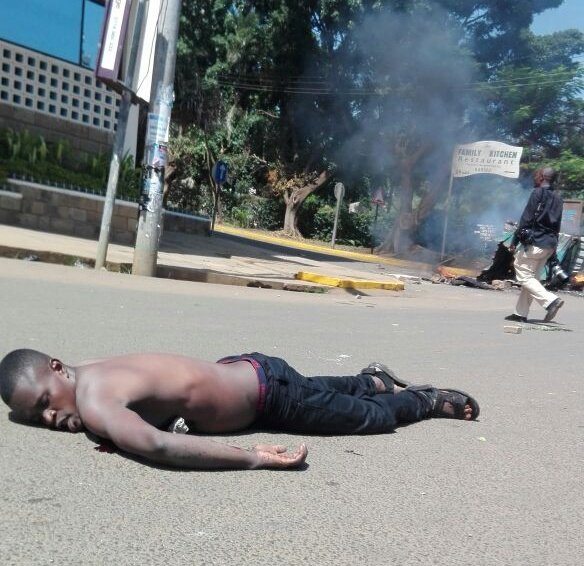
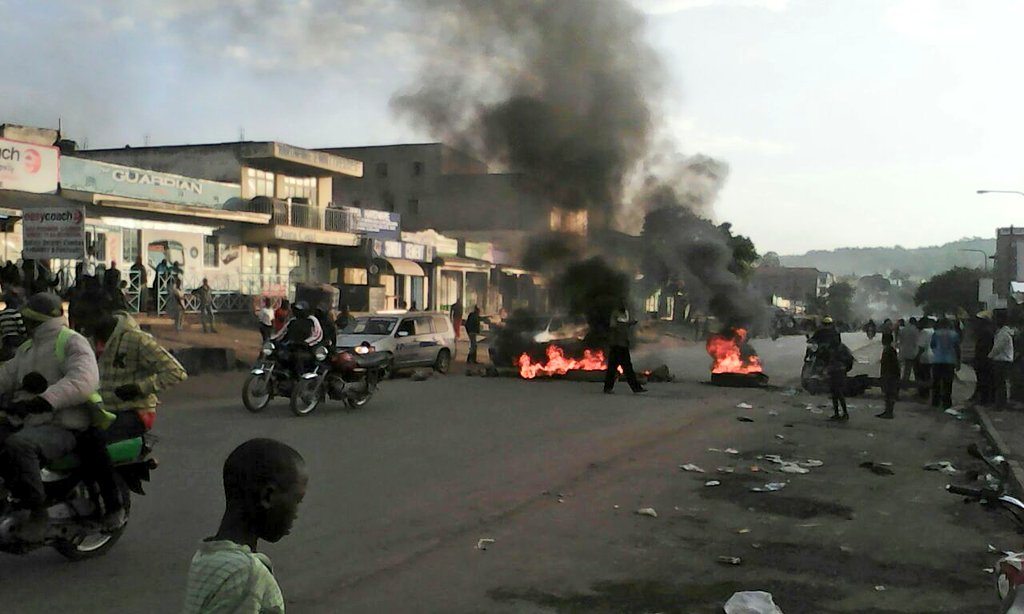
PHOTOS: Kenyan protestors crashed, teargassed Uganda-style

Uganda’s Police force have evidently become increasingly reliant on tear gas in response to rising political disaffection  but their Kenyan counterparts are not  any behind going by Monday’s scenes in Nairobi.

Just like how downtown Kampalans get served teargas and beatings occasionally, Nairobians also got their share as Police lobbed teargas canisters to disperse the protesters who have caused chaos in most busy streets of the city.

MORE: Kenyan cops way more brutal than Ugandan police

The protests were led by opposition leader Raila Odinga/the Coalition for Reforms and Democracy (Cord), who say polls in 2017 cannot be free and fair if the current election commission remains in place. He has called for its commissioners to be removed from office.

There are claims that Raila’s vehicle was shot at during the demonstrations but police dismissed the reports.


Kenya’s police say at least 15 people were arrested during the protest. They will be charged in court on Tuesday, police said, without specifying the charges.

Opposition groups have vowed to hold protests every Monday at the offices of the EC until it is dissolved.

Back here, leading opposition figure Dr. Kizza Besigye who is by press time booked into Uganda’s largest prison Luzira Prison in the capital, Kampala over treason charges has tried to attack the Independent Electoral Commission but without much success.

The judiciary deemed all Dr. Besigye’s party FDC defiance activities including Stay Home Thursday, Black Tuesday prayers as illegal and unlawful in the country.

These pictures show scenes earlier on in the Kenya protest:

Kenya
The Kenyan cops have been busy all day firing tear gas and beating up protesters

Kenya2

policebrutality

The opposition are demanding that the electoral commission be dissolved and a new one be set up ahead of general elections next year.
Stories Continues after ad

Mugabe becomes grandfather

Late Zimbabwean President Robert Mugabe

Zimbabwe’s President Robert Mugabe, 92, has confirmed that he became a grandfather for the first time last month when his only daughter Bona Chikore gave birth to a baby boy at a hospital abroad, the state-owned Herald newspaper reports.

Mr Mugabe said his wife Grace was with their daughter and grandson, and would return to Zimbabwe next month.

Mugabe, 92, was one for the prominent fifteen African leaders who were present when President Yoweri Museveni was sworn in for a fifth term last Thursday.

During a state dinner in Kampala, Mugabe walked in so gently a few minutes after the opening prayer and got a standing ovation; every one sprung to their feet and cheered.

Stories Continues after ad