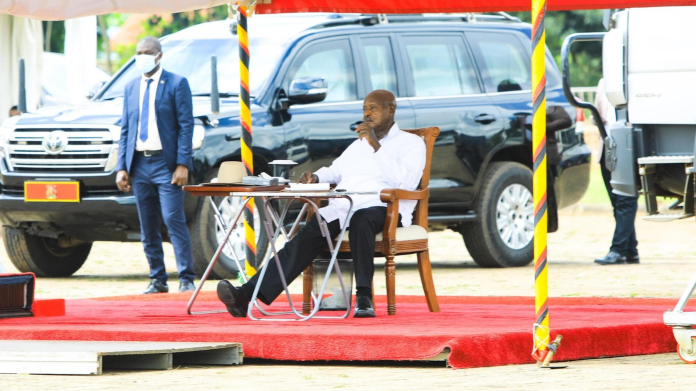
President Yoweri Museveni has clashed with Speaker of Parliament Anitah Among over his 4-Acre model project, a key agricultural initiative.
The clash brewed up during today’s regional parliamentary sitting in Gulu city where the Speaker criticized the model, arguing that it is not a one-size-fits-all solution and fails to account for the reality faced by many Ugandans.
Responding to the Speaker’s comments, Museveni, who seemed unhappy, asked Among to stop lying to Ugandans that the directive does not work. He directed Among to end her confusion since this directive has been in place and helped many Ugandans in different regions.
“I want to tell the Speaker who says that the 4-Acre model does not work here, it does. Do not bring a new confusion. I don’t agree with that lie.
Museveni said that the 4-Acre Model was a rescue operation for the parts of the country that had already fragmented land to apply seven enterprises; one acre for a coffee plantation on one acre, fruits (citrus and mangoes, pineapples, pasture) on the second acre, pastures for feeding the livestock on the 3rd acre, and 4th acre for the food stuff and in the backyard put poultry when near a wetland put fish farming.
“Use intensive agriculture to fight poverty using a small piece of land. But if you have a bigger piece of land, you can use four acres to plant coffee and other enterprises,”
According to the President, this approach directly assists the current Parish Development Model (PDM) by helping farmers transition from subsistence farming to commercial agriculture where communities will unlock economic prosperity and sustainable livelihoods.
Looking for children plot away from busy tight schedules of dropping and picking children from school? Look nowhere else apart from Speke Resort Munyonyo.
Munyonyo is the place to be for fully family parked enjoyment. With expanded facilities overlooking the quiet waters adjacent to bouncing castles, horse riding, swimming pools among many activities, the rousing activities, making it the perfect destination for a memorable family out with the little ones on a holiday experience.
As the little ones are busy swimming and riding horses, parents too can be exploring the scenic beauty of the resort from a unique vantage point.
But it’s not just about the kids Commonwealth Resort Munyonyo has something for everyone. While the youngsters are busy with their adventures, adults can unwind and soak in the tranquility of their lush surroundings. Whether you’re lounging by the pool, enjoying a peaceful stroll by the lake, or indulging in a rejuvenating spa treatment, relaxation is always within reach. Parents too can cool off the evening with a dinner and a drink as the weekend comes to an end.
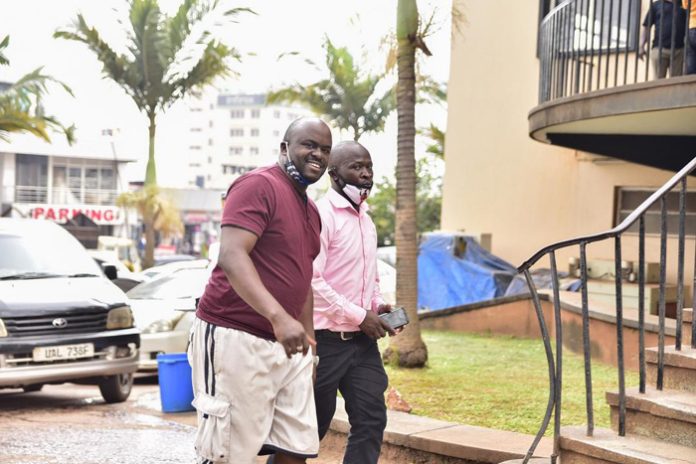
Rugiirwa Katatumba, the son of late businessman Bonny Katatumba has become a symbol of scandal and controversy casting a long shadow over his father’s once-esteemed legacy.
Rugiirwa’s involvement in financial scandals is well documented since over the years he has repeatedly been accused of defrauding business partners out of their hard-earned money.
In 2020 alone, Rugiirwa was accused by bar owners of swindling them out of millions. The bar business is one of the most lucrative ventures in Uganda, a country known for its high alcohol consumption. In fact, a 2016 study by AFKinsider ranked Uganda as the second-highest consumer of alcohol in Africa, following Nigeria. A similar 2014 survey by the Global Status Report on Alcohol and Health ranked Uganda as the highest consumer of alcohol per capita in East Africa, with 23.7 liters of pure alcohol consumed per person annually.
Recognizing the industry’s potential, a group of bar owners formed the Bar, Club, and Entertainment Owners Association to push for collective interests and better opportunities.
However, shortly after its formation, the association collapsed due to money issues. Rugiirwa, the association’s pioneer chairman, registered the organization in his name and that of his family members without informing the other members.
As a result, he effectively controlled the association and kept all its essential documents, including the constitution and bank account details. After collecting contributions from the 150 members, Rugiirwa failed to provide any accountability, and the association disbanded.
Years earlier, Rugiirwa had a falling out with his once-close friend, Spear Abowe, the former owner of Club Rouge on Jinja Road. Their friendship ended in 2013 when they went into business together, opening a bar in Kabalagala called Monte Carlo (formerly Obama’s Bar). Abowe invested heavily in the venture, entrusting Rugiirwa with managing it. However, Rugiirwa embezzled profits, using the money for personal gain and lavishing it on young ladies who frequented the bar.
When Abowe discovered this, the two had a bitter confrontation that ended their friendship. To this day, they remain estranged.
In 2021, Rugiirwa was remanded by the Nakawa Chief Magistrate’s Court on charges of electronic fraud under the Computer Misuse Act of 2011. He was accused of defrauding Pegasus Technology Limited of UGX 206 million between January and February 2018, purportedly for services rendered by Katatumba Safaris Limited. Additionally, he was charged with receiving stolen property.
Rugiirwa’s financial scandals even extended to his own family. While managing his father’s Hotel Diplomate, he reportedly embezzled millions of shillings. This revelation nearly caused his father, Bonny Katatumba, to suffer a heart attack. Consequently, his father fired him and replaced him with his twin sister, Angella Katatumba. It took years for Rugiirwa to regain his father’s trust.
Rugiirwa’s fraudulent activities also affected Ugandans seeking land deals. Through Uganda Real Estate Developers (URED), a company associated with his sister’s former lover Henry Banyenzaki, he defrauded numerous individuals by promising them lucrative land deals. Many victims filed police reports against him.
Shockingly, Rugiirwa was also accused of involving his twin sister, Angella, in his illicit activities by introducing her to wealthy men. One such man was Jamaican singer Kuz KZ, who was famously involved in an altercation with staff at Chicken Tonight in Kasanga while with Angella.
As Rugiirwa attempted to maintain a lavish lifestyle without the financial means to support it, he spiraled into depression. Unable to secure loans and facing mounting debts, he turned to alcohol. His alcohol abuse resulted in numerous hospitalizations.
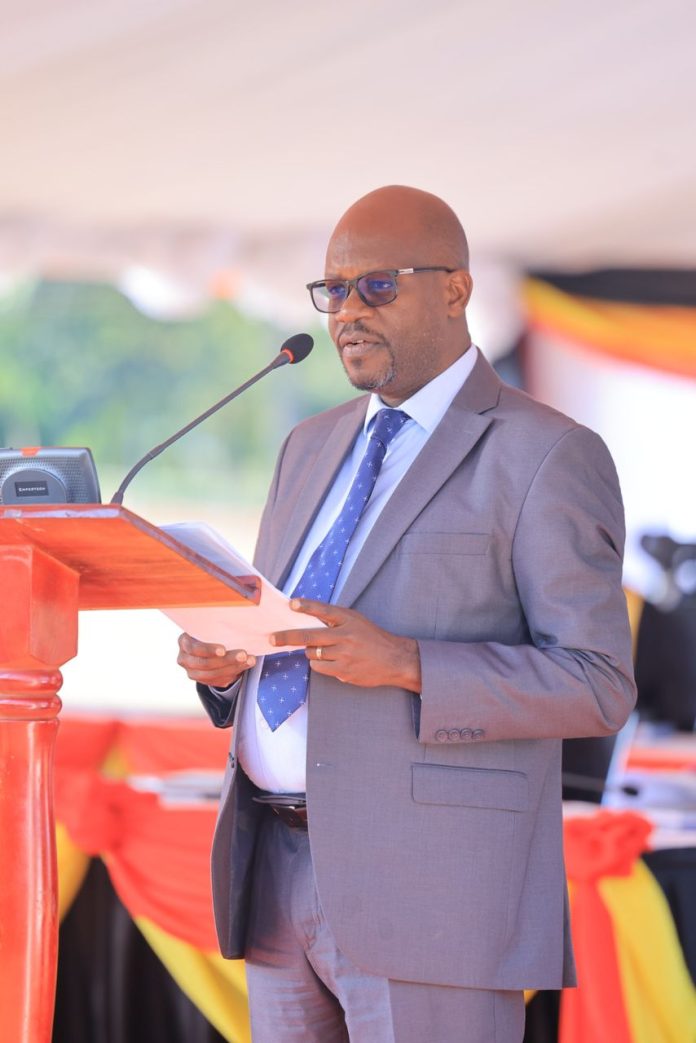
Parliament has granted leave to Mityana South MP Richard Lumu to introduce a Private Member’s Bill to provide for the election of Leader of the Opposition.
The LoP will be elected by members of the opposition in Parliament.
In July 2005, Uganda transitioned from the Movement political system to a multiparty political system through a national referendum.
The adoption of the multi-party system of governance saw the amendment of the 1995 Constitution of the Republic of Uganda to create the office of Leader of the Opposition in Parliament and subsequently, in 2006, the amendment of the Administration of Parliament Act, Cap. 272 to provide for the office of Leader of the Opposition.
He claims that whereas section eight of the Administration of Parliament Act requires the Leader of Opposition in Parliament to be determined through an elective process, currently a Leader of the Opposition is merely designated by the party with the highest numerical strength among opposition parties in Parliament and is simply imposed on the members of opposition in Parliament without their will and consent.
He said suffice to note is that there are various political parties in opposition with representation in Parliament, including the Democratic Party, Forum for Democratic Change, Uganda People’s Congress, Justice Forum, and People’s Progressive Party, and the Leader of the Opposition and the Chief Opposition Whip superintend all members of the opposition in Parliament. However, the current manner of election of Leader of the Opposition in Parliament has not only led to the suppression of the views of other opposition political parties in Parliament but also made it impossible.
“There is a need to amend the Administration of Parliament Act, Cap. 272 to allow the participation of all members of the opposition in Parliament in the election of a Leader of the Opposition and Chief Opposition Whip in Parliament in order to achieve effective representation,” he said.
Lumu wondered why the Catholics can vote for the Pope, Ugandans vote for a President, and MPs elect a Speaker, while the Leader of Opposition and Chief Opposition Whip are exempted from the same democratic principles he says they claim to profess to.
Speaker Anitah Among ruled in favour of Lumu, asking the disgruntled MPs to reject Lumu’s bill on second reading if they so wished.
“Much as we are sitting in Gulu, this is a normal sitting. And as I said, let us not act in anticipation; there is no fight. The law isn’t made for one person, today I may be the leader of opposition, and tomorrow another person will be the leader, but I don’t see any fight in this thing, and you can reject it when it comes to the second reading. We shouldn’t deny a member his right, which is enshrined in the constitution.” Among said.
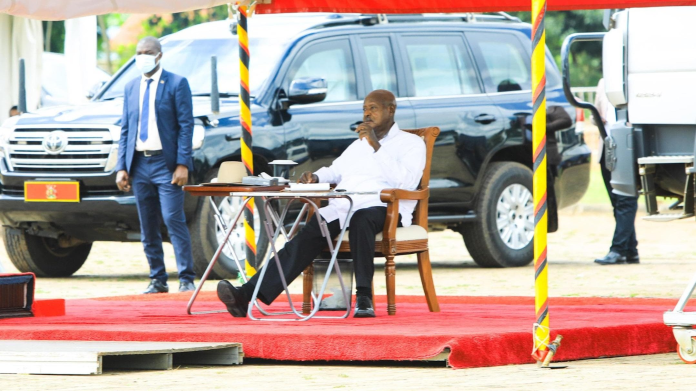
President Museveni attending the parliamentary proceedings in Gulu.
Parliament has paid tribute to President Kaguta Museveni for the Visionary Leadership for Uganda People’s Defence Forces (UPDF) in safeguarding the peace and security of Northern Region; Acholi, Lango, West Nile and Karamoja.
Dan Kimosho (Kazo County) while presenting the motion cited that Lord’s Resistance Army conflict in the Northern Region between 1986-2007 which he says occasioned humanitarian crisis, and wide spread human rights violations, such as death of thousands of civilians, abductions of children, rape, mutilations, displacement of civilians, torture, slavery, use of children’s soldiers and mass destruction of property but the Army, through the visionary leadership of Museveni was able to end the conflict.
Kimosho went on to shower President Museveni with praises arguing, “General Museveni facilitated and supported initiatives aimed at the reintegration of former Lord’s Resistance Army and other rebels, combatants, and abductees into society through programs for disarmament, demobilization, and reintegration.”
“The President has strongly championed peace and security within Uganda and neighboring countries like South Sudan. Somalia and Democratic Republic of Congo, by continuing to pursue the Lord’s Resistance Army remnants and ensure regional security,” Kimosho further remarked.
Catherine Lamwaka (Omoro DWR) while supporting Kimosho’s motion noted, “The biggest problem that we have right now as we celebrate the peace that has been ushered in, is managing the peace.”
However, Anthony Akol (Kilak North) wondered why Lamwaka failed to point out the post war challenges that Northern Uganda is still grappling with, despite the end of the wars that President Museveni is being praised for combating.
“But at the point when he was talking about how peaceful this area is, I thought that the seconder (Lamwaka) would raise some of the issues that we have in Northern Uganda, after the way, which need to be raised, but the fact that she is concluding without talking about the issue of compensation of the war affected people, where we are talking about lives lost, livestock compensation, we also have to talk about the conflict which is still going on in Apaa,” remarked Akol.
Museveni appreciated the Parliament for acknowledging the work done by UPDF in pacifying the north and says it is because of the ideological orientation of the UPDF, that it accomplished what had eluded past governments.
“I want to thank Parliament for passing a motion, recognizing the work of the UPDF and NRM in pacifying Northern Uganda and pacifying the whole country. What you need to know if you are going to make useful contributions is the ability of UPDF to do what has defied other Governments, because the security of Karamoja wasn’t new at all, it had been there, even in the colonial times. It only got worse after 1979, after the Matheniko, one of the tribes of Karamoja, looted arms in the Karamoja barracks, after the Amin soldiers ran away,” said Museveni.
Museveni noted that NRM’s strategy was having Health Centre IIIs at the Sub-county because most of the illnesses can be dealt with there. Noting, “Immunization, midwifery, malaria, they can be dealt with there. And you have seen how immunization has helped public health; polio has disappeared, measles has disappeared. The cancer for the girls, if all girls are immunized against uterus cancer (Cervical Cancer), so immunization has worked.”
Addressing the issue of increased street children, Museveni said that huge school charges are the major cause of this. He urged legislators to advocate for free education for all children under the Universal Primary Education and Universal Secondary Education.
“I beg all of you, the elites, to support my stance on providing thoroughly free education, particularly in public schools. Educating just 10 students in your constituency is not a sufficient solution. Let’s strive for a broader impact,” said Museveni.
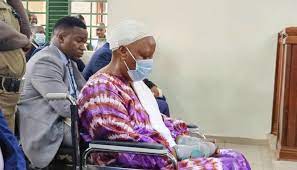
Andrew Kizimula Mubiru, the Acting Forensic Director of Police, has linked Molly Katanga to her husband’s murder.
He testified before the High Court that, upon examination of the pistol used to kill Henry Katanga, it tested positive for the DNA of his widow, Molly Katanga, the deceased himself, and one of their daughters, Patricia Kakwanza.
According to this scientific evidence, the predominant DNA was that of the widow, Molly Katanga, indicating that she fired the fatal shot that killed her husband. However, the pistol was not brought to court because it was submitted for ballistic analysis.
He also testified that the blood samples that were found on the door handles, ceiling, and balcony belonged to Molly Katanga.
Mubiru further said that the two DNA analyses of the exhibits are linked to two other people who are not the couple or relatives of the deceased, indicating that there were two other people at the crime scene.
Molly Katanga is accused of killing her husband, Henry Katanga. The businessman was allegedly shot dead by his wife on November 2, 2023, at their home in Mbuya, Nakawa Division, Kampala City.
Molly is charged alongside her two daughters, Martha Nkwazi and Patricia Kakwanza; George Amanyire, a shamba boy; and Charles Otai, a health worker.
Nkwanzi and Kakwanza are accused of tampering with evidence at the crime scene, rendering it unidentifiable for judicial proceedings. Amanyire and Charles Otai, a health worker, are charged with assisting others involved in the crime.
In February, the four were granted Shs2 million in cash bail while their sureties were bonded at Shs20 million and ordered to surrender their passports.
The Speaker of Parliament, Anita Among, has applauded the Opposition MPs who defied the Leader of Opposition, Joel Ssenyonyi, calling for the boycott regional sittings.
Among revealed that Parliament will take a roll call to establish the MPs that have attended and those that snubbed the sittings.
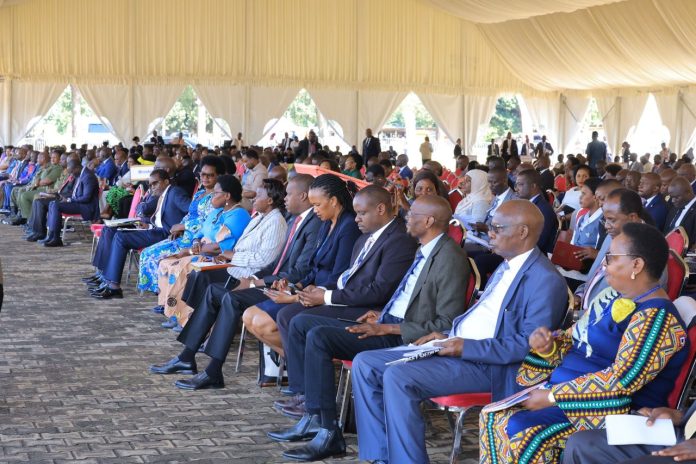
During the opening session at Kaunda Grounds in Gulu city, Speaker Among emphasized that Gulu is an integral part of Uganda and that there is no justification for some MPs to oppose the sitting, unless they have ulterior motives or are opposed to the well-being of the people of Gulu.
She noted that just as Parliament is typically held in Kololo, Kampala, it can also be convened in Gulu, underscoring the importance of regional sittings in addressing specific regional needs.
“A people-centered parliament must be responsive to the needs of the citizens, or else society will be without effective parliamentary representation. The 11th Parliament, right from inception in 2021, vowed to put the people at the centre of the legislative process and its decisions. That is why we are taking Parliament to the people. We have brought parliament to the people; we don’t want people to come to parliament,” she said.
Shs termed individuals opposed to the regional sittings outside Kampala as selfish and don’t love the Northern Region because the constitution gives her powers to proclaim parliament to hold sittings anywhere in Uganda, including the middle of Kampala Road.
“And where Parliament is, is where the Speaker is and where the Speaker proclaims, and this will be Parliament. So, this perception of saying that Parliament must always sit in Kampala is being selfish. The next time, we can even proclaim the middle of Kampala Road to be part of Parliament,” Among said.
Among has asked the people of Gulu not to be misled by some opposition MPs who are boycotting the parliamentary regional sittings in the regions.
Speaker Among assured the public that the regional sittings will continue, with or without the participation of some opposition MPs who are prioritizing their own interests.
This comes after Ssenyonyi urged his colleagues to boycott the sitting, claiming it was a waste of taxpayers’ money.
However, several opposition MPs, including Bukomansimbi district woman MP Veronica Nanyondo, Njeru Municipality MP Jimmy Lwanga, Bukoto south MP Twaha Kagabo, Kawempe South MP Bashir Kazibwe Mbazira, and Abedi Bwanika of Kimanya Kabonera from the National Unity Platform (NUP), have defied Ssenyonyi’s call and are attending the sitting.
Others are Buikwe South Lulume Bayiga and Richard Lumu Mityana South MP from the Democratic Party-DP, as well as MPs from the Forum for Democratic Change (FDC) and Uganda People’s Congress (UPC), are also participating in the sitting, demonstrating a split within the opposition ranks on this issue.
Among has asked the people of Greater North not to vote for any of the current MPs back to Parliament in 2026 if any of them boycott the Northern Regional Parliament sitting.
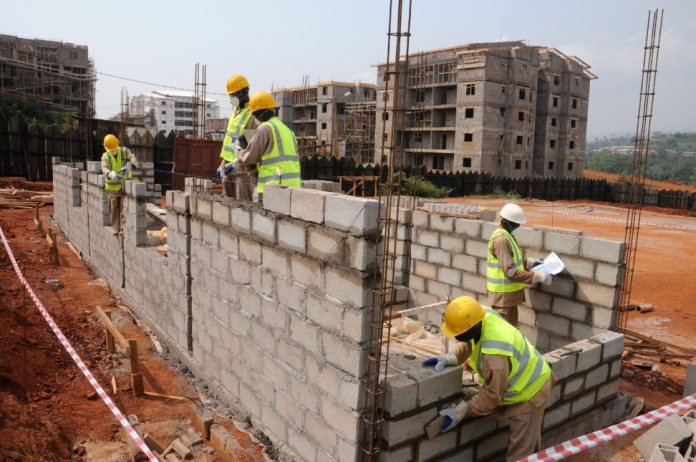
The government has tabled the Engineering Professionals Bill, 2024 in which it is seeking to regulate and impose Code of Conduct for both Engineers and Technologists in Uganda, with a proposed jail term for 2 years or fine of Shs1 Million or both, for anyone who passes off as an Engineer or Technologist, or practices without a valid license.
The Bill was tabled during a Parliamentary sitting held in Gulu city chaired by Speaker Anita Among.
The Minister of State for Works, Musa Ecweru defended the enactment of the law noting that The Engineers Registration Act Cap. 271, regulates aspects of engineers only, and does not provide for the regulation of the other engineering professionals including the technologists and technicians.
“The Act provides for registration but does not provide for licensing of the engineering professionals. The Act does not provide for a code of ethics or any mechanism for inquiry into the conduct of an engineering professional who contravenes the code of ethics. There is therefore need to regulate the technologists and engineers who are the other cadres of engineering professionals aside from engineers, to provide for the licensing of the engineering professionals and provide for a code of ethics for the engineering professionals and a mechanism for inquiry into the conduct of an engineering professional who contravenes the code of ethics,” read part of the Bill.
In clause 44 of The Engineering Professionals Bill, Government has proposed a number of offences and penalties, and is seeking Parliament to bar any person from; (a) fraudulently making, or causing or permitting to make, any false or incorrect entry in the register or any copy of it; (b) fraudulently procuring or attempting to procure himself or herself for any other person to be registered under this Act, to have anyone who commits any of these offence to be held liable on conviction to a fine not exceeding fifty currency points (Shs1 million) or imprisonment not exceeding two years or both.
Government further proposed to have the above penalty imposed on acts where one (c) qualifies for registration under section 22,23 and24, but fails or neglects to register in accordance with the sections; (d) practices or attempts to practice as a registered engineer, registered technologist or registered technician without holding a valid annual license; or (e) knowingly and willfully makes any statement which is false in a material particular, or which is misleading, with a view to gaining any advantage, concession or privilege under this Act whether for himself or herself or for any other person.
Further in clause 44(2) the Ministry of Works has proposed that where a person who commits an offence under subsection (1) is a body corporate, every person who, at the time of the commission of the offence, was a director or officer of the body corporate may be charged jointly, in the same proceedings with the body corporate, and where the body corporate is convicted of that offence, every director or officer shall be deemed to have committed the same offence unless he or she proves that the offence was committed without his or her knowledge or that he or she exercised all due diligence to prevent the commission of the offence.
Foreign Affairs Minister, Gen. Jeje Odongo at the retreat.
General Odongo Jeje Abubakhar, Minister of Foreign Affairs, has urged Ugandan Ambassadors and Heads of Missions abroad to align the Ministry’s work with Uganda’s National Development framework, including Vision 2040 and the Third National Development Plan.
Speaking at the opening of the Ambassadors’ Conference running from August 26 – 30, 2024, Gen. Odongo emphasized the need for Uganda’s foreign policy to drive economic growth and regional integration.
The conference, held at the Civil Service College in Jinja, aims to achieve several objectives, including enhancing performance and innovation among missions, and facilitating peer-to-peer knowledge sharing.
The Ministry has adopted various interventions to achieve these objectives, including promoting regional and international peace and security, enhancing bilateral relations, and engaging with stakeholders.
“If Uganda’s Foreign Service delivers on the objectives of the different national priorities, programmes and objectives, we shall have played a very important historic role in the transformation of our country,” Gen Odongo said. “We must ensure that our foreign policy work contributes to the realization of our national development aspirations,” Gen. Odongo said.
The Minister highlighted economic and commercial diplomacy as key drivers of Uganda’s development, stressing the need for ambassadors to promote value addition, industrialization, and trade.
“Economic and commercial diplomacy has taken center stage in our foreign policy work,” he noted adding, “We must leverage our diplomatic presence abroad to attract investment, technology, and expertise that can drive Uganda’s economic transformation.”
He also stressed the importance of regional cooperation and integration, citing the East African Community and the African Continental Free Trade Area as key frameworks for promoting inter and intra-Africa trade.
“We believe these are important and strategic pillars for Uganda’s national development,” Gen. Odongo said.
“At the level of regional cooperation, the East African Community remains the main entity… For the rest of Africa, the African Continental Free Trade Area provides a framework for continent-wide trade cooperation.”
Gen Odongo also tackled the pressing challenges to regional peace and security, including the ongoing armed conflicts in the Democratic Republic of Congo and The Sudan, as well as the lingering political differences in South Sudan. He underscored the imperative for Uganda to remain at the forefront of promoting peace and security in the region, leveraging its experience and influence to foster stability and cooperation.
“The situation in Somalia remains fragile in terms of peace, as the Al-Shabab is not entirely defeated,” the Minister noted.
“It is important that we pay close attention to the ATMIS draw-down, and whatever post-ATMIS transition arrangements will be put in place. Our interest, as a country that made the ultimate sacrifice for our brothers and sisters, is to ensure that the gains that have been made are not lost.”
On the issue of human rights and governance, Minister Abubakhar emphasized the need for sustained engagement and dialogue to address concerns and misconceptions.
“We need to have continuous engagement and dialogue to generate better appreciation on some of the situations causing discomfort to our partners,” he said, highlighting the importance of open communication in navigating complex issues and strengthening partnerships.
Permanent Secretary Bagiire Vincent Waiswa highlighted the need for effective and efficient approaches to promote economic and commercial diplomacy, particularly in areas such as agro-industrialization, tourism promotion, mineral development, and science and technology (ATMs).
Bagiire re-echoed the importance of mobilizing Ugandans in the diaspora for national development and promoting international law and commitments.
“We need to have a concerted effort to attract investors, eliminate non-tariff barriers, and enhance trade relations,” he said.
“The Ministry has participated in coordinating and mobilizing grants for national development, including the Chinese Government grant of US$5.3 million to finance the MoFA Extension building project.”
Waiswa commended some Heads of Mission for heeding guidance on effective service delivery but expressed concern over others who have disregarded official guidance, leading to acrimonious situations.
“Leadership of a Mission is by the Head of Mission, but it’s impossible for them to succeed if they hold others in their team with little or no regard,” he said.
He added, “I urge you to always acquaint yourselves with the Public Finance Management Act (2015) as you seek to guide Accounting Officers about their duties.”
The Conference will also assess Mission performance and innovation, with awards for top performers.
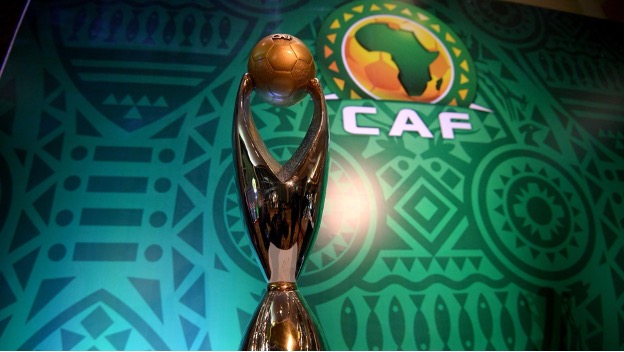
Witness the rise of African giants! Explore how the CAF Champions League is elevating club profiles, attracting investment, and fostering a new era for African football on the world stage.
From Local Heroes to Global Contenders: How the CAF Champions League is Propelling African Clubs
For decades, African football has been a breeding ground for exceptional talent. However, the spotlight often fell on individual players who would head off to shine in European leagues. Now, a new era is dawning, fueled by the growing significance of the CAF Champions League. This prestigious tournament is no longer just a competition for domestic bragging rights; it’s a platform propelling African football matches today to global prominence.
Raising the Bar: Increased Investment and Infrastructure Development
The CAF Champions League is attracting significant investment into African clubs. The increased prize money, television revenue, and sponsorship deals allow clubs to invest in infrastructure upgrades, improve training facilities, and attract higher-calibre coaching staff. This, in turn, leads to a more professional setup and a more competitive environment.
Showcasing Talent: A Gateway to the Global Stage
The CAF Champions League is a stage for African clubs to showcase their talent to a global audience. Strong performances in the competition can lead to lucrative transfers for players, raising their profiles and attracting interest from European scouts. This benefits the individual players and injects valuable funds back into the clubs, allowing them to further invest in development.
Continental Rivalries: Stories to Watch Unfold
The rise of the CAF Champions League creates captivating storylines that transcend national borders:
Classic Rivalries Renewed: Will legendary rivalries like Al Ahly vs Zamalek (Egypt) or Wydad Casablanca vs Raja Casablanca (Morocco) regain global attention on the Champions League stage?
Emerging Forces: Can clubs from previously under-represented regions like West Africa or Central Africa challenge the dominance of North African powerhouses?
The Road to the Club World Cup: Will a strong showing in the CAF Champions League translate to a competitive performance at the FIFA Club World Cup, further raising the profile of African clubs on the world stage?
Building a Sustainable Future: Beyond the Tournament
The CAF Champions League’s impact extends beyond the final whistle. By creating a more financially viable environment for clubs, the competition fosters the development of youth academies and professional structures. This paves the way for a more sustainable future for African football, ensuring long-term growth and competitiveness.
A New Era Dawns: African Football on the Rise
The CAF Champions League soccer live today is a game-changer for African football. The tournament propels African clubs to the forefront of the global game by showcasing talent, attracting investment, and fostering healthy competition. This is not just about trophies; it’s about establishing African clubs as respected forces capable of challenging the traditional hierarchy in world football. As the competition continues to grow, fans worldwide can expect to witness thrilling encounters, captivating storylines, and the rise of African giants ready to take their rightful place on the global stage.