Stanbic Bank
Stanbic Bank
20.7 C
Kampala
Stanbic Bank
Stanbic Bank
Home Blog Page 2177

‘The Return of Oulanyah’ and the removal of the age limit clause

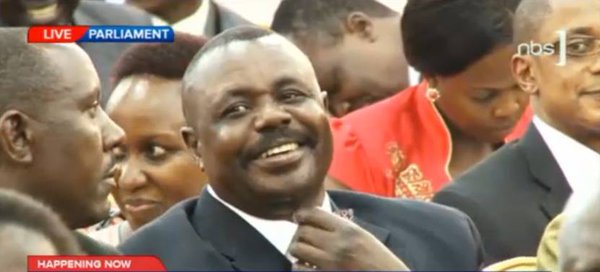
jacob Oulanyah

If he was a movie Director, he would be the brains behind a successful film, ‘The Return of Oulanyah’, a Ugawood blockbuster shot and directed in Uganda by Jacob Oulanyah L’Okori for about 20 years between 1991 and 2016.

Since Oulanyah shot to fame in Ugandan politics, his name has been synonymous with interesting tales: a mixture of candidness, political shrewdness and the ability to navigate difficult terrain, things that have seen him rise to the Number Six position in the country.

To many who follow politics in Uganda, Oulanyah’s political home is the Uganda Peoples Congress (UPC), and he first joined national politics by contesting for and winning the Omoro County seat in 2001 on the UPC ticket.

In fact, in the early 1990s, while still at Makerere University where he was Guild Speaker and the place where he cut his political teeth, Oulanyah was an outspoken critic of the Yoweri Museveni National Resistance Movement/Army (NRM/A) regime, which was then embroiled in a grueling war with Joseph Kony’s Lords Resistance Army (LRA) in his home region of Northern Uganda.

But the 51-year old lawyer’s political fortunes were to change with his election as chair of the Parliamentary and Legal Affairs Committee of the Seventh Parliament, the ensemble that was instrumental in the scrapping of the then mandatory two-5 year term limit, a development that paved the way for NRM’s President Yoweri Museveni to seek a third term in 2006. Oulanyah later tactfully decamped to the ruling party.

But since he joined the National Resistance Movement in July 2006 Oulanyah has earned himself as many Ugandan friends as has earned foes, the latter who blame him for President Museveni’s lengthy stay in power that is now supposed to end in 2021.

Political pundits aver that the despite being a staunch UPC candidate contesting for the Omoro seat in the 2006 elections, his role in the removal of term limits in 2005 endeared Oulanyah to Mr Museveni, but also cost the former his Omoro seat because his constituents considered him a sellout.

However, like the proverbial cat with nine lives, Oulanyah was to make a strong political comeback in the March 2011 elections and was in turn reportedly rewarded with the post of Deputy Speaker of the Ninth Parliament in 2011.

But his term as Deputy Speaker in the previous Parliament has not been a rollercoaster; he has had a brazenly tumultuous working relationship with his boss Rebecca Kadaga that culminated in strong blob tongue-twisters in the public domain.

But interestingly, it is this somewhat funny working relationship with Speaker Kadaga and the charm effect developed over the last 10 years with Mr Museveni and the National Resistance Movement (NRM) party that almost thrust him into the Number Three position, the Speaker of Uganda.

But this was not before the Oulanyah being accused of failing the interests of the Ugandan public in the way he handled parliamentary affairs in regard to the Public Order and Management Bill (POMB), which was later passed into an Act (POMA); the Petroleum (Exploration, Development and Production) Act, 2012 and the stand off between President Museveni/Executive and Parliament following the death of Butaleja Woman Member of Parliament Cerinah Nebanda.

Without delving in the nitty-gritty, in the minds of several Ugandans, in all the above issues Oulanyah acted as an ‘extension of the Executive’, raising queries about his suitability as a people’s representative in the Parliament of Uganda, whose principal duties are to make reasonable laws and to hold the Executive accountable.

It is against such a background that Ugandans are now questioning why the Executive fought so hard to see that Oulanyah, after having failed to floor Kadaga in the race for speakership, still becomes Deputy Speaker.

Indeed, fingers are pointing to electoral reforms, with a possible removal of the Constitutional age limit of 75, as one of the reasons the Executive was hell-bent on Oulanyah remaining as one of those to steer the House, should the need arise.

But that is still a presupposition being fronted by some Ugandans because four years ago in May 2012, Mr Museveni, now aged 72, had reportedly vowed that he would not seek the removal of the age-limit clause.

“After clocking 75, I will not support the lifting of the age limit to allow me contest for another term of office,” Museveni reportedly said while appearing on NTV’s ‘On the Spot’ programme.

But the Constitution is ‘just a paper’ he once reportedly said. And this means changing the Constitution is not rocket science if one so wishes and has a parliamentary majority whose exhibited penchant for freebies including millions in cash handouts is unrivalled.

Nonetheless, talk doing rounds in town indicates that new Deputy Speaker Jacob Oulanyah is more inclined to toeing a path the will likely favour the wishes of the Executive, should need arise.


Stories Continues after ad

Turkey’s Erdogan to visit Uganda

Turkish President Tayyip Erdogan reviews an honor guard during a ceremonial reception in Abuja, Nigeria March 2, 2016 REUTERS/Afolabi Sotunde

Turkish President Recep Tayyip Erdogan will pay a four-day, two-country visit to East Africa from May 31 to June 3, a statement from the Presidential Press Office said on Monday.

Erdogan will first visit Uganda on May 31 to June 1, and then proceed to Kenya on June 1-3.

The Turkish president did the first leg of his Sub-Saharan African tour in the West African country of Senegal this February.

Then in April, he continued in West Africa with visits to Ivory Coast, Ghana, Nigeria, and Guinea.

During his latest visits to Africa, Erdogan vowed to boost Turkish-African relations.

When Erdogan was prime minister, Ankara declared 2005 the Year of Africa, Turkey was accorded observer status by the Africa Union, and Turkey’s official policy of “opening to Africa” gained new momentum

Stories Continues after ad

Ebola ruled out in South Sudan

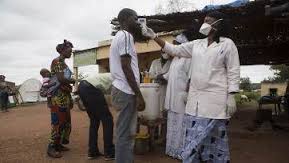
A health worker helps people in light of an Ebola scare in South Sudan. Photo credit/South Sudan Tribune

Samples of a deadly haemorrhagic fever that killed ten people by February 28 in South Sudan since its outbreak was announced late December 2015, have tested negative for Ebola.

According to a May 19 release dubbed Disease Outbreak News (DONs) by the World Health Organisation (WHO), samples of 33 patients were shipped to WHO collaborating centres at the Uganda Virus Research Institute; the Institut Pasteur of Dakar in Senegal and the National Institute for Communicable Diseases in South Africa but all tested negative for Crimean-Congo haemorrhagic fever, Ebola virus disease, Marburg virus disease, Rift Valley fever, yellow fever, West Nile virus and Zika virus.

Earlier, the National IHR Focal of South Sudan had notified the WHO of an outbreak of the haemorrhagic fever syndrome and as of May 9, a total of 51 suspected cases, including 10 deaths, had been reported from the counties of Aweil North with 45 cases, including 10 deaths and Aweil West with six cases.

The area where the outbreak occurred borders Darfur in Sudan where at least 469 cases of undiagnosed viral haemorrhagic fever, including 120 deaths, were reported between August and November 2015.

However, five samples tested positive for Onyong-nyong virus; three samples were positive for Chikungunya; and one sample tested positive for the dengue virus.

The release further indicates that laboratory results received so far do not explain the symptomatology (unexplained bleeding) of the reported cases nor the high mortality rate.

However, according to the release, currently there is no evidence of person-to-person transmission of the disease and no health care workers have been reported among the cases but the majority (74.5%) of the suspected cases are below 20 years of age.

‘The most frequent symptoms include unexplained bleeding, fever, fatigue, headache and vomiting. The symptoms do not seem to be severe and rapidly resolve following supportive treatment’ a release by the WHO states.

The fever has been attributed to the frequent cross-border movement between Sudan and South Sudan, and according to WHO the risk of international spread of the disease cannot be ruled out.


Stories Continues after ad

Whitaker defends Museveni actions towards ICC

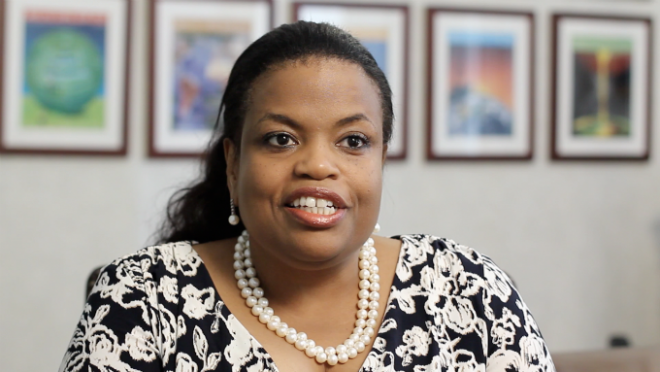
Former US Assistant Secretary for Trade Rosa Whitaker

Former United States Assistant Secretary for Trade in charge of Africa and trade broker Rosa Whitaker has blasted Western envoys for lashing out at Uganda’s President Yoweri Museveni for hosting the Sudanese leader at his swearing in ceremony in Kampala.

Diplomats from the United States, the European Union and Canada walked out of the ceremony in protest at Bashir’s presence. Similar controversy erupted last year when the South African government did not arrest Bashir when he attended an African Union summit in Johannesburg.

President Museveni is a celebrated critic of the court who, when usually in company of other African leaders, accuses it of being a tool of Western powers to witch-hunt leaders on the continent and have threatened to withdrawal from the Rome Statute.

Whitaker who is best remembered for her implication in the $8.5bn Standard Gauge Railway scandal that forced Ugandan legislators to ask her government to investigate her engagement in the deal was also a career diplomat with the State Department called the recent Western actions as an insult to Africa and as “amateur theatrics.”


Below is Ms Whitaker’s statement

Last week, I watched with dismay as two American diplomats walked out on the inaugural address of a respected African leader who continues to make a major contribution to our shared objectives in the region and who has been a steadfast ally in the battle against global jihadism.

Other African leaders attending the ceremony were visibly angered. To see two decades of goodwill built up under Presidents Bill Clinton and George Bush so carelessly forfeited was deeply saddening. Having worked for years in both administrations and the Congress to build a 
strong American partnership with Africa this unprecedented walk-out was personal.

The behavior of our officials reeked of arrogance. It served no US interest and advanced no conceivable strategic goal. America pays for such gratuitous grandstanding with loss of influence in Africa and in multilateral institutions where we need African support.

The target of our diplomats’ abuse was Uganda’s President Yoweri Museveni. He was being sworn in following his reelection. Although his defeated rivals have challenged the result, his share of the vote as officially tallied — 61 per cent — was entirely in line with what independent polls indicated. This was not a stolen election.
The chairman of the African Union and 14 other African heads of state were present at the swearing-in. Representing the US were deputy assistant secretary of state, Bruce Wharton, and our recently installed ambassador to Kampala, Deborah Malac. Their theatrics, leaders told me, were an insult not just to President Museveni but to all of Africa. The Russian and Chinese delegations were gleeful.

Wharton and Malac gave two reasons for their walk-out: the presence of Sudan’s President Omar al-Bashir and President Museveni’s reference to the International Criminal Court as “a bunch of useless people”. Why did the US follow the EU in this embarrassing walk-out? We followed the EU into Libya, the result — an expanded ISIL.

America’s attitude to the Court is hypocritical. We refused to sign the treaty that established it out of a legitimate concern it would be used against our own people. When I was in government, 
I had explicit instructions to lobby African countries not to sign. Since when did homage to this Court, whose jurisdiction we reject, become American policy?

In the case of Bashir, we should remember lessons learned in Iraq, Syria and Libya, ousting incumbent leaders, however unlovely, doesn’t inevitably mean change for the better. The unintended consequences have been dire.

Ugandans largely voted for peace and stability, which their government under Museveni has delivered. Predictably, the State Department was peeved by the home arrest of the opposition’s flagbearer. However, his verbal threats to overthrow an elected government through violence would also not be tolerated in the US or any country. A joke about arms at US airports warrants arrest as does a false claim of fire in a movie theater.

What makes the churlishness of our diplomats especially disgraceful is the contempt it shows for 
the support President Museveni is giving us — and the rest of the international community — to 
see that Somalia does not become another province of ISIL. Ugandan troops are fighting and 
dying to stop our enemies from achieving yet another haven from which to attack us.

As saddened as I am by the poor judgement exhibited by the two diplomats, I take comfort knowing that wisdom still prevails elsewhere in Washington, not least on Capitol Hill where the leadership on African issues is particularly strong at the moment on a bipartisan basis. There is not space to mention everyone, but on the House side, I would single out International Affairs Committee chairman Ed Royce and Congressmembers Charlie Rangel and Karen Bass; in the 
other chamber, Senators Chris Koons, Johnny Isakson and Jeff Flake.

America needs internationalists like these who know how to disagree respectfully and secure 
change through engagement and persuasive argument, as opposed to amateur theatrics.

Stories Continues after ad

Burundi peace talks for tomorrow

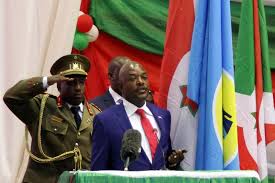
ORDERED ON MARRIAGES: President Pierre Nkurunziza

The Burundi government said it would attend regional talks tomorrow aimed at ending a year-long cycle of violence that has claimed about 450 lives and displaced hundreds of thousands of people.

Mediated by the East African Community (EAC), a regional body of which Burundi is a member, the talks have been repeatedly postponed since a first meeting in December that was chaired by Ugandan President Yoweri Museveni, where the government officials refused to share a table with what it considers insurgent groups.

Spokesman Willy Nyamitwe said that restriction still applied, but added: “We have received an invitation and we will go.”

Burundi’s political crisis broke out in April 2015 when President Pierre Nkurunziza announced he would seek a third term, a move opponents said violated the constitution.

After putting down an attempted coup in May led by generals opposed to his continued rule, he was re-elected in July, supported by a favourable court ruling.

Violence has steadily escalated since, with tit-for-tat killings between Nkurunziza’s security forces and rebels who took up arms against his government.

The next phase of talks is due to take place on Saturday in Arusha in neighbouring Tanzania, under the mediation of that country’s former president Benjamin Mkapa.

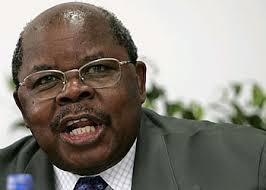
MEDIATOR: Former Tanzanian President Benjamin Mkapa will mediate the Burundi peace talks tomorrow

One opposition party, the CNDD, said it would attend, while others had yet to confirm their presence. The government recognises the CNDD as a legitimate interlocutor.

Meanwhile, a May 19 release by the EAC Mediator, former Tanzania President Mkapa, indicates that preparations  for  the dialogue  are all  in their  different  advanced stages of  their completion, and invitations to the Government of Burundi, Former Presidents of Burundi, Political  Parties,  Civil Society  Organization,  Religious  Groups and some selected important political actors have all gone. So far the Office of the Facilitator has received confirmations for participations from over 63 entities.


Delegates start arriving by today, ready for the opening ceremony that will be attended by the Executive Secretary of the ICGLR, Special Envoys from the USA, Belgium, UK, EU, AU and the UN; and some Ambassadors and High  Commissioners  accredited to Tanzania. The Dialogue  is expected to conclude on Wednesday, 25th May, 2016 with the decision being reached on the agenda, venue and participation to the next dialogue.


Stories Continues after ad

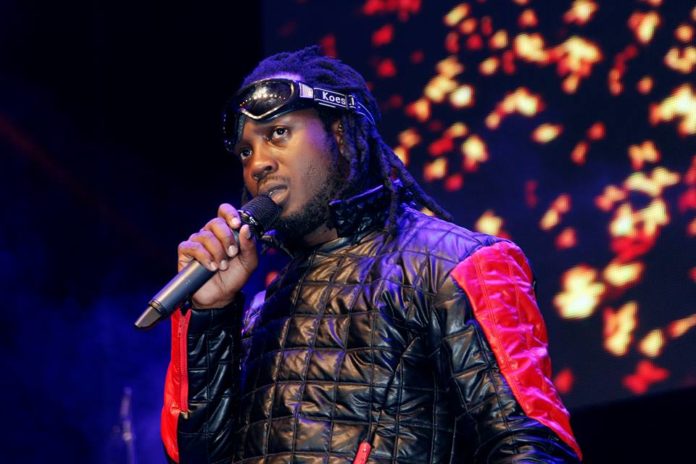
Bebe Cool ignored in 2016 BET Awards nominations

Popular reggea and ragga artist Bebe Cool born Moses Ssali had earlier this week hired a big muscled man to always keep his wife Zuena safe in anticipation for a trip to the Microsoft Theater in Los Angeles for the 2016 BET Awards.

It’s a huge disappointment Bebe Cool miscalculated and will wait much much long to get a sniff at East African’s only BET winner Eddy Kenzo’s experience even after opportunistically releasing so many songs in the last few days.

‘Gagamel’ reps haven’t gotten back to us yet about whether the Tubonga Nawe singer is very upset that he can’t show Kenzo he no mediocre.

Not to say the “upcoming musicians” like Diamond Platnumz (Tanzania) are continuing to shine globally as Bebe Cool’s ‘Go Mama’ album struggles to get the attention the awards organisers. The Americans  snubbed him again in the Best International Act (Africa) category for Diamond, Wizkid (Nigeria), Yemi Alade (Nigeria), MzVee (Ghana), Serge Beynaud (Côte d’Ivoire­), AKA (South Africa), Black Coffee (South Africa) and Cassper Nyovest (South Africa).

In the bigger categories, Drake handily leads the list of nominees with nine nods. Tying for second place are Beyonce, last year’s big winner, and Rihanna with five nominations each. Bryson Tiller, Chris Brown and Future are each up for a quartet of awards.

The 4-day 2-16 BET Experience will kick off on June 23 and will climax with the awards night on June 26.

Stories Continues after ad

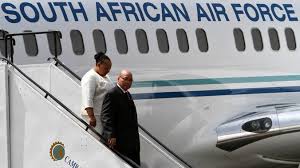
Zuma jet in another mechanical hitch

IN MECHANICAL PROBLEM AGAIN: South African President Jacob Zuma alights from his presidential jet, the Inkwanzi. The jet developed mechanical problems in Qatar

President Jacob Zuma arrived in Pretoria on an alternative flight this morning after his presidential jet, the Inkwazi, developed technical problems in Qatar, the Presidency said.

In February this year, while on a state visit to Burundi, the Inkwanzi developed technical problems, delaying President Zuma’s return home by a day.

“The aircraft used by the President, Inkwazi, developed technical problems in Qatar resulting in the use of an alternative aircraft to return to Pretoria,” said the Presidency in a statement.

Meanwhile, on arrival in South Africa today, Zuma headed for the centenary celebrations of the University of Fort Hare in the Eastern Cape, where he will be joined by other heads of state including Zimbabwe’s 92-year-old leader, Robert Mugabe.

“The State Visit to the State of Qatar was successfully concluded with the signing of several agreements and commitments, which further enhanced and elevated bilateral relations between the two countries to a strategic level,” said the Presidency.

Zuma and the Emir of Qatar, His Highness Sheikh Tamim Bin Hamad Al-Thani, witnessed the signing of the Agreement on Defence Cooperation, Agreement on Police Cooperation, and the Agreement on Cooperation in Arts, Culture and Heritage.

“In this regard, South Africa and Qatar agreed to establish a Joint Investment Committee to oversee the implementation of agreements, in addition to the structured bilateral consultations,” Zuma, whose visit began with Zuma’s interaction with the South Africa-Qatari Business Forum, said.

There is a large South African expatriate community in Qatar working in various sectors, as well as a number of South Africa companies including Nandos and Ocean Basket and, oil giant Sasol.

The visit also presented an opportunity for the two leaders to exchange views on the recent developments in the Middle East, including the Middle East Peace Process and the Palestine question.

The Presidency said Sheikh Al-Thani accepted an invitation from Zuma to visit South Africa.

Whilst in Doha, President Zuma paid a courtesy call on the Father Emir of the State of Qatar, His Highness Sheikh Hamad bin Khalifa Al-Thani.

Zuma was accompanied by Minister of International Relations and Cooperation Maite Nkoana-Mashabane, Minister of Trade and Industry Dr Rob Davies, Minister of Defence and Military Veterans Nosiviwe Mapisa-Nqakula and Minister of Arts and Culture Nathi Mthethwa.


Stories Continues after ad

Interaid Uganda joins forum for global response to threats

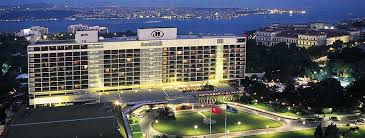
LAUNCH VENUE: The Hilton Hotel Bosphorus in Istanbul, Turkey

A new global and local-focused network of NGOs, the Network for Empowered Aid Response (NEAR) that includes Interaid Uganda will be launched on May 22, ahead of World Humanitarian Summit to be held at the Hilton Bosphorus in Istanbul.

According to a release, is a network of local and national NGOs who have come together in an attempt to restructure the global response to economic, human and environmental threats.

So far, 30 African organizations, 21 from Asia and five from the Middle East have committed to join NEAR and they will focus on four main areas of work: advocacy, financing, organizational development and research, the release adds.
‘It’s clear that local people and organizations are often the fastest to react in a crisis – their local knowledge and ingenuity can save lives in an emergency, or find effective solutions to longer-term challenges. But local voices are often not given the attention they deserve in these situations –large international organizations often take priority over smaller local groups,’ the release states in part. .

Degan Ali, Executive Director of Nairobi-based NGO Adeso and also a member of the NEAR Leadership Council, which has been working on the creation of NEAR since 2014, says: “After many months of consultations with local organizations and regional networks across the world, we are excited to finally launch. We hope NEAR will provide the much-needed platform to strengthen the collective voice of those working directly with local communities.”

Other members of the NEAR Leadership Council include Scholastica Nasinyama of Interaid Uganda; Sema Genel (Support to Life); Rezaul Karim Chowdhury – COAST (Bangladesh); Manu Gupta – SEEDS (India); Amjad Mohamed-Saleem –Independent (Sri Lanka) and Filbert Leone – HDC (South Sudan).
According to the release, there’s been an increase in resources for humanitarian and development aid and the need is growing too because the number of affected populations has doubled in the past decade.

‘Crucially, the amount of resources actually reaching people in need is going down.
NEAR aims to close this widening gap by putting people at the centre of delivery, and strengthening local organizations and communities – making sure the system works for the people in whose name money is raised’ the release further states.
NEAR’s Executive Director Smruti Patel said the response to challenges is dependent on how resilient the community is, and how well prepared the government and local organizations are.
Hari Darshan Shrestha, Executive Director of Centre of Resilient Development from Nepal—a member of NEAR, noted that a lot of the organisations especially from Africa, Asia, Middle East and Latin America share similar challenges.

“We can work together on these issues, share our experiences, lessons, and with combined efforts, find some solutions to these challenges,” Shrestha says.

Stories Continues after ad

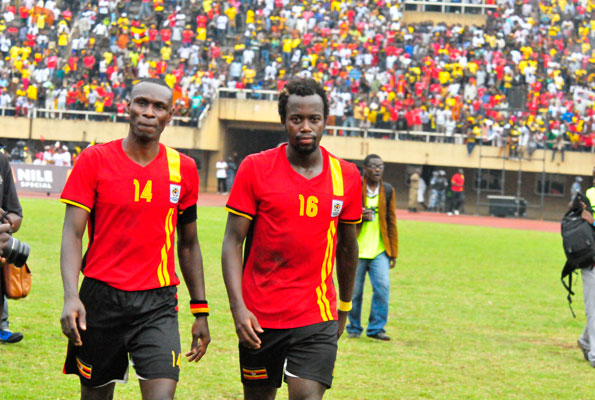
Savio Kabugo aiming for next Cranes call up

Micho Sredojevic has ignored Savio Kabugo (R) in his latest squad to face Zimbabwe and Botswana

Uganda Revenue Authority’s Savio Kabugo admits he is disappointed to have missed out on a place in Uganda’s latest squad but will work harder to make the next one.

The 21-man national sqaud was on Wednesday announced by Cranes coach Micho Sredojevic to prepare for a friendly against Zimbabwe and the 2017 Africa Cup of Nations qualifier against Botswana in Gaborone on June 4.

Savio who is most remembered for his winner against the Black Stars of Ghana at Namboole in 2014 spent almost a year out of active football because of injury. He hasn’t been called up this season and was also ignored when Uganda took part in the 2016 CHAN Championships  earlier this year in Kigali, Rwanda.

Kabugo now at URA is aiming for the very top, and says he wants to return to the national fold soon
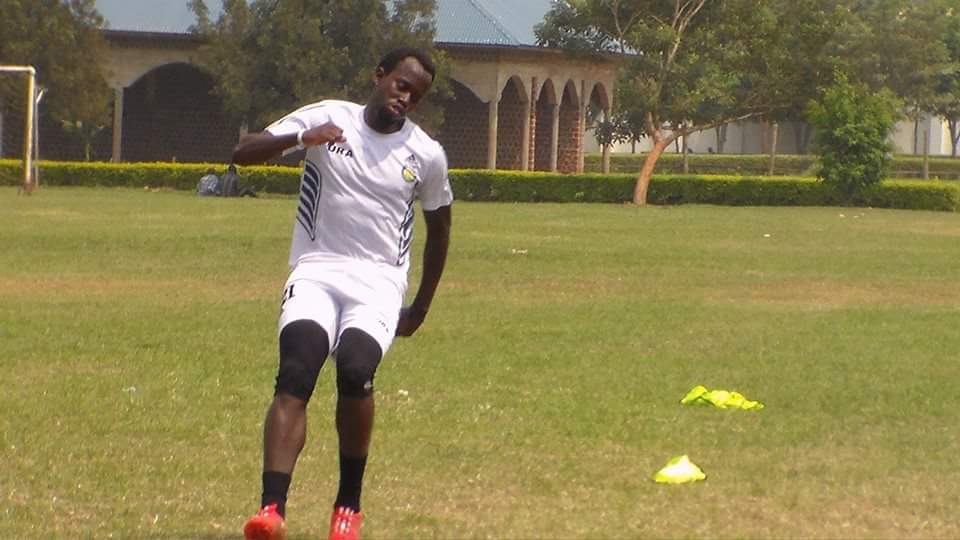
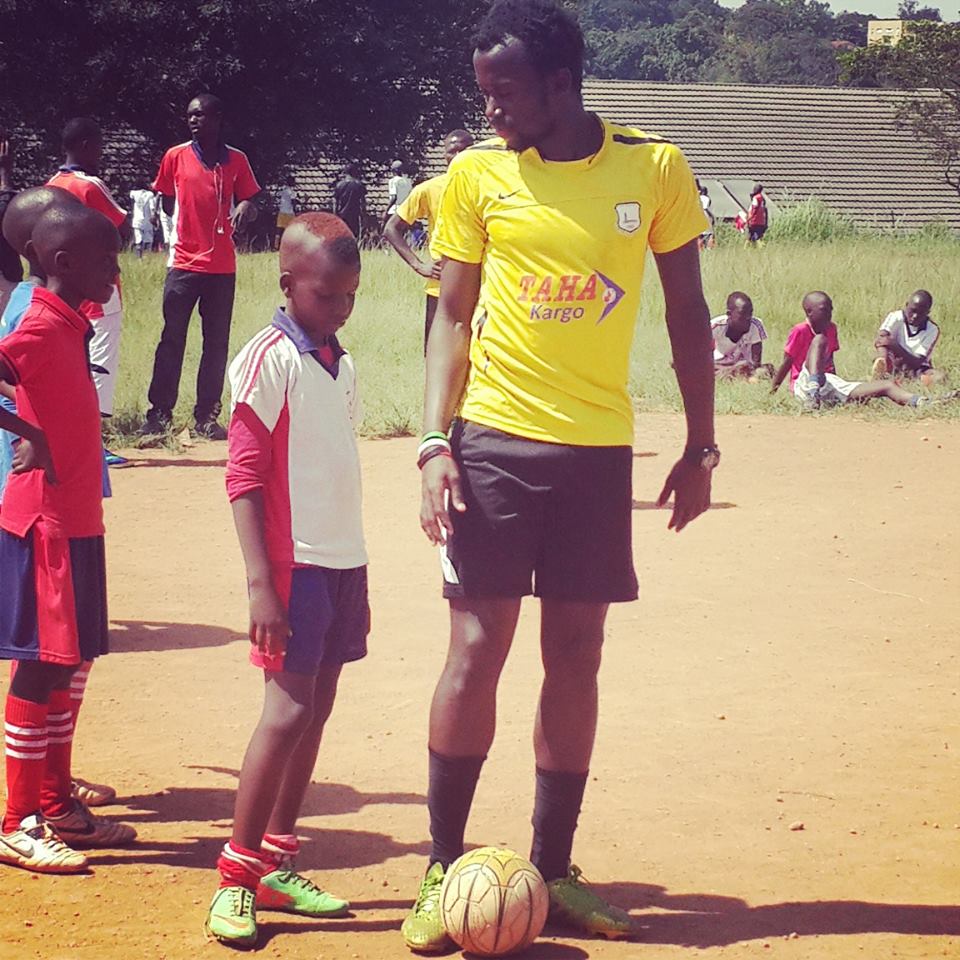
The experienced Savio Kabugo who went through the ranks at Proline Football Academy and SC Victoria University seen training kids is keen on passing on his skills to youngsters

Micho has instead summoned five defenders including Kabugo’s best friend and former SC Victoria University teammate Murushid Jjuuko who now plays semiprofessional football in Tanzania with Simba FC.

“Obviously I would have liked to be on the list. I’ve been working hard all year since I saw I had the chance to return to the Cranes. I’m sad not to have gone but it’s a happy time because there are only a few days until I play for something important with my club,” he said, referring to URA’s second last league game on May 24th against rivals Vipers in Buikwe.

Kabugo was a pillar in all the six group matches Uganda played as they tried to qualify for the 2015 Africa Cup of Nations finals. The Cranes now need maximum points against Botswana and Comoros in September to guarantee a place in Gabon next January.

“Hopefully I’ll have more opportunities with the national team throughout my life and I’m at the disposition of the Coach when he needs me. I think it was difficult for the Coach, because we’re fortunate in Uganda that we have great players and some had to be left out.

“Each person would come up with a different list but the Coach is Micho and I have a lot to be grateful to him for because he gave me my senior debut and many more great games for my country. I will fight to be in the next squad.”

Uganda Cranes defenders vs Zimbabwe and Botswana: Denis Guma (Al Ahed, Lebanon), Isaac Isinde (St George, Ethiopia), Murushid Jjuuko (Simba, Tanzania), Hassan Wasswa Mawanda (Al Shorta, Iraq) and Joseph Ochaya (KCCA)

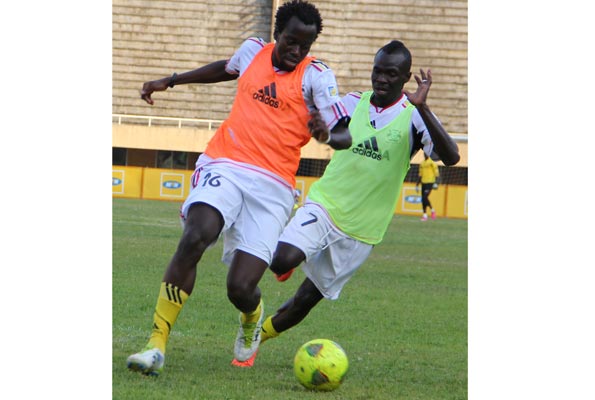
Centre back Savio Kabugo jostles for the ball with Emmanuel Okwi in a national team training session
Stories Continues after ad

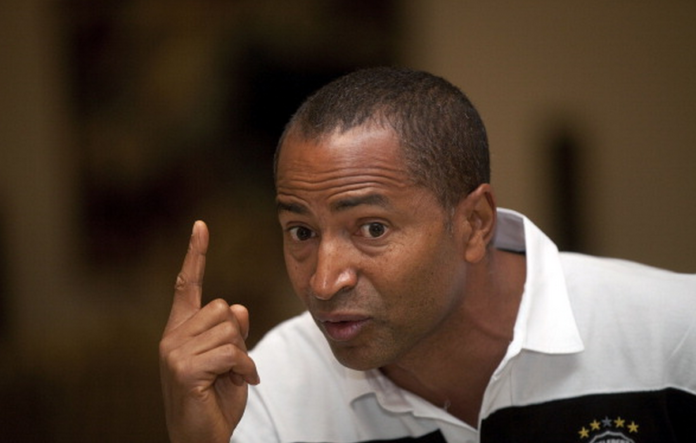
‘Arrest warrant’ for DRC opposition figure Moise Katumbi

A football tycoon in the Democratic Republic of Congo, Moise Katumbi, has been charged with recruiting foreign mercenaries, a government spokesman has said, AFP news agency reports.

Mr Katumbi announced about two weeks ago that he will be running for the presidency in elections due in November.

Government spokesman Lambert Mende told AFP that an arrest warrant had been issued for Mr Katumbi, the owner of TP Mazembe football.

Mr Katumbi has previously described as a “grotesque lie” the allegation that he had recruited mercenaries, and said it was aimed at preventing him from contesting elections.

It is unclear whether elections will be held in November, and whether President Joseph Kabila plans to step down after two terms in office.

@BBC

Stories Continues after ad