Nigeria and Switzerland recently announced an agreement to return $321m in public funds stolen by the former military ruler Sani Abacha.
The agreement came after a meeting in the Nigerian capital, Abuja, between Vice-President Yemi Osinbajo and a Swiss delegation including the country’s foreign minister and ambassador. Both countries said the ‘letter of intent’ to return the money provided a framework to help recover other looted funds by corrupt officials and to determine how it would be spent once repatriated.
“We guarantee that recovered assets would be put to uses for which they have been intended,” Osinbajo said in an emailed statement.
He added: “The framework will guarantee that returned assets will be used in the interest of the people of this country.”
Abacha, in power from 1993 until his death in 1998, is suspected of having siphoned off $2.2bn from Nigeria’s central bank in what the United States has called ‘brazen acts of kleptocracy’.
The head of Switzerland’s Federal Department of Foreign Affairs, Didier Burkhalter, said Switzerland was the first country to have returned a share of Abacha’s ill-gotten wealth.
Ten years ago, some $720m was returned to Nigeria, he said in a statement on the Swiss foreign affairs website.
The $321m was initially deposited in Luxembourg but confiscated by a court in Geneva in December 2014.
Burkhalter said the fight against corruption was ‘one of Switzerland’s priorities’ and the letter of intent ‘confirmed the principle of returning stolen assets monitored by the World Bank.
“This monitoring is a legal requirement to ensure that the funds can indeed be returned to Nigeria and used, as set out in the agreement, to support social programmes to assist the people of Nigeria,” he added.
Nigeria’s President Muhammadu Buhari has begun a purge of corruption since taking office last year and vowed to recover what he said were ‘mind-boggling’ sums of money stolen over decades.
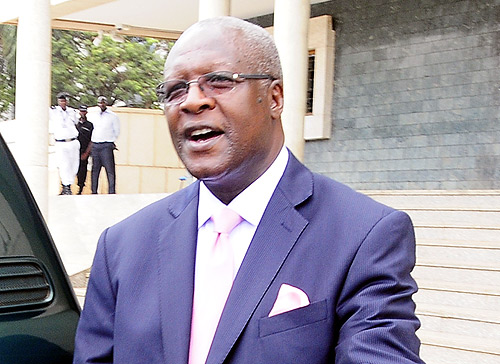
Justice Katureebe. The car bearing the CJ tag is not my official car.
The Chief Justice Bart Katureebe has clarified that he was not attacked as it was reported by police.
In a statement sent to newsrooms, Justice Katureebe says that the suspected mad man nether did he attempt to open his official vehicle nor did he demand to speak with him.
““I only saw a man running around with policemen. He never came close to my car and I never heard him demanding to speak to me. In fact the shooting happened after I left that scene,” said Justice Katureebe.” Reads the statement sent by Solomon Muyita, Senior Communication Officer for the judiciary. Adding “I don’t believe the man intended to attack me. I think this was a mad man who had blocked many other vehicles on that part of the road. My convoy was just caught up in this situation. So this was not an assassination attempt as the media has put it.”
Police reported earlier that they had shot a man they believed was bound to harm the Chief Justice and that he was shot and was being hospitalized in Mulago but later passed on. So where did the police get its version of the story that a man threatened to attack the Justice Katureebe and why was shot?
Below is a statement from the Judiciary
Press Release
I was not attacked, Chief Justice
KAMPALA-March 9, 2016: The spear-wielding stranger who was involved in a mini-scuffle with the Police in Bugolobi on Monday morning did not attack the Chief Justice.
The suspected mad man neither attempted to open the official vehicle of Citizen number four nor did he demand to speak with him, the Hon. Chief Justice, Bart Katureebe, has clarified.
The Chief Justice says the media reports about the incident are exaggerated and alarmist.
“I only saw a man running around with policemen. He never came close to my car and I never heard him demanding to speak to me. In fact the shooting happened after I left that scene,” said Justice Katureebe.
“I don’t believe the man intended to attack me. I think this was a mad man who had blocked many other vehicles on that part of the road. My convoy was just caught up in this situation. So this was not an assassination attempt as the media has put it.”
The Hon. Chief Justice also faulted the photograph published on the front page of Red Pepper issue of Wednesday March 9.
“The picture is false. The car bearing the CJ tag is not my official car. I don’t have that police patrol pick-up in my convoy, and the man lying dead on the ground is not the man I saw. I think the media should not exaggerate this matter,” he adds.
The man sustained injuries as the Police restrained him. He was later rushed to Mulago Hospital for treatment. ###
Media Contact:
Solomon Muyita,
Senior Communications Officer
The Uganda Judiciary Headquarters
Mobile: +256 (0)77 220 0089
“The suspension has been occasioned by allegations of match fixing ahead of the 2017 Africa Cup of Nations match between Zimbabwe and Swaziland,” it read.
“Zifa president Dr Phillip Chiyangwa will issue a statement after consultations with Cosafa, Caf, Fifa and the Government of Zimbabwe.”
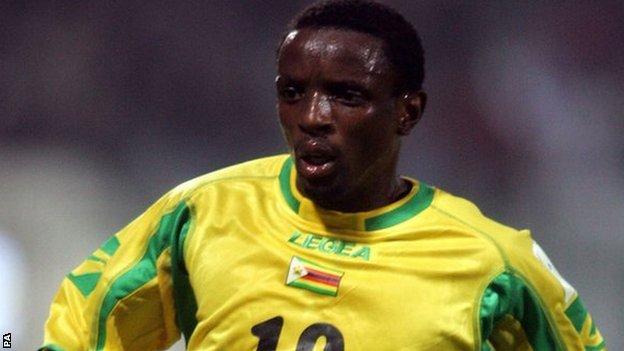
Kasinauyo was quoted in the Zimbabwe Herald newspaper as saying: “I have never been involved in such things all my life and the only relief that I have right now is that I am being told there is evidence and that will paint the correct picture and help set me free.”
The 40-year-old was elected to the Zifa executive committee in December and was part of his country’s squad at the Africa Cup of Nations in 2006.
Cosafa the 14-member council of Southern African associations affiliated to the continent’s governing Confederation of African Football (Caf).
Caf issued a statement on Wednesday saying it would liaise with football’s world ruling body Fifa to “activate the mechanisms necessary” to ensure other Nations Cup qualifiers are not open to manipulation.
“The decision, based on information available to the Association [Zifa] and were subjected to its Executive Committee, including affidavits, emails, audio recordings, may be related to the business to manipulate the results of the Day 3 & 4 matches of the AFCON 2017 qualifiers against Swaziland,” the Caf statement said.
Caf’s director of communication Junior Binyam told BBC Sport: “It’s a critical matter, and a threat for the game – not only for Africa but for the whole world. Match-fixing is probably the biggest cancer in the game today.”
Zifa’s recent history has been littered with problems and in 2012, after several years of investigation, 13 players and officials were banned for life for match-fixing in what became known as the ‘Asiagate’ scandal.
A further 69 received suspensions for their part in fixing friendly internationals that Zimbabwe played in Asia, where games were manipulated under the instruction of a Singapore-based betting syndicate.
The last of those suspensions for administrators, match officials, players and coacheswere lifted earlier this year as an investigation by Fifa into the matter stalled.
Swaziland and Zimbabwe are top of Africa Nations Cup qualification Group L on four points after two games, with the winners gaining automatic entry to next year’s tournament in Gabon. Malawi and Guinea are the other teams in the
Showy city lawyer Bob Kasanga has this afternoon been charged with forgery of judicial documents by Anti-Corruption Court over a pension scandal involving Shs15.4 billion.
Kasango was charged together with his co-accused a court official Milton Mutegeya.
According to Court, the money was reportedly to provide for legal fees after a city law firm won a pension case against government for having delayed to pay over 6,339 pensioners in the 1992 forced retrenchment by government.
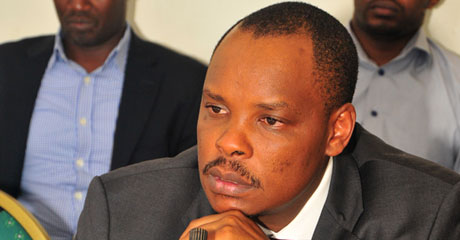
Kasanga, had earlier in 2013, implicated a High Court Judge, John Keitirima of allegedly trying to lobbying for a bribe of Shs500 million form him in order for the Judge to sign the document. However, the Judge later on played for Parliamentarians a recording of Kasango asking from him to sign the documents and in turn be offered a kickback.
The Judge had been summoned by Public Accounts Committee of Parliament as a witness and also to offer light on the allegations that he had asked for a bribe from Kasango.
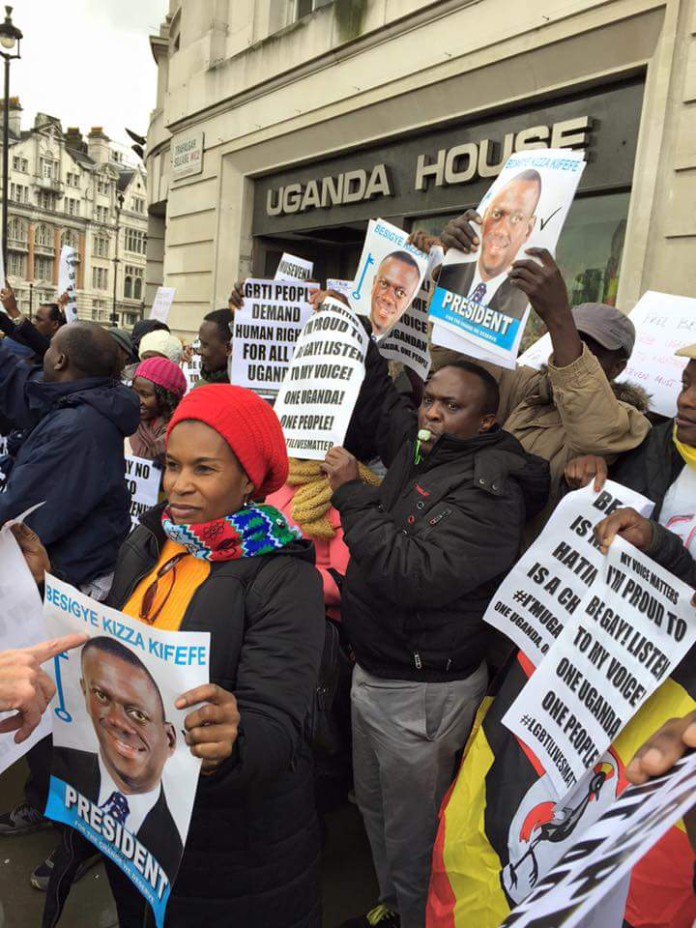
Ugandans in a pro-Besigye demo in London earlier today
A group of Ugandans in London have today held a demonstration in support of Forum for Democratic Change (FDC) flag bearer Dr Kizza Besigye.
Among the afflictions leading to the demo is Dr Besigye’s continued confinement at his home in Kasangati and reported harassment of other opposition political actors.
Waving placards, the group converged in front of Uganda House, the official seat of Uganda’s High Commissioner to the United Kingdom.
Following the announcement of president-elect Yoweri Museveni s the winner of the 2016 presidential elections, Dr Besigye rejected the results and vowed to continue with his earlier stated stance of ‘defiance’. Since then, on February 20, his movements have been restricted by police, and at times they arrest him during the day, only to return him home at night.
According to the FDC Twitter handle, the London petition has been signed and will be forwarded to the British Prime Minister David Cameron.
Former Go-Forward Presidential aspirant Amama Mbabazi
Former presidential aspirant John Patrick Amama Mbabazi has blamed police for this morning’s break-in into the offices of his lawyer Mohammed Mbabazi.
City lawyer Mohammed Mbabazi is leading the team representing Uganda’s former Prime Minister Amama Mbabazi in a Supreme Court petition seeking to annul just concluded the elections, in which incumbent president Yoweri Museveni was announced winner by the Independent Electoral Commission (IEC) on February 20.
“Those who raided counsel Mbabazi’s chambers were wearing police uniform, we have enough eye witnesses,” the former premier said.
According to Mr Mbabazi, a group of thirty policemen, some coming from Wandegeya Police Station, was present at the scene by the time of the break-in.
‘These raids were some few hours before the filing of affidavits. Files and computers were carried away. Evidence to be presented, “ he said adding: “there has been consistency in arresting and intimidating of our possible witnesses by state operatives.”
He also dismissed claims that the break in was staged by the opposition and warned that if the actions of the police are not controlled, ‘Uganda will quickly slide into a police state’. He added that his team would assemble and assess the impact of the raid and determine the next course of action.
Suspected burglars broke into the offices of two of Amama Mbabazi’s lawyers in the wee hours of Tuesday night and reportedly took off with computers and the 2016 presidential election petition case files.
The offices, one on Acacia Avenue in the quiet and leafy Kololo and the other on Buganda Road in Kampala, were reportedly broken into at about 3am.
One of Amama Mbabazi’s lawyers, Fred Muwema
And, reacting to the break in, lawyer Fred Muwema said his firm, Muwema and Co Advocates, had lost 15 affidavits in the break-in.
The African Institute for Mathematical Sciences (AIMS) and the Forum for African Women Educationalists (FAWE) celebrated on International Women’s Day, a joint partnership for the promotion of girls’ participation in Science Technology, Engineering and Mathematics (STEM) education across Africa.
This partnership was cemented by the signing of a Memorandum of Understanding (MoU) on the opening day of the Next Einstein Forum (NEF), Africa’s first global forum on science, taking place in Dakar. An initiative of AIMS, the NEF is a platform that brings together leading thinkers in science, policy, industry and civil society in Africa to leverage science to solve global challenges. This MoU will serve as a framework for collaboration between AIMS and FAWE to promote gender equality in STEM education at continental and country level.
“Gender equality and inclusion is of vital importance to our work at AIMS, where 30% of all of our graduates are women. It goes without saying that we believe that women can and will play a key role in the achievement of the Sustainable Development Goals if they are given equal access to a quality education in the STEM fields; they constitute half of our continent’s brain capacity,” said Thierry Zomahoun, President and CEO of AIMS. “Through this exciting partnership with FAWE, we will reach more girls across the continent and create enabling environments for them to study and succeed in STEM education”
The AU Agenda 2063 and the UN Sustainable Development Goals (SDGs) 2030 name gender equality as a key requirement for sustainable development. This AIMS-FAWE partnership will increase access and quality of STEM education for girls. Some key areas of collaboration include integrating gender responsive pedagogy in secondary school teacher training in Cameroon, joint outreach activities to encourage girls to develop an interest in mathematics and science, promoting AIMS students as mentors to FAWE beneficiaries and promoting awareness of successful African women in STEM as role models.
“Mathematical sciences is a key driver for Africa’s transformation and yet there are few students studying mathematics and even fewer girls. We are especially excited to work with AIMS to increase exposure to role models and mentors for the girls we work with in the communities and to show them that they too could be Africa’s Next Einstein. This partnership will also inform our advocacy engagement with continental and regional policy institutions on women and girls’ participation in STEM Education.’ said Hendrina Doroba, Executive Director of FAWE.
People wait to get water in a drought stricken area in East Africa
An estimated US$20 billion is needed in 2016 to meet the needs of some 87 million people in need, compared to $18 billion that was required to reach 52 million people in need in 2014.
According to a release by the United Nations Office for the Coordination of Humanitarian Affairs (UNOCHA), this is expected to increase, presenting a critical test to the capacity and ability of the humanitarian community to respond effectively on its own.
‘The world is currently facing an unprecedented number of humanitarian crises, putting more strain on responders. The number of people targeted for assistance has more than doubled over the past decade, with the global funding requirements increasing at a much faster rate. As part of the ongoing efforts to bolster the effectiveness of the humanitarian response system in the region, the humanitarian community in collaboration with business partners and the Government of Kenya, today launched the Humanitarian Private Sector Partnership Platform – East Africa, in Nairobi’ the UNOCHA release states in part.
Mr Pete Manfield, Head of UNOCHA, Regional Office for Southern and Eastern Africa said the launch of this partnership is a milestone. “Private sector partners play a key role in improving the reach, quality and timeliness of the humanitarian system and in helping to strengthen disaster management across the region,” Mr Manfield said.
Cross-sector partnerships in the region have however been ad-hoc, with engagement focused on single responses or one-off donations. “The challenge however is how the Government and stakeholders can transform this kind of engagements into continuous and sustainable partnerships, in light of surging crises,” stated Mr. Wycliffe Ogallo, Secretary, Liaison Affairs, Ministry of Interior and Coordination of National Government, who officially launched the Platform.
A key pillar under the World Humanitarian Summit consultations is the review of how the international humanitarian system ‘inter-operates’ with the broader network of actors that are responding to crises, in addition to building upon local and national capacity.
“Humanitarian and business dynamics are changing rapidly especially around mass population movements resulting from natural and man-made disasters,” notes Mr Dickens Thunde, World Vision Kenya Director, adding: “This necessitates that the two entities cooperate.”
The HPPP aims to provide structured and cost-efficient ways to connect humanitarian, business and government actors in helping communities minimize the impact of disasters and forge faster recovery.
The Ninth Parliament was lively and comic, marred though with absenteeism especially when a serious bill is to be passed. It is not easy to forget how the Members of Parliament got Ipads at Shs2.5 million ostensibly to reduce on the cost of stationary, however a few months down the road, the stationary cost doubled, with the Ipads still in the MPs hands, with even one of them seen playing Solitaire during a steamy session. Then there was the tiff between Deputy Speaker Jacob Oulanyah L’Okori and Ssemujju Nganda which degenerated into fracas, with ‘defiant’ Nganda being thrown out of the House like a baby.
Deputy Speaker Jacob Oulanyah
“You must apologise,” Oulanyah thundered but with persistent defiance yielding in the Forum for Democratic Change (FDC) camp, Semujju refused.
FDC Spokesperson Ibrahim Semujju Nganda
Then there were these rebel MPs: Theodore Sekikubo, Muhammad Nsereko, Barnabas Tinkasimire and Wilfred Niwagaba who made headlines after daring the National Resistance Movement (NRM) Chairman Yoweri Museveni, with something akin to Ssemujju’s ‘defiance’. It was not until they were invited to State House that they went numb, but we cannot blame them, all the ‘four musketeers’ are back in the Tenth Parliament but no one knows what they have in store now that the NRM Chairman is back to State House and they are back to the August House.
Then we saw the youngest MP in Uganda’s and Africa’s history, 19-year old Proscovia Alengot Aromait, who was just about to join university when she ‘inherited’ her deceased father Michael Oromait’s Usuk county seat in Parliament, to represent the people. It is not clear if she really did attend school at the Uganda Christian University (UCU) or whether she also fully participated in the activities of Parliament because there is no significant event that involved her at both institutions, but one thing to remember her about is the fighting for a bed in Kyankwazi and reports of her ‘bedding’ senior legislators.
Africa’s youngest legislator Proscovia Alengot
And more about bedding she talked about, when in 2012 Ms Alengot said the obvious, revealing that her male colleagues in parliament were amorously eyeing her. “There are many challenges. Stress. Not stress from my constituency but from people talking a lot about me. Also men, mostly from Parliament; but I will handle it,” Ms Alengot, then a student of Mass Communication, said in an interview with local media. No one know what she expected of the male MPs, but nonetheless the world moved on and before we knew it there were rumours doing the rounds that she had ‘fled’ to the United States for studies at the University of Central Oklahoma. Her parliamentary seat has since been taken by
Then on a sad note the Parliament lost vibrant legislator Cerinah Nebanda, a death that caused government some unease and also turned to near comedy during the ensuing postmortem that also caused Mulago Hospital Pathologist Dr Sylvester Onzivua, some trouble.
Well, as the 9th Parliament’s life ticks away like a clock it is also time we look at the men and women to watch in the 10th Parliament.
Rebecca Alitwaala Kadaga
She is the Speaker of the 9th Parliament and was nominated by the then Kinkiizi West MP John Patrick Amama Mbabazi but their relationship turned sour with the Speaker accusing Mbabazi, who as Prime Minister was Leader of Government of Business, for failing her in her duties. This brave woman presided over the passing of strong bills like the Anti-gay bill, promising that it would be a ‘Christmas gift’ to Ugandans in December 2012. She is the first female speaker of the Ugandan Parliament and the country waits with bated breath to see if she will vie for the same post or she will be given a cabinet post, or worse still, none f the two!
Nathan Nandala Mafabi
The Budadiri East legislator, is a darling to the people in Bugisu sub region. Mafabi lost to Kadaga when they contested for the post of Speaker of the Ninth Parliament. It is not clear if he intends to try his luck again, or try out for the post of Leader of Opposition once again.
Semujju Ibrahim Nganda
The professional journalist-turned opposition politician has been voted back to parliament by the people of Kira municipality. He entertained Ninth Parliament with comical scenes but was among the most vibrant opposition MPs, and pundits say he might tussle it out with anyone contesting for Leader of Opposition.
Jacob Oulanya L’Okori
The Deputy Speaker finally won back his Omoro County; results or no results, he was announced winner and that debate is better left to Mr Fred Enanga, the police publicist who said they will investigate matter. Meanwhile, most sessions chaired by Oulanya have not been perceived as fair by the opposition legislators, with many accusing him of trying to solve legislative matters based on his sentiments. If his victory is not challenged in court, we wait to see if he will be elevated from Deputy Speaker.
David Bahati
The Ndorwa West legislator and State Minister for Finance was so instrumental in the talks between government and striking teachers, he even took over the duties of education minister Jessica Alupo, who during that time who went into hiding. Bahati had earlier come into the lime light after tabling a private member’s bill against homosexuality bill. We wait to see what the 10th Parliament has for him.
Mubarak Munyagwa
The former Mayor of Kawempe and NTV pointblank segment favorite is in Parliament. The comical Munyagwa, known as a big Museveni critic who doesn’t also spare Kampala Capital City Authority (KCCA) Executive Director Jennifer Musisi, will now have to tussle it on the floor with many vibrant members, his performance is what we look out for.
Judith Nabakooba
Former police Spokesperson and Mityana Woman MP-elect Judith Nabakooba
For a long time she spoke all good for the Uganda Police Force (UPF) but might now have to castigate some of the actions of her former colleagues, if she is to effectively represent the people of Mityana and other Ugandans, if the TV footages of police brutality persist.
Other members to look out for are Judith Babirye, Mohammed Nsereko, Frank Tumwebaze, and General Moses Ali among others.
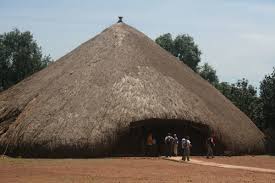
Kabaka Ronald Muwenda Mutebi of Buganda has stopped Katikkiro Charles Peter Mayiga from leading guided tours of his ancestors’ burial grounds, the Amasiro.
In a communication in Luganda the Kabaka says the Amasiro is under reconstruction and that the pace is slow, with officials not knowing what to do and when.
The Royal Tombs before the fire
By press time it was not possible to establish the actual cause of the Kabaka’s directive but the Royal Tombs have in the recent past been plagued by fires, with the first on in March 2011 the Amasiro went up in flames, after which a Commission of Inquiry led was instituted by government. Then again in July 2013 another fire broke out at the same place, destroying two huts in which Buganda Kingdom regalia that was saved from the 2011 fire was being kept.
According to the communication, since then the Katikkiro has been taking stakeholders on guided tours but the Kabaka now says that must stop. Further, according to the communication, the Buganda minister in charge of culture and tourism will be in charge of security at the Amasiro, and will be charged with informing the Katikkiro of any developments there.
‘Olwensonga eyo era ne Katikiro tajja kuddamu kulambuza bantu mulimu gw’okuzimba Amasiro we gutuuse nga bwe gubbade ebbanga lyonna emabega era nga waakuddamu okulambuza ng’okugazimba kuwedde,’ the Kabaka’s communication reads in part.
According to the Kabaka’s communication, the Amasiro will also remain out of bounds for the Kabaka’s other relatives and Mmengo officials, and that at the reconstruction stage will only necessitate the presence of technocrats at the site.
‘Abaami b’oku Masiro, Nnalinya, Katikkiro, Kaggo ne Mugema nabo bayimirizidwa okugenda mu kifo kino okutuusa ng’omulimu guwedde,’ the communication adds.
It further states that the ‘wives’ of his ancestors will remain in their usual places of abode, catered for by the kingdom’s office in charge of the Royal Tombs.