EALA to hold public hearing on Burundi
Mugabe names new acting President
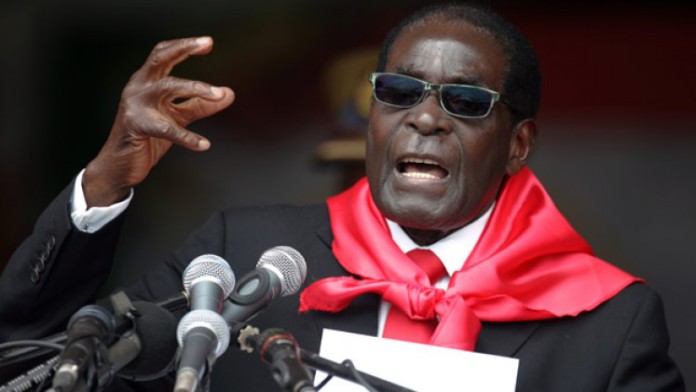
Vice President Emmerson Mnangagwa is now the Acting President, taking over from his counterpart Phelekezela Mphoko who has been acting since 91 year old President Robert Mugabe left for his annual leave that began on December 24, 2015.
“Please kindly note that as of today, Monday, 11th January 2016, Honourable Vice President Emmerson Mnangagwa is the Acting President of Zimbabwe in the absence of His Excellency the President, Cde R.G.Mugabe, who is on his traditional annual vacation,” read a statement signed by principal director in the Ministry of Information, Media and Broadcasting Services, Mr Regis Chikowore.

Media reports had indicated that President Mugabe had ‘snubbed and humiliated’ VP Mnangagwa by appointing VP Mphoko to act on his behalf for the second consecutive time.
Meanwhile, at least ten of Zimbabwe’s 40-plus diplomatic missions are under legal notice for eviction over unpaid rentals with salary arrears for staff, in may cases averaging 12 months, also remaining unpaid, media reports indicate.
In interviews, staff at some of the embassies said the situation was now grave.
Rentals have also not been paid for the personal residences of the ambassadors with some having bills of more than $30,000.
According to reports, phone lines at the New York mission were cut over non-payment and President Robert Mugabe’s delegation had to pay the bill when the veteran leader attended the United Nations General Assembly last September.
Mugabe also found the Paris mission in France with a similar pickle when he attended United Nations climate change conference at the beginning of December.
“At least ten missions are under legal notice; it’s really embarrassing,” said one official who asked not to be identified.
“We are under so much stress with more and more eviction notices coming; phones, water and heating for those in cold western countries have been cut off. We just can’t function.”
Struggling to right a tanking economy despite promises of a boom during the 2013 election campaign, the Harare regime admits that the national purse is nearly empty.
December salaries for most State workers were only paid this January.
Incredibly however, the government has managed to accommodate vice president Phelekezela Mphoko at a top Harare hotel for more than a year.
Again, President Robert Mugabe hosted a party for his ministers and Zanu PF politburo members before taking his family for a State-funded month-long holiday in the Far East.
“They are not afraid of the people; they have no respect for the citizenry,” said opposition politician Douglas Mwonzora about Mphoko’s lengthy hotel stay and the Christmas party for ministers and top ruling party officials.
Last year some diplomats said that they were forced to live on chicken feet and gizzards having gone for more than a year without being paid.
They said while treasury was remitting salaries to the ministry of foreign affairs, the money was not forwarded to staff at foreign missions but used for head office expenses in Harare.
Finance minister Patrick Chinamasa responded by depositing the wages into the diplomats’ Zimbabwe bank accounts beginning, September last year.
While welcoming the move, mission staff complained that the minister had not done anything about arrears prior to September which average a whole year’s salary in most cases.
“The ministry of finance did not keep its promise to pay rentals, utilities, medicals, school fees, fuel; so officers now paying their own rentals if they can.
“But in some cases the rental arrears can be as much as $30,000 and there is no way officers can afford to pay such amounts,” said our source.
Foreign affairs officials could not be reached for comment but the opposition MDC-T said problems at the embassies exposed the rot within government.
“This is a manifestation of the failure of this regime to manage the affairs of the State,” said Mwonzora, the party’s secretary general.
“It’s extremely embarrassing for Zimbabwe and very stressful for the poor diplomats.”
He added: “The only solution is to get rid of this government.”
The parliamentary committee on foreign affairs recently recommended that government reduces the foreign missions to a number it can sustain.
The decision to cut the missions, sources said, can only be made by Mugabe.
Buhari ally returns ‘stolen money’
We won’t be intimidated – FDC
Manchester City’s Vincent Kompany in plane scare
A plane carrying Manchester City captain Vincent Kompany has skidded off the runway at a UK airport.
Kompany was one of five people aboard the Citation CJ2 charter plane when it left the runway during take-off at Norwich International Airport.
The plane came to a stop on the grass and an airport spokesman confirmed there were no injuries to Kompany or any of the other four people on board.
The airport was closed immediately to fixed-wing traffic until the plane was removed. It reopened at 9.58pm, the spokesman added.
The cause of the incident, which happened just after 6pm on Saturday, is not known but the Air Accident Investigation Branch is investigating.
A spokeswoman for Centreline Air Charter, which operated the flight, added: “It is planned that the aircraft will be flown to Centreline Air Charter’s Bristol Airport base, at which point investigations into the cause of the incident will continue.”
Kompany, 29, is currently sidelined from football with a calf injury.
Zuma sticks to his position over Nene sacking
President Jacob Zuma said he made the correct decision to replace Nhlanhla Nene as finance minister, saying the markets overreacted and people exaggerated the situation.
The rand plunged to a historical low of R16/$ when Zuma made ANC backbencher David van Rooyen the new minister. January has seen the rand hit even new lows, mostly because of market woes in China. On Sunday night it was sitting at R16.24/$.
He was allegedly persuaded by his senior leadership and the banking sector of South Africa to find a speedy solution to avoid a total collapse of the economy, which he did by reappointing Pravin Gordhan to his old post.
However, Zuma refused to take responsibility for the economic fall-out and said he was correct to replace Nene. “There was an exaggeration in terms of the reaction,” he said.
“People did not consider many things,” he said. “The rand had been going down when Nene was there. It had been going down for months and months. It was not triggered by the decision (to remove Nene).
“There is no single person who can collapse a department, particularly a department like the Treasury, which is well functioning and well established, with a very effective deputy minister, effective director general and DDGs (deputy director generals). “And with one person walking in, that’s going to collapse it. I mean, that is an imagination. He is going to be working with people who have been doing their work. I think there was an overreaction to that issue. It’s not like breaking the economy, it cannot be true.”

Many analysts complained at the time that Zuma had not given a good enough explanation for Nene’s removal. However, Zuma stuck to his original reason, saying: “Nene is a minister and we took a decision that he should head the regional bank of Brics. It’s an international bank… (and) we want that bank to succeed.”
Zuma said people would have also complained had he allocated Van Rooyen to the Brics post. He recalled that the markets acted in a “funny way” when Trevor Manuel
was made finance minister, who he said turned out to be one of the
best in the world. Speaking about speeding up economic transformation, Zuma said the
process of transformation brought “hiccups along the way”.
He said black empowerment is moving very slowly, because the measure of the economy is so entrenched in many ways. “Just take the stock exchange,” he said. “Only 3% of the majority have a control there. That’s the structure of our economy.
“We can’t break it in order to correct it,” he said. “We must open up the space. That’s why we talk about infrastructure (and) energy, so that you create the space and you train those that were not trained before so that we can deal with the matter.
“We have not succeeded to transform the economy,” he said. “That is one of the key elements in any society. Who owns the economy? If the minority owns the economy (and) not the majority, that influences the life and direction of the country. How do you develop the majority to… be a part of it?”
Zuma was speaking after the ANC’s 104 birthday celebrations in Rustenburg and ahead of crucial local government elections, which Zuma said would be one of the toughest the party had yet faced.
Salva Kiir fires top cops
South Sudan President Salva Kiir, has sacked several top police generals, including inspector general of police two days after his government lost the ministry of interior to the armed opposition faction of the Sudan Peoples’ Liberation Movement in Opposition (SPLM-IO) under the leadership of former vice-president, Riek Machar.
The purged generals included a long serving police inspector general, Pieng Deng Kuol and his deputy, Andrew Kuol Nyuon, and have been replaced with Makur Arol as new inspector general and Biel Ruot as his deputy.
The order was broadcast by the state owned South Sudan Television but did not elaborate on the motives of the changes at the time the government and armed opposition are expected to form a new transitional government of national unity.
The docket of the ministry of interior, according to the selection of ministerial positions conducted last Thursday will be occupied by the nominee of the opposition faction of SPLM-IO who will recommend a new inspector general to command the police force in the country.
The latest move is also seen as a way to curb the power of influence of some of the officers in the security and police services which have long influenced politics from behind the scenes.
General Kuol previously served as deputy chief of general staff for finance and administration in South Sudan’s army (SPLA) before being removed from active military service in 2013 and put on reserve list of senior military officers who have been awaiting reassignment.
His former deputy, general Nyuon was one of the longest serving high ranking police officers in different capacities until he was appointed to the position of deputy inspector general of police.
Both worked under the overall command and administrative supervision of the former interior minister, General Aleu Ayieu Aleu, an ally of president Kiir, who until he was removed from the interior docket in 2015, had played a role of political king-maker for several years by seeking to influence leadership choices behind the scenes.
Changes in the security sector are closely watched in South Sudan, which has been plagued by the ethnic and political violence since gaining independence from neighbouring Sudan in 2011.
Speculations trying to understand the motives behind the removal of General Kuol in particular, who is seen as a close ally of the army chief of general staff, Paul Malong Awan, another strong military ally of President Kiir, have centred on his possible role in the African Union (AU) report of inquiry.
Remarks attributed to him [Kuol] in the report on the atrocities committed by governor forces in December 2013 have been largely interpreted by military and political allies of president Kiir to mean targeting them.
But some analysts see the changes in the police top command as another sign of the waning influence and trust of the president in some of the officers as opposition forces will infiltrate the police force through the implementation of the peace agreement signed in August between President Kiir and Machar in ending 21 months of war.
Relying on oil by 98 percent of its budget and virtually zero exports in other economic sectors, the youngest state on the African soil has been hit by a drastic oil price fall that has slashed its energy revenues by more than half over the past two years of the conflict which has polarized and classified the country into ethnic cantons.
Oxford Und settles Swansea

Kemar Roofe scored twice as League Two Oxford knocked Premier League strugglers Swansea out of the FA Cup.
The in-form hosts recovered from Jefferson Montero’s sublime strike to score either side of half-time.
Liam Sercombe levelled from the penalty spot before Roofe curled into the bottom corner from 20 yards.
And Roofe finished off a counter-attack to ensure Oxford reached the fourth round for the first time in 17 years, despite a Bafetimbi Gomis strike.
Swansea’s rally came too late and the home side fully deserved their place in the next round following a vibrant performance.
The U’s are third in League Two and a number of their young players impressed against a Swansea team that surrendered possession too often and looked shaky at the back in the absence of skipper Ashley Williams.
What it means for Oxford
Michael Appleton’s side are already regarded as one of the best teams in their division, and a cup run is likely to further strengthen their promotion push.
Appleton, a former Portsmouth, Blackpool and Blackburn manager, has been promised 50% of the gate receipts generated from the tie for player recruitment.
More than 11,600 supporters packed into the 12,500-capacity Kassam Stadium, guaranteeing a sizeable pay day for the promotion chasers.
Even when under some late pressure, they refused to go long, and in ball-playing John Lundstram, the pacy Roofe and midfield schemer Sercombe they have players who will surely interest clubs from higher divisions.

Swansea swept away
There was little to cheer for the visitors, who looked to have weathered some early pressure when they took the lead against the run of play from Montero’s backheel after a clever one-two with Marvin Emnes.
Alan Curtis’ side felt aggrieved at Oxford’s leveller – McDonald tumbling without any real contact from Kyle Bartley – but the challenge was reckless and epitomised the muddled nature of some of Swansea’s play.
It was desperate stuff – Jonjo Shelvey continually firing long-range shots over the bar – and more slack defending allowed Roofe time to cut inside and bury a fine finish into the bottom corner.
Again, for Oxford’s third, the Swansea defence could have done better as the impressive Roofe knocked the ball past Jordi Amat and raced through to finish.
There was a late rally following a Gomis goal laid on by Jack Cork, but the sheer desperation about the Premier League side will be a concern ahead of stiffer tests in the top flight.
What they said
Oxford manager Michael Appleton: “I’ve got to be delighted beating a Premier League side – but not just that, it’s the way we did it.
“I think a few people fancied us beforehand and I did too but we also wanted to play the same way we’ve been doing it all season and play with no fear.
“I’ve been saying since the start of the season that we’ve got three or four players who could play at a higher level and Kemar Roofe is one of them.
“But sometimes as a player you want to be at a football club that is also playing to your potential and hopefully they can achieve the success they want here.
“We need more days and nights like this.”
wansea manager Alan Curtis: “We made changes and there was a certain amount of rustiness but I am disappointed. We were poor for the first hour of the game.
“The team we picked was strong enough to win, but all credit to Oxford. They were the better team and deserved to win.
“The league was always going to be the priority but we wanted a cup run and to get some momentum going. It’s a huge setback for the club.”
What next?
Swansea, who made 10 changes, can now focus on Premier League survival, starting with a home game against fellow strugglers Sunderland on Wednesday.
Oxford, who have a four-point cushion in the automatic promotion places in League Two, face Millwall in the first leg of the Football League Trophy area final on Thursday.
LINEUP, BOOKINGS (4) & SUBSTITUTIONS (5)
Oxford United
- 01 Slocombe
- 02 Baldock
- 05 Mullins
- 06 Wright
- 03 Skarz
- 11 MacDonald(O’Dowda – 71′ )
- 08 Sercombe
- 18 Lundstram
- 28 Maguire
- 20 Taylor(Hylton – 80′ )
- 04 Roofe(Hoban – 90′ )
Substitutes
- 09 Hoban
- 10 Hylton
- 13 Buchel
- 14 Ruffels
- 15 O’Dowda
- 33 Dunkley
- 36 Evans
Swansea City
- 13 Nordfeldt
- 32 Shephard
- 27 Bartley
- 02 AmatBooked
- 14 TabanouBooked (Kingsley – 60′ )
- 24 Cork
- 21 GrimesBooked (Barrow – 76′ )
- 11 Emnes
- 08 ShelveyBooked
- 20 Montero
- 18 Gomis
Substitutes
- 17 Éder
- 25 Tremmel
- 35 Kingsley
- 51 James
- 56 Fulton
- 58 Barrow
- 61 Rodon
We need to talk with Besigye over 2016 elections- Mbabazi
Go Forward candidate, John Patrick Amama Mbabazi has said there’s need for him and Besigye to talk over the forthcoming elections due on February 18.
Mbabazi who adressed a press conference today at Mt Elgon Hotel, Mbale said there is need to protect the votes but the most urgent thing is him and Besigye having a common goal.
Besigye and Mbabazi recently met in Masindi and recently in Mbale where it was believed that the two are in talks with a view of one of them stepping down for the other.
I will attend the presidential debate- Amama Mbabazi
Go Forward Presidential candidate Amama Mbabazi today morning confirmed his attendance of the much anticipated presidential debate.
Mbabazi told reporters at a press conference in Mbale Sunday morning: “There are eight people in the race, if two have pulled out, then that doesn’t mean we can’t debate.”
Mbabazi added: “I am not going to the debate for individuals.”
This comes after President Museveni and FDC candidate Kizza Besigye pulled out of the debate citing “busy schedules.
Six candidates will now face off. These include: Mbabazi, Venansius Baryamureeba, Maureen Kyalya, Benon Biraaro, Joseph Elton Mabirizi and Abed Bwanika.
According to Joshua Kitakule, the IRCU secretary general, at least 1,000 people, representing the Ugandan citizenry, are expected to attend as part of a live audience.
These will include students, the transport fraternity, election observers, diplomats, people living with disabilities as well as representatives of the different political parties.