Stanbic Bank
Stanbic Bank
17.6 C
Kampala
Stanbic Bank
Stanbic Bank
Home Blog Page 2234

Hashim Amla resigns as South Africa captain after second Test

Hashim-Amla

Hashim Amla resigned as South Africa captain immediately after his side drew the second Test against England.

The 32-year-old had been in poor form but made a double century to inspire his side’s fightback after England made 629-6 declared in Cape Town.

“I believe I can be of greater value as a fully focused batsman and senior player at this time,” said Amla.

AB de Villiers will lead South Africa in the third Test in Johannesburg, which starts on 14 January.

After his appointment as successor to Graeme Smith in June 2014, Amla captained the Proteas in 14 Tests.

He won four and drew six but oversaw four defeats in five Tests before the draw in Cape Town.

Amla, a veteran of 90 Tests and 7,108 runs, had not hit a century in Tests since December 2014 until his marathon effort at Newlands.

“I am deeply grateful and privileged to have been the Test captain. It was enjoyable and indeed a great learning experience,” added Amla.

De Villiers honoured to take over captaincy      

De Villiers, who already leads the one-day side, had raised doubts about his future in Test cricket during the first Test because of his busy workload, and handed over the wicketkeeping duties to Quinton de Kock for the second match.

The 31-year-old said: “It is an incredible honour to captain South Africa in any format. The captaincy has obviously come at short notice and is the realisation of a lifelong dream.

“At the moment my priority and focus is placed on leading this team to what can be a memorable series win against England. This Test squad is motivated and determined to turn our performances around and I’m looking forward to taking up that challenge as captain.”

Cook pays tribute to ‘nice guy’ Amla

England captain Alastair Cook said he felt sad to learn about Amla’s resignation.

“You’re under pressure as a captain for a lot of the time,” said Cook.

“It’s always sad when someone steps down because to captain your country is a huge honour and a real privilege.

“He’ll have his reasons and I wish him all the best – he’s a really nice guy.”

Cricket South Africa chief executive Haroon Lorgat said Amla “still had a huge role to play in shaping the success of our team”.

He added: “He is just that type of a person and we are very fortunate to have him in our stable.

“I want to thank AB for readily accepting the challenge of rebuilding our Test team as we seek to remain the best team in the world.”

Top of Form

Hashim Amla resigned as South Africa captain immediately after his side drew the second Test against England.

The 32-year-old had been in poor form but made a double century to inspire his side’s fightback after England made 629-6 declared in Cape Town.

“I believe I can be of greater value as a fully focused batsman and senior player at this time,” said Amla.

AB de Villiers will lead South Africa in the third Test in Johannesburg, which starts on 14 January.

After his appointment as successor to Graeme Smith in June 2014, Amla captained the Proteas in 14 Tests.

He won four and drew six but oversaw four defeats in five Tests before the draw in Cape Town.

Amla, a veteran of 90 Tests and 7,108 runs, had not hit a century in Tests since December 2014 until his marathon effort at Newlands.

“I am deeply grateful and privileged to have been the Test captain. It was enjoyable and indeed a great learning experience,” added Amla.

De Villiers honoured to take over captaincy      

De Villiers, who already leads the one-day side, had raised doubts about his future in Test cricket during the first Test because of his busy workload, and handed over the wicketkeeping duties to Quinton de Kock for the second match.

The 31-year-old said: “It is an incredible honour to captain South Africa in any format. The captaincy has obviously come at short notice and is the realisation of a lifelong dream.

“At the moment my priority and focus is placed on leading this team to what can be a memorable series win against England. This Test squad is motivated and determined to turn our performances around and I’m looking forward to taking up that challenge as captain.”

Cook pays tribute to ‘nice guy’ Amla

England captain Alastair Cook said he felt sad to learn about Amla’s resignation.

“You’re under pressure as a captain for a lot of the time,” said Cook.

“It’s always sad when someone steps down because to captain your country is a huge honour and a real privilege.

“He’ll have his reasons and I wish him all the best – he’s a really nice guy.”

Cricket South Africa chief executive Haroon Lorgat said Amla “still had a huge role to play in shaping the success of our team”.

He added: “He is just that type of a person and we are very fortunate to have him in our stable.

“I want to thank AB for readily accepting the challenge of rebuilding our Test team as we seek to remain the best team in the world.”

Top of Form


Stories Continues after ad

South Sudan rebels invited for convention

South Sudan's President Salva Kiir (L) and Vice President-designate Riek Machar Teny commander Riek Machar exchange documents after signing a ceasefire agreement during the Inter Governmental Authority on Development (IGAD) Summit on the case of South Sudan in Ethiopia's capital Addis Ababa

The leadership of the South Sudanese faction of the ruling Sudan People’s Liberation Movement (SPLM) loyal to President Salva Kiir has extended invitation to the leaders of the rival factions, asking them to participate in the upcoming extraordinary convention scheduled to take place tomorrow, January 7.

Bol Makueng, deputy minister of education and head of information, culture and communications at the national secretariat of SPLM announced that the leadership had approved the invitation and participation of Riek Machar, leader of armed opposition Sudan People’s Liberation Movement in Opposition (SPLM-IO) and Pagan Amum, head of the former political detainees at the upcoming national convention.

“An invitation was extended to the leader of the SPLM-IO, Dr Riek Machar, and SPLM secretary general Pagan Amum,” Makueng told reporters on Tuesday.

Other senior members who were dismissed and reinstated in compliance with the reunification agreement which the SPLM factions signed in the Tanzanian town of Arusha last year have been invited to attend the second party convention.

It remains unclear whether the two leaders, Machar and Amum, both of whom are out of Juba, where the convention is slated to be held, will participate in the meeting in which they are not constitutionally expected to be represented.

Machar’s leading officials, including the secretary general of the movement, Dhieu Mathok Diing Wol and General Taban Deng Gai, chief negotiator of the group, are in Juba and it is not clear whether they will attend in their individual capacities and not in their official capacities as members of the opposition.

Stephen Par Kuol, a member of the advance team of the opposition said his group would not participate because they did not take part in the preparation and that holding convention was not the priority.

The factions, according to the Arusha agreement, were supposed to work out details on the reunification process including endorsement of the party’s basic documents such as constitution, manifesto, rule and regulations and code of conduct.

The government’s party faction however decided to unilaterally call for the party convention.


Stories Continues after ad
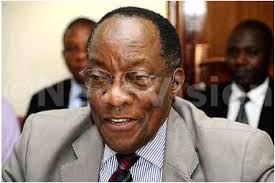
Museveni Facebook post on unity sparks mixed reactions

President Yoweri Museveni, who is also the ruling National Resistance Movement (NRM) candidate in the forthcoming February 18 elections took to Facebook earlier today, to inform Ugandans of what transpired during a press conference he held at Kabale State Lodge.

In his address, the President put emphasis on unity saying it was the gospel that he has been preaching ever since coming to power in 1986. He noted that through unity he had managed to create a party, the NRM which later took power and preached peace.

“Unity produced strength, which provided peace. But now some people are saying they are tired of peace. These are jokers. Development is a result of peace, and now we are tackling wealth creation,” part of the post states.

However, the FB post elicited mixed reactions from a few respondents, and Eagle Online managed to extract a few them, verbatim.

Make sure u doesn’t steal the votes; we want free and fair elections.” Anthony Machoka said,”while Ashirafu Owakabii said: “Thank you so much our beloved president, we love you so much, may the almighty God bless you in everything you put your hands on.”

Another commentator Ben Mugisha said: “You are right His Excellency, there is no country/community that can thrive without unity,” while John Twesigye said, “Songa mbere mzei, great work done.”

For Richard Muweleza Bazanyanengo it was: “Who do you think you are?”, while ‘Shuley Sharp’ says, ‘Which unity are you preaching? No sensible Ugandan will take you serious, your words are opposite of your actions.”

Stories Continues after ad
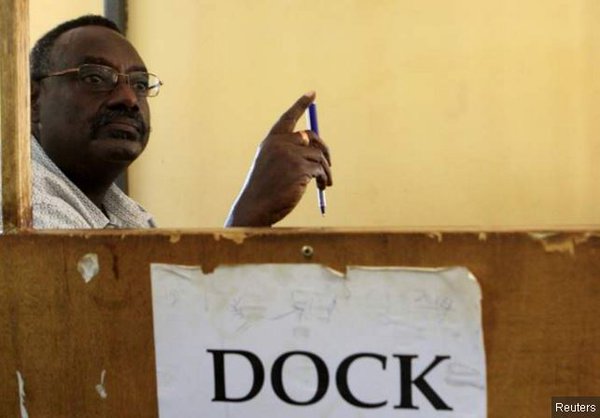
UPC factions feud over court ruling

Jimmy Akena in the hot seat.

A splinter group of the Uganda People Congress led by embattled Jimmy Akena has attacked the party’s ‘former president’ Olara Otunnu and the Milton Obote Foundation (MOF) for allegedly refusing to engage in mediation, as directed by court.

Currently, both the Akena and Otunnu camps are embroiled in a leadership and asset dispute related to the UPC and MOF, respectively.

In December last year court ruled that Akena is not the rightful UPC party president because he was not elected in accordance with the party constitution but then went ahead and advised both parties to resolve their differences amicably.

And speaking about the dispute early today, the acting party Secretary General Edward Segganyi said that court directed all parties involved in the UPC dispute involving the Milton Obote Foundation (MOF), to resolve their differences by way of mediation.

“The Otunnu group were caught trying to smuggle a purported mediation report onto the file, one that had never taken place,” Mr Segganyi said at party headquarters, Uganda House.

The UPC Secretary General warned former party vice president Joseph Bossa for trying to deregister UPC duly nominated candidates, and also charged that Mr Otunnu and MOF had formed an alliance to destroy the party and steal its assets.

He also scoffed at Mr Otunnu’s participation in the Go Forward campaign, saying the act is in contravention of the UPC constitution. “They will be confronted by the full weight and fury of the members,” he charged before urging members not to participate in a Delegates Conference slated for later this month.

“These are the same people who failed to hold a single Delegates Conference during their tenure, the timing and intention begs the question as to the purpose of the announcement,” he said and added that the conference was aimed at disrupting efforts of the UPC candidates.

However, contacted for comment, Dalton Opwonya, Mr Otunnu’s lawyer rubbished Segganyi’s allegetions on mediation.

He said the Akena camp was served with summons but refused saying they had appealed in the Court of Appeal and wanted nothing to do with the High Court ruling.

“The Registrar wrote the mediation report and he is not a mad man,” said lawyer Opwonya, adding: “When outside court they want mediation but when in court they don’t want it.”


Stories Continues after ad
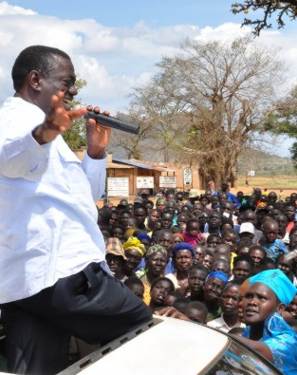
Who is fooling who over Aine?

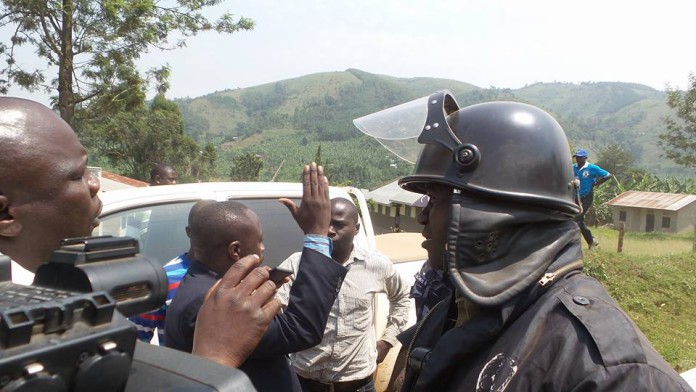
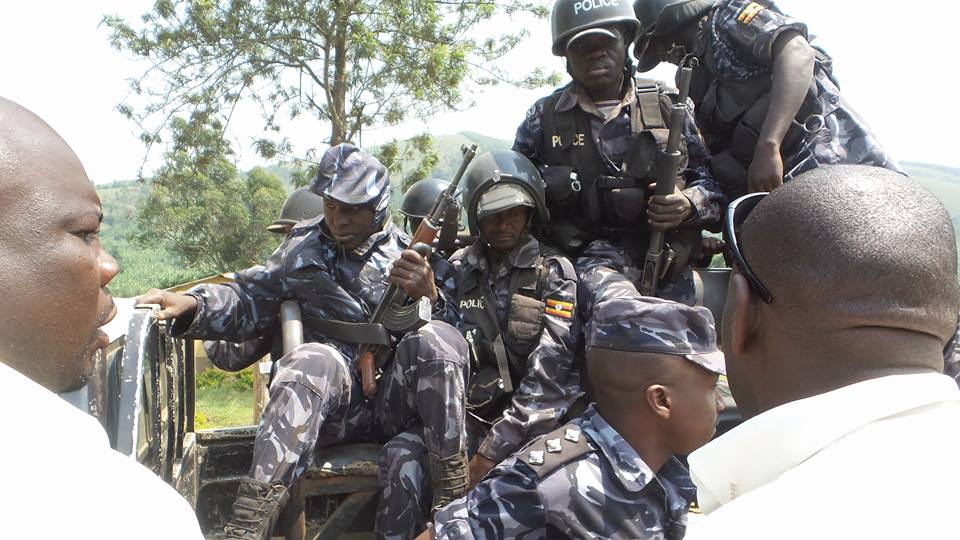
When you walk the streets of Kampala and its suburbs, you can’t fail to notice the posters of Christopher Aine, the missing head of Go Forward candidate Amama Mbabazi’s private security detail. The posters put up by police are announcing a Shs20 million reward for whoever provides police with information leading to his arrest.

Aine is wanted by police for a string of offences ranging from assault, resisting arrest, obstructing police officers on duty and escaping from lawful custody, all crimes he allegedly committed in September  last year as police tried to block an imminent consultative meeting in the heart of Jinja by the Go Forward candidate Amama Mbabazi.

Well, that was in September, and Aine was arrested and detained at Nalufenya Police Station in Jinja, a place reserved for hardcore suspects, among them the former leader of the Allied Democratic Front (ADF) Jamil Mukulu.

Then three months later, on December 12, a bloody fight broke out between candidate Yoweri Museveni’s National Resistance Movement (NRM) supporters and those of candidate Mbabazi.

The following day on December 13, the Inspector General General Kale Kayihura swung in action, and rushed to Ntungamo to guide investigations that could lead to the arrest of the perpetrators of the previous day’s fracas. But before the investigations could begin, Gen Kayihura offered a helicopter to transport the NRM supporters who had been beaten to hospital: some were taken to Mbabara Referral Hospital while others were taken to Mulago Referral Hospital for better health management.

And as all this was going on, Aine’s name surfaced again in the Ntungamo saga, sending the police into a manhunt for the same man who had given them a rough time in Jinja three months back.

Then early last month, Aine went missing from his home in Kyanja at 6amand, according to Ms Josephine Mayanja Nkangi, candidate Amama Mbabazi’s spokesperson, he was arrested by members of the Police Flying Squad.

“We are trying to get in touch with police to ask them why they arrested Mr Aine but they are denying; we are doing everything possible to see that we get a hold of him,” Ms Nkangi was quoted as saying then.

Candidate Mbabazi’s legal team also joined the fray, and has since then persistently accused the police for illegally holding Aine, accusations the police has denied repeatedly.

And, as if to strengthen the legal team’s claim, Mr Severino Twinobusinge, one of candidate Mbabazi’s lawyers claimed that the District Police Commander (DPC) of Ntungamo together with state prosecution put Aine’s name on the list of people who were supposed to appear in court, a move he says, confirms that Aine was in their custody. He however said that when court was about to hear the case, Aine’s name was deleted from the list.

But police rejected the claims, with Police Spokesman Fred Enanga denying Aine was in their custody.

“Those who are saying that police have arrested Mr Mbabazi’s bodyguard are totally wrong. Why would police arrest him? Mr Enanga told a local newspaper, adding: “since we have also been told about his disappearance, we shall investigate the manner in which he disappeared but holding police responsible would be wrong.”

Mr Enanga was later to say that police was yet to begin a search for Aine because they had not yet received reports of Aine’s disappearance from either the Go Forward team or from his family members.

He added that in order to start investigations, they were still waiting for anyone to come and report Aine’s disappearance since they (police) were just reading it from the media.

Then a few days after news of Aine’s disappearance emerged, the IGP placed a Shs20 million bounty on Aine’s head, a move that has since sent tongues wagging, with the opposition and some civil society groups saying the money is ‘too much’ for a case of simple assault.

Some have even made comparisons to last year’s serial killing of Muslim clerics, where police did not put up a bounty. This raised eyebrows, with some fingers being pointed to police again.

However, addressing journalists last Monday at police headquarters in Naguru, Mr Enanga justified the Shs20 million bounty, and said the Go Forward team is hiding Aine to try and tarnish the image of the police.

To further justify the money put on Aine’s head, Mr Enanga also that this was not the first time police had put a bounty for wanted persons, citing a few incidents including the Shs10 bounty put out for the unknown assailants who murdered State Prosecutor Joan Kagezi last year.

Meanwhile, while on the campaign trail, candidate Mbabazi was confronted by a one Jennifer Namuleme, said to be Aine’s mother, who demanded that he produce her son. In response, Mr Mbabazi said he too was looking for Aine.

And now Ritah Babirye, said to be a sister to Aine says the family is fearful that her brother may be dead, and that police has to say something about it.

So, with all the ping pong over Aine’s whereabouts, Ugandans are left in suspense, wondering where Aine is or what fate could have befallen him.

So, who is Christopher Aine?

It is said that Christopher Aine was born to the late RO 0044 Lt Col Julius Aine, a fiery and rebellious bush war fighter who joined the National Resistance Army (NRA) in 1981 to fight alongside current President and NRM Chairman Yoweri Museveni and he participated in the attack of Kabamba Barracks on February 6 1981.

Lt Col Aine died in a motor accident in the 1990s and people familiar with the tale of father and son compare their valour in the face of resisting authority, with some saying that ‘the rebellious traits of the late Lt Col Aine were rubbed onto his son’.

And, could it be the same traits that are responsible for the younger Aine’s current woes?


Stories Continues after ad

Police makes new appointments

Gen. Kale Kayihura
Former IGP Gen Kale Kayihura who is due for retirement in July.

Uganda Police has announced new transfers and appointments of four senior officers.

According to a press statement by Deputy Police Spokesperson Polly Namaye, the transfers have been made to fill some of the vacant positions and to ensure efficient human resource administration and management and are to take immediate.

In the changes Senior Commissioner of Police (SCP) Benson Oyo Nyeko, has been transferred from Human Resource Administration and appointed Deputy Director of Interpol and International Relations, while Commissioner of Police (CP) Benjamin Namanya has been appointed the Acting Deputy Director of Human Resource Administration.

Assistant Commissioner of Police (ACP) Timothy Hallango was named Acting Commissioner for Human Resource Management, while ACP Moses Muluya was named Acting Commissioner, Human Resource Management Manpower Audit.

Stories Continues after ad
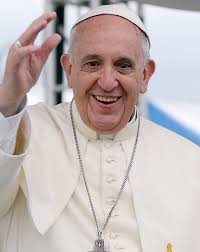
Gambia orders female workers ‘to cover hair’

The Gambia’s government has banned its female employees from leaving their hair uncovered at work, a leaked memo quoted by private newspapers says.

Women should use a “head tie and neatly wrap their hair”, the memo said, without giving reasons for the ban.

Last month, The Gambia’s President Yahya Jammeh declared the Muslim-majority country an Islamic republic.

He added that no dress code would be imposed and citizens of other faiths would be allowed to practise freely.

The Gambia is popular with Western tourists because of its beaches.

Mr Jammeh withdrew the former British colony from the Commonwealth in 2013, describing the organisation as neo-colonial.

The memo, dated 4 January and published in the pro-opposition Freedom andJollofNews newspapers, said that an “executive directive has been issued that all female staff within the government ministries, departments and agencies are no longer allowed to expose their hair during official working hours”.

“All are strictly advised to adhere to this new directive,” it added.

Some 90% of Gambians are Muslim.

When Mr Jammeh declared The Gambia an Islamic republic, he said the move was in line with the West African nation’s “religious identity and values”.

His critics said the declaration was intended to deflect attention from the poor state of the economy, including the rise in the price of basic commodities.

Many Muslim scholars believe that Islam requires Muslim women to cover their hair in public.

However, the requirement is not strictly adhered to in The Gambia.

First Lady Zineb Yahya Jammeh has previously appeared in public with her hair uncovered.

In November, the Gambian leader banned female circumcision, saying it was not required in Islam.

Mr Jammeh, who seized power in 1994 as a 29-year-old army lieutenant, is accused by rights activists of presiding over a brutal regime which is intolerant of dissent.

The European Union temporarily withheld aid money to The Gambia in 2014 over its poor human rights record.


Stories Continues after ad
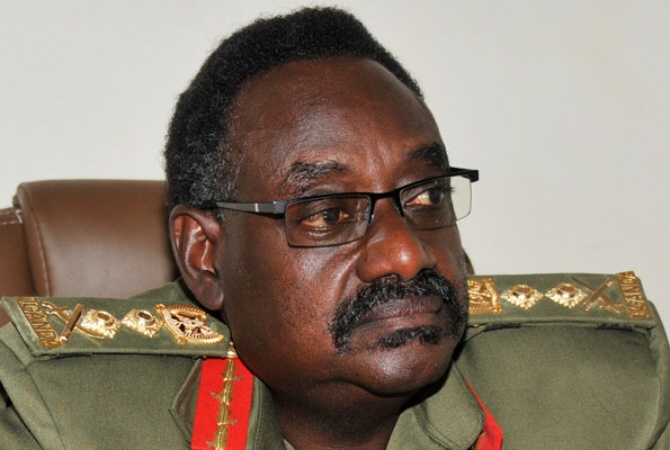
Iran-Saudi Arabia row: Kuwait recalls Ambassador from Tehran

Kuwait has announced it is recalling its ambassador to Iran as a regional row over the execution of a Shia cleric in Saudi Arabia deepens.

Saudi Arabia’s embassy in Tehran was ransacked and set alight on Saturday, after it executed Shia Muslim cleric Sheikh Nimr al-Nimr and 46 others.

Saudi Arabia broke off diplomatic ties with Iran in response, followed on Monday by its allies Bahrain and Sudan.

The US, UN and Turkey are among those calling for calm in the region.

Sunni Muslim Saudi Arabia and Shia Iran are major rivals for power in the Middle East and back opposing sides in the conflicts in Syria and Yemen.

Saudi insists peace efforts should not be affected by the dispute but has criticised Iran’s contribution to the process.

Iran has reiterated its condemnation of Saudi Arabia, with President Hassan Rouhani saying it cannot “hide its crime of beheading a religious leader by severing political relations with Iran”.

Great rivalry explained: Why don’t Iran and Saudi Arabia get along?

Spiralling tensions: Why crisis is ‘most dangerous for decades’

Sheikh Nimr al-Nimr: Who was leading Saudi Shia cleric?

The Kuwaiti government said it was recalling its ambassador from the Iranian capital, describing the attacks as a “flagrant breach of international norms”.

It did not expel Tehran’s ambassador or downgrade diplomatic ties.

Saudi Arabia’s unexpected decision to carry out the executions – following convictions over terror offences – prompted an expression of “deep dismay” from the UN secretary general, while the US accused Saudi of exacerbating tensions “at a time when they urgently need to be reduced”.

But since then, Saudi Arabia has gained support from some allies in its response to the attacks on its missions in Tehran and the Iranian city of Mashhad.

Saudi authorities on Sunday severed diplomatic relations with Iran. They said that all commercial and air traffic links were being cut and that Saudi citizens were banned from travelling to Iran.

As well as the moves by Bahrain, Sudan and Kuwait, the United Arab Emirates (UAE) has downgraded its diplomatic team in Iran.

And on Monday, the UN Security Council issued a strongly worded statement condemning the attack on the Saudi embassy – making no mention of the execution of the cleric.

However, several of the smaller Gulf Arab states have good working relationships with Iran, and two of them, Oman and Qatar, have yet to take any action at all, says the BBC’s Jim Muir in Beirut.

Sunni-Shia divide

  • The split arises from a dispute soon after the death of the Prophet Muhammad in 632 over who should lead the Muslim community
  • Sunnis are estimated to make up between 85% and 90% of Muslims
  • Although the two branches have co-existed for centuries and share many fundamental beliefs and practices, differences lie in the fields of doctrine, ritual, law, theology and religious organisation

Sunnis and Shia: Islam’s ancient schism

Protests against Saudi Arabia have erupted outside Iran, including in Shia-majority Bahrain, where nonetheless Sunni authorities moved to express solidarity with Saudi, clamping down on demonstrations.

Iran has responded angrily to the diplomatic moves, insisting it had no hand in the violent protests that followed the execution.

Earlier, in New York, Saudi UN ambassador Abdallah al-Mouallimi accused Iran of “interfering in the affairs of other countries, including our own”, and “taking provocative and negative positions”.

The UN’s special international envoy for peace in Syria, Staffan de Mistura, is holding talks in both countries and will be hoping the storm will blow over before a major peace conference on Syria is held towards the end of the month, our correspondent reports.

Stories Continues after ad
Kaliba’s cross over will not affect us – Go Forward team

Museveni meets Kaliba this morning at Kabala State Lodge

Independent presidential candidate John Patrick Amama Mbabazi’s team has hit out at the Go Forward Coordinator for Tooro and Rwenzori sub-regions Mr Steven Kaliba who has crossed back to the NRM, saying his defection will not affect their campaigns.

Mbabazi’s Media Coordinator Josephine Mayanja Nkangi said today that Kaliba had crossed as an individual and that he does not affect their campaign strategy. She also denied reports that Kaliba was the Coordinator of the Go Forward team in Tooro and Rwenzori regions.

“He was merely a member of the summit who joined our campaign team during the TDA discussions and it would be wrong for him to or anyone to refer to him as a coordinator as he is claiming to have been,” said Mayanja.

Kaliba, who resigned his job as the Tooro Prime Minister to contest for the same seat in Parliament, says he is frustrated with the way the Go Forward team is playing it politics. Previously, he left the ruling NRM party following some disagreements last year.

A former Prime Minister of Tooro Kingdom, who was also  a Member of Parliament representing Fort Portal Municipality in the Eighth Parliament, Kaliba crossed back to the NRM today following a meeting with President Yoweri Museveni, who is also the NRM presidential candidate at State lodge Kabale.

While receiving him back in the NRM, the NRM Chairman Museveni thanked Kaliba for seeing ‘light and coming back home’.

Analysts in the region say Kaliba’s cross over might bring down Mbabazi’s support in the Tooro and Rwenzori regions.

In a related development, sources say the deal to have Kaliba delivered back to NRM was reportedly coordinated and hatched by a high ranking officer from the region.

The former Tooro Prime Minister now will be part of the Museveni taskforce in the region to canvas support for the NRM candidate Museveni.


Stories Continues after ad
Catholic Church under fire for supporting child labor

The Catholic Church in Uganda has come under fire from human rights activists all over the world. This condemnation comes after an investigation carried out by the BBC revealed that children as young as 10 years are forced to work for a miserable pay on a plantation land owned by the Catholic Church.

According to BBC, the Church leased land to a tea plantation in Kabale, and over 15 children and elders work along for a daily wage of Shs1000 to Shs2000.  The plantation is managed by Kigezi Highland Tea Limited, Catholic Church owns the land.

An official of the Catholic Church confirmed to the BBC investigations  team that  Kigezi Highland Tea Limited  has  been in business with the local diocese for two years and that the decision to harvest tea came ‘through the financial sustainability plan committee’ of the Church.

Kigezi Highland Tea Limited and the local bishop refused to comment on the investigation.

The children’s job entails collecting young tea plants piled at the bottom of a steep hill and transporting them to the location of the designed point of cultivation.  They are also responsible for weeding the rows of tea plants

The BBC investigation stem from a former child soldier, Alex Turyarintuga’s allegations who claimed that children were labouring on land owned by the church. The investigation by BBC come after Pope Francis visited Uganda in Novermber and during his visits in Kenya, Uganda and Central African Republic, the pope said the children were some of the greatest victims of Africa’s historical exploitation by other powers.

Pope Francis appealed for an end to child labour with a strong message in St Peter’s Square in Rome in 2014.

‘Tens of millions of children are forced to work in degrading conditions, exposed to forms of slavery and exploitation, as well as to abuse, ill-treatment and discrimination,’ said Pope Francis. Adding ‘I sincerely hope that the international community can offer social protection to minors to defeat this plague.’

The UN estimates that there are three million child workers in Uganda. According to the latest figures, 30 per cent of children aged between five and 14 are involved in child labour. In the African country, 14 is the legal age for work.

Stories Continues after ad