Stanbic Bank
Stanbic Bank
18.5 C
Kampala
Stanbic Bank
Stanbic Bank
Home Blog Page 224

Her Initiative receives over 560 million Tanzanian shillings to support 100,000 more women across East Africa to achieve financial resilience

The King Baudouin Foundation has awarded the 2023-2024 Africa Prize to Her Initiative, in recognition of its work to unlock women’s economic potential, tackle the youth unemployment crisis and accelerate economic and social development in sub-Saharan Africa.

Tanzania has made significant progress on women’s empowerment and women’s rights. Yet, 60% of women still live in poverty and many don’t have access to the resources they need to shape their future and participate in economic development[1]. As a youth-first and women-led organisation, Her Initiative offers a range of innovative and holistic programmes which equip young women with the education, skills and resources needed to enter the job market or run their own businesses. Notably, Her Initiative aims to remove persisting barriers by leveraging the power of technology to advance digital inclusion among young women and girls. Its Panda Digital platform uses SMS technology to deliver learning courses in Swahili to young women with limited internet access, and its Digimali project helps young entrepreneurs scale-up their businesses online. Since its foundation in 2019, Her Initiative has reached over 15,000 young women and girls through its programmes, including supporting over 200 women to launch a business through Panda on the Ground and enabling 2,805 more to digitalise an existing business.

To support the next phase of its development in Tanzania and beyond, the KBF Africa Prize will provide Her Initiative with 200,000 euros (over 560 million Tanzanian shillings), as well as the opportunity to connect with the King Baudouin Foundation’s international network of non-profit organisations and development professionals. With this support, Her Initiative aims to expand its programmes in Tanzania and across East Africa to reach 100,000 more women over the next five years. It will also use the funds to bring together an ecosystem of youth organisations to facilitate knowledge sharing, share resources, and harness the power of African youth.

Lydia Charles Moyo, Founder and Executive Director of Her Initiative, comments:

“Gender-based violence, underage marriage and HIV are just a few examples of the problems that are stopping women from going to school, getting a job and breaking the cycle of poverty. My friends and I experienced these barriers when we were in high school, and so started to look for solutions to the challenges we were coming up against. And that’s how Her Initiative started.

“We already support young women to build their financial resilience in six Tanzanian regions, but with the KBF Africa Prize we will be able to scale our work to help so many more women to achieve their dreams in Tanzania and beyond.”

The 2023-2024 Africa Prize will be presented to Her Initiative at an awards ceremony today at the Royal Palace of Laeken in Brussels. The organisation was selected from a pool of more than 400 applicants by an independent committee of 12 international experts, including past winners of the KBF Africa Prize.

Bilikiss Adebiyi-Abiola, Chair of the KBF Africa Prize Selection Committee 2023-2024 says:“The selection committee was highly impressed with Her Initiative’s combined approach to advancing women’s rights and financial independence. Coupled with its innovative use of modern technologies and strategic local partnerships, Her Initiative is a highly deserving recipient of this year’s KBF Africa Prize. We look forward to seeing what the team achieves in the years to come.”

The KBF Africa Prize recognises African organisations working to drive African-led solutions to the challenges facing the continent and to sustainably improve the lives of Africans. The Prize plays a transformative role in helping organisations scale-up and advocate for their work on a wider stage. Several past laureates, including Dr. Denis Mukwege, Elman Peace and Grameen Bank, have since been awarded and shortlisted for the Nobel Peace Prize.

Stories Continues after ad

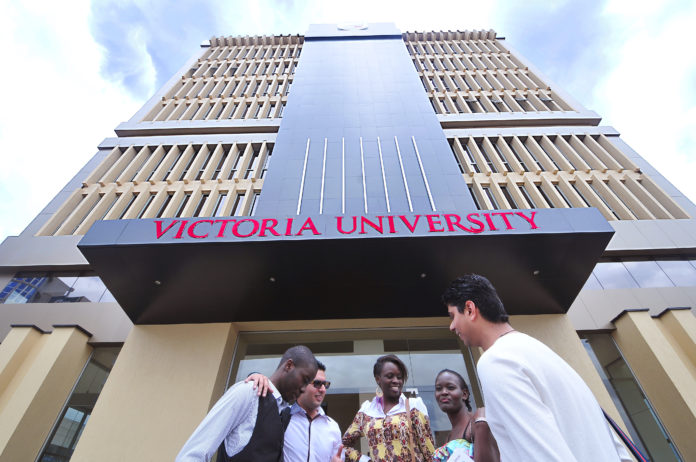
Victoria University starts loan scheme for its students

The Victoria University main Campus

Victoria University has started a loan scheme for its students who are struggling with tuition in their course of study in order for them to acquire high-quality and affordable education in Uganda.

Victoria University administration urged all students willing to apply to wind-as the application deadline is almost closing.

“If you are concerned about tuition and how you’ll manage your expenses, don’t worry. The Government introduced the Students Loan Scheme, and Victoria University is Chartered and selected to assist you in securing your tuition through this Programme,” the Institution announced.

To take advantage of this opportunity, students are required to apply through Victoria University’s admission platform on https://vu.ac.ug/programmes/under-graduate or to alternatively, reach the administrators on 0782 397699

The institution added, “Upon admission to Victoria University Kampala our team will assist you in applying for the Students Loan Scheme, helping you secure the funding you need to pursue your education.”

Victoria University secured the loan scheme in September 2022 following the issue of Charter by the National Council for Higher Education (NCHE) on July 31st, 2022 and its subsequent approval by President Yoweri Museveni on August 19th, 2022.

Victoria University is currently the 13th Private University to receive a Charter with the total reaching 23 Universities including 10 Public Universities.

According to the Universities and Other Tertiary Institutions Act (2001), a Charter is granted by the President as evidence that the University meets the requirements and standards of academic excellence as stipulated by the National Council for Higher Education (NCHE).

Stories Continues after ad

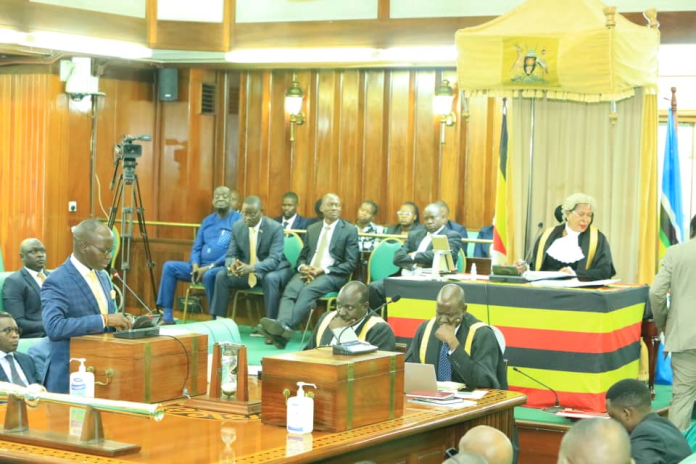
Clerk to Parliament recalls MPs from recess to reconsider Museveni’s concerns over Appropriation Bill 2024

Following the refusal by President Yoweri Museveni to sign the Appropriation Bill 2024 into law, Adolf Mwesige, Clerk to Parliament, has recalled Members of Parliament (MPs) from recess in order to reconsider the President’s concern raised in the letter, accompanying the returned Appropriation Bill 2024.

The Parliament passed the Appropriation bill 2024 on Thursday 16th of May, 2024.

Adolf Mwesige revealed that the President returned the Bill to Parliament for reconsideration in accordance with the provisions of Article 91 (b) and (c) of the constitution.

“This is to inform you that there will be a plenary sitting of Parliament on Tuesday, 2nd July at 2:00pm to reconsider the Appropriation Bill 2024,” Mwesige alerted the MPs.

Museveni declined to sign the Bill cautioning the Parliament to restore the Sh750 million that were reallocated from the government’s priorities in the period 2024/2025 Budget.

An Appropriation Act is a law that contains the amount of money to be spent by each government ministry, department and local government, and authorizes the withdrawal of that money from the Consolidated Fund.

The object of the Appropriation Bill was to provide for the authorization of public expenditure from the Consolidated Fund in the amount of Sh30.314 billion to meet the expenditure for the year ending June 30, 2025 and to appropriate supplies granted by Parliament.

Stories Continues after ad

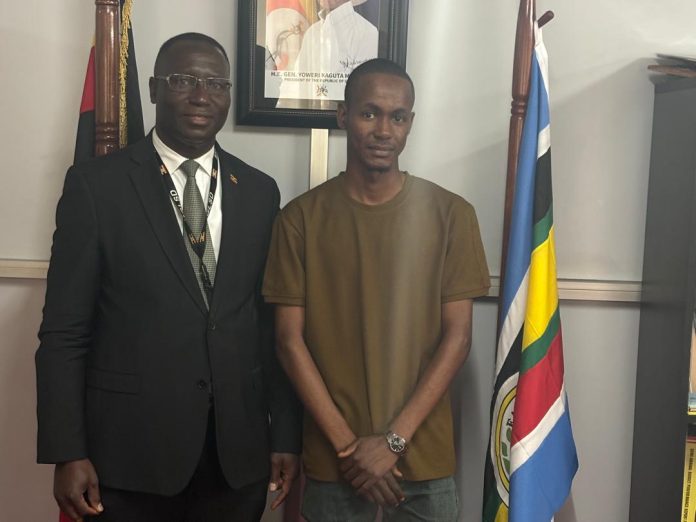
Gender Permanent Secretary Aggrey Kibenge in emotional meeting with youth recently rescued from Myanmer

Alfred, (not real name for safety reasons) is all praises for the personal support he received from Dr. Aggrey David Kibenge Permanent Secretary Ministry of Gender Labour and Social Development. He was recently repatriated from Myanmar after a year ordeal in rebel captivity.

“I am really grateful, who am I to attract the attention of such big people”.He said when he came by to say thank you to the Permanent Secretary who he was meeting for the first time

I received a call from the Prime Minister Robinah Nabanja, she had received a distress call from some Ugandan Youth, most of them computer scientists who had been lured into Myanmar on false promises of Jobs and ended up in rebel captivity in the jungles of Myanmar.

“Definitely the Prime Minister contacted me on the understanding that the Ministry of Gender is responsible for externalisation of labour, but these were victims of trafficking.” Kibenge says

As the clock ticked so did the situation get desperate for the trafficked youth. “They were using us to commit internet fraud and you had a target if you fell short of the target they would punish you using electric shock.” Alfred narrates

Meanwhile in Kampala Dr. Aggrey Kibenge had advised the Prime Minister that the issue of the kidnapped youth would require an Inter-Ministerial committee including Ministry of Foreign Affairs, Ministry of Internal Affairs, Ministry of Gender and others. It’s this advice that would break the jinx

“What came to my mind in the first place is that these are Ugandans, irrespective of how they ended up in Myanmar my duty is to ensure their safe return home.” Kibenge said when one of the rescued youth paid him a visit at the Ministry of Gender

“I kept calling the Prime Minister, Permanent Secretary and later Ambassador Bigombe who kept assuring us that our issue is being worked on and that is what kept our hope alive.” Recalls Alfred

“He would call you sometimes late in the night sometimes when you are in meetings and you step aside to talk to him, the last time you called I think I was in Geneva” Recalls Kibenge

Meanwhile in captivity the situation was getting desperate every passing day, many mostly Kenyans were committing suicide, other would be killed by the rebels, on average two people would die every day but every time we talked to some body home you would get energised that one day we shall be free.

Alfred had kept a phone on him during captivity, and as fate would have it his phone looked exactly like the phone the rebels gave them to use for their daily routine of committing online fraud in on banks and bitcoin. It’s that phone that helped him to call the Prime Minister Hon Robinah Nabanja and Permanent Secretary Aggrey David Kibenge. The phone contacts were got after a blind such on the Internet.

Every time I would get through on a call other would come around to listen in, Betty Bigombe asked as to share photos with her and we took the photos for 26 of us, others feared to take the photos, it appears it’s those photo rebels relied on to set us free those who feared to take photos remained in captivity

Stories Continues after ad

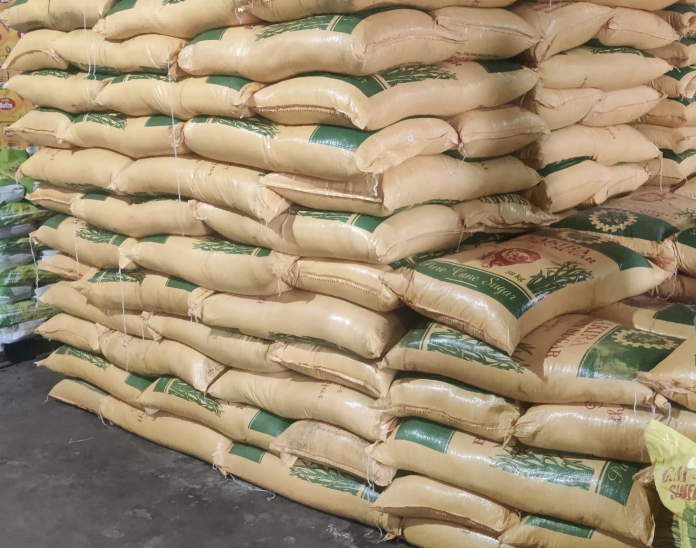
UNBS confiscates 700 bags of underweight Kakira sugar 

The underweight bags of Kakira sugar.

The Uganda National Bureau of Standards (UNBS) has cracked down on businesses selling underweight pre-packaged goods, seizing 700 bags of sugar and numerous loaves of bread in recent operations.

According to a press release from UNBS, the seized sugar, packaged in Kakira branded sacks, was found to be underweight, with tampered packaging material bearing holes in the inner polyethylene layer.

“The packaging material of the underweight sugar was tampered with, as the inner polyethylene layer was found with holes,” the release stated.

UNBS also seized underweight bread from Supa Loafs outlets in Mbarara city and Wakiso district, as well as Jonisa bread in various supermarkets.

The owners and management of the implicated businesses have been summoned for further questioning, with prosecution to follow for possession and distribution of underweight pre-packaged goods.

“Packing, selling, being in possession of or holding for sale underweight pre-packaged goods is an offense punishable by law,” the release emphasized, citing the UNBS Act (as amended in 2013), the Weights and Measures Act, and the Weights and Measures (Sale and labeling of goods) (Amendment) Rules of 2020.

UNBS urges all manufacturers, importers, and traders of pre-packaged goods to comply with these laws and rules, available on the UNBS website.

“Consumers have the right to demand safe, certified, and quality products,” the release stressed. “We encourage consumers to report any dealers of substandard goods to UNBS.”

UNBS can be reached through their toll-free lines (0800133133/0800233233), WhatsApp line (0713227580), and social media pages.

“We remain committed to protecting consumers and ensuring fair trade,” the release concluded.

Stories Continues after ad

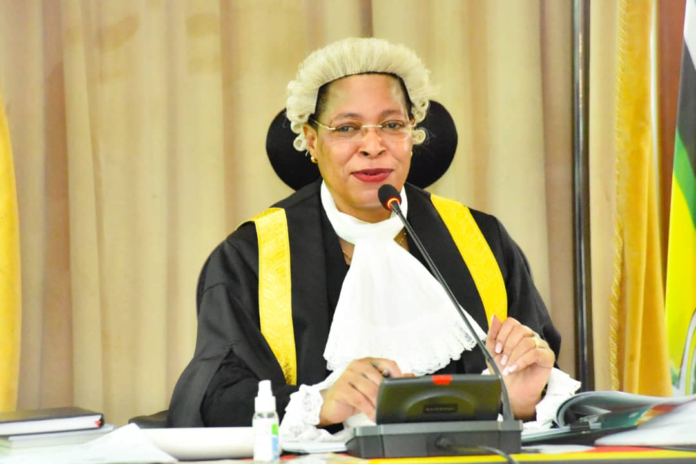
CORRUPTION: Uganda Law Society urges Speaker Among, Kinyamatama to retract their statements 

Speaker Among.

The Uganda Law Society has appealed to the Speaker of Parliament Anita Among and Juliet Kinyamatama to retract their statements and to reaffirm their commitment to the fight against corruption.

The Speaker and Kinyamatama made these troubling remarks while addressing masses in Lwengo district over the weekend. The legislators are quoted telling the masses that corruption is justified when a corrupt person share with his or her constituents.

Bernard Oundo, the President of Uganda Law Society, said they unequivocally condemn these remarks as they undermine the tireless efforts of various stakeholders in the fight against corruption and constitute a significant setback to the ongoing efforts to promote integrity and accountability in public administration.

He said the Constitution of Uganda provides a robust legal framework for ensuring accountability. The National Objectives and Directive Principles of State Policy mandate that all public offices are held in trust for the people and all persons in positions of leadership and responsibility must be answerable to the people.

“The Constitution further mandates that all lawful measures be taken to expose, combat, and eradicate corruption and abuse or misuse of power by those holding political and public offices,” he said.

He called upon all concerned stakeholders to conduct thorough and independent investigations into all the reports of high-level grand corruption, desist from making public comments geared towards undermining the work of accountability institutions and especially when the process involves leaders.

He said ULS remains committed to promoting the Rule of Law, Human Rights and Good Governance in Uganda.

Stories Continues after ad

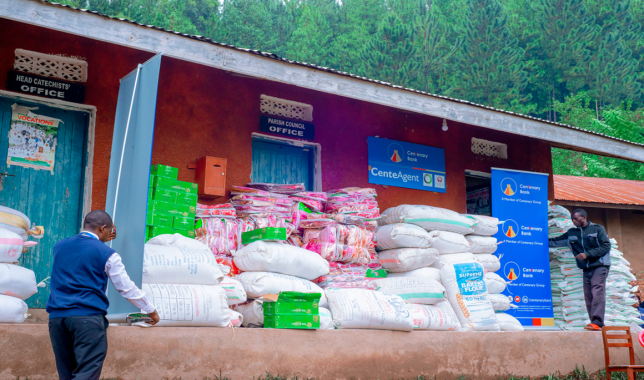
Centenary Bank provides relief to 173 families affected by floods in Kasese

In response to the devastating landslides and floods that struck Kasese District in May, displacing over 1,000 families, Centenary Bank has stepped forward with a substantial donation to aid affected communities.

The catastrophic event saw major rivers such as Nyamugasani, Rwembyo, Kabiri, Isule, Hima Kuruhe, and Muhokya burst their banks, causing widespread damage across eleven Sub Counties and Town Councils.

Centenary Bank, through its Kasese branch, collaborated with local entities, including Bwera branch and the Diocese, to provide essential supplies to 173 affected families.

According to Selevano Masereka the Centenary Bank Kasese Branch Manager, the bank donated 865kgs of maize flour, 346kgs of farm rice, 1,730kgs of cassava flour, 519kgs of beans, 40 cartons of soap, and 173 blankets to the affected families.

These donations are aimed at addressing the immediate welfare needs of the affected families, ensuring they have access to basic necessities during this challenging period. The provision of food items such as maize flour, farm rice, cassava flour, and beans will help alleviate hunger, while soap and blankets will assist in maintaining hygiene and comfort.

Speaking on the initiative, James Katamba Sebavubya, the Centenary Bank Western Region Manager stated, “As a bank that cares deeply for the well-being of our people, we are committed to standing by our communities during difficult times. Our support to the families affected by the floods and landslides in Kasese is a testament to our dedication to making a positive impact and providing relief where it is most needed.”

Annually, Centenary Bank commits 2% of previous year’s net profit towards Corporate Social Responsibility in the areas of education, health, environmental stewardship, social mission of the church which form part of the bigger ESG agenda for environmental, social and economic transformation.

The bank’s intervention has been met with gratitude from the recipients and local leaders, who have lauded Centenary Bank for its swift and generous response.

Centenary Bank remains committed to working hand-in-hand with local authorities and organizations to ensure that the affected families continue to receive the assistance they need to rebuild their lives.

As the affected families begin the arduous task of recovery, Centenary Bank also commits to addressing climate change adaptation and mitigation measures. Together with Kasese leadership, the Cente Foundation, and the local community, 12,000 trees have so far been planted. This initiative shall continue as part of the Bank’s sustainable solutions beyond tomorrow.

Stories Continues after ad

Uganda Prisons trains officers in management of violent extremists, prevention of radicalization

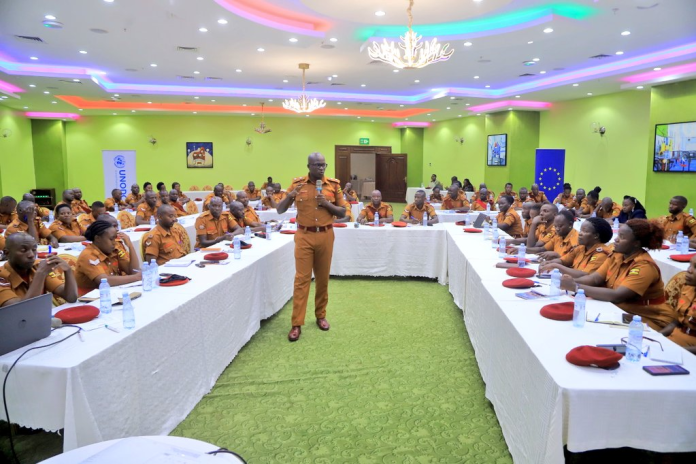
Prisons officers undergoing training.

Uganda Prisons Service, in partnership with the United Nations Office on Drugs and Crime and European Union has trained prisons officers to strengthen efforts in managing violent extremist prisoners, preventing radicalization to violence and enhancing human rights in prisons.

The training, which kicked off at Imperial Royale Hotel, Kampala, and will conclude on Friday June 28th 2024 brought together 80 participants from various prisons in the Kampala Extra, Central, and North Central Regions, including Upper, Murchison Bay, SSU, Luzira Women, Kampala Remand, Kigo, Kitalya Mini Max, Kitalya Farm, Kasangati, Butuntumula, and Nakasongola Prisons.

Ms. Brenda Sana, Commissioner of Prisons (Commandant – PATS), presided over the opening ceremony and emphasized the importance of proper rehabilitation and reformation of Violent Extremist Prisoners (VEPs). She cautioned the officers on maintaining integrity while working in prisons and encouraged them to ask questions, share, and learn from each other during the training.

The training program for prison officers is ongoing at Imperial Royale Hotel, Kampala, it is equipping them with skills to prevent radicalization and violent extremism in prisons. The officers are learning how to identify and support vulnerable inmates, challenge harmful ideologies, and create a safe and secure environment.

They also gained knowledge on alternative narratives, counseling techniques, and rehabilitation strategies to counter extremist influences.

The training is part of a broader effort by the government of Uganda Uganda Prisons UNODC and European Union in Uganda to enhance prison management, improve staff capacity, and promote inmate rehabilitation. The initiative aims to reduce the risk of violence and terrorism and promote safer communities.

By understanding the signs of radicalization and how to address them, prison officers can play a crucial role in preventing the spread of violent extremism and keeping communities safe.

The training program also aims to enhance the capacity of prisons officers to manage VEPs, prevent radicalization, and promote human rights in prisons.

This will be achieved by establishing various centers countrywide to facilitate the training and developing Prisons Intelligence Platforms to prevent violent extremism, with all prisons in Uganda set to benefit from the initiative.

In the training, the participants gained insights into international frameworks and guidelines for preventing radicalization and violent extremism in prisons. They learned about the UN Standard Minimum Rule on treatment of offenders, the Ankara Memorandum, the Rome Memorandum, and the UN Counter-Terrorism Strategy.

Rehabilitation of prisoners is a collective effort that requires the active participation of every prison officer.

By understanding international standards and best practices, participants will be empowered to contribute to the development of effective rehabilitation programs, fostering a safer and more secure prison environment.

Mr. Muhurizi Papus, Superintendent of Prisons, coordinator of the program, emphasized the significance of the training, highlighting that the greatest achievement is having trainers who are uniformed prison officers, a departure from the past where consultants dominated. He affirmed the core mandate of Uganda Prisons as ensuring the safe, secure, and humane custody of offenders, and urged the officers to prioritize reformation, rehabilitation, and reintegration of inmates in their daily roles.

Congratulating the officers on their selection to participate in the course, he encouraged them to live up to the task bestowed upon them, emphasizing the importance of detecting security risks in their units. He assured them that they will be trained in best practices to enhance their capacity to prevent radicalization and violent extremism in prisons.

Stories Continues after ad

Gavi calls on donors to support its efforts to protect more children, against more diseases

Dr. Sania Nishtar.

Global Alliance for Vaccines and Immunisation (Gavi) has called on donors to support its efforts to protect more children against more diseases.

Gavi made the clarion call during the Global Forum for Vaccine Sovereignty and Innovation with the African Union and the French Republic.

The Forum also marked the launch of the African Vaccine Manufacturing Accelerator (AVMA), which will be backed by approximately $1.2 billion in donor funding over the next 10 years.

In presenting its latest investment opportunity, Dr. Sania Nishtar, CEO of Gavi, outlined to participants how the Alliance, if fully funded, could protect 500 million children in its next five-year strategic period, saving over 8 million lives.

Today’s announced targets mean that while Gavi vaccinated one billion children between 2000 and 2020, it is aiming to reach the next billion children in half the time. This acceleration through 2030 is critical at a time when countries are combating the increasing risks of climate change, fragility, and economic instability and in the last push towards the Sustainable Development Goals.

Fifty percent of the vaccines in Gavi’s portfolio help combat the twin threats of climate change and antimicrobial resistance, expand investments in outbreak and pandemic preparedness and response, and key vaccine programmes. In Gavi’s next five-year strategy, it will aim to reach at least 50 million children with four doses of the malaria vaccine and 120 million girls, saving 1.5 million lives with the HPV vaccine.

Achieving this historic milestone will require effort from all of Gavi’s stakeholders, with donors being asked to provide new funding of US$9 billion. These pledges will be supplemented by a suite of innovative financial instruments that will maximise the impact of donor funding.

Meanwhile, countries implementing Gavi programmes are expected to contribute a record amount over 40% of their own routine vaccine costs during the next strategic period. This is compared to 10% just fifteen years ago, reflective of the Vaccine Alliance’s unique model of country ownership and sustainability of immunisation programmes. At the same time, immunisation programmes are expected to generate at least $100 billion in economic benefits for Gavi-implementing countries.

With Gavi’s replenishment process for 2026–2030 only just beginning, the event saw early pledges from the United States of America, France, Spain, and private sector and philanthropic donors worth at least $2.4 billion (see below for details). Gavi will now commence an intense period of fundraising with a view to hosting a final pledging event in the next seven to 12 months.

The Forum also saw the official launch of the African Vaccine Manufacturing Accelerator (AVMA), an innovative finance mechanism designed to boost regional vaccine production capabilities in Africa and thus improve the continent’s resilience in the face of pandemics and other health emergencies.

Designed by Gavi in close collaboration with the African Union and Africa CDC, AVMA will offer incentives to the region’s vaccine producers that successfully hit critical regulatory and supply milestones, helping to offset high upfront investment costs. Twelve sovereign and philanthropic donors committed to providing approximately $1.2 billion to AVMA, including around $800 million from Team Europe partners.

“Over the past twenty years, Gavi has vaccinated a whole generation over one billion children. Our message today to our donors is that, with their help, we can achieve even greater impact, helping to create a world that is safer for everyone,” said José Manuel Barroso, Chair of the Board of Gavi, the Vaccine Alliance.

“The Global Forum for Vaccine Sovereignty and Innovation we organised together today in Paris is a concrete milestone towards vaccine sovereignty in Africa. France, hand in hand with its partners, is leading the way to champion global vaccination, ensuring every nation can protect its citizens and foster a healthier, united world,” said Emmanuel Macron, President of the French Republic.

“The African Vaccine Manufacturing Accelerator could thus become a catalyst for promoting the pharmaceutical industry in Africa, creating an environment conducive to technical assistance and technology transfer, and fostering innovation and collaboration between member states. Africa-CDC is strongly committed to increasing Africa’s drug production capacity from 1% to 60% by 2040. As part of this drive, the African Continental Free Trade Area (AfCFTA), once operational, will lay the foundations for a genuine integration of the levers of our health sovereignty,” said Moussa Faki Mahamat, Chairperson of the African Union Commission.

Stories Continues after ad

Museveni attributes war in Sudan to ideological mistakes by country’s leaders

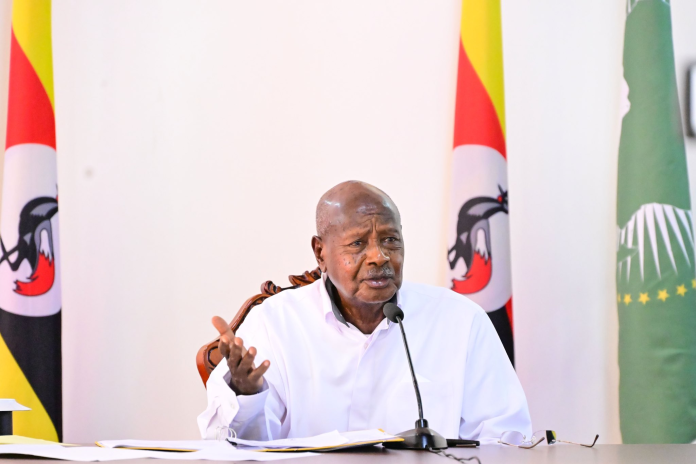
President Museveni.

President Yoweri Museveni who doubles as the Chairperson of the African Union Peace and Security Council revealed that the war in Sudan was caused by the ideological mistakes by the country’s leaders.

Museveni made the statement over the weekend while chairing a virtual meeting of the African Union (AU) Peace and Security Council Heads of State and Government at State Lodge, Nakasero.During the meeting, the leaders discussed the ongoing conflict in Sudan and explored ways to enhance coordinated efforts among regional and international partners to achieve peace and stability for the Sudanese people. “It is now 70 years since our neighbouring country which is part of this region has been in war more or less continuously and this has been because of some mistakes which we many times talk about with the Sudanese leaders. The first mistake was the politics of identity of Africans Vs Arabs or vice versa, Identity of religions; Muslims Vs Christians. This is the reason that caused war for a long time, and we normally talked to Sudanese leaders like Gen.  Bashir and this is the problem also in other parts of Africa. Even in Uganda here, we had the same problem; people who were pushing the politics of identity instead of the politics of interest of the people. I’m this religion, I’m that tribe. This was the original problem,” he said.The President highlighted mistake number two as using force and arms instead of using dialogue.“Mistake number three, when you use force, you use unprepared people who are not disciplined and have got a wrong ideology yet armed with internal and external forces. That is how you get this catastrophe, the one you are seeing. Even if it is a war, it doesn’t not need to affect the whole population unless there’s something wrong with the managers of that conflict,” he noted.“The war crimes are because of those mistakes. Therefore, I’m very happy with the Security Council and other members who have attended. They are all begging the Sudanese factions to please stop the war now, have a ceasefire, go for dialogue and hand the country to its owners; the Sudanese people vote for the person they want.”Mr. Moussa Faki Mahamat, the Chairperson of the African Union Commission informed the meeting that as leaders they must do all it takes to ensure that ceasefire is realised in Sudan.“The African Union, with the implementation of the decisions of your council, we have been engaging all those in the spectrum of the conflict to facilitate the peace process,” he said.“The protection of human rights and the International Humanitarian law will only be possible if national reconciliation is realised. It is for this reason I call for the strengthening of international solidarity to ensure democratic transition in Sudan leading to free and fair elections in order to avoid all sorts of crises that could create further chaos in the country and the region.”Mr.  Mahamat also commended President Museveni for his efforts in facilitating the peace process in Sudan.The IGAD Executive Secretary, H.E. Dr. Workneh Gebeyehu also briefed the meeting on the need for coordinated peace efforts among partners and friends of Sudan.“We must prioritise the Sudanese people who have suffered immensely. IGAD remains committed to finding a path to peace for our Sudanese brothers and sisters, believing that despite the tragic year of war, there is still hope for a peaceful resolution,” he said.Dr.  Mohamed Ibn Chambas, Chairperson of the African Union High Level Panel on Sudan said the conflict in Sudan is worse than that in Ukraine and Gaza.He emphasised that the situation has reached a degree of urgency that requires bold action by the Peace and Security Council.“Sudan is headed for an unprecedented hunger crisis. The vast majority of the hunger spots are in areas ravaged by 15 months of fighting and out of reach of humanitarian aid. Over two million people are facing emergency and even catastrophic levels of hunger. 75 people are dying each day of hunger and disease in Zam Zam camp alone. More than 15,000 fatalities have been recorded and at least 10 million people have also been displaced. such figures are horrific and are a reason for us all to act with urgency to end the conflict,” he noted.On the other hand, the leaders demanded that warring parties namely, the Rapid Support Forces (RSF) and the Sudanese Armed Forces (SAF) immediately stop the fighting and prioritise the interest of Sudan and its people.They also emphasised that there’s no viable and sustainable military solution to the conflict and that only a genuine dialogue can lead to a sustainable solution to the current situation.The leaders further emphasised the need to ensure the protection of civilians in Sudan and in this regard, requested the AU Commission in coordination with the African Commission on Human and People’s Rights to investigate and make recommendations to the Peace and Security Council on practical measures to be undertaken for the protection of civilians.  

Stories Continues after ad