Stanbic Bank
Stanbic Bank
26 C
Kampala
Stanbic Bank
Stanbic Bank
Home Blog Page 2242

EAC varsity debate for Uganda

All is set for the 4th EAC University students’ debate scheduled to take place onDecember 18 and 19 at the International University of East Africa in Kampala, Uganda.
The debate is expected to bring together university students, lecturers, academia, policy makers, media, youth leaders and high school students within the region.
The EAC University Students’ Debate Model is an interactive and representational style of debating aimed at educating, discussing and making resolutions among the Youth in East African to nurture a bond of “eastafricaness”.
‘Apart from ascertaining the analytical skills of debaters; encouraging research among the debaters about the EAC integration process; as well as encouraging diplomatic policy formulation among the debaters; the EAC University students’ debate aims at discovering leadership talent and appoint Youth Ambassadors to champion the integration process’ a release by the EAC Secretariat, states.
The debate will comprise of two teams; Affirmative Team made up of Secretary General, Deputy Secretary General, Chairperson of the Council of Ministers, Amicus Curiae and the Counsel to the Community, and the second team will be the Alternative Strategy Team comprising of the Attorneys General from each Partner State. This has been set as the correct position for this form of dialogue to avoid the word “opposition” used in the context in which it is always perceived.
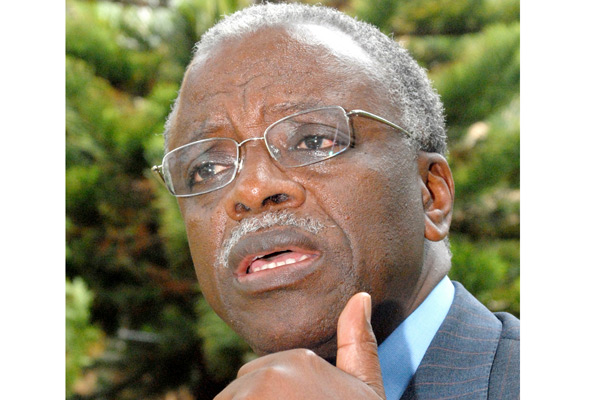
Each team will comprise of 5 debaters drawn from the five Partner States making 10 debaters from the two teams. Prof. Dr. Sandy Stevens Tickodri Tagaboa, Uganda’s State Minister in charge of Higher Education, Science and Technology is expected to officiate at the official opening. Others expected are Prof. Olubayi Olubayi, Vice Chancellor, International University of East Africa; Prof. Alexandre Lyambabaje, the Executive Secretary of the Inter-University Council of East Africa, and Mr. Charles Njoroge, the EAC Deputy Secretary General (Political Federation).
A gala dinner and award ceremony to be officiated at by the EAC Secretary General Amb Dr Richard Sezibera,  accompanied by the VC – IUEA, State Minster in charge of Higher Education and the Speaker of EALA will crown the 4th EAC University students’ debate on Saturday December 19.
The East African Community Youth Summit on EAC Integration and Development Processes held in Arusha in November 2007 set the precedent for youth participation in the EAC integration, while the Secretariat initiated the EAC University Students Debate on Regional Integration in 2012.
Stories Continues after ad

Child soldiers: it is our responsibility to wake up and save them

Latest report indicate that the number of child soldiers recruited by more that 12 warlords in South Sudan since December 2013 has reached 16.000.

According to a recent report, the child soldiers are grabbed from their villages and forced into fighting.

This, of course, is in negation of their basic rights as children, and also in contravention of global human rights charters.

Children are supposed to enjoy the benefits that accrue from community compassion and these include love, care and recognition of their rights, among other attributes.

Indeed, children are supposed go to school, access healthcare and grow up in a fairly familiar set, with both parents offering guidance about societal norms and values.

But this is not to be in most of the war ravaged areas, mostly in Africa; they instead provide labour as combatants or as sex slaves.

Reports indicate there are an estimated 250.000 child soldiers in the world today, with 40 per cent of these girls, some of who are just used as sex objects by the commanders.

The resultant effect is teenage pregnancies and teenage motherhood and, the contracting of deadly diseases like HIV/Aids, gonorrhea and other sexually-transmitted infections (STIs).

Inevitably then, there is need to reverse this pitiable development by putting the warlords to task to compel them release these children and allow them to be re-integrated in the communities.

Also, measures should be put in place by governments that face the problem of child soldiers among their rank and file to discharge them and also provide the necessary psycho-social facilities that allow for an orderly re-integration into society.

It is through such ‘small’ efforts that our children will stop being ‘cannon fodder’ for belligerent opponents.

Stories Continues after ad
EAC holds ‘citizen integration’ activities at Cyanika border post

 In a bid to promote stronger cross border interactions and community engagements, the EAC Secretariat in collaboration with East Africa Local Governments Association (EALGA), the International Republican Institute (IRI) and the German International Development Agency (GIZ), organized a fun-filled sports and cultural festival at Cyanika town at the border of Uganda and Rwanda over the weekend.
kid dancers
The events were a culmination of recommendations of the 21st  Sectoral Council of Ministers Responsible for EAC Affairs and Planning meeting in October 2014, which recommended that 2015 be declared the year of the East African Citizen”.
Bringing together over 1,300 festival-goers, the town of Cyanika was painted in an array of sports, including football, volleyball and cycling, cultural expressions and artistry from Uganda and Rwanda. The Festival was graced by Mr Sam Byibeshyo, the Lord Mayor of Kisoro town in Uganda and Mr Samuel Sembagare, the Lord Mayor of Burera district-Northern Provence of Rwanda. Other attendees included government officials from the district regional offices in Kisoro and Burera, police and immigration officers from the local border authorities, women and young traders. 
“This is an exciting step forward for the Community in getting East Africans more engaged in the integration process,” said Mr. Richard Owora Othieno, EAC’s Principal Information and Public Relations Officer. “We hope that after today, other border communities will initiative similar activities at their border points,” he added. 
local dancers RW (1)
Speaking at the Festival, Mr Byibeshyo expressed his gratitude to the EAC Secretariat and local governments for bringing together citizens from Uganda and Rwanda to work together and promote integration, adding that, “we will continue to support the journey that the EAC has started, and I call upon every East African to join hands and fight whatever obstacles that hinder the integration of East Africa.”
local dancers UG
In concurrence with the Ugandan Mayor, Mr. Sembagare, empathized on the importance of East Africans to take ownership of the integration process and, “use the opportunities availed by the Common Market and the Single Customs regimes to enhance good neighbourliness and community development.”
The year of the East African Citizen is in line with the EAC Consultative Dialogue Framework which ensures continuous dialogue between the EAC Secretariat, Organs and Institutions, Local governments Civil Society Organizations (CSOs), Private Sector Organizations (PSOs) and other Interest Groups both at the national and regional level.  
The Consultative Dialogue Framework is aimed at ensuring that the integration process proceeds with the involvement of the citizens of EAC Partner States and is undertaken in the context of multi-stakeholder partnerships.
Stories Continues after ad
HRW wants South Sudan warlords investigated over child soldier recruitment


More than a dozen senior commanders and officials who children say recruited them as soldiers in South Sudan should be investigated, Human Rights Watch (HRW) said on Tuesday. The United Nations says 16,000 children have joined armed groups since South Sudan’s civil war erupted two years ago.

“It’s the brutal recruitment that is the most heart wrenching,” Skye Wheeler, the report’s author, told the Thomson Reuters Foundation.

“Forces come through their village and grab them and force them into fighting. It’s an absolute negation of their basic rights as children, but also as people, not to be treated just as cannon fodder.”

South Sudan was plunged into a civil war in December 2013 when a political crisis triggered fighting between forces loyal to President Salva Kiir and rebels allied with his former deputy Riek Machar. The conflict has reopened ethnic faultlines that pit Kiir’s Dinka people against Machar’s ethnic Nuer people.

A peace deal was signed in August but the two sides have repeatedly accused each other of violations.

A third of 74 boys interviewed who fought in the current conflict said they were forcibly recruited, often at gunpoint.

Many said they were detained until they agreed to fight or simply abducted, handed a gun and sent into battle.

“I had no experience of holding a gun before,” said one boy in the report who was abducted from school by opposition forces.

“They told us this is how you use it… Then we began fighting.”

Around half of the boys interviewed said they willingly joined armed groups to protect themselves and their communities.

“Without the protection of a gun and an armed group, many boys believed they would have been even more vulnerable to being killed,” the report said.

Half of the child soldiers interviewed fought or worked for government forces or their allies.

Among the most prominent names cited in the report is Matthew “Pul” Puljang, an ethnic Bul Nuer commander who fought in a Unity State militia before joining the government in April 2013.

South Sudan’s army spokesman Philip Aguer said its Child Protection Unit had planned to visit Unity State in 2013 to investigate allegations of Puljang using child soldiers.

“But the visit was interrupted by the violence and it has never taken place,” he said.

“We welcome all investigations to prove any allegations.”

HRW also called for another former rebel who has joined the government side, David Yau Yau, to be investigated.

Yau Yau has released 1,755 child soldiers from his ranks since he signed a peace deal with the government in 2014.

“It not going to be solved just by releasing boys,” Wheeler said. “There also needs to be accountability for commanders who have recruited and used child soldiers to end this endless cycle.”

Stories Continues after ad
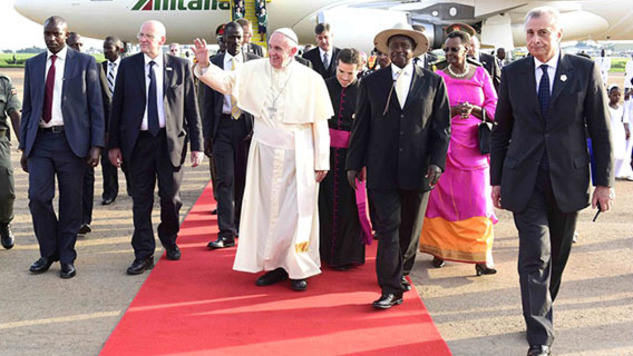
Museveni urges African countries to respect borders

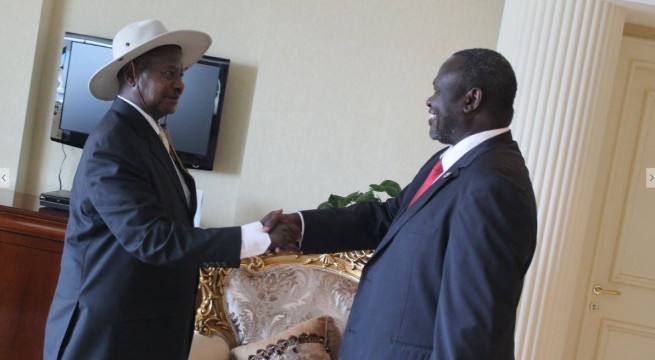
President Museveni holds talks with Saudi Arabia's Crown Prince Muhammed bin Naif Al-Saud bin Abdal Aziz who paid him a courtesy call at his residence in Riyadhi Saudi Arabia


President Yoweri Museveni has called on African leaders to respect borders in order to avoid unnecessary conflict.

The President, who is on a two-day state visit to Saudi Arabia at the invitation of His Majesty King Salman Bin Abdulaziz Al Saud, the custodian of the two Holy Mosques, said this while meeting the Secretary General ofOrganisation of Islamic Cooperation, Dr Iyad Ameen Madani who called on him at his residency in the King Saud Palace, in Riyadh.

President Museveni holds talks with Saudi Arabia's Crown Prince Muhammed bin Naif Al-Saud bin Abdal Aziz who paid him a courtesy call at his residence in Riyadhi Saudi Arabia
President Museveni holds talks with Saudi Arabia’s Crown Prince Muhammed bin Naif Al-Saud bin Abdal Aziz who paid him a courtesy call at his residence in Riyadhi Saudi Arabia

The President noted that there has always been a cold war between Somalia and Kenya stemming from the borders, which has resulted into unprincipled conflict, which the African Union does not condone.

”There has always been a cold war between Somalia and Kenya but we always said; respect the borders wherever they are, since you found them there,” he said, referring to the stand of the African Union.

Mr Museveni was responding to Dr Madan’s comment on the OIC’s interest in the development and humanitarian situation in war torn African countries like Somalia and South Sudan.

President Museveni, however, told his visitors that he will take the issues to the African Union so as to allay fears by Somalia regarding border conflicts with Kenya.

He suggested that Somalia be helped to acquire road equipment so as to open their murram roads and repair the tarmac ones in order to improve transport as well as enable the army to keep security in the country.

President Museveni holds talks with Saudi Arabia's Crown Prince Muhammed bin Naif Al-Saud bin Abdal Aziz who paid him a courtesy call at his residence in Riyadhi Saudi.
President Museveni holds talks with Saudi Arabia’s Crown Prince Muhammed bin Naif Al-Saud bin Abdal Aziz who paid him a courtesy call at his residence in Riyadhi Saudi.

On tribalism, President Museveni said that that NRM has been successful because of her non-sectarian policy where prosperity, pan Africanism and patriotism are given precedence over identity.

“If your identity is not attacked why don’t you emphasize prosperity,” he said.

The OIC Secretary General Dr. Madan suggested that observers be sent to South Sudan to monitor the peace process, an idea that president Museveni also supported.

Meanwhile, President Yoweri Museveni has held bilateral talks with Saudi Crown Prince HRH Prince Mohammed bin Naif Al Saud bin Abdulaziz.

The Crown Prince, who is also the Minister for Interior Affairs of the Kingdom of Saudi Arabia, paid a courtesy call on the President at his residency in the King Saud Palace in Riyadh.


Stories Continues after ad
12 women awarded Euros 75,000 for scientific fellowship


Twelve female scientists from sub Saharan Africa have been honoured for their work in the science field.

Through the 2015 L’Oreal-UNESCO For Women in Science Sub-Saharan Africa Regional Fellowships the 12 were awarded post-doctoral fellowships worth a combined Euros 75,000, with the best three getting Euros 10,000 each.

201512141
Twelve female scientists from sub Saharan Africa have been honoured for their work in the science field.

Rasheedat Mahamood, a Nigeraian from the University of Johannesburg; Zebib Yunus of iThemba Labs, National Research Foundation in Cape Town, South Africa and Jandeli Niemand of the University of Pretoria, South Africa won the top awards that attracted competitors from 19 countries.

‘Through the great diversity of their research, this year’s Sub-Saharan African Fellows highlight the changing face of scientific research and the new disciplines that are continually emerging, forging the next generation of For Women in Science fellows. These young researchers share the thrill of curiosity and discovery, and are strong believers that science can change the world,’ a release by Africa Press Organisation sanction by L’Oreal and UNESCO states in part.

Awardees who received Euros 5,000 each include: Nomvano Mketo of the University of Johannesburg, South Africa; Gaelle Kafira KO of the Laboratory for Solar Energy and Energy Savings (LESEE), Burkina Faso; Shobna Sawry of University of Witwatersrand, Institute of Reproductive Health and HIV, South Africa; Majidah Hamid-Adiamoh of the Medical Research Council Unit, The Gambia and the University of Lagos,  Nigeria; Jinal Bhiman of University of Witwatersrand,  South Africa and Olubokola Adenubi (Nigeria) of the University of Pretoria, South Africa. Others are Olotu Ifeoluwa (Nigeria) – University of Johannesburg, South Africa; Danielle Twilley of the University of Pretoria, South Africa and Edith Chepkorir – International Center for Insect Physiology and Ecology (ICIPE), Kenya, won Euros 5,000 each for their research.

“For the last 17 years, with the For Women In Science program, we have been fighting to advance the cause of women scientists worldwide. Much has been achieved: more than 2,000 women have been recognised worldwide, the program has gained recognition from the international scientific community, a springboard to enable women to go further and rise to greater heights. Science is part of our DNA and we are really proud of all the women who continue to make a difference in Africa through our program,” Sandeep Rai, Managing Director of L’Oréal South Africa, said.
The scientific research areas covered by this year’s fellows are varied and include studies in the fields of life and engineering sciences, food and water security as well as health. New and emerging areas include laser science, nanotechnology, renewable energy and climate change science.

Mauritian President Ameenah Gurib-Fakim is a previous awardee of the L’Oreal-UNESCO fellowship in 2007.

Stories Continues after ad
EC statement on campaign progress

IEC boss Eng. Badru Kiggundu.

Press Statement
14th December 2015

Progress of Implementation of the Roadmap for 2016 General Elections

A. Introduction

Our esteemed partners, members of the press, it is my privilege and pleasure to welcome you to this press briefing.

Today, the Electoral Commission would like to update the country on the progress of various ongoing activities under the Roadmap for the 2015-2016 General Elections.

B. Condolence Message on the Death of Hon. Suzan Namaganda, MP

We were deeply saddened by the news of the sudden death of Hon. Suzan Namaganda, Woman Representative to Parliament for Bukomansimbi District, which occurred on 11th December 2015.

The late Hon. Namaganda was also a candidate for the same elective position in the 2016 General Elections.

On behalf of the Electoral Commission, and on my own behalf, I wish to extend heartfelt condolences to the family, the people of Bukomansimbi District, the Parliament of Uganda, all friends and fellow citizens of Uganda, on the bereavement caused by her untimely death.

We join with you all to pray for her soul to rest in eternal peace.

As a result of the death of a nominated candidate, the Electoral Commission has postponed the electoral programme for election of District Woman Member Representative to Parliament for Bukomansimbi District.

We call upon the people of Bukomansimbi District to remain calm, as a new electoral programme will be issued in due course.
C. Condemnation of acts of Violence during Campaign Meetings

The Electoral Commission has noted with concern the images shown in print and electronic media, where supporters of two Presidential candidates clashed during a campaign meeting in Ntungamo District.

The Electoral Commission has asked the Uganda Police Force to investigate this incident and furnish us with their findings.

Even as the Commission waits for the report on this incident, we wish to reiterate our utter condemnation of acts of violence during the electoral process.

We urge candidates to prevail upon their supporters and agents to desist from any actions that may lead to disruption of public order, and to always use peaceful means to express their views.

We further call for a tolerant approach to political debate, so that we have peaceful, free and fair elections.

D. Issuance of Copies of Photo-bearing Voters’ Register to Presidential Candidates

Today, the Electoral Commission, in accordance with Section 18A of the Electoral Commission Act (as amended), will start the exercise of issuing a complete set of the photo-bearing National Voters’ Register, to each of the candidates contesting in the 2016 Presidential Elections.

The National Voters’ Register bears the names of all the 15,277,196 registered voters, arranged alphabetically by surname, at each of the 28,010 polling stations in Uganda.

The purpose of issuing this Voters’ Register is to enable the candidates, through their official agents, to ensure that only eligible persons are allowed to vote during the 2016 General Elections and only at the polling station where they are registered as voters.

Secondly, the issuance of the Register will help to keep the candidates and other stakeholders, including the electorate updated on the status of registered voters and their voting locations.

Please note that the Electoral Commission has already issued soft copies of the National Voters’ Register to the Presidential candidates, as provided for in Section 18A of the Electoral Commission Act Cap 140.

This issuance should therefore, put to rest any concern among stakeholders about the readiness of the National Voters’ Register for the 2016 General Elections.

The Electoral Commission urges candidates to mobilize their supporters who are registered voters, to prepare to vote in the 2016 General Elections.

The Commission has already clarified that this Register, which bears the photographs of the voters, shall be the basis for voting during the 2016 General Elections. All those persons, whose particulars and photographs appear on the Voters’ Register, shall be eligible to vote at the polling station where they are registered, whether they have a National Identity Card or not.

Constituency Voters’ Registers are also available for other political parties/candidates, on application through the Secretary, Electoral Commission, and payment of relevant fees.

I thank you,

For God and my Country,

Eng. Dr. Badru M. Kiggundu
Chairperson, Electoral Commission Uganda

Stories Continues after ad

Dahabshiil sued in US court over Somali MP’s death


The New York son of Somali singer and politician Saado Ali Warsame is suing the US arm of a money-transfer business, claiming it helped fund the assassination of his mother who returned to Mogadishu in 2012 to work as a Member of Parliament.

Ms Warsame, who moved to Minneapolis in the early 1990s during the Somali civil war, was shot and killed by Al-Shabaab terrorists in Mogadishu, Somalia, in July 2014.

Her son, Harbi Hussein, who was born in New York but now lives in Minnesota, filed the case against Dahabshiil in Manhattan Federal Court last week.

Dahabshiil is the largest money-transfer company in Africa, and it has been accused of funding terrorism by allowing people to send and receive money anonymously.

Ms Warsame even wrote a song about Dahabshiil (whose name means “gold smelter” in Somali) called “Don’t Do Business With The Blood Smelter” and Hussein says his mother’s activist songs and strong feminism made her a target for terrorists.

“She was one of the few Somali female musicians to go on stage without covering her head and she sometimes wore pants, which is unusual for women in Somalia,” reads part of the lawsuit in which Hussein seeks unspecified damages.

Kenya reacts to Dahabshiil ‘Al Shabaab remittances’

In April this year the Government of Kenya, hit by intermittent attacks carried out by Al Shabaab militants, suspended the licenses of 13 Somali remittance firms including Dababshiil, following the attack on Garissa University Campus in which 148 students were slain.

Dahabshiil, which operates in 124 including Uganda, is a market leader in the remittances industry and serves about 95 per cent of the international agencies and charities working in Somalia.

Dahabshiil’s Kenyan license was re-issued two months later in June after President Uhuru Kenyatta ordered the Central Bank of Kenya (CBK) to issue new regulations governing the operations of the 13 suspended firms.

Stories Continues after ad

Electoral violence should be curbed

The Inspector General of Police General Kale Kayihura is in Ntungamo district to oversee investigations into the violence that allegedly broke out between the supporters of presidential candidate Amama Mbabazi and those of the rival National Resistance Movement of presidential candidate Yoweri Museveni.

According to the Electoral Commission regulations governing presidential and parliamentary candidates, aspirants and their supporters should not be in the same vicinity at the same time. And indeed, their schedules are designed in such a way that any two opposing sides don’t have their supporters appear in the same vicinity at the same time.

On the day of the skirmishes in Ntungamo it was Mr Mbabazi who was designated to be campaigning in the district, and law enforcement agencies led by the police were supposed to ensure that his campaigns were peaceful and go on uninterrupted. That is one of the raisons d’etrefor the IEC regulations regarding the campaign schedules for the different candidates.

However, as it turned out there was chaos and reports emerged that police efforts at restoring order were subdued by the errant rioters, purportedly representing their two opposing sides.

It is often said that ‘no one has the monopoly of violence’ and that is why all Ugandans of goodwill should try as much as possible to avoid electoral violence, because in the end every one suffers and no one gains: may be we have something to learn from Kenyans on this.

That said however, as the country awaits the findings of the IGP on the Ntungamo violence, there is need for Ugandans to embrace the spirit of fair political competition if the country is to recognize any meaningful democratic gains arising from political pluralism.

Stories Continues after ad

Kayihura camps in Ntungamo over campaign violence

Gen. Kayihura


In the aftermath of Sunday’s clashes between National Resistance Movement candidate Yoweri Museveni and Go Forward supporters of John Patrick Amama Mbabazi in Ntungamo district, the Inspector General of Police, General Kale Kayihura has pitched camp in the area to assess the situation and figure out the exact cause of the clashes.

According to the Police Spokesman Mr. Fred Enanga, Kayihura’s move is to analyse, “if violence is a new tool used by politicians and whether the alleged NRM supporters were really NRM.”

Upon ending his last rally at Kyamate stadium in Ntungamo District yesterday, Mr.Mbabazi’s convoy was confronted by a group of people donning NRM party colours with the face of President Museveni on their t-shirts, and, according to police, reports indicate that a flying object was thrown at Mbabazi’s convoy, hitting an escort vehicle, prompting his supporters to attack.

A total of nine people, allegedly supporters of the NRM, were injured and rushed to hospital, have currently been discharged.

Police says all the nine have recorded statements and that two arrests have been made.

The IGP has promised Ugandans a preliminary report on the incident after assessing the saga thoroughly.

According to police, the election period is so far free of violence apart from a few incidents recorded in the areas of Bukomansimbi, Arua, Wakiso and the most recent one in Ntungamo. There are also three cases of threatening violence and three others of defacing campaign posters.

“We have so far policed more than 400 campaign rallies this season and all have been a success; we therefore call upon the public to desist from election violence,” Mr Enanga said.

In a related development the Independent Electoral Commission has condemned the Ntungamo violence and directed the police to investigate the matter.

“The Electoral Commission has asked the Uganda Police Force to investigate this incident and furnish us with their findings.

Even as the Commission waits for the report on this incident, we wish to reiterate our utter condemnation of acts of violence during the electoral process.

We urge candidates to prevail upon their supporters and agents to desist from any actions that may lead to disruption of public order, and to always use peaceful means to express their views.

We further call for a tolerant approach to political debate, so that we have peaceful, free and fair elections,” the IEC Chairman Eng Badru Kiggundu wrote.

Meanwhile, the IEC has released voters’ registers, complete with photos of the respective voters to the individual presidential candidates.

Stories Continues after ad