Stanbic Bank
Stanbic Bank
27.6 C
Kampala
Stanbic Bank
Stanbic Bank
Home Blog Page 225

ATMIS hands over Ceel Eglow military base to Somalia forces

The African Union (AU) Transition Mission in Somalia (ATMIS) on Monday handed over the Ceel Eglow military base located in the Middle Shabelle region to the Somali National Army (SNA) as the AU mission steps up withdrawal of its troops from the country.

Atmis said the latest military base marks the third base transferred in Phase Three of Atmis troops drawdown.

Atmis Sector Five Commander Oscal Hatungimana lauded the collaboration between the two allied forces, residents, and international partners in degrading the Al Shabaab extremist group, which has engaged the government in attacks.

The strategic Ceel Eglow base, previously manned by Atmis Burundi troops since 2019, protects the Mogadishu-Jowhar main supply routes and surrounding areas, the designated routes within an area of operations upon which the bulk of traffic flows in support of military operations and humanitarian operations.

The third phase of the Atmis drawdown is in line with United Nations Security Council Resolutions 2628 (2022), 2670 (2022), and 2710 (2023), which mandate Atmis to withdraw 4,000 troops by the end of June.

The drawdown continues as the AU Peace and Security Council (AUPSC) has called for a phased approach to the withdrawal of peacekeepers from Somalia to avoid a potential security vacuum.

The AUPSC has strongly backed Somalia’s request made in May for a phased approach to the Phase 3 drawdown of Atmis to enable Mogadishu to maintain half of the troops that were expected to withdraw by the end of June.

“The AUPSC notes that the exit of Atmis needs to be carefully harmonized with the follow-on mission that replaces it, including the harmonization of Troop Contribution Countries (TCCs), to ensure that there is no security gap between December 31 and January 1, 2025,” AUPSC said in it a communique released Saturday.

The AUPSC warned the ongoing offensive operations against the Al Shabaab terror group and the full implementation of the Phase 3 drawdown could lead to capability gaps that may have significant implications for the security of Somalia and the wider region.

Stories Continues after ad

UNAIDS, Global Fund sign a new strategic framework to end AIDS

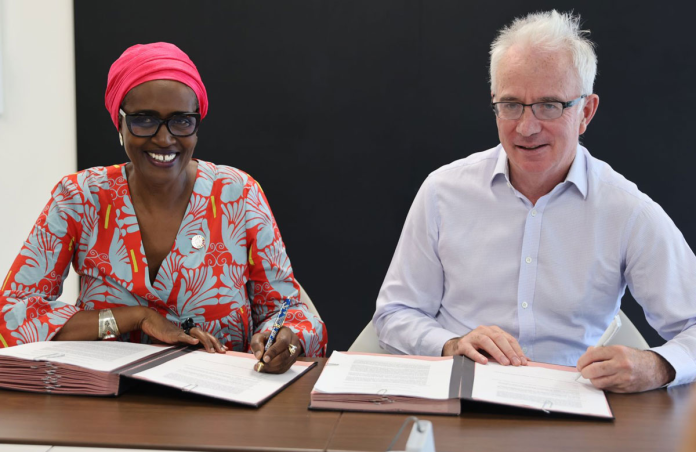
The UNAIDS Executive Director, Winnie Byanyima, and Executive Director of The Global Fund to Fight AIDS, Tuberculosis and Malaria (the Global Fund), Peter Sands, have signed a new strategic framework for cooperation and collaboration to end AIDS (2024 –2028).

The agreement renews the organizations’ longstanding partnership and aligns ongoing collaboration with the most recent United Nations General Assembly Political Declaration on HIV and AIDS: Ending Inequalities and Getting on Track to End AIDS by 2030.

“The longstanding partnership between UNAIDS and the Global Fund has been instrumental in supporting many millions of people living with or vulnerable to HIV to enjoy better health and well-being through improved access to essential services,” said Winnie Byanyima, UNAIDS Executive Director.

She added, “We at UNAIDS are excited to continue building our collaboration with the Global Fund as we head toward our common goal of ending AIDS.”

The new strategic framework puts people and communities at the centre and aims to unite countries, communities and partners across and beyond the HIV response to take prioritized actions to accelerate progress towards the vision of zero new HIV infections, zero discrimination and zero AIDS-related deaths.

“Our strong collaboration, especially at the country level, makes a huge difference in the fight against AIDS,” said Peter Sands, Executive Director of the Global Fund. “Our counterparts at UNAIDS play a crucial role on the ground: they help put communities living with and affected by HIV at the center of the response and ensure that rights-based approaches are widely adopted.”

The Global Fund Strategy (2023–2028) Fighting Pandemics and Building a Healthier and More Equitable World is fully aligned with the Sustainable Development Goals and UNAIDS’ Global AIDS Strategy (2021–2026) End Inequalities, End AIDS, which guides the global AIDS response. It calls on all actors to scale up and sustain global and domestic investments to achieve the strategy’s ambitious targets and commitments for 2025 as well as put the world on course to end AIDS as a public health threat by 2030.

Collaboration under the new agreement will focus on reducing the inequalities that drive the AIDS epidemic and closing the HIV prevention and treatment gaps that are preventing progress towards ending AIDS. It will also prioritize people who are not yet accessing life-saving HIV services.

The common approach supports a renewed focus on primary prevention, addressing structural drivers of HIV infection and AIDS-related deaths, and challenging inequities and human rights and gender-related barriers to services including stigma, discrimination and criminalization. It leverages new HIV prevention and treatment modalities, precision public health approaches, as well as supporting synergies between HIV services and related areas of health.

In addition, the framework continues longstanding support to strengthen countries’ capacity to measure their epidemics and monitor their responses, and act on the data to drive results. There will also be a push for countries to map out the longer-term sustainability of the HIV response through stronger health systems, better-integrated services for HIV, and more streamlined donor contributions.

Stories Continues after ad

Deposit Protection Fund commences payment of mercantile credit bank depositors

he Deposit Protection Fund of Uganda (DPF) has commenced payment to the depositors of mercantile credit bank Limited which was closed by the Bank of Uganda last week.

In a statement issued by Julia Claire Oyet, CEO of DPF noted that the road map for payments of the protected deposits to joint, trust and company account holders has been published today.

She added, “in exercise of its powers under Sections 99 and 17 (b) and (f) of the Financial Institutions Act, 2004, as amended, the Bank of Uganda (BoU) placed Mercantile Credit Bank Limited under liquidation, revoked its license, and made an order for the winding up of its affairs with effect from June 18, 2024.”

“Accordingly, the Deposit Protection Fund of Uganda (DPF) wishes to inform the depositors of closed Mercantile Credit Bank Limited that payment of protected deposits to individual depositors shall commence on Monday June 24, 2024, using various payment mechanisms,” Oyet revealed.

Oyet further noted that the DPF appreciates the cooperation exhibited by the depositors and assures them that they shall all be paid up to the protected limit of UGX 10 million, less any obligations to the bank. Depositors with amounts in excess of the protected limit shall be handled by Bank of Uganda in line with Section 105 of the Financial Institutions Act 2004, as amended.

Mercantile credit bank Limited’s license was revoked last week and ordered to wind up its operations after Bank of Uganda noticed the institution’s failure to resolve its significant undercapitalization, poor corporate governance, and insolvency.

Stories Continues after ad

Unleashing the Power of AI in Trading: A Look at Unicapital’s Automated Trading Platform

Unicapital harnesses the capabilities of artificial intelligence (AI) and machine learning to redefine the landscape of trading, making it more accessible, efficient, and error-free.

Unicapital’s AI Technology

AI can analyze vast streams of market data to pull out trends and opportunities that traders might miss. This advanced technology empowers the platform in several transformative ways:

  • Faster and More Accurate Decisions: AI has the ability to rapidly process and analyze information. This means that trades can be executed almost instantaneously. Moreover, this speed is crucial in capitalizing on transient market opportunities that could disappear in seconds.
  • Reduced Errors: The influence of emotional bias and human error is significantly diminished through automated trading. This leads to a more disciplined approach to trading, enhancing the likelihood of consistent performance.

How Unicapital Augments Traders

Unicapital’s platform is built to enhance the capabilities of traders by providing powerful tools to improve their strategies:

  • Automated Strategy Execution: Traders can automate their proven strategies on Unicapital’s platform. Moreover, this will allow them to devote more time to strategy development and less to manual execution.
  • AI-powered Insights: The platform offers insights generated through AI analysis. This aids traders in making informed decisions and fine-tuning their approaches based on real-time data.

Unicapital’s Educational Resources

Moreover, understanding the importance of knowledge in trading success, the platform offers a comprehensive array of educational resources:

  • Learning Resources: Unicapital provides a wide range of educational materials to support traders at all levels.
  • Interactive Learning: Through webinars, video tutorials, and live trading sessions, traders can engage directly with market experts and apply new knowledge immediately.

Conclusion

Unicapital not only simplifies and enhances the trading process but also actively contributes to trader education and development. As an effect on this, merging human expertise with sophisticated AI technology, Unicapital will make modern trading more efficient, accessible, and successful for traders around the globe. The synergy of technology and human insight paves the way for a new era in financial markets. This is where technology and traders work hand in hand to achieve greater results.

About Unicapital

Unicapital is a multi-faceted platform that empowers users with the knowledge and tools to explore global digital asset markets and capitalize on opportunities with superior speed and efficiency.

Through its unique offering of AI-driven solutions and in-depth learning resources, Unicapital provides users the means to tailor their trading journey according to their personal goals. To know more about Unicapital and its product suite, visit their website at https://unicapital.tech.

You can also follow their socials to keep abreast with their latest news and updates: www.youtube.com/@unicapitaltech

t.me/unicapitaltech

www.instagram.com/unicapitaltech

twitter.com/unicapitaltech

facebook.com/unicapitaltech/

linkedin.com/company/unicapitaltech/

Disclaimer: This article combines insights from both human expertise and AI technology to provide informational content. It is solely for informational purposes only and should not be interpreted as financial advice or a recommendation to invest. Virtual asset investments are inherently volatile and risky. Unicapital provides no guarantee of accuracy or completeness for the information herein. Independent research and professional advice are recommended before engaging in any investment activity. Unicapital does not propose you to buy a Virtual asset and nothing in this article should be taken as an offer to buy, sell or hold Virtual assets or any other financial instrument. Unicapital bears no liability for investment decisions based on this article.

Stories Continues after ad

Govt closes multibillion sugar factory in Namayingo

Over 600 people have lost their jobs following government’s order to close the CN sugar factory in Namayingo district.

The closure of the factory followed the alleged failure of the CN factory to establish a nucleus estate of at least 500 hectares before erecting the mill.

“Reference is made to your application to establish a sugar mill in Namayingo dated September 30, 2022, and no objection letter was issued to you on November 9, 2022, with a condition that you establish a nucleus estate of about 500 hectares, but during the verification exercise it was discovered that only 121 hectares were established,’’ part of the letter dated June 17, 2024 reads.

In the letter signed by the Minister of Trade, Industry, and Cooperative, Francis Mwebesa, addressed to the director of CN Sugar Ltd., said the initially issued certificate of no objection to setting up a factory in Namayingo is hereby revoked.

“I advise you to identify an alternative land in the area outside the Busoga sub-region where you can acquire substantial land to establish a nuclear estate and submit it to the minister, and any conveniences caused are highly regretted, the letter further reads.

The Namayingo District Chairperson, Ronald Sanya, said currently 600 people have been employed at the construction site of the factory but are now jobless.

“Closing the factory is a double tragedy because most of the youths had been suspended from the lake and they have been jobless,’’ he said.

Sanya said they are to petition President Museveni to intervene in the issue because CN Sugar Ltd. is the only industry that has been constructed in Namayingo since its inception.

The Namayingo District Vice Chairperson, Abdallah Twaha Kawuta, said they have been expecting revenue that was going to improve service delivery in the area.

“We have been depending on boat parking, fishing permits, but these activities were suspended. We are only depending on trading licenses. We used to collect Shs700m, but we now collect Shs100m to Shs200m. We expected our revenue to triple with the establishment of CN Sugar Ltd. that has been closed,’’ he said.

Kawuta said the community around the factory benefited in terms of corporate social responsibility.

“Where these factories exist, they improve the health system of the area, water, and education by establishing schools; they help the orphans and the elderly,’’ he said.

The manager of CN Sugar Ltd., Rashid Kakungulu, said they have enough acres of sugarcane, which the Ministry wanted.

“We have bought 1300 acres because they told us to buy land, yet they only need 1250 acres. At the site we have 300 acres of sugarcane, and in the field, we have planted sugarcane on over 650 acres,’’ he said.

Kakungulu said they have so far invested $12m with Shs1billion taxes on importation of the materials.

“We have not yet elected the machines, but the construction of the factory is at 40 percent complete, with $6 million so far invested unless the government compensates the investors with $15 million, but we vow not to leave the area,’’ he said.

He added that “The Minister gave us a license authorizing us to construct the stores, staff quarters, perimeter walls, and canteen. The out growers have spent a lot of money planting sugarcane, then revoked by the same minister,” he said.

Mark Simunyu, one of the residents of Kifuyo village, Buyinja subcounty in Namayingo, has asked the Minister to compensate them because some have sold grave yards to allow the establishment of a factory.

“People have given in their land. If the Minister is revoking it now, how is he planning to compensate every person who sold their land?’’’ he said.

The General Secretary of the Busoga Sugarcane Out Growers Association, David Christopher Mombwe, said instead of the government working on the fluctuating price of sugar cane by setting a minimum price, they are busy closing the few factories in Busoga, which has solved the unemployment in the area.

The Chairman of the Uganda Sugar Manufacturers’ Association (USMA), Jim Kabeho, said it’s too late; they should revoke all of the licenses issued after 2020 because they’re all illegally issued.

The closure of the CN sugar factory came at a time when USMA, in July 2022, petitioned the Ministry of Trade, demanding the process of licensing more mills within the Busoga Sub-region be halted because it caused an unstable supply of cane in the area.

CN Sugar Factory is among the seven factories that were allegedly licensed by the Ministry of Trade across the sugar cane growing areas in the country, despite the absence of the Sugar Board.

USMA claims that they should not be in close proximity of the existing sugar mill in the 25-kilometer radius because it contravenes the sugar policy.

In November 2022, legislators sitting on the Parliamentary Committee on Trade, Industry, and Tourism blamed the Minister for Trade, Francis Mwebesa, for usurping the powers of the Uganda Investment Authority and issuing licenses to the new seven sugar mills to operate in Busoga and Buganda.

Busoga is home to six major sugarcane processing plants, namely; Kakira Sugar Limited (Jinja), Mayuge Sugar Factory (Mayuge), Kamuli Sugar Ltd. (Kamuli), Kaliro Sugar Ltd. (Kaliro), Bugiri Sugar Ltd. (Bugiri), and the neighboring GM Sugar Factory (Buikwe).

Stories Continues after ad

UNBS warns supermarkets to stop selling uncertified, substandard products

In a bid to combat substandard goods and bolster consumer protection, the Uganda National Bureau of Standards (UNBS) has urged all supermarket owners to sell only certified locally manufactured commodities and inspected imported commodities.

This call to action aligns with the UNBS mission to facilitate trade, enforce standards, and protect public health, safety, and the environment from hazardous and substandard products.

UNBS has launched the Digital Conformity Marking (DCM) program which provides a track-and-trace mechanism for consumers, supermarkets, and other retail outlets to distinguish between genuinely certified and substandard commodities. The program’s details were shared during a stakeholder engagement session with supermarket owners and operators in the central region, held at UNBS’s headquarters in Bweyogerere.

“Today’s primary focus is the Digital Conformity Marking program. We’ve introduced technology that allows the public to use their phones to verify if a product is genuinely certified by UNBS. As supermarket owners, it’s your responsibility to ensure that all products on your shelves are certified and safe for consumers,” said Ms. Patricia Bageine Ejalu, Deputy Executive Director in charge of Standards at UNBS.

The DCM program involves issuing Digital Conformity Marks/Stamps to certified commodities, providing consumers with proof that the products meet applicable standards and are of high quality.

“These stamps contain information such as product details, the standard under which it is assessed, certification date, batch number, manufacturer’s name, and more. Supermarket owners, consumers, and the public can use the Kakasa App to scan these stamps and verify product certification,” added Mr. Phillip Kahuma, Acting Manager, and Certification at UNBS.

Currently, the DCM program covers three commodity categories: construction materials, electrical commodities, and cosmetics. Each digital conformity mark costs Shs21 and is expected to lower business costs, particularly for Micro, Small, and Medium Enterprises (MSMEs), as manufacturers can order a number of marks matching their production volume.

During the meeting, supermarket owners were also advised to avoid stocking expired products and altering expiry dates.

“We will not negotiate on the issue of expired goods on supermarket shelves. They are harmful to public health. Remove them before UNBS does. Changing expiry dates to extend shelf life is illegal and punishable by law. If you don’t buy expired products for your family, don’t leave them for other families to buy,” warned Mr. Daniel Arorwa, Manager Market Surveillance at UNBS.

Supermarket owners were encouraged to report any dealers of substandard commodities to UNBS using the toll-free lines 0800133133 / 0800233233.

UNBS remains committed to its mandate of consumer protection and fair-trade facilitation.

Uganda National Bureau of Standards (UNBS) is a government agency responsible for developing, promoting, and enforcing national standards to protect public health, safety, and the environment from harmful and substandard products. UNBS also promotes fair trade practices and competition.

Stories Continues after ad
Uganda Clays fails to pay dividends over Shs2.8b net loss in 2023

Uganda Clays has announced that it will not pay any dividends this year after registering a net loss of Shs2.8 billion for the year 2023.

 During the release of the company’s financial results on Friday, the board attributed the loss of Shs2.8 billion for the year 2023 to a fall in revenues and marginal cost adjustments.

Profit dropped from Shs14.8 billion to Shs8.7 billion shillings. The roofing tiles maker says earnings per share dropped from Shs2.7 in 2022 to minus Shs3.6 in 2023.

“The earning per share decreased to Shs3.17 from Shs2.71 which is due to a reduction in profit and the Dividend Per Share was 0 in 2023,” Mr. Jones Muhumuza- Head of Finance at Uganda Clays, said.

EBITDA, or earnings before interest, taxes, depreciation, and amortization, was Shs3.6 billion, a decrease of 52% from FY 2022. The company said the decrease was due to an increase in the costs of inputs majorly arising due to inflation. Net Profit decreased by 217 % to Shs2.9 billion, due to a decline in revenue.

Eng. Martin Kasekende, the Board Chairman, said the company invested Shs7.9 billion in capacity expansion, leading to improved production performance in the second half of the year.

However, Mr. Reuben Tumwebaze, the MD, said Uganda Clays Ltd achieved success in kiln recovery (79%) and staff engagement (71%), surpassing targets.

“Equipment breakdowns and machine integrity issues led to increased delivery times and decreased customer satisfaction. Two new presses at the Kajjansi factory improved production in the second half of the year,” Tumwebaze explained.

Despite recent challenges, he said the company remains committed to profitability and has a significant order book and project pipeline, with good opportunities for growth due to domestic housing market demand.

UCL’s main shareholders include National Insurance Corporation, Central Bank of Kenya Employee Pension Fund, Bank of Uganda Staff Retirement Plan, and of course National Social Security Fund among others.

In the period ended December 2022, Uganda Clays had recorded a 25 percent drop in profits to Shs2.4 billion.

Stories Continues after ad

Court remands MPs Mawanda, Akamba and Wamakuyu over corruption

The three legislators and their lawyer in the dock before Anti-Corruption court.

Law makers of Igara East Michael Mawanda, Busiki County Paul Akamba, Elgon County Mudimi Wamakuyu and lawyer Julius Kirya Taitankoko have been remanded to Luzira Prison.

The quintet is accused of Diversion of funds and conspiracy to defraud Shs164 billion meant for compensating cooperative societies.

Prosecution avers that between 2019 and 2023, Elgon County MP Mudimi Wamakuyu, Leonard Kavundira, the Assistant Registrar of Cooperatives in the Ministry of Trade, Mawanda, Akamba, and Kirya conspired to defraud Shs7.3 billion budgeted for compensation of Buyaka Growers Cooperatives Society Limited.

The prosecution alleges that Mawanda, in October 2021, in Kampala, diverted public funds amounting to Shs1,050,000 to unrelated purposes. Akamba and Wanakuyu allegedly diverted Shs2.3 billion and Shs200 million for their benefit. Kirya allegedly diverted Shs2.2 billion.

The suspects also conspired to defraud Shs3.4 billion meant for the Buyaka Cooperative Society.

Mawanda and Bulambuli Constituency MP Ignatius Wamakuyu Mudimi were summoned last week to appear before Criminal Investigations Directorate (CID) detectives and record statements over their involvement in the corruption scandal.

Appearing before Anti-Corruption Court Chief Magistrate Joan Aciro, the accused’s lawyers agreed not to apply for bail because their clients were brought to court late, thus denying them a chance to interact with them. They were subsequently remanded to Luzira prison until July 9, 2024.

The prosecution asked for one month to prepare documents and submit them to the lawyers of the accused in the Shs164 billion cooperatives case. Earlier, the prosecution had told the court that they were ready with evidence and only waiting for a hearing date.

Last year, the former State Minister for Trade, Harriet Ntababazi, revealed that up to 30 legislators were facing criminal investigation over their alleged role in the embezzlement of Shs164 billion meant for compensation to cooperative societies.

According to the report that parliament sent to CID and the Inspectorate of Government for further investigations, there were only two MPs supposed to be quizzed. They are Elgon County MP Mudimi Wamakuyu and Igara East MP Michael Mawanda, while former Kyankwanzi District Woman MP Anne Maria Nankabirwa is also a target.

In 2011/2012, the Ugandan government allocated Shs164 billion to compensate cooperative societies that lost funds and property during wars between 1979 and 2006. The disbursement of funds has been marred by irregularities, with some MPs and government officials accused of conspiring to embezzle the funds.

Stories Continues after ad

Uganda Prisons graduates 31 senior officers in intermediate Command and Staff Course

Uganda Prison graduands.

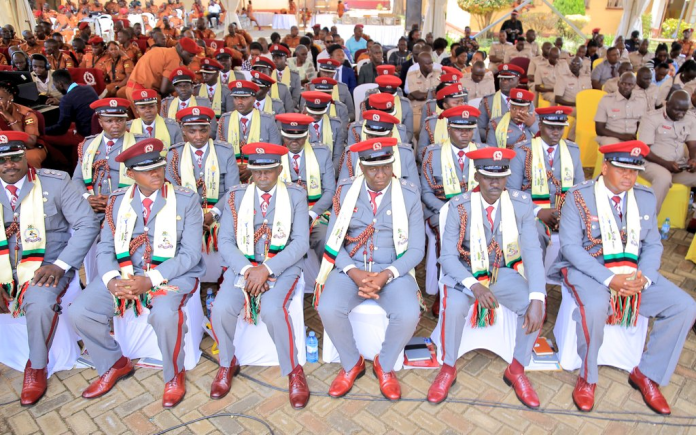
Thirty-one senior prison officers have graduated from the Prisons Academy and Training School in Luzira, marking the completion of their six-month intermediate command and staff course.

The Prisons Academy and Training School has been very instrumental in building the capacity of prison officers, thereby enhancing the overall management of Uganda’s prisons.

The graduates, consisting of 25 males and 6 females, have undergone intensive training in prison management, leadership, and personal development.

Speaking at the event, Ms. Brenda Sana, Commissioner of Prisons (Commandant-PATS) warmly welcomed the guests to the pass-out ceremony of the second intake of the Prison Intermediate Command and Staff Course, intake 002/2023 and announced that thirty-one dedicated officers had graduated, comprising twenty-five men and six women, who had completed an intensive six-month training program.

According to her, the course had covered a wide range of topics, including prison management, leadership, personal development, service writing, security, intelligence, human rights, administrative law, command operations, and conflict resolution.

She emphasized that with this diverse training, the officers are well-equipped to excel in their roles and make a positive impact in the prison service.

She praised the graduates for their discipline and focus. She expressed confidence in their potential as leaders and thanked the Directing Staff, training school staff, and partners for their support.

“I congratulate the graduates on completing their training and urge them to apply their knowledge wisely. The graduates are ready to excel as officers and strategic leaders, and PATS is committed to conducting more training programs under the guidance of the Commissioner General of Prisons,” Sana said.

Over time, Uganda Prisons has transformed from a punitive to a productive correctional philosophy in prison management. Through this transformation, the Service has not only strived to fulfill its constitutional mandate of safe custody and rehabilitation of offenders but also excelled in production. UPS contributes to the national socio-economic transformation, aligning with evolving global trends in prisons management and corrections.

Given this background, human capital development is crucial for achieving the UPS mandate and mission.

To accomplish this, the Service will continuously enhance the capabilities of its human resources at all operational levels. The course aims to equip middle-level managers with the knowledge, skills, and attitude necessary for effective and efficient operational implementation.

The course features tailored content in problem-solving, institutional leadership, critical and analytical competencies, and effective management in diverse and adverse environments.

Stories Continues after ad

Minister Nabakooba launches Church of Uganda mass land registration

Minister Nabakooba and Church of Uganda team during the launch.

The Minister of Lands, Housing and Urban Development, Judith Nabakooba, has launched Church of Uganda’s mass land registration in a move aimed at protecting church land.

The launch happened during the training of the Diocesan Secretaries and Diocesan Estates Officers at the Provincial Secretariat in Namirembe.

The training is focusing on land registration and proper land use, and is organized by Church Commissioners Holding Company Ltd.

Nabakooba called for quick timeliness in registering church land to ensure that the clerical has accurate land titles. She also called for productive usage of the land.

“We have received a number of cases about land grabbers and encroachers on church land. In most cases, there is no evidence that the land belongs to the church. The only evidence we need is the land title and that’s why we are here to support you in the registration process.” The former police publicist said.

The Acting Provincial Secretary, Balaam Muheebwa commended the government of Uganda for their support towards the Church of Uganda especially in the land registration process. 

“On behalf of the Church of Uganda, I thank the government of Uganda especially the Ministry of Lands Housing and Urban Development for supporting us in the land registration with technical expertise and all the relevant literature on the same. We are committed to conducting this exercise in record time.” Mr Muheebwa said.

The group CEO, Church Commissioners Holding Company Ltd, Rev Jasper Mpirirwe Tumuhimbise commended the government for supporting the Church to clear Church House debt. According to Rev Tumuhimbise, the compensations from government usage of church land in different areas helped greatly in paying off the debt on Church House.

The launch of the mass land registration follows a meeting between the Nabakooba and the House of Bishops at Lweza Training and Conference Centre early this year.

The resolutions from the same meeting were sent to the Provincial Assembly Standing Committee (PASC) from which an adhoc committee was selected chaired by Bishop James William Ssebaggala to coordinate the partnership between Church of Uganda and the government to have the land registration process effected.

Stories Continues after ad