Stanbic Bank
Stanbic Bank
18.3 C
Kampala
Stanbic Bank
Stanbic Bank
Home Blog Page 2256

That is my brother’s body – Aine sister

Ritah Babirye Aine, a sister to Christopher Aine, the missing head of Go Forward candidate Amama Mbabazi’s private security detail, has said that the photo of a dead body appearing on social media and carried by one of the local dailies is that of her brother.

Beginning yesterday social media carried a photo of a lifeless man with apparent marks in the chest and broken teeth, and the poster purported the photo was that of Aine, a wanted man who went missing about two weeks ago, prompting police boss Gen Kale Kayihura to put a bounty of Shs20 million on his head.

The media quoted Babirye as saying the marks on the neck and broken teeth appearing in the photo are from an accident he got years ago.

According to news reports, Aine’s sister has asked the police to task the local newspaper to produce the source of the photograph, saying that could provide a lead in the investigations related to her missing brother.

Aine went missing from his home in Kyanja about two weeks ago and, earlier today his relatives in the company of police went to the city mortuary to search for his body but failed to trace it.

However, according to the media, the police spokesperson Fred Enanga has refuted the claims, saying that the photo carried by the newspaper must have been photo-shopped or of another body.

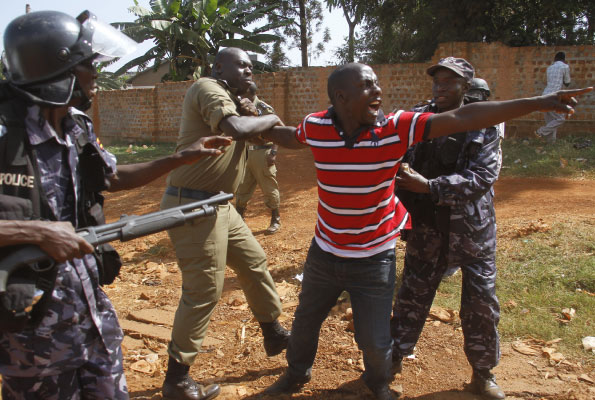
Aine first made headlines mid this year, when he engaged in a vigorous scuffle with police officers who tried to block his boss Mbabazi from addressing supporters in Jinja. At the time Aine was arrested and detained at Nalufenya Police Station in Jinja, a place reserved for hardcore suspects.

Then on December 13 Aine’s name cropped up again, this time linked to a deadly encounter in Ntungamo between supporters of the National Resistance Movement candidate Yoweri Museveni and those of Mr Mbabazi.

In subsequent actions, President Museveni addressed a press conference in Mbale, and said government would deal with those responsible for assaulting his supporters in Ntungamo, while Gen Kayihura followed by putting the 20m bounty on Aine’s head.

Stories Continues after ad

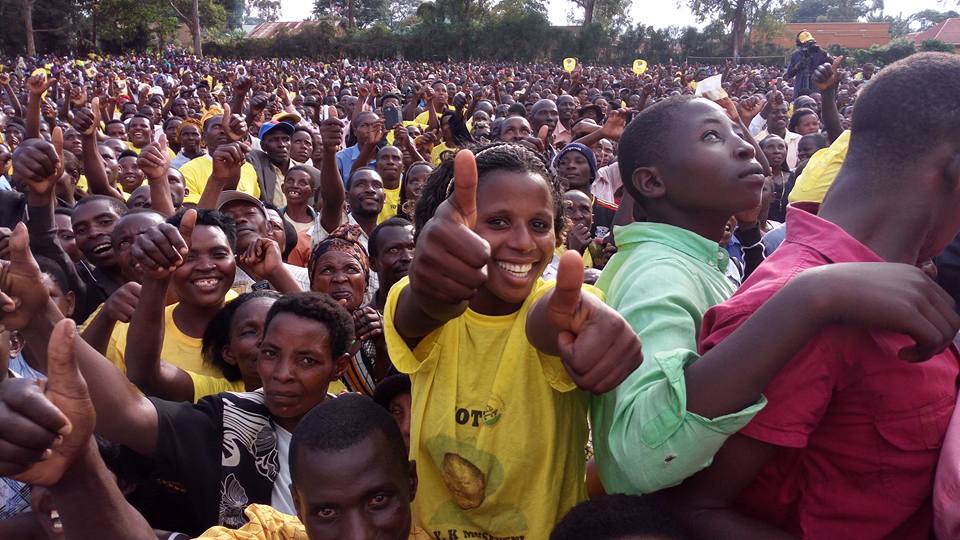
Presidential campaigns in pictures

Amama Mbabazi in Abim, Karamoja Sub-region

Amama2

Amama Crowds


Amama Mbabazi in Abim, Karamoja sub-region

Museveni in Kanungu, Kigezi

Museveni campaigns in Kanungu, Kigezi.

Ndugum7 crowdKizza Besigye in Bukow District, Eastern Uganda

Besigye campaigns in Bukwo district, Eastern Uganda | Courtesy Photos

Besigye-bukwoBes22

Stories Continues after ad

ISIS kills 30 journalists in 2015

Thirty of the seventy one journalists that died in 2015 were killed by extremist groups like the ISIS, the Committee to Protect Journalists (CPJ) has announced.

According to the CPJ, all the seventy one journalists were killed in direct relation to their work, making it the fourth deadliest year since the organisation began keeping records in 1992.

CPJ maintains a database of all journalists killed since 1992 and, according to the organization, the 30 journalists killed by extremist groups represents 42 per cent of the total number killed in 2015.

Those killings came as more than half of the 199 journalists imprisoned in 2015 were jailed on anti-state charges, showing how the press is caught between perpetrators of terrorism and governments purporting to fight terrorists.
CPJ  reported in December that 69 journalists were killed around the world from January 1 through December 23, 2015. On December 27 Naji Jerf, editor-in-chief of the independent monthly Hentah and the maker of documentary films on Islamic State, was murdered in Turkey. In addition, new information led CPJ to confirm that Ahmed Mohamed al-Mousa was killed in relation to his work as a journalist. Al-Mousa, a 23-year-old editor for ‘Raqqa is Being Slaughtered Silently’, was shot dead in Idlib province on December 16. The group of Syrian citizen journalists was honored with CPJ’s 2015 International Press Freedom Award in November.

In 2015, the fight against impunity in the murders of journalists achieved some success, with at least six convictions worldwide. CPJ advocacy also contributed to the release of at least 50 journalists from prison, while the total number in jail at the time of CPJ’s annual census declined slightly compared with the past three years. Of the journalists released this year, six were featured in the ‘Press Uncuffed’ campaign, which, in partnership with students at the University of Maryland, seeks to raise awareness of journalists imprisoned worldwide.
CPJ’s advocacy director Courtney Radsch said the organization will keep the pressure on governments worldwide to allow journalists to work freely and safely.

Stories Continues after ad

South Sudan ‘rebels’ name MPs

The SPLM/A-In Opposition has selected 50 Members of Parliament who will represent it in the upcoming transitional government of national unity in South Sudan.

The SPLM-IO head of the advance team in Juba, Taban Deng Gai, submitted their nominees to deputy chairman of the Constitutional Review Committee Dr Sidig Ali.

Taban said in a press statement the selection was based on 10 states as agreed in the peace deal.

Taban, who was the SPLM-IO’s chief negotiator during the Addis Ababa peace process, said the nominations show their commitment to the signed peace agreement.

For his part, Sidig Ali described the move as an important step in the implementation of peace agreement.

He pointed out that they are now working with political parties in order to activate the committee’s role and the implementation of peace agreement as scheduled.

Meanwhile, Agok Makur, an SPLM-IO nominee to the parliament, told Radio Tamazuj that the peace agreement provides for the expansion of parliament to 400 MPs.

He explained that the agreement gives the armed opposition 50 seats and one seat for the SPLM-G10 “Former Detainees” group.

Agok added that the agreement also gives 17 seats to the other political parties.

Stories Continues after ad

Somalia loses US450m to illegal fishing

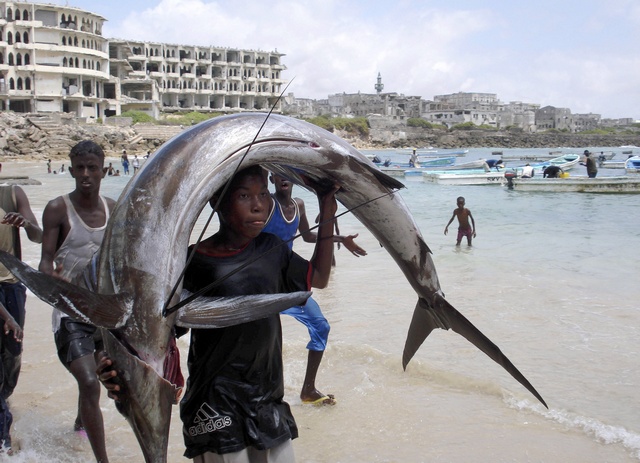
A Somalia young man carries a fish on his head near the shores of Indian ocean in Mogadishu, November 3, 2007. About 88,000 Somalis have fled the coastal city during heavy fighting in Mogadishu since last weekend, adding to hundreds of thousands who ran away earlier this year, according to the United Nations' refugee agency. REUTERS/Ismael Abdi(SOMALIA)


Somalia loses anywhere between US$100 million and US$450 million a year to illegal fishing carried out by foreign vessels, a report indicates.

According to African Development Solutions (Adeso) a charity and development agency with its headquarters in Nairobi, Kenya, the illegal fishing activities have cost the Somali government revenue including landing fees, licenses, taxes and other fees paid by legal fishing companies. Adeso also says the activities have denied Somalis jobs in fishing and post-harvest fishing process.

‘Unregulated illegal fishing also causes overfishing, harming the marine environment and destroying local fishing communities,’ a statement from Adeso indicates.

As a result the agency will, in conjunction with the Rift Valley Forum, hold a panel discussion in Nairobi on January 20 to deliberate on ‘the effects of illegal and unregulated fishing in Somalia and the ways in which they can be addressed’.

At the meeting to be moderated by Rashid Abdi of the International Crisis Group (ICG), Adeso will also launch its report dubbed ‘Illegal, Unreported and Unregulated (IUU) Fishing in the Territorial Waters of Somalia’ and also screen a short film, the ‘Illegal and Unregulated Fishing of the Coast of Somalia’.

Other panelists include Adeso’s Abdi Mohamed Dahir, Kifle Hagos of the University of Rhode Island, researcher Bashir Hussein and Pauline Gibourdel of the Delegation of the European Union to Somalia.

Stories Continues after ad

South Sudan gets US$5 per barrel – experts

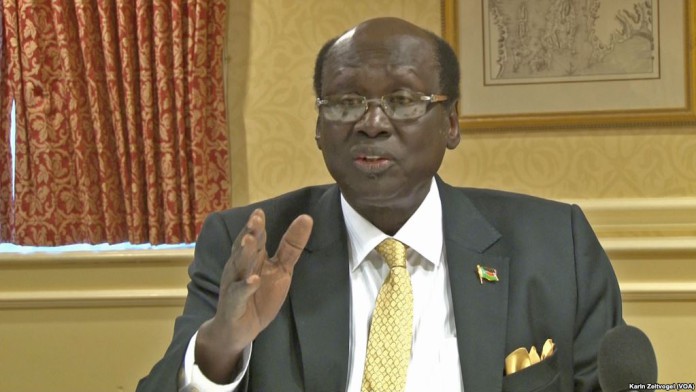
South Sudan Minister of Foreign Affairs Barnaba Marial Benjamin

South Sudan could be getting only about US$5 per barrel of crude oil after its northern neighbor deducting transit charges, experts say.

In April last year South Sudan earned as low as US$10 per barrel but the recent development comes in the wake of the South Sudan Minister of Foreign Affairs Barnaba Marial Benjamin saying the South Sudanese oil minister and the Sudan counterparts will meet over the oil transit fees which remain at $24 per barrel despite reduced global oil prices.

“There is economic reality in which both countries of course through ministries of petroleum are going to discuss that issue,” local media quoted the Minister as saying.

According to the minister, even the production of oil in his country has gone down.

“The reality of the fact is that the production of the oil is down. We are producing about 165,000 barrels a day and on top of that there is drop in the oil prices,” he said.

Meanwhile, the foreign minister, who represented President Salva Kiir Mayardit at Sudan’s 60th Independence Day celebrations on Jan 1 in Khartoum, has said relations with Khartoum are historical and should be strengthened.

“The leadership of President Salva Kiir Mayardit and the people of South Sudan have shown our brothers and sisters in the Sudan that we want good relations,” he said.

“We are to strengthen our relations as I told them. We are going to be neighbours until resurrection, until the end of the world. So it is better now we improve our relations so that the future generation will live side-by-side in peace and harmony,” he added.

Marial also revealed that the Sudanese education ministry had accepted to charge South Sudanese students tuition fees at local rate.

“We were promised by the government of the Republic of Sudan that the students from primary education, going to secondary education will not again pay $150 for registration fees for exams. It will not be there anymore. They will pay like any other Sudanese students,” he said of one vital item discussed during his five day visit to Khartoum.

The top South Sudanese diplomat also reiterated the South Sudan government offer to mediate peace talks between SPLM-north rebels and Khartoum.

Sudan and South Sudan agreed last October to reactivate the buffer zone agreed in the Cooperation Agreement of September 27, 2012, and to redeploy joint monitoring teams along the border.

A Sudanese state minister for foreign affairs said the two countries are considering the resumption of border trade and ensuring free movement of goods and citizens across borders, as provided in the Cooperation Agreement.

In the past Khartoum has rejected the opening of border before the implementation of security agreements and insisted that Juba should first stop its support to the rebel groups and interfering in its internal affairs.

Stories Continues after ad

Hashim Amla resigns as South Africa captain after second Test

Hashim-Amla

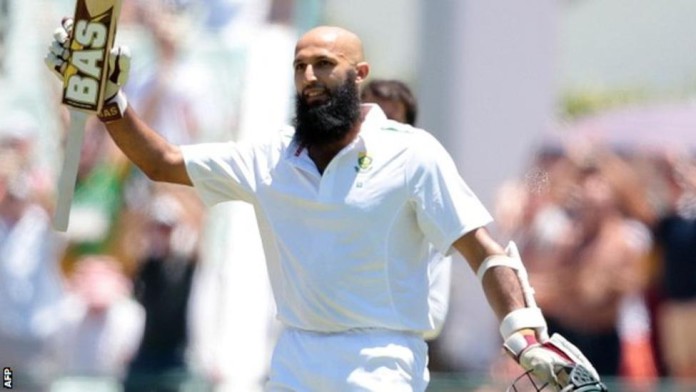
Hashim Amla resigned as South Africa captain immediately after his side drew the second Test against England.

The 32-year-old had been in poor form but made a double century to inspire his side’s fightback after England made 629-6 declared in Cape Town.

“I believe I can be of greater value as a fully focused batsman and senior player at this time,” said Amla.

AB de Villiers will lead South Africa in the third Test in Johannesburg, which starts on 14 January.

After his appointment as successor to Graeme Smith in June 2014, Amla captained the Proteas in 14 Tests.

He won four and drew six but oversaw four defeats in five Tests before the draw in Cape Town.

Amla, a veteran of 90 Tests and 7,108 runs, had not hit a century in Tests since December 2014 until his marathon effort at Newlands.

“I am deeply grateful and privileged to have been the Test captain. It was enjoyable and indeed a great learning experience,” added Amla.

De Villiers honoured to take over captaincy      

De Villiers, who already leads the one-day side, had raised doubts about his future in Test cricket during the first Test because of his busy workload, and handed over the wicketkeeping duties to Quinton de Kock for the second match.

The 31-year-old said: “It is an incredible honour to captain South Africa in any format. The captaincy has obviously come at short notice and is the realisation of a lifelong dream.

“At the moment my priority and focus is placed on leading this team to what can be a memorable series win against England. This Test squad is motivated and determined to turn our performances around and I’m looking forward to taking up that challenge as captain.”

Cook pays tribute to ‘nice guy’ Amla

England captain Alastair Cook said he felt sad to learn about Amla’s resignation.

“You’re under pressure as a captain for a lot of the time,” said Cook.

“It’s always sad when someone steps down because to captain your country is a huge honour and a real privilege.

“He’ll have his reasons and I wish him all the best – he’s a really nice guy.”

Cricket South Africa chief executive Haroon Lorgat said Amla “still had a huge role to play in shaping the success of our team”.

He added: “He is just that type of a person and we are very fortunate to have him in our stable.

“I want to thank AB for readily accepting the challenge of rebuilding our Test team as we seek to remain the best team in the world.”

Top of Form

Hashim Amla resigned as South Africa captain immediately after his side drew the second Test against England.

The 32-year-old had been in poor form but made a double century to inspire his side’s fightback after England made 629-6 declared in Cape Town.

“I believe I can be of greater value as a fully focused batsman and senior player at this time,” said Amla.

AB de Villiers will lead South Africa in the third Test in Johannesburg, which starts on 14 January.

After his appointment as successor to Graeme Smith in June 2014, Amla captained the Proteas in 14 Tests.

He won four and drew six but oversaw four defeats in five Tests before the draw in Cape Town.

Amla, a veteran of 90 Tests and 7,108 runs, had not hit a century in Tests since December 2014 until his marathon effort at Newlands.

“I am deeply grateful and privileged to have been the Test captain. It was enjoyable and indeed a great learning experience,” added Amla.

De Villiers honoured to take over captaincy      

De Villiers, who already leads the one-day side, had raised doubts about his future in Test cricket during the first Test because of his busy workload, and handed over the wicketkeeping duties to Quinton de Kock for the second match.

The 31-year-old said: “It is an incredible honour to captain South Africa in any format. The captaincy has obviously come at short notice and is the realisation of a lifelong dream.

“At the moment my priority and focus is placed on leading this team to what can be a memorable series win against England. This Test squad is motivated and determined to turn our performances around and I’m looking forward to taking up that challenge as captain.”

Cook pays tribute to ‘nice guy’ Amla

England captain Alastair Cook said he felt sad to learn about Amla’s resignation.

“You’re under pressure as a captain for a lot of the time,” said Cook.

“It’s always sad when someone steps down because to captain your country is a huge honour and a real privilege.

“He’ll have his reasons and I wish him all the best – he’s a really nice guy.”

Cricket South Africa chief executive Haroon Lorgat said Amla “still had a huge role to play in shaping the success of our team”.

He added: “He is just that type of a person and we are very fortunate to have him in our stable.

“I want to thank AB for readily accepting the challenge of rebuilding our Test team as we seek to remain the best team in the world.”

Top of Form


Stories Continues after ad

South Sudan rebels invited for convention

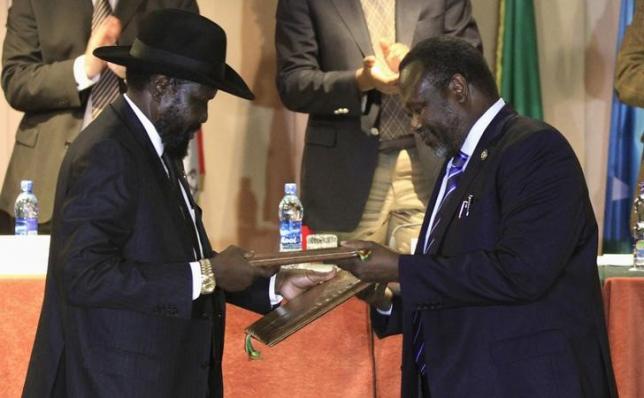
South Sudan's President Salva Kiir (L) and Vice President-designate Riek Machar Teny commander Riek Machar exchange documents after signing a ceasefire agreement during the Inter Governmental Authority on Development (IGAD) Summit on the case of South Sudan in Ethiopia's capital Addis Ababa

The leadership of the South Sudanese faction of the ruling Sudan People’s Liberation Movement (SPLM) loyal to President Salva Kiir has extended invitation to the leaders of the rival factions, asking them to participate in the upcoming extraordinary convention scheduled to take place tomorrow, January 7.

Bol Makueng, deputy minister of education and head of information, culture and communications at the national secretariat of SPLM announced that the leadership had approved the invitation and participation of Riek Machar, leader of armed opposition Sudan People’s Liberation Movement in Opposition (SPLM-IO) and Pagan Amum, head of the former political detainees at the upcoming national convention.

“An invitation was extended to the leader of the SPLM-IO, Dr Riek Machar, and SPLM secretary general Pagan Amum,” Makueng told reporters on Tuesday.

Other senior members who were dismissed and reinstated in compliance with the reunification agreement which the SPLM factions signed in the Tanzanian town of Arusha last year have been invited to attend the second party convention.

It remains unclear whether the two leaders, Machar and Amum, both of whom are out of Juba, where the convention is slated to be held, will participate in the meeting in which they are not constitutionally expected to be represented.

Machar’s leading officials, including the secretary general of the movement, Dhieu Mathok Diing Wol and General Taban Deng Gai, chief negotiator of the group, are in Juba and it is not clear whether they will attend in their individual capacities and not in their official capacities as members of the opposition.

Stephen Par Kuol, a member of the advance team of the opposition said his group would not participate because they did not take part in the preparation and that holding convention was not the priority.

The factions, according to the Arusha agreement, were supposed to work out details on the reunification process including endorsement of the party’s basic documents such as constitution, manifesto, rule and regulations and code of conduct.

The government’s party faction however decided to unilaterally call for the party convention.


Stories Continues after ad
Museveni Facebook post on unity sparks mixed reactions

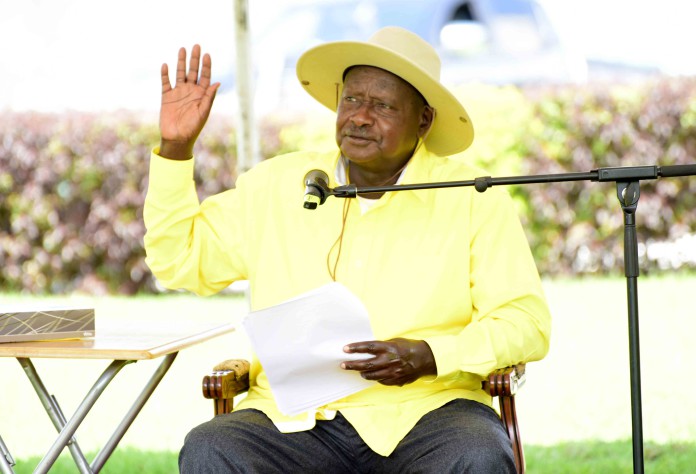
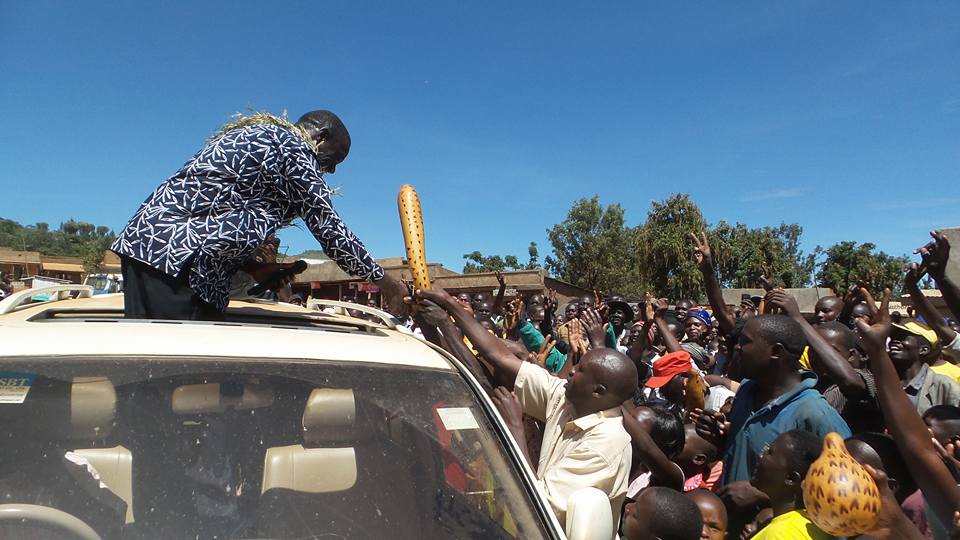
President Yoweri Museveni, who is also the ruling National Resistance Movement (NRM) candidate in the forthcoming February 18 elections took to Facebook earlier today, to inform Ugandans of what transpired during a press conference he held at Kabale State Lodge.

In his address, the President put emphasis on unity saying it was the gospel that he has been preaching ever since coming to power in 1986. He noted that through unity he had managed to create a party, the NRM which later took power and preached peace.

“Unity produced strength, which provided peace. But now some people are saying they are tired of peace. These are jokers. Development is a result of peace, and now we are tackling wealth creation,” part of the post states.

However, the FB post elicited mixed reactions from a few respondents, and Eagle Online managed to extract a few them, verbatim.

Make sure u doesn’t steal the votes; we want free and fair elections.” Anthony Machoka said,”while Ashirafu Owakabii said: “Thank you so much our beloved president, we love you so much, may the almighty God bless you in everything you put your hands on.”

Another commentator Ben Mugisha said: “You are right His Excellency, there is no country/community that can thrive without unity,” while John Twesigye said, “Songa mbere mzei, great work done.”

For Richard Muweleza Bazanyanengo it was: “Who do you think you are?”, while ‘Shuley Sharp’ says, ‘Which unity are you preaching? No sensible Ugandan will take you serious, your words are opposite of your actions.”

Stories Continues after ad

UPC factions feud over court ruling

Jimmy Akena in the hot seat.

A splinter group of the Uganda People Congress led by embattled Jimmy Akena has attacked the party’s ‘former president’ Olara Otunnu and the Milton Obote Foundation (MOF) for allegedly refusing to engage in mediation, as directed by court.

Currently, both the Akena and Otunnu camps are embroiled in a leadership and asset dispute related to the UPC and MOF, respectively.

In December last year court ruled that Akena is not the rightful UPC party president because he was not elected in accordance with the party constitution but then went ahead and advised both parties to resolve their differences amicably.

And speaking about the dispute early today, the acting party Secretary General Edward Segganyi said that court directed all parties involved in the UPC dispute involving the Milton Obote Foundation (MOF), to resolve their differences by way of mediation.

“The Otunnu group were caught trying to smuggle a purported mediation report onto the file, one that had never taken place,” Mr Segganyi said at party headquarters, Uganda House.

The UPC Secretary General warned former party vice president Joseph Bossa for trying to deregister UPC duly nominated candidates, and also charged that Mr Otunnu and MOF had formed an alliance to destroy the party and steal its assets.

He also scoffed at Mr Otunnu’s participation in the Go Forward campaign, saying the act is in contravention of the UPC constitution. “They will be confronted by the full weight and fury of the members,” he charged before urging members not to participate in a Delegates Conference slated for later this month.

“These are the same people who failed to hold a single Delegates Conference during their tenure, the timing and intention begs the question as to the purpose of the announcement,” he said and added that the conference was aimed at disrupting efforts of the UPC candidates.

However, contacted for comment, Dalton Opwonya, Mr Otunnu’s lawyer rubbished Segganyi’s allegetions on mediation.

He said the Akena camp was served with summons but refused saying they had appealed in the Court of Appeal and wanted nothing to do with the High Court ruling.

“The Registrar wrote the mediation report and he is not a mad man,” said lawyer Opwonya, adding: “When outside court they want mediation but when in court they don’t want it.”


Stories Continues after ad