Stanbic Bank
Stanbic Bank
25 C
Kampala
Stanbic Bank
Stanbic Bank
Home Blog Page 2257

Officials swindle US$2bn for fight against Boko Haram


Senior Nigerian officials stole billions of dollars including 2.1 billion dollars appropriated to buy weapons to fight against Islamist group, Boko Haram.

According to Nigerian finance minister Lai Mohammed, the money meant to curb the six-year Islamic uprising in which 20,000 people have been killed, was instead diverted to funding former president Goodluck Jonathan’s election campaign.

Mohammed said overall the thieves, about 55 in number and among them former governors, Cabinet ministers and government workers, stole $9 billion dollars from Nigeria’s treasury.

Mohammed made the allegations as he kicked off a ‘national sensitization campaign’, appealing to Nigerians to join the fight against corruption that is crippling what should be a rich nation with Africa’s biggest economy, population and oil production.

He said the looted 1.35 trillion Nigerian naira, stolen between 2006 and 2013, could have built 36 hospitals or educated 4,000 children through university. At the time the naira stood at about 150 to the dollar, half today’s value. Mohammed did not identify the 55 accused but said bankers and businessmen are among them.

Jonathan lost March 2014 elections to former military dictator Muhammadu Buhari, who has promised to halt corruption and the insurgency.

Buhari said Monday that a multinational force has driven Boko Haram into “fall-back positions” and uprooted them from all territory they held.

Mohammed denied that the war against corruption was a vendetta against the opposition. He said, “If we don’t kill corruption, corruption will kill Nigeria.”

Nigeria’s judiciary is critical to the fight, he said. Three different courts have granted bail to Jonathan’s former national security adviser, Sambo Dasuki, who is accused of being instrumental in the theft of the $2.1 billion and has said he diverted the money on Jonathan’s orders. But Buhari has said he will not allow Dasuki out of detention.

Stories Continues after ad
Senegal President wants shorter terms


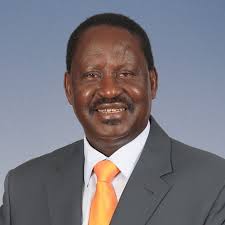
In a marked departure from many of his colleagues across the African continent, President Macky Sall of Senegal is seeking to have the term of office in his country reduced from seven to five years, with a maximum two-five-year mandate.

The change is part of several proposals for constitutional reforms which are to be put to a referendum and according to the president’s office, the move is aimed at strengthening democracy.

Several African presidents have over time changed constitutions to extend their time in power.

The new constitution would not allow a president to run for more than two consecutive terms in office.

According to media reports, after reducing his term in office, Mr Sall is then expected to put himself forward for re-election in 2017 instead of 2019.

Other suggested amendments to the constitution include an upper age limit of 75 years.

The date of the referendum is yet to be announced.

Mr Sall, 54, was elected in 2012, defeating Abdoulaye Wade, who had controversially sought a third term in office.

Term limit debate flares across Africa:

  • Rwanda held a referendum in December which voted overwhelmingly for the country’s current leader, Paul Kagame, to seek a third term and potentially stay in power until 2034.
  • In October, a similar referendum has already made it legal for Denis Sassou Nguesso, in Congo-Brazzaville, to run again in 2016. He has been in power for 31 years. Protests against the constitution change were brutally repressed.
  • Uganda’s Yoweri Museveni, who has been in power for nearly 30 years, is seeking re-election this month. Term limits were scrapped in 2005.
  • Burundi has been engulfed in months of protests since President Pierre Nkurunziza announced last April he would run for a third term. Hundreds have died, there has been an attempted coup and a rebel movement has formed.
  • Elections are due in DR Congo this year but they may be postponed, enabling President Joseph Kabila to remain in office.
Stories Continues after ad
Uganda signs €51.7m financial treaties with French agency

The deal with the French Embassy in Uganda was inked by the Minister of Finance Matia Kasaija, French Ambassador to Uganda Sophie Makame and the Director of the French Development Agency (AFD) in East Africa, Yves Boudot.


Water sanitation and the rural electrification projects in Uganda have received a shot in the arm after the signing of three new financing treaties worth €51.7 million.

The deal with the French Embassy in Uganda was inked by the Minister of Finance Matia Kasaija, French Ambassador to Uganda Sophie Makame and the Director of the French Development Agency (AFD) in East Africa, Yves Boudot.

The total cost for the project amounts to €55.5 million, based on a soft loan of €42.9 million for the 1,500km medium voltage and 1,300km low voltage, as well as a €8.3 million grant secured through the EU-ITF (Infrastructure Trust Fund) to reduce the connection costs and support capacity building.

Two of the financing contracts are aimed at accelerating extension of rural electrification from the national grid to local communities, implemented by the Rural Electrification Agency. Regions to benefit from the project are Rwenzori, the mid-west and southwest and north-western areas of the country.

“This project is expected to significantly enhance the implementation of the Sustainable Energy For All initiative for which Uganda is a front-runner,” said Ambassador Makame.

Another €500,000, the third financing grant, will support feasibility studies and capacity building activities for the forthcoming extension of water distribution in Masaka and Mbarara, to be carried out through the National Water and Sewerage Corporation (NWSC).

Stories Continues after ad

UWA bosses arrested over 1,340.6kg of Ivory

IGG: Justice Mulyagonja Irene

The Inspectorate of Government has arrested four officials of Uganda Wildlife Authority over the loss of 1,340.6 kilograms of Ivory.

According to the charge sheet, the four officers will be charged tomorrowat Anti Corruption Court with abuse of office and corruption contrary to sections 11(1) and (2) of the Anti-Corruption Act 2009.

The four arrested are Moses Sikuku, Head Ranger at UWA, John Lapeyo, Armory Clerk, Moses Olinga, Armory Clerk and Prosper Wasike, Assistant Warden Enforcement UWA.

“Moses Sikuku, John Lopeyo, Moses Olinga and Prosper Wasike between 2009 and 2014, being employed at Uganda Wildlife Authority offices at Kampala as Head of Ranger, Armory Clerk, Warden Enforcement and Assistant  Enforcement respectively did in the abuse of their office  an arbitrary act of prejudicial to the interest of their employer when they were charged with custody of Ivory at Uganda Wildlife Authority  offices Kampala but failed to account for the loss of Ivory weighing 1,340.65kg” reads the charge sheet signed by Sarah Birungi head Legal Affairs and the Inspector General of Government, Justice Irene Mulyagonja.

The Inspectorate of Government says the four corruptly neglected their respective duties when they were charged with custody of ivory but subsequently failed to account for the loss of 1,340.65 kilograms of ivory.

Stories Continues after ad

DP strongman, Kitariko dead

RIP Kitariko | New Vision Photo.

Former Secretary General of the Democratic Party Robert Kitariko is dead

Kitariko who was among the first cabinet Minister of Agriculture in the first National Resistance Movement/ Army was among the few opposition figures who participated and welcomed the NRM after capturing power in 1986. He hails from Kabale district.

Kitariko was later to serve as Minister of Public Service and Cabinet Affairs before he was appointed a commissioner at Electoral Commission in 2001 until 2003 when he was relieved of duties and went back to DP.

Stories Continues after ad

Suruma replaces Kagonyera as Makerere Chancellor

INCOMING AND OUTGOING: Ezra Suruma (L) and Mondo Kagonyera (R).

Former Finance Minister Ezra Suruma has been installed as Chancellor for Makerere University.

Dr Suruma who was credited for good fiscal policies while serving at Finance Ministry replaces his long time friend Prof Mondo Kagonyera who also hails from Kigezi region like him and with whom they have shared a lot both academic and business.

Both men also had a rough time during the Temangalo land scandal and where both alleged to have had a hand. Suruma was the Finance Minister and supervisor to National Social Security Fund (NSSF) where Prof. Kagonyera served as Deputy Managing Director.

Dr Suruma replaces Prof. Kagonyera whose term expired last year when the University advertised for the post.

Suruma became the country’s oldest university’s Chancellor after beating three other contenders last year and was recommended for the position by the University Council.

He beat his competitors by scoring 83 percent and was followed by former Executive Director of National Council for Higher Education Prof. AB Kasozi who scored 70 percent and while former Uganda Martyrs University Vice Chancellor, Charles Olweny  came third and Former Chief Justice ,Benyamin Odoki respectively.

Who is Suruma

Dr Ezra Suruma is a senior Presidential Adviser on Finance and Economic Planning, since 2009 after being dropped as a Minister of Finance,Planning and Economic  Development from 2005 to 2009.

He was born in Kigezi District in 1945, and went to the local schools at both primary and secondary levels holds the degree of Bachelor of Science (BSc) in Finance, from Fordham University, in New York City, obtained in 1969. He also holds degree of Master of Arts (MA) in Economics obtained in 1972, also from Fordham University and a Doctor of Philosophy (PhD) in Economics obtained in 1976, from the University of Connecticut. Dr. Suruma serves as Advisor at Acorus Capital. He also served as Managing Director of the defunct Uganda Commercial Bank for five years.

Role of the University Chancellor

The Chancellor is the titular head of the University. He presides at all ceremonial assemblies of the University and in this name, confers degrees and other academic titles and distinctions. The Chancellor is appointed by the President on the recommendation of the University Council.

Former Chancellors

Prof. George Mondo Kagonyera (2007-2015)

Prof. Apolo Robin Nsibambi (2003-2007)

Yoweri Kaguta Museveni (1986-2002)

 Idi Amin Dada (1971-1979)

Apollo Milton Obote (1970-1971, 1981-1985)


Stories Continues after ad

Magufuli bans miniskirts


In yet another surprising move, Tanzanian President John Magufuli has banned mini skirts, media reports, indicate.

Following his sweeping victory last October, Magufuli has become an international hero due to cost-cutting measures introduced across the country.

Now, Magufuli has surprised the public once again, by banning mini skirts across Tanzania.

The move comes just a few months after the country banned ‘twerking’.

The provocative dance was banned following an announcement by Cultural Development Director Herman Mwansoko, who disclosed that twerking supposedly threatened original dances and impacted negatively on the new generation.

Magufuli seems to have followed in much the same vein, announcing that mini skirts and short dresses encourage the spread of HIV/Aids.

Tanzanian women have since been given three weeks to rid their wardrobes of the “offending” garments.

In an almost similar move, in the 1970s Ugandan dictator Idi Amin banned miniskirts and other offensive wear.

Stories Continues after ad

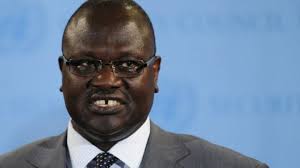
Machar recalls ‘negotiating team’


South Sudan’s unity government is in doubt after former vice president Riek Machar recalled the leadership of his team negotiating with South Sudan President Salva Kiir. Machar has accused Kiir of sabotaging the implementation of the agreement signed last August in Ethiopia by establishing 28 new states in South Sudan.

Machar, who is the leader of the Sudan People’s Liberation Movement in Opposition, has since petitioned heads of state in the region and also called on the international community to put pressure on and prevent the government in Juba from undermining the accord.

Both groups are supposed to form a transitional unity government with a total of 30 ministries. The accord gives the South Sudan government 16 ministries, including finance and planning, defense, information, national security, and justice and constitutional affairs.

Machar’s side got 10 ministries, including petroleum, interior, labor, mining, and land, housing and urban development. Foreign affairs and transport were given to a group of former political detainees not aligned with either the South Sudan government or the rebels. Other political parties in South Sudan got two.

But Machar now refuses to allow his officials to be part of the government.

His decision to withdraw the negotiating team came after the government refused to scrap President Kiir’s recently established 28 new states in South Sudan. Representatives of both sides are deadlocked on negotiations about the states established by the government.

Officials say the outcome of negotiations that had been taking place would be incorporated in a new constitution for South Sudan.

Botswana’s former president Festus Mogae is leading the joint monitoring and evaluation commission that is tasked with supervising the implementation of the agreement. Mogae recently said the formation of the 28 states complicates the implementation of the agreement.

Ezekiel Lol Gatkuoth, the secretary of foreign affairs, says the government’s refusal to abide by the terms of the original agreement is creating unease and tension.

“Dr. Machar has written a letter to [former] president Mogae copied to the regional leaders, the AU, the European Union, the Troika and the U.N. secretary-general saying that we need to implement the agreement as it is. And the agreement is saying 10 states not 28 states,” said Gatkuoth.

“We are telling the world and the international community to let us implement the agreement as it is. But, President Salva Kiir is saying let us work outside the agreement by accepting the 28 states, and that is actually creating the destabilization.”

Gatkuoth says the decision to establish 28 new states violates stipulations of the agreement, which he says calls for only 10 new states to be formed. He contends that the transitional government can only be formed after a constitution has been adopted, which he says has yet to be done due to the deadlock in negotiations.

But supporters of the South Sudan government say the refusal of former vice president Machar to name his ministers to form a transitional government is delaying the implementation of the agreement. They said the opposition is to blame for the delay in the formation of a unity government.

“President Salva has decided not to implement the agreement. Dr Machar has decided today that he would recall only the leadership of the advanced team. We will meet in Pagak, South Sudan to decide on the next course of action that we need to take,” said Secretary Gatkuoth.

Stories Continues after ad

Nile Breweries brewery in South Sudan closed

The only brewery in the world’s youngest country is being closed, and considerations are in place to use the facility as a storage centre for beer and beverages imported from Uganda.

Drinks maker SABMiller announced last week that its brewery outside of Juba will be shuttered as early as mid-February because of a shortage of foreign currency needed to buy raw materials.

The closure is a blow for the country of 11 million once touted as one of the world’s most promising emerging markets. SABMiller’s brewery, built in 2009 and run under its subsidiary South Sudan Beverages, was the country’s first major investment outside of the oil industry and expected to lure more foreign investment.

It also created South Sudan’s first brewery as well as the de facto national beer, White Bull, named after a local breed of cattle and brewed with water from the Nile. Advertised as “the taste of progress,” it became another symbol of independence after the country in 2011 separated from the north, where alcohol is banned under sharia law.

Now, after more than six years and months of civil war, SABMiller has not made a profit in South Sudan, even though sales had increased (paywall) over the years.

White Bull, which beat out well-established competitors like Kenya’s Tusker beer or Bull from Uganda, will soon run out of stock. The company said that it had some supplies of the beer but was not sure how long they would last. The brewery was temporarily closed last year.

The small ecosystem built around the brewery will also suffer from the closure. The brewery employs 237 people, down from over 400 in August, and works with thousands of businesses and individuals along the supply chain, according to the company’s statement on the closure.

“We are monitoring the situation intensively and our priority is to work with affected employees to help them as far as possible but we regret to say that this appears the most likely outcome in the current circumstances,” SABMiller said.

Stories Continues after ad

South Sudan national arrested over gun trafficking

Police in Koboko are holding an unidentified South Sudan national on charges of gun trafficking.

Earlier in the week, a group of three South Sudan nationals  were intercepted by authorities in the West Nile district of Koboko along the Uganda-DRC border, while in possession of guns believed to have been smuggled into the country, with intent to sell them on ‘black market’.

Addressing the press earlier today, police spokesperson Mr Fred Enanga said that the three accessed Uganda through unguarded border points, and that one had been shot, while his two colleagues escaped.

“We are watching his health condition in hospital and when he is fine, he will help us establish whether their business of gun trafficking has just started or they have been doing it for some time,” Mr Enanga said adding, “we also want to know to whom  these men were selling the guns.”

According to Mr Enanga, two SMG rifles and a pistol were recovered from the suspects.

Last year, police embarked on the task of recovering guns possessed by civilians illegally, an undertaking they have taken into the New Year.

“The police flying squad last week managed to recover guns in the districts of Rakai, Rukunjiri and in the West Nile,” Mr Enanga said adding that a four guns and 612 rounds of ammunition have been recovered in police operations in the last one week. Five suspects have also been arrested.

Many of the guns have been stolen from policemen and private guards who are either killed first of beaten by thugs who later make off with their guns.

Last week a total of four policemen were attacked and their guns stolen, and one officer, Muzamir Masaba lost his life.

And, in a related development police today announced measures on how to protect the lives of their officers.

“All area commanders are to see to it that the lives of these officers are protected by ensuring that they are dropped to their respective work stations daily and picked up after duty, routine patrols to check on the officers have also been put in place,” Mr Enanga said.

Police also called upon its officers to attach strict importance to the issue of self defence which includes using weapons and weaponless skills in order to save their lives.

In another development, police has started recruitment of 36000 special police constables to help in next month’s polls.

According to Mr Enanga, these will be deployed for a maximum of two months after which they will return to their civilian duties.

Interestingly, this comes during the time when sections of the public are piling pressure on police to disband the newly recruited crime preventers, on accusations of ‘being unprofessional’.

Stories Continues after ad