Stanbic Bank
Stanbic Bank
28.6 C
Kampala
Stanbic Bank
Stanbic Bank
Home Blog Page 2258

Tooro Go Forward Cordinator Crosses Back to NRM

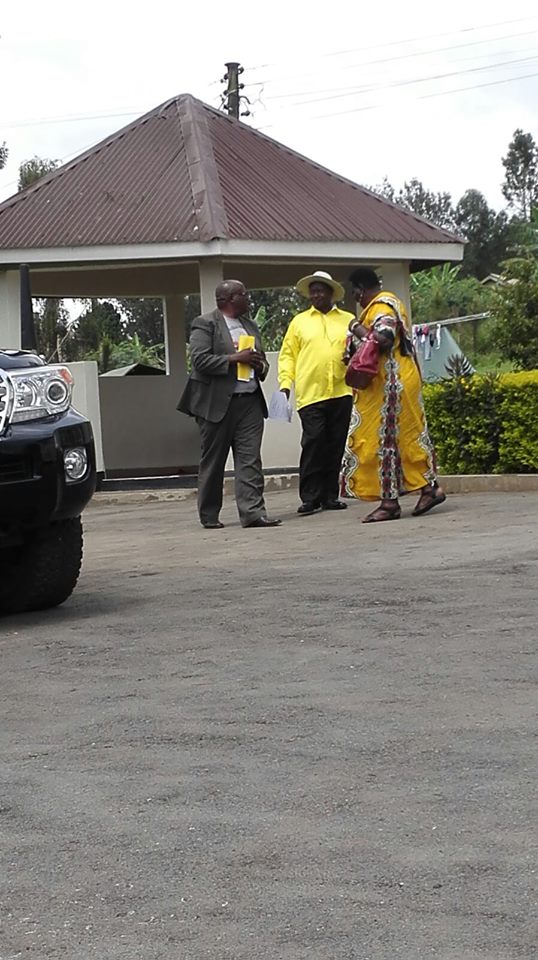
Museveni meets Kaliba this morning at Kabala State Lodge

Hon. Stephen Kalibba, the former Prime Minister for Tooro Kingdom, and former Member of Parliament who has been Go Forward Cordinator for Tooro and Rwenzori sub-regions has defected to NRM.

This happened during a meeting with H.E. The President and NRM Presidential Candidate at State Lode, Kabale today morning. More details to follow.

Stories Continues after ad

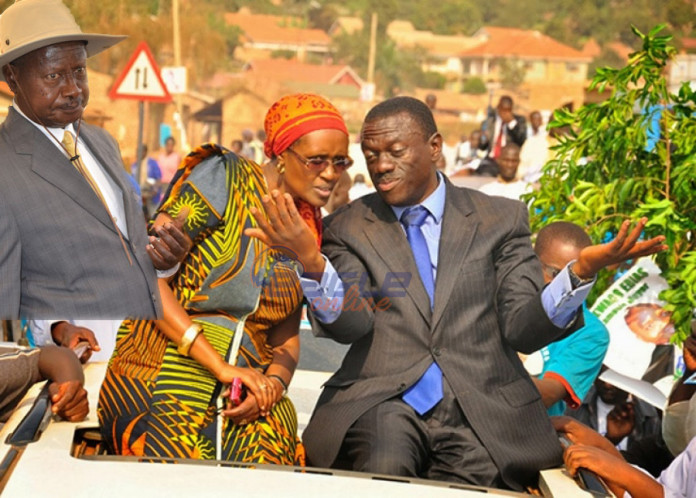
I am not fighting Museveni over Byanyima-Besigye

Forum for Democratic Change presidential candidate Kizza Besigye has said his differences with President Museveni are not over his wife Winnie Byanyima.

Besigye, who was in Nakaseke district on the campaign trail, he for the first time, commented about reports that his disagreement with Museveni is over Ms Byanyima who was very close to President Museveni during and after the Luwero Bush war. Eng. Byanyima later married Dr Besigye.

He said: “our differences are not over a woman” but deviation from fundamental issues that took NRA, now UPDF to the bush.

Dr Besigye’s remarks came on the same day his wife attacked independent presidential candidate Amama Mbabazi for perpetuating violence against the supporters of her husband.

In the late 1980s and early 1990s, Ms Byanyima and Museveni were so close before Dr Besigye married her in 1998.

Some people have attributed the differences between Dr Besigye and Museveni as social, not political, which both parties have strongly dismissed.


Stories Continues after ad

Byanyima attacks Amama over ‘election theft’

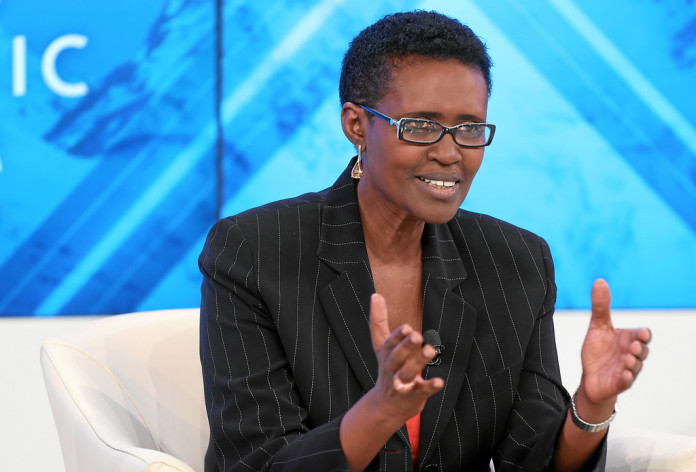
Winnie Byanyima, the wife of the Forum for Democratic Change (FDC) flag bearer has lashed out at Independent presidential candidate Amama Mbabazi, saying the latter orchestrated electoral theft and violence during his time in government.

“When Amama was in the NRM government he meted out violence to Musinguzi and his supporters in Kanungu not once, three times,” Ms Byanyima, wrote adding: “Even when the court nullified his elections, he did it again in the subsequent bye elections.”

Posting on social media platform in apparent reference to Mr Mbabazi’s elections rivalry with tycoon James Garuga Musinguzi, who contested against the former for the Kinkiizi West parliamentary seat in 2006, Ms Byanyima also wondered why Mr Mbabazi expected a leveled ground and privileged treatment while in the opposition.

Ms Byanyima, a former Member of Parliament for Mbarara Municipality and staunch National Resistance Movement cadre, also accused Mr Mbabazi and the NRM Chairperson President Yoweri Museveni, for using the security personnel to cause election violence in the past elections.

“Together with Museveni, they have used security forces, army, ISO operatives up to the village level, LDUs, armed militia, etc. to terrorize KB and opposition candidates and supporters in all past elections,” she wrote on her Twitter handle.

She urged the former Prime Minister to join hands with the ‘democratic forces to stop this vote theft’.

“Amama should be honest and admit and that NRM has been stealing elections and should join hands with democratic forces to stop this theft,” Ms Byanyima, who is the Executive Director of Oxfam, wrote.

Stories Continues after ad

EC releases final electoral roadmap


The Independent Electoral Commission (IEC) has released the roadmap for electoral office, skipping the election schedule for the Workers Representatives and Youth MPs.

According to a release dated January 4 and signed by the Acting EC chairperson Joseph Biribonwa, the presidential and parliamentary elections will be held on February 18, followed by the elections of the LCV Chairpersons and councilors, both directly elected and women onFebruary 24.

The election of the Lord Mayor and Kampala Capital City Authority (KCCA) directly elected councilors and women councilors will take place on February 24; while elections for Councillors for People With Disability (PWDs), Older Persons and Youth to district councils and KCCA will take place on February 26.

Elections for Chairpersons, Directly Elected Councillors and Women Councillors for Municipality and Kampala Capital City Divisions will take place on March 2, while PWDS, Older Persons and Youth Councilors for the same jurisdictions will be held on March 4.

Further, the elections for Chairpersons, Directly Elected Councillors and Women Councillors for Municipal Division, Sub County and Town Councils will take place on March 9, while PWDS, Older Persons and Youth Councilors for the same jurisdictions will be held on March 10.

The elections for the Workers Representatives hit a snag after the Constitutional Court ruled in September last year that their presence and that of the army and youth in Parliament was illegal. Subsequently Government appealed the ruling but it is yet to be disposed of.

Meanwhile, the EC has urged journalists to exercise high level professionalism during the election period, saying that would avert chaos and lend credence to the process.

The observations were made earlier today at the Training Workshop on Elections Reporting Guidelines held at the Royal Suites in Bugolobi, an upscale Kampala suburb.

‘As media professional and practitioners, we urge you to exercise the highest level of professionalism, as this is critical to the electoral process, the journalism profession, your personal safety, the safety of others, and the image of our country,’ the EC release distributed at the training, states.

Stories Continues after ad

WB organises youth opportunity essay competition

The World Bank is organizing an essay competition for people from Uganda, Kenya and Rwanda, to post a blog on how to boost opportunities for youth in their respective countries.

The competition dubbed Blog4Dev is open to any interested writer aged between 18 and 28, who will submit entries in English, of not more than 500 words, not later than January 31, 2016.

The top five entries from each country will be published on the WBG’s Nasikiliza blog page, and also be promoted on World Bank social media channels between April to May 2016.

The winner will receive an all-expense paid trip to Washington to attend the World Bank Group-IMF Spring Meetings in April 2016.

Stories Continues after ad

Kagame ‘answers’ US on third term

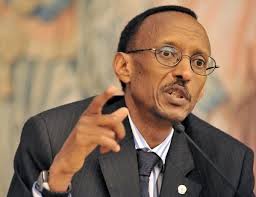
RETURN OF THE HABYARIMANA GHOST: Rwandan President Paul Kagame. His country is embroiled in a conflict with France over the assasination of former President Juvenal Habyarimana.

Rwandan President Paul Kagame rejected US criticism of his decision to seek a third term as leader of the East African nation.

Kagame, 58, announced on December 31 he will run for office again in elections in 2017 after voters approved a change to the Constitution.

The US State Department said it was “deeply disappointed” with Kagame for “ignoring an historic opportunity to reinforce and solidify the democratic institutions the Rwandan people have for more than 20 years labored so hard to establish.”

African issues including poverty, disease and governance “will not easily be solved by what is behind this” attitude, Kagame said in statements on his Twitter account. “There are quite many very disappointing things happening across the globe. We hope to carry our own burden and not be others’ burden.”

Kagame has governed Rwanda since 2000, after he led a rebel army that ended the 1994 genocide in which 800,000 people were killed. The amendment would also enable him to stand in two subsequent elections for the future, with a reduced term limit of five years, potentially retaining the country’s top job until 2034.

Stories Continues after ad

Police collect 120m from ‘New Year traffic offenders’


Over 120 million shillings has been collected by police from traffic offenders during the New Year celebrations between December 31, 2015 and January 1, 2016.

This followed massive operations carried out countrywide by the traffic police within a space of the two days.

Addressing journalists at police headquarters in Naguru today, the Police Director in charge of traffic and road safety, Dr Stephen Kasiima said many drivers had been rounded up during the nation-wide operations for failing to observe the traffic rules and regulations.

Dr Kasiima said some of the offences included driving vehicles in dangerous mechanical condition, non-possession of driving permits, drink driving and speeding, adding however, that not all the culprits were fined.

“We have recorded a few more serious cases that are to go to court, but the biggest number of the victims we have fined,” he said.

Traffic police says that it recorded four accidents in Kampala metropolitan area which claimed three lives and three cases outside Kampala that claimed three lives.

More revelations show that pedestrians were injured more as they were hit by speeding motorists between 9pm and midnight on December 31, 2015.

Speaking at the same conference police spokesman Fred Enanga, described the New Year celebrations as “one of the most peaceful of recent” with a few cases of violence recorded in the different places where people celebrated entering the New Year. He also said 477 venues countrywide were licensed by police to display fireworks.

Meanwhile, police has said that after a postmortem carried out on the 15 people whose bodies were found floating on beaches in Entebbe, indicates that they drowned. Police further states that blood samples from each body are going to be examined to determine whether they were influenced by alcohol or any other drugs.

The police explanation comes after various reports emerged on social media, with claims that the victims might have been killed and dumped in water.

Stories Continues after ad

Former PM leads in CAR poll

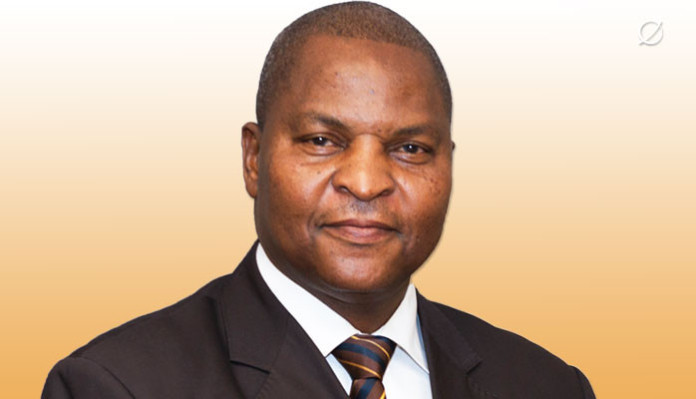
Former prime minister Faustin Archange Touadera took a commanding lead in the Central African Republic’s presidential race on Sunday, garnering more than 23 percent of the vote with a quarter of the ballots counted, electoral officials said.
Touadera, a 58-year-old former maths professor who was prime minister under longtime leader Francois Bozize from 2008 to 2013, was considered an outsider in the field of 30 candidates vying in an election seeking to turn the page on years of unrest.
Running as an independent, he has scored more than 120,000 votes, while his closest rival for the top job, Anicet Georges Dologuele, also a former prime minister, has scored just over 68,500 votes, the elections authority’s rapporteur Julius Ngouade Baba said.
The results confirm early indications of Touadera’s lead in the closely watched vote, which took place last Wednesday after repeated delays. A likely second round is set for January 31.
Desire Kolingba, son of a former president, was in third place with under 40,000 votes.
Fourth-placed Jean-Serge Bokassa, the 43-year-old son of the self-proclaimed emperor Jean-Bedel Bokassa, who ruled CAR from 1966 to 1979, had nearly 34,000.
Ex-premier Martin Ziguele, who had been considered a frontrunner and the favourite of former colonial power France, was trailing in fifth place with under 28,000 votes.
One of the world’s poorest countries, with a history of coups and rebellions, Central African Republic was plunged into fierce sectarian violence in 2013 after Bozize was ousted by a mainly Muslim rebel alliance, bringing Michel Djotodia to power — the country’s first Muslim president.
Thousands of people were killed and around one in 10 fled their homes in attacks by rogue rebels on remote villages and brutal reprisals by Christian vigilante groups against Muslim communities.
UN and French peacekeepers helped restore a degree of calm in January 2014, when Djotodia quit under international pressure and a transitional government took over, but large parts of the country remain lawless.
Nearly two million people in the country of around five million were eligible to vote in the elections, which also saw more than 1,800 candidates standing for a place in the 105-seat National Assembly.
Despite security concerns after a deadly attack on a Muslim district in Bangui during a mid-December constitutional referendum, the elections went off without major incident after initial delays caused by logistical glitches.
The head of the UN peacekeeping mission MINUSCA, Parfait Onanga-Anyanga, hailed the polls as a success.
The country’s three last presidents were barred from standing again: former Bangui mayor Catherine Samba-Panza, who has overseen a political transition, as well as Bozize and Djotodia, who are both in exile and under UN and US sanctions linked to the violence.
Stories Continues after ad

DRC urged not to extradite Burundi journalist

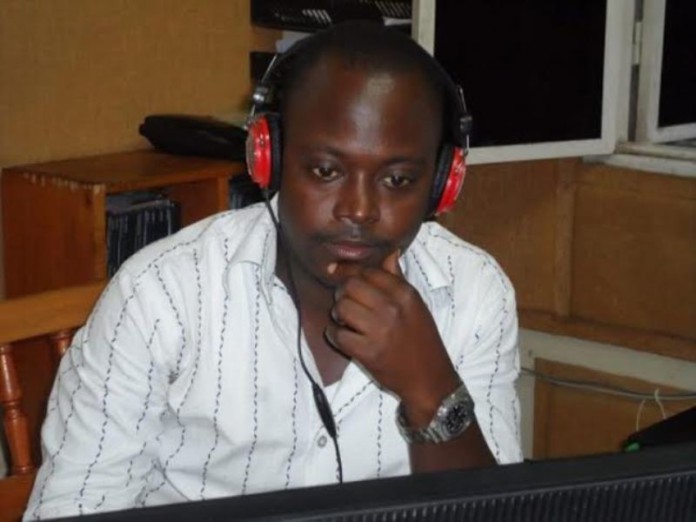
The Committee to Protect Journalists calls on authorities in the Democratic Republic of Congo not to extradite Egide Mwemero, an exiled Burundian radio journalist who has been in custody since October 13.
Bob Rugurika, director of independent Burundian station Radio Publique Africaine where Mwemero also worked, told CPJ he fears Mwemero will be killed if he is sent back to Burundi. According to reports, Burundian authorities this month requested the extradition of at least four other journalists who fled into exile.
“We urge President Joseph Kabila and authorities in the Democratic Republic of Congo to show compassion and release Mwemero so he can return to his family who are living in exile in Rwanda,” said CPJ Africa Program Coordinator Sue Valentine. “Given the growing tensions in Burundi and the ruling party’s antagonism towards the press, to send Mwemero back to his country would place him in grave danger.”
When Mwemero was detained in October, minister for communications and media in the Democratic Republic of Congo, Lambert Mende, told CPJ the journalist had been arrested for broadcasting foreign radio without prior authorization, and for exercising professional activities without a license. 
The CPJ and the Burundi Union of Journalists say at least 100 journalists have left Burundi since protests in April and an attempted coup in May. Many of the journalists who left said they had been threatened or feared persecution.
Stories Continues after ad

SPLM-IO to deploy in Juba by mid January

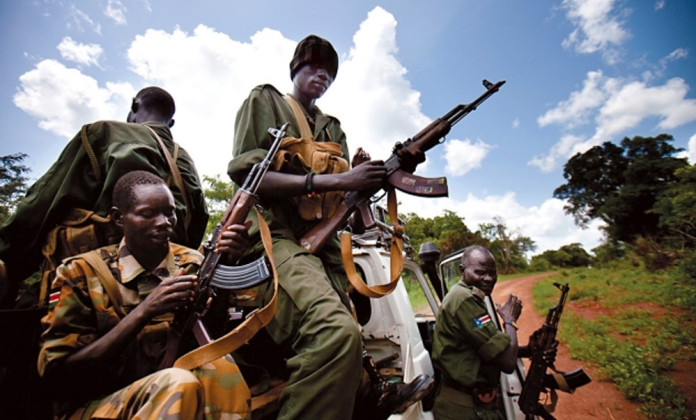
Thousands of components of the would-be joint integrated forces from the armed opposition faction of the Sudan People’s Liberation Movement (SPLM-IO) may deploy in the national capital, Juba, by mid-January, says opposition’s spokesperson.
In accordance with the peace agreement on the Resolution of Conflict in South Sudan which President Salva Kiir and his former deputy, Riek Machar, signed in August to end 21 months of violent conflict in the world’s youngest nation, joint police and military forces including national security and presidential guards were to be deployed within the 90 days of pre-transitional period.
The pre-transitional period, which started from the signing of the peace agreement, has however elapsed since 26 November 2015 and the deployment of joint forces in Juba has not taken place due to obstacles and delays faced in the implementation of the peace deal.
The two main rival factions of government and SPLM-IO have wasted a lot of time due to misunderstandings and violations of security and political provisions in the agreement, delaying establishment of institutions to kick off the implementation.
An advance team of the opposition faction finally arrived in Juba on 18 December 2015 after government lifted its objection to their return in “huge” numbers, but no significant steps have been taken by the peace parties in order to pave way for deployment of forces in the capital and formation of a transitional government of national unity.
The top leadership of the SPLM-IO is yet to return to Juba, pending resolution on main provisions of the peace agreement, as the implementation runs behind the schedule.
Spokesman of the SPLM-IO leadership said that although the designated First Vice President Riek Machar was eager to return to Juba, this would not happen until major provisions required for his return to the capital are first implemented by the advance team with the other stakeholders including the government.
“Our chairman and commander-in-chief will return to Juba any time soon. But this will not happen until major provisions in the peace agreement required for formation of a transitional government of national unity are implemented,” said James Gatdet Dak.
He said among the provisions required first for implementation include amendment of the transitional constitution to incorporate the peace agreement, adding that this will also be based on the 10 states in accordance with the peace deal.
A transitional national legislature will also be reconstituted, he said, with membership from the opposition groups as stipulated in the peace agreement, adding this new national parliament will have to endorse the new transitional constitution after its amendment by the parties and signed by the president. This new constitution will then become the basis for formation of a transitional government, he said.
The opposition faction, he reiterated, does not recognize the recent unilaterally decreed 28 states by president Kiir and endorsed by “his faction’s national legislature.”
He also said there is need to withdraw government forces from Juba to 25km as stipulated in the peace agreement and for the joint forces to be deployed inside the capital.
“SPLA (IO) components of the joint police and military forces may reach Juba by mid-January. However, there is need for the government to first withdraw its excess forces from the capital as stipulated in the peace deal,” he said.
In October, government officials said they had withdrawn only 250 soldiers from Juba, but several thousands more are still in the capital.
Senior military sources from the government earlier admitted the existence of a split of opinion in the government over whether to fully implement the security arrangements or not, with some including the current chief of general staff, Paul Malong Awan, and other senior military commanders allegedly refusing to withdraw forces from Juba.
According to the peace agreement, the government should withdraw its forces and then each side in the conflict will deploy in Juba 1,500 well equipped police forces, making the total of 3,000 to provide the security in the capital.
Also the opposition will deploy another military force of over 1,400 troops in Juba, while the government will deploy over 3,000 military forces.
Out of the total 8,000 armed police and military forces that should be deployed in Juba, the government would have a total of about 5,000 while the opposition would have about 3,000.
Dak said the opposition forces to be deployed in the capital were coming from Upper Nile and Bahr el Ghazal regions and will team up in Juba with other components from Equatoria region.
He said as soon as such constitutional amendments and deployments of the joint forces are completed, including other necessities, Machar would then travel to Juba to form a government of national unity with President Kiir.
The Joint Monitoring and Evaluation Commission (JMEC), which has been established under the peace agreement with membership from representatives of the peace parties and regional and international bodies, and chaired by former president of Botswana, Festus Mogae, is expected to convene a meeting soon to start to resolve on pending issues.
A government of national unity will run the country for the next 30 months from formation at the end of which elections will be conducted country-wide.
Machar, according to the agreement, will become a first vice-president, with a quota of 10 ministerial positions allocated to his faction, a number of states to govern, as well as command a separate army for at least 18 months before unification of the two rival armies into one national army.
Stories Continues after ad