Stanbic Bank
Stanbic Bank
26.7 C
Kampala
Stanbic Bank
Stanbic Bank
Home Blog Page 226

Uganda commemorates world refugee day amid growing global challenges

Uganda joined the rest of the world in commemorating World Refugee Day with reflection on the harsh realities of war and displacement and honoring the resilience of those who have been forced to flee their homes. The global situation is increasingly dire, with ongoing wars and new conflicts emerging. 

Over 114 million people globally, including 24.5 million from the East, Horn and Great Lakes Region, have been forcibly displaced due to war, violence, and climate-related challenges.

In Uganda, the refugee population has reached 1,680,000, and it continues to grow due to ongoing persecution, conflicts, and communal violence. Most refugees in Uganda are from South Sudan, Democratic Republic of Congo, Sudan, Eritrea, Somalia, and over 15 other countries. More than 300, 000 people have crossed into Uganda seeking safety since 2022, including 35,000 arriving from Sudan.

The pressure on public services, including health, education, water, and sanitation, is mounting because of the ongoing and steady influx of refugees into Uganda.

 Humanitarian organizations are over stretched, facing increased demands while dealing with limited funding. This requires careful planning and prioritization.

Uganda’s open-door policy is globally recognized as a best practice. The Government’s approach to refugee management allows refugees to live, work, and access public services like national citizens. This represents true solidarity with refugees, which we celebrate today. Offering shelter and protection to refugees is an expression of our shared humanity.

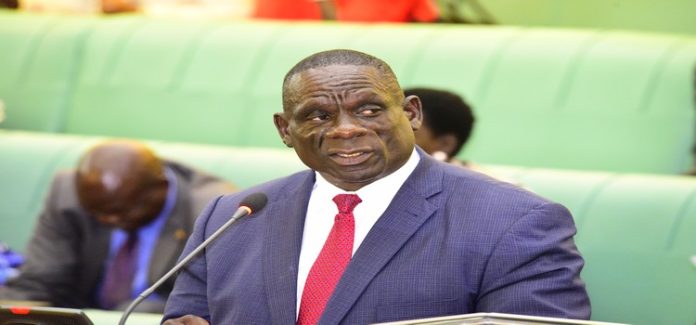
“Uganda has made a strong statement that beyond feeling safe and welcomed, refugees need opportunities to thrive. They need a chance to learn and progress, to earn a living, and to feel a sense of belonging, “said Minister of Disaster Preparedness, Relief and Refugees, Hilary Onek.

“Countries with more means should host refugees without being restrictive. This would embody the true spirit of a world that welcomes refugees.”

Uganda, along with other countries hosting refugees, requires the solidarity of the international community in alignment with the Global Compact on Refugees. It is not possible for Uganda, as the largest hosting country in Africa, to cope without additional support and resources. Public and private donors must step up and act.

“We have a collective obligation to support refugees in their country of asylum by facilitating access to quality education, healthcare, and social services. Additionally, we must encourage their active participation in developmental activities in their local communities and promote self-reliance by strengthening the job market in refugee hosting districts. These actions demonstrate solidarity with refugees and create conditions for them to support themselves and their communities while in exile.” said Matthew Crentsil, the UNHCR Country Representative in Uganda.

In 2024, UNHCR and partners have appealed for $858 million and only 13% of the required funds have been received, leaving 1.68 million forcibly displaced persons, predominantly women and children and 2.7 million host community members at risk of becoming increasingly vulnerable access to services and food assistance is being reduced.

“UNICEF calls for a significant increase in international responsibility-sharing to ensure refugee children have sustainable access to basic services including education, health, nutrition, protection, water, and sanitation. This requires long term commitment among all parties to support the integration of refugees in the national service delivery systems, as well as a well-resourced strategy to promote the resilience and self-reliance of the refugee population, particularly the adolescent, youth, and women,” said Munir Safieldin (Ph.D.), the UNICEF Representative in Uganda.

Munir added, “No one willingly abandons their homes and lives. Seeking refuge is not a choice; it becomes the only option for survival, to find peace, and a way to preserve dreams. Unfortunately, peace remains scarce across the world. Lasting solutions are still obscure for too many. However, we must continue to seek solutions and recognize the progress that has been made. Right now, refugees need our solidarity more than ever.”

Stories Continues after ad

EU invests Shs21.4b to restore 2278 hectares of degraded forest cover in Uganda 

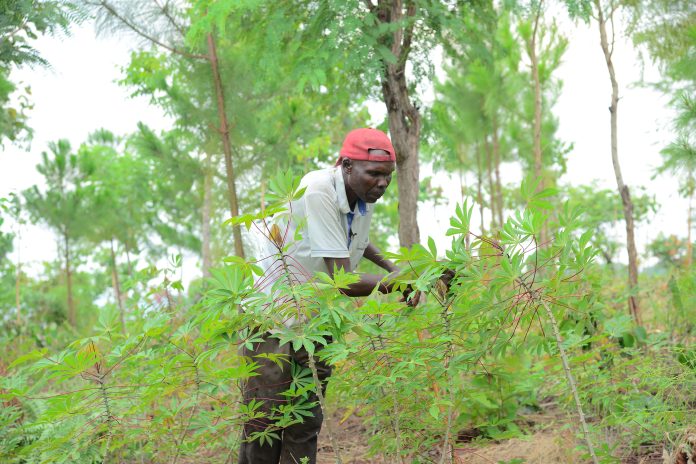
Robert Ezati.

Robert Ezati, 57, of Adim Parish, Beliafe Subcounty, in Uganda’s West Nile District of Terego, has endured years of agonising helplessness while others clear trees to make room for tobacco plants to thrive in his area. Since then, the district and the areas around it have experienced significant environmental degradation due to climate change.

Drier spells have become more frequent, and once-high-yielding crops now hardly yield enough for a respectable harvest each season. For about ten years, Ezati, who was distressed by the impact, pondered what to do to save a situation so dire.

“I stopped the people from cutting down trees. Currently, we are planting more, which is why the area is green now. I also pay all the workers Shs5,000 ($1.3) per day for planting trees,” he said.

On the small mobilised pieces of land where this is being done, Ezati said that his colleagues have started intercropping the trees with food crops like sorghum and cassava, mainly for food security.

The once-green area had turned lifeless, but now, following the tree replanting efforts, even the chirping birds and beautiful butterflies that had disappeared have since returned, and this has also had a personal effect on his life.

“My life changed when I started working with the Ecological Christian Organization. The knowledge they shared with us about the environment was eye-opening, and the tools, logistics, and seedlings needed to plant trees made a huge impact on our lives,” Ezati revealed.

The group’s efforts have since seen a total of 2,279 hectares of forest and about 400 hectares of wetlands in the district restored in the past few years.

The district is one of the major hosts of hundreds of refugees, with most of them coming from the neighbouring restive South Sudan.

Currently, Uganda is home to over 1.6 million refugees coming from South Sudan, the Democratic Republic of the Congo, Rwanda, Somalia, and Eritrea, among others. Their presence also puts pressure on the environment as both they and their host communities struggle for resources like wood fuel, among others.

The current tree-planting efforts are part of a four-year collaboration between the refugees and the host community in the district.

With funding from the European Union Emergency Trust Fund for Africa, the project aims at restoring and conserving degraded fragile ecosystems for improved community livelihoods among the refugees and host communities in Uganda’s West Nile and Albertine Regions. The project is implemented by the Uganda Biodiversity Fund in collaboration with the Ecological Christian Organisation, the Wildlife Conservation Society, and Nature Uganda.

According to Harriet Tumushabe, the project manager and representative of the Uganda Biodiversity Fund, Wildlife Conservation Society, and Nature Uganda, the project has been running since 2020 but was interrupted by the #Covid-19 pandemic.

“The European Union invested Euro 5.4 million (Shs21.4 billion) in the restoration of degraded ecosystems in Terego, Yumbe, Kyegegwa Kikuube, and Kamwenge districts,” she said.

This very project, Tumushabe added, has so far been a great success as it has enhanced the adoption of sustainable land management practices, agroforestry, climate-smart agricultural practices, and woodland establishment.

“The project has restored 2,279 hectares of degraded forests, woodlands, and woodlots, as well as 400 hectares of wetlands and river banks,” she said.

This project is in line with the European Union response to address increased environmental degradation by providing or promoting alternative energy sources in the refugee-hosting areas of Uganda.

According to the project implementers, it has achieved its overall goal of restoring degraded forests, savanna woodlands, and wetlands in most of the of the parts where it is being implemented.

“We have so far restored 353 hectares of central forest reserves. Woodlots of 596 hectares have been established. We have promoted agro-forestry practices and sustainable land management practices,” Tumushabe said.

The project has also seen the introduction of alternative sources of livelihood like fruit planting, beekeeping, and others, which could sustain families and keep them away from environmentally unfriendly acts like charcoal burning.

Stories Continues after ad

The Budget is a fresh opportunity to grow

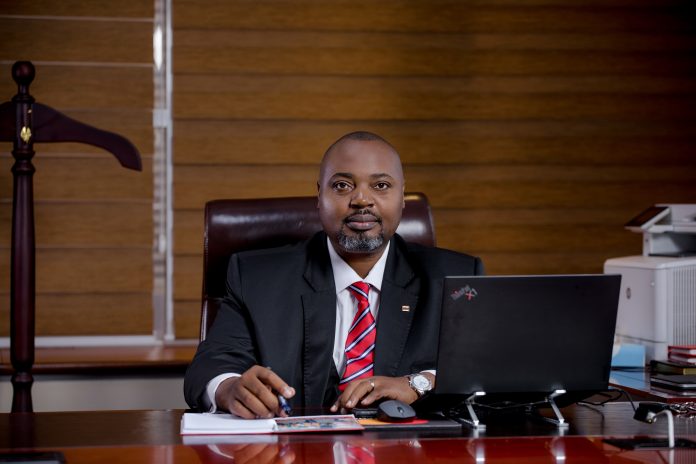
Mr Anthony Kituuka

By Anthony Kituuka, Managing Director Equity Bank Uganda Ltd

The Ugandan national budget for 2024/2025 was approved by Parliament, with a total expenditure of Shs72.136 trillion. The budget consists of recurrent and development expenditure, with the largest portion coming from domestic revenue.

Other sources include budget support, domestic financing, project support, and domestic debt refinancing. The budget allocates Shs3.1 trillion for external debt repayment, Shs9.5 trillion for project support, Shs12 trillion for domestic refinancing, Shs9 trillion for interest payments, and Shs293.9 billion for appropriation in aid.

With GDP projected to grow by 6 percent this financial year 2023/24 compared to 5.3 percent in FY2022/23, this year’s growth of 6 percent is even more impressive when compared to Sub-Saharan Africa’s average of 3.8 percent, and the global average of 2.9 percent projected for the year 2024.

Uganda’s growth strategy for next financial year and in the medium term is anchored on four key growth drivers: (i) Agro industrialisation; (ii) Tourism development; (iii) Mineral development including oil and gas; and (iv) Science, technology and innovation (STI).

I find a lot of resonance with these growth pillars as they mirror our own Africa Recovery and Resilience Plan (ARRP) that was launched in 2020 to accelerate growth post-COVID-19 and continue the economic and social recovery after the pandemic.

The ARRP comprises 6 strategic pillars that are entrenched in: a) a more coherent and productive natural resource ecosystem in agriculture and extractives, b) manufacturing and logistic anchors c) Trade and investment to give broader market access and support factor mobility d) MSMEs e) Social and environmental transformation and f) Technology-enabled economy.

Looking at the budget as a banker, there are several opportunities we can all take advantage of. First, one needs to read the budget from end to end to fully understand it; and understand it they must from a sector-to-sector point of view. The budget is anchored on the tenfold growth strategy and presents a multitude of opportunities and interventions to improve the business environment further.

Secondly, there are some measures taken by the Government for enhanced tax administration and rationalisation of tax exemptions in line with the Domestic Revenue Mobilisation Strategy. An imposition of excise duty at a rate of 0.5 percent of the value of withdrawals of money from other platforms other than mobile money (this does not apply to withdrawals from agent banking or banking halls) will fully support the digitisation policy put in place by the Government and Bank of Uganda to promote cashless banking. This will fully support other incentives put in place for financial deepening.

Thirdly, the Government has provided tax holidays on the income of a person who develops, establishes or operates a medical facility or hospital facility. Investment in health is one that we have seen is important to provide much-needed medical services; through Equihealth, an affordable medical insurance cover targeting individuals in a group, allowing them to get coverage for themselves and their families.

Fourthly, the Government has extended the waiver of penalties and interest on arrears outstanding by June 2023; this waiver will apply when the taxpayer pays between July and December 2024. We believe that this will unlock the much-needed cash flows of many businesses indebted to the state. I implore all businesses with penalties and arrears due to URA to take advantage of this incentive and use this money to recapitalise their businesses for more success in the coming year.

However, the introduction of a 10 percent withholding tax on commission paid to the banking agents and fintech agents (payment service providers) will reverse the gains made on agent banking; these services have been pivotal in the administration of banking services to millions of customers in Uganda who cannot physically access bank branches.

As a parting note, the Ugandan economy has shown resilience over the last four years: from Covid-19 to post-Covid-19 shocks and then the Russian–Ukraine war coupled by global supply chain shocks and instability in global oil prices. We firmly believe, in line with our ARRP, that to ensure continued social and economic development on the continent and ultimately realize Africa’s nascent economic opportunities, local private sector will need to play a more prominent and intentional role in the recovery and resilience of the African continent.

Equity Group’s corporate strategy, as an African-grown and African-focused plan, is to be a catalyst of wealth transformation for the African continent. The plan ultimately aims to capacitate, finance and connect East African Community value chains to global supply chains.

As Matia Kasaija, Minister of Finance, Planning and Economic Development, said in his closing statements: “Let every adult Ugandan engage in producing a good or a service for sale. That way, we shall be able to create a bigger pie for the greater good of our country”: let us all engage in wealth creation for economic and social empowerment of ourselves, our people and our generations.

Stories Continues after ad

Will Mpuuga confess before Masaka church service divides NUP ‘sinners from saints’?

Mr Ssegawa.

By Mike Ssegawa

Masaka’s self-professed ‘favourite son’ has organized a holy mass to be led by none other than the Kampala Archbishop Paul Ssemogerere. There is however a group claiming those attending this church service are in for an unholy event. As the Masaka group says – no one should blasphemy a sacred activity – one wonders what’s up the sleeves of church leaders as the country debates the pros and cons of the Kitovu event.   

The big question is; after accusations and counter accusations among National Unity Platforms rank and file, one realises that the holy eucharistic at the Kitovu Sports Arena will be graced by sinners or saints – politically – however, didnt Jesus come down for sinners?

Uganda must be returning to its shackles with politicians retreating back to religion and tribe, ideological bankruptcy is increasingly being replaced with sentimental groupings and petty fights.

Masaka could have been blessed with a special catholic church mass in honour of Nyendo Mukungwe legislator, the former Leader of Opposition, Mathias Mpuuga Nsamba, if he had anything to celebrate and not his headline grabbing money heist characterizing parliament in recent years.

It is expected holymen and women in political, culture, religion, business, and other walks of life, are going to attend this make-or-break event for Mpuuga to save him from sinking into political oblivion – after his severe fall out with Bobi Wine, a disruptor, who has thrown politics in the country into turmoil due to his lack of ideological clarity but kicking every glass in the room in the name of checking their durability.

One Masaka priest is filmed asking ironically if the church was celebrating Mpuuga’s loot or cleanse it! It sounded like a disapproval in the decision of the Catholic church leadership to lead such a high-profile mass amidst the controversy Mr Mpuuga finds himself in. I understand however that in the catholic church rites, the sacrament of penance proceeds every mass.

However, NUP headed to Masaka, and NUP against the mass in Kitovu, are both suffering agony – as they are stuck faced with such a dilemma.

Mpuuga’s party, the National Unity Platform, has distanced themselves and dissuaded their support from the Masaka Mass. Never has a catholic leader in Uganda campaigned a church service.

It remains to be seen if Kyagulanyi aka Bobi Wine’s portrayal of Mpuuga as ‘corrupt’ and ‘insubordinate’ and his running into the church to rebrand himself, would save the day! Arguments for and against the so-called ‘service award’ – have been made, culminating into the suspension of the defrocking of Mpuuga, a once respected politician, now, baptized on the social media street as a ‘common thief’.

Whereas Mpuuga has been adamant in remaining a Commissioner in Parliament as per his appointment after the removal, however, NUP has been clear – he no longer represented the party in the Parliamentary Commissioner. His stay has become both a moral question and a further portrait of shame on the image of ‘Honorable’ Mpuuga. Many analysts agree that whether Mpuuga and co felt legally entitled to give themselves the funds – the moment it was raised publicly it was incumbent on them to step aside and allow themselves to be properly investigated.

NRM has gone ahead in their last central executive committee meeting to agree to reshuffle the committees of parliament. The move gives the NRM commissioners a smooth exit from the commissioner before they get soiled like Mpuuga.

It should have been the case the moment fingers pointed at them that they had dipped their hands into the jar – a puzzling development albeit showing their insensitivity to the plight of Ugandans in terms of strained resources from the donor community and taxpayers’ complaints.

President Museveni has now and again highlighted corruption in his many speeches, as a cancer eating away the gains of Uganda. In his state of the nation address this year, he promised to deal with the corrupt. The current arrests of MPs associated with budgeting-linked corruption have sent shivers into the spine of Ugandans. Without forgetting the near past, iron sheets scandalous leaders were equally punished with prosecution as well as politically being removed from parliament. This was a reminder of the President’s awareness of the plight of Ugandans.

We have also seen the State House Anti-Corruption Unit running its operations weekly around the country – arresting especially local government leaders frustrating service delivery to the common wananchi.

So, Mpuuga and co, now bitter rivals with NUP ranks, have a weekend to show Ugandans what next. However, whether he is starting his own party, or wants to show off his huge numbers, remains to be seen.

However, for a good mass to start well – some few things need to be observed. One, Jesus came to redeem sinners – not the saints. So, the two holy and ungodly groups in NUP will need to agree on which sides they belong.

Last but not least – every Holy Mass should start with a good confession so that he can reach the holy table to receive Jesus’ body and blood with clean hands and a beautiful heart.

Mpuuga’s confession will go a long way in showing Masaka as indeed a holy site of Uganda’s saints. His was a moral issue – not just a legal question. And, who knows, it will take Mr Mpuuga and Mr Kyagulanyi, as high priests of their political party, to tell who of the two shall tell the truth behind their fight and why they are setting venues for their fight inside church walls, following a bitter confrontation on social media streets. 

And if there’s a chance for NUP’s saints and sinners to do a favour to the nation is joining President Museveni to fight the corruption vice. This is a challenge in our midst – something we must fight as a people of in this country – and not pointing fingers at each other with the holier-than-thou attitude.

 Mike Ssegawa is a journalist and deputy RDC Mukono. 

Stories Continues after ad

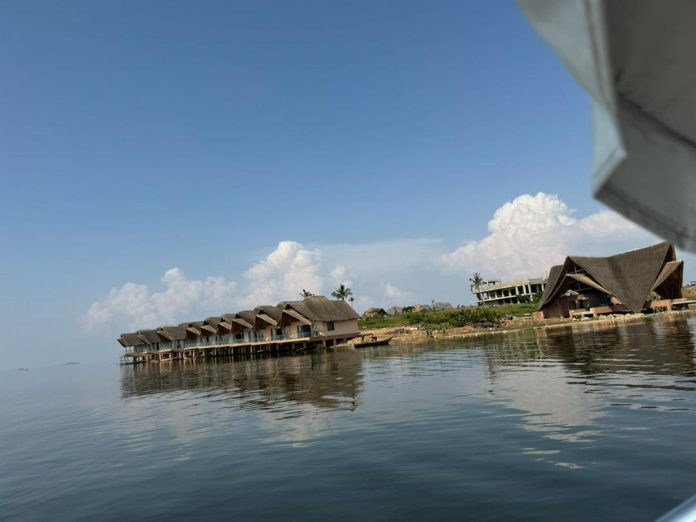
The Paradise Island Resort on Lake Victoria ready for visitors

Pictures of the new magnificent resort on Lake Victoria, located 20 minutes away by speed boat from Speke Resort Munyonyo in Kampala, were released last Saturday to the excitement of the public, and soon visitors will start flocking the facility.

The project which started in May 2021 is geared towards boosting domestic and international tourism treating visitors with pampering and seclusion in paradise.

The resort boasts 10 Standard cottages, 11 standard cliff hunger cottages, 14 units of Deluxe cottages (2BHK), and 3 beautifully appointed Executive Villas which will enable guests experience the wonder of Lake Victoria and the ambiance of the island.

Paradise Island Resort sits on 19 acres of land and is surrounded by another rocky island, which is occupied by trees and a huge number of birds, which makes it extremely beautiful for lovers of bird tourism.

The project was being handled by Rajiv Ruparelia and Sheena Ruparelia, children of Kampala businessman who is the Chairman of Ruparelia Group.

The Ruparelia Group also runs social amenities such as Munyonyo Commonwealth Resort, Speke Resort and Conference Centre, Kabira Country Club, Speke Apartments, and Forest Cottages, all in Kampala, although the Group also has a presence in real estate, agriculture, education, insurance and finance, labour, and media.

Ruparelia Group is good at facilities management, which plays a crucial role in creating an environment conducive to fueling the tourism industry’s objective of exceptional customer experience along with enhancing business sustainability resulting from the asset upkeep.

According to Sudhir Ruparelia, the strong demand for top-notch facilities in Uganda, especially in Kampala, continues to drive Ruparelia Group’s desire not only for growth but also for the Group’s continued quest to make Uganda the number one tourist destination in Africa.

Stories Continues after ad

 UPDF urges S.6 science students to join army  

UPDF conducting a screening exercise for the new recruits.

The Uganda People’s Defence Force (UPDF) has announced further recruitment into the army considering S.6 science students and degree holders in engineering courses. 

This phase targets those who completed Advanced level and university, aged between 18 and 28 years.

In a statement issued by Brigadier General, Felix Kulayigye, UPDF Spokesperson said that S.6 leavers should have done sciences with at least a principal pass in Chemistry, Physics, Mathematics and Geography, plus subsidiaries.

Preferably, the combinations needed include; PEM, PCM, PCB, BCM, and MEG.

Those who finished university should have a Degrees or Diplomas in Civil Engineering, Telephone Engineering, Automotive Engineering, Computer Engineering, Aircraft Maintenance Engineering, Electronic Engineering, Cyber Security, Computer Forensics, Computer Science, Aero Space, Masons, Electricians, Painters, Specialized fabricators, Carpenters, Heavy Engineering Equipment Operators, and Heavy Engineering Equipment Mechanics.

The applications will be done on the UPDF website www.updf.go.ug/careers/ and will last 14 days effective today, June 19, up to July 3.

“From 4th July up to 10th July the applications will be scrutinized and uploaded on the website for successful applications.”

“From July 11 to July 14, the successful applicants will be uploaded on the website,” Kulaigye added.

“The candidates that will find their names on the website will report to the Land Forces Headquarters in Bombo for screening on July 15. The screening includes medical and physical fitness tests. The screening exercise will take place from July 15, 2024.”

He noted that successful applicants will report to Bombo with the National Identity card and letters from LCI and LCII Chairpersons, GISO and DISO.

Stories Continues after ad

Over 25 institutions benefits from EU sustainable cooking energy funds

A total of 26 institutions including schools and a prison in West Nile and Kiryandongo districts have embraced alternative sustainable cooking energy as a result of the intervention of Save the Children with funding from the European Union.

With the introduction of Lorena stoves for both household and institutional use, the modified cooking technology has reduced the amount of wood fuel used and also the emission of smoke which often results in respiratory challenges.

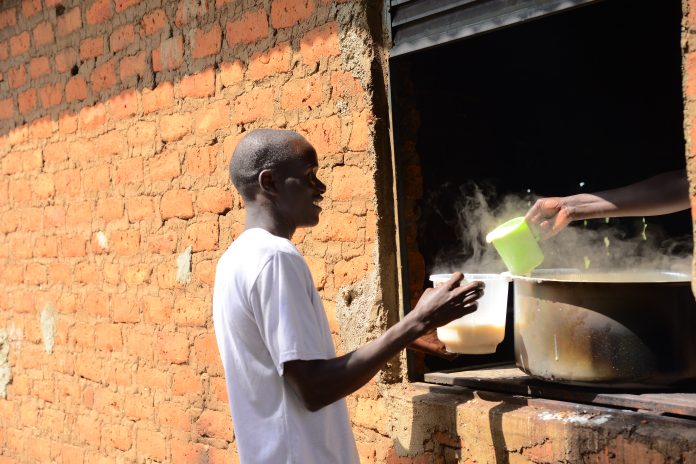
According to Hamid Amin the Head teacher of Barakala Seed Secondary School located in Bidibidi Refugee settlement, they were spending Shs 2.1 million per term on firewood purchases prior to switching to the Improved Institutional Cook stoves.

Previously, it was costly for the school to provide meals to students. We would spend Shs 2.1 million per term on firewood. Students who were unable to afford to pay for school meals would have to walk home for lunch resulting in lost study time and ultimately impacting academic performance. Now with this advanced cooking technology, the school spends no more than Shs 350,000 on firewood per term, and the improved stoves offer several advantages: they cook food faster, and emit less smoke,” he said.

Prior to the refugee influx in 2016, areas such as Bidibidi had a thick green cover. However, the environment has deteriorated since then due to deforestation for charcoal production and construction by refugees and host communities.

The growing refugee population in Uganda has intensified the reliance on natural resources by both refugee and host communities, leading to environmental degradation, reduced groundwater recharge, and decreased food and nutrition security.

Albert Okwai the Project Officer for Save the Children stated that with funding from the European Union Emergency Trust Fund for Africa with the major aim of increasing environmental protection and forest restoration and also sustainable use of alternative energy sources by the displaced Refugee and host communities. With the target of increasing access to energy sources and having decreased dependence on natural resources though the use of alternative resources.

The European Union Emergency Trust Fund for Africa has for the last eight years donated over Euros 540 Million in the development and humanitarian assistance to the national refugee response benefiting both the refugees and host communities.

Okwai said that they used some of the funds to build the 11 stoves to protect the environment, improve cooks’ health and ensure that the students don’t waste time getting their meals.

“We have installed 11 cooking stoves in Yumbe, six in Adjumani, three in Terego, two in Madi Okollo, and five in schools in Kiryandongo district. These stoves will help conserve trees that would otherwise be cut down, as we aim to reduce the reliance on natural trees for at least 44,000 households,” Okwai said.

Stories Continues after ad

Corruption: Police search MP Mawanda’s Kololo-based home

Police are searching the home of Igara East MP Michael Mawanda in lower Kololo Terrace pending his trial in the Anti-Corruption Court.

Mawanda was arrested last evening for the alleged mismanagement of Shs 164 billion in compensation for cooperatives and detained at Natete Police Station.

Mawanda and Mbulambuli Constituency MP Ignatius Wamakuyu Mudimi were summoned last week to appear before Criminal Investigations Directorate (CID) detectives and record statements over their involvement in the corruption scandal.

The nabbed MP was reportedly involved in the West Mengo Growers Cooperative Society and is reported to have played a crucial role in mismanaging funds.

Last year, the state minister for trade, Harriet Ntababazi, revealed that up to 30 legislators are facing criminal investigation over their alleged role in the embezzlement of Shs 164Bn meant for compensation to cooperative societies.

According to the report that parliament sent to CID and the Inspectorate of Government for further investigations, there were only two MPs supposed to be quizzed. They are Elgon County MP Mudimi Wamakuyu and Igara East MP Michael Mawanda, while former Kyankwanzi District Woman MP Anne Maria Nankabirwa is also a target.

In 2011/2012, the Ugandan government allocated Shs 164 billion to compensate cooperative societies that lost funds and property during wars between 1979 and 2006. The disbursement of funds has been marred by irregularities, with some MPs and government officials accused of conspiring to embezzle the funds.

Stories Continues after ad

Police nabs security guards for attempting to shoot at Minister Nyamutoro

Minister of State for Energy and Mineral Development Phiona Nyamutoro has survived being shot at by private security guards of the National Cement Company in Kisoro.

The incident occurred while she was conducting a routine check on allegedly illegal mining activities in Kisoro District.

The guards attached to National Cement Company, a subsidiary of the Devki Group, have reportedly been arrested.

Details to follow…

Stories Continues after ad

Museveni applauded for building a professional army as Brig Bainababo hands-over SFC Deputy Commander Office

Maj Gen David Mugisha, Commander of the Special Forces Command (SFC), has lauded President Yoweri Kaguta Museveni, Commander-In-Chief of the Uganda Peoples’ Defence Forces (UPDF), for establishing a strong and professional army.

“In a very special way I want to take this opportunity to thank the President of the Republic of Uganda, Gen Yoweri Kaguta Museveni for establishing and building the UPDF from a small force to a mighty, professional and capable army that is able to defend the Constitution and protect the sovereignty and territorial integrity of Uganda,” Maj Gen Mugisha said.

He made these remarks at the SFC Headquarters in Entebbe, where Brig Gen Charity Bainababo handed over the office of Deputy Commander of SFC to Brig Gen Asaph Mweteise Nyakikuru.

Brig Gen Nyakikuru, formerly Commander of SFC’s Commando Brigade, was recently appointed Deputy Commander of SFC by President Museveni.

Brig Gen Bainababo will now attend an advanced one year course at the National Defence College (NDC) in Buikwe in July this year.

Maj Gen Mugisha also thanked the Chief of Defence Forces (CDF), Gen Muhoozi Kainerugaba, for entrusting him with overseeing the handover ceremony. He praised the CDF for his patriotic conviction, leadership, and passion for training, which has strengthened SFC personnel in the pursuit of peace and regional pacification.

Maj Gen Mugisha commended Brig Gen Bainababo for her leadership and dedication, wishing her success in her future endeavors. He also congratulated Brig Gen Nyakikuru on his appointment and expressed confidence in his ability to excel in his new role.

Brig Gen Bainababo thanked President Museveni for the opportunity to serve in various SFC offices, while Brig Gen Nyakikuru pledged to maintain the high standards of the office he is taking over. He emphasized the importance of teamwork in fulfilling their mandate.

Col Gilbert Owamagyezi handed over the office of Director of Civil-Military Cooperation to Lt Col Moses Musinguzi, stressing the importance of ideological development and maintaining strategic relationships with the civilian population.

Stories Continues after ad