Stanbic Bank
Stanbic Bank
20.1 C
Kampala
Stanbic Bank
Stanbic Bank
Home Blog Page 2295

Reflecting on Uganda’s ‘winding loose alliances’ since Independence


After weeks of back and forth meetings and arguments, The Democratic Alliance has declared, amid voices of dissent, that it will field John Patrick Amama Mbabazi as its presidential candidate.

The post-Independence history of Uganda is awash tales of political debauchery and avarice, and it is not surprising that the ‘fine brains’ at the TDA summit and the contestants, principally Dr Kizza Besigye and former Prime Minister Amama Mbabazi failed to agree on a way forward in their quest to wrest the reins of power from the National Resistance Movement (NRM) and its leader Yoweri Kaguta Museveni.

In 1962, the country started off on a faulty premise, when Dr Apollo Milton Obote entered into an ‘unholy’ alliance with the Kabaka Yekka to outwit Democratic Party stalwart and Uganda’s first pre-Independence premier Benedict Kiwanuka. The Uganda Peoples Congress and KY alliance was a marriage of convenience that was set up to ‘eat’ into Kiwanuka’s support base in Buganda. Unfortunately, it did not last for long because Obote and Kabaka Edward Muteesa, then also President of Uganda, disagreed over a couple of issues including the ‘lost counties’ of Buyaga, Bugangaizi and Buhekura. Another thorny issue in this standoff was whether Mutesa, in his ‘private capacity’ as the Kabaka of Buganda could enjoy the services of the Uganda Army band at his birthday. Obote refused to honour Mutesa’s ‘demand’ and the rest as we know it, is history.

Then there was the anti-Idi Amin coalition formed in the early 70s, comprised mostly of Ugandan intellectuals who had fled the murderous regime. They formed several loose alliances like the Front for National Salvation (Fronasa) of Yoweri Museveni and the likes of Mbabazi; the Save Uganda Movement (SUM) of Paulo Muwanga, Samwiri Mugwisa and Ateker Ejalu, among other groups, which later on coalesced under an ‘umbrella’ called the Uganda National Liberation Front (UNLF). This UNLF organised the Moshi Conference, a loose alliance of 28 groups which, with the support of the Tanzania Peoples Defence Forces (TPDF), spearheaded the ouster of Amin and the subsequent capture of power in April 1979. However, because the respective political players had different interests, the UNLF was never to hold and within the first two months its leader Professor Yusuf Lule was shown the exit. The cracks were now bare and evident; some UNLF members wanted former UPC boss Obote back as the President of Uganda, as if by divine right! But before they could execute their plan, these UNLF members, most belonging to the then defunct Uganda Peoples Congress (UPC), were forced to swallow humble pie, paving the way for Godfrey Lukongwa Binaisa, a former Attorney General during the Obote I regime, to become president. A ‘comedian’ Binaisa faced turbulent times amidst intense infighting in government and nine months into office he tried to purge those he thought were responsible for punching holes in the ‘umbrella’ and making it leak. In this journey to political homicide Binaisa started off with shuffling the ‘wrong persons’: Defence Minister Yoweri Museveni, Labour Minister Paulo Muwanga and Army Chief of Staff Brigadier David Oyite Ojok. He would later regret this move: On May 11 1980, Binaisa was deposed and held under house arrest and a ‘sober’ group of Ugandans, two Judges and one politician: Justice Saulo Musoke, Justice Polycarp Nyamuconco and Yoweri Hunter Wacha Olwol were appointed to serve as de facto leaders under what was then known as the Presidential Commission. This Commission succeeded the Military Commission which was headed by Muwanga, and deputized by Museveni with Oyite Ojok and then Major General Tito Okello Lutwa as members. And about one year later, the four leading proponents of the Military Commission had disagreed, with Yoweri Museveni going to the ‘bush’ in February 1981, after contesting the December 10, 1980 elections, which he said had been rigged to hand power to Milton Obote.

The remaining three namely Muwanga, Brig Oyite Ojok and then Maj Gen Tito Okello were to maintain a presence in Obote’s UPC government, serving as Vice President and Defence Minister, Army Chief of Staff and Army Commander, respectively. But by 1982, following incessant attacks by several guerilla outfits including Museveni’s Peoples Resistance Army (PRA), the Uganda Freedom Movement (UFM) of Andrew Lutakome Kayira and the Freedom Democratic Movement (Fedemu) of Doctor David Livingstone Lwanga  and Captain George Nkwanga, tribal cracks began to emerge in the Uganda National Liberation Army (UNLA) between the Langi and Acholi over the ‘war strategy’, mostly in respect of command and the deployment of foot soldiers. The ensuing chaos persisted for about another year, with the lowest points coming after December 2 1983, when then Major General Oyite Ojok died in a helicopter crash in Kasozi in Luwero.

Indeed, Maj Gen Oyite Ojok’s death caused a strain in Uganda’s military command, and President Obote failed to name his successor for over a year. And when he did, Obote named his tribesmate, little-known Langi officer Lieutenant Colonel Smith Opon Achak as Chief of Staff and promoted him to Brigadier, in the process whizzing past the likes of Acholi commanders, Colonels Langoya and Mwaka, and Bazilio Olara Okello, then Commander of Central Brigade.

The Opon Achak jolt in 1984 made the Acholi rethink their status within the army ranks, and by early 1985 it was evident that there was a split when then Vice President and Minister of Defence announced that there had been an ‘uncoordinated movement of troops’ after renegade Acholi foot soldiers attacked Mbuya barracks.

Then, on July 27, 1985 the Acholi struck, bundled out Obote and formed the Military Council headed by Gen Tito Okello Lutwa and deputized by then Brigadier Bazilio Olara Okello. These two also tried to form an alliance with various military groups that were opposed to the Obote II regime but none would prove conclusive after only men and officers of the Uganda National Rescue Front led by the flywhisk-carrying Major Amin Onzi, came ‘out of the bush’. Other groups that ‘consented’ to the Okello junta olive branch after a series of ‘peace talks’ included UFM and Fedemu, which however, stationed their forces in Kampala’s peripheral areas like Kansanga, Kabalagala and Makindye. Museveni and the NRA had named then Commander Salim Saleh (Caleb Akandwanaho) to the Council but he never set foot in Kampala, mostly after word went round that the Okellos were inviting their adversaries and killing them, a case in point being that of George Nkwanga, the Fedemu military leader who was reportedly slain by Gen Bazilio Olara Okello.

Save for the increased insecurity the Okellos did not make any impact on Uganda’s political stage, largely because they spent only six months in power, the second shortest regime period in Uganda’s history so far, the first having been Lule’s two months as president, from April to June 1979.

Then, on January 26, the NRM/A captured state power and set out to form ‘alliances’ with the various groups, most of which had been in opposition to the Obote and Okello regimes.

Subsequently, under a ‘broad-based government’ the NRM/A brought on board people like DP’s Paul Kawanga Ssemwogerere, UFM’s Dr Andrew Lutakome Kayira, Fedemu’s Dr David Livingstone Lwanga, and General Moses Ali of the UNRF. This alliance held for sometime, ending around 1995 with Semwogerere’s departure, amid clamours for the reinstatement of multipartism.

Then, at the tail end of agitation for return to multiparty politics in 2005, the Democratic Party (DP) and the Uganda Peoples Congress (UPC) formed the Inter- party Forces for Cooperation (IPFC), and fronted DP’s Dr Paul Kawanga Ssemwogerere to contest against Museveni and the NRM. The group then known as the G6 lost the 2006 elections and collapsed.

Earlier in 2004, a new political party, the Forum for Democratic Change (FDC) had been formed, mainly by neo-oppositionists who had broken away from the NRM and now bent at removing the regime from power.

However, with the NRM proving unbeatable, another almost similar alliance, the Inter Party Cooperation (IPC) was to surface in 2008, with the opposition parties like DP, UPC, the Justice and Equality Movement (JEEMA) and the Conservative Party (CP) joining the Forum for Democratic Change (FDC).

The IPC also collapsed in similar fashion, after a series of disagreements which saw the DP and UPC withdraw, leaving only the FDC, CP, Jeema, new entrant, the Social Democratic Party (SDP) of Michael Mabikke and the political pressure group Ssuubi led by former Buganda katikiro Joseph Mulwanyamuli Ssemwogerere and political activist Erias Lukwago among others.  This group, though largely comprised of ‘weak’ parties and pressure groups, sympathised with Dr Kizza Besigye and the FDC in the 2011 elections. Dr Besigye lost but was shortly to ally with DP’s Mathias Mpuuga to start what they termed For God and Country (4GC) and organised the ‘Walk to Work’, a political-cum-economic protest against the soaring commodity prices obtaining then.

However, after months of protest the ‘alliances’ seemed to go into abeyance, only to resurface early this year. This was after the resumption of intense political activity following the Kyankwanzi Resolution, a development that paved the way for President Yoweri Museveni to be proposed as ‘sole candidate’ by the NRM in February 2014.

The Evelyn Anite-led motion seemed to scuttle the NRM, with then Secretary General John Patrick Amama Mbabazi’s hesitantly signing the Resolution as Number 202. Mbabazi’s political ambitions including becoming President of Uganda had also seemingly been thrown into doldrums; what followed was his sacking as Prime Minister in September 2014, followed by his demotion from the post of SG in December the same year.

Mbabazi, the Member of Parliament for Kinkiizi West then went into temporary political oblivion, leaving his wife Jacqueline, daughter Nina Mbabazi Rukikaire and sister-in-law Hope Mwesigye Ruhindi, a former agriculture minister and local government state minister, to take charge of his political destiny.

However, on June 16, Ugandans woke up to a ‘Youtube’ message by Mr Mbabazi, indicating he would contest for both the chairmanship of the NRM and the Ugandan presidency. He failed in his endeavor to position himself in the NRM and it was at this juncture that the supremacy battle betweem Museveni and Mbabazi took a different twist, prompting politicians from different shades to wait for Mbabazi’s next communication regarding his new political journey.

Inevitably, Uganda’s longest-standing political alliance spanning over 40 years had collapsed, and Mbabazi started his ‘lone’ political maneuvers, first by reaching out to all who stood for ‘change’. The Democratic Alliance (TDA) was an almost natural option, since it brought together several politicians allied to different political organisations. And before we knew it, Mbabazi emerged one of the four top contenders for the presidency, contesting against FDC’s Kizza Besigye, DP’s Norbert Mao and Professor Gilbert Bukenya. The latter two dropped off, leaving Mbabazi and Besigye to tussle it out for the TDA flag bearer, a contest that ended with both men ‘agreeing to disagree’.

So, just like all alliances before it, the TDA had also collapsed; a failure arising out of individual perceptions and the egotistic tendencies of its contenders for the top slot.

And as we all know now, Dr Besigye has returned his nomination forms to the Electoral Commission, a stark indicator that he is going to stand on the FDC ticket.

I will not speculate about Mbabazi’s next move but chances are he will be on the ballot paper alongside his two former NRM colleagues, Museveni and Besigye, come 2016.

Stories Continues after ad
UPDF for gradual withdrawal from South Sudan


The imminent withdrawal of Ugandan troops from war ravaged Southern Sudan is set to take much longer than expected, the army has announced.

Army spokesperson Lt Col Paddy Ankunda took to twitter to confirm that the army will eventually withdraw from the world’s newest and troubled country, albeit not so soon.

“While UPDF withdraw from South Sudan is a real possibility in future, we have not started any withdraw at the moment,” Lt Col Ankunda wrote.

After signing a peace deal with rebel leader Riek Machar, South Sudan President Salva Kiir wrote to his Ugandan counterpart Yoweri Museveni asking him to withdraw the UPDF troops from the capital Juba and the town of Bor in Jonglei state.

The peace deal was signed recently in Addis Ababa, Ethiopia, with clauses binding President Kiir to ask all foreign troops including the UPDF to leave the country within 45 days.


The presence of the UPDF in South Sudan had attracted criticism from Ugandan civil society groups and opposition politicians who said the deployment was not approved by Parliament.

Stories Continues after ad
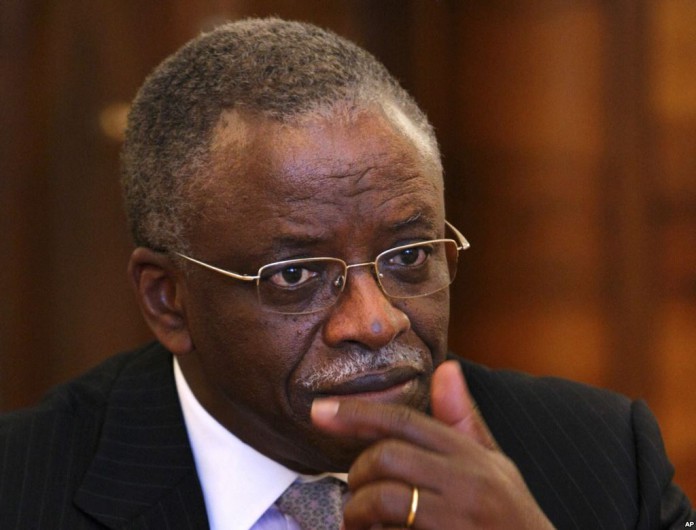
DHL appoints new MD for Sub-Saharan Africa

One of the world’s leading logistics company DHL has appointed Hennie Heymans as Managing Director of DHL Express Sub-Saharan Africa (SSA), effective October 1, 2015.

Heymans, the outgoing Managing Director of DHL Express South Africa succeeds Charles Brewer and will oversee 51 countries and territories, over 3,500 employees and 250 facilities, five regional hubs and 14 DHL aircraft.

large_article_im847_Hennie_Heymans_Cup_of_Coffee_1_
Hennie Heymans

‘Succeeding Charles Brewer, who is now focused on building a new African e-commerce venture as part of the Mara Group, Heymans’ knowledge of operating in challenging markets, strong leadership skills, as well as his solid network within the African region makes him the natural choice for the role,’ a release by the Africa Press organization (APO) states.

A South African national, Heymans joined DHL Express in 2001 as Head of the Direct Business Unit, supervising telesales, agents and retail in Namibia, Swaziland and Lesotho. Soon after this, he was appointed Managing Director for Central Africa, and managed eight markets in the region. He later expanded his portfolio to become the Managing Director for Central Africa and Indian Ocean Islands (CENIO), before taking up his current role of Managing Director for the South African region in January 2013.

According to Ken Allen, Global CEO of DHL Express, under Heymans’ leadership the company has seen major development in both the regional and South African businesses.

“Hennie has consistently delivered on some tough targets despite the sometimes uneasy economic climate. He has also played an integral role in driving leadership and motivating our people to ensure DHL remains the logistics provider of choice. We are confident that he will continue to grow our market share and now bring his particular brand of respectful leadership and results-driven approach to an even bigger challenge,” Allen extolls Heymans.

“DHL Express will continue to invest in its people and network in Africa. Having entered the African market 37 years ago, we have witnessed the turnaround from the ‘forgotten continent’ to ‘Africa Rising’ and we now wish to be part of the next phase – ‘Africa Thriving’,” Heymans was quoted as saying.

Stories Continues after ad
Museveni presses for global partnership at the UN

UNM71

President Yoweri Museveni has told the United Nations summit that in order to build effective, inclusive and accountable institutions at all levels; we have to ensure that the voices of developing countries and regions are heard and that they are treated as equal partners in multilateral decision-making.

“At the international level, we need urgent reform of the United Nations ─ particularly the Security Council ─ and other multilateral institutions to reflect the current geo-political realities. We need a renewed global partnership for development in which all the commitments made, including on Overseas Development Assistance (ODA), trade and investment are fulfilled,” he said.

President Museveni was today co-chairing the opening plenary meeting of the summit for the adoption of the post 2015 Development agenda together with the Prime Minister of Denmark Lars Lokke Rasmussen.

“While the Agenda represents the collective aspirations of all peoples, its success will hinge on its ability to reduce inequalities and improve the lives of the most vulnerable among us, including women, children, the elderly and persons with disabilities,” he said.

The President who had earlier held a tri-lateral meeting with PM Rasmussen and the 70th President of the General Assembly Mogens Lykettoft and also attended an address by the Pope said after months of intense negotiations and steadfast commitment, they have before them an Agenda that represents the best opportunity to transform our world.  He also paid tribute to exiting 69th  UN President Sam Kutesa for his leadership and accomplishments during his tenure.


UNM72


“We have heard the voices of people spanning the globe; from eager children asking for access to a quality education to young women seeking better maternal health; from rural villagers whose farmlands have been ravaged by droughts to the coastal fishermen on Small Island States who fear their entire existence will soon be swallowed up by rising sea levels,” he said.

The President who moderated the meeting for over two hours told the summit that they continue to witness the influx of refugees and migrants into Europe from Africa and the Middle East, which is partly caused by conflict and lack of economic opportunities.

“These voices may speak many languages and dialects, but in the end their message is the same ─ please help us to live happier, more prosperous lives, while also protecting the planet for our children and grandchildren. After adoption of this Agenda, it is incumbent upon us all to take the development aspirations laid out in this document and turn them into reality on the ground; for our people, our communities and our nations.  This agenda will create global prosperity different from the past arrangements of prosperity for some through parasitism and misery and under-development for others,” he said. The UN Secretary General Ban Ki Moon said they have reached a defining moment in human history and the people of the world have asked them to shine a light on a future of promise and opportunity.

UNM74

“Member States have responded with the 2030 Agenda for Sustainable Development. The new agenda is a promise by leaders to all people everywhere. It is a universal, integrated and transformative vision for a better world. It is an agenda for people, to end poverty in all its forms. An agenda for the planet, our common home. An agenda for shared prosperity, peace and partnership,” he said.


See full statement here:

https://docs.google.com/document/d/1dEwgTbbPLxzNEIGfyLEKBDxI2kHY2MUxLJDaAxhXt-s/edit


Stories Continues after ad
Fifa: Sepp Blatter faces criminal investigation

Sepp Blatter


Sepp Blatter
Sepp Blatter

Swiss prosecutors have opened a criminal investigation into Sepp Blatter, the head of football’s world governing body Fifa.

The attorney general’s office said he was being investigated “on suspicion of criminal mismanagement as well as – alternatively – on suspicion of misappropriation”.

Mr Blatter was being questioned, and his office was searched, it added.

Fifa said it was co-operating with the investigation.

Mr Blatter, 79, has run Fifa since 1998 and has always denied any wrongdoing.

‘Disloyal payment’

The Swiss attorney general’s office said the investigation surrounds a TV rights deal Mr Blatter signed with former Caribbean football chief Jack Warner in 2005.

Mr Blatter is also suspected of making a “disloyal payment” of two million Swiss francs ($2m; £1.3m) in 2011 to Michel Platini, the head of the European football body Uefa, the statement said.

It said the payment was “at the expense of Fifa, which was allegedly made for work performed between January 1999 and June 2002”.

Mr Blatter is due to step down in February. Mr Platini is widely expected to replace him.

Analysis by BBC sports editor Dan Roan

Ever since May, when the arrest of senior Fifa officials in dawn raids in Zurich plunged world football’s governing body into crisis, the sport has wondered whether the scandal would lead directly to President Sepp Blatter.

Today – finally – it did. On the one hand, perhaps it should come as no surprise.

After all, Mr Blatter has been at the helm of Fifa for 17 years. He’s become symbolic of the many corruption allegations that have blighted the body and some thought it a matter of time until investigations by the FBI and Swiss criminal authorities would implicate him.

In fact, such was the perceived threat facing Mr Blatter that his lawyers advised him not to travel abroad.

However, this is still a stunning development, with criminal proceedings opened against the man who still runs world football.

Although Mr Blatter announced he was stepping down back in June, he decided to hang on as president until February in a bid to influence the choice of his successor and reforms. That now seems highly unlikely, with calls for him to resign immediately bound to intensify.

In May, Swiss authorities arrested seven Fifa officials in Zurich at the request of the US. They face extradition.

The US then unveiled indictments against seven other people in their corruption case, nine of whom are high-ranking officials. The Swiss then opened their own investigation into Fifa, hours after the initial arrests.

Mr Blatter won a fifth consecutive Fifa presidential election on 29 May but, following claims of corruption, announced his decision to step down on 2 June. He is due to finish his term at a Fifa extraordinary congress on 26 February.

Fifa cancelled its news conference on Friday only minutes before it was due to start.

Mr Blatter would have been speaking in public for the first time since general secretary Jerome Valcke was suspended last week amid allegations regarding ticket sales at the 2014 World Cup.

Newspaper reports implicated Mr Valcke, 54, in a scheme to sell tickets for above face value.

Mr Valcke, who describes the allegations as “fabricated”, has been released from his duties pending an investigation.

Fifa also announced earlier that it had moved its next executive committee meeting from Tokyo to Zurich.

Correspondents say that, although Mr Blatter has not been indicted, he might be more vulnerable to an extradition request outside of Switzerland.


Stories Continues after ad

Mbabazi urges Besigye to join him to defeat Museveni


The Independent candidate  for 2016  presidential race,  John Patrick Amama Mbabazi has argued FDC flag bearer Col (rtd) Dr. Kiiza Besigye to join him to defeat President Museveni come 2016.

“I welcome Dr Besigye to join me and we work together to get the change we desire,” Mr Mbabazi said at a press conference, adding that the two should work for unity.

Mbabazi also hailed his fellow candidates, Democratic Party (DP) President General Norbert Mao and former Vice President Prof. Gilbert Balibaseka Bukenya for putting ‘country first’, in reference to the two opposition politicians’ support for him to carry the TDA flag in the 2016 polls.

Two weeks ago, Mr Mbabazi was nominated by the TDA summit to contest for the flag bearer position alongside Dr Besigye, Prof Bukenya and Mao.

However, Mbabazi’s remarks came a few hours after Dr Besigye expressed reservations over his governance credentials, including his lengthy involvement with the NRM spanning about three decades.

The former Prime Minister and erstwhile Secretary General of the ruling National Resistance Movement (NRM), Mr Mbabazi announced he would contest as the party’s chairman to lead the party in the 2016 elections.

His intentions did not materialise, prompting him to associate with  TDA, which has now endorsed his candidature.

Stories Continues after ad

Besigye nomination papers returned to EC


The nomination forms for the Forum for Democratic Change (FDC) presidential flag bearer Col (rtd) Dr Kiiza Besigye have this afternoon been returned to the Electoral Commission.

Besigye’s papers were returned to the EC by the FDC Electoral Commission boss Dan Mugarura, following Besigye’s attainment of the requisite number of signatures as enshrined in the Presidential Elections Act (PEA).

Earlier, Besigye’s nomination forms were picked from the Electoral Commission by the FDC Electoral Commission vice chairman Michael Kabaziguruka, before the former and the FDC party boss Major General Mugisha Muntu embarked on a nationwide campaign trail to introduce themselves to the electorate.

bes2

And, during a delegates conference held at the Mandela National Stadium, Namboole, last month, Dr Besigye defeated Gen Muntu to become the party’s flag bearer in the 2016 elections.

Meanwhile, early today Besigye addressed a press conference at the TDA headquarters in Naguru, and explained why he had failed to agree with rival Amama Mbabazi on the issue of joint candidature of TDA.

According to Dr Besigye, he doubts Mbabazi’s commitment to democratic practices of respect for human rights and the fight against corruption, among others.

But Besigye’s concerns did not sway TDA summit which, through Norbert Mao, announced that Mbabazi had been endorsed the TDA flag bearer, bringing to the fore an issue that seems to have prompted Besigye’s supporters to act in defiance and return his presidential nomination forms as part of the due process that qualifies him to stand for the presidential elections come next year.

Stories Continues after ad

Proscovia shines as Uganda falls to Gabon, Mozambique

Yesterday
Uganda 39:70 Gabon
Today
Uganda 50:73 Mozambique
Uganda’s leading sportswoman Peace Proscovia is a living proof that one can become a jack and master of basketball and netball, with the towering 25-year old proving an asset to the serial losing Gazelles, who are making a debut appearance at the Afro Basketball Championships in the Cameroonian capital Yaounde.
PEACEE
Uganda is in group A drawn with hosts Cameroon, South Africa, Mali, Mozambique and Gabon and yesterday, the Gazelles fell to Gabon 39:70 and today they have fallen to Mozambique 50:73 but Proscovia stood out of the crowd on Wednesday, scoring 9 and making 8 assists/rebounds in the first game against Gabon.
“It’s always a challenge and hard to play your first games against big teams but we are determined and prepared to face any challenges in the next games,” assistant coach Nimrod Kaboha told Eagle Online by phone from Cameroon.
Uganda’s Gazelles are without star players Sharon Karungi and Claire Lamunu, both in the US on basketball scholarships, but Peace Proscovia, who also turns out for the national Netball team, the She Cranes, has salvaged the little respect the team deserves.
The 1.93m netballer plays professional netball with Loughborough Lighting in the United Kingdom and has just returned from representing Uganda in Australia, where she was ‘talk of Sydney’ and helped Uganda reach the quarter finals of the Netball World Cup.
“It’s all about mental focus; I have my own schedules that I follow for the two games and the best thing I do is to switch my mind according to the game I play,” Peace Proscovia, says when asked how she manages to juggle the two sports.
Peace Proscovia is currently pursuing a Masters Degree in marketing and management at the Loughborough University and said she would pursue both sports disciplines for club and country until that time when her body can no longer permit.
Stories Continues after ad

Prof Barya unveils manifesto

Prof. Venansius Baryamureeba


Former Makerere University vice chancellor, Professor Venansius Baryamureeba has this morning unveiled his 2016-2021 presidential manifesto ahead of next year’s general elections.

Early last week Prof Barya, as he is commonly referred to, returned his nomination forms to the Electoral Commission and he now awaits nomination to stand for presidency.

“I have already booked October 5, 2015 as the date for my nomination as a presidential candidate,” he said adding: “I would like to announce to all Ugandans that I have already fulfilled all the requirements for nomination.”

Prof Barya announced his presidential ambitions in May this year, and came up with 12 issues which form the basis of his manifesto.

Among the 12 points are provision of health services, job creation, agriculture, governance and foreign policy. Other issues are infrastructure development, minimum wage, industrialization, defence and security, zero tolerance to corruption and, the relationship between religious and cultural institutions and the central government.

The professor maintains that a special touch has been accorded the youth who make up the biggest portion of the Ugandan population, and hastens to add that the points in this manifesto represent the views of Ugandans collated after a countrywide consultation exercise.

“This is a people’s manifesto since the views in it have been collected from the grassroots through our consultations before the Electoral Commission stopped us from carrying out public consultations,” he said.


PROF BARYA AT A GLANCE

He was born in Kasharara village, Kagongo Parish, Ibanda District, in the Western Region of Uganda. He holds a Bachelor of Science in Mathematics, obtained in 1994 from Makerere University. He also holds a Master of Science and a Doctor of Philosophy, both in Computer Science from Bergen University in Norway, awarded in 1996 and in 2000, respectively. In 1997, he was awarded a Postgraduate Diploma in the Analysis of Linear Programming Models by the University of Trondheim, also in Norway.

Career

His academic career began soon after his first degree, when he worked as a teaching assistant in the Institute of Statistics and Applied Economics at Makerere University, from 1994 until 1998. He then worked as an assistant lecturer at the Institute of Teacher Education Kyambogo, which now is part of Kyambogo University, from 1995 until 1996. While pursuing graduate study in Norway, he worked as a teaching assistant in the Department of Informatics at Bergen University from 1997 until 2000. He also worked as a Research Fellow, in the same department and institution, from 1995 until 2000.

Beginning in 1998 until 2000, he worked as a lecturer in the Department of Mathematics at Makerere University. He was a senior lecturer in the Institute of Computer Science at Makerere University, from 2001 until 2006 (which was transformed into the Department of Computer Science, Faculty of Computing and IT (FCI)). He then became an associate professor, and, in November 2006, he was made a Professor, continuing to teach until August 2012 at FCI. From October 2005 until June 2010, he served as the Dean of FCI.

From November 2009 until August 2012, he was Vice Chancellor of Makerere University.

After that he founded the Uganda Technology and Management University, where he has served since September 2012 as the Vice Chancellor and as a professor of Computer Science in the School of Computing and Engineering.

Stories Continues after ad

Mbabazi declared TDA flag bearer


Amid scattered voices of dissent mainly from supporters of the Forum for Democratic Change, former Prime Minister John Patrick Amama Mbabazi has been unveiled as the joint flag bearer for The Democratic Alliance.

“Let me confirm for the 11th time, TDA has no Joint Presidential Candidate. No one has been agreed upon. It is unfortunate that some of TDA leaders who signed the statement I read to the media in their presence about this matter, are the same ones declaring one of the two candidates we did not reach consensus on as a TDA candidate,” Wafula Oguttu, the spokesperson of TDA wrote on his Facebook wall.

“I think that by pulling out of TDA, Dr Besigye may actually have saved the FDC party from self-destruction. There were no guarantees that after loaning his supporters and his party structures to Amama Mbabazi, he would get them back after 2016 election. With FDC’s structural support, Mbabazi would become the only formidable opposition leader after 2016 and would definitely try to own the party supporters and regional/local structures. So the 10yrs the FDC has spent building the party, would be meaningless. You build and then transfer to an opponent/ newcomer? It only makes sense if you are a weak party looking at short-term strategic gains,” Gerald Bareeba, a Teaching Assistant and PhD candidate at the University of Toronto in Canada wrote on his Facebook wall.

Mr Mbabazi, formerly a self-avowed National Resistance Movement (NRM) – leaning candidate who reportedly broke ranks with the party after a series of disagreements and FDC flag bearer Colonel (rtd) Doctor Kizza Besigye, have been locked in a marathon contest for one of them to become the joint presidential candidate of the TDA.

But later today, Mr Mbabazi was declared TDA’s flag bearer in a statement presented by Nobert Mao, one of the four people who had sought to run for the same position.

Mao, who is also the Democratic Party’s President General, said Mbabazi was selected by the alliance as its flag bearer by the majority of the summit.

“Our protocol does not allow more than one person to carry the flag for the alliance because presenting two candidates goes against our unity,” he added.

Mao’s announcement comes a few hours after the TDA Head of Operations Bishop Zac Niringiye addressed a press conference and said members of TDA had agreed on having Mr Mbabazi and Dr Besigye as TDA candidates.

Stories Continues after ad