Stanbic Bank
Stanbic Bank
17.6 C
Kampala
Stanbic Bank
Stanbic Bank
Home Blog Page 2296

Mbabazi, Besigye ‘joint presidential talks’ collapse

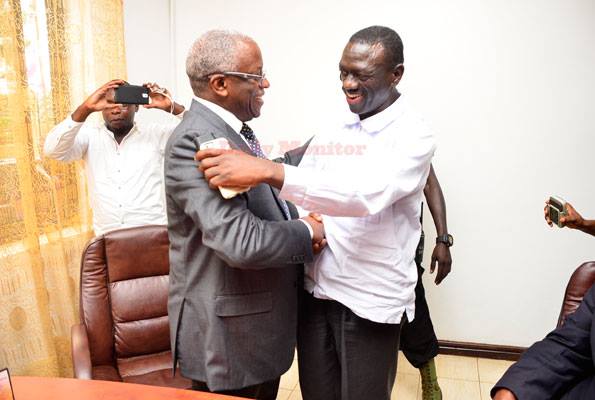
ANNOUNCED DR BESIGYE'S RETURN: FDC stalwart Mr Wafula Oguttu


Mr Wafula Oguttu
Mr Wafula Oguttu

With less than 24 hours for John Patrick Amama Mbabazi to be nominated as a presidential candidate, the loose opposition coalition, The Democratic Alliance has failed to zero-in on a joint presidential candidate to take on incumbent president Yoweri Museveni in next year’s elections.

Writing on his Facebook wall earlier today, official TDA spokesperson Wafula Oguttu said Mbabazi and Col Dr Kizza Besigye of the Forum for Democratic Change (FDC) would both contest in the elections as individuals.

‘Because of the time element, given that the Presidential nominations are due on 3 and 4 November, we agreed to move on and have the two candidates nominated while we continue the contacts and exploring the possibilities of future cooperation most especially on vote protection and resisting partisan and unconstitutional police actions during the ongoing electoral process,’ Mr Oguttu wrote.

For about four months now both Mbabazi and Dr Besigye have been engaged in a series of meetings aimed at choosing who among them would become the TDA official candidate.

And, over the past two weeks both teams held a series of meetings in the United Kingdom under the auspices of the Kofi Annan Foundation, attended by among others Kofi Anna himself and the former International Criminal Court (ICC) Chief Prosecutor Louis Moreno Ocampo.

Meanwhile, the talks held over two days in Uganda as a follow-up to the earlier talks in the UK were co-chaired by seasoned lawyers Medard Lubega Ssegona and Augustine Ruzindana, while the two teams were led by Ambassador Olara Otunnu and FDC president Maj Gen John Gregory Mugisha Muntu, for Mr Mbabazi and Dr Besigye, respectively.

‘When the negotiations hit a stalemate, FDC proposed alternative B as the fallback position; of both candidates testing the ground after nomination and then (the) two sides meeting again to review the situation. The Go Forward team said they would go back and consult on the proposal,’ Oguttu added.

According to the FDC Dr Besigye is a ‘better candidate’ who has withered the political storm in Uganda for the last 15 years and therefore should be given chance to lead the joint opposition.

‘Pushing for our candidate as the better option, FDC president Maj Gen Muntu argued that Besigye, who had been elected by the Party Delegates Conference, had for 15 years demonstrated his consistence in the struggle for democracy, had a more popular appeal, has millions of voters and supporters behind him despite being rigged out of victory, has strong party structures behind him and was unlikely to suffer any more surprising-state-trumped-up charges,’ Oguttu, who is also the Leader of Opposition in Parliament, adds.


Stories Continues after ad

The NRM got it right at the Delegates Conference

Over the past twelve months, Uganda has been in electioneering mood, with politicians of different shades running all over the place trying to find a footing.

In the ruling National Resistance Movement (NRM) some have been lucky, pulling it off in the primaries, while many were unlucky, with some like State Minister for Lands Aida Nantaba and her health counterpart Sarah Achieng Opendi coming out openly to challenge their loss and also threaten to turn their backs on the party.

But not all has been lost for them, at least for now; the party has established a mechanism to ameliorate the grievances that arose last week, following a somewhat chaotic primaries.

It is worth noting that internal squabbles affect party cohesion, making the aggrieved senior members and their supporters become apathetic to party activities, including voting in the general election.

So, what happened at the just-concluded NRM Delegates Conference, where several would-be aspirants stood down for their more senior colleagues like Mike Mukula et al, is a move in the right direction, expected to strengthen and unify the party ahead of the 2016 elections.

And, if the country’s politics is to mature, such frontal actions that reflect reconciliation should also rub off on other political parties and organisations.

The benefits are immense.

Stories Continues after ad

Vipers raid Soana, target third straight win

Kezron kizito has been Vipers best player
As Azam Uganda Premier League defending champions raid Kavumba Recreational Stadium today, Vipers SC head Coach Edward Golola will be plotting a third straight win at the ground where they have scored five times in the last two outings and not conceded a goal. “We need to approach the game with a lot of discipline especially defensively. Our record against them at Kavumba maybe something to look at but at this moment it will mean nothing,” Golola was quoted saying.
 “We want to go there, give our best and get three points, and we already have the game plan that will get us victory,” he added.
The two time league champions Vipers must be wary of the experienced Steven Bengo, Willy Kavuma in mid field as well as swift striker Francis Olaki.
Golola and his assistants will surely have selection headaches especially after a number of players have been putting up spirited performances during the friendlies Vipers played in the league break.
Defenders Yusuf Mukisa, Harid Lwaliwa and Musa Malunda have been impressive in the absence of Bakaki and Midfielders Allan Kyambadde, Sadam Juma and Joseph Mpande have also been awesome in the absence of Bukenya, Miya and Kizito.
A win for Vipers might take them top of the log on 17 points that is if KCCA fail to pick maximum points off Maroon in Luzira, while a win on the other hand might also land them to top or second position.
In the last four league meetings between Soana and Vipers, the visitors have managed three wins and one draw.
But this time round hosts Soana head into today’s game with huge confidence having won their last game against the 16 time league champions Villa at the same venue last Tuesday, a win that pushed them to fourth on the 16 team log with 14 points.
Meanwhile, according to an official communication from Vipers Sports Club, the Buikwe based club will welcome back eight players who helped the Cranes qualify for the third straight African Nations Championship (Chan) last weekend after Uganda defeated Sudan 4-0 over two legs to seal the final slot.
 “Soana FC has a good run to be in the top four when giants like URA, Villa are struggling at the bottom half of the table is no mean feat,” read part of the statement.
Farouq Miya, Deus Bukenya, Shafiq Bakaki, James Alitho, Keziron Kizito, Ismael Watenga, John Ssemazzi and Erisa Sekisambu, all resumed training last Tuesday and will be all available for selection.
Others games of the day
Bright Stars Vs Police at Mwerere
URA FC Vs Saints at Lugazi
BUL FC Vs Sadolin Paints in Jinja
SC Victoria University FC Vs Simba FC at Namboole
Maroons FC Vs KCCA FC at Maroons Stadium in Luzira
Lweza FC Vs JMC Hippos FC at Nakivubo
Stories Continues after ad

EAC observer team protests against cancellation of Zanzibar polls

John Magufuli .
The EAC Election Observation Mission (EOM) to the General Elections in Tanzania on October 25 has issued a statement questioning the nullification of the polls on Zanzibar Island.
‘The Mission, notes with concern the Statement issued by the Chairman of the Zanzibar Electoral Commission, nullifying the Zanzibar elections. The Mission urges the political leadership of the United Republic of Tanzania to urgently address this situation for the sake of democracy and stability of the country,’ EOM leader Arthur Moody Awori, wrote on October 29.
According to Mr Awori, the observer team deployed in all regions of the United Republic of Tanzania, and was satisfied with the electoral processes.
‘The Mission observed voting and counting of votes and the Mission’s overall assessment of the process at polling stations was that it was peaceful and transparent up to the polling and counting processes,’ the statement signed by the EOM leader Awori states in part.
According to Awori, on October 27 his team issued a preliminary statement on the general elections on, indicating that it would ‘continue to follow the electoral process to its conclusion’.
Meanwhile, the ruling party Chama Cha Mapinduzi candidate John Pombe Magufuli has been declared winner of the October 25 presidential elections after beating resilient rival Chama Cha Demokrasia na Maendeleo (CHADEMA’s) Edward Lowassa, a former Prime Minister who decamped to the opposition, following allegations of corruption against him.
Mr Lowassa has since rejected the outcome of the elections, saying the polls were rigged in Mr Magufuli’s favour.


Stories Continues after ad

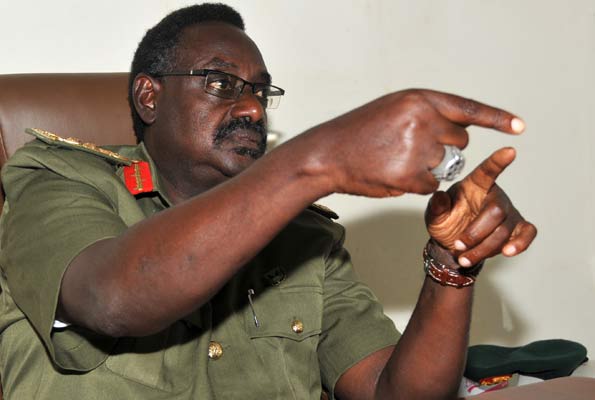
Stop wasting time with western powers-Sejusa to Mbabazi, Besigye

Gen David Sejusa


Sejusa11


The phase of confusion, we need to be careful.

I will post guidance to our people on the correct approach as we enter the fantasy world of NRM so called nominations for presidential candidates.

From the obvious pointers to most obvious ones like the NRM primaries debacle, it would take fool or an extremely naive person to imagine that Mbabazi, Besigye and or even Sebaggala (seya) will take power through the sham election.

Absolutely fascinating to see opposition leaders spending weeks in London cutting deals on how to share power!! Which power? Where is Museveni going? Is he going to be removed by US, UK, Kofi Anan? Common folks, we should be better than that.

How can you leave the ground when NRM was busy disintegrating through its primaries to lay strategies and go to cut deals of power sharing and looking for a single candidate and whatever else!!!? Am sorry to dampen your spirits.

THERE IS NO POWER TO SHARE UNTIL WE HANDLE MUSEVENI AND HIS FEW ROYAL ARMRED GANGS

YES; WE GOT TO FIGHT FOR IT TO HAVE IT. THAT’S WHATS IT GOING TO TAKE.

So there is no power for Besigye or Mbabazi or whoever! Until we wrestle it from the FANGS OF THE DICTATOR.

I have learnt through experience to be weary of people who put on shows, give false impressions and there are quite a number.

At times they pass for comedians. What else can they be? YOU SAW A WHOLE 2 DIVISION COMMANDER BEING ABUSED BY HIS SUPERIORS WHEN HE WAS SENT TO (Brig Elweru) TO personally deploy troops to beat up people in Ntungamo? You saw the pictures and the war like deployments in Isingiro, Kanungu, Hoima, Lwengo, etc just in NRM primaries and these wonderful leaders read nothing in this, instead they put up a show of power sharing as if we the people are stupid!

Mr Mbabazi, pretence won’t do for much longer, you got to prepare to confront Museveni and his rabid son and his crazy police chief before you get power to share. Down in your heart you know it i know. So be honest with your followers and tell them so and prepare them for the inevitable. That is if you have a stomach for it.

I know Dr Besigye understands what this means because he has been there. So he should stop wasting time and prepare.

UPDF AND EVEN UGANDA POLICE AND SO CALLED CRIME PREVENTERS ARE ON THE SIDE OF THE PEOPLE.

It’s a few bad apples that will be isolated with time.

Let each of us do what they have to do but detailed guidance to follow.

God bless the struggle


Stories Continues after ad

Besigye, Mbabazi agree on ‘single candidate’

Presidential aspirants Col Dr Kiiza Besigye and John Patrick Amama Mbabazi have agreed on the principle of fielding a single candidate to face off with President Yoweri Museveni in the 2016 elections.

The two reportedly reached the agreement following meetings in the United Kingdom, held under the auspices of the Kofi Annan Foundation.

12182617_1270434012983506_1529890145777139423_o

In a statement released October 29, the parties agreed on a number of issues. “We shall go into the elections, as agreed, as a single coalition with one presidential, candidate and we shall form an election protection mechanism,” reads the statement in part.

According to the statement, cabinet shall consist of the President, the vice president, the prime minister, the two deputy prime ministers, and other ministers.

The Prime Minister is to have the authority to perform executive functions as shall be provided for by the parties to the agreement, and under the agreement the President will have powers to appoint the Prime Minister but has no powers to remove him from office.

However, in the agreement it is not stated who will be the flag bearer in the elections that are slated for February next year.

But a source told The Eagle Online that Mbabazi was destined to become ‘Ceremonial President’, while Dr Besigye would become ‘Executive Prime Minister’.

12193616_923562334401399_8636852129823813581_n

Meanwhile, the two parties also agreed that the president shall appoint members of the cabinet whom the he will have agreed upon with the Prime Minister based on the principle of portfolio balance as shall be specified by the parties to this agreement;

“The removal of any minister of the coalition shall be subject to consultation and concurrence in writing by the parties to this agreement,” reads the statement.

It also says following the election, the government of national unity and reform shall, within the first year, carry out democratic reforms and provide for constitutional governance and free and fair elections within a period not exceeding two years.

“We wish to state, finally, that we are fully committed to unity and the fielding of a single presidential candidate,” reads the statement in conclusion.

Stories Continues after ad

Social sciences neglect leads to narrow development view

The marginalisation of social sciences and humanities in African universities has radically stifled scholarship.
This was revealed by the Council for the Development of Social Science Research in Africa (CODESRIA ) at a five day workshop in held in Nairobi earlier this week. Scholars from the diaspora and from Sub-Saharan Africa heard that this had narrowed the region’s view on development.

“Attempts to improve Africa’s development prospects by focusing on scientific advances and the benefits accruing from them have masked the critical role of social sciences and humanities as torchbearers of African values, systems of power, production and distribution,” said Professor Ibrahim Oanda Ogachi, the CODESRIA coordinator .

CODESRIA in conjunction with the Carnergie corporation of New york has embarked on an ambitious project of mobilising African academics in the diaspora to work jointly with colleagues in African universities to re-establish intellectual traditions embedded in a scholarship and research culture.

It is at the workshop that the African Diaspora Support to African Universities project was launced. Ogachi said the primary objective of the project was to strengthen PhD programmes and curricula in the social sciences and humanities. The project will help scholars in the diaspora mentor and conduct PhD supervision in order to alleviate shortages of academics in the social sciences and humanities in African universities, and to bolster institutions with valuable international experience and insights.

“Currently there is under-enrolment in certain disciplines, as well as a prevailing perception that social sciences and humanities disciplines do not matter, especially in the debate on Africa’s development agenda,” Ogachi expressed.

In a keynote at the workshop, Emmanuel Akyeampong, professor of African history at Harvard University in the United States, noted that despite Africa’s fixation on the fields of science, technology, engineering and mathematics – STEM – the continent still had serious infrastructural and technological deficits.

“In the last 35 years, Africa’s share of global trade had also declined from 3.3% to 2%,” said Prof. Akyeampong. Adding, “for Africa to develop, what is required is not merely teaching STEM fields but acquiring competencies in knowledge, skills and attitudes, and understanding how to deal with migration, the environment, citizenship, employment, inequality, family and technology.”

While university education in Africa had expanded exponentially in the last two decades, expansion had not been followed by a proportional increase in staffing and academic supervision capacity, especially in the social sciences and humanities.

Consequently, CODESRIA’s current project to build capacity in African universities had been conceived with an understanding that most tertiary institutions are operating on threadbare physical infrastructure and human resources.

Presenting a project document on how to overcome brain drain from African higher education through partnerships with diaspora scholars, Professor Patricio Langa of the University of the Western Cape and Dr Samuel Fongwa of University of the Free State in South Africa showed the current low percentages of academics with PhDs in selected African universities.

Prof. Langa noted that only 17% of academics at Eduardo Mondlane University in Mozambique have PhDs or other doctoral degrees, 42% at the University of Mauritius, 43% at Makerere University in Uganda, and 45% each at the University of Dar El Salaam in Tanzania and Kenya’s University of Nairobi.

Universities cited with improved PhD faculty proportions included the University of Ghana, Legon at 50%, the University of Cape Town at 63% and the University of Botswana at 65%.

He stressed that deliberate efforts should be made to provide flexible conditions for teaching, research supervision and thesis examination.

Ethiopia’s Dr. Amare Desta, a senior lecturer at London South Bank University, and Edwards Alademerin, an associate professor at Tai Solarin University of Education in Nigeria, revealed a plan to open an African doctoral and Masters academy with a view to developing capacity in African universities in information technology.“To date many universities in Nigeria and Ethiopia and elsewhere in Sub-Saharan Africa are in a state of advanced decay, with most of the teaching staff leaving the country in droves in search of greener pastures abroad,” said Desta.

The aim of the proposed academy will be to connect academics and researchers in the diaspora to those resident in African universities, and to work together to improve the quality of higher education on the continent.

“They are investigating the impact of various student-instructor interaction formats in blended-learning in Ghana. “The primary goal of the project is to find out whether digital technologies increase learning outcomes and grades among Ghanaian university students,” said Tutu.

CODESRIA has raised the red flag of neglect and discrimination against social sciences and humanities within Africa’s development agenda. There is sufficient testimony to suggest that the skewed emphasis on natural sciences and technology needs to be balanced by inputs from other areas of human interest.


Stories Continues after ad

EC finalizes nomination process of presidential candidates

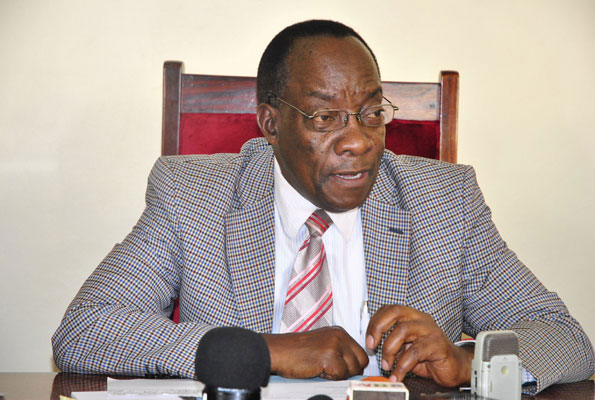
IEC boss Eng. Badru Kiggundu.


The National Independent Electoral Commission has today finalized preparations for the nomination of candidates to contest for the presidential elections next year.

According to the NIEC chairman Engineer Badru Kiggundu, the nominations will be conducted on Tuesday November 3 and Wednesday November 4, 2015 at the Mandela National Stadium from 10.00am to 4.00 pm each day.

The commission says that out of the 40 aspirants who picked nomination forms, only 10 have managed to fulfill the requirements and have been issued with a certificate of clearance. Those cleared include Bwanika Abed  (Peoples’ Development Party), Charles Bbaale (Ecological Party of Uganda), Yoweri Kaguta  Museveni(NRM), Venancius Baramureeba (Independent), Dr Kizza Besigye (FDC), Joseph Mabirizi (Independent), Amama Mbabazi (Independent), Maj Gen (rtd) Benon Biraro (Farmers Party of Uganda), Nasser Ssebagala Ntege (Independent) and Faith Maureen Walube Kyalya, the only woman who is also running as an Independent.

The commission maintained that access to the nomination venue will be restricted and advised aspirants to use two vehicles whose occupancy should not exceed 20 persons. Each of the vehicles shall bear a police sticker.

Prior to their clearance the candidates were required to submit the proof of age which should not be less than 35 years or more than 75 years; proof of possession of minimum academic qualification which is Advanced Level or its equivalent and also proof of payment of a non refundable nomination fee of twenty million Uganda shillings.

Stories Continues after ad

Uganda ranked among Africa’s most influential countries

President Museveni posses for a photo with members of newly commissioned Petroleum Authority of Uganda headed by Jane Mulemwa (on his Left( and Nationaly Oil Company headed by Emmanuel Katongole.


Uganda has been ranked 7th most influential country in Africa, with the army, the Uganda Peoples Defence Forces (UPDF) lauded for its efforts in peacekeeping.

“Uganda army may not be the most advanced in Africa but it is the most courageous and it has proved itself better than most force (sic) from the rest of Africa from 1993 when it (participated) in stopping the Rwanda genocide, protected Kenyans in 2008, fought the Rwandan rebel in Congo up to date, when its keeping peace in southern Sudan and largely in Somalia which was abandoned by most Africa great powers like the South Africa and the African Arab countries,’ How Africa states in a blog released October 29.

According to How Africa, Uganda was also able to maintain GDP growth at between 6.5 and 7 percent during the period 1990s up to 2010.

‘Uganda was among the first sub Saharan countries to embrace market reforms in the late 1990s and graduated as a mature reformer in 2006 with sound economic fundamentals and much improved governance. Real GDP growth accelerated from an average of 6.5 percent year-on-year in the 1990s to over 7 per cent during the 10 years leading up to 2009-10. Not surprisingly, Uganda qualifies as one of the few durable African success stories,’ Africa How states.

Top on the list released October 29, South Africa is ranked No.1 on the continent, followed by Ethiopia, Egypt, Kenya, Morocco and Nigeria. Others are (Uganda), Rwanda, Zimbabwe and Algeria.

‘South Africa is the only African country that is a member of the G20 and BRICS (Brazil, Russia, India, China and South Africa grouping) and the only country of of the EU’s 10 global strategic partners,’ How Africa says of South Africa, the continent’s top ranked country.

Surprise package Zimbabwe, ranked No.9 is credited for standing up to the western powers.

‘The only that has not followed the conventional development strategies as directed by the western countries… the advantage is localization of the vast economic wealth/dividends moving forward as opposed to recording good GDP when in actual fact the country is nothing but a western resource extraction ground,’ How Africa says of the country that has been ruled by one man, President Robert Gabriel Mugabe, since Independence in 1980.

Neighbouring Kenya at No.4 has been singled out for educational prowess, while Rwanda at No.8 is credited for its UN peace keeping efforts among other credentials.

‘Kenya is a powerhouse in human resource capital. With the most educated population on the continent it also (has) the fastest growing ICT hub on the continent,’ Africa How says of Uganda’s neighbor to the east, Kenya.

Stories Continues after ad

Kony killing Congo elephants, selling ivory in Sudan

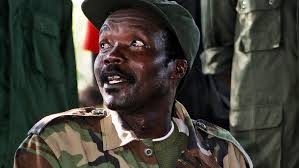
LRA boss, Joseph Kony.


African warlord Joseph Kony’s Lord’s Resistance Army rebels in Congo are killing elephants for their ivory, which they trade for supplies in Sudanese-controlled territory.

According to a new report released Monday by the watchdog group Enough Project, the ivory is trafficked from Congo’s Garamba National Park, where the animals are poached, to Kafia Kingi, an enclave controlled by Sudan. “The rebels deal with Sudanese merchants to get food, uniforms and ammunition,” says the Enough Project report. The findings are based on interviews with defectors from the rebels.

One group of rebels based in the park poaches elephants and secures the ivory, and then another group transports the ivory from northeastern Congo through Central African Republic to Kafia Kingi, the report charges.

“The tusks are likely trafficked to Nyala, South Darfur, and on to Khartoum for export abroad, primarily to Asia,” it said.

The report adds that rebel commanders, under direct orders from Kony, have also traded with Sudanese military officers.

Sudan has faced persistent accusations that it is aiding Kony’s group, charges the Khartoum government denies.

Kony is being hunted by a joint African force of troops from Uganda and Congo. U.S. advisers are also deployed to the jungles of central Africa to help the force trying to capture or kill Kony and his rebels.

Last week President Barack Obama reauthorized U.S. support for the mission against Kony.

Kony himself is believed to be hiding in Kafia Kingi, where he has eluded the international forces searching for him. His rebel group originated in Uganda in the 1980s as a tribal uprising against the government, eventually gaining notoriety for the sexual enslavement of girls and the recruitment of boys. By 2006, a Ugandan military assault had forced all the rebels to flee to Congo and to other parts of central Africa.

According to Enough Project, only about 120 Lord’s Resistance Army rebels remain in the bush.

AP

Stories Continues after ad