Stanbic Bank
Stanbic Bank
20.7 C
Kampala
Stanbic Bank
Stanbic Bank
Home Blog Page 2297

Uganda ranked among Africa’s most influential countries

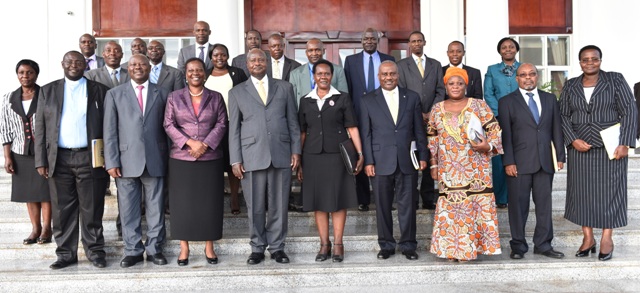
President Museveni posses for a photo with members of newly commissioned Petroleum Authority of Uganda headed by Jane Mulemwa (on his Left( and Nationaly Oil Company headed by Emmanuel Katongole.


Uganda has been ranked 7th most influential country in Africa, with the army, the Uganda Peoples Defence Forces (UPDF) lauded for its efforts in peacekeeping.

“Uganda army may not be the most advanced in Africa but it is the most courageous and it has proved itself better than most force (sic) from the rest of Africa from 1993 when it (participated) in stopping the Rwanda genocide, protected Kenyans in 2008, fought the Rwandan rebel in Congo up to date, when its keeping peace in southern Sudan and largely in Somalia which was abandoned by most Africa great powers like the South Africa and the African Arab countries,’ How Africa states in a blog released October 29.

According to How Africa, Uganda was also able to maintain GDP growth at between 6.5 and 7 percent during the period 1990s up to 2010.

‘Uganda was among the first sub Saharan countries to embrace market reforms in the late 1990s and graduated as a mature reformer in 2006 with sound economic fundamentals and much improved governance. Real GDP growth accelerated from an average of 6.5 percent year-on-year in the 1990s to over 7 per cent during the 10 years leading up to 2009-10. Not surprisingly, Uganda qualifies as one of the few durable African success stories,’ Africa How states.

Top on the list released October 29, South Africa is ranked No.1 on the continent, followed by Ethiopia, Egypt, Kenya, Morocco and Nigeria. Others are (Uganda), Rwanda, Zimbabwe and Algeria.

‘South Africa is the only African country that is a member of the G20 and BRICS (Brazil, Russia, India, China and South Africa grouping) and the only country of of the EU’s 10 global strategic partners,’ How Africa says of South Africa, the continent’s top ranked country.

Surprise package Zimbabwe, ranked No.9 is credited for standing up to the western powers.

‘The only that has not followed the conventional development strategies as directed by the western countries… the advantage is localization of the vast economic wealth/dividends moving forward as opposed to recording good GDP when in actual fact the country is nothing but a western resource extraction ground,’ How Africa says of the country that has been ruled by one man, President Robert Gabriel Mugabe, since Independence in 1980.

Neighbouring Kenya at No.4 has been singled out for educational prowess, while Rwanda at No.8 is credited for its UN peace keeping efforts among other credentials.

‘Kenya is a powerhouse in human resource capital. With the most educated population on the continent it also (has) the fastest growing ICT hub on the continent,’ Africa How says of Uganda’s neighbor to the east, Kenya.

Stories Continues after ad

Kony killing Congo elephants, selling ivory in Sudan

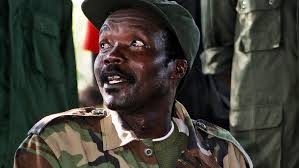
LRA boss, Joseph Kony.


African warlord Joseph Kony’s Lord’s Resistance Army rebels in Congo are killing elephants for their ivory, which they trade for supplies in Sudanese-controlled territory.

According to a new report released Monday by the watchdog group Enough Project, the ivory is trafficked from Congo’s Garamba National Park, where the animals are poached, to Kafia Kingi, an enclave controlled by Sudan. “The rebels deal with Sudanese merchants to get food, uniforms and ammunition,” says the Enough Project report. The findings are based on interviews with defectors from the rebels.

One group of rebels based in the park poaches elephants and secures the ivory, and then another group transports the ivory from northeastern Congo through Central African Republic to Kafia Kingi, the report charges.

“The tusks are likely trafficked to Nyala, South Darfur, and on to Khartoum for export abroad, primarily to Asia,” it said.

The report adds that rebel commanders, under direct orders from Kony, have also traded with Sudanese military officers.

Sudan has faced persistent accusations that it is aiding Kony’s group, charges the Khartoum government denies.

Kony is being hunted by a joint African force of troops from Uganda and Congo. U.S. advisers are also deployed to the jungles of central Africa to help the force trying to capture or kill Kony and his rebels.

Last week President Barack Obama reauthorized U.S. support for the mission against Kony.

Kony himself is believed to be hiding in Kafia Kingi, where he has eluded the international forces searching for him. His rebel group originated in Uganda in the 1980s as a tribal uprising against the government, eventually gaining notoriety for the sexual enslavement of girls and the recruitment of boys. By 2006, a Ugandan military assault had forced all the rebels to flee to Congo and to other parts of central Africa.

According to Enough Project, only about 120 Lord’s Resistance Army rebels remain in the bush.

AP

Stories Continues after ad

UNOCHA calls for more aid to displaced South Sudanese


The head of Operations at the United Nations Office for the Coordination of Humanitarian Affairs, John Ging, has called for more help for people and communities who have faced years of crisis in Sudan, South Sudan and Somalia.

“Each of these countries faces a unique set of challenges. But in each country, I spoke with people who have had to run from their homes again and again, fleeing successive waves of violence. I met children who have grown up never knowing peace and stability,” said Mr. Ging

According to the UNOCHA official, those in need of assistance have ‘simple demands’.

“These people had simple demands: they wanted support in rebuilding their livelihoods, educating their children and accessing medical care,” said Mr. Ging. “But above all they told me they were exhausted, and desperately wanted an end to conflict,” he said.

Mr. Ging travelled to the three countries from 18 to 25 October with representatives from the United States, the United Kingdom, the European Union and the Netherlands.

“The challenges faced by these countries are overwhelming,” said Mr. Ging. “But in each we saw reasons for hope. In Sudan, the Government indicated a new willingness to allow humanitarian workers to access those in need of assistance. In South Sudan, the signing of a new peace agreement provides a prospect for an end to the violence which has engulfed the country. And in Somalia, we saw progress that many described as the best chance the country has had in 25 years to build lasting peace.”

In South Sudan, worsening violence has swept across the central region of the country over the past months, systematically targeting civilians. In Southern Unity state alone, some 1,600 women have been forcibly abducted since May, more than 1,000 civilians killed, 1,300 women and girls have been raped and more than 15,000 children have been recruited into armed groups.

Across East Africa, one of the most severe El Nino events on record is set to have a devastating impact in the next few months, causing an estimated 83 per cent increase in food insecurity by the start of 2016. The number in need of food assistance across the region is forecast to increase from 12 million at the start of 2015 to 22.1 million at the start of 2016, with flooding set to affect up to 3.5 million people.

These countries are some of the most dangerous in the world for humanitarian workers, with at least 10 aid workers killed in Somalia so far in 2015 and at least 34 killed in South Sudan since December 2013. Despite this, humanitarian workers continue to reach millions of people every month with lifesaving assistance.

“It is inspiring to witness the efforts our colleagues are making on the front line,” said Mr. Ging. “The international community must continue to support these efforts, and stand in solidarity with those who have been the victims of conflict for far too long.”

Stories Continues after ad

What is wrong with our parties and political organisations?

Almost all political parties in Uganda are at their lowest ebb, unfortunately at a time when the population has high expectations and is anxious to participate in a process that will provide the next national leadership.

Indeed, the plague that has engulfed the leadership of Uganda’s political organisations serves as an indicator as to the levels of bigotry and malfeasance that characterize our political terrain.
As we approach the election date, there is apparent discontent from some of the members of the ruling National Resistance Movement (NRM), who have lost in the just-concluded primaries, a development that has prompted the party to establish a ‘special tribunal’ to address the grievances of the losers.
But the group of losers should appreciate that in every contest there is always one winner and after the elections they should marshall all their efforts to ensure the success of the party.
Then there is The Democratic Alliance (TDA) where there has been persistent bickering since the loose political organization ‘grafted’ to challenge incumbent President Yoweri Museveni in the 2016 polls failed to come up with a flag bearer by consensus. This resulted into the aspirants declaring each would go it alone, never mind that there seem to be ongoing negotiations to try and rejuvenate the antagonistic members of Alliance.
Indeed, as of yesterday there was loose talk that the two Principals, Mbabazi and Dr Besigye, are in talks aimed at having one of them become the ‘Ceremonial President’ and the other ‘Executive Prime Minister’.
But both camps are tight-lipped about the touchy issue, yet it seems to have far-reaching implications on their political ambitions and as such the two should be able to come clean and tell the populace what is really cooking in their pot. That way they will calm the nerves of their supporters.   
That said, in the Democratic Party, President General Norbert Mao and staunch party member, Lord Mayor Erias Lukwago, are at loggerheads, their differences almost pushing the DP into oblivion.
Also, the Uganda Peoples Congress is ‘on fire’, with party ‘President’ Jimmy Akena facing ‘arrest’ after failing to turn up for a court hearing in which he, together with 13 other party officials are charged with trespass on the Uganda House, the formal party headquarters.
So, against such a background the big question is: What is wrong with our parties and political organisations?
Stories Continues after ad

First Lady, Kagina awarded Masters Degrees

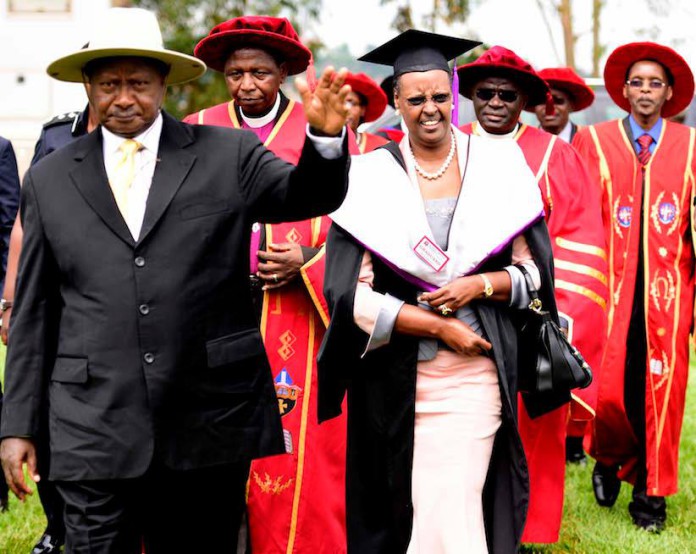
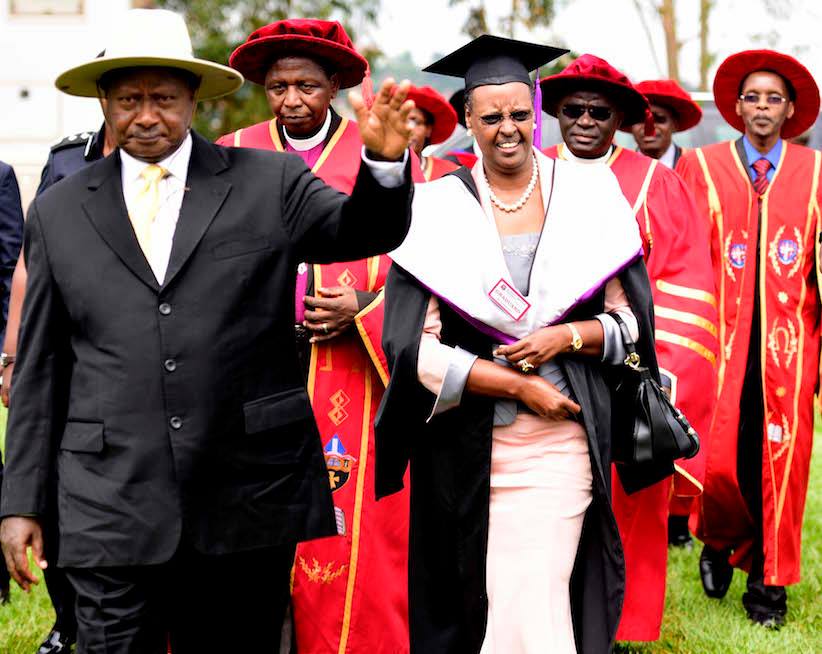
First Lady and Karamoja Affairs Minister Janet Kataha Museveni, and Uganda National Roads Authority (UNRA) boss Allen Catherine Kagina have been awarded Masters Degrees.

12189687_997688626965411_9094193758622102040_n

The two prominent ladies in the country were awarded Masters of Arts in Organisational Leadership and Management in the third batch at the 16th graduation ceremony that took place at Uganda Christian University (UCU) Mukono today.

Also awarded a Masters of Arts in Organisational Leadership and Management was Ms. Susan Muhwezi Kabonero, wife to the Minister of Information Maj Gen Jim Muhwezi.

Over 1600 students graduated today with Diplomas, Bachelors and Masters Degrees at a ceremony presided over by Dr. David S. Dockery,President of Trinity International College in Chicago.

Stories Continues after ad

China to end one-child policy


China one child


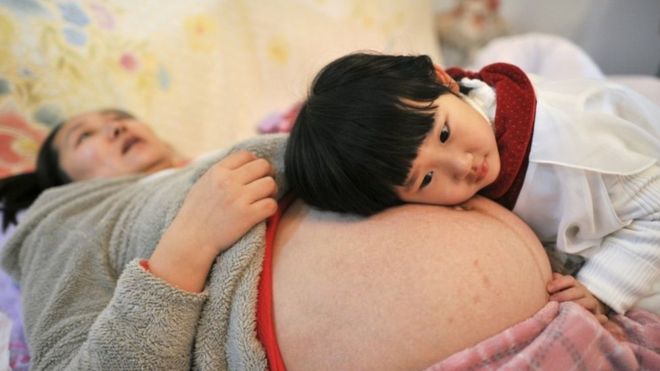
China has decided to end its decades-long one-child policy, the state-run Xinhua news agency reports.

Couples will now be allowed to have two children, it said, citing a statement from the Communist Party.

The controversial policy was introduced nationally in 1979, to slow the population growth rate.

It is estimated to have prevented about 400 million births. However concerns at China’s ageing population led to pressure for change.

Couples who violated the one-child policy faced a variety of punishments, from fines and the loss of employment to forced abortions.

Over time, the policy has been relaxed in some provinces, as demographers and

Introduced in 1979, the policy meant that many Chinese citizens – around a third, China claimed in 2007 – could not have a second child without incurring a fine

In rural areas, families were allowed to have two children if the first was a girl

Other exceptions included ethnic minorities and – since 2013 – couples where at least one was a single child

Campaigners say the policy led to forced abortions, female infanticide, and the under-reporting of female births

It was also implicated as a cause of China’s gender imbalance

What was China’s one-child policy?


The decision to allow families to have two children was designed “to improve the balanced development of population” and to deal with an aging population, according to the statement from the Community Party’s Central Committee carried by the official Xinhua News Agency (in Chinese) on Thursday.

Xuefei Zheng in the UK emails

Great news! I am a Chinese national married to an English man. I am an only child myself. My parents loved kids but they could only have me because of the threat of losing their jobs if they had more.

I felt lonely growing up by myself. My parents tried their best by having my cousins over and sending me to my cousins for a day but I always wished I had sisters and brothers.

Now my parents are over 50 and my grandparents are living with them. I want to be able to help my parents too but it will be hard to make them move all the way to the UK and give up their life and friends in China.

My husband is very understanding of the Chinese culture and we are working hard now to save money to begin our own family. If we are blessed, I will definitely have more than one child.

Read more experiences and reaction


Critics say that even a two-child policy will not boost the birth rate enough, the BBC’s John Sudworth reports.

And for those women who want more than two children, nor will it end the state’s insistence on the right to control their fertility, he adds.

“As long as the quotas and system of surveillance remains, women still do not enjoy reproductive rights,” Maya Wang of Human Rights Watch told AFP.

The announcement comes on the final day of a summit of the Chinese Communist Party’s policy-making Central Committee, known as the fifth plenum.

The party is also set to announce growth targets and its next five year plan.


Stories Continues after ad

Let India, Africa work together to claim legitimate rights at UN


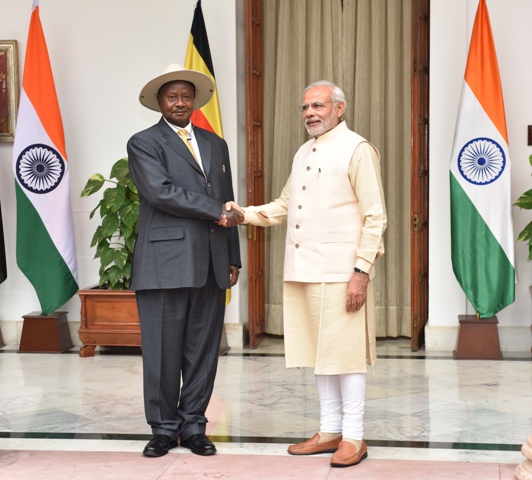
India's Prime Minister Narendra Modi receives President Museveni at his residence at Hyderabad in New Delhi India yesterday Oct 28 where the two leaders held bilateral talks. PPU Photo
India’s Prime Minister Narendra Modi receives President Museveni at his residence at Hyderabad in New Delhi India yesterday Oct 28 where the two leaders held bilateral talks. PPU Photo


October 29, 2015

Rt. Honourable Modi, Prime Minister of India,

H.E. Robert Mugabe, Chairperson of the African Union,

Her Excellency Nkosazana Zuma, Chairperson of the African Union Commission,

Your Majesties,

Your Excellences’ Heads of State and Government,

As I told Your Excellency yesterday, the overriding universal legitimate interest of the whole human race should be “prosperity for all.”  This is actually a concept we use in Uganda.  Even globally, this concept is legitimate.  The most efficient way to generate prosperity is to support one another through trade, investments, tourism and sharing science knowledge.  This is the smart way of moving “towards a dynamic and transformative agenda,” as our theme for this forum goes.  As I told Your Excellency, when I buy what you produce, I am supporting your prosperity and vice-versa.

The current figures show that Uganda supports India’s prosperity by buying US$1.6 billion worth of goods.  India, on the other hand, only buys goods worth US$16million.

This is unbalanced support for each other.  We need to work together systematically so as to expand and balance this trade. India should support Uganda and Africa to develop infrastructure so as to lower the costs of doing business in Uganda, thereby attracting more businesses into the country.  India should work deliberately to open their markets to goods from Uganda and Africa. If you look at the figures of trade, you will see that Africa, certainly Uganda, has been supporting the prosperity of India by spending US$1.6 billion per annum importing products from India.

The majority of these imports have been oil products, probably re-exported (US$533 million) and pharmaceuticals (US$117 million).  Uganda, on the other hand, only exports to India goods worth US$16 million mainly coffee beans.  This means that Uganda has been supporting the prosperity of India more than India has been supporting the prosperity of Uganda.  This imbalance, in mutual prosperity support, needs to be corrected.  I have made concrete and specific proposals to the Indian side to correct this.

Even the similarity of products, e.g. tea or textiles, should not be a problem.  India could allow Uganda’s processed tea and textiles so that the Indian consumers are the ones that decide on what they prefer.

Although Africa is 12 times bigger than India, the populations of the two areas are almost equal today.  Africa’s population is 1.23 billion.  In the past, the Indian population has been much bigger than that of Africa.  By 2050, however, the African population will be 2.5 billion people while that of India will be 1.66 billion.  These two areas – the continent of Africa and the sub-continent of India – should deliberately use these huge population groups in the two areas to support, through trade, the prosperity of the two peoples – the Indians and the Africans.  Put another way, the two key players of the modern world are the consumer and the producer of goods or services.  It is these two that generate prosperity.  All the other actors are linkmen.  Let us link our producers and consumers in a balanced way.

Apart from trade, we can support our prosperity mutually through four other areas – investments, tourism, scientific knowledge and co-operation on the issue of global security (either bilaterally or through the UN).  I am told 15 million Indians go out as tourists per annum.  I normally see some in London when I pass through there.  Some of these could come to Africa, particularly Uganda where the climate, the peace and the absence of lawlessness is incomparable.  The Ugandans have for long noticed the discipline of the Indian investors – especially their capacity to start small and grow very big.

Uganda has got plenty of such examples:  the Madhvanis, the Mehtas, the Ruparelias, the Tirupatis, and the Karmalis etc.  I want more and more of these.  We fought against colonialism together.  Let us fight for mutual prosperity together.

Recently, we adopted the 17 sustainable development goals in the UN.  These SDGs subsume what I have said above and more.  On global security, let the two areas work together to claim our legitimate rights in the UN system, especially the UN Security Council.

I thank you.


Stories Continues after ad

Eliminate trade barriers, Museveni urges India

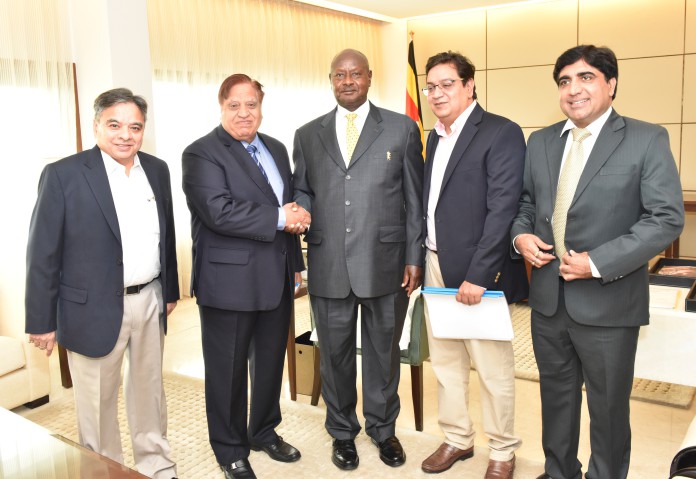
President Museveni posses for a photo with the propriator and chairman of Amos Dairies Dewan Pruthi and his team who paid a call on him at his hotel in New Delhi yesterday Oct 28


President Yoweri Museveni has urged Indian entrepreneurs and business executives to come and invest in Uganda, saying it is more profitable than in India or many other countries.

Addressing the India-Africa Business Forum at the Le Meridien Hotel, New Delhi, the President said prosperity could be done through trade and investment as a strategic goal for India to promote partnerships with Africa.

Museveni is in India on a four-day working visit during which he will also address the 3rd India – Africa Forum Summit currently underway at the Indira Gandhi Sports Complex.

President Museveni posses for a photo with the propriator and chairman of Amos Dairies Dewan Pruthi and his team who paid a call on him at his hotel in New Delhi yesterday Oct 28

President Museveni identified trade, infrastructural development, tourism and collaboration in scientific cooperation and research as areas that can be exploited to create prosperity sustainably through production.

He said the first stimulus for prosperity is trade because the producer, and the buyer mutually support each other.

He however pointed out that whereas Uganda has been supporting the prosperity of India by buying Indian products, India has, over the years not reciprocated in equal measure, thus the trade imbalance between the two countries. He explained that India’s exports to Uganda are worth US $1.6 billion, but only imports Uganda’s unprocessed coffee worth US $16million only; thus creating unbalanced prosperity through trade.

President Museveni shares a light moment with the panelists of the India Africa Business Forum PK Gupta after addressing the Business Forum at Le Meridian Hotel in New Delhi yesterday Oct 28

He invited them to come and invest in the agricultural processing sector to add value to agricultural products for export.

He also identified other areas as mineral processing, fresh water products, oil, gas and energy.

President Museveni called for ‘the elimination of trade barriers so that Uganda’s products such as textiles, tea and dairy products can gain access to the Indian market’ but only blocked by consumer action. “It was trade not aid that leads to sustainable prosperity,” he said.

The President had earlier met a number of investors who included those from the Confederation of Indian Industry, the Hinduja Group, and the Tata Group Chairman Cyrus P Mistry, who called on him at his hotel residence.

The meetings were attended by the Minister of Foreign Affairs Sam Kutesa, Uganda’s High Commissioner to India Elizabeth Paula Napeyok and Uganda’s Ambassador to Ethiopia and African Union Mull Katende.

Stories Continues after ad

FUFA seeks gov’t financial support ahead of World Cup qualifiers

The Uganda football governing body,FUFA, has written to the government seeking for financial assistance to help in the process of preparing for World Cup qualifier match against Togo.
According to communications from FUFA, the first leg clash against the West African giants will take place on Thursday, November 12, 2015 in Lome at the Kegue stadium at 15:30hours and the return leg is slated for Sunday, November 15, 2015 at the Nelson Mandela Stadium, Namboole in Kampala at16:00.
2
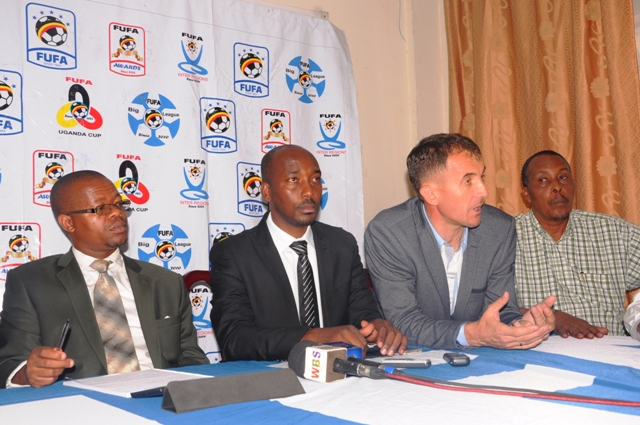
“The Federation has received communication from the head of FIFA World Cup and Olympic qualifiers confirming 12th and 15thas dates for the match between Cranes and Togo,” FUFA Communications Director, Ahmed Hussein told the media during the weekly press conference held at FUFA House, Mengo in Kampala on Wednesday
“We (FUFA) have written to the Government through the National Council of Sports and the Ministry seeking for financial help in the due process of preparing for both matches, away and home,” said Hussein, who also called upon all the stakeholders to rally behind the Uganda Cranes against Togo in a bid to qualify for the group stage of the 2018 FIFA World Cup Russia.
In other World Cup qualifiers of CECAFA countries Kenya will face Cape Verde, Burundi will play DR Congo, Rwanda will tussle it out with Libya, while Sudan will play against former AFCON Champions Zambia.
Tanzania will battle it out with top ranked African country Algeria, while Ethiopia will face Congo.
Five nations will qualify from the African continent for the 2018 FIFA World Cup to take place in Russia.


Stories Continues after ad

Micho praises Cranes’ spirited approach against Sudan

Cranes will be involved in a busy schedule
Uganda Cranes head tactician, Milutin ‘Micho’ Sredojevic has lauded the national teams’ spirited performance against Sudan in the recently concluded African Nations Championship (CHAN) qualification match.
Addressing the media during the weekly press conference held at FUFA House, Mengo in Kampala on Wednesday, Micho appreciated the role played by individual Cranes players, who he said, put up a highly spirited performance against Sudan at Nakivubo and away in Sudan.
Micho also praised the Uganda football governing body (FUFA) for providing a conducive atmosphere that facilitated Cranes’ qualification after eliminating neighbors Tanzania in the first leg and against Sudan recently.
“The boys put up a spirited performance against Sudan however; we have to put the celebrations to a hold as we quickly start planning for the upcoming 2018 World Cup qualifiers, CECAFA 2015, CHAN 2016 and the remaining AFCON 2017 qualifiers,” an exited Micho told the press.
“This is a bridge and the road to Burkina Faso has been inclined on four pillars- Chan qualifiers, back to back World Cup qualifiers against Togo, CECAFA 2015 and the CHAN Finals in Rwanda,” Micho added.
Cranes defeated Sudan 2-0 and 4-0 on aggregate to qualify for the third straight finals of the Championship of African Nations (CHAN) to be held in Rwanda next year.
Uganda’s captain Farouq Miya scored one of the goals in the extra minutes of the first half and created the other for Express FC’s Sam Caesar Okhuti who scored Uganda’s first goal in the 43rd minute after Sudan’s defenders failed to clear the ball from their goal area.
Meanwhile, the Federation of International Football Associations (FIFA) has communicated new dates for the upcoming first round qualifier between Togo and the Uganda Cranes.
According to FUFA, the first leg will take place on Thursday, November 12, 2015 in Lome at the Kegue stadium at 15:30 hours and the return leg on Sunday, November 15, 2015 at the Nelson Mandela Stadium, Namboole (Kampala) at 16:00 hours.
The Serb tactician is expected to unveilthe Uganda Cranes squad to play the western African giants next week on Wednesday, during the weekly press briefing.


Stories Continues after ad