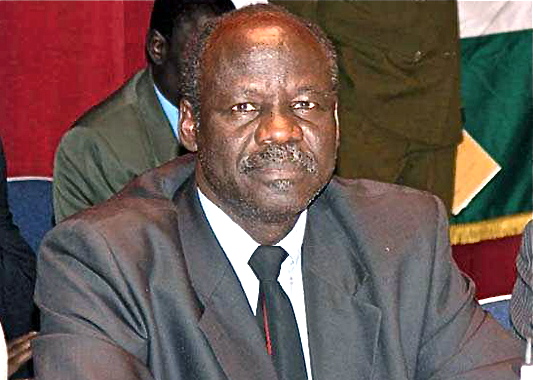
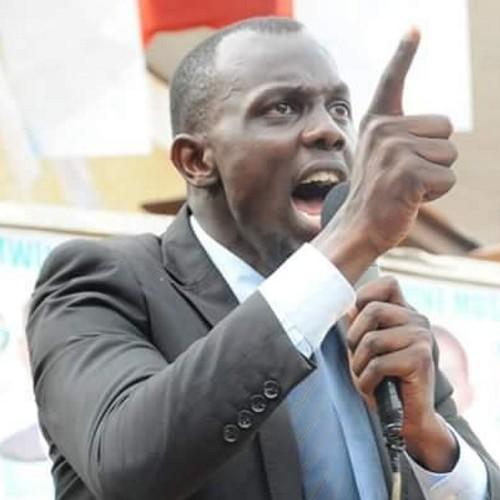
A South Sudanese opposition leader who has been a leading critic of President Salva Kiir said on Wednesday he was barred from boarding a plane to attend peace talks in Ethiopia.
Lam Akol, whose Shilluk ethnic group say they have been sidelined for years, said the IGAD East African regional bloc had invited him to peace talks but he was blocked from boarding the flight from the capital Juba to Addis Ababa.
“Unfortunately, a major general of the police told us that he has directives from the Presidency that the leaders of political parties are not allowed to travel without the permission from the presidency,” Akol told Reuters.
Awen Riek, speaking for the president’s office, said the government had no information that Akol’s party had been invited to the talks.
A political crisis in South Sudan in late 2013 sparked fighting that reopened ethnic fault lines between Kiir’s Dinka people and ethnic Nuer forces.
Other ethnic groups, such as Akol’s Shilluk, say they have been excluded from peace talks. The talks have made glacial progress and ceasefire agreements have been broken repeatedly.
Akol, a foreign minister of South Sudan when it was a semi-autonomous region before independence in 2011, formed his SPLM-DC party after breaking away from the ruling SPLM. He criticized the scrapping of elections that were due in June and opposed the extension of Kiir’s term in office by three years.
The Federation of Uganda Football Associations (FUFA) Chief Executive Officer (CEO), Edgar Watson has publicly communicated to Lweza Football Club about the team’s relegation.
In a letter dated August 5 addressed to the Lweza Chief Executive Officer, Watson said Lweza had not fulfilled its licensing requirements for the 2015/16 season and asked the Lweza CEO to make reference to three earlier communications of June 24, July 14, and July 30, made by FUFA.
According to Watson, Lweza have upto Friday, August 7 to appeal the decision.
“You have been granted a grace period of up to Friday, 7th August 2015 to appeal in case there is need before closure of business at 5pm.Please observe the requirements for lodging an appeal in line with FUFA statues,” Watson letter states in part.
The ongoing strike being carried out by non-teaching staff at all the seven public universities is an unwelcome distraction.
Early this week the support staff under their umbrella organization, the Public Universities Non-Teaching Staff, PUNTSEF, vowed not to carry out any work at their designated stations until their salary increment grievances are sorted out.
The groups cite an earlier increment in the salaries of the teaching staff announced in the current budget, and aver that they have been discriminated against.
The support staff strike is poignant for a number of issues, not least because these people offer services that are of critical importance to the students. These are the people who clean, man the library and guard the varsity premises, among other tasks.
It is common knowledge that the government has prioritized infrastructure development ahead of almost all other areas of service delivery. This in itself is not bad. However, there is a ‘tired’ tendency by those in charge of grading the salaries of public officials/workers; they create huge salary disparities that demoralize even the personnel that would have otherwise wanted to hang in there till the appropriate time comes when government can satisfactorily pay its workers. And therein lies the problem, one that needs a quick fix if we are to avoid intermittent strikes by workers in the public sector.
For starters, we could borrow a leaf from our neighbor to the east, Kenya, which established the Salaries and Remuneration Board, the SRB, to try and harmonise the salaries of public officers in the country.
The advantage of having bodies such as the SRB is that they are established through an Act of Parliament, meaning their activities are subject to parliamentary scrutiny and approval, thereby minimizing inequitable handling of public workers’ affairs including remuneration.
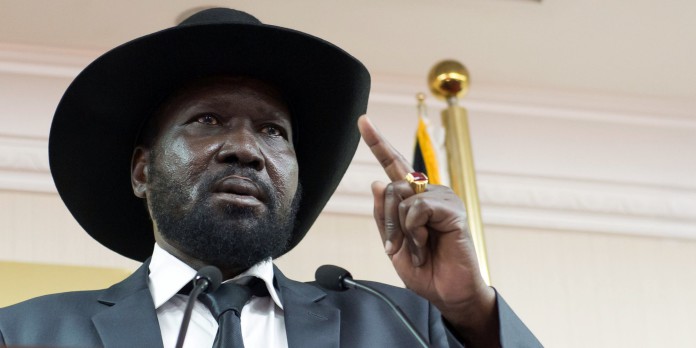
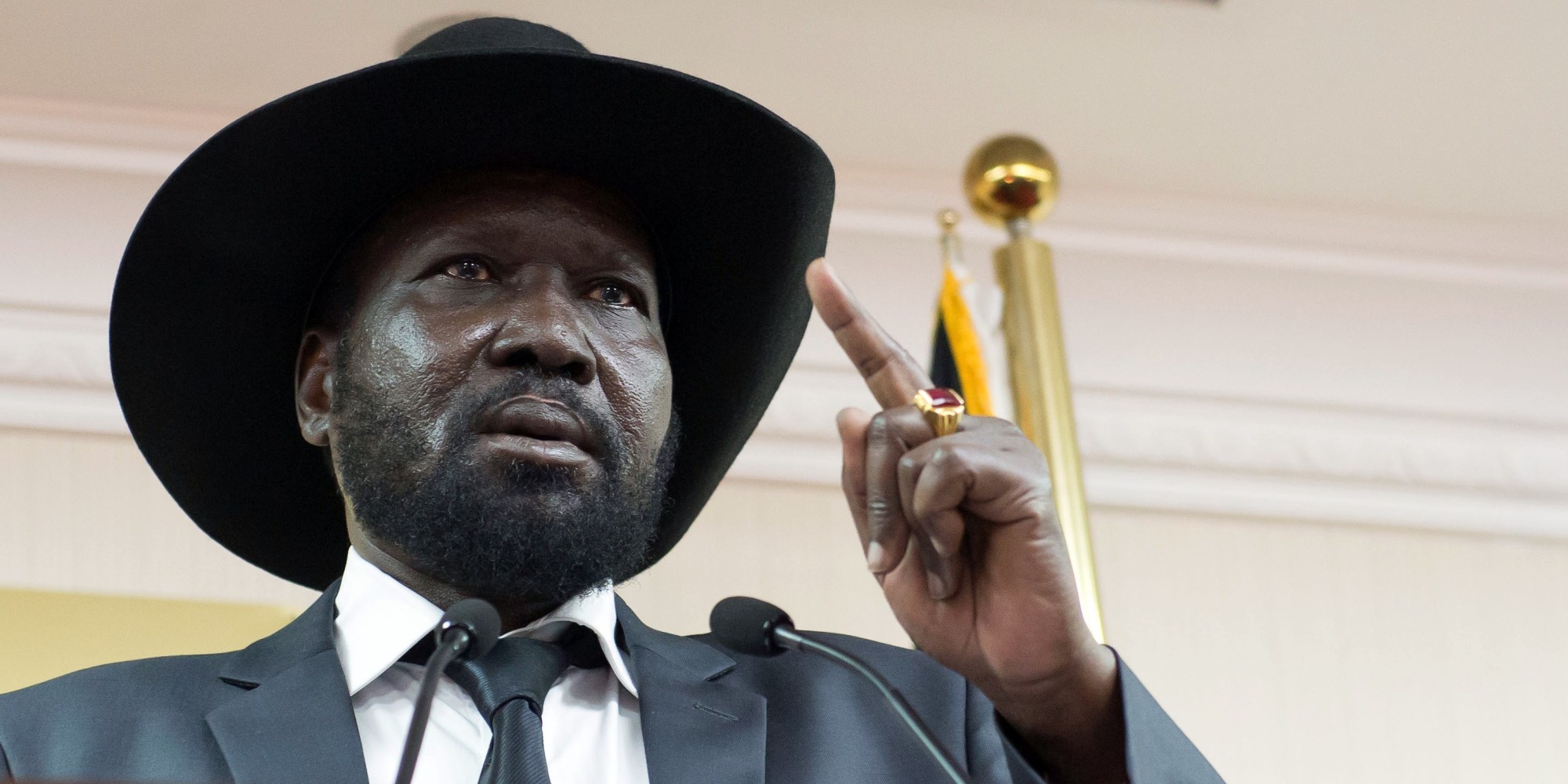
South Sudan President Salva Kiir whose government closed media houses.
Authorities in South Sudan have shut down three independent media outlets in the past five days.
According to news reports and the outlets’ editors, Arabic daily Al Rai, English daily The Citizen, Free Voice South Sudan were all closed on orders of security agents. The Voice of America, which shares premises with the Free Voice, was also forced to close down, but Hildebrand Bijleveld, the programs director for Free Voice, told the Committee to Protect Journalists (CPJ) the outlet was in compliance with the law and had done nothing to ‘concern the government’.
Free Voice, which was raided on Tuesday, August 4, produces radio programs including the serial drama “Sawa Shabaab” (“Youth Together”) and “Na’eesh Mabath” (“Living Together”), a radio series about traditions and contemporary conflict-resolution mechanisms.
Following a split between South Sudan President Gen Salva Kiir nd his former deputy Riek Machar, several thousand people have been or displaced, prompting the international community to intervene through the Intergovernmental Authority on Development, IGAD, to force the two SPLM/A gurus to sign a peace deal and, according to journalists, this has led the government to crack down on the media.
“The Committee to Protect Journalists condemns the closures, which come as international mediators seek to arrive at a peace deal between the government and the armed opposition following months of civil war,” a release by CPJ states.
Tom Rhodes, the CPJ east Africa Representative urged the government to reopen the media outlets, even when no reason for closure or timeline for reopening was given by the government.
“South Sudan’s press has been constrained since this conflict began.
Now authorities seem to be ratcheting up the pressure,” Rhodes said, adding: “We call on the government in Juba to reopen these news outlets and allow all journalists to freely carry out their duties.”
For the Citizen that was closed on Monday, it Chief Editor Nhial Bol said he was accused of ‘promoting the opposition’ and that his staff were ordered to stop printing ‘until further notice’.
According to Bol, he covered a recent conference ‘of 16 allied opposition parties’ and wrote an Editorial, comparing the current political crisis in South Sudan to that in Somalia. According to Bol, the shutdown of the outlets contradicts South Sudanese media laws as well as the Constitution, which protects press freedom.
Meanwhile, earlier on Saturday security forces had ordered the Arabic daily Al-Rai to shut down, accusing one of the paper’s board members of joining rebel forces in Nairobi, the paper’s chief editor, Michael Wazir, told CPJ.
Wazir said that the board member had traveled to Nairobi to visit family members and said the paper’s staff was trying to negotiate with the authorities about resuming publications.
Calls to Paul Jacob, the government’s director of public information, and Ateny Wek Ateny, government spokesman, were not answered, the CPJ release states.
In a related development, the CPJ says South Sudan officials have targeted the press throughout the conflict, and that at least five journalists have been ‘killed in direct relation to their work in South Sudan this year’.
The CPJ also says that journalists have turned to self-censorship, to avoid harassment and closures and the Chief Editor of the English daily Nation Mirror Wol Deng Atak told the CPJ that in February, national security agents raided his publication, accusing it of publishing “anti-government articles.
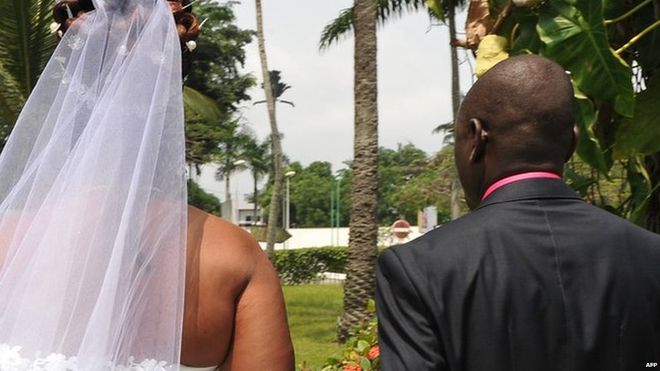
Refund of bride, Uganda’s Supreme Court has ruled that the practice of refunding a bride price, or dowry, on the dissolution of a customary marriage is unconstitutional and should be banned.
The judges said it suggested that women were in a market place, and infringed on their right to divorce.
But they rejected the argument that the bride price itself was unconstitutional.
Campaigners said that the dowry turns a woman into the husband’s property.
Should a marriage end in Uganda, the wife had been expected to refund the bride price – often paid in livestock.
But it was argued that as women tend to have less wealth than their husbands, many became trapped in unhappy relationships.
There was a gasp in the court-room when the first justice ruled against the refunding of the bride price.
This is being seen by those behind the case as a major step in chipping away at a tradition that is detrimental to women.
But as most of the judges acknowledged many Ugandans support the idea of a bride price, which they do not see as a commercial transaction.
The women’s rights organisation Mifumi, which brought the case, welcomed the ruling, despite not getting everything it campaigned for.
“This is a momentous occasion… and this ruling will aid the fight against women and girls’ rights abuses,” spokesperson Evelyn Schiller told the BBC outside the court.
Mifumi said that bride price encouraged domestic violence and could lead a man to think that he had paid for his wife’s “sexual and reproductive capacity”.
Six of the seven judges said that the direct link between the bride price and domestic violence had not been proved.
However, they did say that using the phrase “bride price” was wrong as it made it look like the woman was purchased.
The only dissenting opinion came from Justice Esther Kisakye, who said that while the constitution supports culture “it [only] validates customs that respect the rights of all Ugandans”.
Relatives of those missing on Malaysia Airlines flight MH370 have vented anger at apparent mixed signals over whether part of the plane has been found.
Malaysian PM Najib Razak said experts in France had “conclusively confirmed” the wing part found on an island in the Indian Ocean was from the aircraft.
But French investigators stopped short of confirming the link, only saying it was highly likely.
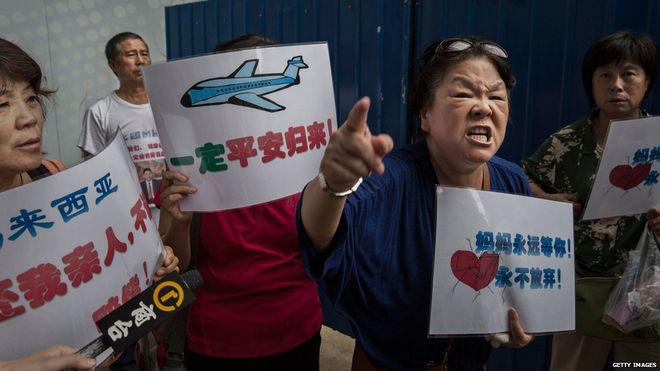
Chinese relatives staged a protest outside the airline’s Beijing offices.
The Boeing 777 was travelling from Kuala Lumpur to Beijing on 8 March 2014 when it vanished from radar. It had 239 people on board, most of them Chinese.
Debris found on the remote French island of Reunion a week ago – a wing part known as a flaperon – was the first possible physical trace of the aircraft.
Experts in the French city of Toulouse resumed their tests on the object on Thursday.
In another development, the Malaysian transport minister said more plane debris had been found on Reunion, including window panes and seat cushions.
Liow Tiong Lai said the items had been sent to French authorities to be verified.
He also said elements of the flaperon, including the paint colour, matched with maintenance records for the missing flight.
The lack of unity over whether parts of MH370 had been found has angered many of the families of those missing.
Malaysian PM: “Experts have conclusively confirmed that the aircraft debris found on Reunion Island is indeed from MH370.”
French investigators: “There exists a very high probability that the flaperon indeed belongs to Flight MH370.”
Australian PM: Debris “does seem to indicate the plane did come down more or less where we thought it did”.
Australian search team: “It is heartening that the discovery of the flaperon is consistent with our search area.”
“Why the hell do you have one confirm and one not?” asked Sara Weeks of Christchurch, New Zealand, whose brother Paul Weeks was on board the flight.
“Why not wait and get everybody on the same page so the families don’t need to go through this turmoil?”
Many of the Chinese relatives have consistently questioned the official view that the plane crashed.
Some gathered in Beijing on Thursday to demand further answers.
“I don’t believe this latest information about the plane, they have been lying to us from the beginning,” Zhang Yongli, whose daughter was on board, told AFP news agency.
“I know my daughter is out there, but they won’t tell us the truth.”
Liu Kun, whose younger brother was on the plane, said: “Find the people for us. We suspect that the plane wreckage could be faked.”
Mr Najib’s announcement came after the first day of tests on the flaperon in Toulouse.
He said investigators had “conclusively confirmed that the aircraft debris found on Reunion Island is indeed from MH370”.
French prosecutor Serge Mackowiak said only there were “very strong indications” this was the case, and that confirmation would only come after further tests.
The BBC’s Hugh Schofield in Paris said Mr Mackowiak’s caution did not suggest he had doubts, but that he was exercising legal caution.
Australia, which is leading the search for the plane in the southern Indian Ocean, would only say that it remained confident it was searching in the right area.
Australian Transport Minister Warren Truss said Malaysia, which is in charge of the overall investigation, had the right to express its view.
“We respect the view that they believe they have sufficient evidence to make a categorical statement of that nature,” he said.
“The French inquiry, of course, has not been quite so conclusive.”
‘Respect decision’
Mr Liow said he understood why the French team had been less categorical.
“We respect their decision to continue with their verification,” he said.
“For the Malaysian team, the technical report and maintenance report that we have matched with the flaperon… the expert team strongly feel and confirm that it is MH370.”
Meanwhile, Australian Prime Minister Tony Abbott said the search for the body of the plane would continue as “we owe it to the hundreds of millions of people who use our skies”.
The Australian Transport Safety Bureau (ATSB) has been co-ordinating the deep-sea hunt in the southern Indian Ocean, where the plane is believed to have gone down, thousands of miles east of Reunion.
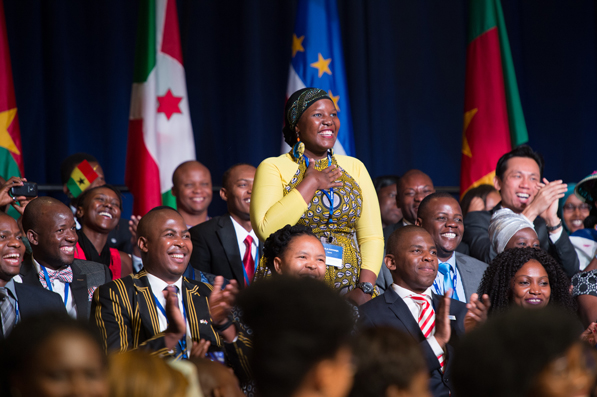
Dartmouth YALI fellow Jamila Mayanja reacts as President Obama recognizes her at a YALI summit this week.
Dartmouth YALI fellow Jamila Mayanja reacts as President Obama recognizes her at a YALI summit this week.
President Barack Obama called out Dartmouth fellow Jamila Mayanja from a crowd of hundreds of young African leaders at a summit for the president’s Washington Mandela Fellowship program Monday, sharing a laugh with the Ugandan entrepreneur.
Mayanja was at Dartmouth for the month of July as one of 25 fellows from the Young African Leaders Initiative, an Obama administration program that brings some 500 innovators from across Africa to develop business, leadership, and networking skills at U.S. colleges and businesses.
When Obama recognized Mayanja for her work founding a socially conscious business, a cheer went up from the crowd. Mayanja jumped to her feet smiling, hands on hips, and greeted the president.
“Are you posing?” the president said to laughter. “She’s posing,” he said, mimicking her stance. “Jamila is not a fashion model. She started a door-to-door laundry company to employ Ugandan youth and teach them entrepreneurial skills.”
“She hopes to take what she learned during her time at Dartmouth University to meet her goal of getting 1,000 youth to work in or run their own business, so we’re proud to be your partner,” the president said.
“I can’t describe that moment,” Mayanja said. “It was amazing for me to have him recognize the work we are doing and also for our partners back home to see that our work is making a difference.”
She said the event was the culmination of an exceptional experience developing her leadership and entrepreneurial skills in the Dartmouth program led by the John Sloan Dickey Center for International Understanding.
“I benefitted very much from the training in design thinking, business development, and leadership skills at Dartmouth, which I will take back to Uganda and share,” she said.
She said the workshops by Rich Nadworny ’82 in the DEN Innovation Center and New Venture Incubator were invaluable for her thinking about her business, and she noted that Nadworny, director of entrepreneurship and innovation for the Dartmouth YALI program, took time to work with her to think about how to share new ideas with the Ugandan youth she works with.
“I made many friends in the community there,” Mayanja said. “I left Dartmouth with a very big family.”
US President Baraka Obama turned 54 yesterday August 4.
US President Baraka Obama turned 54 yesterday August 4.
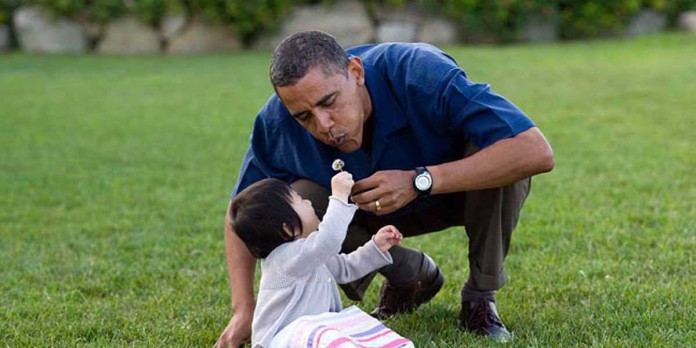
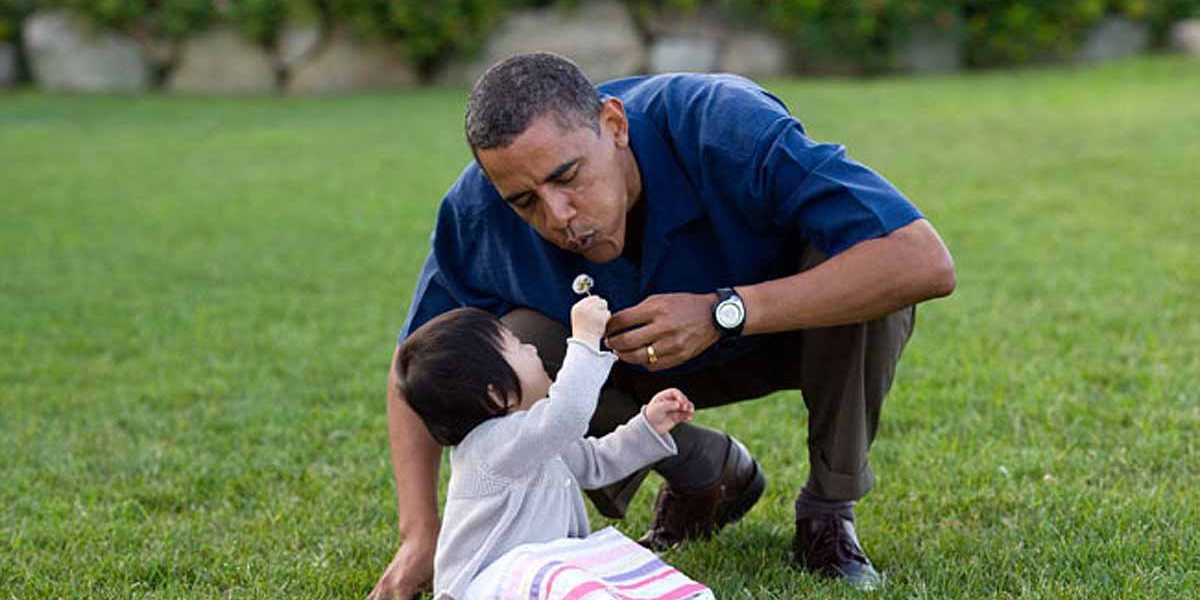
US President Barack Obama celebrated his 54th birthday August 4, with visit to prominent Washington DC off-the-counter-eatery, the Luxury Rose.
Obama, the son of an African father Hussein Barack Obama Senior and white mother Ann Dunham, was born Honolulu, Hawaii in 1961.
Obama and his wife Michelle are blessed with two teenage daughters, Sasha and Malia, and tweeting on her handle, Michelle wished her ‘favourite dance partner’ a happy birthday, while former President Bill Clinton was jocular in his birthday comment to the 44th President of the United States of America.
Happy birthday@POTUS! Hopefully when @FLOTUS isn’t looking you can have some cake. #44 turns 54, Clinton wrote, in reference to Obama’s US presidential lineage and age, respectively.
Plastic materials have turned into a business venture by many unemployed people.
Ruth Mutonyi is a single mother who has decided to venture into disposable plastic material collection to earn a living.
According to Ms Mutonyi, she decided to join this business after the failure of her first business, a retail shop.
“I hail from Mbale district and I found it hard to go back and do nothing in the village after the collapse of my business,” Mutonyi said, adding that she started her current business with Shs50, 000, used for labour and transport.
According to Ms Mutonyi, one of the challenges she faced with the new venture was to locate an appropriate area to act as a collection centre for the disposed bottles.
She says at the beginning she used to collect 50 sacks of plastic bottles and transport them to a nearby factory called Rwenzori Plastic Cycling.
“Due to a high demand of plastic material and good price (Shs500 a kilo) offered by the factory then, I would earn Shs500,000 per collection making the business more lucrative for me since I had no taxes to pay,” she says.
Ms Mutonyi also says they (suppliers) were being encouraged by the government (NEMA) to carry out the ‘environment-friendly activity’.
Speaking of her achievements, Ms Mutonyi says she has been able to pay school fees for her four children in secondary school, and to also cater for her in the village.
However, not all that glitters is gold, so the adage goes.
So, Ms Mutonyi has to move long distances in search of the disposed plastic bottles, while at the same time fighting off stiff competition from her ‘business rivals’ who also scour all places in search of the disposed plastic bottles.
She also says there is limited market now because some companies have closed shop; she faces transport constraints and declining prices, with a kilo now going for Shs300.
“Sometimes we are forced to pay bribes to those weighing at the factory so as to get the actual weight,” Ms Mutonyi says.
In future she hopes to expand her business, to surpass the current collection of five sacks a day.
David Bala Bwiruka said that if the government has not resolved the striking non-teaching staff issues by the end of this week, the students will be left with no option but to join the strike.
David Bala Bwiruka said that if the government has not resolved the striking non-teaching staff issues by the end of this week, the students will be left with no option but to join the strike.
Students at Makerere University have threatened to go on strike if the non-teaching staff continue with their industrial action which started on Monday, August 3.
On Monday the non-teaching staff under their umbrella body Public Universities Non-teaching Staff Executive Forum (PUNTSEF) declared a sit down, faulting government for failure to increase their salaries.
The students argue that strike by the non-teaching staff is negatively impacting on their studies as they are unable to access services at the university. Currently, there are students who remain at the University Recess’ but are unable to access their faculties because they are locked.
Even the Main Library which has always been open for students to do their reading and research is also closed and Makerere University Guild President David Bala Bwiruka said that if the government has not resolved the striking non-teaching staff issues by the end of this week, the students will be left with no option but to join the strike.
“We are thinking that government will act very fast to intervene in order to put the situation to order because the strike is having a very negative impact on the operation of the universities,” Bwiruka noted.
He added that the that university is now supposed to be handling a number of student issues like clearance of missing results and issuing of admission forms to fresh students, is non-functional.
“We are calling upon government to act very fast to rescue the situation; but if no solution is provided, we will be joining the strike at a point that we are not receiving the services that we pay for,” Bwiruka said.
When Eagle online spoke to the Minister of State in charge of Higher Education Prof. Sandy Steven Tickodri Togboa, he could not comment, saying he is out of the country.
Also, efforts to reach the education minister Jessica Alupo were futile as she could neither pick nor return our calls.
However, earlier on she had said that government is aware that the support staff had asked for enhancement of their salaries but that the Ministry was financially constrained.
She also asked them not lay down their tools and be patient with government up to the next financial year.
But the PUNTSEF Secretary General Bruce Tweisgye says the staff will not return to work until government meets their demands as stated in a petition that was handed to the Speaker of Parliament.
On Monday, support staff at all the seven public universities went on strike, demanding that their salaries be increased just like the teaching staff.