|
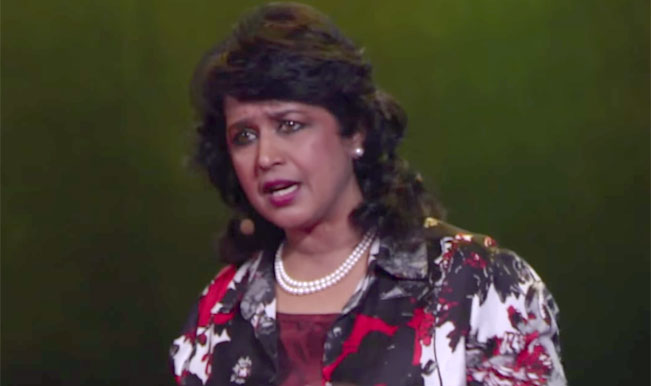
The President of Mauritius, HE Dr. Ameenah Gurib-Fakim, has been appointed Vice Chairman and Trustee of the Planet Earth Institute (PEI), an international NGO and charity working for the ‘scientific independence of Africa’. Her Excellency will host the official launch of the PEI on an event at the State House on November 23rd 2015 along with Dr Álvaro Sobrinho, the PEI’s founding Chairman, and the full Board of Trustees. As Vice Chairman and Trustee of the PEI, Dr. Gurib-Fakim will work alongside fellow Board Members, Dr Álvaro Sobrinho, the prominent Angolan philanthropist and businessman, Rt Hon Lord Boateng, a member of the UK House of Lords, Prof. Sir Christopher Edwards, the distinguished academic, and Prof. Sir Magdi Yacoub, the pioneering cardiothoracic surgeon. The PEI’s expansion to Mauritius will build upon its international work to support African science, technology and innovation, as well develop a number of locally focused initiatives to be announced in early 2016. HE Dr. Gurib-Fakim was appointed as President of the Republic of Mauritius in June 2015, following a highly distinguished career as a scientist and businesswoman, including a role as Pro Vice Chancellor of the University of Mauritius. In recognition of her significant contributions to scientific research, she was awarded L’Oréal-UNESCO Award for Women in Science in 2007.The PEI’s launch on 23rd November will be an exclusive, high-level meeting for a range of key stakeholders including African government ministries, international institutions, private businesses, local and pan-African universities, and civil society. The private launch will be followed by an expert policy roundtable focusing on ‘Mauritius and Africa’s scientific independence: the role of business’, hosted by HE President Gurib-Fakim and the Board of the PEI. HE Dr Ameenah Gurib-Fakim, President of the Republic of Mauritius: “Mauritius has a proud track record of investing in scientific excellence and developing research. In the future, science, technology and innovation will be vital in creating jobs and prosperity for our citizens in Mauritius and across the mainland African continent. I look forward to helping lead the PEI’s work as Vice Chairman and Trustee, and in turn to contributing to our continent’s increasing scientific and technological excellence, as the underlying foundations of our sustainable development”. Dr. Álvaro Sobrinho, Chairman of the Planet Earth Institute: “Although Africa has experienced sustained economic growth over the past decade, scientific and technological output has not kept pace. Yet, if we want to ensure that sustainable development is a reality for all, we must make greater investments in science and technology, and equip our next generations with the skills they need to compete in a globalised, 21st Century workplace. Along with my distinguished fellow Board Members, I am absolutely delighted that HE President Gurib-Fakim is joining the PEI as our Vice Chairman and Trustee. With her distinguished research career and strong commitment to a science-led development agenda for Africa, the PEI is now well positioned to continue to grow and develop as an organisation, and, crucially, to keep increasing our impact on Africa’s scientific agenda”. |
President of Mauritius appointed Vice Chairman and Trustee of the Planet Earth Institute
Black managers: ‘Thirty years before equality’ – report
It could be 30 years before black and minority ethnic (BME) managers are properly represented in English football, according to a new study.
The second Sports People’s Think Tank report found 23 out of 552 elite coaching roles are held by BME people.
That is just 4 percent of the available positions, despite 25 percent of players being from BME backgrounds.
Former Reading striker Jason Roberts said it was due to “unconscious bias” at best or “possibly racism” at worst.
There are six black managers at the 72 Football League clubs.
Ex-Blackburn and Wigan forward Roberts, 37, is a founding member of the think tank and told BBC Sport there was a lack of “urgency” from the “footballing family” in addressing the issue.
Dr Steven Bradbury, of Loughborough University, carried out last year’s inaugural study, which found there were just 19 BME managers and coaches at elite level across all 92 professional football clubs in the English leagues.
He calculated the “slow” rate of increase in 12 months meant it would be 31 years before the figures accurately reflected the number of BME players currently in the game.
The report concluded, for a second year running, that “a form of institutional discrimination” continues to limit opportunities for BME coaches.
Some of the BME managers and coaches
Chris Hughton Manager, Brighton & Hove Albion
Chris Powell Manager, Huddersfield Town
Chris Ramsey Manager, QPR
Jimmy Floyd Hasselbaink Manager, Burton Albion
Keith Curle Manager, Carlisle United
Ricardo Moniz Manager, Notts County
Terry Connor Assistant manager, Ipswich Town
John Salako Head coach, Crystal Palace
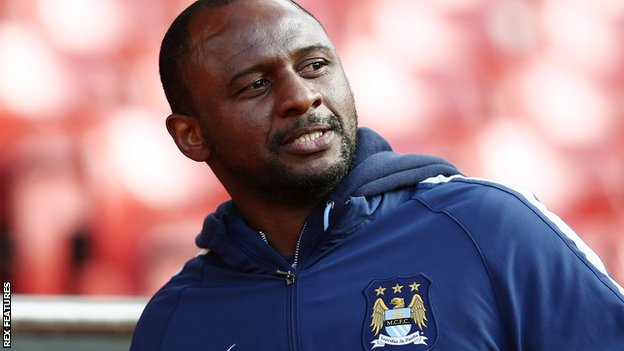
Patrick Vieira Head of the elite development squad, Manchester City
Key findings from the report
The report, which will be presented to the All-Party Parliamentary Football Group at Westminster on Wednesday, classes senior coaching positions as anything from a manager through to an under 18s coach.
It found:

- 18 of 92 clubs (20 percent) employ a BME coach in a senior position
- Barriers to BME coach progression remain and include “conscious and unconscious racial bias and stereotypes”
- There is a “consequent lack of BME role models at all levels”
- It will monitor the “upward career mobility” of a number of other BME coaches in less senior roles such as Richard Shaw at Crystal Palace, Eddie Newton at Chelsea, Ledley King at Tottenham, Darren Moore at West Brom and Michael Johnson at Cardiff
Football is not doing enough, says Roberts
Roberts said he understood “things don’t change overnight”, but argued not enough has been done to “challenge the decision-makers” over a “structured exclusion of a minority in football”.
“When you’re a black player and you’re coming to the end of your career you think, ‘well there’s no opportunity for me as a manager’, and the statistics only prove that,” said Roberts. “I believe because of it we’re losing potentially top managers and top coaches.”
Former Birmingham defender Michael Johnson, who had to wait four years before successfully interviewing for a role with Cardiff City’s academy this year, agrees, adding: “The networks are closed off.
“Predominately football is run by white, older men, so you seem to gravitate to what you have found is the norm.”
“I couldn’t get any more qualified. But I was out of work from August 2011 to August 2015.
“My main challenge was getting to the table to show people what I’m about. ”
What is being done?
The Football League is set to vote on bringing in a version of American football’s Rooney Rule at its 2016 annual general meeting.
It would see clubs interviewing one BME candidate for each head coach or manager role from next season.
Professional Footballers’ Association chief executive Gordon Taylor has previously said football has a “hidden resistance” preventing black managers getting jobs.
Speaking about the Rooney Rule, Johnson added: “Hopefully this will start to make things easier for talented black managers, who are qualified to get in front of chief execs and chairmen, just to show they are capable of doing a fantastic job.”

What is the Rooney Rule?
The Rooney Rule was established in 2003 and named after Dan Rooney, owner of the Pittsburgh Steelers and the chairman of the NFL’s diversity committee. It requires NFL teams to interview at least one black or ethnic minority candidate for head coaching and senior football operation opportunities that become available, as part of a transparent and open recruitment process.
The Football Association said it has endorsed “the principles” of the Rooney Rule in its own hiring processes, and board member Heather Rabbatts urged clubs to “shift the culture of closed network of recruitment” by “embracing the practice of short listing and interviewing BME coaches and managers with the requisite qualifications”.
The FA is spending £1.4m over five seasons on BME coaching bursaries, including working with England development teams, while the Premier League has made additional places available to BME applicants on its elite coach apprenticeship scheme to help develop world-leading coaches.
Rwanda plans ‘droneports’
Mbabazis invited for NRM conference
Former National Resistance Movement Secretary General John Patrick Amama Mbabazi and his wife Jacqueline, the NRM Women’s League chairperson have been invited to attend the party’s delegates conference slated for October 30 and November 2.
According to NRM Deputy Secretary General Richard Todwong, Mr Mbabazi has been invited in his capacity as the Member of Parliament for Kinkizi West constituency, elected on the NRM party ticket.
Mbabazi, also a former Prime Minister, is aspiring to become President after falling out with his party chairman and fellow presidential contender Yoweri Museveni.
Both men have been cleared by the Electoral Commission to contest for the presidency in the 2016 elections alongside Dr Warren Kizza Besigye Kifefe of the Forum for Democratic Change (FDC) party.
It is not clear whether Mbabazi will attend the said conference that will also see members endorse Museveni as NRM flag bearer, but sources intimated to the Eagleonline that the former NRM SG might not honour the invitation.
According to the source, Mbabazi is already deeply entrenched in his new alliance, gained when he joined opposition pressure group The Democratic Alliance (TDA), where he contested for flag bearer with Dr Besigye and former Vice President Professor Gilbert Balibaseeka Bukenya.
Prof Bukenya has since decamped to support Museveni, while Mr Mbabazi is enjoying the TDA support, orchestrated most by the Democratic Party (DP) and its President General Norbert Mao.
Suruma, Odoki recommended for Makerere Chancellorship
Kampala-Makerere University Council has recommended former Finance Minister and Economic Planning Dr Ezra Suruma and Former Chief Justice Benjamin Odoki to president Museveni for appointment of Makerere University Chancellor.
President Yoweri Museveni who doubles as the Visitor of public universities, Makerere inclusive will have to choose between the two fine gentlemen.

The search team led by Chairman of the Makerere University appointments committee Bruce Balaba received four nominees and these were Dr. Suruma, Prof Charles Olweny, formerly Vice Chancellor Uganda Martyrs’ University Nkozi, Justice Odoki and former National Council for Higher Education Executive Director, Prof A.B Kasozi

The search team is guided by the Universities and Other Tertiary Institutions Act of 2001. A chancellor is a none executive director of the university with no veto powers as he only presides over graduation ceremonies. If any of the two is picked, he will replace Prof. Mondo Kagonyera who has served his two none renewable terms.
NRM Treasurer involved in accident
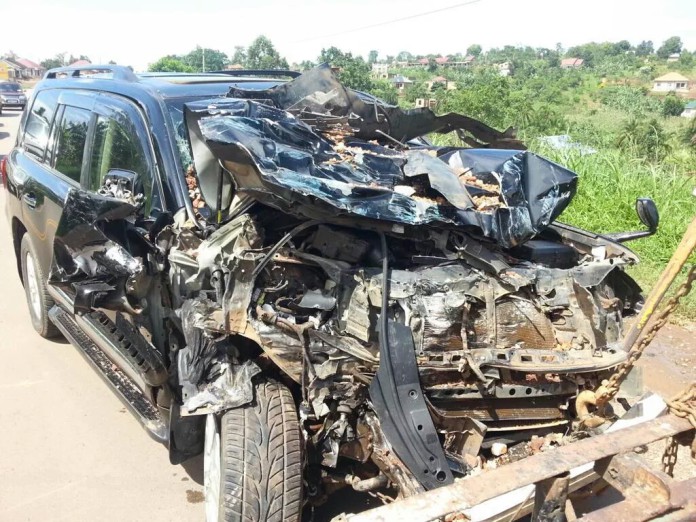
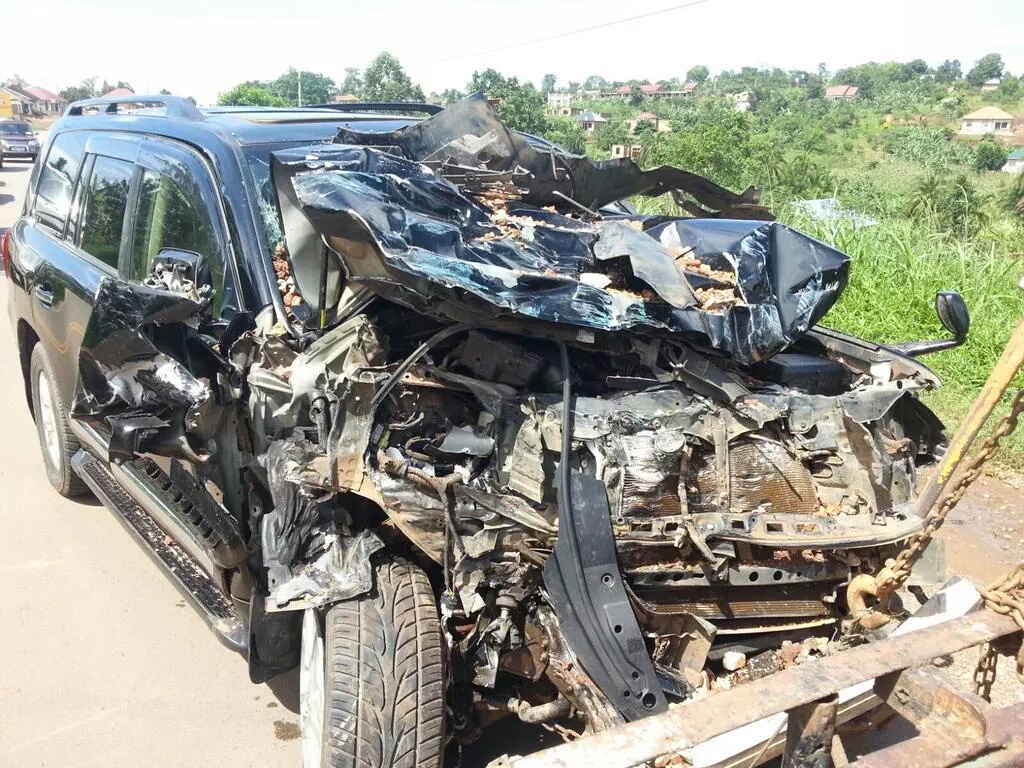
The NRM National Treasurer Rose Namayanja Nsereko has been involved in an accident and fractured but her life is out of danger.
A team of medical doctors led by Dr Ben Mbonye, have confirmed that her life is out of danger despite the fracture on her upper thigh.

Dr Mbonye said Namayanja’s mother, the bodyguard and driver are also safe although they sustained several injuries.
The Prime Minister Dr Ruhakana Rugunda, NRM National Vice Chairman Moses Kigongo and NRM Deputy Treasurer Kenneth Omona are among the many dignitaries that paid her a visit at Nakasero Hospital.

The Party Communications Officer, Rogers Mulindwa, has however requested the public not to visit her until tomorrow as the medical team continues to asses her condition.
Burundi journalist held in DRC

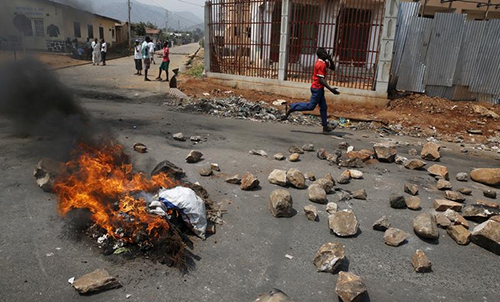
A journalist who fled Burundi after the attempted coup against President Pierre Nkurunziza on May 13 is being held by authorities in the Democratic Republic of Congo, without charges.
According to the Committee to Protect Journalists (CPJ) Egide Mwemero, who works for Radio Publique Africaine, was arrested in Uvira in eastern Democratic Republic of Congo on October 13 after fleeing from Burundi following violence that erupted when President Nkuruunziza announced he would run for a third ‘unconstitutional’ term.
In a release earlier today the CPJ says Mwemero was arrested together with two Congolese reporters, Manzambi Mupenge and Lucien Kanana, who work with local community station Radio le Messager du Peuple, which had partnered with Mwemero’s station to broadcast the latter’s show, ‘Humura Burundi’ on its airwaves. Mupenge and Kanana were released two days later, but the Congolese station that was airing the show was ordered by the authorities to stop broadcasting it on October 9.
‘Unrest in Burundi earlier this year, in which several radio station were forced off air and had equipment damaged, forced Radio Publique Africaine to stop broadcasting from Burundi,’ the CPJ says in the release, and adds that Bob Rugurika, the managing director of Radio Publique Africaine had confirmed that Mwemero was still in custody.
“Radio is a vital information source for people in this region and journalists should be allowed to do their jobs,” said CPJ Africa Program Coordinator Sue Valentine. She added: “We are extremely concerned that Egide Mwemero is being held without any public disclosure of charges against him and we urge Democratic Republic of Congo authorities to release him immediately.”
According to reports DRC President Joseph Kabila, who is himself trying to vouch for a third unconstitutional term and participate in the elections in November 2016, has maintained good relations with Burundi.
‘Journalists in the Democratic Republic of Congo are often faced with a hostile environment, and the government has attacked press freedom in an effort to silence critics or dissenting opinions, the CPJ says. In January, authorities briefly blocked Internet and cellphone service throughout the country; in March during a pro-democracy rally, government forces arrested about 30 individuals, several of whom were journalists covering the protest and some of whom reported being assaulted’ the CPJ release adds.
The journalists’’ rights lobby group says efforts to get comments about the arrest of Mwemero from the DRC ministers for communications, human rights, and justice were futile.
Tanzania seeks adjournment of EALA ‘Forest Bill’ over elections
Algeria to support UPDF to counter terrorism
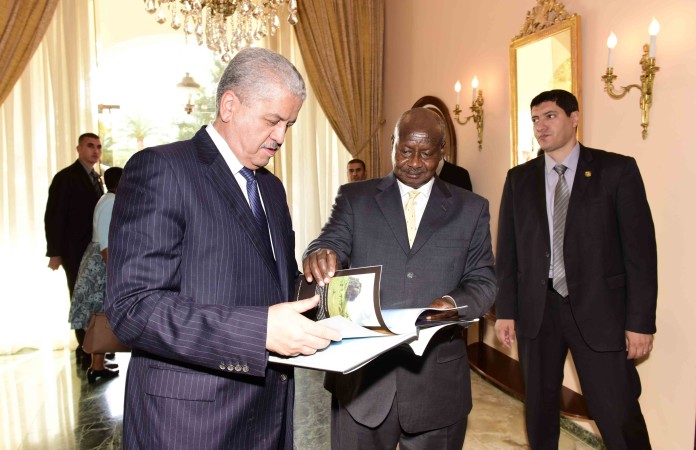
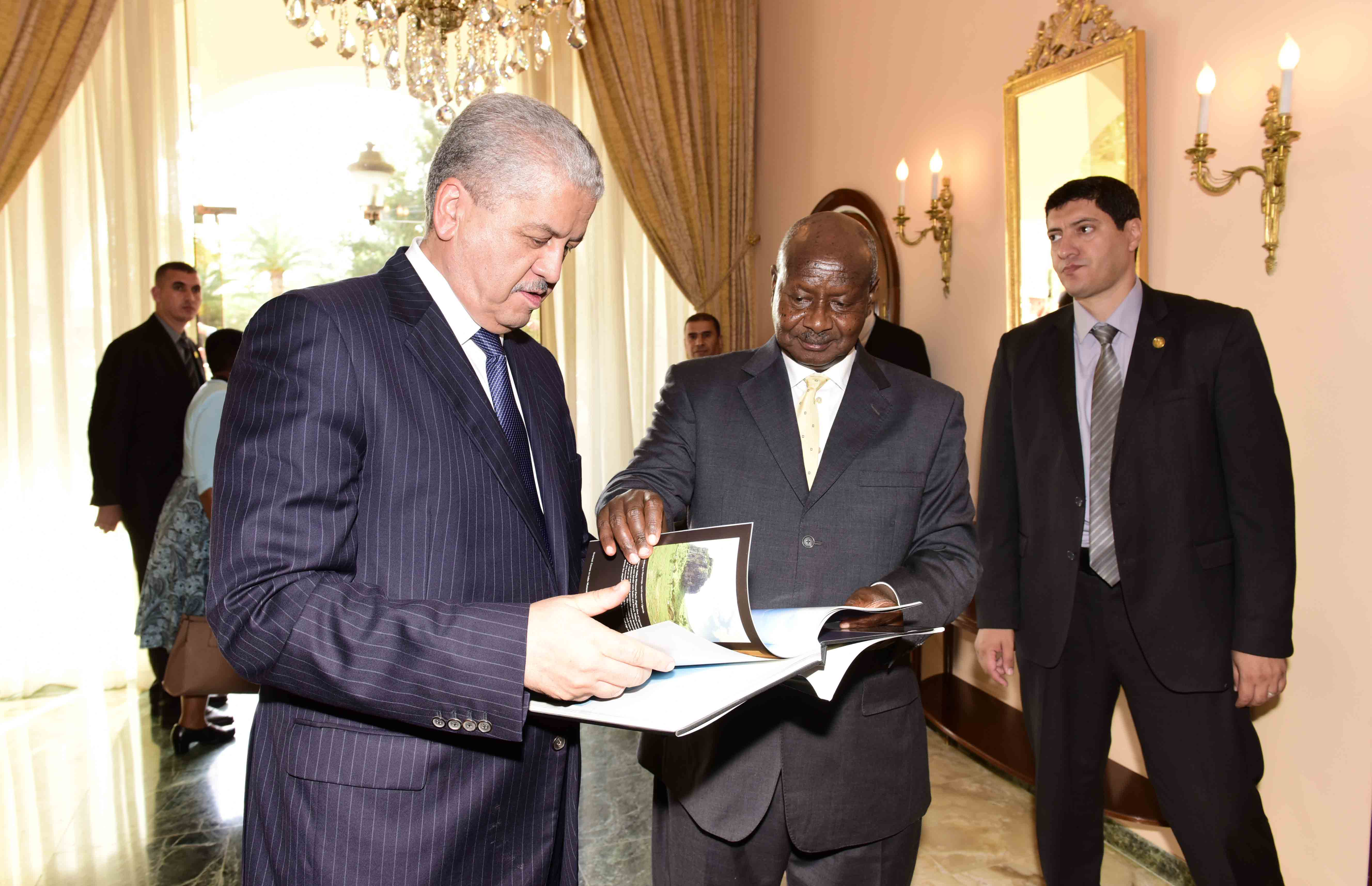
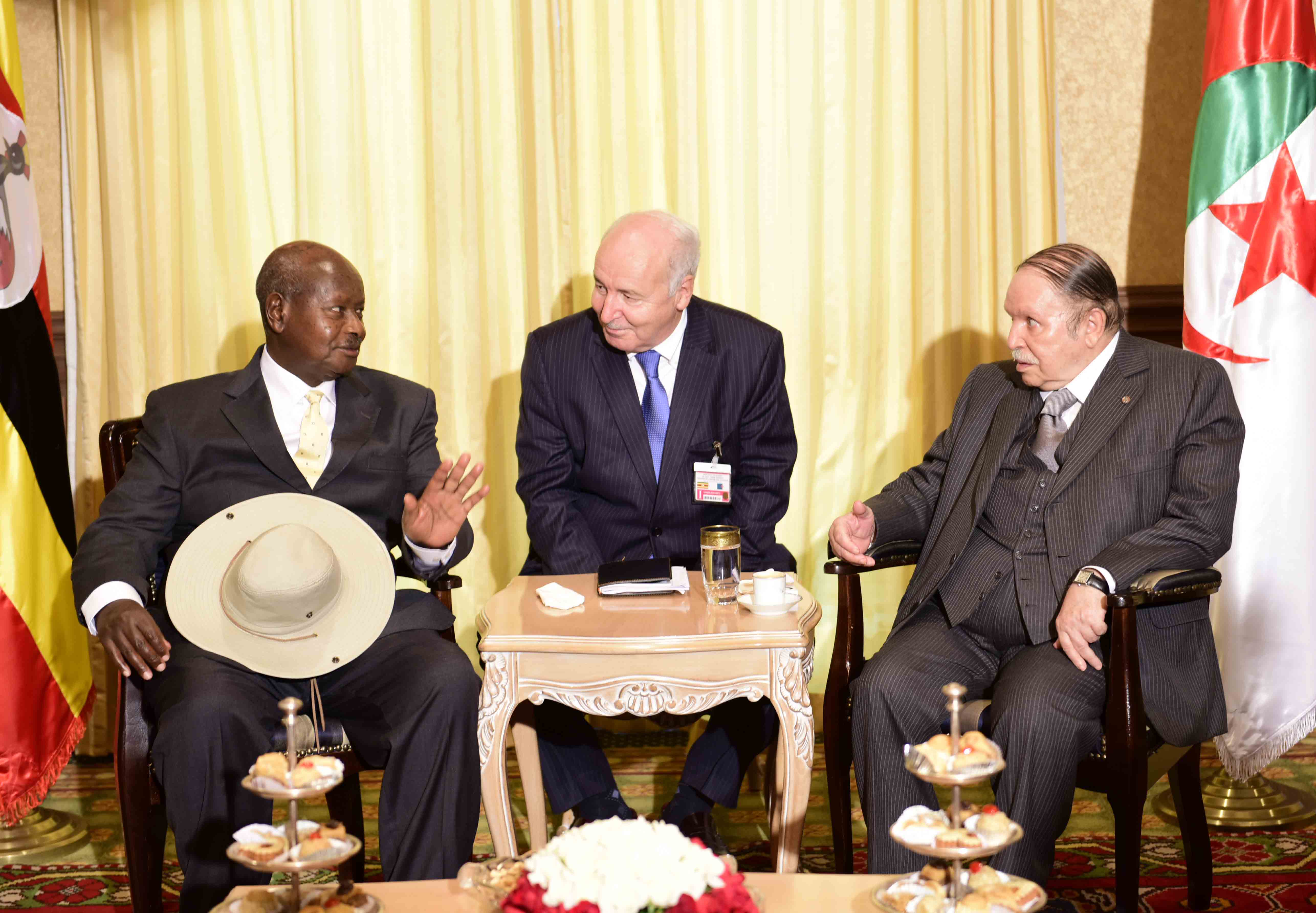
President Yoweri Museveni and the Algerian Prime Minister Abdelmalek Sellal have discussed military cooperation between their two countries, with Sellal promising that Algeria will help support the Uganda Peoples Defence Forces (UPDF) in counterterrorism and peacekeeping operations.
At a meeting held at the Zeralda State Residence, in the Capital Algiers Sellal hailed President Museveni’s efforts in finding solutions in South Sudan and Somalia and pledged additional support to stabilize the region and bring back security and development.
The two leaders also discussed military cooperation in Africa to ensure African unity, sovereignty and stability, with focus mainly on the security situation in the Sahel Region, Tunisia, Libya and the migration crisis, South Sudan and Somalia.
Meanwhile, President Museveni has called for the immediate resumption of the joint Ministerial Commission between Uganda and Algeria to push for the engagement of the business sector and table the trade proposal for tea, coffee, maize and maize products and milk to boost trade between the two countries.
While meeting the Algerian Prime Minister, the two leaders agreed on the proposal to bring the business communities of both countries together to exploit the economic potential of the two countries.
“I am happy to be here and I start with business. I want to sell a lot of agriculture products here especially, tea and coffee. We have a lot of tea. And for coffee, after a long time, we are starting to add value through processing. Nescafe have been buying our coffee at a dollar per kilo and selling at US$15 a kilo in London. We lose jobs and money. But when we process we sell directly,” he said.
Prime Minister Sellal noted that the visit by President Museveni is a great opportunity to make and update relations between the two countries in order to boost development cooperation.
“From the economic view, there are not great deals of trade exchanges. We look forward to building economic relations. We have some importers of coffee, tea and cocoa from Uganda but this is an opportunity to increase more trade,” he said.
Mr Sellal said his country has great opportunities in promoting cooperation in the Agriculture and fisheries sector and called for the biannual cooperation commission to meet and look at the possibilities of cooperation and exchange.
Uganda’s exports to Algeria are low with the major products being cocoa, coffee and tea. Uganda’s imports from Algeria are less than USD$ 1m per annum.