A vaccine against the deadly Ebola virus has led to 100 percent protection and could transform the way Ebola is tackled, preliminary results suggest.
There were no proven drugs or vaccines against the virus at the start of the largest outbreak of Ebola in history, which began in Guinea in December 2013.
The World Health Organization (WHO) said the findings, being published in the Lancet, could be a “game-changer”.
Experts said the results were “remarkable”.
This trial centred on the VSV-EBOV vaccine, which was started by the Public Health Agency of Canada and then developed by the pharmaceutical company Merck.
It combined a fragment of the Ebola virus with another safer virus in order to train the immune system to beat Ebola.
A unique clinical trial took place in Guinea. When a patient was discovered, their friends, neighbours and family were vaccinated to create a “protective ring” of immunity.
Analysis
This could be the breakthrough the world has been waiting for.
There is caution as the results are still preliminary, with more data coming in.
But officials at the WHO believe the effectiveness of the vaccine will end up being between 75 percent and 100 percent
If such a vaccine was available 18 months ago then thousands of lives could have been saved.
There are still other vaccines being trialled – notably from GSK and Johnson&Johnson – although as the number of cases continues to fall it is becoming increasingly difficult to prove how effective they are.
Ebola will inevitably come again.
The hope now is that the legacy of this unprecedented outbreak will be a vaccine that means a tragedy of this scale can never be repeated.
One hundred patients were identified in the trial between April and July and then close contacts were either vaccinated immediately, or three weeks later.
In the 2,014 close contacts who were vaccinated immediately there were no subsequent cases of Ebola.
In those vaccinated later there were 16 cases, according to the results published in the Lancet medical journal.
‘Promising’
The WHO says it is so far 100 percent effective, although that figure may change as more data is collected.
Close contacts of Ebola patients in Guinea will now be vaccinated immediately. And since the vaccine has been shown to be safe, that process will also be extended to include children.
Médecins sans Frontières (MSF) is involved with this research, and is part of a parallel trial for frontline healthcare workers.
Medical director Bertrand Draguez said the Lancet results should spur instant action.
“With such high efficacy, all affected countries should immediately start and multiply ring vaccinations to break chains of transmission and vaccinate all frontline workers to protect them.”
Marie-Paule Kieny, an assistant director general at the WHO told BBC News: “It is certainly promising. We have seen that where rings have been vaccinated, the transmission has stopped.
“Prior to vaccination there were cases, cases, cases. The vaccine arrives and 10 days later the cases are flat.
“It could be a game-changer because previously there was nothing, despite the disease being identified 40 years ago.
“When there is a new outbreak this vaccine will be put to use to stop the outbreak as soon as possible to not have the terrible disaster we have now.”
More than 11,000 people have died from Ebola and nearly 28,000 have been infected.
The sheer scale of the 2014-15 outbreak led to an unprecedented push on vaccines – and a decade’s work has been condensed into around 10 months.
The number of cases has fallen – and in the week up to July 26, 2015 there were just four cases in Guinea and three in Sierra Leone.
Prof John Edmunds, from the London School of Hygiene & Tropical Medicine, helped design the trial: “The development has been at an absolutely unprecedented speed.
“This is very good news, these are very significant results, the epidemic is not over and this shows we have another potential weapon.
“The trial is still continuing, these are interim results which need confirming, but there’s now light at the end of the tunnel.”
Dr Jeremy Farrar, the director of the Wellcome Trust medical charity, said this was a “remarkable result” and was the product of international collaboration.
He added: “Our hope is that this vaccine will now help bring this epidemic to an end and be available for the inevitable future Ebola epidemics.”
President Yoweri Museveni has today, Friday July 31 picked nomination forms for the National Resistance Movement party Chairperson and presidential candidate for the forthcoming 2016 national elections.
He becomes the first and last NRM member to collect nomination forms for the party’s topmost position and presidential flag bearer candidate, meaning he is unopposed. This has eased Evelyn Anite’s work, since she now does not have to explain a lot about her Kyankwanzi resolution on Museveni’s ‘sole candidature’.
Anyway, at around 2.00pm the NRM Electoral Commission Chairperson Dr Tanga Odoi welcomed President Yoweri Museveni and the First Lady Janet Kataha Museveni at the NRM party headquarters on Plot 10 Kyandondo Road.
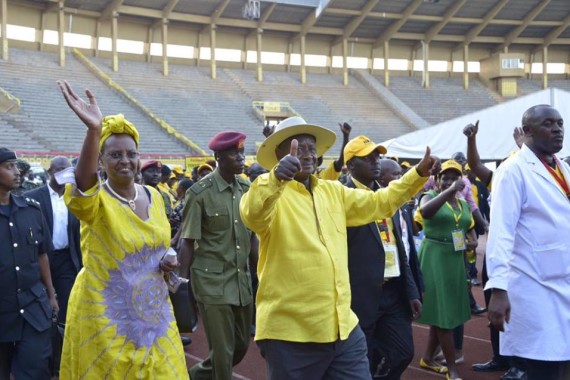
Clad in a yellow shirt and yellow hat and waving at the crowds Museveni arrived at the NRM offices amid cheers and ululations from hundreds of supporters who had gathered at the venue to welcome him.
Among others who accompanied the President to No. 10 were the Vice President Edward Kiwanuka Sekandi, Speaker of Parliament Rebecca Alitwala Kadaga and the Deputy Speaker of Parliament Jacob Oulanyah.
The NRM party office premises were painted yellow as various groups of people were carrying President Museveni’s portraits in demonstration of support for their man. The whole place was actually a beehive of activity as supporters clad in yellow, with many selling items like key holders, caps and other paraphernalia that bore the president’s portrait.
Before his arrival, several supporters danced to the local Bagisu dance Kadodi as they waited for the President to arrive and attempted to escort him as he left although his convoy sped off after a short distance.
Earlier in the day, government Chief Whip in Parliament, Ruth Nankabirwa assured the audience that Mr Museveni doesn’t need Uganda but Ugandans are the ones who need him.
VP Sekandi told the media that Museveni is the best team player and said Mbabazi is free to return home since differences can be ironed out.
While addressing the crowd, the President said the population of Uganda in general has improved since 1986 when the NRM came into power. He also said that Uganda is undergoing infrastructural growth on a massive scale. “We are now building a standard gauge railway that will enable train to move from Kampala to Nairobi in 24 hours,” he stressed.
The President praised the two ‘super ladies’, Kampala Capital City Authority (KCCA) Executive Director Jennifer Musisi and Uganda National Roads Authority (UNRA)’s Allen Kagina, for the ‘good job’ they are doing in transforming Uganda.
The President also promised that the issue of corruption would be solved by the NRM. “We cleaned the army, UWA and will do so to the civilians,” he said.
He explained that he delayed to pick forms to lead NRM for another term because the culture of the party is not ‘I want’, especially for a senior position like that of the party chairperson.
Museveni’s visit to N0.10 today to pick the nomination forms comes in the wake of former Prime Minister John Patrick Amama Mbabazi announcing earlier in the day that he would contest for the presidency as an Independent.
Mbabazi, who had earlier expressed interest in the two positions, cited illegalities in the regulations issued by the MRM’s electoral body, especially the charging of fees for those who aspire for positions in the party.
Meanwhile, another ‘presidential contender’ Capt (rtd) Daudi Ruhinda Maguru, who had claimed he would pick nomination forms on Tuesday this week, did not turn up at all. He gave no reason for withdrawal, but some suspect he lacked the Shs10 million that was to be paid by anyone aspiring for the topmost positions in the party and country.
And, as the day comes to a close, Museveni remains NRM Chairman and is also the party’s flag bearer for presidency, a much sought-after relief for Evelyn Anite Kajik, the Minister of State for Gender in charge of Youth and Children Affairs.
The outgoing Kampala Metropolitan police boss Haruna Isabirye has advised his successor Benjamin Namanya, to selectively assign guards to Kampala’s rich men.
According to Mr Isabirye, most of the rich are scared of terrorism.
But that is a weak argument that should not be allowed to gain currency because the consequences of swarming individuals with police protection units have a negative impact of the performance of the force on the ground.
The provision of security in Uganda is a function of the government, supposed to benefit all the people living inside the country.
And fortunately, over the years the police in Uganda has improved on its community policing skills and this is what all Ugandans should support instead of just looking on as the rich seek to cushion themselves at the expense of other less-privileged Ugandan citizens.
To be honest, the rich in Uganda are not as vulnerable as the poor; they live in secured neighborhoods, have perimeter wall fences and are capable of hiring private security guards to watch over their premises.
So, which is the best way forward to equitably protect both the rich and poor?
One, the police must enhance crime detection and prevention measures so that the criminals are ‘nipped in the bud’ before they unleash terror on the citizens.
And one of the ways of attaining this is the revival of night foot patrols carried out by local council officials, the police and vigilantes.
Two, the Kampala Capital City Authority (KCCA) should endeavor to light all the streets, so that criminals find it difficult to find hiding places, from which they pounce on unsuspecting people and rob or even kill them.
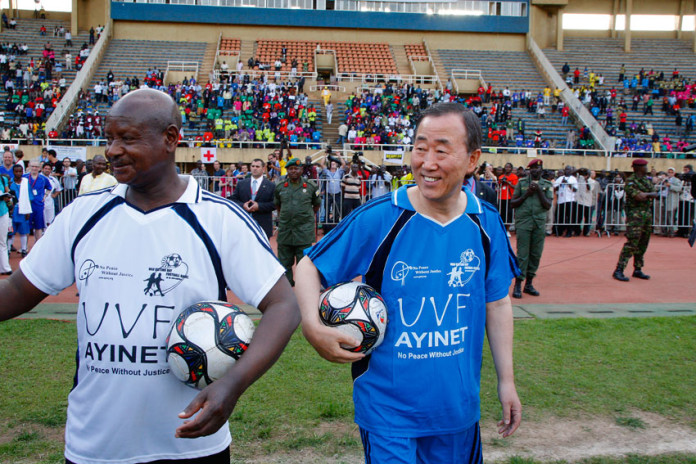
President Yoweri Museveni picked nomination forms.
President Yoweri Museveni picked nomination forms.
Kampala-President Yoweri Museveni has said that senior Uganda People’s Defence Forces (UPDF) officers and National Resistance Movement (NRM) and convinced him to stand for the 2016 elections.
Museveni, who today picked nomination forms from the ruling party secretariat in Kampala to contest as party flag bearer, told his supporters and journalists that the ‘historicals’ abide by proper party procedure.
Accompanied by the Vice President Edward Sekandi, ministers and the party historicals, Mr Museveni seemed to take an indirect swipe at former Prime Minister Amama Mbabazi, who has declared he is also contesting for President.
“Historically, we worked and when we were done we would sit down to assess our achievements. This business of I want, I want, is not our culture of work,” Museveni said.
Should he win next year’s elections, Museveni will serve a fifth term, capping 35 years in power since the NRM/A stormed Kampala on January 26, 1986, after a grueling five-year guerrilla war between 1981 and 1986, fought against the Milton Obote and Tito Okello Lutwa regimes.
Meanwhile, Mr Mbabazi today said he would not contest for presidency on the NRM ticket, leaving Museveni unopposed in the party elections due for September this year.
unlike some graduates, Muhumuza put aside his degree and started his personal business.
Meet Jimmy Muhumuza Atooki a graduate from Kyambogo University who has decided to use personal skills acquired from his parents and he is applying them to earn a living.
Muhumuza, who runs a bakery at his brother’s home in Nakawa, revealed to me that he started his business back in 2012 during his form six vacation because he had realized that there was a shortage of money from his parents’ pockets to make him continue with education.
The 25 years old revealed to me that he had acquired skills of baking from his parents who used make breads days back.
During his vacation Jimmy decided to improvise a shelter and he roofed a corridor at his brother’s home where he placed his two tray oven that was used before by his parents’ and he managed to Start with an initial capital of 300.000Shillings provided to him by his brother Julius.
I decided to start up my bakery which I branded BUGOLOBI CONFECTIONERY while producing one product which was sponge roll but after a period of seven month the production increased and i even introduced other kinds of products such as wedding cakes, marble cakes, cookies and even I added crisps and this was due to an increase in the Market demand he explains.
In his story Jimmy reveals that he decided to join University as well as he was running his bakery business and this made him pay tuition fees by himself .Despite qualifying to be a professional teacher he has decided to put his papers aside and continue with his business. Am not joining the job market to look for jobs of my profession am going to use my informal skill to earn a living, he explains.
Jimmy reveals that apart from funding his education, his business has helped him to create new friends, improve his personal standards of living and maintain the family up keep.
Looking at side B of his business jimmy says that he still faces some challenges such as power which is ever not constant, high transport costs during marketing, theft and delay in payment by his customers as well as limited capital to expand his business.
About his future plan, Jimmy thinks of expanding the business by shifting it from his home and reallocating it to a bigger place and even he thinks of expanding the market by supplying more than 15 super markets he supplies today.
He hopes of maintaining his business using the skills acquired from his parents than loitering looking for jobs of his professional.
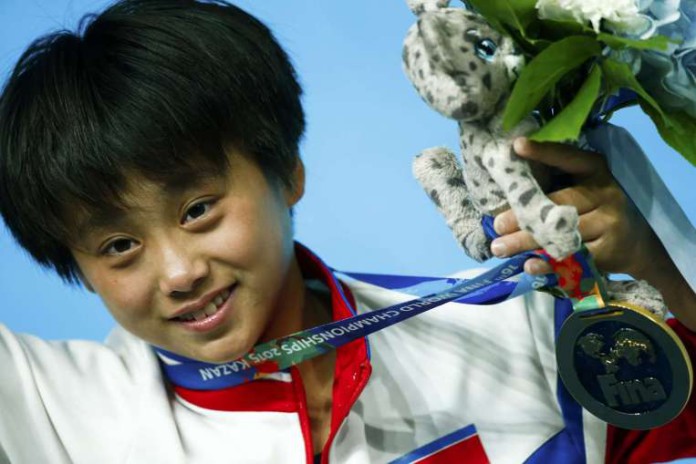
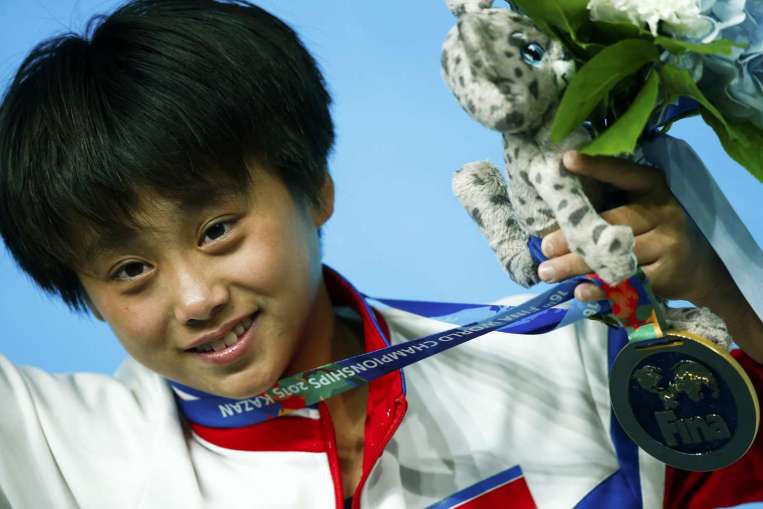
Kim Kuk-hyang won a gold medal in 10m of women’s individual platform finals
Kim Kuk-hyang won a gold medal in 10m of women’s individual platform finals
Kim Kuk-hyang, a16 year old diver won a gold medal in the women’s individual 10m platform finals followed by Ren Qian, 14, from China. The teenager then paid tribute to North Korean leader Kim Jong-un after her victory.
“It gives me happiness to meet the prospects of my government and
my great leader “Kim Kuk-hyan said.
The Olympian Tonia Couch who won the overall World Series tittle
earlier this year finished in the eight position. The 26year –old had
previously secured Team GB a place in the event
at the 2016 Rio Olympics Games by benefit of qualifying for the final.
Team Bronze from North Korea worn the countries first-ever World
champions medal on Wednesday.The team trained by Chinese world-
leading diving coaches is inaugurating itself as serious medal
contenders.
The girl who was in tears told BBC Sport. “I hope when I go home my
people will come out on the streets to celebrate and I will do
everything to win another Olympic gold medal next year”
World Series Winner, Jack Laugher will on Friday attempt to add on
this medal collection in an individual 3m springboard final-having won bronze alongside Chis Mears in the synchronized event earlier in the week.
Tanzania’s leading global information and communications technology (ICT) solutions provider, Huawei, has been conferred with the outstanding ICT leadership and contribution award during a two-day summit dubbed (C2C) connect to connect.
The summit in Dar es Salaam brought together ICT practitioners, policy makers, investors and solution providers to deliberate on how to drive country to country broadband connectivity across Africa, and innovations that will propel Tanzania’s economy and facilitate public service excellence.
Huawei received the award from the Ministry of Communication, Science and Technology following its active participation in the ICT industry and leading position in doing research and great contribution in the evolution of broadband connectivity in Tanzania.
This is also the second time that the government of Tanzania recognizes the efforts Huawei in the country among them being the Memorandum of Understanding (MoU) between Huawei and the government to deal with the ICT strategies to fulfill the country’s vision of 2025.
Huawei’s Senior Solutions consultant Eastern and Southern Africa Dr. Bello Moussa said: “The countries of Eastern and Southern Africa have shown great enthusiasm in investing and innovating within the broadband ecosystem over the past few years. These countries are of course at different stages of ICT development but unfortunately, 90% of the population of the region can still not access broadband at home so therefore we are currently far behind more advanced markets.”
Presenting on the new 5G network during the Connect to Connect (C2C) workshop hosted by Huawei Tanzania, the Vice president of Huawei Wireless Marketing, Alex Wang said: “Huawei have helped operators build near 200 LTE networks worldwide and accumulate abundant experience on mobile network evolution. Huawei continues to pay attention to protect customer’s investment and more importantly focusing on the network evolution to help customers improve the competitiveness”.
Huawei’s contribution in the 5G research is recognized by the industry widely and was awarded “Biggest contribution to 5G Development” at 5G world summit on June 26, 2015 LTE workshop.
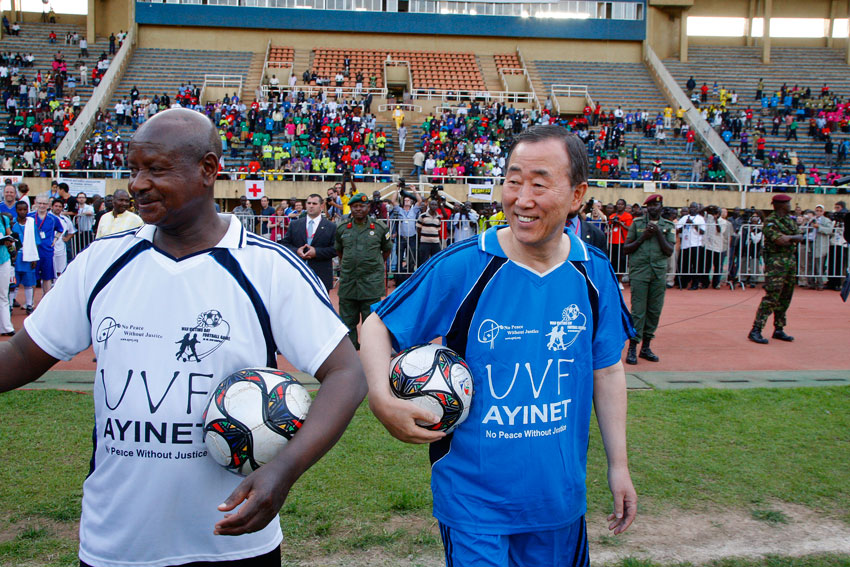
President Yoweri Museveni to grace villa at 40 celebrations.
President Yoweri Museveni to grace villa at 40 celebrations.
President Yoweri Museveni is expected to grace SC-Villa at 40 years celebrations this evening.
The function is also expected to honour former SC Villa officials and players who contributed to the club’s victory will be acknowledged. during the celebrations of 40 years of Club SC Villa‘s existence at Hotel Africana today.
Among the officials to be recognized is former boss Patrick Kawooya (RIP), another administrator Andrew Kasagga (RIP), former club boss Franco Mugabe and an administrator Ahmed Omar Mandela.
By the celebrations tagged Villa@40, prior players with an outstanding influence to the team’s success will also be thrilled. These include Paul Hasule (RIP), Majid Musisi (RIP), Andrew Mukasa, Hakim Magumba and Geoffrey Higenyi.
“We are celebrating 40 years not only that but planning for the next 40years as well” he added
” Zambia’s Football Federation president Kalusha Bwalya and other sports officials from Zambia’s Nkana Red Devils and DR Congo’s TP Mazembe will join the celebrations” said Villa boss, Emmanuel Misagga.
SC Villa club manager said they had requested top football officials from other countries to talk to Villa players and inspire them.
R&B singer Miriam Mukape popularly known as Mampi will head both foreign and local artists at the festivities.
UBC Television which recently signed a mult-million sponsorship to the team contributed 50million for the function.
SC Villa is 16-time record winners of the national league. They have won the Uganda Cup nine times and the CECAFA Clubs Championships on three occasions.
The Kampala-based side reached the finals of the Africa Club Championship (now the CAF Champions League and the Africa Cup Winners Cup (now CAF Confederation Cup). But the team lost the bid to bring either trophy back home.
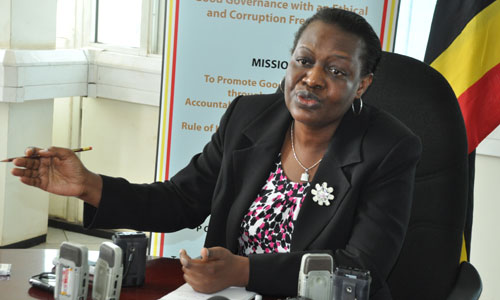
GAVE ULTIMATUM FOR WEALTH DECLARATION: IGG Irene Mulyagonja.
IGG- Irene Mulyagonja.
On Tuesday, July 29, Parliament’s Director for Budget Samuel Wanyaka was given a ten year jail sentence by Justice Paul Mugamba, after the former was convicted for embezzling Shs822 million. On top of the sentence Mr Wanyaka was ordered to pay back all the money, and is not supposed to get a public job for the next 10 years, which is the duration of his sentence anyway.
But in all fairness, Justice Mugamba’s ruling is supposed to act as a deterrent to other public officers who hemorrhage the taxpayers money with reckless abandon, and it would only be prudent if more ‘big thieves’ who dip their dirty fingers in the public purse faced the same punishment like Mr Wanyaka.
Mr Wanyaka’s prosecution was led by the Inspectorate of Government and it is important to note that Ugandans expect a lot more from the IGG’s office because as an institution it has the unique opportunity to investigate and prosecute cases.
Be that as it may, below Eagle Online details some other cases that the IGG is handling and the ones that have been disposed off, beginning with most pronounced.
Uganda vs Prof. Gilbert Bukenya
Prof.Gilbert Bukenya, a former vice president of the Republic of Uganda was charged with abuse of office contrary to section 11 of the Anti-Corruption Act, 2009. The facts are that while acting as Chairman of the Commonwealth Heads of Government Meeting (CHOGM) cabinet subcommittee on various occasions unlawfully and high handedly, directed the award of the contract to supply Executive vehicles to Motorcare (U) Ltd without following the procurement laws and regulations.
On Friday October 14, 2011, before Justice Mugamba, he pleaded not guilty to the charge and the case was adjourned to 7th November 2011 when hearing will commence.
However, in a petition, No.30 of 2011 to the Constitutional Court, Prof Bukenya’s lawyers led by MacDosman Kabega challenged the constitutionality of trying ‘for acts in his official capacity as the Vice President of Uganda, and also whether an acting IGG has the authority to perform the functions of the IGG’.
The IGG responded to both challenges, and citing Articles 98 (4) and (5), the Inspectorate reasoned that it is only the President of Uganda who enjoys the privilege of immunity and that in his capacity as Vice President Prof Bukenya could be prosecuted for both civil and criminal offences. Also, citing Article 223 and Section 2 of the IG Act No.5/2002, the Inspectorate reasoned that in his capacity as Deputy IGG then, Raphael Baku Obudra could carry out prosecutorial functions on behalf of the institution because he was a substantive D/IGG.
“There is no position designated as Acting IGG currently. However, the current IGG, Mr. Raphael Obudra Baku is substantively a deputy IGG who now happens to be carrying out the duties of IGG since the position of the substantive IGG has not yet been filled,” the IGG’ office opined. It added: “This, however, does not nullify his position and powers as Deputy IGG who is capable of prosecuting offences. We do consider this to be an internal administrative arrangement which does not affect the capacity of the officer to perform his constitutional duties.”
However, on November 4, 2011, just a few days before his trial was to commence, government dropped all charges against the former VP when the IGG learnt that ‘the state has been dragged to court in civil litigation by Spear Motors’, which was one of the companies vying for the lucrative deal.
Maj .Gen.Jim Muhwezi, Capt. Mike Mukula, Dr Alex Kamugisha and Alice Kaboyo Vs the Attoney General and IGG.
Health Minister Maj Gen Jim Muhwezi and his deputies Capt Mike Mukula and Dr Alex Kamugisha and, State House aide Alice Kaboyo, had been investigated by the Office of the IGG, which recommended that they be prosecuted for mismanaging about Shs1.6 billion Global Alliance for Vaccines and Immunisation (GAVI) funds.
The four petitioned the Constitutional Court, challenging the investigations, findings and recommendations made by the Inspectorate of Government in the GAVI funds report dated April, 2007. The petition also sought to challenge some provisions of the Inspectorate of Government Act of 2002, the Leadership Code Act of 2002 and the Appointment of the former Inspector General of Government.
The matter was duly heard by five Judges of the Constitutional Court and the ruling signed by then Deputy Chief justice Leaticia Mukasa Kikonyogo summarized thus: (1) This petition succeeds in part to the extent that the appointment of an IGG who is a judicial officer contravenes the doctrine of Separation of Powers established in Chapters six, seven and eight of the Constitution and is therefore void. It also contravenes the provision of article 223(4) of the Constitution. It does not contravene any other provisions of the Constitution.
The investigations the arrest and prosecution of the petitioners by the IGG at the request or “instructions” of the President did not contravene any article of the Constitution.
The prosecution of the petitioners by the IGG did not contravene the provisions of article 230 of the Constitution or any other article.
Each party shall bear its own costs.Other Judges on the Coaram included Lady Justice Alice Mpagi Bahigeine, Justice Amos Twinomujuni, Lady Justice Constance Kategaya Byamugisha and Justice Steven Kavuma.
Anyway, the four were put on trial and in the ensuing hearing court and in July 2012, acquitted all the three ministers on charges of mismanaging the GAVI funds, but maintained that Mukula had an embezzlement case to answer. As for Ms Kaboyo, she admitted culpability and was ordered to refund the Shs20 million, which she did and was let off the hook, while Mukula appealed the ruling in the Court of Appeal and was also acquitted.
Uganda vs Akankwasa and three others
Damien Akankwasa, the National Forestry Authority Executive Director was jointly charged with Molly Kyepaka Karuhanga, the NFA Legal Officer, Charles Twagira, the Managing Director of Beachside Development Services and Leuben Arinaitwe, a Range Officer of NFA.
The four were severally charged withAbuse of Office, Conspiracy to defraud and Causing Financial Loss of Shs3.2 billion to NFA and the Government of Uganda and the case was heard by the Anti-corruption court in Kololo.
Earlier, in April 2011 the Constitutional Court led by Deputy Chief Justice Alice Mpagi Bahigeine had dismissed a petition challenging the jurisdiction of the IGG to investigate him. Other judges on the panel included Lady Justices Constance Kategaya Byamugisha and Stella Amoko Arach and Justices Steven Kavuma and Augustine Nshimye Sebuturo.
“The ruling in that reference applies to the instant case with the result that we dismiss it with costs. The record of the lower court (magistrate/anti-corruption) is returned with the direction that the trial magistrate should proceed with trial of the applicant forthwith,” the Judges ruled, paving the way for Akankwasa’s trial.
Uganda vs Herbert Sabila Kaale (MP) and two others
In March 2011, Herbert Kaale Sabila, the then Member of Parliament for Tingey County in Kapchorwa District, was charged with offering a Shs700.000 bribe to an Inspectorate Officer. He was jointly charged with Nathan Chelimo and Sammy Nelson and they were all convicted and each sentenced to pay a fine of Shs 4 million. Prosecution leading to the MP’s conviction was led by officers from the IGG’s office. He appealed the sentence but in October 2014 the Court of Appeal comprising Justices Rubby Aweri Opio, Kenneth Kakuru and Egonda Ntende upheld the earlier ruling by Anti-corruption Judge John Bosco Katutsi.
“As we have noted, after an appraisal, we have found that there was sufficient evidence for the trial court to find that money changed hands… as contended by the prosecution (IGG),” the ruling read in part.
Uganda vs Sarah Kulata Basangwa
A female adult working as Commissioner Land Registration, Ministry of Lands, Housing and Urban Development is charged with abuse of office contrary to section 11 of the Anti-Corruption Act, 2009 for hastily and unlawfully registering M/S Kikonyogo Investments as the proprietors of land in Lubowa estate to the detriment of M/S Lakeside Investments, reportedly the true purchasers and owners of the land.
She was summoned to appear in court on November 4, 2011 to plead to the charge of abuse of office. She later appealed and her case, HCT-00-CV-MA-0465-2011, was heard by Justice Eldard Mwangushya.
Uganda vs Peter Odok W’oceng, Charles Otai, Paul Peter Etot
Peter Odok W’oceng, the former LCV chairperson of Agago district, Charles Otai, the former acting Chief Administrative officer all of Pader district local Government and a one Paul Peter Etot of Ms Rising Star Transport Ltd were charged before the Anti-Corruption Court with two counts of abuse of office, causing financial loss and conspiracy to defraud, all contrary to the Anti-Corruption Act and the Penal Code Act. The three were involved in the illegal and irregular award of a tender to repair district vehicles and eventual payment of over Shs50 million to Ms. Rising Star Transport Ltd.
On October 28, 2011, Odok W’Oceng and Etot appeared before a magistrate of the Anti-Corruption court and entered pleas of not guilty and were granted bail of Ushs3 million and their sureties ordered to pay 100m non-cash. Then, Otai did not take plea and the case was adjourned to November 2011.However, the IGG Website does not give an update of how the case ended.
David Kiyimbwa Kiyingi
David Kiyimbwa Kiyingi, then an Assistant Commissioner for Procurement in the Ministry of Finance, Planning and Economic Development, was charged with abuse of office and causing financial loss of Shs240 million when he reportedly inflated prices during procurement of textbooks while still in the Ministry of Education and Sports in 2008.
The case was before the Anti-Corruption Court in Kololo, but just like in many instances involving prosecution by the Inspectorate of Government, it was not possible to glean any more information from the IGG Website. Fred Katamba, Mukono ACAO
On April 17, 2014, Fred Katamba, the Senior Assistant Secretary (ACA0) of Mukono District Local Government was charged with solicitation of gratification of Shs4 million and receipt of gratification of Shs1 million and was removed from office o recommendation of the inspectorate and in 2009 Katamba had challenged his removal from office, but the court dismissed his petition with costs to the IGG.
Besalari Saulo Okello, Ocira George and Okot Jalon
Saulo Besalari Okello, George Ocira and Joan Okot were officers of Acholi Cooperative Union. They embezzled Shs400 million from the Cooperative and they were all convicted and sentenced to four years imprisonment and ordered by Court to repay the 400 million.
John Achiga
John Achiga Chiga, the District Engineer for Moyo, under case HCT-ACD- Criminal Case Appeal No. 5 of 2010, appealed against a three-year prison sentence for misappropriating Shs5.5 million for road construction. The appeal was dismissed and conviction of three years in prison confirmed.
Wycliff Gashenyi Vs Uganda
On March 4, 2011, John Wycliff Gashenyi, the Town Clerk of Kiboga Town Council appealed against the conviction and sentence to pay a fine of Uganda shillings two million for abuse of office for his role in selling town council land at Katanjovu without authority.
However, the Anti-corruption Court dismissed the appeal, confirmed the sentence of the lower court and increased the punishment by ordering Gahenyi to pay compensation of Uganda shillings five million to Kiboga Town Council. IGG vs Ruth Kizza and others
The accused persons who included Ruth Kizza, Gideon Bwahuha, Eresi Ithunga and Jackson Kizza, all teachers of Nyakiyumba SSS, were charged with the offence of uttering forged appointment letters and posting instructions. They all pleaded guilty to the charges and were each sentenced to imprisonment for one year or a fine of Shs500,000.
Uganda vs Gad Aziku
The Arua Senior Staff Surveyor was charged with soliciting and receiving gratification of Shs400, 000. He took plea on January 29, 2014.
Uganda vs Christopher Odongo
Matter came up for sentencing on August, 4, 2014, and the accused person was sentenced to 20 months imprisonment for each count of fraudulent false accounting and 30 months imprisonment for each count of causing financial loss. Court further ordered him to refund Shs41 million which was lost under his management.
Uganda Vs Harison Mukiza
Harison was a Regional Supervisor of Soroti Karamoja Region under Allied Health Professional’s Council. On 8/04/2014 he was charged with soliciting and receiving gratification of Shs2 million.
Uganda vs Bainomugisha John Bosco
The accused was a NAADS Coordinator of Birere Sub County, Isingiro district. On 9/04/2014 he was charged with receiving gratification of Shs50,000.
Tororo sub county chief
The Sub County Chief of Sikuda in Tororo district charged with uttering false documents and impersonation. The accused was convicted of both and sentenced to 15 months imprisonment or 500,000 shillings on each count on January 27.
Uganda vs Yedida Biribonwa Ssentongo
The Inspectorate of Government suffered an acquittal when in the case of Uganda vs Yedida Biribonwa Sentongo, the accused was acquitted of charges of causing financial loss and abuse of office. The Inspectorate of Government disagreed with the trial court decision and appealed against the acquittal.
Uganda Vs Abel Muhumuza
Abel Muhumuza, the OC CID for Rubaya Police Post, was found guilty and sentenced to 12 months on each charge of soliciting and receiving a bribe before her Worship Irene Akankwasa, the Chief Magistrate of the Anti-Corruption Court at Kololo.
Going by the above cases prosecuted by the IGG, the success rate is high. However, compared to the billions of shillings lost by government through fraud by public officials, the scorecard is still wanting. Also, Ugandans want to see some ‘big fish’ fished out of the pond that is Uganda and if that happens then we can start chest-thumping about routing the menace that is corruption.
REPORTEDLY DRAFTED ODOI INTO NRM: Former NRM SG John Patrick Amama Mbabazi.
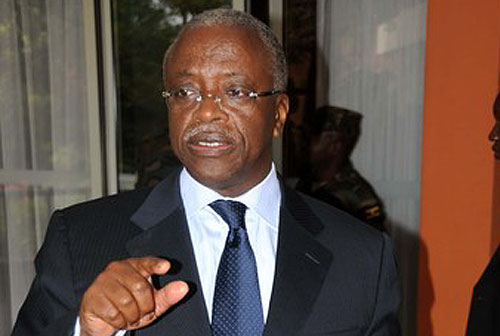
Former National Resistance Movement (NRM) Secretary General Amama Mbazi has decided to run as an independent candidate in the 2016 elections.
Mbabazi, who is also the immediate former Prime Minister, said he is not is not quitting the NRM but that he is not willing to participate in the party primaries because the rules of the game are not fair.
Speaking to journalists at his Kololo home, Mbabazi stressed that he would be the duly elected president of Uganda come next year.
“I am going to start a journey and at the end of the it I will be the elected President of the Republic of Uganda,” Mbabazi said today, adding that he is now waiting to be nominated as presidential candidate by the national Electoral Commission.
He stressed that as a lawyer, a founding NRM member and patriotic citizen he could allow himself to part of an illegality.
Mbabazi’s announcement to run as an Independent candidate comes in the wake of President Museveni, the current Chairman of NRM, picking nomination forms to contest for the posts of the NRM presidential flag bearer and party chairmanship.
According to the NRM’s Electoral Commission chairman Dr. Tanga Odoi, today is the deadline for picking nomination forms.
On July 16, Mbabazi went to the NRM party headquarters at Plot 10 Kyadondo Road ostensibly to pick nomination forms but on reaching there he disagreed with the Dr. Tanga Odoi on the issue of payment of nomination fees, arguing that it was a move isolate the poor and leave affairs of running NRM to the rich only.
The NRM flag bearer for the 2016 presidential elections is supposed to pay Shs10 million, while any one vying for the post of party Chairman also forks out Shs10 million, fees Museveni has already paid.
Former National Resistance Movement (NRM) Secretary General Amama Mbazi has decided to run as an independent candidate in the 2016 elections.
Mbabazi, who is also the immediate former Prime Minister, said he is not is not quitting the NRM but that he is not willing to participate in the party primaries because the rules of the game are not fair.
Speaking to journalists at his Kololo home, Mbabazi stressed that he would be the duly elected president of Uganda come next year.
“I am going to start a journey and at the end of the it I will be the elected President of the Republic of Uganda,” Mbabazi said today, adding that he is now waiting to be nominated as presidential candidate by the national Electoral Commission.
He stressed that as a lawyer, a founding NRM member and patriotic citizen he could allow himself to part of an illegality.
Mbabazi’s announcement to run as an Independent candidate comes in the wake of President Museveni, the current Chairman of NRM, picking nomination forms to contest for the posts of the NRM presidential flag bearer and party chairmanship.
According to the NRM’s Electoral Commission chairman Dr. Tanga Odoi, today is the deadline for picking nomination forms.
On July 16, Mbabazi went to the NRM party headquarters at Plot 10 Kyadondo Road ostensibly to pick nomination forms but on reaching there he disagreed with the Dr. Tanga Odoi on the issue of payment of nomination fees, arguing that it was a move isolate the poor and leave affairs of running NRM to the rich only.
Below is Mbabazi’s statement in full.
Press Statement by the Rt. Honourable Amama Mbabazi
Members of the Press
Good Morning.
Six weeks ago I came before the Ugandan people to declare my intention to stand for President in the 2016 Presidential election.
I did so with the full understanding that the matter of the presidency is not one to be taken lightly. It is not merely a great privilege but a profound responsibility. For that reason, I took some time to ponder this issue: where I wanted Uganda to go as opposed to where we are today.
These are questions I began to ask myself decades ago as a student and whilst much has changed, much remains the same. For me what is as alive today as it was back then is a desire to serve my country and a hunger for justice, for fairness and for true prosperity. These things are unyielding and it is in this vein that I address you again today.
My reasons for standing are simple. I believe it is time for two changes: a change in governance and a change of guard. A peaceful transition with no bloodshed. My deepest desire is to restore good governance and steer that peaceful transition of power from one generation to the next.
The coming election is not simply about a change of leader, but about changing systems in Uganda for this generation and generations to come. Never has the truth of this matter been more apparent to me than in the last six weeks in which, unfortunately, my declaration has been met with great hostility by the top party leadership of NRM.
The fact of the matter is NRM has sought to obstruct my intentions completely. The party’s pressuring of the National Electoral Commission was evident in the EC’s attempt to renege on their initial position regarding my consultations by requesting me to “harmonise” my schedule with the party. Similarly, the use of some elements of the Police in internal party affairs is indicative of the extent to which the top party leadership is willing to go in order to stop me from contesting. Even the rules and regulations, full of all sorts of snares and illegalities, were obviously created with my candidacy in mind.

But this obstruction is not the only unlawful thing that has taken place. The arrests, torture and in some cases near week-long disappearances of my supporters, as well as the arrest of Dr. Kizza Besigye, are an obscene violation of the basic human rights guaranteed by our Constitution. The arrest of my daughter, as well as my own, was simply illegitimate and only served to illuminate the lawless forces at work in this nation; the lawless forces whose intentions we, united and strong, will defeat.
Sadly, that the top command of the party has chosen to boldly disregard the National Constitution means that it cares nothing for NRM’s legacy of peace, freedom and stability. More importantly, it means that the top leadership of NRM is no longer the keeper of democracy and rule of law. In this, I cannot be an accomplice.
And so I have decided that I will not stand in NRM as a flag-bearer but I will carry on with my intentions; and when the time comes, I Will Be Nominated as a presidential candidate for 2016 by the National Electoral Commission.
I remain eternally committed to the core values of our struggle. In everything I do, I will continue to embody the true objectives and identity of the National Resistance Movement. The principles of NRM are noble and just; they were and are still based upon a desire for a better Uganda but as a founding-member, lawyer and patriotic citizen I will not bind myself to illegalities.
This is a personal choice, one that we are all free to make.
Now, what does this mean for NRM? It means that NRM must re-examine itself and that the top leadership must decide whether to continue on this path or whether the NRM party, its reputation and the enduring principles upon which it was founded are ultimately more important than the singular political dreams of some.
I say this to my NRM comrades, we have achieved so much in the last thirty years. Let’s not reverse our gains. It is my hope that the NRM I have given decades of my life will self correct and return to true form in the near future.
To everyone who has asked for clarity in the last few weeks: I am going to start a journey. At the end of this journey I will be the president of Uganda. I call on everyone who dares to believe, all those without hope and all who feel fear I call on all those who know in their hearts that it’s time to take this country forward: join me.
The NRM flag bearer for the 2016 presidential elections is supposed to pay Shs10 million, while any one vying for the post of party Chairman also forks out Shs10 million, fees Museveni has already paid.