Stanbic Bank
Stanbic Bank
24.8 C
Kampala
Stanbic Bank
Stanbic Bank
Home Blog Page 2337

Police blocks MPs’ demo over district

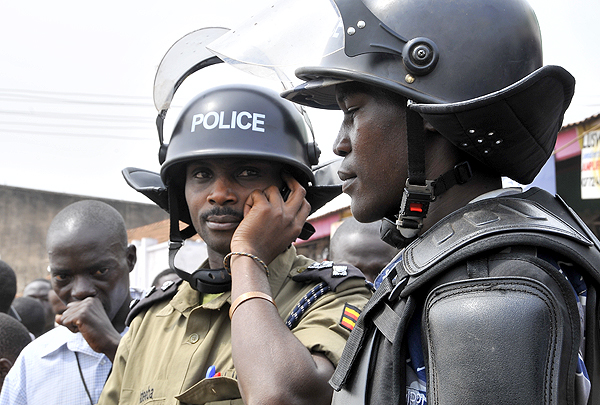
Police in the Albertine region recently blocked some area Members of Parliament from carrying out a demonstration against what they call ‘lies by the government’.

According to police spokesperson Fred Enanga, the legislators including Barnabas Tinkasimiire (Buyaga) and Robinah Nabbanja (Kibaale) claim that in 2011 President Museveni promised to give Kagadi a district status by July the same year, a pledge that did not come to pass.

So, according to police, last week the two and others at large organized to stage a demonstration before the finance minister Matia Kasaija, who was to attend a fundraising function in the Kigezi region but the police thwarted their plans.


Background

Last year, the Minister for Local Government Adolf Mwesige tabled before Parliament a proposal for the creation of 25 more districts, saying government wants to take services closer to the people. The proposal faced resistance from the civil society, opposition and some ruling party MPs who reasoned that creating more districts without resources to fund them is economically unviable.

And, on August 13 this year Mr Mwesige withdrew a bill to create more districts citing the lack of funds, something that has since rubbed several politicians the wrong way.

In a related development, Parliament recently approved the creation of 43 new counties, raising the number of MPs to over 400.

Meanwhile, the police have this morning arrested three members of a youth activist group, the Youth for Change, which had planned to hold a demonstration in the city centre.

Those arrested included Robinson Wobulembo, the group’s National Coordinator, Arthur Mugenyi and Dickson Nagalamo, and the three are being held at the Central Police Station in Kampala.

According to Police Spokesperson Enanga, the youth planned to start their demo from the Constitutional Square, head to Parliament and finally to the Electoral Commission  with the group demanding for an ‘independent Electoral Commission’ and calling upon the army and police to desist from engaging in electoral activities.

But Mr Enanga said that the planned demonstration was unlawful under the Public Order Management Act and that the police had not been informed.

He also said the police believe that some politicians are using members of these youth groups for selfish interests as the country prepares for the 2016 general elections.

Mr Enanga also reiterated that the police was bound to carry out its constitutional duties in line with the law.

“We as the police are not against any demonstrations since the Constitution grants all Ugandans that right, but this should be done in accordance to the law.” he said.

Stories Continues after ad

Salva Kiir in Addis for talks

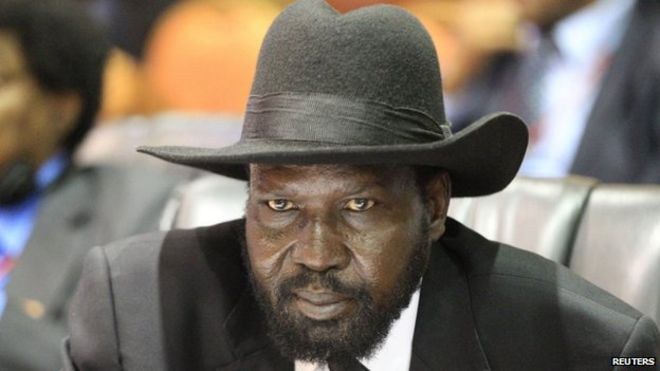
NAMED NEW IGP: South Sudan President Salva Kiir

The President of South Sudan arrived in the Ethiopian capital Addis Ababa yesterday, to take part in the South Sudan peace talks.

Since December 2013 South Sudan has been embroiled in a deadly civil war that has pitted President Salva Kiir Mayardit against his erstwhile Vice President Dr Riek Machar Teng.

Previously, Kiir had said he would not participate in the talks, arguing that a rebel split involving groups allied to Machar’s Sudan People’s Liberation Movement In Opposition (SPLM-IO) would undermine the credibility of and outcomes of the peace process. Kiir’s assertion is based on utterances made by rebel General Peter Gadet, who accused Machar of being a self-seeker, and that he would not recognize the outcome of the peace deal.

The one and a half year standoff between the two sides has attracted the attention of the international community led by the Intergovernmental Authority on Development (Igad), which has pushed for the brokering of a peace deal between the warring factions, with a deadline set for today, Monday, August 17.

The civil war in South Sudan has left thousands dead while many more have fled to exile in the neighbouring countries.

Meanwhile, the talks today were attended by Kenyan President Uhuru Kenyatta, his Ugandan counterpart Yoweri Museveni, Sudan president Omar Al Bashir and Ethiopian Prime Minister Hailemariam Desalegn.

Others in attendance were from the United Nations, African Union and individual countries like China, United Kingdom, Norway and the United States.

Stories Continues after ad

Ankole, Kigezi aspirants dominate the 2016 presidential race

Politicians from the greater Ankole and Kigezi regions have provided the biggest number of those vying for the presidency in 2016.

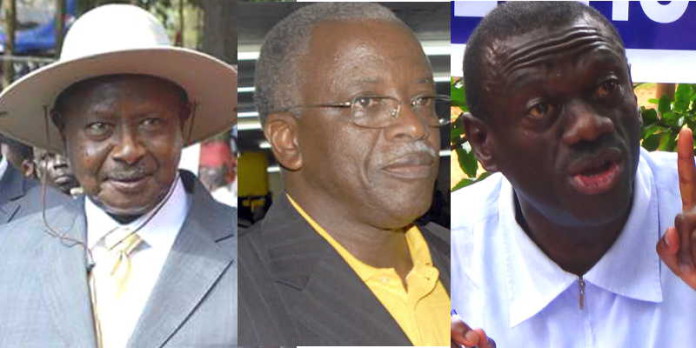
The politicians include incumbent President Yoweri Museveni of Kiruhura; former Prime Minister John Patrick Amama Mbabazi from Kanungu; Forum for Democratic Change president Mugisha Muntu from Kajara County in Ntungamo and his predecessor Colonel (rtd) Dr Kizza Besigye from Rukungiri; former Makerere University Vice Chancellor Professor Venasius Baryamureeba of Ibanda and Major General (rtd) Benon Biraro of Isingiro.

The six contestants from the western region are expected to be joined in the race for Uganda’s topmost office by Democratic Party’s Norbert Mao and Uganda People’s Congress Jimmy Akena.

But there is a Catch 22 situation that might scuttle the ambitions of some aspirants: the Presidential Elections Act 2005.

According to the PEA, a presidential candidate is required to collect 100 signatures from voters backing their candidature from two thirds of the districts in Uganda.

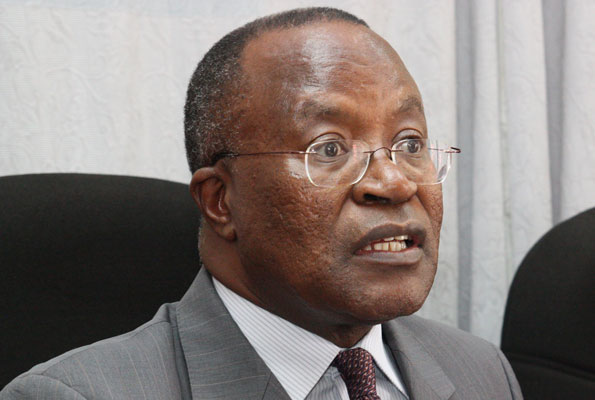
And today Mbabazi, a former Secretary General of the ruling National Resistance Movement (NRM), was accompanied by his wife Jacqueline to pick nomination forms for the 2016 Presidential Elections from the Jinja Road-based Electoral Commission.

A former confidant of President Museveni, the man from Kanungu has said he will run as an Independent candidate, after he failed to secure endorsement from the NRM.

“According to the Ugandan law, any person is free to contest as an Independent and I belong to that category,” Mbabazi was quoted as saying.

The second person to pick the nomination forms today was Prof Baryamureeba, who is also contesting as an Independent.

According to Prof Barya, as he is fondly called, he doesn’t expect a run-off. “I am standing as an Independent and I expect to win with a very huge margin in round one,” said the man who hails from Ibanda district, in the greater Ankole region.

Prof Barya however, acknowledges incumbent Museveni still has strong political credentials. “He is loved by many but this does not take away the fact that he is old. I respect him and if I win, I will let him retire peacefully at Rwakitura,” Baryamureba promised.

He also denied being part of The Democratic Alliance (TDA) claiming that the coalition has failed to present contestants at all levels and also doubts if the Alliance will be able to field a candidate at the presidential level.

The other person who has picked the nomination forms is a retired soldier, Maj Gen Benon Biraro, who also seeks to run as an Independent.  General Biraro hails from Isingiro District in the greater Ankole region.

President Yoweri Kaguta Museveni, who was returned unopposed in the National Resistance Movement (NRM), is also from the greater Ankole region.

But for some Ugandan political minds with ‘region-of-origin’ lenses, the most exciting contest is that of the FDC flag bearer that has pitted one contender, Maj Gen Muntu from the greater Ankole against a colleague, Dr Besigye from the greater Kigezi region.

The two FDC heavyweights are currently criss-crossing the country, convincing voters to elect one of them as the flag bearer of the biggest opposition party.

Meanwhile, the Electoral Commission has set October 5 and 6 as the days for the nomination of presidential candidates, who are all supposed to pay a non-refundable fee of eight million shillings on picking the nomination forms and then return them filled by September 21.

Stories Continues after ad

Powerful voices of the 1970s and 1980s long gone or silent: Part 5

Dr James Nsaba Buturo

Born in 1951 in Kisoro, Dr James NsabaButuro studied at Makerere University where he graduated with a Bachelor of Arts degree in Political Science and Public Administration. He also has a Mastersdegree and Doctorate in Development Administration from Birmingham University in the United Kingdom. He joined the civil service in Uganda as a District Commissioner in the local government ministry in 1977 and by 1983 was the much-feared District Commissioner of Kampala under the Obote II regime.

After the overthrow of Obote, NsabaButuro fled to the United Kingdom, where he lived from 1989 up to 1995. In 1999 he returned to Uganda and joined politics in 2001, winning the Bufumbira County East constituency. At the time he also served as the State Minister for Information.

buturo (1)

He was re-elected in 2006, and after some time transferred to the Ethics and Integrity State Minister, but when he lost his seat in 2011, he left cabinet.

Cyprian Bamwoze

A retired Bishop of Busoga diocese, Cyprian Bamwoze openly supported Obote and the Uganda People’s Congress and in 2001, while in retirement, campaigned for presidential aspirant AggreyAwori, a renowned UPC then.

bamwoze

 Emmanuel Cardinal Nsubuga

Emmanuel Cardinal Kiwanuka Nsubuga was born in 1914 and was the first Archbishop of the Archdiocese of Kampala from 1966 to 1990.

During Amin’s regime Cardinal Nsubuga spoke against the government’s human rights abuses and later during the war between Museveni’s NRA and Obote’s UNLA, he encouraged Catholic clergy across the country to shelter people fleeing harassment by the army. He died in 1991.


Emmanuel Cardinal Wamala

Emmanuel Cardinal Wamala was born in Lwamaggwa, Masaka in 1926, ordained priest in December 1957, and served in various places before being named Cardinal.

images (1)

Currently aged 87, Cardinal Wamala is retired and was succeeded in Kampala Archdiocese by Archbishop Cyprian KizitoLwanga.

Sheikh Abdulrazak Matovu

Born around 1931, Sheikh AbdulrazakMatovu was the first Chief Khadhi of the Uganda Muslim Supreme Council (UMSC) in 1972.

An academic, he went to Pakistan in 1956 and studied Islamic Studies for five years, returning to Uganda in 1961. He also reportedly translated the Quran from Arabic to Luganda and was the first African to become an Executive Committee member of the World Muslim League in Saudi Arabia.


Sheikh Kassim Mulumba

Sheikh KassimMulumba was appointed acting Mufti after the overthrow of Amin in 1979 at the instigation of the internal affairs minister Paulo Muwanga, courting trouble for himself when he exceeded the six months he was supposed to act as Mufti.


Sheikh Obed Kamulegeya

Born in Butambala, Gomba, ShiekhObedKamulegeya was one time a Mufti of the Uganda Muslim Supreme Council in the mid 1980s. He was the first deputy president of the National Association of the Advancement of Muslims (NAAM), an association formed by Milton Obote’s UPC in the 1960s to pacify Muslims in Uganda. He was also one time deputy Mufti under Mulumba, after the two were reconcioled by Prince BadruKakungulu. Sheikh Kamulegeya pays allegiance to the Kibulifaction of the Muslim community in Uganda and was instrumental in denouncing the election of Sheikh RamadhanMubajje as Mufti.

 kamulegeya2

Sheikh Ali Saad Islam Kulumba

He was one time the Speaker of the Buganda Lukiiko and first Deputy Mufti of the Uganda Muslim Supreme Council (UMSC). He passed on in 2004.

 Prince Badru Kakungulu

Prince BadruKakunguluWassajja was born in 1907, into the royal family of Prince NuhuMbogo. He was a very influential Muslim leader and was responsible for the construction of the Islamic schools in Kibuli. He passed on in 1991 aged 84.

Sheikh Hussein Rajab Kakooza

Sheikh Hussein Rajab Kakooza was elected as a ‘compromise’ Mufti after Sheikh ObedKamulegeya and SaadLuwemba failed to resolve their long-standing differences.

 Sheikh Saad Ibrahim Luwemba

He was one time the Mufti of Uganda and died in 1997.


Stories Continues after ad

Museveni wants former presidents involved in conflict resolution

President Museveni

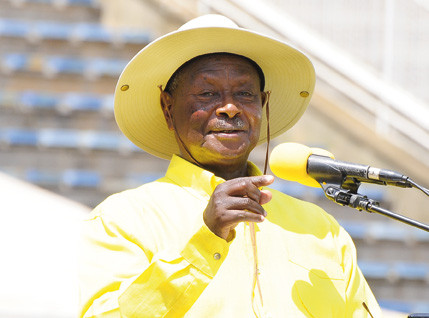
President Yoweri Museveni has said that former presidents should be engaged in coordinating efforts to end conflicts.

According to president Museveni, this should involve neutral and mutually agreeable former heads of states that would ensure proper follow up of resolutions.

“The problem is that coordination is not done. We are not following up properly. For armed conflicts, we should have former heads of state involved. In Burundi we survived because we had former President Julius Nyerere and President Mandela involved,” Museveni said August 16, while meeting the United Nations Deputy Secretary General Jan Eliasson at the Sheraton Addis Ababa.

The meeting was held on the sidelines of an IGAD led peace process on South Sudan that saw several heads of state including Uhuru Kenyatta of Kenya, Prime Minister Hailemariam Desalegn of Ethiopia, and Omar Al-Bashir of Sudan in intense closed door consultations to ensure a deal is reached before the IGAD set deadline today.

Museveni and Eliasson also discussed a range of issues particularly the security situation in Somalia, South Sudan and the Democratic Republic of Congo.

The president also called for stronger coordination mechanisms at the highest international level possible in finding a solution to regional conflicts, and warned against sectarian tendencies, saying countries need prosperity and security first.

The Deputy Secretary General thanked President Museveni for his role in conflict resolution and pledged UN support in implementation.

“Implementation would be difficult but we shall help in any way possible. Your role in ensuring that these conflicts end honourably is crucial. All the permanent five security council members agree your role is very crucial in ending these conflicts,” he said.

Eliasson said they would push for a higher level of engagement as requested by Museveni to get the coordination the attention it deserves.

The Deputy Secretary-General is in Addis Ababa, Ethiopia to represent the Secretary-General at the IGAD-PLUS Summit on the Situation in South Sudan. He was accompanied by the Special Representative of the Secretary General on Sudan, Haile Menkerios and the Special Representative of the Secretary General on South Sudan Ellen Loj. Uganda’s Ambassador to Ethiopia Mull Katende attended the meeting.

Stories Continues after ad

Indonesian plane with 54 people on board missing in remote Papua as night falls

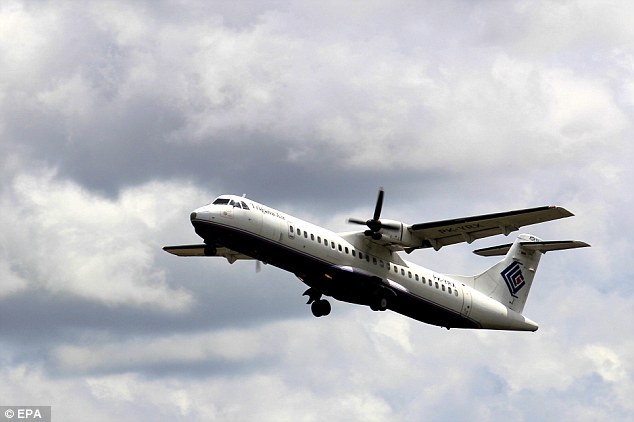
ndonesian search and rescue agencies are hunting for a Trigana passenger plane (similar to the one pictured) that went missing over the remote eastern Papua region, with 54 people on board Read more: http://www.dailymail.co.uk/news/article-3199842/Rescuers-launch-search-Indonesian-aircraft-carrying-54-people.
ndonesian search and rescue agencies are hunting for a Trigana passenger plane (similar to the one pictured) that went missing over the remote eastern Papua region, with 54 people on board
Read more: http://www.dailymail.co.uk/news/article-3199842/Rescuers-launch-search-Indonesian-aircraft-carrying-54-people.


An Indonesian twin-turboprop aircraft carrying 54 people lost contact with air traffic control on Sunday in the remote, forested eastern Papua region, the National Search and Rescue Agency (BASARNAS) said, with search efforts hampered by failing light as night falls.

“We can’t confirm it has crashed. We can say contact has been lost with the plane,” BASARNAS chief Bambang Soelystyo told Reuters by phone.

“It’s a Trigana airline plane carrying 54 people including 5 crew. We are working to get more details.”

According to the official BASARNAS Twitter account, the aircraft, a short-haul ATR 42-300 airliner belonging to Trigana Air Service and built in France and Italy, was carrying 44 adult passengers, five crew and five children and infants.

The plane was flying between Jayapura’s Sentani Airport and Oksibil, due south of Jayapura, the capital of Papua province.

The agency’s Jayapura office was coordinating the search, a separate tweet read as dusk set in the tropics.

Air transport is commonly used in Papua, Indonesia’s easternmost province, where land travel is often impossible.

It was not immediately clear if search efforts would continue into the night in the densely forested mountainous region where the aircraft was traveling.

According to the Aviation Safety Network, an online database, the ATR 42-300 had its first flight 27 years ago. ATR is a joint venture between Airbus (AIR.PA) and Alenia Aermacchi, a subsidiary of Italian aerospace firm Finmeccanica (SIFI.MI) .

Trigana has been on the EU blacklist of banned carriers since 2007. Airlines on the list are barred from operating in European airspace due to either concerns about its safety standards, or concerns about the regulatory environment in its country of registration.

The airline has a fleet of 14 aircraft, according to the airfleets.com database. These include 10 ATR aircraft and four Boeing 737 classics. These have an average age of 26.6 years, according to the database.

Trigana has had 14 serious incidents since it began operations in 1991, according to the Aviation Safety Network’s online database. Excluding this latest incident, it has written off 10 aircraft.

Indonesia has a patchy aviation safety record and has seen two major plane crashes in the past year, including an AirAsia flight that went down in the Java Sea, killing all on board.

That crash prompted the government to introduce regulations aimed at improving safety.

Indonesia’s president promised a review of the aging air force fleet in July after a military transport plane crashed in the north of the country, killing more than 100 people.


Stories Continues after ad

IAAF accused of suppressing athletes’ doping study

The Sunday Times reports that the study concluded that 29%-34% of the 1,800 competitors at Daegu 2011 had used performance-enhancing drugs in the previous 12 months.


The Sunday Times reports that the study concluded that 29%-34% of the 1,800 competitors at Daegu 2011 had used performance-enhancing drugs in the previous 12 months.

Athletics’ governing body suppressed a study which showed as many as a third of the world’s top athletes admitted violating anti-doping rules, according to the Sunday Times.

The University of Tubingen in Germany is reported to have said the International Association of Athletics Federations (IAAF) blocked publication.

Hundreds of athletes apparently told researchers in 2011 they had cheated.

The IAAF said discussions were ongoing about the report’s publication.

In a statement to the newspaper, the university said: “The study is an independently initiated scientific research project and was not commissioned by the IAAF.

“The IAAF’s delaying publication for so long without good reason is a serious encroachment on the freedom of publication.”

The governing body responded: “Discussions are ongoing with the research team and Wada [the World Anti-Doping Agency – the other partner in the project] regarding publication of the study.”

Four years ago, a team of academic researchers interviewed hundreds of athletes at the World Championships in Daegu, South Korea.

The Sunday Times reports the study concluded that 29%-34% of the 1,800 competitors at the championships had violated anti-doping rules in the previous 12 months.

It says that a month after collecting the information, the researchers were told to sign a confidentiality agreement to prevent them speaking out about the admissions.

A leaked copy of the full study has been seen by The Sunday Times and the German broadcaster ARD/WDR.

“These findings demonstrate that doping is remarkably widespread among elite athletes, and remains largely unchecked despite current biological testing programs,” it concludes.

The findings are similar to the newspaper’s revelations a fortnight ago after it obtained access to the results of 12,000 blood tests from 5,000 athletes.

Two leading anti-doping experts found that, between 2001 and 2012, a third of medals, including 55 gold medals were won in endurance events in the Olympics and World Championships by athletes who have recorded suspicious tests.

The IAAF said their findings contained a number of seriously inaccurate assertions.

The German university’s study was reportedly financed with £50,000 from Wada to find out the extent of the use of performance enhancing drugs and methods in athletics. It was put together by 10 academics, including two from British universities.

Although the IAAF played no role in the study, it had the power to veto its publication by Wada in return for allowing access to the competitors at Daegu.

Some of the study’s headline figures did appear in The New York Times two years ago but the IAAF has prevented publication of the  study, according to the Sunday Times.

Lead author, Dr Rolf Ulrich from the University of Tubingen, told The Sunday Times he and his fellow experts had been barred from discussing their work.

Asked why the study had never been published, he replied: “It’s because the IAAF is blocking it. I think they are stakeholders with Wada and they just blocked the whole thing.”


Stories Continues after ad

South Sudan peace deal in balance as leaders gather ahead of deadline

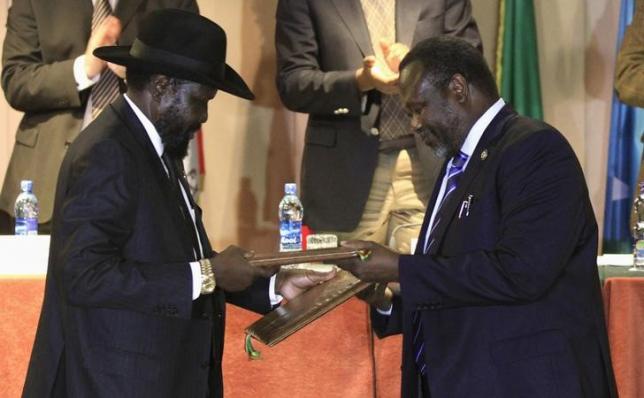
South Sudan's President Salva Kiir (L) and First Vice President Riek Machar exchange documents at a past function in Addis Ababa, Ethiopia.


South Sudan's President Salva Kiir (L) and South Sudan's rebel commander Riek Machar exchange documents after signing a ceasefire agreement during the Inter Governmental Authority on Development (IGAD) Summit on the case of South Sudan in Ethiopia's capital Addis Ababa, Feburary 1, 2015.
South Sudan’s President Salva Kiir (L) and South Sudan’s rebel commander Riek Machar exchange documents after signing a ceasefire agreement during the Inter Governmental Authority on Development (IGAD) Summit on the case of South Sudan in Ethiopia’s capital Addis Ababa, Feburary 1, 2015.


East African leaders gathered in the Ethiopian capital on Saturday in a last-ditch effort to convince South Sudan’s warring sides to sign a peace deal, ramping up pressure before a Monday deadline to end a 20-month civil war.

The world’s youngest nation, which gained independence from Sudan in 2011, descended into chaos in December 2013 when a political row between President Salva Kiir and his deputy Riek Machar spiraled into armed conflict that reopened ethnic faultlines.

Numerous rounds of negotiations have failed to end hostilities that have killed over 10,000 people and displaced more than 2 million, with both sides locked in a bitter war of attrition despite signing ceasefire deals.

Last month, IGAD – the East African bloc mediating the talks – handed both sides what it called a compromise deal on power-sharing and other contentious issues, proposing a three-year interim period as a solution to the conflict while setting Aug. 17 as the deadline to end the drawn-out talks.

Leaders from six East African nations are expected to be joined by representatives of the African Union, the European Union, the United Nations, the United States, Britain, China and Norway in Addis Adaba at the planned signing ceremony on Monday.

But a split within the rebels’ ranks and sharp disagreements over the power-sharing formula proposed by IGAD threaten to curtail chances of a deal being struck by the proposed deadline.

“Instead of committing ourselves into dates and trying to impose an agreement which is not yet accepted and owned by the parties, then I would advise that in case the parties do not agree, give them the chance to continue negotiating,” South Sudan Information Minister Michael Makuei told a news conference.

The talks suffered another setback this week after a rebel general split with Machar and rejected any possible peace deal between the two.

Peter Gatdet, a leading field commander, said both Machar and Kiir should be barred from the transitional government and wait to compete in the next election.

Under IGAD’s proposal, the rebels would be allocated a first vice president and the government the presidency, while an 18-month period would be set to integrate both armies.

It also suggests the demilitarization of the capital Juba – a call Kiir’s government has rejected. The rebels are seeking an extension to other regional capitals.

The main bone of contention is its proposal to hand the rebels’ the lion’s share of power in the flashpoint Unity, Upper Nile and Jonglei regions.

However, Machar announced on Friday that IGAD leaders had decided to scrap that arrangement in favor of the government, in a meeting held last week in Kampala.

“On the contrary, it will exacerbate and escalate the war,” Machar said in a statement.

IGAD officials were not immediately available for comment.

An East African diplomat close to the talks confirmed that the arrangement was discussed, but said no decisions were made.

In late July, U.S. President Barack Obama said South Sudan’s warring factions faced more international pressure if they did not reach an agreement by IGAD’s deadline.


Stories Continues after ad

Swansea 2 Newcastle 0


swansea beat newcastle

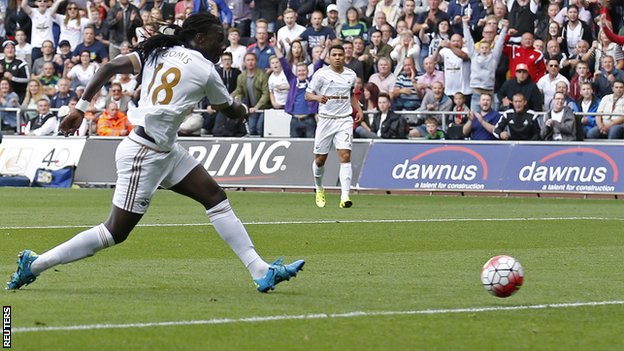
Swansea produced a stylish display to beat 10-man Newcastle and inflict a first defeat on new Magpies head coach Steve McClaren.

Jonjo Shelvey set up Bafetimbi Gomis to round Tim Krul and slot into an empty net to give Swansea an early lead.

Swansea dominated Newcastle – Garry Monk

Newcastle defender Daryl Janmaat was sent off shortly before half-time for persistently fouling Jefferson Montero.

The Ecuadorian’s next involvement was to cross for Andre Ayew to head in his second Swansea goal in as many games.

Garry Monk’s side could have won by a bigger margin, but Montero and Gylfi Sigurdsson’s long-range shots hit the woodwork.

Newcastle failed to trouble the hosts, who monopolised possession and consigned their opponents to a seventh successive Premier League away defeat.

Shelvey’s renaissance


Jefferson Montero (right) deserves an honourable mention but it was Jonjo Shelvey (left) who dictated the game from the start and inspired a dominant Swansea display.

Green = successful passes; red = unsuccessful passes

Swansea midfielder Shelvey’s inconsistency was a source of frustration for Swans manager Monk last season.

But judging by his form early in this campaign, the 23-year-old seems to be finally making the most of the ability which brought him his only England cap to date in 2012.

Shelvey impressed in the 2-2 draw at Chelsea and dominated against Newcastle, orchestrating Swansea’s midfield and providing a brilliant assist for Gomis’s goal.

“We are working to improve his performances,” said Monk. “He is listening hard. It is about him working hard and us working hard with him to improve his play in all areas.”

The graphic shows Shelvey’s influence in midfield after the break which helped Swansea control the game. He completed 88% of his 83 passes and ran 10.92km during the game – only fellow midfielder Jack Cork covered greater distance for the home side.

McClaren’s misery

Newcastle showed signs of promise in their opening draw against Southampton, with Georginio Wijnaldum the brightest of the new signings on display.

But the visitors were toothless for large parts at Liberty Stadium, the likes of striker Papiss Cisse almost anonymous as McClaren’s side were starved of possession.

Janmaat’s red card will have irked the former England boss, as the Dutchman was guilty of an unnecessary and impulsive tug of Montero’s shirt to leave Newcastle down to 10 men and facing a daunting task which they never looked like completing.

Man of the match

Swansea manager Garry Monk: “We dominated the whole game from start to finish. When the red card does come it impacts on the dynamic of the other team more and they sat back after that.

“We were very professional in the second half and made sure we won the game with a clean sheet.”

Newcastle head coach Steve McClaren:“We didn’t learn a lot apart from it is difficult to win with 10 men.

“A little bit of naivety has cost us, 10 men and your backs are against the wall. We have to dust ourselves down and concentrate on the Manchester United game next week.”


Stories Continues after ad

Military games good for regional cooperation

The armed forces from the five East African Community states are holding the 9th Edition of the East African Military Games and Cultural Event at the Mandela National Stadium in Uganda.

Sports is one of the most successful undertakings in respect to enhancing unity so every effort must be mustered by the respective member states to ensure that the event is strengthened.

The member countries must also ensure that event is staged in accordance to schedule so that respective member countries have the chance of hosting fellow soldiers from other countries to compete in the various sporting activities.

This helps the armed forces to interact at a recreational level as opposed to military interaction that they get when they are on duty.

Indeed the success of these games can also go a long way in widening and establishing cooperation among the EAC Defence Forces and also enhancing the process of fast-tracking the EAC integration.

This is because if there is unity among the respective defence forces, then unity and cooperation among their respective citizenry is easily guaranteed.


Also, the interaction of our men and women in uniform through participation in games helps to promote different cultures.

Otherwise, Ugandans welcome all competitors.

Stories Continues after ad