Stanbic Bank
Stanbic Bank
18.1 C
Kampala
Stanbic Bank
Stanbic Bank
Home Blog Page 2344

Burundi urged to investigate attacks on journalists

Representatives of eighteen press freedom and human rights organisations have written to the authorities in Burundi, asking the government to investigate attacks on journalists.

The organisations also noted that about 50 journalists had fled from Burundi since civil unrest broke out the tiny central African country following President Pierre Nkurunziza’s announcement to run for a third term.

The organisations also cited the closure of media outlets and castigated the recent attacks on human rights activist Pierre Claver Mbonimpa and journalist Esdras Ndikumana, who was brutalized by police and intelligence personnel.

‘The undersigned press freedom, media development and human rights organizations denounce the continued attacks on and threats to journalists, media workers and human rights defenders, most recently the serious incidents in which human rights defender Pierre Claver Mbonimpa survived an attempt on his life while journalist Esdras Ndikumana was the victim of a brutal attack by police and intelligence officials. Furthermore, we are very concerned by the continued closure of independent media outlets and the consequent lack of access to reliable information in Burundi’ the organisations wrote in an August 5 release.

They also urged the authorities to ensure that the journalists’ tormentors are brought to book and tried before court.

‘ We call on the Burundian authorities to investigate these attacks immediately and to ensure that those responsible are found and brought to justice in a fair trial’ the organisations wrote and implored government to cooperate with local and international stakeholders  including the opposition, the UN and AU.

‘Finally, we encourage dialogue between the authorities and media, between the authorities and opposition parties and between authorities and United Nations and African Union representatives to create conditions conducive to building an environment of peace for all Burundians,’ the organisations state.

The communiqué was signed by  Henry Maina, Regional Director, Eastern Africa, ARTICLE 19 Tom Henheffer, Executive Director, Canadian Journalists for Free Expression (CJFE) Toby Mendel, Executive Director, Center for Law and Democracy Courtney Radsch, Advocacy Director, Committee to Protect Journalists Caroline Vuillemin, Director of Operations, Fondation Hirondelle,  Ruth Kronenburg, Director, Free Press Unlimited Daniel Calingaert, Executive Vice President, Freedom House.

Others are Daniel Bekele, Africa Director, Human Rights Watch, Melody Patry, Senior Advocacy Officer, Index on Censorship, Ernest Sagaga, Head, Human Rights and Safety, International Federation of Journalists (IFJ), Jesper Højberg, Executive Director, International Media Support (IMS), Barbara Trionfi, Executive Director, International Press Insitute (IPI) Elisa Lees Munoz, Executive Director, International Women’s Media Foundation (IWMF).

Karin Deutsch Karlekar, Director, Free Expression Programs, PEN American Center Tamsin Mitchell, Africa Researcher and Campaigner, PEN International, Cléa Kahn-Sriber, Head of Africa Desk, Reporters sans Frontières, Tina Carr, Director, Rory Peck Trust and Ronald Koven the Acting Director, World Press Freedom Committee also signed the communiqué.


Stories Continues after ad

Fifa presidency: Caf will not back Musa Bility’s bid


Musa Bility1

The Confederation of African Football has declined to back Liberian Football Association president Musa Bility in his bid to become Fifa president.

Bility, 48, is one of four men to have expressed their interest in standing in next year’s election to replace outgoing Fifa chief Sepp Blatter.

“The Caf executive committee decided unanimously not to give Musa Bility the support he requested,” Caf stated.

“It advised him of this, wishing him good luck in his mission.”

Bility is only the second African ever to make a bid for the job.

Brazilian Zico, Frenchman Michel Platini and South Korean Chung Mong-joon are the other names in the frame to stand in the 26 February election.

Bility has stated his belief that “this is Africa’s time” to take the lead in world football but his lack of support from his continent’s football governing body will be a blow to his candidacy.

The Liberian has had a difficult relationship with Caf in recent years.

In 2011 Bility declared he would vote against Blatter in that year’s Fifa elections, in contrast to most of his African colleagues.

And in 2012 he – and the Liberian FA – took a case to the Court of Arbitration for Sport over changes to the way Caf elects its president, which favoured incumbent Issa Hayatou.

The court twice ruled against the LFA and then in 2013 Bility was banned from all football activity by Caf after the governing body said he “had violated statutes relating to the use of confidential documents”.

While Bility insists that their differences are now a thing of the past, Caf does not appear ready to completely forgive and forget.


Stories Continues after ad

Uganda drops in FIFA rankings

Uganda National team, the Cranes.


Uganda National team, the Cranes.

Uganda, East Africa’s top ranked soccer-playing country has dropped from 73rd to 74th position.

According to the latest Fifa rankings released August 6, Kenya maintained its 116th slot while Tanzania dropped one place to 140. Rwanda and Ethiopia climbed up the rankings ladder, with the former scaling 13 slots to reach 91st, while the later moved up two places to settle at 91.

But despite dropping one slot Uganda still remains among the top 20 ranked nations in Africa, stationed at 19th position on the continent.

Togo have climbed three places to the 80th position six slots behind Uganda on the continent,  it’s  opponent in the 2018 World Cup qualifiers.

The top five African countries include Algeria, Ivory Coast, Ghana, Tunisia and Senegal, positioned at 19th, 21st, 27th, 34th and 39th respectively in the world.

Argentina, Belgium, Brazil, Colombia and Germany are the world’s leading five countries.


Stories Continues after ad

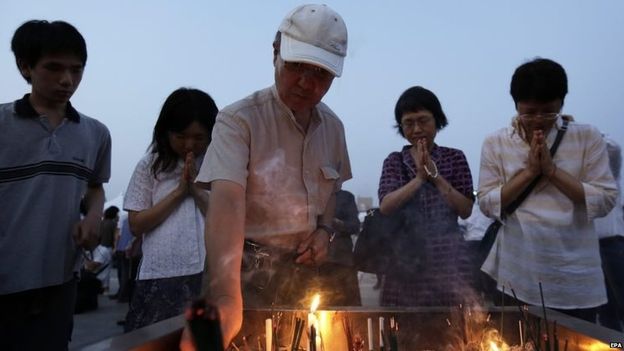
Japan marks 70 years since Hiroshima bombings

Incense sticks were burnt in the city on Thursday morning. Photo by BBC.


Incense sticks were burnt in the city on Thursday morning. Photo by BBC.
Incense sticks were burnt in the city on Thursday morning. Photos by BBC.

Residents of Hiroshima, Japan commemorated 70 years since the world’s first atomic bomb explosion hit their city during the final stages of the Second World War on August 6, 1945.

The United States, as a counter to the earlier bombings of their fleet at Pearl Harbour by Japan, dropped a Uranium gun-type atomic bomb on the city of Hiroshima that exploded 600 metres above the city killing at least 7000 people, with the acute effect claiming 140,000 lives after the explosion.

During the ceremony held at the Hiroshima Memorial Grounds in Japan, the Prime Minister Shinzo Abe urged the world to fight the use of nuclear weapons.

″We have to collectively contribute to keeping the world atomic bomb free by ensuring that the nuclear states come to terms with non-nuclear states, ″ Mr. Abe said adding that: ″ we as Japan are willing to act as peace makers for both sides.″

A mushroom cloud over Hiroshima following the explosion of an atomic bomb.

Of recent the United States has been instrumental in fighting the use of nuclear weapons with President Barack Obama engaged in the pursuit of a nuclear deal with Iran, which is on the brink of being attained.

In an interview with Aljazeera, Mr Greg Thielmann of the Arms Control Association said North Korea remains the only country testing nuclear weapons today.


Stories Continues after ad

Augsburg wants over €20m for Ghana defender Rahman


Baba Rahman.
Baba Rahman.


Chelsea is topping the battle to sign defender from Augsburg, but the team won’t let go of him for no less the €20m.

According to Augsburg president Klaus Hofmann, Rahman is one of the best players in the world. “We are a very vigorous club,” Hofmann said. “Baba is one of the main gifts in the world. No one should call us and offer €20m,” Hofmann said of the 21 year-old.

Premier league teams like Manchester City and Arsenal had an interest in Rahman, but ESPN FC has been told that Chelsea is in better position to land the left-back, who also played for Greuther Furth.

Ghanaian Rahman was one of the best for Augsburg as they ended fifth in the Bundesliga last season.

Two million euros echoes like a heavy amount, but it turns to less than £30k a week. They’re speaking the exact amount, however, so let’s double that number to justify taxes, which is approximately £55-60k per week for the 21-year-old.  It’s not the cheapest, but clearly we can afford it and by all accounts, Baba is pretty good at his job and should only improve.

Earlier this week, Augsburg sporting director Stefan Reuter told Augsburg: “Nothing is new. We are not in contact. There have been no tangible deals for him. It does not concern us at the moment. We are totally relaxed.

“We still want the player at Augsburg, but if exciting sums are offered we will think about it. That’s usual but it does not automatically mean we will sell him.”

Mourinho club has a meeting scheduled with Augsburg to complete the deal for Baba and Chelsea already reached an agreement with the player on a 5 year deal worth €2 million net a season.

Nevertheless, ESPN FC was told that Augsburg  have submitted to losing Rahman as they admit they cannot contest with what is on offer from Europe’s top clubs, and the player has an inclination for the Premier League.


Stories Continues after ad

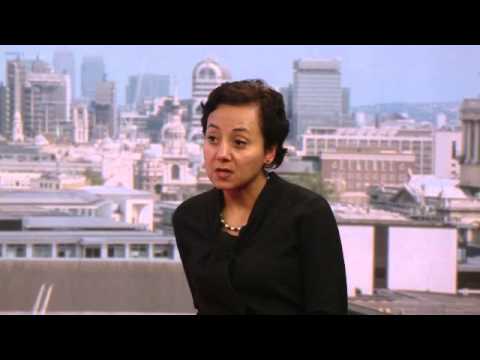
Islamic finance could help plug infrastructure gaps in Africa

Standard & Poor’s credit analyst Samira Mensah.


Standard & Poor’s credit analyst Samira Mensah.

The development of an Islamic finance industry in Africa could help plug the regions large infrastructure gaps over the coming decade.

According to Standard & Poor’s Ratings Service Report released Thursday, August 6, ‘a framework of regulation and fiscal adjustments will be necessary to foster African sukuk markets, provide wider investment options for potential Islamic investors, and attract a pool of Islamic liquidity’.

To date, African sovereigns have issued about $1 billion of sukuk instruments, compared with global sukuk issuance of an average $100 billion per year over the past five years. Meanwhile, widening fiscal deficits and large infrastructure gaps will likely require multibillion-dollar additional financing needs over the next decade.

Standard and Poor, the world’s leading provider of credit risk research, says that South Africa and Senegal have shown that a significant amount of time can elapse between a government’s announcement of intent to issue sukuk and their effective issuance, ‘as governments gauge market interests and try to address the legal hurdles and cost of issuance’.

“We believe legislation gaps are the main causes of delay between a country’s intent to issue and its effective issuance of sukuk,” said Standard & Poor’s credit analyst Samira Mensah. The success of Malaysia in South-East Asia as a hub for Islamic finance lies, among other things, in the strong regulatory framework to support the sector’s growth. Malaysia also moved quickly in 2009 to address the standardization of instruments and interpretation of Sharia law.

Tax regimes are equally important to consider when encouraging sukuk issuance. Sharia-compliant instruments require equal treatment with conventional instruments for investors to consider them. Malaysia introduced various tax incentives that made Islamic finance a cheaper economic alternative for institutions to raise funding.

However, increasing technical assistance by the Islamic Development Bank (IDB) and Islamic Corporation for the Development of the Private Sector (ICD), are also gradually facilitating sovereign sukuk issues.

“We believe that a growing interest in Islamic finance could encourage some North African countries, as well as sub-Saharan countries Cote d’Ivoire, Nigeria, and Kenya, which have fairly well developed capital markets by regional standard, to issue sukuk in the future,” said Ms. Mensah.


Stories Continues after ad

Uganda, Zambia match fires up players

She cranes in action.


She cranes in action.

The Zambia national netball team, Chipolopolo draws fire against She Cranes in their opening match on Friday, with the latter’s win over Singapore in a build-up friendly on Tuesday seemingly inconsequential.

Uganda next plays at netball’s biggest competition in a Group D match against Zambia tomorrow and the Zambians seem confident of victory.

“We are here to win, and we want to take the World Cup to Zambia” veteran shooter Diana Banda, said.

However, the She Cranes coach Rashid Mubiru dismissed the Banda talk as empty threats.

“They can talk. Let’s wait for the right match. We shall beat them like we have always done,” Mubiru countered.

Both Uganda and Zambia are playing their second World Cup, with the former having played its first WC in 1979, 20 years before the Zambians played in Christchurch in 1999.

In the buildup matches, Uganda lost 46-67 against New Zealand and today the She Cranes take on Samoa in the third and final buildup match. Samoa is ranked 13 in the International Netball Federation rankings, with Uganda a slot below.

Besides Zambia, Uganda is also placed alongside Fiji and Wales, the seventh and eighth ranked countries by INF.


Stories Continues after ad

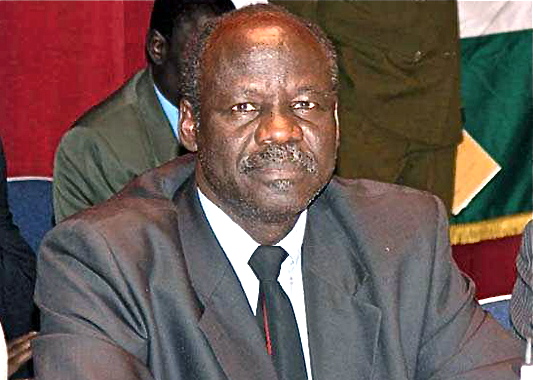
South Sudan opposition figure blocked from traveling to peace talks

Opposition leader Lam Akol.


A South Sudanese opposition leader who has been a leading critic of President Salva Kiir said on Wednesday he was barred from boarding a plane to attend peace talks in Ethiopia.

Lam Akol, whose Shilluk ethnic group say they have been sidelined for years, said the IGAD East African regional bloc had invited him to peace talks but he was blocked from boarding the flight from the capital Juba to Addis Ababa.

“Unfortunately, a major general of the police told us that he has directives from the Presidency that the leaders of political parties are not allowed to travel without the permission from the presidency,” Akol told Reuters.

Awen Riek, speaking for the president’s office, said the government had no information that Akol’s party had been invited to the talks.

A political crisis in South Sudan in late 2013 sparked fighting that reopened ethnic fault lines between Kiir’s Dinka people and ethnic Nuer forces.

Other ethnic groups, such as Akol’s Shilluk, say they have been excluded from peace talks. The talks have made glacial progress and ceasefire agreements have been broken repeatedly.

Akol, a foreign minister of South Sudan when it was a semi-autonomous region before independence in 2011, formed his SPLM-DC party after breaking away from the ruling SPLM. He criticized the scrapping of elections that were due in June and opposed the extension of Kiir’s term in office by three years.


Stories Continues after ad

Lweza demoted to Big League


FUFA CEO,Edgar Watson.

The Federation of Uganda Football Associations (FUFA) Chief Executive Officer (CEO), Edgar Watson has publicly communicated to Lweza Football Club about the team’s relegation.

In a letter dated August 5 addressed to the Lweza Chief Executive Officer, Watson said Lweza had not fulfilled its licensing requirements for the 2015/16 season and asked the Lweza CEO to make reference to three earlier communications of June 24, July 14, and July 30, made by FUFA.

According to Watson, Lweza have upto Friday, August 7 to appeal the decision.

“You have been granted a grace period of up to Friday, 7th August 2015 to appeal in case there is need before closure of business at 5pm.Please observe the requirements for lodging an appeal in line with FUFA statues,” Watson letter states in part.


Stories Continues after ad

Solve varsities’ support staff impasse


The ongoing strike being carried out by non-teaching staff at all the seven public universities is an unwelcome distraction.

Early this week the support staff under their umbrella organization, the Public Universities Non-Teaching Staff, PUNTSEF, vowed not to carry out any work at their designated stations until their salary increment grievances are sorted out.

The groups cite an earlier increment in the salaries of the teaching staff announced in the current budget, and aver that they have been discriminated against.

The support staff strike is poignant for a number of issues, not least because these people offer services that are of critical importance to the students. These are the people who clean, man the library and guard the varsity premises, among other tasks.

It is common knowledge that the government has prioritized infrastructure development ahead of almost all other areas of service delivery. This in itself is not bad. However, there is a ‘tired’ tendency by those in charge of grading the salaries of public officials/workers; they create huge salary disparities that demoralize even the personnel that would have otherwise wanted to hang in there till the appropriate time comes when government can satisfactorily pay its workers. And therein lies the problem, one that needs a quick fix if we are to avoid intermittent strikes by workers in the public sector.

For starters, we could borrow a leaf from our neighbor to the east, Kenya, which established the Salaries and Remuneration Board, the SRB, to try and harmonise the salaries of public officers in the country.

The advantage of having bodies such as the SRB is that they are established through an Act of Parliament, meaning their activities are subject to parliamentary scrutiny and approval, thereby minimizing inequitable handling of public workers’ affairs including remuneration.

It works!

Stories Continues after ad