Stanbic Bank
Stanbic Bank
18.2 C
Kampala
Stanbic Bank
Stanbic Bank
Home Blog Page 2351

Deejay Sharq of Big Fish Entertainment

Deejay SharqDeejay Sharq

What is your name?

My name is Moses Owiti but Deejay Sharq is my stage name, aka the Big Fish

Where were you born?

I am a Kenyan born in Yala division, Gem constituency and Siaya County in western Kenya.

What is your family background?

My dad is a polygamist and my mum is the youngest wife, with me as her only child. There are four boys and one girl from another wife. Both my mums are businesswomen and my retired dad is farming in the village.

Which schools did you attend?

I attended Joseph Kange Primary School in Nairobi, class eight in Ochol Primary School in Nyando district, Thurdibuoro High School in Paponditi Nyando district, KIU for Access Programme then I pursued a degree in journalism and communication still at KIU. I graduated in 2009 with an Upper Second degree.

Why did you choose to be a deejay yet there are ‘better’ careers in limelight industry?

I did not choose to be Deejay, I wanted to be a radio presenter and I worked at Hearts FM, KIU radio before it was closed. I went to UBC for a Dance Force show with Bob G and I am still doing the show. Then I ventured into club as opportunities were scarce but I kept on working hard with hope of getting spots and I still chase the dream.

What are the challenges you have encountered in the struggle to be who you are now?

There are so many challenges in the Deejay industry. Ugandan industry is not well structured  in terms of recognition and payment compared to my country Kenya; equipment like laptops, Mbs for downloading music from the internet, transport costs, lack of respect for Deejays as most people, especially parents, view us as people who lost focus. We are seen as people who do drugs and sex workers that’s all. This has tarnished our reputation before everyone.

How are you paid?

Poor payments have forced us to work in so many night clubs and bars, TVs and radio stations in order to make ends meet since we are paid according to hours worked.

What have you achieved in this job so far?

I have been able to build a house for my mum in the village, bought my self-equipment and a car; I pay rent and buy other basic needs. Besides that, I have made many friends, visited many countries and districts, got platform to play music for both national and international artistes on the same stage, recognized by different media houses like NBS, Galaxy FM and Life among others. And all this has pushed me to the limelight.

What are your future plans?

In future I want to do big promotional events both locally and internationally and own a big entertainment company. Good enough bar, club and company owners have started recognizing deejays importance so I am sure deejays will get good money just like their colleagues in other countries.

How do you survive those ‘yummy’ club girls?

The girls are yummy and if you do not practice, you may be soon gone. But if you have displine you can conquer the odds. You have to be careful because these days there are parasites.  The truth is those babes are daring however much we try to resist. I survive by taking selfies with them only for Facebook likes, you know girls. But other issues, “no way”.

How are you different from other deejays?

By creating my own style of play, understanding more genres, when to play, how to drop and make people dance, the energy I out on set, love and passion drives it all. Creating a fan base on social media; giving out t-shirts, mix tapes and interacting with the fans on daily basis. My attire is blonde hair, my identity and logo and how I behave while on duty by keeping it professional.

Why did you choose to establish yourself as a Deejay in Uganda and not in Kenya?

I chose to stay here because I see potential; there is demand for the game and opportunities are opening up day by day; it has been an untapped industry and not fully explored unlike in my country.

People say you are Deejay Nimrod’s brother, what do you say about it?

Deejay Nimrod is my ‘brother’ from another mother. He has helped me establish a lot; he taught me how to play Ugandan music and how to mix it and through him I became star. That is why I call him brother. He acts like a guardian in Uganda and I owe him a lot. He has been there for me in good and bad times and I salute him. He is the one man I would donate my kidney if in case of need.

What club brought you to the limelight?

Las Vegas that is owned by Charles Muhangi, the former rally driver and owner of Horizon buses. I played there from 2007-2013 then I moved to Club Venom. Being pioneer Deejays gave us a platform because it was the first microbrewery club in Kampala.

You married?

No, but I am dating a beautiful girl though I will not mention her name.

Why do most deejays live reckless lifestyle?

Excitement, exposure, quick money, lots of women who envy them, drugs and alcohol drives them. They do not save or plan for the future since they can make quick money, just in hours.

Which female celebrity do you have a crush on?

If I was to date a Ugandan female artiste, I think I would go for Grace Nakimera because she’s cool.

Why do people call you Big Fish?

Big Fish entertainment is a label where I belong and I have few Deejays in my team.

What is the craziest thing you will never forget in your life?

The day my girlfriend had a fight in club with a fan who had come to the Deejay box to request for a song. She boxed me as well.

Stories Continues after ad

Burundi VP ‘flees’

Burundi’s Vice President Gervais Rufyikiri has fled the country, claiming his life was in danger.

One of Burundi’s Vice President Gervais Rufyikiri has fled the country, claiming his life was in danger. According to media reports, Rufikyiri, who said that a third term for President Pierre Nkurunziza was unconstitutional, fled to Belgium, even as officials back home claimed he had gone on ‘official duty’.

If Mr Rufikyiri’s departure is confirmed, he will become one of a handful of top government officials to flee the troubled central African country; Constitutional Court vice president justice Sylvere Nimpagaritse sneaked out in early May, just as the court was about to pronounce itself on the legal issues surrounding Nkurunziza’s presidential bid, while a senior official at the country’s electoral body also fled shortly after.

In the past few months Burundi has been embroiled in persistent turmoil following the President’s announcement that he would seek re-election in the polls that were earlier slated for June 15, but have since been rescheduled for July 15.

However, Nkurunziza’s announcement was met with stiff resistance, with several people flooding the streets of Bujumbura to protest. The protests culminated in a temporary coup led by a former intelligence chief, Maj Gen Godefroid Niyombare, staged on May 13.

At the time president Nkurunziza was in Dar es Salaam attending the East African Community Heads of State Summit on the crisis in his country. However, forces loyal to Nkurunziza were to recapture his seat the next day Thursday 14 and landing in his home area of Ngozi, in the north of the country, after which he made a triumphant return to Bujumbura on Friday, May 15.

After his return, tens of protesters were arraigned before court and charged with attempting to overthrow the government, with top coup plotters, former defence minister Gen Cyrille Ndayirukiye and Police Commissioners Herman Ndabaneze and Hermenegilde Nimenya leading the pack in the courtroom.

A former rebel leader, Nkurunziza has led Burundi since 2005, after the belligerent forces in the country agreed to lay down arms following peace talks held in the northern Tanzanian town of Arusha.

Stories Continues after ad

What type of Parliamentarians are these?

We live in a weird country, full of people who carry out drab actions that have cost the tax payer billions of shillings through unmitigated corruption. And, by their actions on Tuesday this week, some members of the Ugandan Parliament appeared drab, in respect to a pension scam involving Shs15 billion.

The pension sector in Uganda needs no introduction; it has turned into cash cow for civil servants and rogue private citizens. And billions are lost in heists that seem non-ending, yet we have MPs that seem detached from any actions that can curb the loss tax payers’ money to con artistes.

Recently, while appearing before the Public Accounts Committee of Parliament city lawyer Bob Kasango admitted he had pocketed Shs7.8 billion taxpayers’ money, meant for pensioners. He promised to repay the swindled money, and the PAC MPs just looked on as ‘Mr Moneybags’ talked of refunding cash that almost equals their collective monthly perks. The MPs just allowed him to go home, yet PAC has detectives attached to the committee, who should have been ordered to detain Kasango, pending further inquiries.

But for PAC, Kasango’s appearance before them was just a ritual, never mind that he admitted committing a felony. Interestingly, Kasango also told the PAC members that a High Court Judge, John Eudes Keitirima, had asked for a bribe of Shs500 million, to ‘smoothen’ the path to hemorrhage the 7.8bn. While that may be true, Kasango as a lawyer must know that ‘he who asserts, proves’. So, in as far as the bribery claims are concerned, the ball lies squarely in his court, to prove that Keitirima is a ‘rogue’ Judge, not fit to hold such an esteemed judicial office in Uganda, or elsewhere in the world.

But be that as it may, there are quite a number of questions to be asked, though: Can Ugandans trust this crop of Parliamentarians to make the Executive account when the legislators cannot even make just a simple lawyer accountable for his criminal acts? Was Kasango’s admission before PAC to the commission of a crime in the form of a ‘Plea Bargain’? From which vote was this money drawn and who, in the Attorney General’s Office, authorized the payment? And, in case Kasango is to pay back the money, in which names will he write the cheque? Or is he going to pay back in cash? In any way, is it possible that the ‘Bill of Costs’ in any matter of litigation can be half of the total sum payable? This whole Kasango/pension saga stinks!

Recently, Senior Counsel Prof George Kanyeihamba brought to light the issue of corruption in the courts of Uganda and also within his fellow lawyers’ fraternity. He even submitted to Chief Justice Bart Magunda Katureebe a ‘List of Shame’, of the allegedly corrupt judicial officials. Nothing much has been heard from the CJ ever since but if the judicial sector in this country wants to purify its contestable public image, it must act now! This Pension Scam matter deserves the critical intervention of the Ministry of Justice Uganda, the High Court, the Uganda Law Society (ULS), the Law Council and the Police.

That said, it is quiet disturbing that this country has suffered from the hemorrhaging of pension funds because this money is supposed to pay some old men and women who rendered invaluable service to Uganda.

Stories Continues after ad

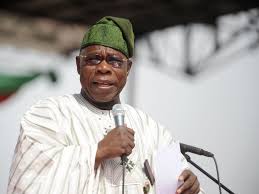
Obasanjo thought Kagame would make ‘better DRC leader’

President Obasanjo


Obasanjo. wanted Kagame to takeover Congo because of his strong 'leadership skills'.
Obasanjo. Wanted Kagame to takeover Congo because of his strong ‘leadership skills’.

Nigeria’s former president Gen Olusegun Obasanjo, who is widely credited with helping end the war in eastern Congo in 2009, thought President Joseph Kabila didn’t have the skills to manage such a big country.

According to US diplomatic cables that were leaked to the whistleblower site WikiLeaks, Obasanjo reportedly said he wished Rwanda’s President Paul Kagame were the man running Democratic Republic of Congo, because he had the leadership skills to manage the complex Central African nation.

Then, the DRC was Africa’s third largest country (it is now second largest after the formal break-up of the Sudan in July 2011).

According to the cables, in a November 10, 2009 closed-door meeting with the US ambassador to the United Nations in New York, Susan Rice, Obasanjo said that though Kabila meant well, “he (Obasanjo) thought at one point that Kabila was overwhelmed by his presidency.”

Obasanjo worked on the Congo conflict as the UN Security Council’s Special Envoy to the Great Lakes, with Tanzania’s former President Benjamin Mkapa as his co-facilitator. It is the voluble and controversial Obasanjo, though, who is cited in the cables.

Obasanjo allegedly said, “Kabila was not so forthcoming as Rwandan President Kagame,” and that he wished Kagame were in the DRC and Kabila in Rwanda, due to their respective leadership attributes.

He commented that Kabila was very sensitive and needed to develop self-confidence, but that would be difficult to do because he was not well-served by the people around him.”

In the past Rwanda has intervened in the DRC, which is 27 times bigger than it, several times to attack what it says are remnants of the forces Kigali accuses of having carried out the genocide in 1994 in which nearly one million people were slaughtered.

Rwanda has also backed several rebel groups in the east of the country, especially in the period when the government in Kinshasa was also being accused of supporting anti-Uganda and anti-Rwanda dissidents.

Political critics and human-rights groups, however, accused Rwanda for invading the mineral-rich DRC to plunder its wealth, and said it had direct and indirect responsibility for the deaths of millions of people in the east of the country in recent years.

Kabila took power in 2001 after his father, President Laurent Kabila, was assassinated. It would be typical of Obasanjo to make such remarks. Both in and out of power, he has continued to be in the headlines, sometimes for the worst reasons.

Obasanjo knows Kabila and Kagame well, and at the height of the DRC war in 2001, brought the two presidents together dramatically in his swashbuckling style.

Kabila was not picking up Kagame and Uganda President Yoweri Museveni’s calls, because the two had troops in the east of the country who were backing anti-Kinshasa rebel groups.

According to a Kagame aide, former Libyan leader Muammar Gaddafi organised a meeting in the Libyan town of Sirte to help end the DRC war. Kabila and Kagame, not surprisingly, were staying as far away from each other as possible.

One morning before the formal meeting started, Obasanjo was walking around the conference venue, in his voluminous robes, when he spotted Kagame approaching. He stopped him and hugged him. Holding his hand firmly, Obasanjo walked about shouting for Kabila to be brought to him. The youthful Kabila was found and presented to Obasanjo.

Obasanjo grabbed him, and walked off, with a president in each hand, to a meeting room. Inside, Obasanjo allegedly said, “Let us solve this problem among us as men, man to man, in the African way”. When they emerged from the room, they were laughing and Kabila and Kagame were arranging a coffee date. It would seem Kabila never made a big impression on the veteran Nigerian politician.


Stories Continues after ad

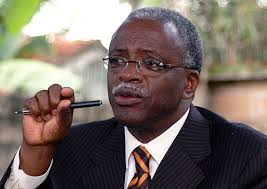
Mbabazi tells Americans, it is time for Museveni to leave

Mbabazi tells Voice Of America (VOA) talk-show that it is time for Museveni to leave but he wasn't sure whether Museveni would step down.
Mbabazi tells Voice Of America (VOA) talk-show that it is time for Museveni to leave but he wasn’t sure whether Museveni would step down.

Meanwhile by filing time of this story, the Inspector General of Police, Gen. Kale Kayihura had written to Mbabazi  informing him that his nationwide consultation would not be cleared by police.

amayemba@eagle.co.ug

Kampala-Former Ugandan Prime Minister Amama Mbabazi has said it is time for a peaceful transition in Uganda, where President Yoweri Museveni and the ruling National Resistance Movement (NRM) have been in power for 29 years.

On June 16 Mbabazi announced that he will challenge Museveni for the ruling party’s chairmanship and the 2016 presidential nomination.

Mbabazi, who is in Washington, told VOA that while the NRM has done good things for Uganda, he believes it’s time for a new leadership to do even better things. “The NRM has performed very well in the last 30 years. We’ve had the leadership which has led this very well during this time, but the Bible says there always time for everything. In my view and in light of the successes that we have had, it is reasonable to expect the continuation of that success even as it deserves change. So, my offer will be to lead that process of change,” he said in an interview on Daybreak Africa, hosted by VOA’s James Butty.

Mbabazi, the erstwhile National Resistance Movement (NRM) Secretary General, said he wants to be the engine of change, prompting a quick response from party chairman Mr Museveni, who said the former Premier was part of the government and that he had the capacity to effect any changes during that time.

For his ambitions, Mr Mbabazi has come under severe criticism from some NRM quarters, the most recent being the party Secretary General Justin Kasule Lumumba’s dismissal of her predecessor’s presidential bid under the banner of the NRM. Citing the NRM Constitution, Ms Lumumba said no NRM organ had endorsed Mbabazi for the 2016 elections.

“The NRM Constitution mandates the NRM Electoral Commission to organize and conduct elections within the organs of NRM. The NRM Electoral Commission can only nominate aspirants who have been recommended to the National Conference by the National Executive Council. Amama Mbabazi has not been recommended by either the Central Executive Committee or the National Executive Council as a presidential aspirant,” Ms Lumumba was quoted as saying.

She added: “Amama Mbabazi’s self-introduction to the National Electoral Commission purporting to be an aspirant for office of President on NRM ticket is irregular and illegal as his aspirations have not been endorsed by the NRM in accordance with the Presidential Elections Act and NRM Constitution.”

However, it seems Mbabazi is not deterred and during the VOA interview said the change he envisages will make Uganda a better country by reviving its democracy and institutions, transforming the economy, attracting local and foreign investment, and promoting equitable development. He said he’s willing to associate with everyone, including the opposition, if it will bring about unity.

“My point all along has been that Uganda now is at a stage where we need the effort of everyone. Nobody should be left behind for us to achieve the objective of takeoff, things we can do together in order to achieve that high objective,” he said.

Mbabazi said he has been holding discussions with people in the opposition because he doesn’t consider himself an enemy to anyone, and so, too, the opposition should not see him as an enemy.

“We are Ugandans who espouse maybe different ideas about how to run country. It only means that we have different approaches. And this should not really stop us from cooperating with each other,” Mbabazi said.

Uganda’s opposition parties have been advocating electoral reforms, including a call for an independent Electoral Commission whose members are not appointed by the President, and an end to government control of the media. Mbabazi said he has for long been an advocate for electoral reforms, even when he was Prime Minister.

“Obviously, we need reforms in our electoral laws. These are necessitated by the experience we’ve had from previous elections. We’ve had challenges in the courts of law. We had observers from all over the world. We have observers locally, and they made some observations, and we needed to take all these into account in order to do everything that was necessary to be done to have a better election this time around than we did the last time,” he said.

He said any democrat should be willing to support the idea that, where the law is lacking, it should be made better.

Mbabazi said he thinks he and Museveni are in agreement on the need for a peaceful transition of power in Uganda. But, he would not say if Museveni would be willing to step aside in the name of a peaceful transition.

“Well, peaceful transition may be via stepping aside, meaning resigning, or it may mean through a democratic process,” he said.

Meanwhile by filing time of this story, the Inspector General of Police, Gen. Kale Kayihura had written to Mbabazi  informing him that his nationwide consultation would not be cleared by police.

Stories Continues after ad

Misagga looks to refresh Villa


Flores to be at SC Villa for two years.

SC Villa has embarked on a rebuilding process after impartial 2014/15 season that ended with Uganda Cup silverware.

For starters, Uganda’s record (16-times) champions have hired the services of Spaniard Antonio Flores on a two-year contract taking over from interim coach Ibrahim Kirya.

“It’s true we signed a two year contract with Flores (Antonio) and we expect him to start work in July 2015,” Misagga confirmed

Flores, who has previously handled Polideportivo Aguadulce’s U16 side, a fifth level of competition in Spanish League Football promised to improve matters at the club.

The Spaniard is believed to have signed the contract in March during his brief visit to the country although he was unveiled to media then as “a scout from Spain here to help identify and connect SC Villa players to European clubs.

” “We thought it was just not the right time to announce the signing,” Misagga said of the club’s decision to refer to Flores as a scout.

The 42-year-old Spaniard, however, revealed in an interview published by La Voz de Almeria last month that a deal had been finalized between him and the club.

“This March I was in Kampala, where the club invited me to access all infrastructures and I showed them a general methodology and analysis in preparation for next season.

After, I signed two seasons, the 2015-16 and 2016-17,” he is quoted to have said.

The coach’s last work station was in the fifth level of competition in the Spanish League Football with Polideportivo Aguadulce’s U-16 side.

Villa continues to be busy in the transfer window to refresh their squad in preparation for next season and next year’s CAF Confederations Cup.

Already last season’s League top scorer Umar Kasumba from Uganda Police FC, Taddeo Lwanga (Express FC), Robert Achema (Bul FC), Ambrose Kirya (Jinja MC) and James Kasibante (URA FC) among others.

They are also said to be eyeing FUFA Big League side goalkeeper Stephen Latex Odong who at the beginning of the year tried out with Kenyan Premier League (KPL) side Tusker FC but his transfer hit a snag after his parent club failed to release him in time.


Stories Continues after ad

Gospel artistes to be recognized in HIT awards

The Heaven Inspired Triumph (HIT) awards have been introduced to reward those whose strong values and faith have inspired them to stand out in their different fields of expertise.

According to the organisers, the HIT Awards are gospel-oriented and designed to appeal to a broad spectrum of people, reaching the ‘upward mobile individual’.

The awards event, slated for Friday, July 31 will focus on the seven spheres of influence: Arts & Entertainment, Business, Philanthropy, the Church, Leadership and the media, among others.

The categories include Artist of the year, Video of the year, Rising Star, Fine Artist of the year, Comedian of the year and Dance Group of the year. Others are Business of the year, Philanthropic personality of the year, TV Personality of the year, Radio Personality of the year, Radio Choice of the year, Evangelistic Minister of the year, Youth Minister of the year and Charismatic Leadership. Also, there will be Church project of the year and the Lifetime Achievement Award.


Stories Continues after ad

Do something about the rapidly falling Shilling

Over the past few months the Uganda Shilling has persistently depreciated against the Dollar and Pound Sterling, with the Dollar at about 3,300/- and the Pound going for over 5,000/-.

The development has led to an increase in the costs of carrying out both internal and external trade and in the process slackened the growth component projected by government for this fiscal year.

Recently, while presenting the Budget before Parliament, finance minister Matia Kasaija alluded to the fact that the imbalance of imports against the exports had affected the external sector including foreign reserves. He also talked about increased demand for foreign exchange and insecurity faced by some of Uganda’s trading partners in the region and the struggling European markets that were, however, on the recovery path.

However, according to Mr Kasaija, despite the above-mentioned shortcomings, Uganda is registering ‘positive’ economic growth, with the economy expected to grow by 5.3 per cent this financial year.

But in real terms, the opposite seems to be obtaining; more so if one considers the weak Shilling and the effects it can have vis-a-vis the rate of inflation. So, now is the time for the Central Bank to intervene, offering policy alternatives that can help stabilize the Shilling.

That scenario notwithstanding, in order to ensure the wellbeing of all Ugandans, it is important for the government to maintain stable prices for both goods and services. Further, in terms of food production Uganda has a favourable climate and a comparative advantage over most of our neighbours, so the government must also heavily invest in agriculture, with emphasis being put on value-addition if our exports are to meet the quality standards of the net importers like the western countries.

It is the resulting inflows from such investment that will help the country bridge its deficits and consequently improve on our foreign exchange savings.


Stories Continues after ad

Fashion: how to brand oneself

An Internet Illustration of girls doing a catwalk.

Kampala-Promoting fashion business can be very expensive, something many start-ups cannot afford but thanks to Social Media Platforms such as Facebook, Twitter and Instagram for making life a little bit easy for young entrepreneurs to share their creativity.    

In a competitive industry like fashion, you need to find ways to distinguish yourself from the others and show why your brand is the best for your customer.

But as a start-up or growing fashion business brand that cannot afford hiring a PR for branding and promotion, here are some tips for you on how you can use social media to tell your brand story.

Share something meaningful every day – Product of the day, showcasing at fashion or trade show, discount and coupons, when a product is being conceptualized, when you’re sketching the new collection, during a strategy session, when you’re cooling off with a glass of wine … you must let your audience be part of that journey that gets you to the next step. Let them share in your joys and crazy adventures along the way.

Tell a good story – What is your brand promise? Communicate that to your customer often, what your brand stands for, inspire and motivate others. Just remember that your customers care about your story but they also care about what your story means for their own happiness.

Be Personal and Connect – Don’t just be a postmaster. Interact with your customers, answer questions, and learn how to handle critics because lot will emerge. This includes all the normal marketing stuff such as being authentic, consistent, transparent, and persuasive. All should tap into the values and beliefs of your audience.

Hiring a PR person or agency is a must for every fashion brand if you want to take your business to next level and, as soon as you can afford it, go for one.


Stories Continues after ad

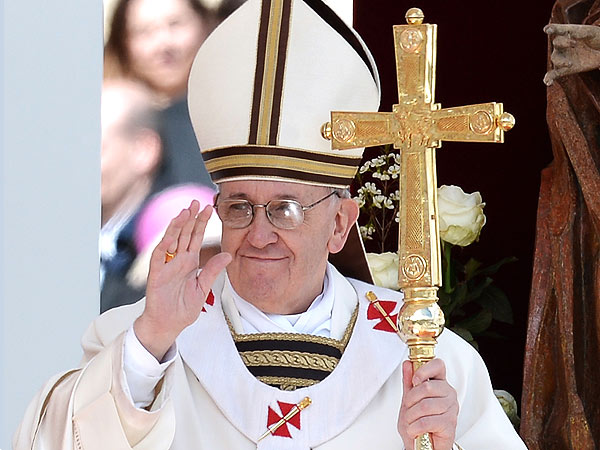
US Vatican embassy ‘foresaw’ Bergoglio as future Pope

Pope Francis. According to Wikileaks, he was supposed to replace Pope John Paul II.

Leaked U.S. State Department cables published by Wikileaks show that the U.S. Vatican Embassy saw the Pope Francis as a contender for the papacy in the 2005 conclave, reporting him to be a “wise pastor” who could appeal to allies of Cardinal Joseph Ratzinger.

Six cables mention Cardinal Jorge Mario Bergoglio, the Archbishop of Buenos Aires who became Pope Francis on March 13. One of the unclassified cables, dated April 18, 2005, includes a detailed profile that examined the Argentine Cardinal as a possible successor to Pope John Paul II.

“Bergoglio exemplifies the virtues of the wise pastor that many electors value,” said the cable authored by the U.S. Embassy to the Vatican. “Observers have praised his humility: he has been reluctant to accept honors or hold high office and commutes to work on a bus.”

The cable was signed by the U.S. embassy’s then-Charge d’Affaires D. Brent Hardt and was sent the day the 2005 conclave began. It discussed the future Pope Francis as one of 16 possible candidates.

“Bergoglio is said to prefer life in the local Church as opposed to a bureaucratic existence in Rome’s ecclesiastical structures, but at the same time he has been willing to serve on the Vatican’s various supervisory committees,” the cable continued.

The embassy analysis said this preference indicated the cardinal could bridge what it characterized as a “divide” between the curia and the cardinal archbishops of local Catholic churches. In the embassy’s view, this made Cardinal Bergoglio “a good compromise candidate” for voting cardinals.

The embassy said the cardinal’s membership in the Jesuit order “could count against him,” citing some senior prelates who are “suspicious of a liberal streak in the order.”

The embassy analysis said Cardinal Bergoglio, along with Cardinals Ruini and Scola, would be “suitable to the Ratzinger camp.”

Like most observers, the embassy incorrectly believed there was not enough conclave support for Cardinal Joseph Ratzinger, who would be elected Pope Benedict XVI on April 19, 2005.

In late 2010 the whistleblower website Wikileaks published about 250,000 leaked State Department cables as part of its “Cablegate” project. Hundreds of the cables touched on Catholic issues, including 700 cables originating from the U.S. Embassy to the Holy See.

Catholic News Agency published multiple in-depth reports on the documents from late 2010 through September 2011.

Cardinal Bergoglio is mentioned by name in a total of eight State Department cables in the Cablegate archive, which does not contain all State Department communications from 2010 and earlier.

Several of the cables concern the Catholic Church’s sometimes tense relationship with the Argentine government, especially with current President Cristina Kirchner and her predecessor and late husband President Nestor Kirchner.

An Oct. 11, 2007 cable from the U.S. Embassy in Buenos Aires said that some observers consider Cardinal Bergoglio to be “a leader of the opposition” to the administration of President Nestor Kirchner.

The cable suggested that the conviction of the Catholic priest Christian Von Wernich for his role as an accomplice in murder, torture and illegal imprisonment during Argentina’s “Dirty War” would be used to undermine the moral authority of the Catholic Church and the cardinal.

One confidential cable sent in January 2010 mentioned Cardinal Bergoglio in the context of U.S. Ambassador to Argentina Vilma Martinez’s meeting with Gabriela Michetti. Michetti is a former vice-mayor of Buenos Aires who presently sits in the lower chamber of Argentina’s legislature as a national deputy from Argentina’s center-right Republican Proposal (PRO) party.

The cable said Michetti maintained “regular dialogue” with Cardinal Bergoglio and other Catholic groups

Stories Continues after ad