Stanbic Bank
Stanbic Bank
30.3 C
Kampala
Stanbic Bank
Stanbic Bank
Home Blog Page 2360

Hundreds flock registration centres as deadline ends

A Voter at a polling station
A Voter at a polling station verifies her identity to vote

Hundreds of prospective voters today flocked voters registration centres to register ahead of the 2016 general elections. The verification exercise ends today 4 May.

Many Kampalans flocked various registration centers to cross-check register data after the Electoral Commission (EC) announced 4 May as the deadline date. On 29 April the Electoral Commission announced that it had extended the verification period to 4 May since many voters had not checked out their data.

According to the number of people at various centres today, it showed that many people had not registered and verified data. In Najjanakumbi, over 100 people lined up to check out the register at Namuli Church zone Voting Centre.

The EC official at the centre who wished to remain anonymous revealed that many people had been sent back home since time had run out. “I am not even sure these people lining up will cross check and verify their data;’ said the official.

Most voters at the centre complained and urged EC to give them more time since it’s them to blame for the delay. “We find it hard tracking these people they shift all the time, they should extend the exercise for one month,” said Busulwa Vincent a resident of Najanankmbi.  The official said EC was not to blame but the people. “The verification exercise started on April 7, but they didn’t turn up.” The same sentiments are shared by Mbabazi Margret, the Chief Supervisor at Nooku Zone, Kisenyi 3 parish voting centre.

Many residents flocked voters registration centers to verify their registration identities ahead of the 2016 general elections.

Ms Mbabazi says that in the past month, few people verified the Voter’s Register and that during early April they would get about 10 to 15 people. “After EC announced it won’t extend the deadline, it’s when they are coming in big numbers, we have been verifying since early April but it’s now that they are coming.”

Some of the voters at Kikoni Zone C voting centre, said that the National Identity Card Registration exercise and National Voters’ Register Verification exercise confused them. “I was only told by a friend that I needed to check the voter’s register to verify my data, I didn’t mind at first because I thought they had my correct data from the Identication card register,” said Meele Nabankema.

“They didn’t sensitize us so much and am sure many people have not cross checked their information,” Kakande Gilbert a Boda Boda rider said.

Although there are a number of people that haven’t verified their data in the National Voters’ Register, the EC commission in a Press Release published on 29 April confirmed that there would not be any extensions after the 4 May deadline. Many election officials at the various verification centers have considered the exercise a success. They claim many people verified their information compared to those that did not.

The updated National Voter’s Register will be displayed for one month staring 20 June to 20 July.

Stories Continues after ad

EC further extends voter registration

EC further extends voter registration

The Electoral Commission this evening succumbs to public pressure and extends the voter registration exercise to May 11. This is the second time the election body extends the exercise which ended today.
Many registration centres around the country today were jammed with prospective voters as they lined up to beat the deadline of May 4.
The EC warned that the extension will affect the election process and cause delays. The election body will not give any further extension for the exercise.

Stories Continues after ad

Ugandan for UK’s House of Commons

yahaya Kiyingi
yahaya Kiyingi
yahaya Kiyingi campaigning

A Ugandan born, Mr Yahaya Kiyingi is closing in, in the race to become a representative of Camberwell and Peckham in the House of Commons in United Kingdom.
Kiyingi, 23, is a force to reckon with as a parliamentary candidate for Camberwell and Peckham, one of the most diverse constituencies represented in the House of Commons of the United Kingdom. He faces stiff competition from Harriet Harman of the Labour Party who has represented the constituency for 30 years.
Yahaya was born in Uganda and his family moved over to Britain when he was 5 years old. He has developed numerous projects in his community which include being vice-chairman of a local charity, running and editing his own local magazine and radio show, working with the local council on special committees, organising various community events and serving on the local party executive. He has a love for literature, and runs a local book club with the aim to bring people in his communities together. Yahaya is passionate about making a difference in people’s lives.

He was brought up in inner city London, attended local schools and went to university to read Law at the University of Southampton. He works in marketing.

He joined the Lib Dems when he was 16, quickly winning a reputation for articulating the plight of young people. “Only the Liberal Democrats offer real opportunities for a fair and just future for all people of from all backgrounds, but especially the young,” he says. Yahaya loves the “diversity, friendly people and sense of real community in Camberwell & Peckham”.

Stories Continues after ad

KEYNOTE ADDRESS BY H.E. YOWERI KAGUTA MUSEVENI PRESIDENT OF THE REPUBLIC OF UGANDA

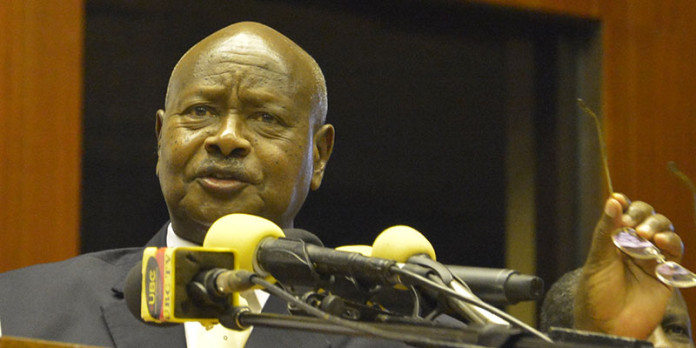
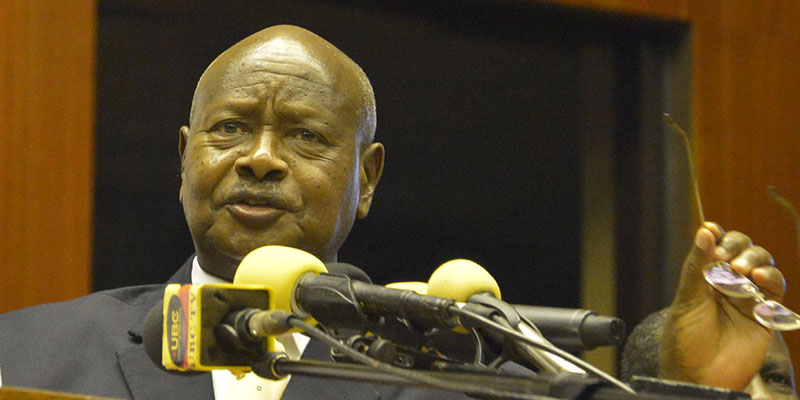
H.E YOWERI KAGUTA MUSEVENI DELIVERING KEYNOTE ADDRESS

Your Excellency, the President of the UN General Assembly,

Your Excellency, the Secretary–General of the United Nations,

Your Excellencies Heads of State and Government,

Your Excellencies, Heads of Regional and Sub-Regional Organizations,

Ladies and Gentlemen,

This year, 2015, marks the 70th anniversary of the founding of the United Nations. When the UN was created, many of our countries did not exist as independent countries. In Africa, Ethiopia and Liberia were the only sovereign countries on the continent. While there have been some modest reforms in the UN since its creation in 1945, most of the fundamental structures that were created after World War II by the victorious powers, such as the powers conferred upon the Permanent Five countries in the Security Council, remain unchanged.

Chapter VIII of the Charter of the United Nations provides for cooperation between the UN and Regional Organizations. Despite this, it reserves the right for the UN Security Council to authorize enforcement action. However, the crucial decisions of international peace and security, within the Security Council, are mostly taken by the veto-wielding members. This is a big mistake and has already caused alot of harm to Africa, like in the case of Libya where Africa’s opinion was ignored; hence, the present massive human haemorrhage in that area. If the Security Council members that took military action in Libya had listened to the voice of Africa, the present chaos in Libya, Nigeria, Mali, the people who are dying in the Mediterranean sea from the African shores trying to get to Europe, could have been avoided. In fact, Gaddaffi’s Libya used to employ many workers from Africa.

In any case, it was very presumptuous for the five permanent members to claim that they are responsible for global security. Out of the global human population that is now 7 billion people, the 5 permanent members represent only about 1.9 billion people. How and why should they monopolize the “responsibility” for global security? This is a structural deficiency in the architecture for global security.

To talk about strengthening cooperation, between the UN and regional and sub-regional organizations, one has got to start by re-examining the structures of the whole UN itself and change some of the old fashioned ones to conform with the current realities. Uganda strongly believes that for genuine cooperation to occur between the UN and regional and sub-regional organizations, reform of the UN in general, Security Council in particular, is imperative. This, in the long run, will help us, collectively, to prevent the use of the UN for national or group interests of the powerful members to undermine the efforts of regional organizations and of peace in the world.

UNADDRESS3

In the meantime and as we strive to reform the UN into a modern and relevant organization that serves all its members based on sovereign equality as embedded in its Charter, the starting point for cooperation is that we need to reaffirm the Principle of Complementarity envisaged in Chapter VIII of the Charter as the basis for building and strengthening cooperation between the UN and regional and sub-regional organizations.

The United Nations should, therefore, respect processes that are undertaken by the regional organizations especially in areas of conflict resolution. While we abhor impunity, the UN approach that usually, superficially and without proper contextualization, emphasizes justice in instances of conflict resolution at the expense of long term peace, is manifestly self-defeating. In this regard, the UN should not just blindly pursue the option of placing sanctions on individuals or referring them to the ICC without holding consultations with the regions affected as this often undermines the very process of resolving the conflict in question. On the other hand, where the UN has worked in consonance with regional or sub-regional organizations, there have been tangible positive results as is the case in Somalia and Burundi. Many of the conflicts are results of distortions and mistakes of long duration, endogenously and exogenously authored and perpetuated. Therefore, last minute high-handed interventions without a thorough understanding of the dynamics of the situation are wrong and injurious to the hapless populations of the concerned areas.

President Museveni Delivering Keynote Address

Secondly, we need to harmonize our understanding of what complementarity entails. This, in our opinion, means the recognition that both the UN and regional organizations have various strengths and weaknesses and hence the need to complement rather than supplement each other’s roles in the areas of conflict prevention, mediation, resolution, peacekeeping and peace-building.

Thirdly, from Uganda’s and, indeed Africa’s, perspective, complementarity also entails sharing the burden of maintaining international peace and security, consultative decision-making and respect for regional processes, as well as division of labor based on comparative advantage.

Mr. President,
Many on the African continent and elsewhere have come around to agreeing with what Uganda and other African patriots have been advocating for, for long: African solutions for African problems. The international community, including the UN, can only support and should, therefore, respect regional processes. You are all aware of the long period it takes the UN to deploy in a crisis situation. The process from initial consultations, to a “zero” draft resolution, through several rounds of negotiations on actual drafts to a final resolution authorizing any form of action, can take agonizingly long to come through. That is if one or more of the Permanent Members with veto power does not use it to block the process. Some crises situations are such that an immediate and robust response is required. This can best be done by countries in the region. Such a situation occurred in December 2013 in South Sudan and the UN Security Council is still debating the issue up to now!!!! If we in the region had not acted when we did quickly, the region could possibly have had another genocide. The neighbouring countries could have stopped the genocide of Rwanda in 1994. We could not do it because the UN was obstructing us.

Uganda, therefore, strongly supports the establishment of the African Capacity for Immediate Response to Crises (ACIRC) which is an African owned initiative for rapid military intervention as and when the need arises, to quickly respond to crisis situations on the African continent. We believe, support to this mechanism will strengthen the international community’s resolve to deal with crises that threaten international and regional peace and security.

In situations where actual deployment by the UN has been taken as in Eastern DRC, the mandate of the mission is often so restricted that you end up with a “sitting duck” mission with troops in a “peace-keeping” role with no peace to keep. What we need in Africa is support from international community in terms of funding and equipment so that we can do the job ourselves. It is true that due to the phenomenon of colonialism and neo-colonialism in Africa, many of our countries still face challenges of ensuring peace for their nationals because they do not build capacity. Therefore, in cases where the national army and security forces fail to guarantee peace, the region can step in and only be supported by the international community, including the United Nations. I refer to this arrangement as the Trinity; that is to say the internal stakeholders, the region and the international community.

Where this has happened as in DRC with the internationally supported Intervention Brigade from contiguous African States, the results have been positive to some extent. Support for an African rapid response force would go a long way in strengthening cooperation between the UN, regional and sub-regional organizations.

Mr. President,
I have already referred to the support to the regions by the UN. The major challenge in addressing regional and sub-regional issues whether in peace and security, humanitarian response or regional integration and economic development, is inadequate resources. Most of the African countries have instituted reforms which have seen the region as a whole registering some of the fastest economic growth.

However, in the long run, we shall need partnerships with the international community, including the UN, to develop our own capacities. To demonstrate our resolve to address these challenges, Uganda strongly supports the African Union’s commitment to increase the proportion of the cost of AU peace operations covered by its Member States. This is in addition to contributing about 45% of the UN’s uniformed peacekeepers.

On the other hand, since the UN has the duty to support regional organizations as provided for in the Charter, Uganda supports the use of UN assessed contributions to support regional-led peace operations, based on the fact that the UNSC retains the primacy for the maintenance of international peace and security. This is because Uganda believes that the use of funding mechanisms like Trust Funds, while helpful in the short run, are unreliable and unpredictable since they are based on voluntary contributions.

We also believe that strengthening cooperation between the UN and Regional and Sub-regional Organizations, will greatly benefit the implementation of Post-2015 Development Agenda. On account of the leverage they have with their respective constituent member countries, regional and sub-regional organizations provide useful fora for policy coordination and harmonization on various ongoing important multilateral processes, including the Post 2015 Development Agenda, climate change, the WTO Doha Round, among others. They are also central in coordinating the implementation of the outcomes from these multilateral processes at their appropriate levels.

Regional and sub-regional organizations are at the centre of promoting cooperation and integration in areas such as trade and investment, infrastructure development, critical sectors including agriculture, energy, water, security, etc. as well as fostering private sector partnerships.

I cannot end my comments without making two final points. One point is the question of ideological disorientation. This entails the misdiagnosis of social, political or economic issues and acting on the basis of the misdiagnosis, especially with the use of force ─ regular or irregular.
In the past, that ideological disorientation manifested itself in the form of imperialism and colonialism. They caused so much damage to societies and peoples. The colonized peoples rose up and, after great sacrifices, defeated the overt aspects of imperialism and colonialism. Today, one of the forms of ideological disorientation is sectarianism of religion, tribe or, even, clans and chauvinism of gender and, sometimes, of race. This ideology of sectarianism and chauvinism is a pseudo ─ ideology that tries to promote the issue of identity in such a manner that it eclipses the very people’s legitimate interests of economic exchange, interaction and shared prosperity. Most of the time, they even mis-define identity on opportunistic and an irrational basis where the actors wish to remain “big fishes in small ponds” as one of our leaders once said. Many of the conflicts in the world are authored, promoted and fueled by this ideological disorientation. We cannot only deal with the consequences but not look at the causes. Some parts of the international community have been able to blacklist what they call anti-Semitism. Why can’t something be done about sectarianism and chauvinism? How can we hobnob with sectarianisms and chauvinists and then talk about global peace when these pseudo ─ ideologies are the causes of the very conflicts we are talking about?

President Museveni with UN Secretary General Ban Kimu
President Museveni with UN Secretary General Ban Ki-moon

The second point is the discipline and, indeed, orientation of the international forces, the regional forces or the local forces the UN system uses or relies on to keep or enforce peace. Uganda had become a failed State by the 1970s and 1980s. we were only able to rescue it by assaulting ideological disorientation mentioned above and dealing most harshly with indisciplined soldiers that loot people’s property, rape and defile women, take sex-slaves or commit homicide. If the UN system, the regional forces or those acting under us are not able to handle the question of discipline, we shall become part of the problem and not part of the solution.

I thank you.

Yoweri Kaguta Museveni
PRESIDENT OF THE REPUBLIC OF UGANDA

Stories Continues after ad

Hundreds flock registration centres as deadline ends

IDRegistration3

Hundreds of prospective voters today flocked voters registration centres to register ahead of the 2016 general elections. The verification exercise ends today 4 May.
Many Kampalans flocked various registration centers to cross-check register data after the Electoral Commission (EC) announced 4 May as the deadline date. On 29 April the Electoral Commission announced that it had extended the verification period to 4 May since many voters had not checked out their data.
According to the number of people at various centres today, it showed that many people had not registered and verified data. In Najjanakumbi, over 100 people lined up to check out the register at Namuli Church zone Voting Centre.
The EC official at the centre who wished to remain anonymous revealed that many people had been sent back home since time had run out. “I am not even sure these people lining up will cross check and verify their data;’ said the official.
Most voters at the centre complained and urged EC to give them more time since it’s them to blame for the delay. “We find it hard tracking these people they shift all the time, they should extend the exercise for one month,” said Busulwa Vincent a resident of Najanankmbi. The official said EC was not to blame but the people. “The verification exercise started on April 7, but they didn’t turn up.” The same sentiments are shared by Mbabazi Margret, the Chief Supervisor at Nooku Zone, Kisenyi 3 parish voting centre.
Ms Mbabazi says that in the past month, few people verified the Voter’s Register and that during early April they would get about 10 to 15 people. “After EC announced it won’t extend the deadline, it’s when they are coming in big numbers, we have been verifying since early April but it’s now that they are coming.”
Some of the voters at Kikoni Zone C voting centre, said that the National Identity Card Registration exercise and National Voters’ Register Verification exercise confused them. “I was only told by a friend that I needed to check the voter’s register to verify my data, I didn’t mind at first because I thought they had my correct data from the Identication card register,” said Meele Nabankema.
“They didn’t sensitize us so much and am sure many people have not cross checked their information,” Kakande Gilbert a Boda Boda rider said.
Although there are a number of people that haven’t verified their data in the National Voters’ Register, the EC commission in a Press Release published on 29 April confirmed that there would not be any extensions after the 4 May deadline. Many election officials at the various verification centers have considered the exercise a success. They claim many people verified their information compared to those that did not.
The updated National Voter’s Register will be displayed for one month staring 20 June to 20 July.

Stories Continues after ad

Miss Tourism 2015 launched

Miss Tourism beauty pageant, 2015 pose for a photo with Tourism minister Maria Mutagamba

The Ministry of Tourism, Wildlife and Antiquities in conjunction with the Uganda tourism board has today launched the third edition of the annual Miss Tourism beauty pageant, 2015.

Speaking at the launch held at the ministry headquarters, Maria Mutagamba the minister for Tourism and Wildlife attributed a few positive reasons why they carry out this pageant.

“Apart from just promoting the tourism sector, this undertaking also brings the girl child to the limelight,” she said adding, “We therefore call upon all stake holders,bmedia fraternity and Uganda at large to promote this cause because it benefits the entire country.”

The competition
This year’s competition is under the theme, Celebrating Uganda’s Cultural Diversity. This will see a total of 33 contestants from various regions of the country that make up the 11 target clusters. These will participate in countrywide auditions that have already kicked off in their different clusters.

All contestants will undergo a rigorous training both at regional level and at three week national boot camp which is aimed at transforming the finalists to impart them with knowledge about tourism, conservation and prepare them as tourist ambassadors.

The previous Miss Tourism beauties have represented us well, for example in competitions in Kuala Lumpur and at Miss Heritage International. This has helped promote our tourism industry abroad,” the minister noted.

With weekly elimination, 11 contestants will vie for the grand finale that will be held on 28th August 2015 at Kampala Serena Hotel where President Museveni is expected to be the chief guest. From here, the top three winners will go on to represent Uganda at various international competitions.

Tourism minister Maria Mutagamba addressing the press on Monday.

The Minister also dropped a massive hint on a possible opportunity for Uganda to host the international Miss tourism pageant later this year, “We sent a request to the organizers and we received a confirmation. So hopefully, we shall take up this opportunity,” Mutagamba added.

It should be noted that this is the third contest of a kind to be organized by the ministry in a long-term bid to promote tourism in and out of the country. The contest has over the years of its existence seen vibrant and ambitious young women become tourist ambassadors of Uganda with the recent and current one being Miss Patricia Babirye Ntale .

Stories Continues after ad

Museveni addresses UN this afternoon, received by UN President Sam Kutesa

PPU
PPU
PPU

Museveni addresses UN this afternoon
. Strengthening cooperation
. Peace, security and human rights

President Museveni is due to deliver a key-note address to the United Nations High Level thematic debate on Strengthening Cooperation between the United Nations and Regional and Sub-Regional Organisations in the maintenance of peace and security, human rights and development in their respective areas.
The President who arrived in New York on a five day working visit to the United Nations at the invitation of both the President of the UN General Assembly Mr. Sam Kutesa and the UN Secretary General Mr. Ban ki Moon will have his address transmitted live this afternoon, courtesy of the United Nations.
The debate will focus on what concrete measures can be taken to build and strengthen strategic partnerships between the UN and regional and sub-regional organizations and what needs to be done to strengthen mechanisms to promote common understanding and effective coordination across a range of issues including conflict prevention and mediation.
The debate also seeks to exploit ways of how regional and sub-regional organizations can secure human, logistical and financial funding in a predictable and sustainable manner and how to galvanize international support towards building the capacities of regional and sub-regional organizations in conflict prevention and resolution, peacemaking, peace building and development.
The President was received on arrival at JFK International Airport, New York, by the UN General Assembly President Mr. Sam Kutesa, Minister of State for Foreign Affairs Mr. Okello Oryem, Uganda’s Head of Mission and Permanent Representative to the United Nations Dr. Richard Nduhura, his deputy Mr. Kintu Nyago Military Attache Brig. Silver Kayemba and senior UN Protocol officers. Also to receive him at the airport was Uganda’s Ambassodor to the United States Olive Wonekha.
While in New York, President Museveni is expected to hold official talks with both the President of the UN General Assembly and the UN Secretary General in their respective Chambers at the UN Headquarters. On the sidelines, the President will meet a number of American investors and prospective investors in the Ugandan economy at his residency.

Stories Continues after ad

Frustration as Reds suffer third straight defeat

UNITED

Manchester United suffered a third straight loss as they were beaten 1-0 by West Brom, despite dominating the game, and a top-four finish in the Barclays Premier League remains in the balance. As there efforts to hung on to the top four finish were frustrated by West Brom. Robin van Persie passed up a golden opportunity to equalize when his penalty was saved by Boaz Myhill, and the keeper was magnificent throughout.

Manchester United coach Louis van Gaal has stressed he wants to see improvement in his side – starting in next Saturday’s match at Crystal Palace.”I have seen a lot of good things today and, in our evaluation, I shall show that,” he stated. “But I’ll also show what I have always shown in an evaluation, the things that we have to improve upon. Despite a third successive defeat, 1-0 against West Brom at Old Trafford, the fourth placed United remain determined to clinch a Champions League spot.

Stories Continues after ad

Sports heroes to get state assistance

Sports

Sports personalities of yesterday could see their fortunes take a change for the better after President Museveni announced that government will find and support all Uganda’s sports heroes for the contribution they made to their country.
“We should look them up and help them or their families. They made a contribution to their country but because of the insecurity we had in our country we did not follow this up,” he said.
The President was meeting Uganda’s boxing legend Grace Sseruwagi, 83, a 1960’s light-welter weight boxer who had three friendly matches with former President Idi Amin and knocked him out each time before becoming his coach. Sseruwagi successfully represented Uganda at the Rome Olympics and later became one of the most successful boxing coaches in Uganda.
Of recent exemplary sportsmen have seen the State come to their assistance, with notable athletes like Stephen Kiprotich, the World and Olympic marathon champion being promoted to the rank of Assistant Superintendent of Prisons and also receiving huge sums of money and other accolades.
Similarly, Moses Kipsiro, a double Commonwealth Games champion has also been accorded state recognition, while government built for former world champion Dorcus Inzikuru a house in Arua and also named a road in the same area, after her.

Stories Continues after ad

King Saha claims his throne at Freedom City

Saha1

He came, he saw, he conquered and walked smiling all the way to the bank. Saha had sent tongues wagging after he announced that he was to have his Gundeeze album launch on 1st May, the same day that Chameleon was holding his Wale Wale/double trouble concert at Kyadondo rugby grounds.
Many called it disrespect for the man whom they believe mentored him into music. Bebe Cool was even prompted to come out on Facebook and tell the public off for comparing Saha and Chameleone. Whether Saha and his team took this as a direct attack on their crew is a bit hazy. However the fact that they used this as a publicity opportunity for Saha’s launch is crystal clear. They called upon their fans and encouraged them to show up at Freedom city on labour day. And it worked! The fans turned up in multitudes.

SahaF

King Saha has followed up the success of his 2014 Mulirwana concert that had theatre La Bonita filled to capacity, with an even bigger and more statement-making concert. By 9pm, his VIP tickets that were going for only 20,000 shillings were sold out while the general section was already packed with eager sweaty bodies. I tried to squeeze through so i could find a good spot where I could see the action on the stage and failed. Thank God the children’s section was turned into an overflow for the still increasing number of revelers. But that too, filled up within no time.

curtain raiser
curtain raiser

With a big number of curtain raising acts like Lydia Jazmine, Scooter, Young Mullo, Nince Henry, among others, the show kicked off to an exciting start. This was before Big Eye, Bobi Wine, Sheeba, Gravity Omutujju and Ziza Bafana sent the crowd into frenzies. Damn! These guys are performers.
So after waiting for five noisy hours for the night’s main act, King Saha shows up on stage at Midnight and gives the fans a mediocre performance. After having seen his rehearsal pictures on Facebook, I expected musical Heaven only to be served with quite the usual hustled Freedom City performances. Nothing great! His microphone was a bit lower than those of the backup singers which spelled disaster for the show. After watching Bafana rip the stage apart with guluma nasomye, the crowd unfortunately had to cool down with Saha’s weak start. He kicked off with the late AK47’s tukikolemu and then went into some of his older songs like signal and vimba. And that is where he went wrong. In an attempt to save the best for last, he killed the crowd’s mood. By the time that he performed his best songs,(which he still did not perform to the crowd’s expectations) mulirwana and gundeze, some revelers had begun moving out. This however did not stop those who stayed to sing and dance along.
At the end of the show, two things were clear; King Saha is loved by his ever-growing fan base but his live performance and planning is still lacking.
While Chameleon also filled up Kyadondo rugby grounds, the big numbers that showed up at Freedom City proved to the “elders” that an ant attempted to fight an elephant and it came out alive.

Revelers danced their hearts out????????????????????????????????????
Stories Continues after ad