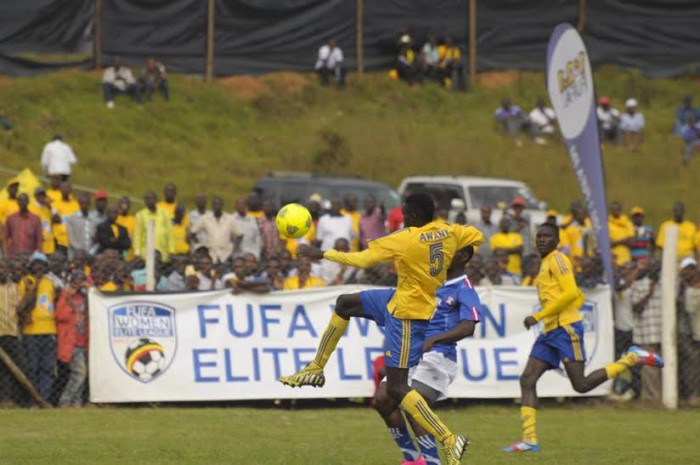
As Uganda Cranes embark on another Africa Cup Nations qualifier campaign, Coach Milutin ‘Micho’ Sredojevic will use Tuesday’s friendly against Gambia to measure players’ progress.
“We must forget about the failed campaigns as a nation and players, but pick lessons and experience and move on,” Micho stressed.
Cranes will kick off the 2017AFCON qualifiers against Botswana this Saturdayat Namboole Stadium as Micho looks for a fresh start.
“There will be a few changes but overall, we have to try to stay consistent,” he said.
The Serbian tactician has dropped Andy Mwesigwa, Tony Mawejje and Baba Kizito and Joesph Olaya are among the senior players not summoned for Cranes’ encounter against Botswana.
“We don’t want to throw it all overboard and start completely new again, but at the same time you want to see a couple of new faces for the first time,” He added.
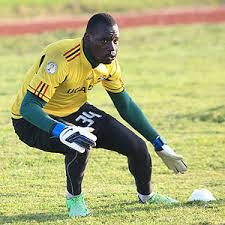
Goalkeeper Denis Onyango should take over from Mwesigwa as captain
Goalkeepers: Denis ONYANGO, Robert ODONKARA, James ALITHO,Defenders: Isaac ISINDE, Denis IGUMA, Alex KAKUBA, Denis OKOTH, Brian OCHWO, Richard KASSAGA, Shafiq BAKAKI, Hassan WASSWA,Midfielders: Derrick TEKKWO, Khalid AUCHO, Boban ZIRINTUSA, Yasser MUGERWA, Keziron KIZITO, Farouk MIYA, Saidi KYEYUNE, Wiliam LUWAGGA KIZITO, Godfrey WALUSIMBI, Brian MAJWEGA, STRIKERS:Geoffrey MASSA, Robert SSENTONGO, Brian UMONYI Yunus SENTAMU, John SEMAZI
Meanwhile; FUFA marketing department has confirmed tickets for the 2017 AFCON match between Cranes and Botswana due this Saturday are on market.
‘We have distributed the tickets to the selling points and our fan can now buy them from the authorised outlets,” Esther Musoke, the FUFA Marketing Director said.
The outlets are; SHELL – • Shell Capital (Kampala Road), • Shell Malindi (Kibuye), • Shell Bugolobi, • Shell Kireka, TOTAL, • City Centre (Opp. Uganda House), • Kireka, • Bweyogerere • Kajjansi, • Nakivubo, • Bwaise, AIRTEL SHOPS, • Shoprite – Ben Kiwanuka Street, •Bweyogerere, • Plaza Building, Jinja Road (opposite KCB Bank), KOBIL • Kobil Kawempe, • Kobil Kasubi, • Kobil Jinja Town, GAPCO: • Ben Kiwanuka Street, CITY OIL, • Namirembe Road • Martin Road, • Bombo Road, • Kamwokya, • Nakawa, • City Tyres 6th Street.
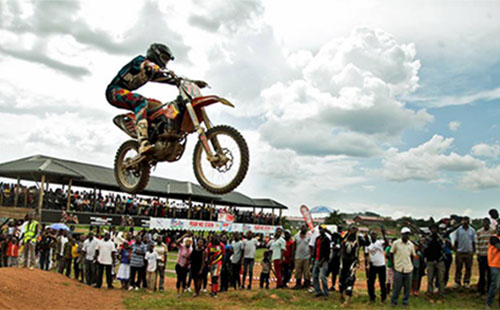
Maxim Van Pee dominates in Busiika (courtesy photo)
Fourth Round Results:
MX1
Maxime Van Pee 57points
Arthur Blick Jnr 54
Talha Kiggundu 45
MX2
Ali Omar Yasser 60points
Fatuh Kiggundu 51
Ahmed Tamale 41
MX 85
Fortune Sentamu 57points
Aviv Orland 54
Stav Orland 45
MX 65
Wareed Omar 60points
Anold Nyanzi 51
Malcom Lubega 45
MX 50
Isabella Blick 57points
Milton Akaki 54
Ashi Mbabazi 41
Maxime Van Pee laid a down a marker with a dominate display in the fourth round of the national MX Championship at Busiika racing track on Sunday.
Van Pee, the Ugandan national and regional East and Central Africa motocross champion swept all three heats stretching his lead to 26 points ahead of 11-time national champion Arthur Blick.
“Its just four rounds into the season, I just want to keep myself at the top and I will keep training hard,” Van Pee said.
Van Pee clinched last year’s national title in style by sweeping all events on the eight-round Seniors’ Category (MX1) Championship. In a consistent and memorable show of skills on the track, Van Pee won three and five events at Busiika and Garuga circuits respectively.
With Asaf Natan not participating, Van Pee could only face Blick Jnr, who closely battled him but finished second in all three heats.
“I will keep pushing until he (Van Pee) makes a mistake, we have another four rounds (events) to race,” an optimistic Blick noted.
Meanwhile, Ali Omar Yasser won the MX2, Fortune Sentamu maintained his lead in the 85 Class as did Wareed Omar (65 Class) and Isabella Blick (50cc) class.
Abbas Mubiru who is a husband to singer Stecia Mayanja has been remanded to luzira prison until June 11 when he will reappear in Court.
Mubiru was charged with fraud and false presence when he tried to transact the sell of land that belongs to Mr Ronald Ddanze.
Appearing before Buganda Road Chief Magistrates Court, Mubiru was remanded by Grade One magistrate Joan Aciro for fraudulently acquiring Shs45.5million on Ddanze’s land that is located in Lubowa between October and November 2014.
Mubiru requested for bail but he was told to wait for Chief Magistrate Ms Lillian Bucyana who will handle his case onJune 11.
Recently one of Amin’s sons was in Arua, where he called upon Ugandans to forgive his father for the wrongs the former president committed against his countrymen during his eight year rule, between 1971 and 1979.
Jaffary Amin’s bold move to reach out to the people of Uganda is a most welcome innovation, given the history of this country, which has been characterized by state-inspired violence, military adventurism and debauchery and corruption, among other social ills.
Indeed, Uganda is one of the several African countries that have the notorious distinction of not having had a peaceful transfer of power, from one President to another. And, for a country that prides itself in the appealing motto: ‘For God and My Country’, this is shameful.
In all we have had seven presidents since Independence, all leaving power forcefully and, at best, such countries need to try and come to a national consensus on how to forge ahead inspite of their tragic pasts.
So, despite not having an official for a at which to communicate his sentiments, Mr Jaffary Amin must be lauded for stepping out and indicating to the world that dialogue and forgiving one another is the best way to effect generational continuity.
At times this is attained through the establishment of a ‘Truth and Reconciliation Commission’ as a vehicle through which individuals, both victims and their tormentors, come up and give truthful and detailed information about what went wrong, why it went wrong; when it went wrong and how to remedy the situation.
It is this responsibility and genuine soul-searching that will inform the minds of our children and their descendants that before them there were men and women of integrity, who sought to have national consensus through forgiveness, dialogue and constructive engagement.
Post-apartheid South Africa has done this with a high degree of success and other African countries in dire straits could do themselves a favour by emulating the Rainbow State.
There is need to secure the future and that is our responsibility.
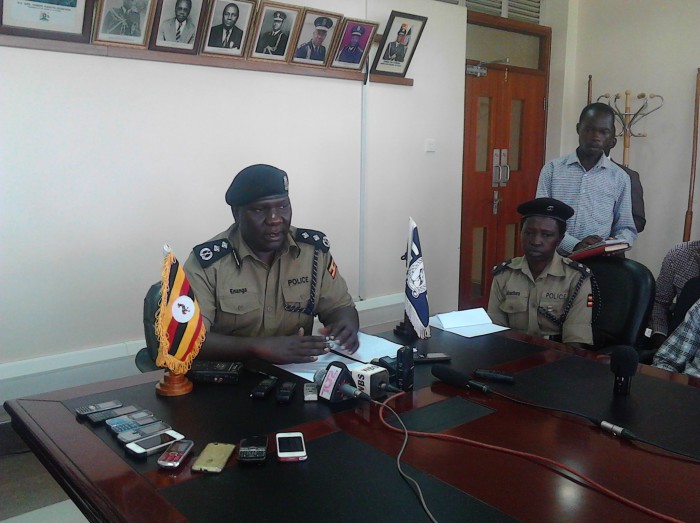
Police has said the search carried out at Nina Mbabazi Rukikaire’s office premises has nothing to do with politics.
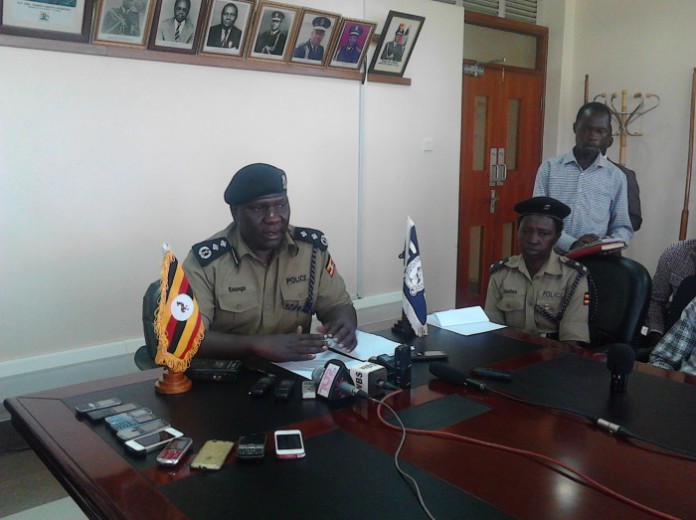
Addressing a press conference today, June 8, Police Spokesman Fred Enanga told the media that the search at the offices of Supreme Security, a company belonging to former Prime Minister Amama Mbabazi’s daughter Nina, was routine inspection of private security companies, carried out by security agencies.
On Friday June 5th, the Military Police and other intelligence agencies occupied the premises of Supreme Security, prompting reports of political witch-hunt against Mbabazi’s tough-talking and unrelenting daughter, to compel her to hand in the National Resistance Movement (NRM) register.
Since her father was fired as Prime Minister in September 2014 and subsequently as NRM Secretary General in December the same year, Nina Mbabazi has come under intense pressure to hand over the NRM party register, which is reportedly in her custody.
But Ms Mbabazi and her father have persistently denied she was in possession of the said register amid counter-accusations that also involve a Shs5.4 billion debt allegedly borrowed from Mr Arvind Patel, the NRM Entrepreneurs League treasurer, to facilitate the compilation of the register.
It is also said that it is this stalemate that prompted the NRM to order for fresh registration of party members.
“The search was not political as many reports have been claiming; we were not looking for the NRM register for that’s party business which we have nothing to do with as police,” said Mr. Enanga.
However, according to police, the operation was to ensure that the standard operations procedure in storage, maintenance and usage of firearms is adhered to, following a directive from the Joint Operations Command.
Under this arrangement, security agencies including the police, army and all private security armories are to be inspected.
“We have finished with the police, army and at least 14 private security companies; we intend to do this throughout Kampala,’’ Mr.Enanga said adding that those found wanting would face sanctions.
The operation headed by the UPDF Member of Parliament Brigadier Phinehas Manoni Katarima is to cover all regions of the country.
Following recent murder reports of various taxi and special hire drivers coupled with the theft of their vehicles, the police Flying Squad swung into action, recovering 21 vehicles that are believed to have been stolen.
Police Spokesman Fred Enanga said of those recovered 15 are commuter taxis while six are small vehicles used for special hire.
“We have recovered some of the vehicles and we have twenty four suspects in custody,” Mr. Enanga said adding that a network of hardcore criminals responsible for stealing cars after murdering their drivers had been broken.
“We have 12 of these hardcore criminals whose group constitutes of 15 people, two are on the run, we also have 12 buyers of these stolen cars and they are going to help us with our investigations,” the police spokesman added.
He also disclosed that seven cases of murder were reported to police and that five bodies have so far been found with only two of them identified as Isaac Tulugende and Isaac Kalanzi, who were both taxi drivers.
Mr Enanga also said that the thieves fake number plates and change the engine number to conceal evidence of real ownership.
‘’We have asked URA to verify the numbers of these vehicles and find out whether they exist or not,” said Mr.Enanga, before advising claimants to check with the Flying Squad headquarters at Central Police Station in Kampala.
Kampala-The Acting Prime Minister of the Adhola Cultural Institution, Thomas Okoth Nyalulu has written to Members of Parliament from Tororo district opposing the move by the district council to divide Tororo County into two.
According to Mr Nyalulu, creating Tororo North and Tororo South would cause disunity and disadvantage some communities in the district.
He further asserts that the move relegate the people of West Budama ‘to beggars on their own ancestral land’.
“On behalf of Tieng Adhola, the Padhola cultural institution, I thank you for the work you are doing in representing our people. We have reliably learnt that government is proposing to add one or more constituencies to Tororo district and in particular to split Tororo County into two.” Mr Nyalulu wrote on May 16, 2015.
He added: “As cultural institution we have no objection to splitting Tororo County into two and creating more sub-counties. However, we have received bitter compliant from our subjects in West Budama that Tororo County, smaller in geographical area and population, would have more (14) sub-counties against (12) sub-counties in West Budama. And more sub-counties means more councilors in the district council making the interests of the people of West Budama seriously compromised and thirdly, people of West Budama would be grossly underrepresented in Parliament.”
Nyalulu says as a cultural institution, they have been promoting unity and harmony among the people of Tororo district, being cognizant of the cosmopolitan nature of the district, and based on the principle that no person or group of persons deserves to be treated unfairly under whatever circumstances.
He however, warns of the likely consequences should the Japadhola from West Budama be ignored.
“Hence the reason for writing to you MPs is to alert you of possible negative outcomes of this inconsideration of the fears of our subjects in West Budama. The subjects are not prepared to just watch when they are being relegated to beggars on their own ancestral land,” he said.
On May 18, 2015, the Minister of Local Government Adolf Mwesige wrote to the district Chairman of Tororo indicating to him that the ministry had received a district council resolution requesting for the creation of Tororo County North and Tororo County South.
However, Mwesige also said that he had dismissed claims by a delegation led by the district Speaker that had told him the council minutes asking for the creation of another county in Tororo had been rescinded.
“Henceforth, it was unanimously agreed that the earlier decision of the council to subdivide Tororo County into Tororo County North and Tororo County South stands however, there was a strong urge from all the leaders to create another county out of the current West Budama County,” Minister Mwesige wrote.
The issue of sub divisions in Tororo is a prickly matter and in June, 2005, a man in Molo sub-county stunned crowds including President Yoweri Museveni who was in the area at the time, when he (the man) ate a rat to demonstrate the community’s desire to get a new district
Facts about Tororo.
Tororo district has two rural counties which include West Budama and Tororo Counties and 15 rural sub-counties and one in town. The Municipality, which forms the third County, has two divisions; Western Division and Eastern Division.
Tororo has a total population of 402,621 with sex ratio of 94.99 for every 100 females. The population growth rate is at 2.7 percent and 90.9 percent of the population lives in the rural area whereas only 9.1 percent live in urban areas.
As the country commemorates Heroes Day on June 9, it is important to also look back at other Ugandans who have made contributions to Uganda since Independence in 1962.
And, in serialized episodes of Powerful Voices’ the eagleonline will review 100 of the prominent and powerful players on Uganda’s socio-economic and political scene, some, dead or living, beginning with the 1960s.
Kabaka Fredrick Mutesa II
1. Kabaka Fredrick Walugembe Mutesa II
The Kabaka of Buganda, Edward Frederick David William Walugembe Luwangula Mutebi Mutesa II was the first President of independent Uganda. King Freddie, as he was affectionately referred to, led Uganda from 1963 to 1966, when he was forced to flee the country after falling out with the then Prime Minister, Milton Obote. He died in exile in London in 1969 aged 45, and his remains were returned and buried in Uganda after Iddi Amin overthrew the government of Milton Obote, Uganda’s second president. Mutesa II reportedly had 12 wives and 21 children, among them the reigning Kabaka of Buganda, Ronald Muwenda Mutebi.
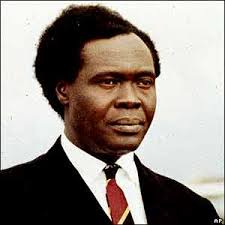
Dr Apollo Milton Obote
2. Apollo Milton Obote
The first post-Independence Prime Minister of Uganda in 1962, Obote was one of the founders of the Uganda Peoples Congress (UPC). Commonly known as AMO by the ‘Congressmen’, he is so far the only man to rule Uganda as Prime Minister and later President. He is also the only man who has ruled Uganda twice, from 1962 to 1971 and from 1980 to 1985. Both his regimes were ended by military coups orchestrated by his serving Army Commanders, Major General Iddi Amin and Lieutenant General Tito Okello Lutwa, respectively.
In 1971 Obote was overthrown as he attended the Commonwealth Summit in Singapore and lived his first exiled life in Tanzania, while on his second exile life he lived in Zambia.
The Patriarch of a political family, Obote’s wife Miria and son, Lira Municipality Member of Parliament Jimmy Akena have also at some time led the UPC, with the latter becoming party president just last week. Born in 1925, Obote studied at Busoga College Mwiri and later at Makerere College (University), where he was reportedly expelled for his radical ideas against colonialism.
He died aged 80 while undergoing treatment at a South African hospital in 2005 and was accorded a State Funeral. He was later buried at his ancestral home in Akokoro, Apac district. Obote is survived by the widow, Miria Kalule Obote, and five children.
Yusuf Kironde Lule
3. Professor Yusuf Kironde Lule
He was the third President of Uganda, and ruled the country for 68 days, from April to June 1979. Lule, an academic-turned-politician replaced Iddi Amin. He was overthrown in a ‘palace coup’ by the National Consultative Council (NCC), the de facto post-Amin parliament which comprised of prominent Ugandans like Professors Edward Rugumayo, Omwony Ojok among others.
After his ouster, Lule was to form a rebel organization, the Uganda Freedom Fighters (UFF) but was later to join forces with current President Yoweri Museveni’s Peoples Resistance Army (PRA) in 1981, to form the National Resistance Movement/Army (NRM/A), and at one time becoming the Chairman of the organisation. He died in London aged 73, and was buried at Kololo, in the Heroes Corner.
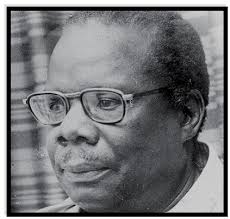
4. Godfrey Lukongwa Binaisa Kayitiro (QC)
Binaisa
Born in 1922, Binaisa was the fourth president of Uganda for only 11 months, from June 1980 to May 1981. A lawyer, Binaisa was the first and only Ugandan to acquire the title Queens Counsel (QC), and was also the first indigenous Attorney General, from 1962 to 1968. He is most remembered for the ‘Pigeonhole Constitution’ of 1966 and also for his gaffe of sending then military strongman, Army Chief of Staff Brigadier David Oyite Ojok to Algeria as Ambassador in 1981. It is this move that led to his ouster. Binaisa died in 2010 at the age of 90, but this was not before he married an internet acquaintance, Japanese Tomoko Yamamoto. He had earlier lost his first wife, Irene Marjorie Kabamori from Tooro.
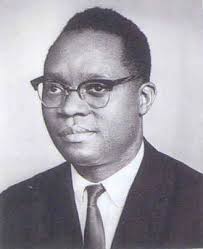
6. Benedicto Kiwanuka
5. Benedicto Kagimu Mugumba Kiwanuka
Was the first indigenous pre-Independence Prime Minister of Uganda in 1961. Born in 1922, Kiwanuka, a British-trained lawyer, was the leader of the Democratic Party (DP). After the overthrow of Apollo Milton Obote by Iddi Amin in January 1971, Kiwanuka was made Chief Justice. He was to be killed by Amin in 1972, aged 50. One of his children, Maurice Kagimu Kiwanuka, was once a Member of Parliament representing Bukomansimbi constituency. The younger Kiwanuka is currently Uganda’s Ambassador to Nigeria.
William Wilberforce Nadiope III
6. William Wilberforce Kadhumbula Nadiope III
The second Kyabazinga of Busoga, William Wilberforce Kadhumbula Nadiope III became Uganda’s first Vice President under Milton Obote, from 1963 to 1966.
At home in Busoga, he was elected Kyabazinga twice, serving between 1949 to 1955 and between 1962 to 1966.
As Kyabazinga, Nadiope III is remembered for ending the colonial practice, where his subjects were required to supply rat tails to the colonialists to prove that they had killed a rat. This was in an effort to curb the onslaught of smallpox. His Kyabazingaship was cut short when kingdoms were abolished by Milton Obote in 1966.
His grandson, William Wilberforce Kadhumbula Gabula Nadiope IV, who was born in 1988, is the current Kyabazinga of Busoga.
Henry Waako Muloki
7. Henry Waako Muloki
Like Kadhumbula Nadiope III, Henry Waako Muloki was twice the Kyabazinga of Busoga, first between 1955 and 1966 when the Prime Minister Milton Obote abolished kingdoms, and then from 1995 until he passed on in 2008, aged 87.
Brigadier Shaban Opolot
8. Brigadier Shaban Opolot
The first indigenous Commander of the Uganda Army, Brigadier Shaban Opolot joined the military in 1945, under the then Kings African Rifles (KAR). Brig Opolot is best remembered for taking a tough stance against Milton Obote’s intentions to abolish the Kingdoms in Uganda, and then particularly for refusing to lead an attack on Mmengo establishment at the Lubiri. He died in 2005 aged 86.
Grace Ibingira
Grace Ibingira
Born in 1932, Grace Ibingira was one of the founding members of the Uganda Peoples Congress. He was a member of the pre-Independence parliament, the LEGCO and also a Member of Parliament representing Ankole West constituency after Independence.
As the Minister of Justice in the first post-Independence government, Ibingira is largely remembered for designing the current Flag of Uganda. He was one time UPC Secretary General and is also remembered for attempts to topple Apollo Milton Obote from both party and national leadership, after the two fell out over the Gold Scandal.
Akena Adoko
Akena Adoko
A pompous cousin to former President Apollo Milton Obote, Dr Naphlin Akena Adoko was the first indigenous head of the spy agency, the dreaded General Service Unit (GSU). A lawyer by profession, Akena Adoko was one time the President of the Uganda Law Society.
After the overthrow of his cousin Obote in 1985, Akena Adoko fled to the United Kingdom and set out on a tricky career journey as an advocate yet the Law Society (UK) had not cleared him to practice in that country. He passed on in exile in the UK in the 2000s.
Daudi Ochieng
Daudi Ochieng
The son of an Acholi chief, Daudi Ochieng was once a Member of Parliament representing the Kabaka Yekka party, a loose alliance formed to champion the interests of Buganda in the greater Uganda.
Born in 1925, Ochieng enjoyed a special relationship with Kabaka Mutesa II, the first President of Independent Uganda, and as a result he was made a member of the Buganda parliament, the Lukiiko. He was the one who moved the Gold Scandal motion in the Uganda Parliament, alleging that then Prime Minister Milton Obote and Army Commander Colonel Iddi Amin, were engaged in smuggling gold from the Congo Kinshasa, current Democratic Republic of Congo (DRC) in the 1960s. A Wales-trained Agriculturalist, Ochieng died under mysterious circumstances in 1966 aged 41.
Abu Mayanja
Abu Mayanja
Born in 1929, Abu Mayanja is one of the most prominent Ugandan politicians and he held influential offices in almost all post-Independence governments. He was also at one time a Minister of Education in the Buganda government, having earlier participated in the formation of Uganda National Congress (UNC), a pre-Independence political organization that also had big names like Ignatius Musaazi Kangaave and Milton Obote. He studied law at the University of Cambridge in the United Kingdom after being expelled from Makerere University College for engaging in political agitation to bring colonialism in Uganda to an end. He was also a pan-Africanist.
Mayanja died in 2005 aged 76 and is survived by wives and several children.
Eric Otema Allimadi
Eric Otema Allimadi
Born in 1929, Eric Otema Allimadi was the second Prime Minister of Uganda from 1980 to 1985, during Milton Obote’s second regime. Earlier, between 1979 and 1980 he had served as Foreign Minister. He died in 2001.
Adoko Nekyon
Adoko Nekyon
A cousin to former president Milton Obote, Al Haj Ali Akbar Adoko Nekyon was the first post-Independence Minister of Information, Broadcasting and Tourism in the 1960s. He also served as Minister for Health and Minister of Rehabilitation and Social Services between 1988 and 1980, under the NRM government.
Alex Ojera
Was a Minister of Information serving under the Obote 1 regime. He was killed in 1972 by Iddi Amin.
Basil Bataringaya
Basil Bataringaya
He was the internal affairs minister at the time Milton Obote was overthrown in 1971. A former Secretary General of the Democratic Party in the 1960s, Bataringaya also served as Minister for Local Government in the first self-governance regime of Benedicto Kiwanuka. He led the first cross-over of Parliamentarians, taking with him six other DP MPs to join the Uganda Peoples Congress, after falling out with DP party leader Kiwanuka. One of the earliest victims of regime change, Bataringaya was killed during Iddi Amin’s reign in 1972.
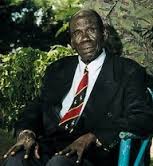
Boniface Byanyima
In his 90s, Boniface Byanyima is a retired politician who was a Democratic Party Member of Parliament in the 1960s, representing Ankole. Mzee Byanyima currently stays at his rural home in Ruti, Mbarara and is the father of another former fiery politician and current Oxfam International Executive Director Winnie Byanyima. Opposition stalwart Col. (rtd) Dr Kizza Besigye marries Winnie and together they have one son, Anselm.
John Babiiha
At the time of Obote’s ouster in January 1971 John Babiiha was the Vice President.
He was the second Vice President of Uganda, serving from 1967 to January 1971. Nothing much is remembered about him, however, a road in Kamowokya, a city suburb, is named after him.
Shaban Kirunda Nkutu
Shaban Kirunda Nkutu
Born in 1930, Shaban Nkutu served as Minister of Works, Transport and Communications in the first post-Independence cabinet of the Milton Obote government, and later worked as Minister of Health between 1966 and 1967, during which time government constructed several referral hospitals across the country.
He was later to be killed during Iddi Amin’s regime in 1973, aged 43. He was reportedly related to one of Amin’s wives but this did not deter the latter from killing him. Nkutu belongs to one of the royal clans of Busoga
Nkutu’s remains were recently exhumed and given a decent burial at his ancestral home in Bugweri County.
Paulo Muwanga
Paulo Muwanga
Born in 1921, Paulo Muwanga was the Vice President of Uganda between December 1980 and July 1985. Earlier, between May and December 1980, Muwanga was the Chairman of both the Presidential Commission and the all-powerful Military Commission, the de facto presidency, where he was deputized by current Ugandan President Yoweri Museveni. The two men were later to fall out after Muwanga supervised an election which Museveni said was rigged.
In a surprise move, after the overthrow of Obote in 1985, Muwanga, immediate former Vice President at the time was named Executive Prime Minister by the ruling military junta of Tito Okello Lutwa and Lt. Gen. Bazilio Olara Okello.
Muwanga also worked with the Foreign Service in several Ugandan missions abroad including France, where he reportedly sold off all Embassy property during the Amin reign in the 70s and fled to the United Kingdom.
He died in 1991 aged 70.
Mustafa Adrisi
Mustafa Adrisi
Born in 1922, Gen Mustapha Adrisi was the third Vice President of Uganda, serving under Iddi Amin between 1978 and 1979. Until his death in 2013, Gen Adrisi was living a quiet life in his home town of Arua. He is reportedly survived by several wives and children.
Luke Kercan Ofungi
Luke Kercan Ofungi
Born in Okoro County, Nebbi District in 1934, Luke Kercan Ofungi joined the Uganda Police in 1954 as a Police Constable but rose through the ranks, thrice becoming the Inspector General and serving under four Presidents: Iddi Amin, Apollo Milton Obote, Tito Okello and Yoweri Museveni. He also served as the Deputy Inspector General of Police during the 11 month government of Godfrey Lukongwa Binaisa, the second President in the post-Iddi Amin era.
Possibly one of the most decorated IGPs, Ofungi died in 1990 aged 56 and was accorded a state funeral.
Interestingly, after his death he was accorded a 24-month retrospective posthumous contract to serve as IGP for the ‘fifth term’, effective 1989.
Joseph Mary Mubiru
Joseph Mary Mubiru
An Economist, in 1966 at only 37 years Joseph Mary Mubiru was the first Governor of the Bank of Uganda, having worked with the United Nations at the beginning of his career. He also worked with the defunct Uganda Commercial Bank (UCB) as its Chief Executive. He was also instrumental in establishing the African Development Bank (ADB) in 1964. Mubiru lost his job at the central bank when Iddi Amin took over government in 1971, and it is believed he was later killed on the orders of the former president.
Today, his legacy still lives on and he is remembered through the annual Joseph Mubiru Memorial lectures, organized by the Bank of Uganda.
John Robert Elangot
An Economist, John Robert Elangot served in various capacities in the 1960s and 1970s, rising to become the Governor of the Bank of Uganda. Before that he had also worked as the Deputy Governor. He is now retired.
Leo Kibirango
An Economist also, Leo Kibirango served as the Governor of the Bank of Uganda from 1981 to 1986. After leaving the central bank, Kibirango had a stint with the Capital Markets Authority, as Chief Executive.
Charles Kikonyogo Nyonyntono
An Economist, Charles Kikonyogo Nyonyintono was a Governor of the Bank of Uganda in the late 70s, immediately preceding Leo Kibirango.
KAMPALA: East African presidents on Saturday signed a cyber-security that will bond regional efforts to fight cyber-crime especially terrorism.
This will see Uganda, Kenya, Rwanda and South Sudan form a joint intelligence center in Nairobi to help fight terrorism.
The pact is part of East African Northern Corridor integration projects being undertaken by the four East African countries that are now known as “coalition of the willing” after Tanzania opted to go slowly on some proposed EAC projects.
Presidents Paul Kagame of Rwanda and Uhuru Kenyetta of Kenya were in Uganda for summit on East African northern corridor integration projects and South Sudan was represented by its defence minister.
The East African states are undertaking various infrastructural projects including building standard gauge railway, east African single visa and removal non-tariff barriers and oil refinery.
The leaders also signed another agreement on the total liberalization of labour and services in the four countries that include; Uganda, South Sudan, Kenya and Rwanda.
The agreement will see Uganda finally giving waiver of the work permit fees on Rwandan and Kenyan professionals to follow Kenya and Rwanda which had given the waiver to the workers from the region.
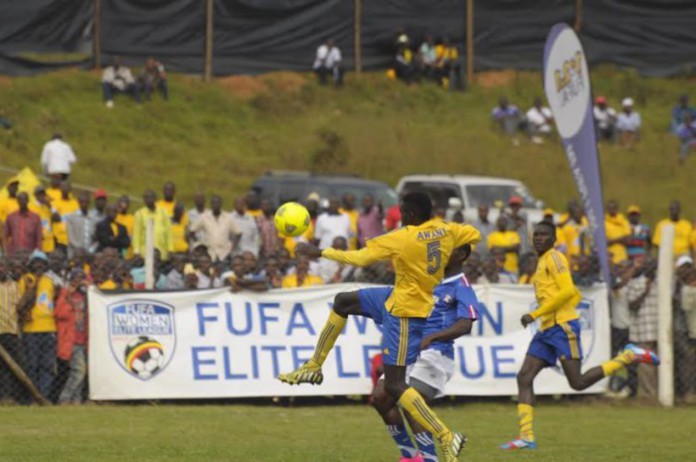
KCC’s defender Awanyi clears ball during the Uganda Cup final
KCC’s defender Awanyi clears ball during the Uganda Cup final
SC Villa 1-0 KCC (Abandoned After 72 Minutes)
What started as a rosy evening ended in total confusion and shame for Ugandan Football as the Uganda Cup final descended into chaos as KCC FC took on SC Villa at the Kyamate sports ground in Ntungamo on Saturday.
With 72 minutes played, the game ended prematurely after pitch invasion by a section of KCC fans after Villa took the lead through a controversial penalty that was converted by Erisa Ssekisambu in the 68th minute.
Center referee, Robert Donney, whose appointment was questionable and debated, awarded a penalty on 64th minute after ruling that defender Joseph Ochaya had fouled Chriszetom Ntambi, which was clearly outside the forbidden area and with assistant referee Robert Makwali already calling for an off-side on Ntambi.
Fans invade the pitch at Kyamate sports ground in Ntungamo
KCC players, joined by the entire bench bitterly protested the decision. After a 5 minute scuffle, the penalty was taken, as Ssekisambu sent KCC goalkeeper Yasin Mugabi the wrong way.
As SC Villa players celebrated the goal, disgruntled KCC fans and players continued with the protests.
Play resumed, but KCC fans invade the pitch after midfielder Hakim Ssenkumba fouled Abdul Karim Kasule, a foul that referee Donney rewarded with a straight red card.
Kampala City Executive Director, Jenifer Musisi walked across the playing turf to try clam the supporter who never listened to her peal.
Police’s efforts to calm the situation fell on deaf ears thus forcing abandonment.
By press time, FUFA Executive and FUFA Competition committee were involved in an emergency meeting at Ntungamo Resort Hotel.
“A decision shall be communicated after the FUFA Executive meeting” Ahmed Hussein, FUFA’s spokesperson told the media.
This was the 41st Uganda Cup final; both SC Villa and KCC have won the trophy 8 times apiece with Express the record winners on 10.
S.C Villa XI: Nicolas Ssebwato (G.K), Derrick Walulya, Isaac Muleme, Fahad Kawooya, Hassan Wasswa, Isaac Kirabira, Erisa Ssekisambu, Augustine Nsumba, Victor Emenayo, Denis Kamanzi, Chrizestom Ntambi
KCC XI: Yasin Mugabi (G.K), Saka Mpiima, Joseph Ochaya, Timothy Awanyi, Ayubu Kizza, Ivan Ntege, Owen Kasule, Hakim Ssenkumba, Herman Wasswa, Michael Birungi, Tom Matisko