Stanbic Bank
Stanbic Bank
28.3 C
Kampala
Stanbic Bank
Stanbic Bank
Home Blog Page 2381

Fourth Annual Progress Report on the Implementation of the National Programme of Action for the period July 2011- June 2014

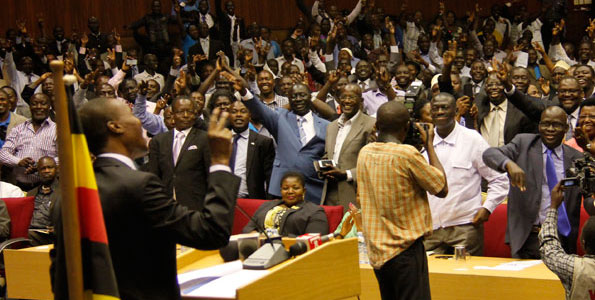
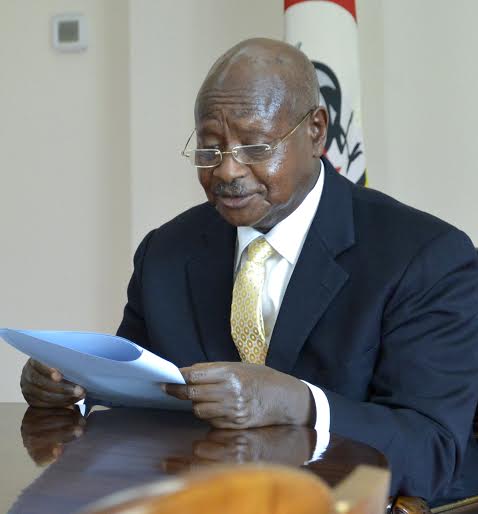
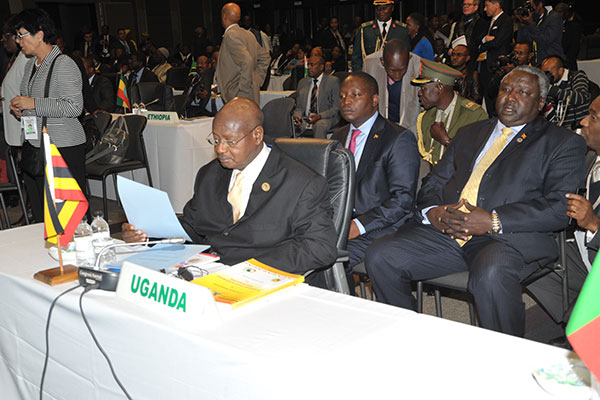
President Museveni and the Uganda delegation.

Your Excellencies, Heads of State and Government,

The APR Panel of Eminent Persons,

Distinguished Ladies and Gentlemen,

At this 23rd Summit of the African Peer Review Mechanism Forum, Uganda presents its Fourth Annual Progress Report on the Implementation of the National Programme of Action for the period July 2011- June 2014”.  This is in line with the APRM objectives and processes. Since its inception 12 years ago, this mechanism has reviewed 17 countries. I, therefore, would like to take this opportunity to congratulate the Heads of States for their commitment to this home grown initiative.

Colleagues, during this period, Uganda has been Peer Reviewed three times and remarkable governance reforms have been adopted. To take one example, the APRM Programme of Action has now been integrated in our Uganda Vision 2040 and the National Development Plans. Three Annual reports have so far been presented to this Forum.

Your Excellencies, my commitment to this APRM process, therefore, remains unequivocal.

Your Excellencies, allow me to comment briefly on Uganda’s Fourth Annual Progress Report on the Implementation of the APRM Programme of Action for the period July 2011 and June 2014. In this report, the APRM National Governing Council (NGC), identifies areas of notable achievements, best practices and highlights some of the remaining governance challenges. Some of the key issues include:

1.0  Democracy and Political Governance

Achievements

  • Uganda has ratified and domesticated protocols that protect children’s rights and those promoting women rights.
  • A draft National Civic Education Policy is now in place awaiting to be approved by Cabinet.
  • The Anti-Corruption Division (ACD) of the High Court maintained an outstanding performance, completing 76.7% of the cases before it during the period 2013/14.

Challenges

  • There is still need for harmonization and strengthening of the laws and institutions that fight corruption including the Leadership Code Tribunal; there is also need for mind-set change because society, to a large extent, still glorifies the corrupt.
  • Comprehensive civic education as envisaged by the Constitution has not yet been realized.

2.0  Economic Governance and Management

Achievements

  • Uganda has focused on compliance with the COMESA and EAC protocols with a very busy schedule on the legislative calendar to harmonize national laws to the EAC protocols.
  • Macroeconomic management remained on course with inflation reducing from a high of 30.6% in November 2011 to 2.9% in June 2014 and, eventually, averaging at 12.1%. This is despite the fact that the world economy was going through the credit crunch during this reporting period and our economy remained resilient. The Economic growth rate averaged 4.1% against target of 7.2% for the National Development Plan.

Challenges

  • The absence of strong anti-counterfeit legislation in Uganda, is leading to flooding of the Ugandan market with counterfeit goods, which undermines the efforts towards manufacturing.
  • Domestic government borrowing has cut back lending by banks for private investment in favour of safer alternatives of investing in government securities.

3.0  Corporate Governance

Achievements

  • Uganda continues to register progress in attracting Foreign Direct Investment (USD 1,134 million in 2013).
  • Uganda has benchmarked a number of internationally accepted corporate governance best practices and codes and standards which auger well for making the country an attractive investment destination.

Challenges

  • There is limited access to finance for investment due to high interest rates.  This is due to factors that are not clear to me because inflation has been low all these years.

Some years ago, the IMF came and gave me a lecture that the interest rates were high in Uganda because our Government Commercial Bank, UCB, which was making profit that time, was corrupt and inefficient. Why was it so? It was so because, according to them, UCB was giving improperly evaluated loans which end up not being paid. Those that pay, therefore, end up paying for the ones that do not pay. That is why the interest rates end up being high. I was a good student and I privatized the UCB. However, the interest rates are still high as the report says in spite of the inflation rate being low all these years. We are, therefore, looking for a new medicine for the interest rates. The IMF medicine has not worked.

4.0  Socio Economic Development

Achievements

  • Investment in rural electrification has been intensified with connection of district headquarters to the national grid prioritized.
  • The volume of paved roads increased from 16% in 2011/12 to 18.1% in 2013/14. In 2012/13, a total of 205.6 was done and another 305km in 2013/14.

Challenges

  • The absence of a body to oversee the implementation of key strategic projects contained in the Uganda Vision 2040.
  • The share of commercial bank loans to agriculture remains low which makes transformation of the rural economy difficult to achieve.
  • Ugandan youth remain uncompetitive because of the low number of years they stay in school and lack of appropriate industry skills.
  • Best Practices
  • Uganda’s exemplary role in helping to stabilize the region, including its role in Somalia and South Sudan;
  • Uganda’s handling of refugees it hosts from the region has been hailed as exemplary.  We handle the refugees well because we do not believe in the colonial borders. We cannot accept that the French, the English, etc. could come and say these are Congolese, these are Ugandans, these are South Sudanese, these are Tanzanians, these are Kenyans, etc. Yes, we recognize that reality but we also know that these people are our relatives. They are Africans. They are part of the Bantu groups that are found in Uganda. They are part of the Nilotic groups that are found in Uganda. They are part of the Cushitic groups that are found in Uganda. Uganda, therefore, is their home.
  • Community policing being implemented by the Uganda Police Force contributing to peace and security.
  • Government’s commitment to a tight monetary policy and wealth creation programmes has seen Uganda’s income poverty levels reduce from 22% to 19.7% in the reporting period.
  • The management of the oil and gas process so far, such as setting up institutions to manage production and revenue utilization; building Ugandan capacities from policy, analysis, technical skills and deliberate effort to collaborate with non-state actors. The report is praising our petroleum and gas policy because we have said that our oil money will never be used to import perfumes and wines. We have told our daughters and our wine consumers that they will have to use other monies for those purposes but not the oil money. The oil money will be for infrastructure (the electricity, the railways, etc.) and for scientific research and innovation.
  • The establishment of a gender e-Resource Centre in 2012 and having it hosted by the National Women’s Council under the Ministry of Gender, Labour and Social Development is a good practice.
  • Recommendations

Excellencies, the Report makes some of the following recommendations:

  • Government is urged to complete the process of ratification and domestication of the outstanding protocols. Where these conflict with national values, Uganda should present its case to the APRM Forum for further deliberation.
  • To enhance professional journalism and media reportage, Government should put in place an institute for training journalists beyond the university courses, particularly in investigative and financial reporting and to practice responsible journalism. As of now, somebody just declares himself a journalist and starts writing without any skills.
  • In order to promote macro-economic policies that support sustainable development, government should take a deliberate effort to plan and implement the widening of the tax base in line with the needs for financing the national development plans.
  • The Government is urged to put in place strong and enforceable anti-counterfeit legislation to promote and protect domestic manufacturing.
  • Government is urged to intervene over the high interest rates and spread between what commercial banks offer as interest on savings and the interest they charge on loans.
  • The government is urged to urgently put in place a mechanism to oversee the implementation of key strategic projects contained in Vision 2040 as some are regional in nature and require high level coordination across government and Non-State Actors.
  • The moratorium on creation of new districts and constituencies should remain. The panelists do not understand my problems. I create districts and constituencies, sometimes, so as to effect internal emancipation of some of our peoples. The colonialists, who did not understand our society, would lump certain tribes together in one administrative unit. Since our people, sometimes, do not vote politically but ethnically, it means the smaller tribes will be marginalized in politics, administration, etc. Hence, these administrative and representation units. They are for internal emancipation.

Policies and plans in Uganda are aimed at social-economic transformation of Uganda from a traditional, quasi-feudal, pre-industrial society to a high income, middle class and skilled class society, eventually, evolving into a high technology knowledge society. Right from the outset, we identified ten strategic bottlenecks:

  • Ideological disorientation (sectarianism of tribe and religion as well as gender chauvinism).
  • The mistake of interfering with the private sector like when Idi Amin uprooted the Indian Community from Uganda in 1972; yet these were the entrepreneurial class. Some people wonder why the Asian countries such as South Korea, Singapore, etc., which had no resources, developed faster than the African countries such as Uganda which had everything. Persecuting the private sector was one of the reasons.
  • The problem of an under-developed infrastructure (electricity, roads, the railway, the telephone, the ICT back bone etc.).
  • The problem of a weak state, especially the Army, the Police, etc.
  •   The under-development of the human resource (lack of education and poor health).
  • The problem of a fragmented African market on account of colonialism – when you produce a product but nobody buys or you do not get enough buyers, you cannot prosper and expand your business.
  • Lack of industrialization – the modern slavery of exporting raw-materials where we get only 10% of the products we sell and export jobs to other continents.
  • The under-development of services sector (banking, insurance, tourism, etc.).
  • The under-development of agriculture; and
  • The attack on democracy.

Therefore, when Uganda is being reviewed by our peers, it is important to see how far Uganda has gone in eliminating these bottlenecks. Out of the 10, the following bottlenecks have been seriously tackled:

  • Ideological disorientation – we treat with contempt and do not tolerate for a moment those who promote sectarianism and gender chauvinism; that is why Uganda’s record on women emancipation is excellent and there is peace in the whole Country.
  • The private sector has been emancipated from interference by the state; that is why our economy has been growing at the rate of 6.6% per annum for the last 29 years, the bottlenecks notwithstanding; the private sector has played a crucial role in that recovery.
  • Working with our brothers and sisters in the EAC and COMESA areas to end the fragmentation of the African market to that extent; our entrepreneurs have a bigger market to sell to and we can negotiate more credibly with other partners in the World.
  • The massive free education programme for Primary and Secondary Schools, the expanding of tertiary and University education, massive immunization programmes have produced a more educated and healthier generations; the literacy rate is now 75%; the struggle now is to skill these educated people and create jobs for them.
  • On account of defeating the ideological disorientation, we have been able to create a strong State, starting with a revolutionary Army, the UPDF, that has even contributed to peace in the neighbouring countries.
  • Democracy was restored even when we were still in the resistance.
  • We have been lagging behind in the area of infrastructure because, initially, we depended on external financing for infrastructure development; since 9 years ago, however, we created the Government funded Energy and Road funds; these have enabled us to catch up on infrastructure development; for the first time in the history of Uganda, Uganda is under taking massive road and electricity development; the aim of this effort is to lower costs of doing business in Uganda; on this, we are adding a modern Standard Gauge Railway.
  • On the issue of ending slavery of exporting raw materials, we are beginning to achieve progress in the area of value addition and industrialization by either implementing plans to add value to milk, meat, coffee, cotton, tea, minerals, etc. or having such plans in the pipeline.
  • On the side of agriculture, the problem has been so many of our people continuing to engage in just subsistence farming – growing only food crops or rearing livestock for subsistence; we are now in the process of universal commercialization of agriculture (small, medium and large scale).
  • The services sector is growing at the rate of 10.2% per annum.

Therefore, Uganda is finally waking up to embrace and understand the purpose of our vision. Uganda will become a lower middle income by 2020 and a high middle income by the year 2040. The policies we pursue are not the end in themselves. Policies are a means to an end. The end is the total social-economic transformation of Uganda to become a first World country in the next 3 decades if not earlier.

Colleagues, the details of the progress on implementation can be found in the copies of Uganda’s Fourth Annual Progress Report that has been distributed to you.

I pledge my government’s commitment to ensure that issues identified in this report are addressed within our existing legal framework and available resources. We are also keen to learn the best practices from member countries. Finally, I would like to inform you that we have started the process of the Second Cycle of the Country Self-Assessment.

I thank you.

Yoweri Kaguta Museveni

PRESIDENT OF THE REPUBLIC OF UGANDA
Johannesburg, South Africa
13th June 2015

Stories Continues after ad

To gain the people’s trust parties must show signs of political maturity

Forum for Democratic Change (FDC) meet

The National Delegates Conference of the Forum for Democratic Change (FDC) can be described as a success, given the level of maturity and tolerance exhibited by those who contested for party positions yesterday.

In the past the FDC elections have been a show of intolerance, back-stabbing and malice, making the biggest opposition party in Uganda a disreputable organization, unable to provide alternative guidance to the voters. World over opposition parties are supposed to hold the respective governments accountable to the people and also act like a government-in-waiting, initiating policies that are relevant to the electorate. This therefore, means that their personnel should be above reproach, while the party’s integrated activities are supposed to be credible.

But before the just-concluded FDC elections what we have been seeing is the opposite; internal in-fighting and lack of party cohesion at almost all levels of top leadership of the Official Opposition, almost culminating into stagnation of the party activities.

Indeed, to better understand the problems that dog Uganda’s opposition parties, a sneak peek into the recent elections of the Uganda Peoples Congress will reveal the rot that characterizes most other parties. Even before the UPC delegates conference, there were obvious divisions, with the most vile pitting former president Dr Olara Otunnu against president-elect Jimmy Akena and party stalwart David Pulkol.

In the Democratic Party, the situation is no better; there are in-fights at almost all levels of leadership, with claims that the party leader Norbert Mao had to abandon office

Also, the once-bitter-but-now-receding divisions in the ruling National Resistance Movement (NRM) party that pitted the Chairman against his erstwhile Secretary General should be of concern to the populace since it is the organization in charge of the day-to-day affairs of state.

Such scenarios beg the questions: How can a party with a Constitution to boot fail to resolve internal differences? Secondly, how can party members simply look on as individual egos derail the activities of a party?

It is only genuine answers to these questions that can provide a glimmer of hope for political pluralism in Uganda.

Stories Continues after ad

Bebe Cool gets MTV MAMA nomination

Bebe Cool
CHIDED? Musician Bebe Cool
Bebe Cool
Bebe Cool

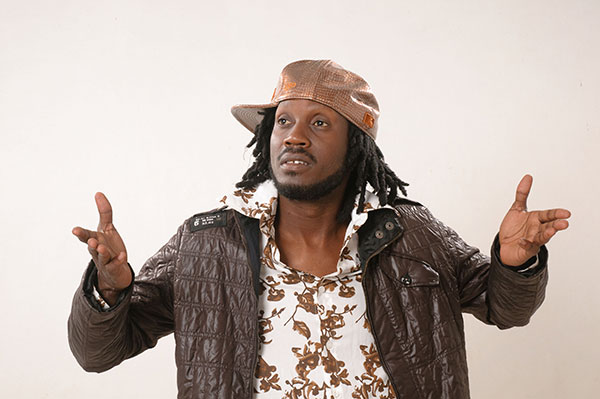
Ugandan Singer Bebe Cool has received a nomination in the Video of the Year category for his song “Love You Everyday’’,

The revelation was made by MTV Base at the 2015 MTV MAMA nomination list at a star-studded reception in Johannesburg last night.

Celebrating the extraordinary evolution of African achievement, this year’s MAMA recognises contemporary artistes and trailblazers in a range of music and lifestyle categories including Song of the Year, Video of the Year, Best Collaboration and Personality of the Year.

A total of 70 nominees were unveiled at the event, to vie for awards in 13 different categories. Nominees for additional categories, including the MTV Base Leadership Award and Best International Act, will be revealed at a later date.

Other competitors in the Video of the Year category include Davido Ft Uhuru & DJ Buckz – The Sound South Africa Nigeria, Prime Circle – Doors / South Africa, Riky Rick – Nafukwa South Africa, Seyi Shay Ft Wizkid – Crazy / Nigeria.

Meanwhile, an elated Bebe Cool posted on his Facebook thanking the media and fans who made it possible for him to receive the prestigious nomination.

‘’To the glory of Allah and his mercy, today is a great morning for me and my fellow East Africans, who were nominated in Africa’s most prestigious awards,MAMA.I would like to congratulate my fellow East African artistes…Sauti Soul, Diamond Platinum,Vanessa Mdee upon this height.
I therefore call on all East Africa’s music fans, media houses, artistes, to combine into one musical army Team East Africa to vote for all our nominated artistes in their categories because we all r in different categories and it would make a lot of sense to have the four accolades come to East Africa.
Gagamel family let’s lead by example and start voting for all nominated East Africans.#TeamUganda,#TeamKenya,#TeamTanzania,#TEAMEASTAFRICA
I would also like to call upon all Ugandan artists and their teams to join me in the fight to bring this accolade back home as we have had Blue 3,Navio,Radio n Weasel nominated before but they did not bring the accolade back home because we did not combine forces for the good of the Ugandan music industry.
Today hard work gives us another chance, let’s go Uganda. follow this link http://mama.mtv.com/voting/to vote for Love you Everyday in category of Video of the Year at MTV Africa music awards 2015 n other East African artistes that av been nominated.
FOR GOD N MY CONTINENT.’’

Stories Continues after ad

Mafabi, Birigwa elected FDC top bosses

Nathan Nandala Mafabi
FDC Secretary General Nathan Nandala Mafabi
Nathan Nandala Mafabi

Kampala-Budadiri West legislator Nathan Nandala Mafabi and former Ugandan Ambassador to Japan Wasswa Birigwa have been elected Forum for Democratic Change Secretary General and National Chairman, respectively.

Mafabi polled a distant 809 votes against his rival and fellow legislator Kassiano Wadri, who got 191 votes. The other contestant was Kampala Woman legislator Nabilah Naggayi Ssepala who got eight votes in absentia, while nine votes were declared invalid.

Amb. Birigwa, who many at the delegates’ conference viewed as a new comer to the party beat outgoing party Secretary for Legal Affairs, Dan Wandera Ogalo, in a tight race that also had former Katikamu North MP and Constituent Assembly Delegate,  Bwanika Bbale.

Mafabi, who had earlier assured party supporters that he was ready to work with party President Maj. Gen. Mugisha Muntu, said he would operationalize all district party offices and also give the district party secretaries a phone to ease communication.

“Immediately after being elected, every district Secretary will be given a phone for easy communication but I also intend to make all district offices operational from the time I assume office,” Mafabi said.

Others that won include Ingrid Turinawe, who was elected Secretary for Mobilization after beating Ibrahim Kasozi and Obongi Member of Parliament Hassan Kaps Fungaroo, Ms Anita Among and Justine Juuko. The post of Secretary for Information and party publicist went to firebrand Kyandondo East legislator Ibrahim Ssemujju Nganda who defeated the acting secretary for publicity, John Kikonyogo and party activist Sarah Epenu.

Rubaga division Mayor Joyce Ssebugwawo was elected to the post of Vice President for Buganda, while the post of western region vice president went to Patrick Baguma. Aswa County legislator Reagan Okumu took the slot of Vice President North unopposed while Leader of Opposition in Parliament (LoP) Philip Wafula Oguttu stood down for Alice Alaso, after she pleaded with him to save her remain relevant in the party.

“Mr Wafula I want to request you to step down for me like I did for you during the LoP elections. Please allow me serve in the Vice Presidency as you remain LoP” Alaso pleaded.

And, without hesitation, Mr Oguttu took to the podium and announced he had stepped aside for Alaso.

Regional vice chairpersons are Salaam Musumba for Eastern Uganda, John Baptist Okello-Okello for Northern Region, Roland Mugume for Western and Baganda Ssenfuka for Buganda.

Tororo County legislator Geoffrey Ekanya was unopposed for the post of party Treasurer after Soroti Woman legislator Angelina Osege pulled out. By press time, elections for other posts were still being conducted.

rwanambwa@eagle.co.ug

Stories Continues after ad

Pope confirms Uganda visit

Pope Francis
Pope Francis
Pope Francis
Pope Francis

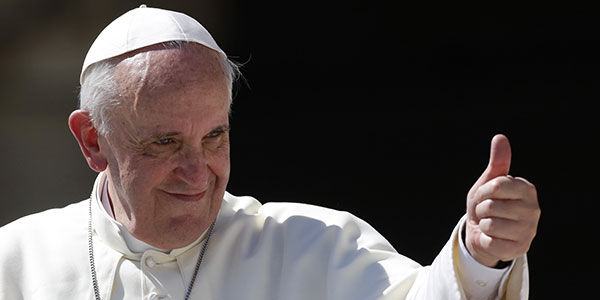
Pope Francis on Friday confirmed his visit to Uganda, the third such visit to the East African country. The visit also means that President Museveni is probably the only President in the world to host two reigning Popes, John Paul II in 1993 and Pope Francis I in November, 2015. Earlier, in 1969 Uganda under Obote became the first to host a Pope, Paul VI.

Pope Francis will also visit the Central African Republic and plans to include Kenya on his first trip to Africa since becoming Pope.

Speaking to a gathering of priests from around the world, the pontiff said he wanted to add Kenya to his African visit but “it is still uncertain because there are organizational problems”.

The pope did not elaborate on the difficulties of visiting Kenya, but it has been a target for attacks by Islamist militants, Somalia-based Al Shabaab.

Francis, who became Pope in 2013, has already announced trips to Ecuador, Bolivia and Paraguay from July 6-13 this year and to Cuba and the United States in September.

Stories Continues after ad

The most productive students are the quiet ones – VP Ssekandi

Edward Ssekandi
Edward Ssekandi
Edward Ssekandi
Edward Ssekandi

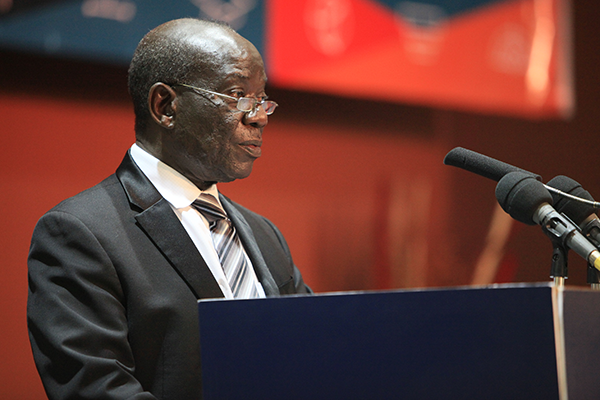
The Vice-President of the Republic of Uganda is Edward Ssekandi. We are sorry that you must actually be reminded of who the country’s Number Two is, but such is that state of affairs that we can’t help it. When we sought an interview, it did not take long to get an appointment. His aide said it was flexible. “No worries, he is always free and available for interviews,” the aide who preferred anonymity for fear of reprisal said.

We meet the VP in a hotel he frequents (we won’t name it because the man literally sleeps there).

“You are the one who I am told needed a few minutes with me?” Ssekandi asks amiably upon our arrival. He explains that he is a very busy man and that he would give, at most, half-an-hour for the interview. “Many people think I just sit around idle and scrubbing my face but that is a lie,” the VP says in self-deprecating deadpan.

“But it’s true, your Excellency. In fact, one needs to hit the Google search engine to know who the vice-president of Uganda is,” the Pun said.

“That is entirely the problem of perception,” Ssekandi said glumly. The Frying Pun waited for him to add but the man’s attention was not on it. He looked up as if expecting another question and it was only then that Frying Pun realised he had said the perception thing with some sort of finality.

The Pun decided to probe further on the issue. You hardly feature anywhere in national issues,” the Pun said. “Compared to your predecessors Samson Kisekka, Specioza Wandira Kazibwe and Gilbert Bukenya, you need a PR firm to keep you in the news.”

“Do you know the President of Ethiopia? I guess not. How about that of Germany? Italy? India? You don’t. You need Google to find out who the president of Israel is too. Now, all these countries are more developed than Uganda, right? Ask yourself then, what is the relevance on focusing on how much Ssekandi is featuring on the front pages of the newspapers. What Uganda needs is progress, young man,” he said.

“Yes, we need progress. We also need leaders who draw salary from taxpayers to earn it. You are not earning your paycheque like Kisekka, Spe and Bukenya before you,” the Pun said.

“So, should I start embracing skimpily dressed singers to appease the public desires of Ssekandi appearing on the front pages of the other thing in Namamve… what do they call them again…”

“Red Pepper.”

“Yes, that one. That newspaper…
“Red Pepper is a tabloid,” we corrected, but the VP ignored the correction and went on. “Do you want me in the shrines just because I should appear in the news? The best performers are the silent ones who do their duties from the shadows.”

“Duties like what? Carrying kaveera to the UK with Team Uganda for Olympic Games? Or posing in sandals for official photos with President Barack Obama?” we rubbed him harder.

A chortle left his throat at this. Then he smiled and said Obama was meeting Ssekandi, not Ssekandi’s suit or shoes. “As far as I know, Fr Lokodo has never complained that I dress indecently. Yet you hear Ugandans go bananas over how Ssekandi appears in public, over what Minister Mateke has chosen to walk out in.”

“You are public figures, Mr VP. You have to dress to public approval. Mark you, the public pays for what you wear, so at least make it good, no?” The Frying Pun probed.

“I am not aware of that. Shall I return the so-called bad clothes I have to the public then?” he asked jokingly.

“Yeah right. Possibly, return even the office because you are clearly drawing salary by idle pretences while doing nothing,” we said.

“You man, you went to school. In that school, you had brilliant students and average ones. There were also the kind you would call daft. Did the best performing students in your class make so much noise?” asked. “Wait, I am still talking… Otafiire used to make a lot of noise, but did it mean he was the best performing minister? As far as I am concerned, there were a lot of wetland encroachments during his tenure and later at local government, there were a lot of market and vendors issues… garbage too. Making noise and performing on the job are two different sciences.”

“So, what exactly do you do in the shadows? Spying?”

“You mean you don’t know the responsibilities of the Vice-President of the Republic of Uganda,” he asked sarcastically.

 The Frying Pun is a parody column

Stories Continues after ad

Did study, Mbabaali Muyanja insists

Kampala-Presidential Advisor on Resident District Commissioners, Muhammad Mbabaali Muyanja has said his diploma in Information Communications Technology from Mountains of the Moon University is genuine.

Mbabaali, who has been dragged to Court by a voter in his Bukoto South constituency, refutes claims that he did not acquire the said diploma because at the stated time he was a student at Makerere University.

“I know I have had issues in the past, but this time I will sue whoever is coming up with useless claims that the papers I have a not authentic” Mbabaali told Eagle Online, adding: “I am currently a student at Makerere University pursuing a Bachelors degree and this can be ascertained with records from Makerere.”

In 2011 Mr Mbabaali won the Bukoto South constituency elections and was later named State Minister for Investment. However, Mbabaali was thrown out of Parliament by Court after his challenger, Democratic Party (DP) Secretary General Matia Nsubuga, filed a case citing his lack of academic qualifications to become an MP.

Documents obtained by Eagle Online dated August 2014, indicate that Mr Mbabali is registered as a student at Makerere (university) and his registration number is 12/U/24261/EVE while his student number is 214023821 and he is attached to Livingstone Hall.

“I write to offer you a place at Makerere University for the academic year 2014/2015 for a programme of study leading to the following: Bachelor of Arts (Social Sciences) subjects: POS, SWA, and SOC as a privately sponsored student” reads part of the admission letter written by Mr Alfred Masikye Namoah, the Academic Registrar at Makerere University.

According to documents, Mbabaali was admitted to Makerere after he sat and passed the mature entry exams held on December 2013.

“This is to certify that Muyanja Mbabali sat and successfully passed the university mature age entry scheme examination held on Dec 14, 2013 for entry into the following programme (Bachelor of Arts (Social Sciences),” the document adds.

editorial@eagle.co.ug

Stories Continues after ad

Government to construct ‘oil’ airport

Entebbe International Airport

Plans are underway for government to build an airport in Hoima at Kabale, to ease transport operations in the nascent oil sector, including the construction of a refinery.

The announcement was made by the Minister of Finance Matia Kasaija, while delivering his inaugural budget speech.

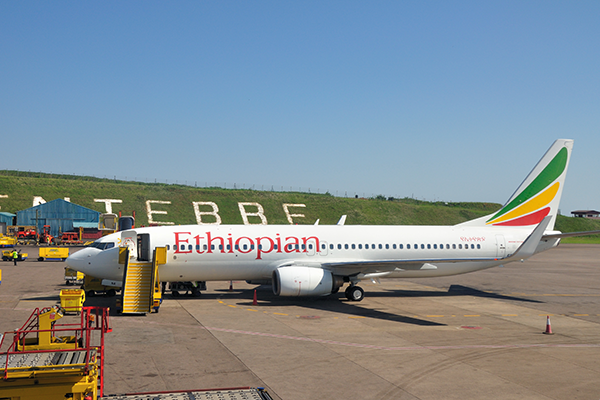
He also announced the upgrade of Entebbe International Airport at a cost of US$325 million, which money has already been secured.

“Over the next five year period, Entebbe International Airport as Uganda’s principal international gateway will be upgraded to improve the quality of operation and maintenance,” Mr Kasaija said.

Mr Kasaija, who was named finance minister in March this year, also indicated that several aerodromes around the country will get a makeover.

Currently Uganda has one major airport at Entebbe and 30 airstrips and aerodromes spread across the country, all supervised by the Civil Aviation Authority (CAA) and the Ministry of Works and Transport.

Meanwhile, the minister has expressed optimism that developments in the oil industry were on course, saying three multi-national companies had already acquired exploration licenses and one production license.

“In February this year, Government announced the first bidding licensing round for six blocks in an effort to attract new companies in the exploration phase. The bidding process is ongoing and it is expected to be concluded by December 2015,” he said.

Stories Continues after ad

I never wrote a divisive letter to Gadaffi – Museveni

PM7@Social Media critics warning

STATEMENT

by

H.E Yoweri Kaguta Museveni

President of the Republic of Uganda

To

Irresponsible People Spreading Falsehoods Using WhatsApp


12th June, 2015                                        –                 Entebbe


My dear country men and country women,


About two or so weeks ago, I made a voice recorded message that I caused to be transmitted to the listeners over the social media network known as WhatsApp that some irresponsible people have, apparently, been using to spread falsehoods. That time, the message was in Runyankore-Rukiga (part of the Runyakitara or what I proposed to call Kinyanja ─ North, as opposed to the Kinyanja of Malawi, Zambia and Mozambique), because the irresponsible people had used that dialect to propagate their falsehoods. I call these dialects Kinyaja ─ North because they are mutually intelligible dialects in the Great Lakes area.  Those that are mutually intelligible are used by a population I estimate to be about 60 million people if not more. On that occasion, I used the words: Abasiru,

Abashema and Abazigu (stupid, uninformed and enemies) to describe the authors of that sectarian and criminal altercation.  Although I had strong suspicion that the authors, were criminal opportunitists who were using sectarianism to try and profit politically, I reacted as if the actors were uninformed villagers that needed education about the powerful, ancient interlacustrine (the people of the Lakes ─ Amayaanja:─ Nalubaale, Mwitanzigye, Masyooro, Kioga, Rutshuru-Butuumbi) peoples who had advanced agriculture (crops and livestock), fishing, industry (metal work, ceramics, leather-working, wood-work, textiles, etc), had symbiotic societies but were badly governed by the, sometimes, parasitic and tyrannical chiefs who were responsible for our colonization by failing to unite us so as to face the colonial forces.

About a week ago, the intelligence service brought me a forged letter that I was supposed to have written to the late Gaddaffi on the 25th of January, 2010.  In that forged letter,  I was supposed to be informing Gaddaffi about my political intentions and plans in Uganda, denigrating some of my comrades in the struggle and showing a sectarian attitude towards one of our Ugandan communities, the Bakiga ─ i.e. the same Bakiga of the other sectarian recording.  Fortunately, this time, the intelligence services and the vigilant NRM people were able to discover who the authors might be and who the propagators were.  Indeed, the Police already have some suspects.  I would like to inform the listeners and those who follow the goings on, on the social media that that letter is a forgery.

 It is a forgery because I never wrote such a letter.  In fact, the whole context could not have existed.  At that time, my relationship with the late Gaddaffi was very sour because I had opposed his plans of an All-Africa Government, preferring to work for the East African Federation as far as political integration was concerned and only for economic integration as far as the whole of Africa is concerned.  Besides, the whole talk of German doctors and my health is a fiction.  Fortunately, in the whole 70 years of my life, God has given me excellent health save for occasional malaria attacks, coughs or mild allergic reactions in the nose. Even today, there are hardly any physical exertions that I cannot undertake except squatting which I find abit uncomfortable these days.

We, the freedom fighters, who mobilized all the Ugandan communities that we came across, to create the powerful NRA and, later NRM, cannot, even in the state of somnambulism, disapprove of any of our communities because they all helped us to build that strength and we also helped them to get out of the bad times of effuga bi (bad governance).  In December 1978/January 1979, I recruited 200, mainly Bakiga boys, while based at Nyamiyaga Primary School in Tanzania for the anti-Amin struggle.   When we crossed into Uganda, on the 11th of February 1979, I recruited alot of Banyankore boys and girls until the fall of Amin on the 11th of April, 1979.  In order to train the 200 at Nyamiyaga, I utilized the skills of the boys from Kaberamaido whom we had trained in Mozambique.

Some of those Banyankore and Bakiga boys of 1978/79, who qualified, went for leadership training at Jinja and Monduli in Tanzania.  Many of them are the ones that helped me to start and prosecute the resistance in the Luwero Triangle, starting on the 6th of February, 1981 (Tarehe Sita).  They are the ones that helped me to train a large number of Baganda boys and girls in the Luwero Triangle (i.e. to prosecute the war).  Later on, when we had the opportunity, we recruited fighters from the whole country on the quota-basis.  That is how we built the powerful UPDF.  We do not look at people’s tribes, religion or sex when we are determining whether they are good or bad. We look at their capabilities.  We look at their ideology.  We look at their loyalty.

Sometimes, we look at their discipline – but the other three take The three, to repeat, are: capability, ideology and loyalty.  Tribe, religion or sex do not feature in our Minzani (yard- stick, evaluation) of determining who is useful and who is not.

When you hear somebody, claiming to be a leader, talking about tribes, religion, sex (Gender) as yardsticks of determining people’s usefulness, you should know that he/she is a failure and a danger to Africa.  He/she is a parasite.  He/she is an opportunist.

I described the first group as “Abasiru”, “Abashema” and “Abazigu” (stupid, uninformed and enemies).  I now describe this group as Abatemu, Abanyaanda and Abazigu (criminals, opportunitists and enemies).  Although, I will not have time to answer much of the nonsense on the social media, when it comes to trying to divide the Ugandans and the Africans in general, I will confront those enemies both verbally and, if necessary, physically.  It says, in the Book of Matthew 7:16 that “You will know them by their fruits”.  You will know the orientation of all those actors by what they say and do.

Besides, it is only people who have never been involved in armed combat that have the luxury of talking about tribes, religions and sex of people in a derogatory way.  In combat, your own very life depends on the actions of your neighbour regardless of his tribe or religion or sex.  How can you afford to be sectarian?  In Mbale, on the 22nd of January, 1973, I was saved by a Mugisu boy who gave me information that enabled me to take another route.  Treat with contempt those who talk about tribes, religion and gender as a way of judging who is good and who is bad.

If the letter is forgery, how did what appears to be my signature get to the document?  Certainly, not through me.  I have been told by Police that there are techniques of forging signatures or transferring signatures from one document to another one.  The Police will get to the bottom of it.

Yoweri Kaguta Museveni  Gen (rtd)

PRESIDENTOF THE REPUBLIC OF UGANDA

Stories Continues after ad

Cranes and Micho start all over

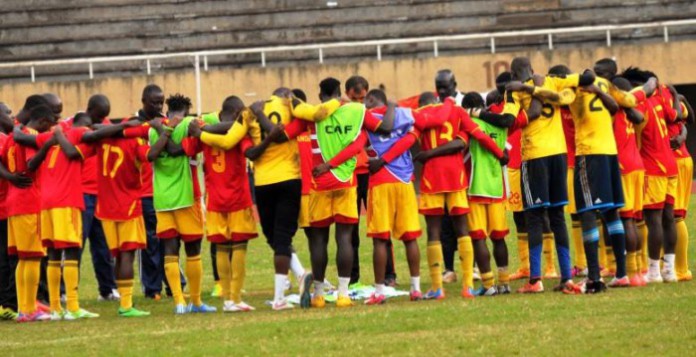
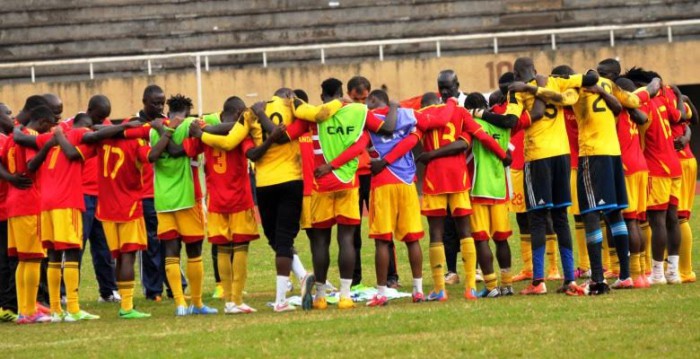
Cranes gather in prayer after Thursday's training session
Cranes gather in prayer after Thursday’s training session (courtesy photo)

AFCON 2017 QUALIFIER:

Uganda v Botswana

Saturday: 4pm

Venue: Namboole Stadium

Charges: 20,000/- (Ordinary), 50,000/-(VIP) and 120,000/- (VVIP)

Uganda Cranes embark on another Africa Nations Cup qualification campaign with optimism seeking to break a 38-year jinx at the continental showpiece.

Coach Milutin ‘Micho’ Sredojevic believes his charges have learnt from the past failed and hopes for strong statement as Cranes face Botswana in the 2017AFCON qualifier at Namboole stadium tomorrow, Saturday.

“It was a fine preparation. Gambia was a good test but we missed several chances to score in the first half. We will have to adjust in order to fulfill our target.” Micho noted.

The mood in camp is one of buoyancy while local fans expect nothing short of three precious points to act as a springboard for qualification before The Cranes travel to minnows Comoros in September.

Of the 13 qualification groups, The Cranes wouldn’t have asked for a better draw having avoided the continent’s big boys from West Africa as well as our serial tormentors from North Africa.

The task at hand is also quite simple unlike the previous complex campaigns; Uganda only needs to top the four-team group that also includes Burkina Faso and be assured of a berth to Gabon.

Even in the worst-case scenario, there is a slim chance of scooping one of the two extra slots for the best second-placed teams.

In all respects, this seems to be the best chance in years. Yet we have been in such a position before.

So, as his charges prepare for the Botswana Zebras, the task is to ensure future assessments of this campaign do not conclude with an autopsy.

The Cranes have often won at Namboole but lacked the required consistency and have always been a point or a goal short qualification.

Botswana players go through drills at Lugogo on Thursday
Botswana players go through drills at Lugogo on Thursday (courtesy photo)

Botswana Zebras’ national team head coach, Peter Butler is worried of the Uganda Cranes physicality.

“Uganda is a great team which plays a very physical and high tempo game”Butler told the media on Thursday after the team’s training session at the Phillip Omondi Stadium, Lugogo.

“We (Botswana) have new players on board and we are on a developmental trend,” he added.

Stories Continues after ad