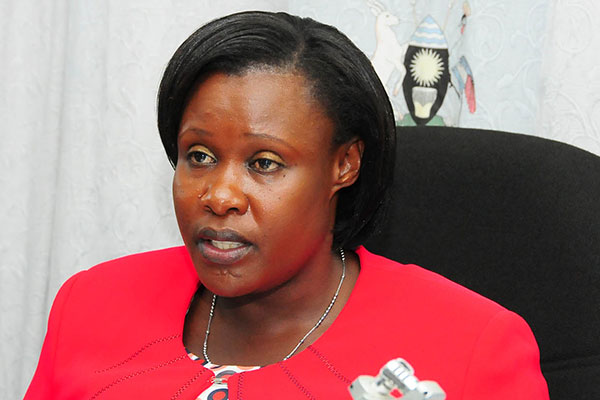
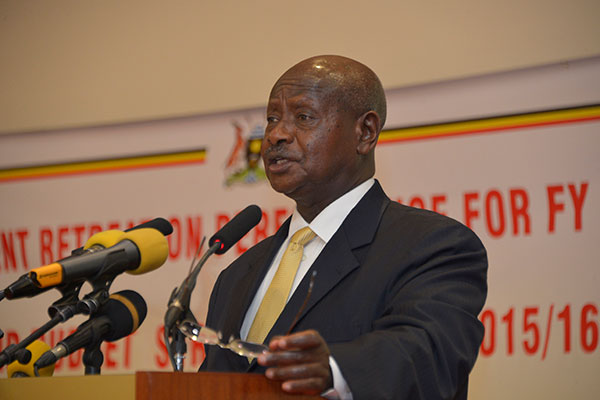
Ex- Minister of Education and Sports Jessica Alupo who has been kicked out of the 2021 race.
The Minister of Education, Sports, Science and Technology, Jessica Alupo,
The Minister of Education, Sports, Science and Technology, Jessica Alupo, has lauded the Swedish government for her tremendous support to Uganda’s development through several research programmes.
Alupo made these remarks today as she officially opened the two-day International Research and Innovations Dissemination Conference at Hotel Africana Kampala.
“Through several civil society programmes, the Swedish government has been very instrumental in the recovery process of northern Uganda,” Alupo said.
The conference, that started today, is organized by Makerere University in partnership with the Swedish International Development Cooperation Agency (Sida).
Running under the theme Community transformation through research, innovations and knowledge translation, the conference will see some 300 participants make presentations on five subthemes.
These include: Health and Health Systems; Natural Resource Utilisation, Conservation an Environmental Sustainability; Food Security, Safety and Value Addition; Culture, Socio-economic Development, Social Justice, Governance, Conflict and Disaster Management; and Advances in Education, Science and Technology.
According to Makerere’s director for Graduate Training, Prof Mukadasi Buyinza, the conference’s main objective is to showcase and share with the public the different research undertakings over the past 15 years.
The Makerere research capacity programme supported by Sida started in 2000 with the aim of raising the university level of research and innovations. More than 200 researchers have obtained postgraduate degrees from Makerere and Swedish partner institutions through this programme, over the last 15 years.
The Government today released Shs10bn to fund political party activities ahead of the 2016 presidential and general elections in line with Section 14(a) of the Political parties and Organisations Act of 2005. By law the government is mandated to fund political parties.
Electoral Commission Chairman Eng. Badru Kiggundu told a news conference in Kampala that the money is to be shared among six political parties that have representation in parliament.
The parties include; NRM, FDC, DP, UPC, CP and JEEMA.
Eng Badru Kigundu said only the six political parties with representation in parliament are eligible to receive this money that is to be shared according to the number of MPs in parliament each political party has.
“The formula of distribution is prescribed in the law; it is on the basis of strength in parliament, so if you have 20 members we shall get the members divide by the total number of members in parliament and then multiple by 10 billion” he noted.
Kiguddu said political parties that have provided all the requirements to the commission have received the money.
EC says the commission they have communicated to all the six parties calling for submission of requests.
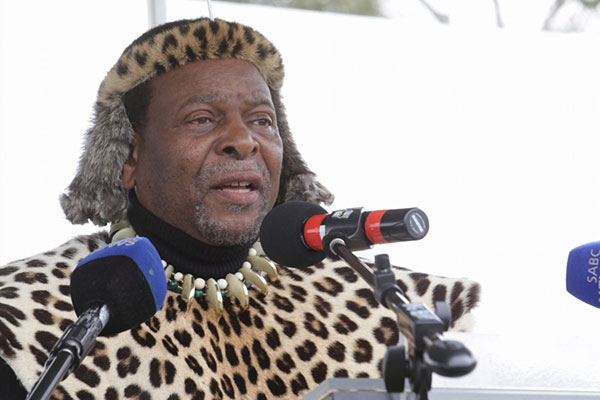
Zulu King Goodwill Zwelithini has asked for an end to violence
Zulu King Goodwill Zwelithini has asked for an end to violence
Zulu King Goodwill Zwelithini has asked for an end to violence after attacks against migrants in South Africa.
The king told crowds of thousands at a stadium in Durban that previous reports that he said foreigners should “go back to their countries” were distorted.
He has been accused of fuelling attacks in which at least seven people died.
Hostile sections of the crowd sang songs calling for immigrants to leave and booed a speaker who said foreigners had the right to live in South Africa.
In King Zwelithini’s speech he called recent violence shameful and vile. “We need to make sure no more foreigners are attacked,” he urged.
He said accusations against him of inciting violence were incorrect because the country has only been shown a portion of his speech.
“If it were true that I said foreigners must go, this country would be up in flames,” he added.
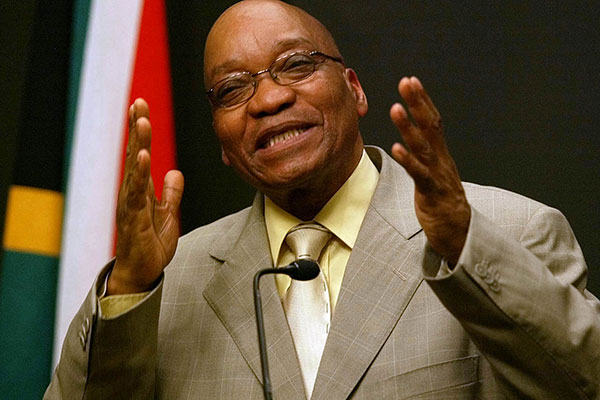
South African President Jacob Zuma condemned the attacks
More than 300 people have been arrested. Among the latest arrests were three men detained in connection with the murder of a Mozambican national in Alexandra, a township in Johannesburg.
South African photojournalist James Oatway witnessed Emmanuel Sithole being stabbed to death in broad daylight and has spoken to the BBC about what he saw:
Except for Mr Sithole, those killed have been in Durban, the biggest city in South Africa’s KwaZulu-Natal province. They are an Ethiopian man, a Mozambican man, a man believed to be from Zimbabwe and three South Africans.
In other developments:
Students at the University of Johannesburg have protested against the attacks
South African Football Association has announced two friendly matches against neighbouring countries to counteract the hostility towards migrants
Zimbabwe’s government has sent buses to repatriate its citizens
South African President Jacob Zuma has condemned the attacks, saying they “go against everything we believe in”.
With the unemployment rate at 24%, many South Africans accuse foreign nationals of taking jobs from locals.
Official data suggests there are about two million foreign nationals in South Africa, but some estimates put the number much higher.
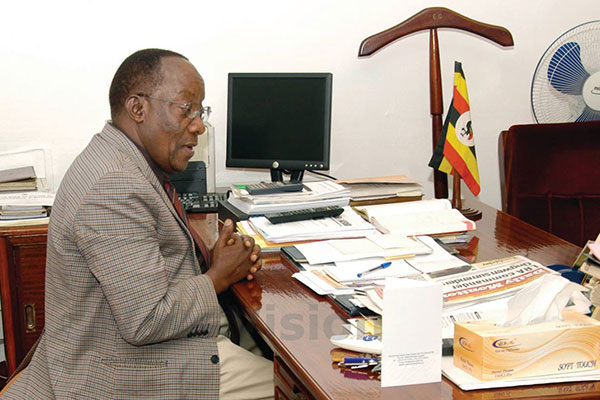
President Museveni has expressed his gratitude over the retreat organized for district officials at the National Leadership Institute (NALI) to discuss effective service delivery to the people.
“It is a rare opportunity for me to see them gathered here together to discuss service delivery,” he noted.
The President was Saturday briefing journalists on his interaction with Resident District Commissioners, Deputy Resident District Commissioners, District Internal Security Officers and Chief Administrative Officers from all districts in Uganda who are on a 10-day retreat at the National Leadership Institute Kyankwanzi in Kyankwanzi district.
Museveni said their deep interaction with resource persons from the line ministries such as Local Government, Public Service, Ministry of Gender, Labor and Social Development, among others, had energized district officials who are now going to effectively solve challenges affecting people in their areas of jurisdiction.
He observed that since peace is already prevailing in the entire country, the only main challenges district officials are to deal with include; ensuring the maintenance of law and order, preventing crime like murders, monitoring and inspecting government development programmes as well as promoting wealth creation at household levels in order to eradicate poverty.
More than 300 people have been arrested in South Africa in connection with a wave of violence against immigrants from other parts of Africa, the minister of home affairs says, the BBC reports.
Malusi Gigaba issued a warning to those responsible, saying that they would be subject to “the full might of the law”.
At least six people have been killed in the past two weeks.
Armed groups have targeted shops run by African immigrants, accusing them of taking jobs from locals.
Thousands of foreigners have fled their homes to shelter in makeshift camps, and neighbouring Zimbabwe, Malawi and Mozambique have announced plans to evacuate citizens.
Speaking during a news conference, Mr Gigaba said 307 people were arrested in connection with the violence.
“Everything is being done to restore peace and order,” he said. “The government will enforce the laws of the country and will not hesitate to act speedily and decisively.
“We also want to issue a stern warning to those who lend themselves to acts of public violence: We will find you, and you will be dealt with to the full might of the law.” Zuma jeered
In Durban on Saturday, President Jacob Zuma told a group of people displaced by the violence that the unrest went against South African values and that he would bring it to an end, but he was jeered by some in the crowd who accused him of acting too slowly.
Migrants, mostly from other African states and Asia, have moved to South Africa in large numbers since white-minority rule ended in 1994. Many South Africans accuse them of taking jobs in a country where the unemployment rate is 24%.
Zulu King Goodwill Zwelithini has been accused of fuelling the attacks by saying that foreigners should “go back to their countries”. However, he says his comments were distorted.
Official data suggests there are about two million foreign nationals in South Africa, about 4% of the total population. But some estimates put the number of immigrants at five million.
Clad in a nicely fitting knee-length hot-red skirt suit with her hair neatly plaited in black bob braids, Ruth Nankanja is the embodiment of true corporate elegance. With each word spoken, Nankanja exudes a confidence and eloquence that leaves many in awe of her.
One look at her is enough to convince you that she has lived a very lucky life. Her reality, however, is painfully different.
Diagnosed with Sickle Cell Disease (SCD) at a very tender age, Nankanja had to battle with stigmatization from teachers and her fellow peers.
“Back in primary school, my parents gave me a medical letter indicating that I had sickle cell to deliver to my teacher. That day, as my classmates went for the physical education (PE) class, I was restricted from attending this class by the teacher who loudly commented that I had sickle cell disease,” Nankanja narrates.
From that day forth, Nankanja was restricted from engaging in any fun activities in school because of her health condition. At a very tender age, she was subjected to stigmatization in all its painful forms.
“When I joined secondary, my parents gave me the same letter to give to my teachers. For fear of being stigmatized again, I chewed it up. I went through the whole of my secondary school without telling anyone about my health condition,” she narrates.
Nankanja held life by the horns and battled her way through stigmatization, pain and suffering. Married for 12 years now, she has two children: a 10 year-old and two year-old.
Nankanja is currently the Chief Executive Officer (CEO) of Sickle Cell Association Uganda (SAU) and has dedicated her life to fighting and creating awareness about sickle cell disease. She is one of the lucky few survivors with the disease.
Studies
According to studies conducted in the 1960s, 80 per cent of the estimated 20,000 babies born with SCD annually in Uganda died before they celebrated their fifth birth day.
However, new studies reveal that;
25 per cent of infants between birth and 18 months of age die because of SCD;
Sickle cell disease affects 7 out of every 150 children in Uganda, and;
13 out of every 100 children have sickle cell trait.
The Uganda sickle cell surveillance study, carried out on over 90,000 children, also revealed that rates of sickle cell disease are lower in HIV positive infants.
Of the 112 districts subjected to the study, 14 districts contain 47 per cent of the sickle cell disease;
These districts are: Kampala, Gulu, Lira, Jinja, Tororo, Luweero, Wakiso, Apac, Iganga, Mayuge, Buikwe, Oyam, Masaka and Masindi, and;
Highest rates of sickle cell disease were noted in the North and Central regions of Uganda;
Eight of the 112 districts have 20 per cent of the sickle cell trait. These districts are: Bundibugyo, Busia, Alebtong, Jinja, Tororo, Gulu and Lira.
This study was released last Thursday by the Ministry of Health in partnership with the Division of Hematology and Global Health Center Cincinnati Children’s Hospital USA, Department of Pediatric and Child Health Makerere University College of Health Sciences and Central Public Health Laboratories (CPHL).
According to the principal researcher from the Department of Pediatric and Child Health, Professor Grace Ndeezi, blood samples were collected from different health centres, thereafter taken to the district hub, then to the regional hub and later transported to the central laboratories where they were tested.
The disease
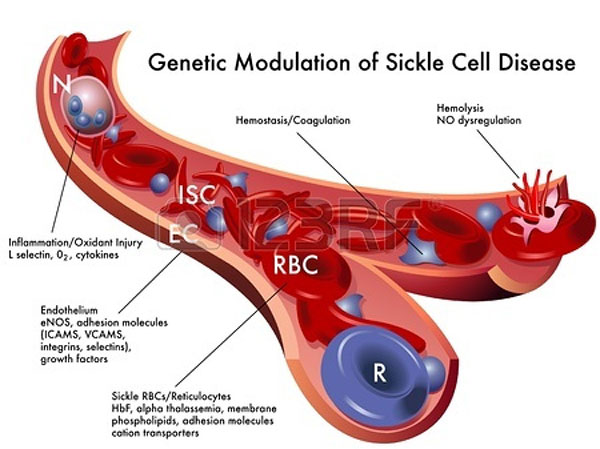
Sickle Cell Disease (SCD) is a genetic disorder in which the body creates sickle-shaped red blood cells, which affect blood flow in cells and organs. This causes pain, organ damage and raises the risk of infection.
SCD is genetic, and is neither contagious nor a punishment or family curse as some Ugandans might believe. Sickle Cell trait, on the other hand, is not the same as the disease and can’t change into the disease.
SCD is a lifelong incurable disease, though treatments are available to alleviate the pain and prolong one’s life.
According to the study, sickle-cell anaemia, the commonest type of SCD in Uganda, remains high where malaria is endemic.
SCD screening campaign
This presentation of findings was followed by the launch of the nation-wide Sickle Cell screening campaign that kicked off with free screening at the University’s freedom square. From primary schools to secondary and university schools, the freedom square was bursting with people from all walks of life.
One Ruth Nakayiza brought her 14year old son to be screened for free. “My son has been feeling severe joint pains for a long time now. I had him tested for typhoid, brucella and malaria but the tests were nagative,” she says in Luganda.
“I was later advised to have him tested for sickle cell at a fee of Shs30, 000. However, when I heard that there would be free screening at Makerere University, I decided to bring him along,” Nakayiza says.
Speaking at the launch of the nationwide screening campaign, state minister for Primary Health Care, Sarah Achieng Opendi expressed her enthusiasm that the survey’s finding would help inform proper planning and look for resources to fight against SCD.
“We cannot plan and allocate resources without data. These results have availed us with enough data to come up with a Sickle Cell control strategy,” Opendi said.
The national sickle cell screening campaign will be taken to other parts of the country with high prevalence rates.
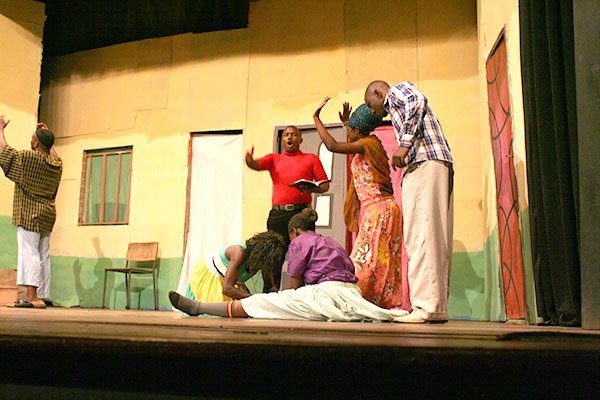
Pride Performers Africa's Mawotto e' Mawotto on stage. Photo by JANE JUSTINE MIREMBE
Member of Pride Performers Africa
With the recent wake of terrorism and religious intolerance in the region, Pride Performers’ mawotto e’ mawotto is not only a welcome but also an educative play. After having recently watched bikambagga, another of their plays, I looked forward to an evening of great acting and comedy in one production and they did not disappoint. Running with the tag line “unity in diversity”, the play depicts a small neighborhood (boys’ quarters) that has sub divided itself along lines of religion, tribe and social status in a village called Mawotto.
Pegan families live next door to a born again pastor, a Moslem family and a traditional family (who claim to be traditional healers). All groups believe that theirs is the rightful religion and are willing to rub it in any one’s face.
With creative use of wit and humour, the play write Deo Ssebufu shows how hard it is for people with different beliefs to stay together. The Moslem family headed by Hajji (Daniel Mawanda) is in constant conflict with the neighbors who dump utensils they’ve used to cook pork at the tap. The non believers on the other hand fight with with the witch doctor’s wife who showers with suspicious looking herbs in the communal bathroom.
The play further portrays that even the different lines that we divide ourselves along are not perfect. Despite Hajji’s self righteousness, during the fasting period, he agrees to eat food served by Nusullah, (his wife)before the time for breaking the fast has reached.
The drama is turned up a notch when Nusullah, whose husband never leaves money for basic supplies at home turns into the neighborhood’s beggar. She asks for everything from soap, drinking water, to already lit pieces of charcoal. Trouble breaks out when Nandutu gives Nusullah salt on a platter which she uses to eat pork. Upon being told by the witch doctor’s wife, Nusullah tries to pour the soup because she is afraid of what Hajji will say. He however says there is no need to pour the soup. He asks his neighbours that they need to learn to live with each other. However despite his apparent liberalism, Hajji beats up any one who under looks Islam or can’t return Islamic greeting, clearly depicting the religious intolerance witnessed in some parts of the world.
Though the national theatre auditorium was not packed to capacity last Sunday,the actors give it their best bringing this strange collection of characters which clearly sets them apart as actors.
Though given less dialogue, Francis Makumbi (who acts ‘boy’) is one of the most comedic characters in the play. His mere appearance on stage gets the audience excited. The school boy uniform on his burly frame is enough to crack the audience up. He is the audience’s favorite.
Pride Performers Africa’s Mawotto e’ Mawotto on stage. Photo by JANE JUSTINE MIREMBE
I personally was impressed by Daniel Mawanda’s portrayal of a staunch Moslem man. He not only relies on Islamic dress code but also has a fairly good command of Arabic terminologies. He really puts himself into character.
The play write however sacrifices the audience’s comprehension of the play for comedy by including a Gishu family which was displaced due to the Bududa landslides. While their high-pitched voices and sibilant speech spoken with accents typical of the Bagishu people are great comedy relief, one has to strain their ears and mind so as to follow the dialogue on stage. Either the play write stretched the comedy too far or the two actors had a little too much fun and forgot that their primary role is to communicate. Though extremely annoying, Nandutu who is bitten by a snake becomes the uniting factor in the play. It is after she is bitten by a snake that the entire neighborhood comes together to save her. The pastor goes to one corner to pray, Hajji prostrates himself on the floor while the witch doctor shakes his Ensaasi over Nandutu’s body. It is quite amusing when each of them claims to have been the one who saved her life. This is the point that the play writer’s message of unity despite our differences is clearly portrayed.
If you can not understand Luganda, most of the scenes from the play are just a series of incomprehensible actions because it basically is the only language used.
It however goes without saying that great theatre is dying on stage with nobody watching it. The small number of people who were present for this play is evidence of that.
KAMPALA: South African High Commission officials in Kampala have apologized for the ongoing anti-immigrant xenophobia protests that have rocked two major towns of Durban and Johannesburg.
The Counsellor, Political Affairs at the High Commission, Wendy Swartz, addressing journalists today (Saturday) morning said considering the amount of hospitality rendered to South Africa by the rest of African countries especially Uganda in recent years there is no excuse for what is happening.
“We apologise to Uganda, and we apologise to the rest of Africa,” Ms Swartz said at the briefing held at the Foreign Affairs ministry headquarters.
She added that, although there have not yet been official statement from her government about compensating victims of the xenophobic protests, the matter “will certainly be taken forward.”
Six people have been so far confirmed dead, scores injured and property destroyed after protests broke out on Tuesday, first in the Kwa-Zulu Natal provincial capital of Durban and later spread out to the Guateng provincial capital of Johannesburg on Thursday.
The protests are engineered by jobless South Africans accuse foreign African workers of taking their jobs. Unemployment according to official statistics is believed to be around 25 percent.
On Tuesday, shop and stores belonging to Ethiopians and Somalians in Durban were looted and torched.
Ms Swartz, said, security in the flashpoints of the protests has been put on the 24 hour basis, and perpetrators will be arrested and brought to book. “We have also established emergency relief centers working closely with UNHCR to help victims.”
According to South African Police, 112 people have been arrested throughout KwaZulu Natal over the protests.
The Permanent Secretary in the ministry of Foreign Affairs James Mugume, said they are closely monitoring the situation working closely with Uganda’s High Commission in Pretoria.
“We continue to work closely with our South African counterparts to get updates of the situation, so far reports indicate that calm has returned to the most affected areas,” Ambassador Mugume said. “We welcome the strong stand taken by President Zuma and the government of South Africa against acts of xenophobia towards foreigners of African origin.”
He said they set up an inter-ministerial crisis team comprised of security agencies, Foreign Affairs and Office of Prime Minister to work out “scenario planning” and contact the leadership of Ugandan communities in South Africa.
The PS said so far there are no reports of any Ugandans killed or attacked during the protests.
About 200,000 Ugandans are believed to be in South Africa and majority engaged in the informal sector.
President Jacob Zuma on Friday condemned the attacks and said immigrants contribute to the nation’s economy while others bring scarce skills.
Looking at Zari, it is hard to imagine she is a mother of four,
At the Frying Pun, we shall choose to know her just as Zari (L)
Zarinah Tlale is her Facebook name, Zaitun Kiriggwajjo her maiden name or so they say. Some say she has Senegalese blood and is therefore Cisse Dangote. Others say she is Zari Hassan, or Hussein. At the Frying Pun, we shall choose to know her just as Zari, a name good enough to pass for a suave label on the lapels of suited penguins. We meet Zari, currently dating or is it married to Tanzanian Nasibu Abdul Juma, popularly known by his stage name Diamond Platnumz, in a health club. She is gleaming with sweat and smiling like a nun seeing a naked man for the very first time. An infectious smile, it is.
“Let’s have a seat. You’ve won this tête-à-tête because of your relentless push for an interview,” she says.
Relentless is the right word considering how I chased you around Kigali during the New Year events. It was easier to stars in the sky during the day than get you down to an interview, I said.
“Not really, just that when I am with Diamond, I feel like a butterfly surrounded by lovely flowers. It’s hard to think about anything else,” she says as she dubs bids of sweat from her temple with a towel. Looking at Zari, it is hard to imagine she is a mother of four, and like The Kampala Sun once wrote, a woman well into the four decade mark of life on earth.
She dubs her tummy and tickles the navel, instantly alerting me to the fact that she is expecting her fifth child. Do you do all this regular workout to stay forever young, or what? I ask.
Looking at Zari, it is hard to imagine she is a mother of four,
“Dude, I’m a health-conscious person. I need to maintain my wellness and fitness. Aging is something you have to live to nature. The only way you can cheat aging is through those things, plastic surgery, but even then, nature would eventually catch up with you in tougher ways, she says. “Naturally, my body will surrender to nature when the time comes.”
Now, how do I dip Zari into the pun
I begin to feel like I am beating about the bush too much. At this rate, Chris Atukwasize, the Daily Monitor cartoonist, will accuse of going to Fry Zari only to end up with my ladle hitting misses as my mind wanders into admiring the Busoga creature. Now, how do I dip Zari into the pun and turn-turn her with the perfection of a Musoga chapatti maker turning his stuff on Iganga Road in Jinja town?
“Why would you leave the Sangoma for the Bongo Flava singer?” I ask. Zari looks at me as though I had not asked this question. Then, after checking her watch, she says glumly: “I didn’t leave Ivan, Diamond came to me, and if you are going to choose an Ivan instead of a Diamond, then you are a loser kabisa.” I could not help noticing the disdain in her tone.
“Talking of the noun ‘loser’ and its sound-alike verb, is Zari loose or a professional go-getter?” I had expected this to hurt. The words had left the pun so it was time to assess things. Zari sits motionless, staring at me like I had asked to prove she was pregnant. I was about to change the topic when she decided to respond.
“Zarinah is Zarinah, she is neither loose nor a go-getter. She is just that, Zarinah, a fine woman living her life and loving it. I was born to live and that’s exactly what I’m doing,” she says. “I have one chance at life, and I have to exhaust it. The choice of how to live is down to what you really want in life. No one is in charge of your happiness but you. Zarinah wants nothing but a fulfilling life, a life of happiness.”
So what is your definition of a fulfilling life? Jumping from one man to another and doing those things you did in public in total disregard to the fact that you have children who look up to you? And… she could not allow me to go on.
Zarinah defines herself
“First, leave my children out of this. They are very adorable to me, they are my life, they make Zarinah complete. If I made a mistake and they did not approve of it, I will apologise… to them, not to the society, not to you nosy journalists. Now, about what people might say, well, they can say or think whatever they want about Zarinah, but Zarinah defines herself. You see, when you know and love who you are, none of that sh*t matters.”
“Well, Zari, did you return the Sengoma’s cows?”
“Which cows?”
“The ones he gave during the kwanjula. I understand a Fuso truck delivered cows…”
“He never gave me any cows. If he gave cows for my hand, then he got the children. Those cows would belong to the children,” Zari says. “By the way, why don’t we talk about Diamond more than this nonsense you are into? I thought you were better than the typical journalists that dot Kampala and Facebook.”
Okay, how long are you going to last with Diamond? I ask.
Zari chuckles and picks her phone to check a message. With her head down, she says: “I have tolerated you long enough, a testimony that I have a heart for nonsense. Yes, I use nonsense to build my life. You know, a great queen got to use the stones thrown at her to build her palace and that is what Zarinah has been doing all these years.”
“Then let me throw one last stone at you for another foundation for your new palace if you please,” I say. “After a diamond, will you lure a gold next?”
For answer, Zari dubs her tummy again. She winks and picks her bottle of mineral water to take a sip. As she gets up from the couch, I realise that was it for the day.
President Museveni has expressed his condolences upon the death of the Supreme Mufti, Sheikh Zubair Kayongo. The President was speaking today at Kibuli Mosque during the Duwa and funeral service of the late Sheikh Kayongo who passed away in Tanzania yesterday. The prayers were attended by various dignitaries, including the Vice-Chairman of NRM, Al hajji Moses Kigongo, the 2nd Deputy Prime Minister and Leader of Government Business in Parliament, Gen. Moses Ali and Archbishop Emeritus Livingstone Mpalanyi Nkoyoyo.
“I am expressing my condolences because of the untimely departure of Sheikh Kayongo at 82 years of age. He was crucial and credible in efforts towards solving issues within the Muslim community,” the President said noting the passing on of Sheikh Kayongo is a big loss to Muslims and all Ugandans at large.
He called on the Muslim community to continue with efforts to promote unity. He informed them that the Government has arrested a number of killers and thugs and some of them were using the Islamic faith. He assured the mourners that the rest of the murderers would also be arrested.
The Kabaka of Buganda, His Majesty Ronald Mutebi, in a message delivered on his behalf by Katikkiro Peter Mayiga, said he had learnt of the death of Sheikh Kayongo with great shock. He added that the late Sheikh Kayongo supported Buganda and wished all the people happiness. He prayed for him to rest in peace.
The Historical Head of the Muslim Community, Al Hajji Kassim Nakibinge saluted President Museveni for contributing Shs. 50million towards the funeral expenses. He further thanked him for an additional Shs.25million, noting that it had enabled the return of the body from Dar-es –Salaam.
He thanked God for the wisdom He gave to the late Sheikh Kayongo and called on the College of Sheikhs to sit and agree on the issue of the next Supreme Mufti.
He thanked the Tanzanian Government for assisting in the medical treatment of the late Sheikh Kayongo.
The NRM Vice Chairman, Hajji Moses Kigongo said that apart from training people to behave well, Sheikh Kayongo was also a man who cherished respect for people.
Kayongo was laid to rest at his ancestral home in Buswa-Bulogo in Kiboga district at 4.30pm.