Stanbic Bank
Stanbic Bank
20.7 C
Kampala
Stanbic Bank
Stanbic Bank
Home Blog Page 2413

IGP transfers Sam Omala in mini-reshuffle

Senior Superitendant of Police Sam Omala confronts Dr Kizza during walk to work.

Renown Senior Superitendant of Police Sam Omala has been transferred to Greater Busoga as the Deputy Commander Bukedea Sector. He has been replaced by Superintendent of Police (SP) Agero Rashid, the new Field Force Unit Operations Commander for Kampala Metropolitan Police, a statement issued by Police Spokesman Fred Enanga shows.

The transfer of Omala, who turned a nightmare for the opposition and former Forum for Democratic Change leader Dr Kiza Besigye in peaceful demonstrations  in the city, takes immediate effect.

Others transferred in the mini-reshuffle include; Assistant Commissioner of Police (ACP) Kaali Fadhil who was appointed as Commander of the Special Field Force Regiment (SFFR), and is to be deputized by Superintendent of Police (SP) Ojandu AD Robert, the Ag. Deputy Commander SFFR.

See statement below in full:

IGP transfers and appoints gazetted officers

The Inspector General of Police has with immediate effect transferred and appointed four (4) Senior Police Officers in a mini-reshuffle.

These include; Assistant Commissioner of Police (ACP) Kaali Fadhil who was appointed as Commander of the Special Field Force Regiment (SFFR), and is to be deputized by Superintendent of Police (SP) Ojandu AD Robert, the Ag. Deputy Commander SFFR. While Senior Superintendent of Police (SSP) Sam Omala has been transferred to Greater Busoga as the Deputy Commander Bukedea Sector, and replaced by Superintendent of Police (SP) Agero Rashid, the new Field Force Unit Operations Commander-Kampala Metropolitan Police.

The transfers that are normal and regular, take immediate effect, and are also based on service exigencies and competence.

We congratulate the appointed officers and wish them success in their new postings.

CP Fred Enanga

Press and Public Relations Officer

Uganda Police

17.04.2015

Stories Continues after ad

Museveni says Uganda has a bright future in the youth

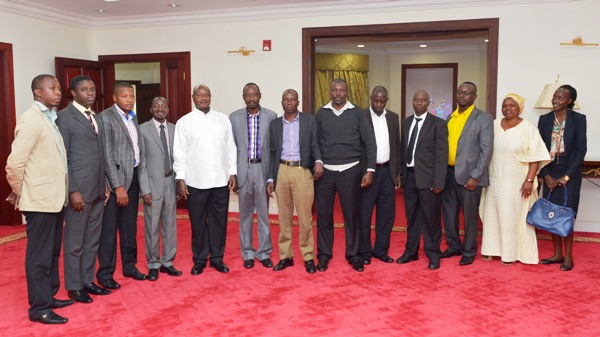
A group of NRM Youth pose for a photo with the president at the state House in Entenbbe.
A group of NRM Youth pose for a photo with the president  at the state House in Entenbbe.
A group of NRM Youth pose for a photo with the president at the state House in Entenbbe.

President Museveni has said that if the youth are well oriented, Uganda will have a good future.

The President made the comments during the thanksgiving ceremony for the newly appointed Minister of State for Youth and Children Affairs, Hon. Evelyn Anite which was held yesterday at St. Charles Lwanga Grounds in Koboko district.

During the ceremony, the President also witnessed the signing of a Memorandum of Understanding between the United Nations High Commission for Refugees (UNHCR), an Italian NGO (ACAV), Koboko district as well as a South Korean NGO (KATO) and the Office of the Prime Minister. The MOU is designed to support President Museveni’s initiative on wealth creation to benefit the local community and refugees in Koboko district.

“Anite has got a very important role to play. We shall help her turn the youth into innovative and hard- working people. The youth must learn to be economic. They must be disciplined because the practice is a foundation to success,” the President said. He reminded the gathering that the NRM went to the bush with 27 guns during the liberation struggle and defeated an army of 60,000 men due to discipline. He was confident that Hon. Anite can perform the important and challenging task because she is disciplined.

President Museveni told the people of Koboko district in particular and Ugandans at large that the biggest job was to maintain preventive health adding that the task can be accomplished though the administration of immunization, nutrition, hygiene and behaviour change to prevent diseases resulting from promiscuity. He said that hospitals should take care of the 10% of the illnesses since medical practitioners have testified that 90% of the illnesses can be prevented.

The UNHCR Country Representative, Ms. Neema Wasame, highly commended the President for his personal efforts in promoting peace and security not only in Uganda but also in Somalia and the region at large.

Stories Continues after ad

Meet a church that conducts prayers in bars

“Every bar should become a church and every bar man, a pastor,” the senior Pastor of Worship Harvest Ministries, Moses Mukisa, once said

A day of hymns of Praise and worship, along with an elongated sermon and testimonies are normally the compositions of a traditional Sunday service. Despite the different chronologies of each faith, they all believe in one God.

Most Ugandans were brought up to revere that day of the week when they go to church to worship and pray to the creator. They dress modestly, remorsefully repent their sins, meditate upon their lives throughout the week, and walk bending in humility almost touching the ground.

Mini-skirts, shaggy hair, dreadlocks and tattered jeans are a misfit wear to the sanctified ground. Ideally church is holy ground, a place of adoration and one’s appearance is supposed to conform to that; “Sunday wear and behavior”.

This tradition is gradually fading as the world becomes more liberated. Perhaps liberation has also entered the church of God. Bars, cinemas, coffee shops and major auditoriums have become the new venues for churches in Kampala.

Juliet Atim narrates her first experience in a non-traditional church; “When my friend invited me to a church called Worship Harvest,I was surprised that we would meet at Kati-kati. I have always known that place to be a bar. I was hesitant to go but later did and I never regretted.”

According to Atim, she was alien to fun in church, “It was the first time I saw old men in jeans and sandals and the pastors being called by name and nick-names without the title pastor. I just could not tell the difference if I’d gone out to have fun with friends or church to pray,” Atim added.

At worship Harvest, they have a slogan that church begins on Monday and Sunday is garage time. During the week days, everyone is expected to share the gospel in deeds and words wherever they are, and then Sunday is more celebration with the rest of the congregation.

The church’s branches are stationed at Kati- Kati bar &Restaurant, Lotus in Entebbe, Travel Hotel in Jinja and Kasangati Recreation center in Gayaza. The main church building is still under construction in Naalya.

Beatrice Byemanzi, a leader at Worship Harvest at Kati- Kati says,” We didn’t choose a bar at the beginning. We had failed to pay rent for Shs30,000 at our initial place but later God blessed us. The management at Kati- Kati gave us space and we are able to pay over a million shilling per week for rent.”

“Besides God being everywhere, he dwells in us and church is where you are.  Nowadays church has become a sign post for only the clean to come in. However, Worship Harvest church is full of neglects who are thrown out of their churches because they are pregnant or don’t want church,” Byemanzi added.

The most common question people ask themselves is what matters? Is it the place of meeting or people? What really makes church?

The Arch-Bishop of the Church of Uganda, the most Revered Stanley Ntagali, says church is where people who believe in God assemble to fellowship. It is not a building but rather the people.  According to Ntagali, the early church did not have cathedrals but used to meet in people’s homes.

“The building can go and God’s people will remain. The important thing is God’s people assembling to worship,” Ntagali said.

However some people find it strange and awkward to pray from a bar because it is associated with mischievous behaviors.

“A church is a holy ground of worship. It shouldn’t be associated with anything unrighteous unto the Lord. The traditional church is being changed to dubious acts,” said Woman leader at Luwafu fellowship cell.

Gerald Businge, a Lecturer at Makerere University, prefers to a designated place of worship known as a church. He agrees to thefact that God is everywhere as long as there is a minister or leader. Although it should be like once in a while if it’s in the bar.

Worship Harvest it is associated with a corporate kind of people who enjoy rock Christian music and have no defined dress code;crazy hair, the men can wear shorts and sandals, and ladies in jean trousers. The church greatly depicts the saying “come as you are”.

Cooper Abrams, a missionary pastor and church planter of Calvary Baptist Church, in one of his online teachings said “We learn in God’s word that fellowship is a heart issue, something to be felt and expressed, and something very important to be a part of. It should occur apart from any program, schedule, or activity.”

Stories Continues after ad

Mufti Kayongo burial today in Kiboga

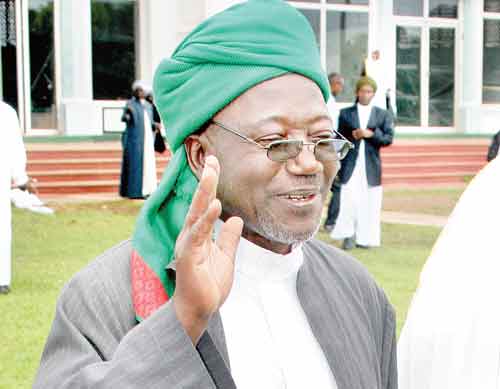
The late Zubair Kayongo

The remains of the Supreme Mufti Sheik Zubair Sowed Kayingo arrives at Entebbe International Airport aboard Kenya Airways.

Kayongo, passed on Thursday Morning at Agha Khan Hospital in Dar es Salaam in Tanzania. According to the Muslim leadership in Kibuli, the body is being taken straight to his home in Kiteezi, Wakiso district.

At 12.30pm the body will be taken to Kibuli Mosque for prayers and thereafter for burial. He will be laid to rest at his ancestral home in Buswa, Kiboga district at 4.30pm.

Among the high profile persons to send their condolences are the Kabaka of Buganda Ronald Muwenda Mutebi and religious leaders across the religion divide.

Stories Continues after ad

The Prime Minster Dr Ruhakana Rugunda issues another statement on the ban on Buveera

Uganda's Prime Minster Dr Ruhakana Rugunda
Uganda’s Prime Minster Dr Ruhakana Rugunda

The Prime Minster Dr Ruhakana Rugunda today issues another statement on the ban on Buveera following the Wednesday cabinet meeting.

Rugunda said in the statement that Cabinet discussed and agreed that the implementation on the ban of, “plastic carrier bags of 30 microns and below continues while consultations are held to discuss the handling of other types of polythene carrier bags.”

The statement comes as the campaign to end the use of polythene carrier bags being implemented by NEMA, the Country’s Environment watchdog entered day two.

See below is the statement

Friends: I informed you that consultations on the effective implementation of the ban on polythene carrier bags were ongoing. Today, I wish to share with you CABINET decision on the matter as follows:

After consultations on the issue of the ban of polythene carrier bags popularly known as Buveera, Cabinet yesterday 15th of April 2015 discussed the matter and decided as follows:

1. Implementation of the ban in respect to plastic carrier bags of 30 microns and below continues while consultations are held to discuss the handling of other types of polythene carrier bags.

2. An Inter-Ministerial Committee has been set up to examine the matter further to conclude the consultation process, and prepare a Cabinet Paper within 30 days for the consideration and decision of Cabinet. The Committee comprises of: Ministers of Trade, Industry and Cooperatives; Water and Environment; Agriculture, Animal Industry and Fisheries; Finance, Planning and Economic Development; together with the National Environment Management Authority (NEMA); Uganda Manufacturers’ Association; and Kampala City Traders’ Association (KACITA).

3. Manufacturers and distributors have been directed to establish polythene collection centres across the country and intensify public sensitization on polythene waste management.

4. The ban applies to the importation, local manufacture, sale or use of polythene carrier bags. This ban excludes polythene packaging materials for the following purposes: agriculture; industrial use; medical use; research and science; sanitation; construction material; and exports. It also excludes polythene packaging materials for foodstuffs such as bread, milk and other groceries.

All stakeholders are directed to comply.

Stories Continues after ad

Sickle Cell lower in HIV positive Infants

A woman takes a blood test. Vaccines are a great way to prevent many serious infections


A Uganda Sickle Surveillance study conducted on 93,316 individuals across the country has found that the sickle cell burden is lower in HIV positive Infants.

The Early Infant Diagnosis (EID) study which was flagged off in February last year predicted that amongst HIV positive infants, 5.1 were normal, 5.0 had the trait and 3.0 had the disease.

Amongst HIV negative infants, the study discovered that 94.9 were normal, 95.0 had the trait and 97.0 had the disease.

This study was conducted by the Division of Hematology and Global Health Center Cincinnati Children’s hospital, Makerere University, CPHL Sickle Cell laboratory and the Ministry of Health.

A man takes a blood test. Vaccines are a great way to prevent many serious infections

Out of the total of 93,316 screened; 664 had the disease, 12,283 have the trait, 79,943 were normal and 426 were variant. The study discovered that Northern and Central regions had the highest values of the Sickle Cell disease.

Of the 112 districts subjected to study, 14 districts contain 47% (312 out of 664) of the sickle cell disease. These districts are Kampala, Gulu, Lira, Jinja, Tororo, Luweero, and Wakiso, Apac, Iganga, Mayuge, Buikwe, Oyam, Masaka and Masindi.

It is from these findings that Professor Grace Ndeezi from the Department of Pediatric and Child Health- Makerere University College of Health sciences suggested that screening of the disease should mainly focus on these highest burden regions.

The Minister of Health for Primary Health Care, Sarah Opendi, acknowledge that this survey has come at the right time when government had limited knowledge on the Sickle Cell disease and was operating on old statistics.

“We cannot plan and allocate resources without data. These results have availed us with enough data to come up with a Sickle Cell control strategy,” Opendi said.

These study findings were revealed during a scientific conference on the Sickle Cell Burden in Uganda at the senate building Makerere University and later crowned by the free national Sickle Cell screening exercise at the University’s freedom square.

gamme@eagle.co.ug

Stories Continues after ad

Police fires teargas, live bullets to disperse rowdy students, two injured

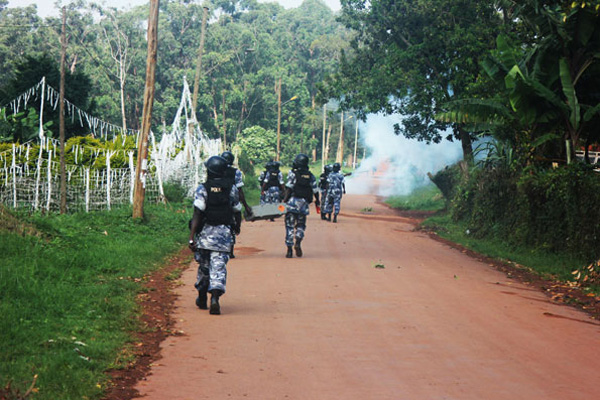
Police fire teargas to disperse rowdy Kyambogo students

The highly anticipated Kyambogo vs Makerere University Football League game didn’t take place as students from both sides turned violent.

In a game that  police was lowly deployed,  students demanded reinforcement to no avail. Match officials were thus escorted off the Kyambogo football pitch.

The impatient students from both sides invaded the grounds were a scuffle erupted. Students in possession of Stones and sticks hurled them against each other. Two students were injured in the process and were rushed to Kyambogo medical centre for treatment.

Police  fired in the air to bring order but instead worsened the situation as running battles began. Police reinforcement arrived with teargas and more personnel. Students from both camps blamed each other for the violence.

The Makerere football team,  still stranded in the pitch with some fans got police escort outside the University only to land into the ambush of the now violent Kyambogo students. They hurled stones at the players but where interjected by police teargas and bullets.

During the last edition,  the game at the same University was abandoned after the visitors invaded the pitch at half time.

It’s up to the court of arbitration to decide on what action will be taken.

Stories Continues after ad

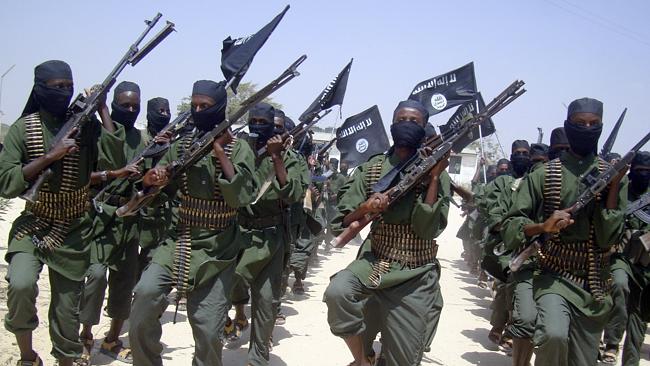
Al-Shabab recruiting in Kenyan towns – BBC

2011 Al-Shabab fighters march with their guns during military exercises on the outskirts of Mogadishu, Somalia. Source: AP

Somalia’s Islamist al-Shabab militants are recruiting heavily in north-eastern Kenya, according to evidence gathered by the BBC.

The BBC reports that the recruitment marks a new tactic for al-Shabab, underscoring fears voiced by Kenyan intelligence services and MPs.

In one town alone, the BBC has learnt of 26 young men whose disappearance was reported to police because they were suspected to have joined the militants.

Al-Shabab attacked a Kenyan university two weeks ago, killing 148 people.

The attack at Garissa was the deadliest yet on Kenyan soil by the militants. One of the gunmen was a Kenyan national.

Al-Shabab’s recruitment of fighters in Kenya’s own backyard marks a change of tactic for al-Qaeda’s affiliate in East Africa.

The BBC has learnt of scores cases of missing young men in the north-eastern town of Isiolo, who later admitted in phone calls to their parents that they had joined the Islamist group.

Only half of those cases have been reported to the police because of fears of reprisals. There are similar concerns in other parts of the country.

As part of the Kenyan government’s efforts to enlist the help of the Muslim community to fight the radicalisation of Kenyan youth, an amnesty has been offered to young Kenyan men who have been lured into joining al-Shabab.

But one of the most powerful Muslim leaders in the country, Sheikh Abdullahi Salat, warned that widespread mistrust of the security services in Kenya threatens to frustrate investigations.

He claimed that corruption within the police, military and intelligence services was likely to hamper attempts to hunt down al-Shabab.

But the Kenyan government, whose anti-insurgency campaign has focused largely on military efforts across the border in Somalia, have described the allegations as a “diversion”.

Stories Continues after ad

Makerere and its dangerous solidarity culture

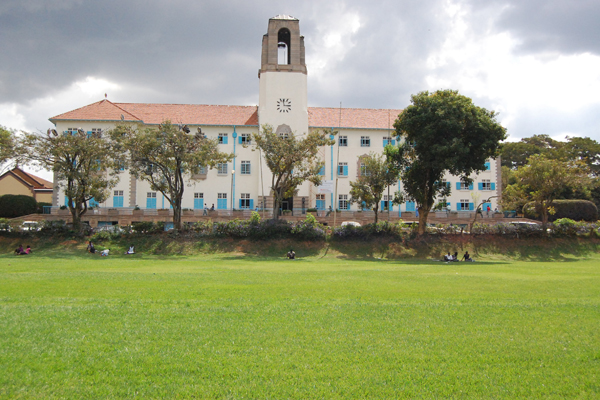
Makerer University Main Administration

“Do not forget, through all the years; those who have gone through the gates of Makerere. Give them the pride, give them the joy; oh to remember the gates of Makerere…”

That is a stanza in the Makerere University anthem, the late David Ojok’s parents, family, friends and other alumni of the great institution can no longer attach meaning to ever since the gruesome murder of Ojok at Nkrumah hall on Sunday April, 12th.

According to the guild information minister, Davidson Ndyabahika, Ojok graduated with a Bachelor’s degree in Soft-ware engineering in January this year and owned an internet café in a suburb around the university commonly known as Kikumi-kikumi.

Little did he know that the institution which turned out as his education vine-yard would ultimately be the place he meets his death in the most unimaginable manner.

“From the information I have gathered from the students, it is alleged that Ojok often went to Nkrumah to watch soccer. On the day of his demise, it is still alleged that he had gone to demand money from a student who owed him,” Ndyabahika said.

However, when Marvin Mutunji, the newly appointed chairperson saw him, he asked Ojok for identification which he did not have.

“The students told me that when Mutunji over questioned him, Ojok decided to run. This provoked students to run after him and some started shouting thief. The result was his tragic death in the hands of a mob,” Ndyabahika said.

This sad story which has taken rounds on mostly social media still sends a chill down the spine of everyone who reads it. How can university students be capable of committing such an injustice on mere suspicion?

Adeke Anna Ebaju, a former guild president of the great institution also testifies of how she survived injury under the culture of “solidarity”.

“Just as any convoy would, we were moving around campus during campaigns speaking to students. But when we reached Lumumba hall, we were stoned. We had to turn back and save our lives,” Adeke said.

Similar incidents happened during this year’s guild campaigns. Gangs from rival camps fought and some of these exchanges resulted into injuries and bloodshed. All in the name of candidate support solidarity.

Is Makerere slowly developing a murdering culture?

Before it was pulled off the Makerere University Students’ Guild Facebook page, this is how a post by Humble Derick Wagooli, that gathered 24 likes on 12th April at 11:35 pm read;

“HAHAHAHA for us we don’t joke… another thief killed at the mighty Nkrumah hall today at 10:30. EHH NKRUMAH OYEE?? Eh activists oyee?? .. Feeling thankful”

The university guild president, Bala David Bwiruka, had this to say about the gruesome act;

“While culture and solidarity are very essential anthropologically, it is also not true that murdering is a culture at Makerere. This kind of solidarity that joins people to commit atrocities is evil and as leaders, we condemn it.”

Ndyabahika denies accusations that the entire students’ body is violent. He refers to the mob that killed Ojok as few ill-mannered isolated cases who will be arrested face the law.

“The solidarity culture is not dangerous. I don’t think we have dangerous culture in Makerere. It only gets bad when it goes extreme and some of the behaviors are intolerant. All these halls have had culture since they were established and I am sure it is important because it binds students together,” Ndyabahika said.

This is what a third year student of Journalism and Communication at Makerere University, John Blanshe Musinguzi posted on his Facebook page on Wednesday;

“That awkward moment when you don’t want to be identified as a Makerere University student. Today, I am planning to visit an office in town. My University identity card will be my entry ticket. I am just thinking, what if am asked; were you among those who lynched that innocent lad???!! Alas!!!”

gamme@eagle.co.ug

Stories Continues after ad

Supreme mufti Sheik Zubair Kayongo dies

The late Zubair Kayongo

The Supreme mufti of Uganda, Sheik Zubair Kayongo, has passed away this Thursday Morning at Agha Khan Hospital in Dar es Salaam in Tanzania.

Sheikh Kayongo who has been heading the parallel Kibuli-based Muslim administration was appointed de facto mufti in January 2009 by a College of Eminent Sheikhs.
Kayongo’s profileSheik Kayongo was born in Bbaale, Kayunga district to the late Hajji Sowedi Kayongo.He studied at Katuumu Muslim School in Luweero district and later at Lamu Muslim College in Kenya. He started teaching Islamic studies in 1955.Served as a deputy Mufti to Sheik Luwemba in the 1980s. He also held the same post under Sheik Ahmad Mukasa when he was leading a faction based at Kibuli Mosque.A member of the Uganda Muslim Supreme Council’s college of sheiks.He is close to the Buganda Kingdom leadership at Mengo and heads a conflict resolution committee of one of Buganda’s clans, the Kobe. He has residences in Kiteezi, on Gayaza road in Wakiso district and Lwamata in Kiboga district.

Stories Continues after ad