Stanbic Bank
Stanbic Bank
19.8 C
Kampala
Stanbic Bank
Stanbic Bank
Home Blog Page 243

Gen Bakasumba reassures citizens, foreigners of safety in Uganda

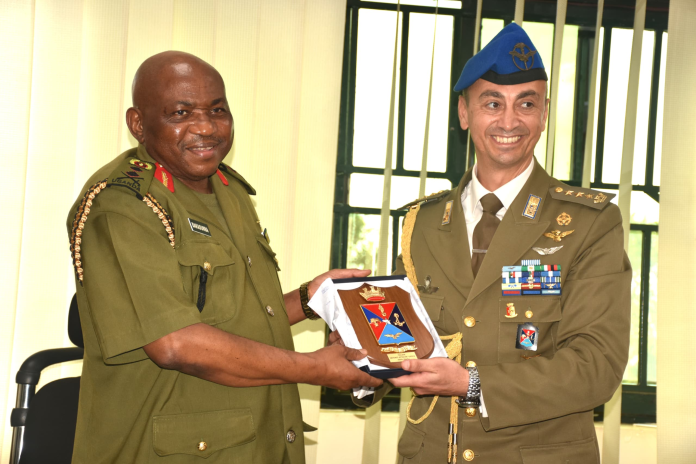
Gen. Bakasumba and Italian Ambassador to Uganda, His Excellency Mauro Massoni.

Major General Jackson Bakasumba, Chief of Joint Staff of the Uganda Peoples’ Defence Forces (UPDF), has reassured citizens and foreigners that Uganda is generally safe for business and tourism to flourish.

 “The security of the country is very peaceful, and there is no cause for alarm,” he said, speaking on behalf of Gen Muhoozi Kainerugaba, Chief of Defence Forces, during a meeting with Italian Ambassador to Uganda, His Excellency Mauro Massoni. The bilateral meeting at the Ministry of Defence and Veteran Affairs (MODVA) headquarters in Mbuya, Kampala, focused on strengthening cooperation between the two countries in training, equipment, and business. Gen Bakasumba praised the Italian government for its significant support in stabilising Uganda through various socio-economic transformation programmes. Regarding the African Transition Mission in Somalia (ATMIS), Maj Gen Bakasumba commended International Partners and Development Partners for their efforts to pacify Somalia despite Al-Shabaab threats. He acknowledged the UPDF’s efforts towards restoring peace and security in Somalia, saying, “Surely, UPDF has sacrificed a lot for the mission as if it is our own country, and yet Uganda does not share a border with Somalia,” adding that “Uganda’s commitment in Somalia is great.” Maj Gen Bakasumba emphasised that Uganda remains eager to see a stable Somalia and said, “All these years, we have been working hard to degrade Al-Shabaab so that we can go in as tourists; that is our wish.” He noted that security challenges persist in Somalia due to imminent clan clashes and urged Somalia to build a robust force to address its security challenges. Regarding the Allied Democratic Force (ADF) terrorists, Maj Gen Bakasumba stated that the group has been significantly degraded and can no longer stand to fight. “We have partnered with the DR Congo army to derail all ADF capabilities. We are doing well in the mountainous area and regret the unfortunate incident of the death of tourists in Kasese,” said Maj Gen Bakasumba. He assured the Ambassador on the safety of tourists, especially in Queen Elizabeth National Park, saying that culprits behind the death of the tourists in Kasese have been brought to book. “Don’t worry, the park is now very safe. What happened in Kasese was a wake-up call to ADF. We encourage tourists to come in big numbers,” said Maj Gen Bakasumba. However, he requested the Italian government to support the UPDF in terms of training personnel and acquisition of modern equipment. Ambassador Mauro Massoni expressed his gratitude for the opportunity to strengthen collaboration between the two countries. He pledged to consolidate the existing partnership, saying, “Our collaboration with the army is very important. We have to make our relationship with Uganda very important.” The Italian Ambassador further promised to contribute to Uganda’s development. “We are ready to help whenever you want us,” he said.  


Stories Continues after ad

Uganda Cancer Institute officials oppose offering free services to patients at private wing

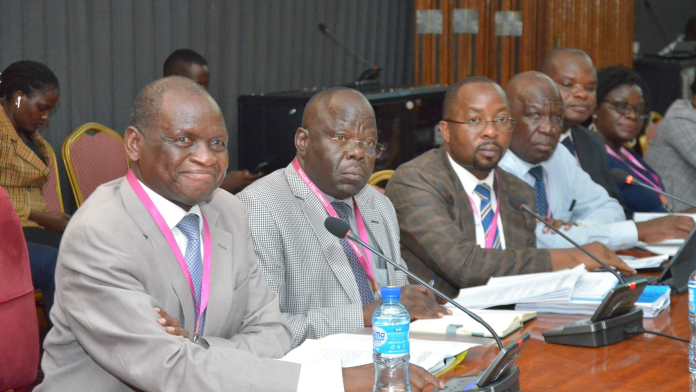
Officials from Uganda Cancer Institute appearing before Parliament’s Public Accounts Committee.

The officials at Uganda Cancer Institute have opposed appeals by parliament to stop charging patients seeking services at the private wing, saying the revenue collected from these patients is used for maintenance of equipment since the money provided by the government for this activity is not enough. 

The officials made the remarks while meeting with legislators on Parliament’s Public Accounts Committee to scrutinize the December 2023 Auditor General’s report, where auditors had queried the low revenue collections in 2022/23, with the Institute having projected to collect Shs4.5 billion, but only collected Shs3.37 billion.

Dr. Jackson Orem, Executive Director, Uganda Cancer Institute noted, “Even if government gives us that Shs4.5 billion, there is still going to be need because cancer treatment is uniform internationally so that means, even if you are a rich or poor person, the standard of treatment that you are getting is the same. So even if you gave us that Shs4.5 billion, it is still not going to make a very big difference.”

Dr. Orem’s remarks were in response to a question raised by Muwanga Kivumbi (Butambala County) who questioned why Uganda Cancer Institute continues to operate a private wing, yet only Shs4.5 billion is collected in revenue, wondering if the Institute would be comfortable at having these funds incorporated within the Institute’s budget by Government, to enable the facility offer free services to all Ugandans.

Muwanga remarked, “You generate Shs4.5 billion and your budget is Shs48 billion and the services offered are a public good because my understanding is that the poor are subsidizing for the rich who go in the private wing because for the Shs48 billion, it is collected from all of us. So, my small money goes to finance the rich man and I can’t access the private wing, so, is it comfortable for you if we added the Shs4.5 billion on your budget and you say, we no longer charge anything?”

Dr. Orem highlighted that Cancer is a very impoverishing condition that majority of the people who come to the institute actually, they come when they do not have money. Even the rich and people of middle class, initially when they come, they want to be in the private services, but they cannot even last three months in the private services. They revert to the general wing.

 “All cancer patients are equal and despite the fact that we have a few people who want exclusive services, even those we subsidize them, the only thing they are getting in the private wing apart from a few investigations, is the space that has ambiance,” explained Dr. Orem.

He added, “There is a need to revisit what private service is in the Ugandan context. Although we are calling it private services, literally what we are providing is called cost sharing. So, if at all the Government is interested in investing in the Institute to provide private services, the market is immense. Because of the investment that we have, we are attracting so many people coming from the neighbouring countries. 20% of the patients who are enjoying services at the Institute are now foreigners and they get free drugs,”

Dr. Nixon Niyonzima, Head of Research and Training at the Uganda Cancer Institute said that private wing services include; Admission fees- Shs100,000 charged per night, consultation fees-Shs50,000 per visit, laboratory blood tests-Shs10,000, ultrasound-Shs10,000, X-ray-Shs30,000, CTScan-Shs200,000 to Shs300,000 and this is charged depending on the organ the patient wants, but patients in both general and private wing receive free drugs.

He also said the Institute charges for Radiotherapy services and in case a patient is doing one for the advanced techniques, the charge is Shs1.4M for the entire radiotherapy period that lasts six weeks and defended the need to charge patients.

“Part of the reason we collect NTR is to ensure that our equipment is maintained, we have a very small budget for maintenance of equipment and most of the money we get from NTR is for maintenance of equipment. We actually need more support from the Government, we still have many gaps that are unfunded,” Niyonzima defended.

Susan Amero (Amuria DWR) reacted saying, “There isn’t a single day that I have gotten a tablet outside Uganda for free, so why are these people benefitting from our taxes that we are paying, stressing the meager resources that we are having? What are you people doing? Why do you give them free treatment because that money should be the NTR spent on some other things to look after Ugandans after all, the facility is here and money is paid by Ugandans? Why should it be free for everybody and yet those who go out pay a cost, so why are you offering free services for foreigners?”

However, Dr. Orem defended the Institute noting, “The foreigners who are coming, a good number of them are members of the East African Community and we don’t have a framework within which we should charge them so that means, whatever Ugandans are getting, that is what they also get.”

Amero however, rejected Dr. Orem’s explanation saying when Ugandan MPs contracted #Covid-19, during the East African Legislative Assembly games, those without insurance would not get services from Arusha.

“If you need to subsidize East Africans, it should be clear that there is a subsidy for East Africans, but they must pay. They aren’t Ugandans, they don’t pay their taxes here. There is nothing that you get outside Uganda for free. We shouldn’t give priority to foreigners and then we stress the resources and fail to look after our own people who are suffering to pay heavy taxes here, that can’t be. Something has to be done,” added Amero.

Stories Continues after ad

Malaria in Uganda: Challenges and Interventions in Katanga and Kirimanya communities

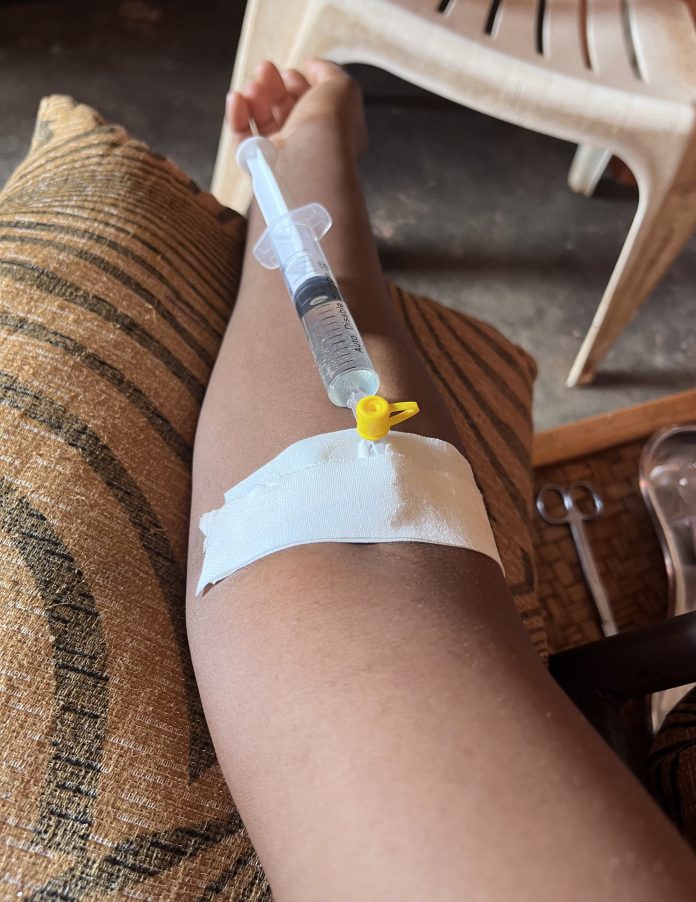
A patient undergoing treatment after malaria attack.

By Precious Baba

Malaria remains one of the most pressing public health challenges in Uganda, a country where the disease is both endemic and perennial. Despite significant efforts to combat it, malaria continues to cause substantial morbidity and mortality, particularly among vulnerable populations. 

Uganda experiences some of the highest rates of malaria in the world. The World Health Organization (WHO) estimates that malaria accounts for up to 40% of outpatient visits and 20% of hospital admissions in the country. The disease disproportionately affects children under five years of age and pregnant women, with over 10,000 deaths attributed to malaria annually in these groups alone. Malaria transmission occurs throughout the year, with peaks often coinciding with the rainy seasons when mosquito breeding sites proliferate.  Katanga and Kirinanya, two of Uganda’s informal settlements exemplifies the challenges faced in controlling the disease with residents residing in overcrowded conditions, dealing with inadequate sanitation, and having limited access to healthcare.

In these communities, many houses are makeshift structures lacking proper windows and doors, which means residents are more exposed to mosquito bites. Furthermore, stagnant water found in numerous open drains and puddles serves as ideal breeding sites for malaria transmitting mosquitoes. Additionally, the limited access to healthcare means that many cases of malaria go untreated or are treated too late, leading to severe complications and sometimes death. 

Efforts to combat malaria in Uganda, and specifically in areas like Katanga and Kirimanya have included various strategies such as the distribution of insecticide-treated nets (ITNs), indoor residual spraying (IRS), and public health campaigns aimed at educating the population about preventive measures. However, these interventions face significant challenges. 

 While Insecticide Treated Nets (ITNs) have been shown to be effective in reducing malaria transmission, their distribution in these regions and similar areas is often hampered by logistical challenges. Furthermore, even when nets are available, they may not be used consistently because the nets wear out and are not replaced.

Indoor Residual Spraying (IRS) involves spraying the interior walls of homes with insecticides. While effective, its implementation in densely populated communities are difficult and also, many residents are reluctant to participate because they cannot afford to disrupt their daily activities for the spraying process.  

In addition, access to healthcare is limited in these communities. Many residents cannot afford medical treatment, and health facilities are often understaffed and under-resourced. This situation leads to delays in diagnosis and treatment, which exacerbates the spread and severity of malaria.

Addressing the root causes of mosquito breeding requires substantial improvements in infrastructure and sanitation. This includes better waste management, drainage systems, and housing conditions. However, such large-scale infrastructure projects require significant investment and political will, which are often lacking. Local health volunteers have been instrumental in distributing ITNs, educating residents on their proper use, and encouraging early treatment of malaria symptoms. These grassroots efforts, supported by non-governmental organizations (NGOs) and international aid, are crucial in bridging the gap where government interventions fall short. Innovative solutions, such as the use of mobile health technologies, are also being explored to improve malaria diagnosis and treatment. Mobile phones can be used to send reminders for taking medications, providing health education, and even enabling remote consultations with healthcare providers. 

Malaria remains a formidable health challenge in Uganda, where informal settlements like Katanga and Kirimanya bear a disproportionate burden. While significant progress has been made in malaria control, substantial barriers remain. Addressing these requires a multifaceted approach that combines effective disease management with improvements in living conditions and healthcare infrastructure. By focusing on community-based solutions and leveraging technological innovations, there is hope for reducing the impact of malaria and improving the health outcomes for the residents of Katanga, Kirimanya and other similar communities across Uganda.

Stories Continues after ad

UWA temporarily suspends hiking activities at Margherita Peak

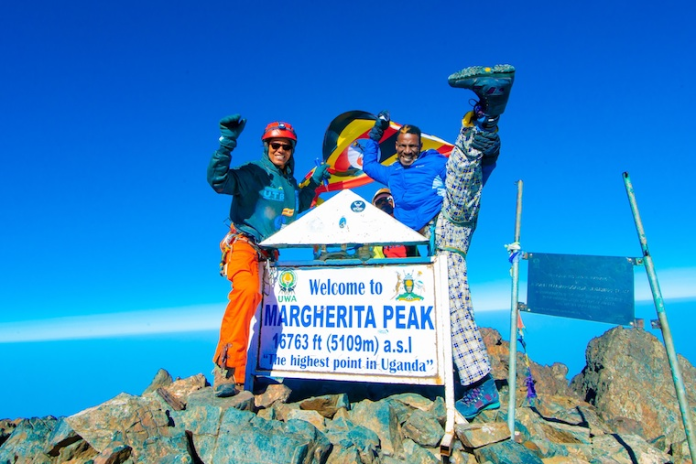
Uganda Wildlife Authority (UWA) has temporarily suspended hiking activities to Margherita Peak in Rwenzori Mountains National Park as a precautionary measure after a comprehensive assessment conducted in response to reports of a crevasse formation in the Margherita glacier.

In a statement, Bashir Hangi, communications manager at UWA noted, “To make hiking safer, we are exploring the option of installing a permanent ladder at a strategic location on the right side of the Margherita glacier. This alternative route will provide a safer passage for hikers to Margherita Peak.”

He added that in the meantime, visitors are encouraged to explore other picturesque peaks within Rwenzori Mountains National Park.

“Noted alternatives include Mount Speke, Mount Baker and Cheptegei Peak on the Stanley Range. These routes offer breathtaking views and unique experiences amidst the stunning landscape of the peak.”

He further revealed that UWA prioritizes the safety and well-being of the clients.

Hangi noted, “We are committed to ensuring that all clients safely enjoy their visit to Rwenzori Mountains National Park. We will continue to monitor the situation closely and provide updates on the status of hiking activities to Margherita Peak as developments unfold.”

Stories Continues after ad

Timely outbreak response, enhanced surveillance halts wild poliovirus transmission in Southern Africa

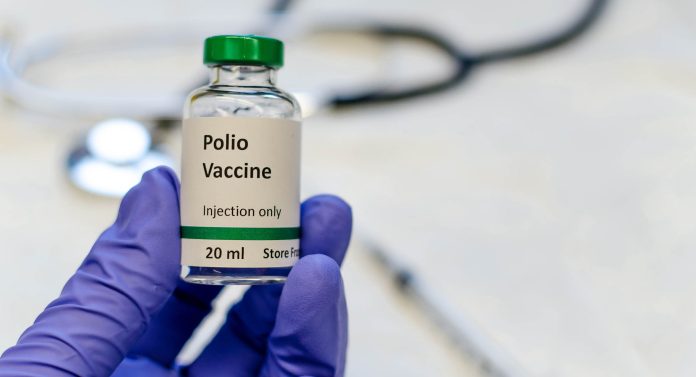
Following thorough assessments in Malawi and Mozambique, an independent Polio Outbreak Response Assessment Team (OBRA) today recommended the closure of the wild poliovirus type 1 (WPV1) outbreak in Malawi and Mozambique, marking a significant milestone in the fight against polio in the African region.

The last WPV1 case in the African Region, linked to a strain circulating in Pakistan, was reported in Mozambique´s Tete Province in August 2022. A total of nine cases were detected in Mozambique and neighbouring Malawi, where the outbreak was declared in February 2022. In a coordinated response, more than 50 million children have been vaccinated to date against the virus in 5 countries in southern Africa.

The meticulous evaluation carried out by the OBRA team included two in-depth field reviews and supplementary data review, concluding that there is no evidence of ongoing wild polio transmission. The assessment considered the quality of the outbreak response, including the overall population immunity, supplementary immunization campaigns, routine immunization coverage, surveillance systems, vaccine management practices, and the level of community engagement.

The successful stopping of this outbreak reflects the unwavering commitment and collaborative efforts of African governments, health workers, communities and Global Polio Eradication Initiative (GPEI) partners, including Rotarians on the ground. Through robust surveillance, quality vaccination campaigns and enhanced community engagement, both countries have effectively controlled the spread of the virus, safeguarding the health and well-being of their children.

“This achievement is a testament to what can be accomplished when we work together with dedication and determination,” said Dr Matshidiso Moeti, WHO Regional Director for Africa. “I commend the governments of Malawi and Mozambique, as well as all those involved in the response, for their tireless efforts to contain the outbreak. It is now imperative that we continue to strengthen our immunization systems, enhance surveillance, and reach every child with life-saving vaccines.”

Health authorities, with high-quality technical support from GPEI, have put in place national prevention strategies in Malawi and Mozambique, as well as in all districts bordering other countries involved in the response. These include Tanzania, Zimbabwe and Zambia.

To date, more than 100 million vaccine doses have been administered in the most at-risk areas. The strategy to get ahead of this outbreak and stop it before it got out of hand relied on detailed micro-planning, including mapping of cross-border communities, migratory routes, cross-border entry/exit points, and transit routes for each of the cross-border facilities. Synchronization and coordination of vaccination plans across five countries, as well as the monitoring of vaccination activities, proved key to identifying and reaching all eligible children in the cross-border areas, to avoid the risk of paralysis due to the virus.

“The official closure of the outbreak is truly a success due to unfaltering determination and strong collaboration between the governments of Mozambique, Malawi and neighbouring countries, as well as between all partners and health workers. I want to particularly recognise the strong efforts of the vaccination teams working on the frontline to reach every last child,” said Etleva Kadilli, UNICEF Regional Director for Eastern and Southern Africa.  “Going forward, routine immunisation must remain high up the priority list; no child is safe from polio until all children are vaccinated.”

To enhance polio surveillance, over the past two years, 15 new wastewater surveillance sites were established in the affected countries. These sites have a critical role to play in detecting silent circulating poliovirus in wastewater, ensuring that quality samples are sent to laboratories for timely confirmation and response to poliovirus presence.

Additionally, countries have scaled up efforts to protect children in high-risk areas by strengthening surveillance, and data and information management. World Health Organization (WHO) in the African Region’s Geographic Information Systems (GIS) Centre has analysed spatial and geographic data on visual maps, providing geographic real-time coverage information, including locating missing settlements, to improve vaccination coverage.

“Closing polio outbreaks is possible when national governments, local health workers, community mobilizers, and global partners come together to prioritize a rapid and timely response to protect children from this devastating disease,” said Dr. Chris Elias, president of Global Development at the Bill & Melinda Gates Foundation. “Malawi, Mozambique, and the entire Southern-African region are setting the example for what it takes to urgently improve vaccination campaigns and disease surveillance systems. Commitments like these will help us achieve a world free of all forms of poliovirus.”

Stories Continues after ad

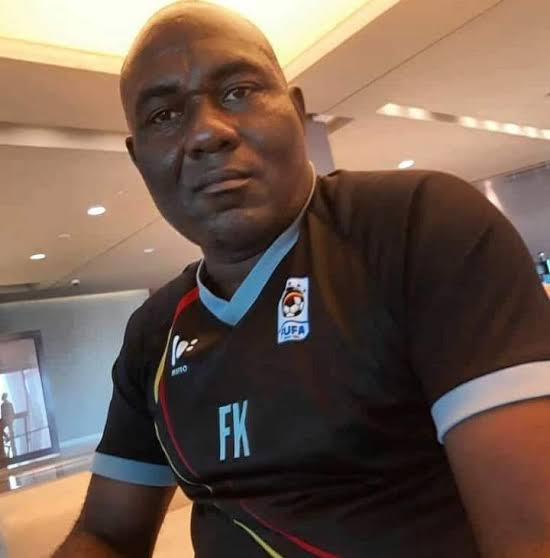
FUFA mourns sudden death of coach Fred Kajoba

RIP Fred Kajoba.

The President of Federation of Uganda Football Associations (FUFA), Moses Hassim Magogo, has mourned the sudden death of goalkeeping coach Fred Kajoba. Kajoba passed away yesterday in Tanzania.

Former head coach of the Uganda team, Vipers, has been working in Tanzania under Moses Basena as goalkeeping coach of Ihefu.

“I am deeply saddened by the news of the untimely passing of Coach Fred Kajoba. Kajoba diligently served the game in different capacities, right from playing up to the highest levels of coaching. Serving in the capacity of Uganda Cranes goalkeeping coach,” Magago said

Magogo said Kajoba has groomed great players that have formed a formidable and enviable goalkeeping department over the years.

Kajoba was part of the technical team that led the Uganda Cranes to the Africa Cup of Nations (AFCON) in 2017 and 2019.

“FUFA extends its deepest condolences to the bereaved family, his club, Ihefu FC, and the entire football fraternity. Football will dearly miss coach Kajoba.” Magogo said.

Stories Continues after ad

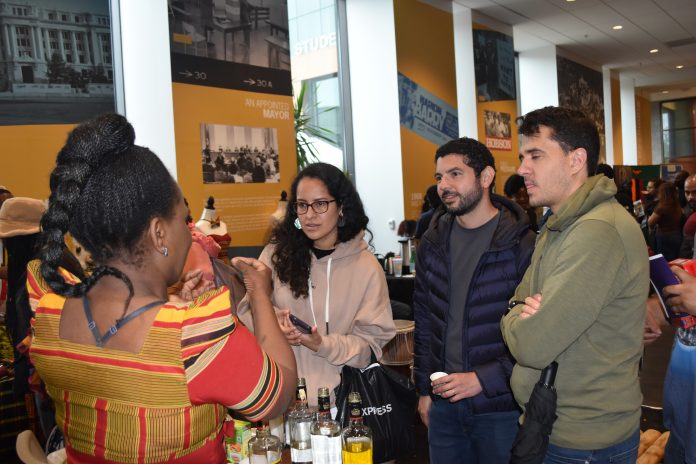
Ugandan culture, heritage stood out at Washington DC Embassy chef challenge

Telling the Uganda Waragi story.

Ugandan culture and heritage stood out at the 2024 Washington DC Embassy chef challenge, a global culinary event held at Union Station, 50 Massachusetts Avenue.

A total of 23 embassies, including Uganda, China, Malawi and Morocco, among others, gathered to compete for the People’s Choice Award and the Judges Choice Award, which were selected by a panel of culinary and cultural judges.

The event placed a spotlight on Chef Sentie Kironde, a re-known Boston-based diaspora Ugandan chef. The Chef and his team set up the Ugandan stand at the event, serving some of Uganda’s signature cuisines including steamed fresh matooke, katogo of roasted goat meat stew, steamed groundnut luwombo for vegans, garden vegetables, brewed Ugandan coffee and an assortment of Uganda Waragi sundowner cocktails. The Ugandan stall attracted over 1000 guests who sampled the menu.

The event was organised with the support of the Presidential Advisory Committee on Exports and Industrial Development (PACEID), which coordinated producers of Ugandan products, including a Uganda Waragi collection from Uganda Breweries Limited, Ugandan coffee from ORONCAFE, and Tooke Flour from the Presidential Initiative on Banana Industrial Development.

“Uganda Waragi is the spirit of Uganda and the ethos of the brand is rooted in celebrating our unique Ugandan culture and heritage. We are pleased to support this event, which provided an opportunity to take Uganda to the world allowing guests to experience our food, culture and Uganda Waragi, a high quality, rich premium gin made in Uganda,” said Hillary Baguma, Brand Manager Mainstream Spirits at Uganda Breweries.

The cultural exchange established Embassy linkages with other Diaspora communities in the United States of America through a showcase of Ugandan cultural, commercial and culinary craft through food and drinks.

Events the DC Embassy Chef Challenge is an annual celebration of global food and drink organised with the support of the Presidential Advisory Committee on Exports and Industrial Development (PACIED) office.

Stories Continues after ad

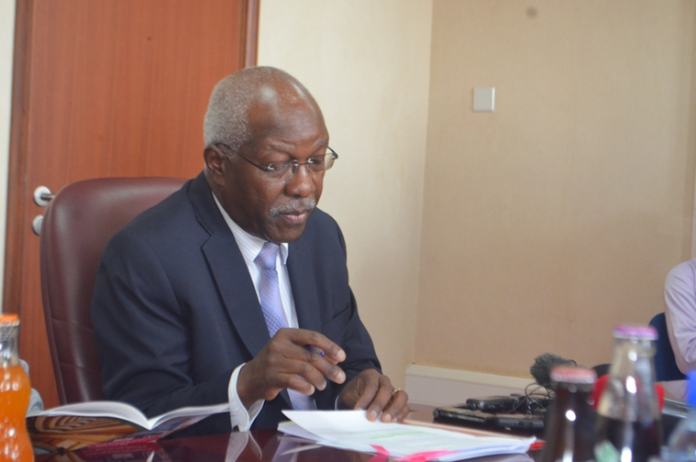
Auditor General accused of delaying special audit report on iron sheets, goats’ corruption

Auditor General, John Muwanga.

The Auditor General, John Muwanga has been accused of fueling corruption in Uganda, citing his failure to release the Shs39 billion special audit report on the theft of iron sheets and goats meant for the vulnerable communities in Karamoja that was orchestrated by top officials in the government.

Muwanga Kivumbi (Butamala County), accusations followed an admission made by officials from the Auditor General’s office that the completed special report on iron sheets scandals was still in possession of the Auditor General, prompting MPs to raise concerns on why the report is still being kept private, yet over Shs39 billion of public funds was misused.

“You know we are almost completing another year without you giving the country the report, tell my namesake that this is extremely unfair to the country. Tell the Auditor General that he is also becoming part of the corruption in this country because that breeds impunity,” said Muwanga Kivumbi, Chairperson Public Accounts Committee.

This was during a meeting held between the Committee and representatives from Office of Prime Minister, it was reported that of the money allocated to this project, Shs6.8 billion was spent on travel allowances, fuel and maintenance of cars by officials from Office of the Prime Minister and contrary to the promise of giving out 16 goats to each beneficiary, only one goat was distributed to each beneficiary.

In the preliminary December 2023 report by the Auditor General, it was reported that out of the Shs39billion meant for the procurement and distribution of goats & iron sheets in Karamoja, Shs1.78 billion was spent on travel in land, while fuel, oil and lubricants cost Shs700 million, while OPM also spent Shs300 million on vehicle maintenance.

The Office of Prime Minister also allocated another Shs2.2 billion on travel in land for monitoring, while civil works for maintenance of Moroto regional office cost Shs500 million, and procurement of iron sheets cost Shs8.8 billion.

“What concerns me is that workshops and seminars took Shs1.8 billion, Travel in land Shs1.8 billion, another travel in land Shs2.5 billion. A total of Shs6.8 billion of the Shs39 billion that is how you spent it and this was money originally for distribution of goats. The manner over which urgency you put this money, when we are processing the so-called supplementary budgets, it is like Uganda will close if we don’t give you this money. Now, we give you Shs39 billion but you spent Shs6.8 billion of this money on travel in land and maintenance,” Kivumbi noted. 

Stories Continues after ad

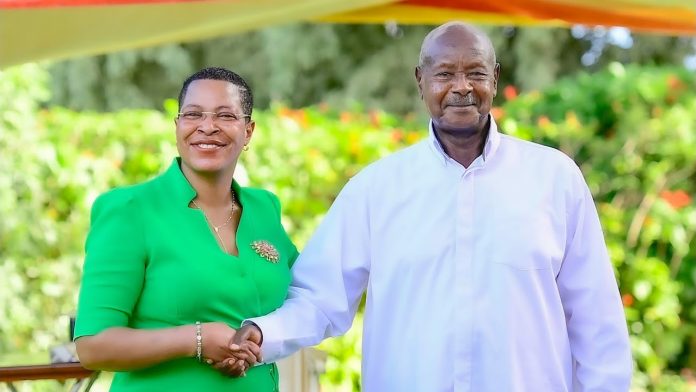
Museveni tasks UK gov’t to bring evidence over Speaker Among’s alleged properties

Speaker Anitah Among and President Museveni during a past event.

President Yoweri Museveni has ordered Minister for Foreign Affairs, Jeje Odongo to request evidence from the United Kingdom (UK) government on allegations that Speaker Anita Among possesses properties in the UK.

In a letter dated May 11, President Museveni stated that he had received a letter from Dr. Patricia Achan Okiria, Deputy Inspector General of Government, which clarified that Speaker Among had not declared a house in the UK. Dr. Okiria’s letter quoted Speaker Among as saying, “I do not own a house or houses in the UK.”

President Museveni has demanded that the UK authorities provide evidence to support their claims, emphasizing that Uganda will not tolerate false accusations against its citizens. He instructed the Foreign Affairs Minister to work with the Attorney-General to demand the source of the UK’s information.

“Therefore, working with the Attorney-General, write an appropriate letter to the relevant authorities in the UK to demand the source of their information. They cannot falsely accuse any of our people and we just let it pass,” the President wrote in a letter confirmed by the State House.

The UK government recently imposed sanctions on Speaker Among, freezing her assets in the UK and a travel ban, citing concerns over corruption in the vulnerable communities.

However, Speaker Among has denied owning any property in the UK, maintaining that the sanctions are politically motivated due to her passing of the Anti-gay law in 2023.

Speaker Among clarified that she has been to the UK once, and she does not even have a cat there. Adding, “These sanctions are politically motivated, and I am carrying a cross for 

Stories Continues after ad

Uganda Tourism Board, Emirates sign MoU to stimulate inbound tourism

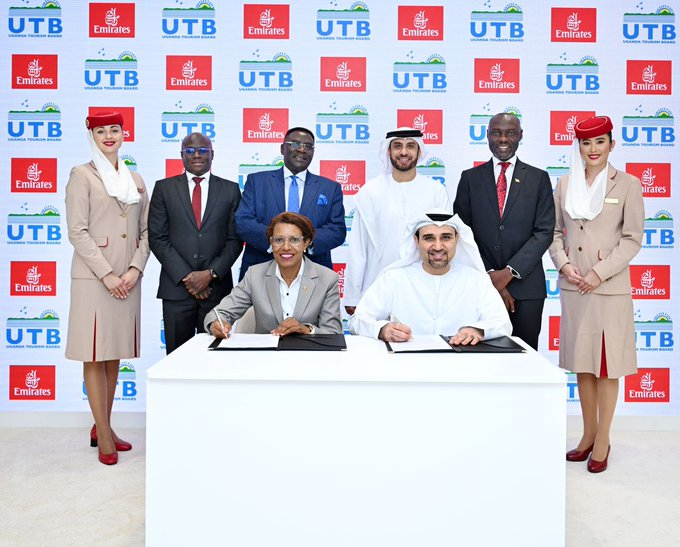
Uganda Tourism Board has signed a Memorandum of Understanding (MoU) with Emirates to drive inbound tourism and boost visitors to Uganda, the Pearl of Africa.

The partnership underscores the Airline’s commitment to the market by attracting visitors from across its global network of more than 130 passenger destinations, as Uganda aims to become a premier tourist destination.

The MoU was signed by Badr Abbas, Senior Vice President of Commercial Operations for Africa and Lilly Ajarova, the Uganda Tourism Board’s CEO, in the presence of Adnan Kazim, Emirates’ Deputy President and Chief Commercial Officer, along with Zaake Kibedi, Ambassador of the Republic of Uganda to the UAE, and other senior officials.

Badr Abbas, Senior Vice President of Commercial Operations for Africa, said, “Uganda has been a key destination on our global network for over two decades and one of the most loved in Africa. Through this partnership with the Uganda Tourism Board, we are solidifying our commitment to driving international travelers to experience Uganda’s stunning natural landscapes, where some of the world’s most exotic wildlife roams free, thrilling adventure sports and activities and, of course, the warm hospitality that characterises Ugandan culture.”

Lilly Ajarova, the Uganda Tourism Board CEO, said, “The signing of this MoU is a significant milestone in promoting Uganda, which is also affectionately known as the Pearl of Africa, as a competitive tourism destination.” She added that “the Uganda Tourism Board is excited to partner with Emirates to benefit from its vast network across the world and attract tourists to Uganda.”.

Under the MoU, Emirates will identify key markets to promote Uganda as a favourable tourism destination and encourage travelers to experience its abundant natural, cultural and adventure attractions. The Uganda Tourism Board will in turn work closely with the airline to develop programmes for trade partners, hoteliers and tour operators to market and stimulate the industry. Both partners will explore incentives, familiarisation trips and other marketing initiatives to stimulate tourism bookings in Uganda.

Uganda’s tourism sector is undergoing a renaissance, with initiatives to attract more international tourists and create thousands of employment opportunities as the country aims to become a premier destination on the global map. The partnership between Emirates and the Uganda Tourism Board supports the next chapter of transformation, increasing the visibility and competitiveness of Uganda as a tourism destination.

Emirates first began operations in Uganda in March 2000 with a linked flight via Nairobi. Over the next 24 years, the airline steadily scaled up its operations, delinking the flights and launching a daily direct Dubai-Entebbe route. Since the inaugural fight, Emirates has carried over 2.63 million passengers, between Entebbe and Dubai. Beyond commercial operations, Emirates has also invested in Ugandan communities with medical and engineering missions through the Emirates Airline Foundation, the airline’s non-profit organisation, which aims to improve the quality of life, regardless of geographical, political, or religious boundaries.

Stories Continues after ad