Stanbic Bank
Stanbic Bank
17.7 C
Kampala
Stanbic Bank
Stanbic Bank
Home Blog Page 257

UNBS hosts EAC member states to harmonise standards for trucks transporting goods

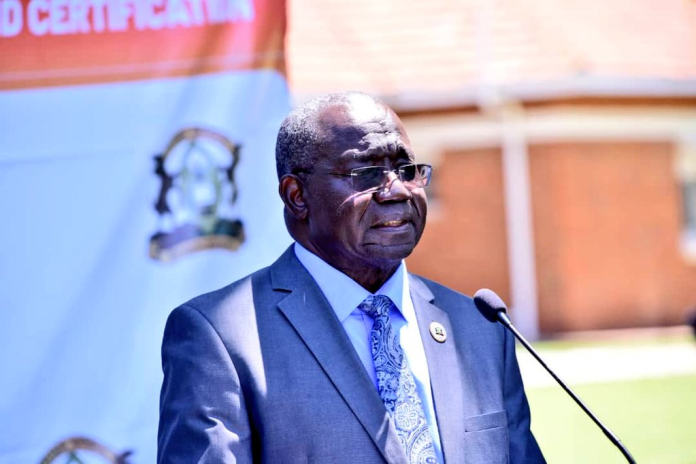
Regional Standards officials

Uganda National Bureau of Standards (UNBS) is hosting Partner States from the East African Community (EAC) to develop harmonized procedures for calibration and verification of road tankers, to facilitate trade. This is in line with the UNBS mandate of ensuring fairness in trade and precision in industry through reliable measurement systems.

Road tankers are vehicles with mounted measures of capacity used for the transportation of liquids for purposes of trade. These tankers are very critical in the intra-EAC trade because they are used to transport and distribute various commodities like petroleum products, Liquefied Petroleum Gas (LPG), raw materials for soap and cooking oil production.

However, each EAC partner state legislates its own regulations and procedures for the calibration and verification of road tankers, resulting in measurement variations, which may constitute unnecessary technical barriers to trade when the measurements in question traverse the different partner states.

“We need to eliminate irregularities and inconsistencies during inspections at the borders to facilitate smooth flow of goods within the EAC region which boosts trade,” said Eng. John Paul Musimami, the UNBS Deputy Executive Director in charge of Compliance.

Some of the issues reported include;

Variations in the limits of error (Minimum Permissible Errors) during verification, for example, the limit of error in Uganda is + or -0.25% for both initial and subsequent verification while the limit of error for Tanzania is + or – 0.2% for initial verification and + or – 0.5 for subsequent verification.

Inconsistency in respect to stamping dipsticks and verification charts  

High chances of foul play by transporters during the delivery process such as swapping and cutting of dipsticks, alteration of calibration charts which affects the measurement accuracy, and more.

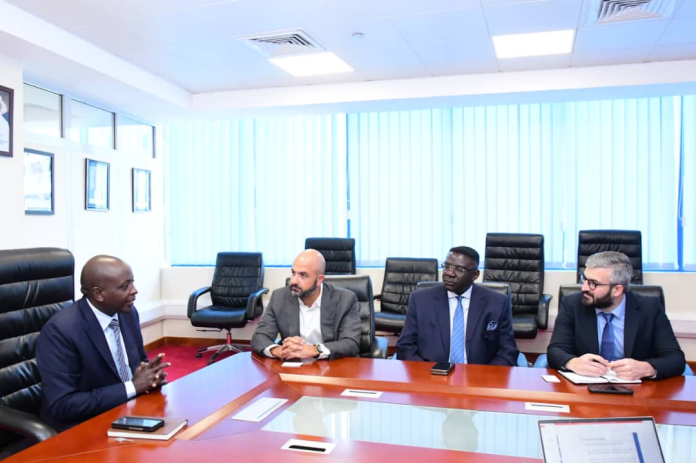
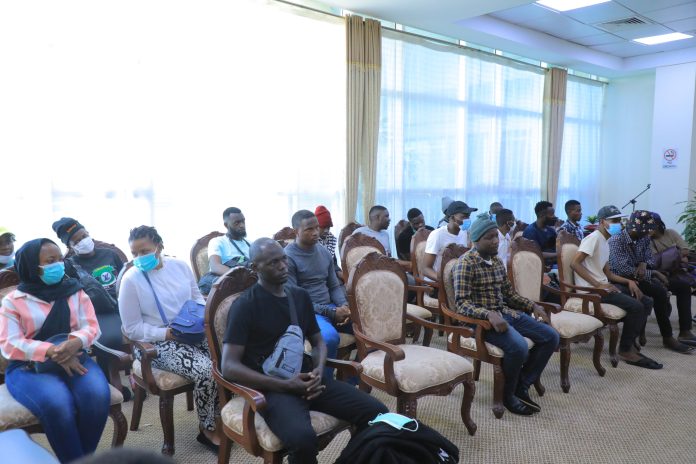
Based on the above inconsistencies, representatives from seven EAC partner States: Uganda, Kenya, Tanzania, Democratic Republic of Congo, Rwanda, Burundi and South Sudan, led by the EAC Secretariat, have converged at the Standards House in Kampala, for a week-long meeting starting 15th April 2024, to harmonise procedures for calibration and verification of road tankers, to ensure consistent measurements within the EAC region. The development is aimed at facilitating intra-EAC trade of goods transported using road tankers.

“As we harmonise these procedures, the law should guide us. We have to abide by the laws in the different member states and also close the gaps used to commit malpractices that negatively affect trade.” Said Ms Stella Apolot, the Principal Standards Officer at the EAC Secretariat.

The Member states thus agreed to harmonise procedures for stamping of the measures (Dipstick Stamping and Name Plate Stamping), treatments of boosters and airbags, Calibration Charts information, Verification provers and Limits of error (Minimum Permissible Errors) for initial and subsequent verification of road tankers, among others. 

Besides developing a draft EAC procedure for calibration and verification of road tankers, the annual EAC Metrology Committee Meeting will also be held to review and develop the East African Metrology work plan for Financial Year 2024/2025.

Stories Continues after ad

Uganda doesn’t use fertiliser, their land is fertile due to East African Revival prayers-Kenya First Lady

Kenya's First Lady, Rachel Ruto says Uganda is blessed with fertile soils due to East African Revival Prayers in the early 1930s.

Kenya’s First Lady Rachel Ruto has claimed that Ugandans no longer plant their crops with fertiliser because the country is not only fertile but also receives enough rainfall throughout the year.

Speaking during a thanksgiving service at KICC on Monday, Rachel further claimed Uganda has been blessed because of the East African revival that swept the country in the 1930s, where ‘God blessed them with fertile land and rains.’

It’s these prayers, according to the First Lady, that saw Ugandans start planting their crops without fertiliser.

“In Kenya we see our President talk about fertilisers for our farmers. In Uganda, they don’t use fertilisers. Their land is very fertile and there is enough rain. I came to discover one thing; it is the East African Revival that swept Uganda and some parts of East Africa,” Mama Rachel said.

She narrated how in 2022 she visited Uganda and found the country very green, while Kenya was dry and people were suffering.

The First Lady said she went down on her knees and prayed for rain.

She urged attendees of the Thanksgiving service to embrace prayer and always thank God for everything.

Further, Rachel wished that, just like Americans have a Thanksgiving holiday, Kenya will one day have such a holiday to pray and give thanks.

Stories Continues after ad

Trial of ex-LRA rebel Thomas Kwoyelo kicks off in Gulu

Thomas Kwoyelo

The trial of Thomas Kwoyelo, a former commander of the rebel Lord’s Resistance Army (LRA), has kicked off at the International Crimes Division (ICD) of the High Court in Gulu.

The defense has lined up fifteen witnesses to defend Thomas Kwoyelo, led by Evans Ochieng. The witnesses will defend him against 78 counts of war crimes and crimes against humanity.

Submissions by the witnesses are expected to be completed within three days, before the three-judge bench delivers their judgment within three weeks.

Kwoyelo’s trial resumed on April 17, 2023, at the International Crimes Division of the High Court (ICD) sitting at Gulu High Court in Gulu City, Northern Uganda; however, it stalled due to a lack of funds.

Having commenced the trial on September 24, 2018, the court had its first prosecution witnesses testify in March 2019, and since then, trial sessions have been held periodically between Kampala and Gulu.

Kwoyelo is grappling with 78 of the 93 counts of murder, aggravated robbery, extensive destruction of property, causing serious injury to body or health, and inhumane treatment, rape, and torture, among others, that he is alleged to have committed against the civilian population of northern Uganda, southern Sudan, and the northeastern regions of the Democratic Republic of the Congo (DRC).

Kwoyelo was abducted by the LRA on his way to school in 1987, remained in captivity, and later became a colonel.

The worst attack of the paramilitary group that was under the leadership of Joseph Kony occurred in Haute-Hele Province (DRC) in December 2008, the so-called Christmas massacre, where over 200 people were killed and over 800 houses razed down.

The rebels split up into groups to attack the villages of Faradje, Batande, Duru, Bangadi, and Burgi. They waited until people had gathered for Christmas festivities, then surrounded and killed them with axes, machetes, and clubs.

In March 2009, Kwoyelo was injured during hostilities between the Ugandan army and the LRA in the DRC and brought into Uganda for medical treatment and subsequently into custody.

His trial, however, commenced in July 2011. Before ICD, a division of Uganda’s High Court Constitutional Court resolved that the suspect’s trial should stop as it found grounds for the failure by the DPP and the Amnesty Commission to act on Kwoyelo’s application. In 2015, the Supreme Court decided that Kwoyelo’s trial should resume.

Stories Continues after ad

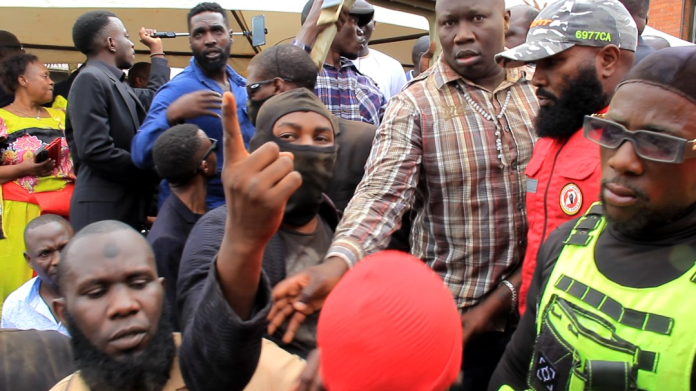
Businesses in Kampala at standstill as trader’s protest over EFRIS

Traders in Kampala under their associations, Federation of Uganda Traders Associations (FUTA) and Kampala Capital City Traders Association (KACITA), say they will not reopen their businesses for five days until URA reverses the use of EFRIS and President Museveni meets their leaders.

Today morning, shops in downtown Kampala were closed, with police and the military seen patrolling the area. Kikuubo Business Operating Area was also closed but security officers ordered that it reopened.

The same situation has been reported in Jinja Luweero and Masaka City where shops remained closed.

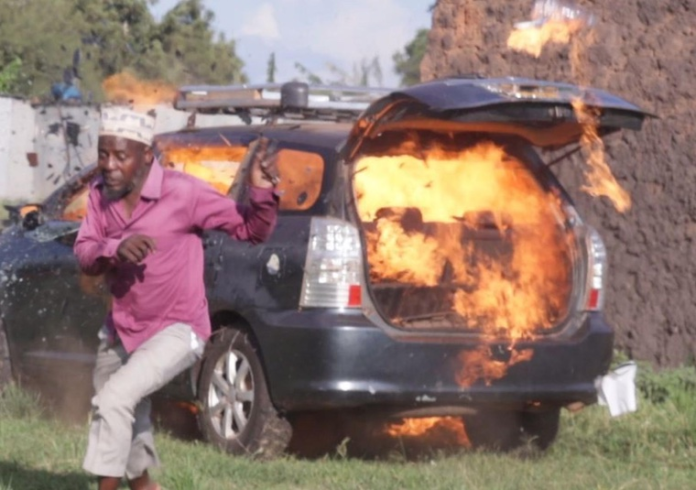
Some of the traders could be seen seated outside their closed shops. Some attempted to burn tyres in the protest but security quickly put out the fire and arrested others.

Kampala Central Mayor Salim Uhuru voiced his support for the traders protesting the Electronic Fiscal Receipting and Invoicing Solutions (EFRIS) system by URA. He said despite his affiliation with the ruling party, he acknowledges the tax system’s negative impact on the business community.

Commotion erupted at Arua Park, Kampala, after a police patrol car (UP 00005) allegedly knocked a boda rider only identified as Onviti, while he was seated on his motorcycle. Onviti was rushed to the hospital for treatment. Traders, angered by the incident, attempted to confront the police driver, who fled to the Nile Coach Police Post within Arua Park for safety.

Issa Ssekito, Spokesperson of KACITA, said EFRIS is a victim of circumstance and that the government has been ignoring their other concerns.

“There have been issues that have not been solved and EFRIS is just a switch to the light on those issues. We have been talking about how garments are being taxed in kilograms. We also raised the issue of the Chinese who are the manufacturers but bring goods to town and also set up shops that compete with the traders,” he said.

“If EFRIS had been implemented by the guidelines that were given to us, this EFRIS wouldn’t have been bringing problems like it is,” he added.

Ssekito also revealed that the traders were meeting the Minister of Finance over the matter.

“Seems we have been meeting juniors. We can meet with the President after to inform him about what we have been discussing,” he added.

Pamela Natamba, the Partner and Head of Tax, PwC Uganda, said: “People have not understood EFRIS and that’s a challenge. If the sensitization through TVs has not worked, let’s try another method but more sensitization is needed. EFRIS is the tip of the iceberg. There is a lot that has been going on. Traders need to understand tax and know that EFRIS is just a mechanism. Do they understand that?”

But Twaha Kayondo, the Domestic Tax Officer at URA, said: “On the side of URA, we are willing to have a dialogue and we always dialogue with the traders but some issues can’t be solved by us rather the line ministry, Ministry of Trade.”

URA has continued to enforce EFRIS, saying it has led to an increase in tax collection in the central business district by 500 percent and has also reduced incidents of underreporting sales by many traders. Kacita has planned their strike to start next Thursday.

However, Speaker Anitah Among has called for dialogue to resolve the current stand-off between city traders and government over the implementation of EFRIS.

Stories Continues after ad

Is Geraldine Ssali a rotten tomato in public service basket?

Ms Geraldine Ssali

For almost a month now the Permanent Secretary in the Ministry of Trade, Industry and Cooperatives (MTIC), Geraldine Ssali Busuulwa has been featured in the local media for a bad reason.

Ssali who is synonymous with indiscipline wherever she serves is said to have slapped one Sandra Aneno, a senior legal officer in MTIC over unclear circumstances. Ssali is also accused by her Minister Francis Mwebesa of trying to sack Anemo without following the established guidelines.

Insiders in MTIC says indeed Ssali slapped Aneno, and told her bodyguard to rough up Aneno, even though the PS has tried to cover it by using Victoria Nansikombi, senior human resource officer in MTIC to pin Aneno with allegations of indiscipline. In fact, the anonymous worker in MTIC says Ssali and Nansikombi should be disciplined for attempting to tarnish Aneno’s image in the media in an attempt to cleanse the ills of Ssali.

“Going backwards, Ssali is a person who thinks she is untouchable and blameless when it comes to government work. She thinks she is the alpha and omega at the ministry, forgetting that we have a minister at the top,” an insider said, adding “that is why minister Mwebesa is mad at her.”

The officer said the explanation that Aneno was frustrating the settlement of new trade Minister Mbadi are false, and do not erase the fact that Ssali is a badly mannered senior government officer that should not be holding that position. “I don’t know whether you have ever observed her facial expression when confronted with a challenge. She looks bad,” the official said.

Backwards the NSSF Board of Directors, at its meeting on March 14, 2016, suspended Ssali as the NSSF Deputy Managing Director for “gross insubordination contrary to the Fund’s Human Resources Code of Conduct.” According to a statement released then, “the decision is in line with the Board’s mandate, the Fund’s Human Resources Manual (Policy & Procedures) and Section 63 of the Employment Act (2006).”

Ssali who briefly acted as NSSF MD, was not happy that Richard Byaruga was selected to be her boss and as such she kept on showing acts of insubordination towards him, the NSSF Chairman Kaberenge and the Finance Minister Matia Kasaija. So Ssali is not new to controversy in public service.

Further, Ssali, according to a recent parliamentary report, she one of those people who mismanaged money meant for cooperatives after she undermined the Inter-ministerial Committee established by advice of Cabinet and set up her own in MTIC. She is said to have given Bwavu Mporogoma Cooperative billions of shillings irregularly, from which her husband Busuulwa benefited.

This is how Ssali runs MTIC, and one can see that she always disrespects those above her. Ugandans have not forgotten that she was also involved in a recent scandal at MTIC, forcing the PSST to advise that she be relieved of the role of Accounting Officer.

Stories Continues after ad

Museveni grants Wamimbi, Aliker official burials

RIP Amb. Wilson Wamimbi.

President Yoweri Kaguta Museveni has granted official burials to recently fallen two great citizens; Former Umukuka of Bamasaba Wilson Wamimbi and Ex-Minister, Dr Martin Aliker.

The announcement was made by Milly Babalanda, Minister in charge of the Presidency.

“His Excellency the President of the Republic of Uganda, Gen (Rtd) Yoweri Kaguta Museveni, has granted an official burial to the following recently deceased eminent persons: Former Umukuka of Bamasaba Wilson Wamimbi and Former minister, Martin Aliker,” Babalanda revealed.

She mourned, “We extend sympathies to bereaved communities and families and pray for the souls of the deceased loved ones to rest in eternal peace!”

Umukuka has been the chief elder of Bugisu. He was also a former Chairman LCV of the then Mbale District which comprised the following districts today, Mbale, Mbale City, Sironko, Manafwa, Bududa, Bulambuli and Namisindwa.

He was also briefly appointed Uganda’s Ambassador to Canada before he returned home to be elected the first Umukuka of Bugisu. The Umukuka is the Chief Elder of the Bagisu or rather known as Bamasaba who are found both in Uganda and Kenya.

Dental surgeon and businessman, Dr. Martin Aliker died yesterday. At the time of his death, he was the Chancellor of Victoria University, Uganda, a private institution. Dr. Aliker served as senior adviser to the President of Uganda and has sat on the boards of directors of nearly forty Ugandan companies.

Aliker was born in Gulu District on October 21, 1928, to Rwot Lacito Okech and Julaina Auma, the daughter of Musa Ali, the first ordained Anglican priest in the region of Acholi. He attended Gulu High School for his primary education before transferring to Kings College Budo for his O-Level studies.

Starting in the 1960s, Aliker began buying shares in blue chip companies, including the Uganda Commercial Bank and the National Insurance Company. As of October 2014, Aliker was a shareholder in the following publicly traded Ugandan companies: Stanbic Bank Uganda, Uganda Clays Limited, Nation Media Group, National Insurance Corporation, and East African Breweries, among others.

He sits on the boards of many of these companies and is the chairman of Uganda Clays Limited.  From 2004 until 2014, he served as the founding chancellor of Gulu University, a public university. He was also the best man to President Milton Obote.

Stories Continues after ad

Parliament approves Shs200b for maintenance of Kampala roads

More taxes less development.

Parliament has approved an additional Shs157 billion to Kampala Capital City Authority (KCCA) for reconstruction and maintenance of city roads in the 2024/2025 financial.

The report by the Committee on Presidential Affairs on the Ministerial Policy Statement and Budget Estimates of the entities under Presidential Affairs was adopted during plenary sitting chaired by Speaker Anita Among.

Presenting the report, committee chairperson, Jesca Ababiku, said that the committee established that KCCA requires Shs200 billion to undertake road infrastructure development and maintenance but only Shs43 billion is provided in the Medium-Term Expenditure Fund ceiling.

“The committee observes that the poor state of roads characterised by potholes and clogged drains results in discomfort for motorists, increased travel time, breakdown of vehicles and motorcycles and accidents,” the report read in part.

The committee observed that whilst KCCA is projected to receive external financing of Shs549 billion, this intervention is projected to reconstruct and upgrade only 116 kilometres of the road network in Kampala while over 1,500 kilometres remain in a poor state.

“The committee recommends that additional annual provision of Shs157 billion be availed to enable KCCA cope with the current roads maintenance demands and deal with the problem of rampant pot holes on the city roads,” the report stated.

Muhammad Nsereko, Kampala Central Division Member of Parliament, said that Kampala is the face of the nation and yet the road infrastructure is dilapidated while the streets are littered with garbage.

“I request colleagues that since we are anticipating an increase in fuel levy and 50 percent comes from Kampala Metropolitan, let us make the City look good, we will attract more tourists and tax payers will be able to see tangible results and be motivated to pay taxes,” said Nsereko.

Furthermore, Kiira Motors Corporation (KMC) is expected to transition into commercialisation after the legislators approved a recommendation for an additional Shs134 billion for operationalisation of the Jinja- based vehicle plant.

According to the committee’s report, it was established that KMC requires Shs166.64 billion to operationalise the plant but only Shs32.5 billion is provided for.

“Kiira Motors Corporation is one of our best projects, they have assembled and facilitated production of 21 buses and to facilitate them to transit to commercialisation, we are requesting for Shs134 billion,” said Ababiku.

The funding gap, Ababiku said, will cater for support for construction, tooling and furnishing of the Kiira 4S master store, parts and materials for plant commissioning, human capital development and operating expenditure.

KMC is a government enterprise established to champion the development of the domestic automotive value chain for job and wealth creation.

Stories Continues after ad

Why was Uganda removed from Agoa?

Mr. Brad Brooks-Rubin.

Mr. Brad Brooks-Rubin,

Senior Adviser
Office of Sanctions Coordination
U.S. Department of State

RE: WHY WAS UGANDA REMOVED FROM AGOA ?

Uganda  has endured the AGOA sanctions and bad image for its exports what we perceive as unjust and illegal removal from AGOA  imposed by your USA Government .

Against this backdrop, I would like to seek further clarification on how , what criteria, you used in arriving on Uganda’s removal from the list .

I am  particularly concerned as a Ugandan since this removal deters other export markets that want to buy our products .

The  explanation on U.S. sanctions will throw light on your notable shift in U.S. foreign policy towards Uganda , possibly wanting to destroy our commercial diplomacy with the world .

Millions of Ugandan farmers  are seriously intrigued  about the United States’ AGOA sanctions and your ongoing denial of sanctions against Ugandan exports in general.

The removal of Uganda from the list is viewed by Ugandans  as a direct affront to their sovereignty. The assertion that sanctions solely target AGOA is unacceptable and must be unequivocally condemned.

Uganda, as a sovereign nation, refuses to be intimidated by the actions of the U.S. government. The selective approach on which African countries the USA targets worries millions of Ugandans.

Our nation will maintain the steadfastness which is imperative for Uganda to uphold its principles and VALUES. These are the values that make us a nation .Just as USA has principles in the culture ,Uganda stands on its principles and our sort of nationalism stands on those values.

As Ugandans we believe that the good days of Ronald Reagan’s  policies of containment are gone and Rogue administrations have changed paradigm shift and lost USA  international reputation.

Lastly , we notice that your sanctions are also targeting our institutions and heads of those institutions which govern the State of Uganda. It is against the international human rights to target, profile others without basis.

The way things look like, we are on the road towards ICJ to seek clarification as to why Uganda’s international human rights have been profiled and violated by selective sanctions. 

Furthermore, your recent actions have harmed American investments opportunities in Uganda as safe destination for American businesses. The USA skewed selective foreign policy that has not helped must change in global context.

In almost all regions of Africa, there are resentments to your FOREIGN POLICY of using Fake pretexts of human rights violation yet you remain the biggest human Rights violators across the world.

This is the last letter , the next action will be at higher levels of international Justice when several nations in Africa might take collective measure to expose the double standards .

Unlike Uganda which you torment with sanctions ,Niger people are today demonstrating on the streets of Niamey as they want you out of Niger .

Hoping that you expeditiously reply to this later ,

God bless Uganda

Yours truly

Dr.David Nyekorach -Matsanga
Founder/Chairman of PAF
London United Kingdom
africastrategy@hotmail.com
15.04.2024

Stories Continues after ad

Speaker inspects Namboole Stadium, urges perfection ahead of CHAN

Speaker and Namboole officials.

Speaker of Parliament Anita Among has led a Parliament team, including Commissioner Mathias Mpuuga, to inspect works at Mandela National Stadium.

Speaker Among was taken on a guided tour by army officials supervised by Sports State Minister Peter Ogwang and was satisfied with the work done by the Uganda People’s Defence Forces (UPDF) Engineering Brigade.

“I did not expect to see what I have found here; I want to tell the UPDF Engineering Brigade that I am extremely impressed with what they have done,” she said.

To ascertain the exact amount of money needed to get the work done to completion, Parliament will conduct a forensic audit. She also asked Mpuuga to take time to properly tour the facility and report to Parliament on areas that need improvement.

“We shall do a forensic audit to see how much money we have spent on the project and how much more needs to be done due to the proposed variations,” she said.

Minister Ogwang directed contractors to complete all pending works and hand over the facility in two weeks, in readiness for the African Nations Championships (CHAN) competitions in June. The stadium is also part of Uganda’s plans for the Africa Cup of Nations (AFCON) competition in 2027.

With Shs80 billion so far released for the project, final works required a full pay-up of the Shs97 billion appropriated.

Parliament last week pressed Finance State Minister Amos Lugoloobi to release the remaining Shs17.7 billion to have work completed.

Speaker Among, upon Ogwang’s request, ordered Pioneer Bus Limited vehicles parking in the stadium’s spaces to be removed forthwith ahead of inspections.

Stories Continues after ad

USAID donated Shs95b towards refugee communities in Uganda

TO BE VERIFIED: Refugees at the Bidibidi Reception Centre in Yumbe, Northern Uganda.

The United States, through USAID and the Department of State, has provided $25 million (Shs95 billion) in additional humanitarian funding to the United Nations High Commissioner for Refugees (UNHCR) and the World Food Program (WFP) to assist refugees in Uganda facing ongoing food insecurity and the compounding impacts of conflict in the region.

Jessica Jennings, the Spokesperson of USAID they are providing $11 million (Shs41.8 billion) to WFP, while the Department of State is contributing more than $14 million (Shs53.2 billion) to UNHCR.

These additional contributions to WFP and UNHCR will support the provision of life-saving monthly food assistance, health care, education, and other emergency relief to the more than 1.6 million refugees that Uganda hosts.

Uganda hosts the highest number of refugees of any African country and received more than 130,000 new refugees last year alone, primarily fleeing conflicts in South Sudan, the Democratic Republic of Congo, Somalia, and Sudan. This additional funding will be vital to meeting urgent needs in the country.

“We urge other donors to join us in stepping up to support WFP and UNHCR to assist the most vulnerable people affected by conflict and other crises throughout the region,” she said.

She said the United States is committed to ensuring our assistance is provided without discrimination, including in Uganda, where we have significant concerns about the impact of the Uganda Constitutional Court’s recent decision to uphold most aspects of the Anti-Homosexuality Act.

Stories Continues after ad