Stanbic Bank
Stanbic Bank
17.6 C
Kampala
Stanbic Bank
Stanbic Bank
Home Blog Page 259

Stanbic Business Incubator launches two programs to boost access to finance for SMEs in Uganda

Chief Executive of the Stanbic Uganda Holdings Limited (SUHL), Francis Karuhanga.

The Chief Executive of the Stanbic Uganda Holdings Limited (SUHL), Francis Karuhanga has officially launched two innovative programs aimed at supporting businesses access finance, fostering economic growth within Uganda’s dynamic SME sector.

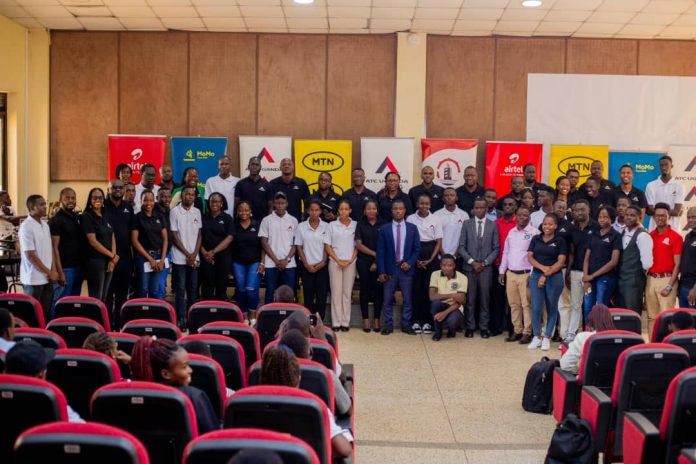
Dubbed the Stanbic Accelerator Program (SAP) and the Supplier Development Program (SDP) and unveiled in Kampala on Thursday, the two are under the implementation of the Stanbic Business Incubator Limited (SBIL), which is a subsidiary of SUHL.

“Each year, we inject about sh2 billion into the Incubator. The programs mark a significant milestone in SBIL’s commitment to empowering entrepreneurs and small business owners across the country. These initiatives are designed to equip SMEs with the essential skills, knowledge, and resources needed to thrive in today’s competitive business landscape,” Karuhanga said.

SBIL has partnered with MTN, Uganda Chamber of Mines and Petroleum, Uganda Registration Services Bureau (URSB), NSSF, GIZ, Petroleum Authority of Uganda and many more strategic partnerships, bringing together key players in the sector to support SMEs that enroll for these programs to scale and create social impact.

Justina Ziraba, MTN Business representative, said MTN will work with the Stanbic Incubator to enable targeted businesses to build digital identities and digital brands; Specifically, MTN will be providing training and coaching experts for digital transformation and tailored-MTN business solutions for SMEs.

“MTN will also contribute to the Stanbic-SME awards Gala, an event which will recognise and award outstanding SMEs that demonstrate excellence during the capacity-building program,” Ziraba said.

Tony Otoa, the Chief Executive of Stanbic Business Incubator Limited, said strategic partnerships have enabled SBIL impact over 3,000 businesses in three years, while urging entrepreneurs to unlearn and relearn as they prepare their businesses for the future especially a future affected and driven by Artificial Intelligence (AI).

“We want to have a 99% support rate to all the entrepreneurs who seek access to finance,” Otoa said.

The Stanbic Accelerator Program is tailored to support SMEs in their journey towards growth and investment readiness. Through this program, business owners will gain invaluable insights and training to enhance their company’s growth prospects. Key focus areas include building competence in capital raising, fostering resilience, and creating employment opportunities. Furthermore, the program will facilitate the development of a robust pipeline for potential investors, thus fostering sustainable economic growth.

Meanwhile, the Supplier Development Program in alignment with Uganda’s growing energy sector, will demystify opportunities and empower SMES to participate actively.

Stanbic Incubator’s Programs Manager Nelson Kasadha said, “Participants will receive comprehensive training and guidance on navigating the complexities of the energy market, including market trends, opportunities, and challenges. Moreover, the program will facilitate crucial market linkages, connecting SMEs with potential partners and customers. Additionally, participants will gain insights into accessing grants and loans to fuel their growth and expansion within the energy sector.”

“We are thrilled to introduce these transformative programs aimed at empowering SMEs and driving economic prosperity in Uganda. By providing access to finance, training, and market opportunities, we are confident that these initiatives will unlock new pathways for growth and innovation within the SME ecosystem,” Kasadha said.

Stanbic Business Incubator Limited (SBIL) is a subsidiary of Stanbic Uganda Holdings Limited, dedicated to supporting the growth and development of SMEs in Uganda. Through a range of innovative programs and initiatives, SBIL aims to foster entrepreneurship, drive economic empowerment, and create sustainable impact within local communities.

Stories Continues after ad

Kanyamunyu released from prison after serving three years

Mathew Kanyamunyu

Executive Director of Quantum Express Logistics, Mathew Kanyamunyu has been released from prison after serving his sentence for shooting dead child rights activist Kenneth Akena in 2016.

Kanyamunyu was sentenced to five years and one month in jail but he has served three years and five months upon remission.

Kanyamunyu, his brother Joseph Kanyamunyu and his girlfriend Cynthia Munwangari were accused of murdering Kenneth Akena, a child rights activist on November 12, 2016 around Lugogo bypass. 

Prosecution alleges that on November 12, 2017 while at Game Stores, Kanyamunyu, in company of his girlfriend, allegedly shot Akena and drove him to Norvik hospital, where he died.

His brother Joseph Kanyamunyu was implicated on the condition that the telecom printouts indicated that he was contacted immediately after the incident, which puts him in position to be having some knowledge on the incident.

In 2020, Kanyamunyu opted for Mato Oput. He went and apologized to the cultural leaders of the deceased Non-government organisations (NGO) worker in Gulu. Sources say before his release, he had developed health condition that necessitated him for treatment. Prison authorities further transferred him from Kityala to Luzira for easy monitoring.

In the traditional ritual Mato Oput practiced in Acholi, the culprit apologizes for the crime he committed against an individual or family. The ritual allows the two families to reunite, dine and reconcile.

In Acholi, one can only undergo this kind of cleansing after accepting the crime committed. He was captured kneeling before cultural leaders for over an hour.

Mato Oput is the end result of ‘Culu kwo’ compensating the bereaved family after some time. Usually the spirit of the dead will ask for it after inflicting spiritual revenge to the killer’s family.

According to cultural analysts in Acholi region, he should undergo the truth telling to let the world know what exactly happened on that day, accept compensation or face the full wrath of ‘cen pigwang’ in Acholi or full prosecution.

Late Akena came from the Payira clan also headed by Paramount Rwot Achana. There has been protracted dialogue between the two families of Kanyamunyu and the Akena. According to the source, chief Achana did not attend the protracted meeting.

Kanyamunyu was ordered to pay 10 herd of cattle, an unrevealed amount of money and others.

This is where the justice system in Uganda may need to learn from Mato Oput which is practiced widely among Acholi. It leaves both parties united. Not bitter and divided by prosecution which is mostly corruptible given the gravity of deaths in societies.

Stories Continues after ad

UK gov’t temporarily suspends export taxes on East African flowers

City tycoon Sudhir Ruparelia at Rosebud flower farm. He among those that will benefit from the UK tax duty on flower export.

The United Kingdom government has temporarily suspended duty tax on flower imports from East Africa.

The UK government has said through regional High Commissions in Nairobi, Kampala, Addis Ababa, Dar es Salaam, and Kigali.

“Thursday April 11, from today, the UK has temporarily removed export tariffs for cut flowers, to make trade with the UK easier and cheaper for growers in East Africa and beyond,” the UK government said in a statement. 

Unlimited quantities of flowers can now be exported to the UK at 0% tariff, even if they transit via a third country.

This is particularly important for East African flower growers who transport their blooms via third-countries or auction houses before they arrive in the UK.

Regional pears including Kenya, Ethiopia, Rwanda, Tanzania, and Uganda—sell the bulk of cut flowers to Europe through auctions near Amsterdam.

The UK, which formally withdrew from the 28-member European Union bloc in January 2020, expects the policy action to benefit its citizens through reduced “price, seasonality and variety”.

The UK Trade Ministry further sees the move as boosting trade and strengthening economic ties with the East African Community bloc.

“The UK’s relationship with East Africa is rooted in mutually beneficial trade. This additional flower power will allow trade to bloom,” UK’s Trade Commissioner for Africa John Humphrey was quoted in the statement. “We go far when we go together… or in this case, we grow far when we grow together, further reinforcing the UK’s commitment to the expansion of trade in East Africa.”

“The move aims to increase trade and further strengthen the economic relationship between the UK and the East African region. UK consumers could win big too – on price, seasonality and variety.”

The suspension of 8% duty for cut flowers applies across the world but will be a big win for major flower-growing regions in Kenya, Ethiopia, Rwanda, Tanzania, and Uganda. The duty suspension will remain in place for two years from April 11, 2024 to June 30, 2026.

In 2022, Kenya was ranked as the fourth biggest exporter of cut flowers in the world, with 6% of global cut-flower exports. Ethiopia is the second largest cut flower producer in Africa, making up 23% of Sub-Saharan African exports. In 2023, the value of trade in cut flowers between the UK and Ethiopia was valued at £12.6 million, Rwanda at £727,000, £839,000 from Tanzania, and £1.1 million from Uganda.

Stories Continues after ad

Roko questioned over slow Parliament building extension construction work

The Roko Construction Limited has been questioned for slow construction works at parliament which started in 2013.
Nakasekke South Member of Parliament says parliament should hold the company accountable to explain the delayed completion of the parliament extension which was awarded to Roko over 10 years ago.
“Parliament plays an oversight role and therefore should be in position to explain this annoyingly slow work despite the government agreeing to financially support this private company,” he said.
In 2022, the government purchased 150,000 preference shares in Roko Construction Limited worth Shs202.13 billion which would be paid in five years to support the construction company which had been choking on debts.
The payment will consist of shares purchased at a par value worth Shs150 billion and a share premium value estimated at Shs57.6 billion.
Roko had faced severe liquidity challenges that constrained its ability to execute contracted projects that have adversely affected payments to its various suppliers and the financial sector.
The company was in 2022 said to have been significantly indebted and its indebtedness as of May 31, 2022, was Shs202.4 billion.
Mr Lutamaguzi said so far, the Ministry of Finance has disbursed over Shs20 billion to the company. “We have so far given them Shs20 billion,” he said.
Before the government intervened to support the company on the directive of the president, it also had contingent liabilities from bank guarantees of Shs130.9 billion while its indebtedness to financial institutions was $35.7 million and Shs20.7 billion. Bank guarantees issued for ongoing projects amount to 130.9 billion, which would be retired as projects are executed, and dues to local suppliers are Shs46.8 billion.

Stories Continues after ad

Minister Peter Ogwang tasked to account for Namboole stadium renovation

Namboole Stadium renovation.

Speaker Anita Among has tasked Peter Ogwang, Minister of State for Sports to provide an accountability of the Shs97Bn spent on renovations of Mandela National Stadium in Namboole, after the latest inspection report by Confederation of African Football (CAF) indicated that the current works being done by UPDF Engineering brigade are below the required standard.
“Let the Minister give us a status of the progress of Namboole and let him also give us accountability of the Shs97Bn. This is a very serious issue, all Ugandans have been excited about AFCON, but at the same time that there is no way we can go and play in another country, remember we are supposed to play with Algeria, but then, Morocco has offered us to go and play in Morocco for free, but Algeria has said, we aren’t going to Morocco, because of their issues, so, what is the way forward?”Among said.
The Speaker’s directive followed a concern raised by John Baptist Nambeshe , Opposition Chief Whip who expressed disappointment towards the failure by Minister Ogwangto honour his numerous pledges about the Namboole stadium construction works.
“The inspection report has found the stadium works are not compliant with the requirements and it hasn’t been approved. The Minister had made an undertaking that by the time of inspection, the works will be ready, he has let us down and I would like the Minister to report to us what has gone amiss. Moreover these works, if we have an opportunity, if they can be expedited we can have a second chance because we don’t have another venue to host this FIFA World Cup United 2026 qualifiers,” Nambeshe said.
Silas Aogon (Kumi Municipality) called for the resignation of all people behind the shoddy works at Mandela National Stadium and a detailed explanation on what went wrong during the renovation works.
“I think it is proper that when the Minister is speaking, they give us a proper statement about the gaps, is it the money which was the problem? What was the issue so that we get to know early enough, otherwise, for us to miss this actually the Minister or the person responsible will have to vacate their position because this time as Uganda, we can’t lose that opportunity. You assured us, told us that things are going to be okay and we are now here, we are asking, what is wrong?” noted Aogon.
Jonathan Odur (Erute South) warned that the failure by the Government to address issues raised in CAF’s inspection report on the quality of works at Namboole would threaten Uganda’s chances at hosting other tournaments like CHAN and AFCON, in which the country submitted its bids.
“The Minister promised so far there are five deadlines. This lack of seriousness and taking the House for granted and Ugandans is what the Minister has to address today. That when you come here and make promises and reassure the country the country and the country is excited. That Namboole is the pre-condition for us to host CHAN, and if you are satisfied, then you can host AFCON and by December 2025, we should have that Stadium ready. Would the Minister address us in light of the bid we have put to host AFCON and CHAN because Namboole was the only stadium that was earmarked to host CHAN,” Odur said.

Stories Continues after ad

Uganda’s Ambassador to Algeria has no official car, travels in taxi

Amb. Alintuma Nsambu

Uganda’s Ambassador to Algeria, John Chrysostom Alintuma Nsambu, is reportedly travelling in taxis for lack of official representational vehicles, according to the information obtained by Eagle Online.

The development was revealed by Pingire County MP Fred Opolot during the presentation of the report of the Committee on Foreign Affairs on the budget estimates for the votes that follow under that sector.

The report indicates that the Ambassador in Algeria has no official car, and he has used taxis for the last eight years. Therefore, the embassy requires Shs700 million to purchase a car for the Head of Mission and a utility van.

“Some missions have no official representational vehicles. This is very embarrassing because some heads of missions use public means to perform mission duties. Many other missions that still have a semblance of official representational and utility vehicles have vehicles that are outdated, completely worn out, and beyond the standard emissions levels as required by the host countries,” the report indicates.

In some countries, like India, the Ministry of External Affairs of lndia has occasionally cautioned the Uganda Mission to dispose of the vehicles as soon as possible in compliance with the set emission regulations. This calls for the urgent provision of the required funds as indicated herein to enable the missions to purchase decent representative cars and utility vans.

It is not only Algeria; the Uganda High Commission in New Delhi requires Shs800 million to purchase a new representational car for the Head of Mission and a utility van; Nairobi requires Shs180 million to purchase an executive utility van; Tehran requires Shs465 million to purchase a new representational car for the Head of Mission; Malaysia requires Shs637 million and Shs600 million is required to purchase a representational car and a utility van for the Consulate in Dubai.

Stories Continues after ad

Mpuuga to Bobi Wine: You have no powers to suspend me as Deputy President

Mathias Mpuuga.

Troubled former Leader of Opposition in Parliament Mathias Mpuuga has revealed that Robert Kyagulanyi alias Bobi Wine, the National Unity Platform party principal has no authority to suspend him from his position as party deputy president.

“I am well acquainted with the party’s constitution and the president’s powers. Suspending a vice president is not within his jurisdiction,” he asserted.

Mpuuga said that he paid no attention to his suspension because it lacked a legal foundation based on the party’s constitution.

“A political party is a national asset and a public good. It should not be used to satisfy personal egos. The actions taken must consider the stakeholders involved,” he added.

Mpuuga further noted that the NUP has not progressed beyond its formative stages to become a fully organized entity capable of achieving its objectives.

In late March, Kyagulanyi suspended Mpuuga from his position as Deputy President of the Central Region, citing allegations of corruption.

During a meeting involving Mpuuga and three NRM-nominated Parliamentary Commissioners, Kyagulanyi disclosed that an allocation of Shs1.7 billion was made under the pretext of “Service Awards.” It was alleged that Mpuuga personally received an allocation of Shs500 million.

Ever since, Mpuuga has vowed to resist internal issues and manipulations within the NUP that could retard the party’s growth.

In response to mounting pressure and calls for his resignation, Mpuuga accused certain elements within the party of orchestrating a deliberate and well-funded campaign to tarnish his reputation.

Despite facing persistent attempts to undermine his work, he remained dedicated to serving above personal interests and prioritizing the restoration of integrity in national and party politics.

On March 18, 2024, the NUP Secretary General, David Lewis Rubongoya, wrote to Speaker Among, informing her that the Party’s National Executive Committee had decided to withdraw Mpuuga’s nomination and subsequently recalled him from the position of Commissioner of Parliament.

Mpuuga was replaced by Francis Zaake, the lawmaker representing Mityana Municipality.

Speaker Among responded, stating that the NUP lacks the authority to recall Mpuuga from the Parliamentary Commission.

She explained that Parliamentary Commissioners are elected by Parliament by the law, and the role of political parties is limited to nominating candidates for the election.

In recent media interactions, Mpuuga expressed his determination to remain within the party while criticizing its lack of direction and inability to guide disheartened members.

He outlined his vision for the NUP, pledging to address issues such as nepotism, corruption, and the absence of internal democracy through a reform process.

Stories Continues after ad

UNOC to import first batch of fuel products in June

The Uganda National Oil Company (UNOC) will import its first batch of petroleum products through Mombasa port in June 2024 after getting a license from Kenya’s Energy and Petroleum Regulatory Authority (EPRA).

Last month, Kenya granted UNOC a license to import petroleum products through Mombasa port, which ended a standoff that saw the country’s two presidents get involved. As a result of the feud, Uganda also has since explored the Tanzania route.

The Minister of Energy, Ruth Nankabirwa, said the delay to get the licence delayed UNOC’s plans.

 “We got the license this month, but it was too late for the products of April to come. So, we shall now place an order for June,” she said on Tuesday during the swearing-in ceremony of new UNOC Board members.

She explained that UNOC, under the new arrangement, will work with partners to ensure that pump prices come down as soon as possible.

While Uganda imports 90 percent of its refined petroleum products through Mombasa port, they have been handled by oil marketing companies operating in Kenya through the Kenya Open Tender System.

However, Uganda last year made a policy shift, which empowered UNOC to be the sole importer and supplier of all petroleum products.

UNOC will buy petroleum imports from Vitol Bahrain and Ms Nankabirwa said the government will construct a storage terminal in Namwabula, Mpigi District to ensure that the oil and petroleum products market is stable and pump prices are manageable.

Mathias Katamba, who took over from Emmanuel Katongole as the new UNOC chairman, said they will work with partners to ensure that pump prices come down as soon as possible.

The seven-member board also has six non-executive directors, including Eng Herbert Mugizi, Ms Justine Isenyi, Dr Ivan Lule, Mr Moses Kabanda, Dr Simon Echegu and Ms Zulaika M. Kasajja.

Stories Continues after ad

Principal Clerk Assistant at Parliament Kagoro is dead

RIP John Bosco Kagoro.

The Principal Clerk Assistant at Parliament, Kagoro John Bosco, has passed on. His death was confirmed by Speaker of Parliament Anita Among during the plenary, which kicked off earlier in the morning.

During the plenary, Members of Parliament observed a moment of silence in honour of the late Kagoro, a staff member of Parliament who died yesterday after a short illness.

“I regret to announce the death of a distinguished staff member of the Parliamentary Service, Kagoro John Bosco, who at the time of his death was a principal clerk assistant,” she said.

Kagoro was a diligent staff member of Parliament who served as Clerk-at-Table and a Committee Clerk to various Committees, including Commissions, Statutory Authorities, and State Enterprises (COSASE), Local Government, and Appointments.

“On behalf of the Parliamentary Commission and myself, I relay condolences to the bereaved family, his loved ones, friends, the Clerk to Parliament, and the staff of Parliament. Funeral arrangements will be communicated in due course,” she said.

Kagoro has been a darling of many people in Kira Municipality where stays. There will vigil today at his home in Mulawa next to Makerere College School whereas will take place tomorrow at St. Charles Lwanga Catholic Church in Ntinda.

Stories Continues after ad

Energy Minister commissions Shs37b Biomass Plant in Luzira

The Minister for Energy and Mineral Development, Ruth Nankabirwa, has commissioned a Shs37 billion biomass plant at Uganda Breweries Limited in Luzira.

The unveiling of the plant marks a significant milestone in the organisation’s commitment to sustainability while demonstrating dedication to reducing its carbon footprint.

The facility represents a substantial investment by UBL and excellent progress in their decarbonising journey as envisaged in their Society 2030: Spirit of Progress sustainability action plan. Powered by locally sourced biomass materials, the plant also exemplifies UBL’s dedication to harnessing sustainable manufacturing while offering livelihood opportunities to local communities.

Nankabirwa said that by investing in biomass plants, UBL is not only reducing its carbon footprint but also contributing to the country’s energy security and economic growth.

She said the biomass project aligns with Uganda’s National Development Plan and Vision 2040, which prioritise sustainable development and environmental conservation.

“This project will not only create jobs and stimulate economic activity but also promote the use of clean energy, which is essential for mitigating the impacts of climate change. Uganda has increased its ambition to reduce greenhouse gas (GHG) emissions from 22% to 24.7% in the new climate change plan that presents the country’s intention to reduce greenhouse gas emissions, deal with the effects of climate change, and fulfil the aspirations of the Paris Agreement,” said Nankabirwa.

Speaking during the biomass commissioning, UBL Managing Director Andrew Kilonzo said, “Today, with the launch of this biomass plant, we have come closer to realising this goal, with the plant reducing our carbon emissions by 92%—8,000 metric tonnes of CO2 per year.”

He said that, as a responsible corporate citizen, UBL remains steadfast in pursuing sustainable practices and initiatives that benefit society and the environment.

Diageo Africa’s President Dayalan Nayager said the biomass plant is within the organisation’s promise to accelerate to a low-carbon world, in which it is committed to only using renewable energy by 2030 through becoming net zero carbon in its operations.

He said the organisation is also committed to reducing its value chain carbon emissions by 50% and using renewable energy across all our direct operations.

“The biomass plant, we are happy to report, has already reduced our carbon emissions by nearly 92%. We have not only done this in Uganda but have collectively invested over Shs180 million into green energy and water recovery solutions across Africa,” said Nayager.

The UBL Board Chairman, Jimmy Mugerwa, said, “Uganda Breweries Limited is the one of the few companies in Uganda that has an investment of such a scale designed to significantly reduce carbon emissions in the production processes. We urge all organisations across Uganda to emulate what Uganda Breweries is doing here today in their various operations and call upon the government to continue supporting these sustainability initiatives.”

“As a brewery, we already work closely with different ministries like the Ministry of Water and Environment, Finance Ministry, Trade, and Agriculture Ministries, and these collaborations have fostered the work that we do not only in replenishing the environment.”

Stories Continues after ad