Stanbic Bank
Stanbic Bank
22.9 C
Kampala
Stanbic Bank
Stanbic Bank
Home Blog Page 260

Proposed income tax to cause increase on prices of land  

The Ministry of Finance, Planning and Economic Development, in its plan to raise revenue in the next financial year has introduced Income Tax (Amendment) Bill, 2024 which seeks to introduce a new tax on disposal of non-business assets such as land which is seen to affect the prices of land in the country.

Based on Clause 3 of the Bill, the Ministry seeks to introduce a tax on the disposal of non-business assets at a rate of 5% on the profit made/gain from such disposal. The Bill specifies the affected non-business assets which include shares of a private company, land in cities or municipalities except the principal place of residence and rental property that is subject to rental tax under section 5 of the Act.

It should be noted that the government of Uganda intends to generate Shs1.902 trillion from the recently proposed taxes on cement, fuel, land transactions, mineral water, among others, in order to finance the Shs58.340 trillion budget for FY 2024/25.

However, this is not the first time that Government seeks to impose a tax on the sale of land other than commercial land. In 2020, government sought to introduce a withholding tax of 0.5% on the purchase price on the sale of land which is not a business asset by a resident person from another resident person. This tax was a withholding tax and the obligation to withhold was on the buyer. However, this tax was out rightly rejected by Parliament on April 15, 2020, arguing that this amounted to double taxation and was likely to increase the prices of land as sellers would not want to pay this tax.

Last year, government made attempts to re-introduce the tax by seeking to levy a withholding tax rate of 5% to be deducted on the gross payment made by a person who purchases any asset situated in Uganda. The major challenge with that tax was that it was to apply to depreciable assets and the assets of personal nature like used furniture, motor vehicles, computers, and all types of unspecified assets. However, government withdrew the proposal and maintained the provision on capital gains tax derived by a person on the disposal of a business asset

It is therefore shocking that a similar tax is being proposed this year under a special regime of capital gains tax on non-business assets. The tax on non-business assets has now been reintroduced as a stand-alone tax head as opposed to bringing it under the withholding tax regime.

Currently, tax is levied on disposal of only business assets as part of business income though there is a withholding tax of 6%. This new tax is aimed at covering gaps on disposal of non-business assets vis-à-vis disposal of business assets. The new proposal means that where the asset disposed of is not a business asset, the tax rate is 5% on the gain.

Recently URA has been grappling with an issue of disposal of land in cities such as Kampala and sought to impose a withholding tax of 6%. The situation has been exacerbated by Ugandans who deal in real estate that is, buying and selling land as part of their business. This was seen in the case of Makerere University Retirement Benefits Scheme v URA TAT Application No. 17 of 2021 where the seller of the land was involved in buying and selling real estate and claimed that the land was its stock and not a business asset. Court held that the seller was selling stock in trade and thus the purchaser had no obligation to withhold tax as the land sold was not a business asset.

There has been some conflict between URA and taxpayers as to what constitutes a business asset for purposes of withholding tax. This proposed law also seems to seek to reduce the conflicts between URA and the taxpayers on whether an asset is a business asset or not. If the proposed amendment is allowed, both business and non- business assets will be subject to tax on the gain at disposal.

The Bill proposes to tax non-business assets by introducing Section 5A to the Income Tax Act yet income from non-business assets is exempt under Section 21(1)(k) of the Act. Without amending Section 21(1)(k), there is potential for having two conflicting provisions.

The proposed amendment is likely to result into a ripple effect on prices of land. Practically, the vendors will either increase (by grossing up) the price of the land to cover for the additional 5% tax. Therefore, the proposed tax will be transferred onto the buyer thereby increasing prices of land.

Stories Continues after ad
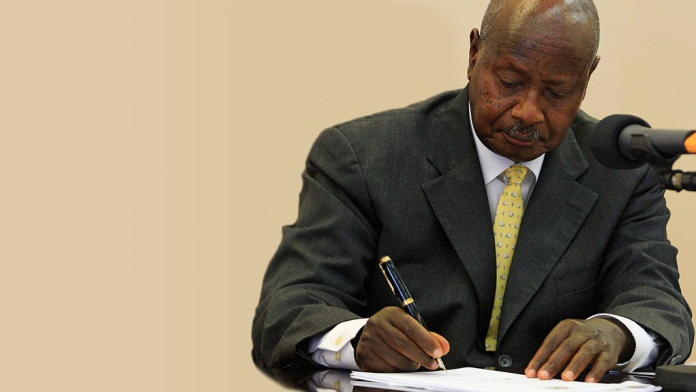
Museveni, EU Commissioner sign forest program agreement

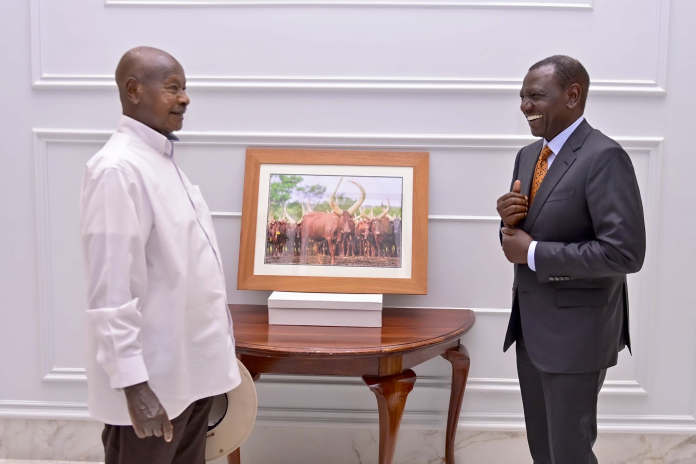
President Yoweri Museveni and European Union (EU) Commissioner, Mr. Virginijus Sinkevicius,during the launch.

President Yoweri Kaguta Museveni and European Union (EU) Commissioner, Mr. Virginijus Sinkevicius, have launched the new EU Forestry programme which will see Uganda benefit from the extensive experience of the EU in the forestry sector.

The launch took place on Tuesday at State House Entebbe.

“The European Union is making available grant financing to Uganda to the tune of Eur40 million (Shs167 billion) in new funding to tackle the root causes of deforestation in Uganda while promoting reforestation and sustainable economic development,” said Mr. Sinkevicius who is the EU Commissioner for Environment, Oceans and Fisheries.

He noted that the grant comes as a milestone that demonstrates common aspirations in achieving the European Green Deal objectives and the Global Gateway – the EU’s sustainable connectivity strategy.

“This includes enhancing the role of forests in the bioeconomy and nurturing our trade flows of wood material,” he added.

President Museveni welcomed the EU group and appreciated their support for the environment, saying it is great to protect the ecosystem including national parks and forest reserves. He added that the wetlands should be included in their conservation plans.

Both the EU and Government of Uganda have laid the groundwork for commercial forestry in Uganda, particularly in the last 15 years, through which the two have accumulated collective experiences and efforts to identify and implement inclusive solutions that strike a balance between different land uses, reduce deforestation, forest degradation and unsustainable conversion of natural ecosystems.

Commissioner Sinkevius congratulated Uganda for being among the first five countries in the world to sign a Forest Partnership Agreement with the European Union at the COP-27 in Sharm El-Sheikh, Egypt, where President of the European Commission, Ursula Von der Leyen ratified the Memorandum of Understanding on November 8, 2022.

Following that signing, Uganda successfully developed and validated a Forest Partnership roadmap on June 29, 2023, within the set six months as committed globally.

The new Forest programme will work through the following key areas:

To increase inclusive investments and decent job opportunities for women and men in sustainable forestry and forest-based value chain,

To increase forest cover by both decreasing deforestation & forest degradation and promoting forest restoration and community support to preservation efforts; and to enhance effectiveness of forest resources governance, protection and management.

The Government of Uganda and the EU have enjoyed a long-standing collaboration in natural resources management (forestry, water, climate change) for over 30 years but most recently in the past 15 years this collaboration has mainly been in the field of commercial forestry.

The Minister of State for Environment, Beatrice Anywar thanked the President for hosting the event as well as his continuous support to the water and environment sector.

She noted that the implementation of the forest partnership will contribute to reducing greenhouse gas emissions by approximately 22% by 2030 and increasing forest cover of up to 21% by 2030, among other benefits.

The meeting was attended by the Minister of Finance, Matia Kasaija, the Minister of State for Foreign Affairs, Okello Oryem, among others.

Stories Continues after ad
Post Bank records Shs27.5b in profits in the last financial year

One of PostBank’s intelligent ATMs at the Forest Mall Branch. In 2021, the bank replaced half of its fleet of ATM dispensers with recycler/intelligent ATMs that support instant cash deposits, cardless transactions, and a wide range of other services. The rest of the ATM fleet will be replaced this 2022.

Post Bank has registered Shs27.5 billion in profits after tax, the just-released 2023 financial year results indicate. Julius Kakeeto, the managing director and CEO of Post Bank, alluded to the fact that profits are linked to an increase in interest on deposits and placements, loans and advances, investment securities, and foreign exchange income.

“This reinforces the bank’s capital position as it prepares itself for the new minimum capital requirements that will take effect on June 30, 2024, and demonstrates the bank’s consistent improvement in its operations,” he said.

The bank reported an increase in its earnings from Shs159 billion recorded in the previous year to Shs206 billion in 2023. This is alluded to by an increase in customer loans and deposits and the drive to diversify our business lines.

He said our growth over the past five years is undeniable! We have increased our profit after tax from Shs8.4 billion in 2019 to an impressive Shs27.5 billion in 2023.

Whereas its total expenditure stood at Shs171 billion, the bank paid 6.8 billion in tax in the last financial year. The customer’s deposits stood at Shs789.8 billion, while the total liabilities and shareholders’ equity were Shs1 billion.

Stories Continues after ad
Uganda’s export earnings increase to Shs27.1t

Downtown Kampala.

Uganda’s export earnings have grown to Shs27.1 trillion, the State of the Economy Report rereleased by the Central Bank indicates. The growth is largely attributed to gold exports.

The country’s overall balance of payments (BoP), which records transactions with the rest of the world, has remained resilient. The BoP recorded a surplus of $278 million (Shs1 trillion) in the year to January 2024 relative to the previous year, largely due to improvements in the current account.

The current account deficit narrowed to $3.7 billion, largely due to higher export revenue and a stronger secondary income surplus.

“Excluding gold, exports increased by $433 million (Shs1.6 trillion) due to favourable weather conditions, improved trade relations, and relative improvements in the terms of trade as global commodity prices continue to recede,” the report indicates.

Though outpaced by export receipts, imports grew by 28.0 percent to US$10 billion (Shs39. trillion), owing to increased private sector imports for investment such as oil, gold, and machinery. Excluding gold, imports increased by 0.9 percent to $7.8 billion (Shs30 trillion).

With export growth outpacing import growth, the trade balance improved by 13.3 percent to US$3.1 billion (11.9 trillion) in the year to January 2024. The secondary income surplus also improved by $48.2 million (Shs183 billion) to $19 billion (Shs7.5 trillion), supported by increased receipts of personal transfers. However, other components of the current account deteriorated.

“Foreign direct investments remain robust at $2,888.6 million in the 12 months to January 2024. Other investment net inflows stood at $1,008.0 million in the year to January 2024, a slight decline from the previous year due to increased debt service payments and limited loan disbursements to the government,” the report shows.

The report states that the BoP outlook is highly dependent on the evolution of geopolitical tensions, their impact on the supply chain and commodity prices, and the extent to which global financial markets will remain tight. It is likely to accumulate a surplus of $300 million (Shs1.1 trillion) by June 2024, as exports are expected to increase relative to imports.

Stories Continues after ad

Katanga murder: Prime suspect Molly Katanga denied bail

Prime suspect, Molly Katamba.

The Crimes Division of the High Court has denied bail to Molly Katanga, the widow of the late city businessman Henry Katanga.

Molly Katanga is accused of killing her husband, Henry Katanga. The businessman was allegedly shot dead by his wife on November 2, 2023, at their home in Mbuya, Nakawa Division, Kampala City.

Through her lawyers of Kampala Associated Advocates alongside Tumusiime and Kabega Company Advocates, Mrs. Katanga applied for bail following her committal to the High Court in February. 

She contended that she is of advanced age and requires specialized medical treatment after undergoing multiple surgeries on her head and her hands to address the injuries she sustained on the fateful day of her husband’s death.

She noted that she has a fixed place of residence in Mbuya, which is within the court’s area of jurisdiction. She also told the court that she is the sole breadwinner of her family and a mother of tender children, which requires her presence.

Appearing before High Court Judge Isaac Muwata, Mrs. Katanga was denied bail. He ruled that she is not too old to be in jail, and the medical officers at Luzira women’s prison have not informed the court that they have failed to manage her health.

“Since the matter has been fixed for hearing, it is better that the applicant prepare for trial,” he ruled.

Molly is charged alongside her two daughters, Martha Nkwanzi and Patricia Kakwanza; George Amanyire, a shamba boy; and Charles Otai, a health worker.

Nkwanzi and Kakwanza are accused of tampering with evidence at the crime scene, rendering it unidentifiable for judicial proceedings. Amanyire and Charles Otai, a health worker, are accused of assisting others involved in the crime.

The four were last month granted Shs2 million in cash bail, while their sureties were bonded at Shs20 million and ordered to surrender their passports.

Stories Continues after ad

Muslims to celebrate Eid-al-Fitr tomorrow

Muslims praying

Ugandan Muslims and the entire world will celebrate the joyous occasion of Eid al-Fitr tomorrow on Wednesday, April 10, 2024, after the crescent moon was not sighted on Monday evening.

The announcement was made by the Uganda Muslim Supreme Council (UMSC) after the moon sighting committee reported negative results on Monday evening.

“After careful assessments and consultations with moon sighting committees throughout Uganda, it has been confirmed that the crescent moon has not been sighted this evening, therefore, Eid al-Fitr will be celebrated on Wednesday, April 10th,” Dr. Sheikh Ziyad Swaleh Lubanga, Director of Sharia at UMSC said in a brief statement to the Muslim community on Monday evening.

Sheikh Lubanga’s announcement came just hours after the World Muslim leadership in Saudi Arabia made a similar proclamation moments ago, urging believers to spend the remaining days of the auspicious month doing good deeds.

Eid al-Fitr, also known as the “Festival of Breaking the Fast,” is celebrated on the ninth day of Ramadan, the ninth month in the Islamic calendar. Ramadan is a time for fasting, prayer, and introspection.

On Wednesday morning, worshippers are expected to gather at various mosques around the nation for special Eid prayers, while families will prepare customary meals, exchange blessings, and spend time together.

This joyous occasion, marked by feasting, family reunions, and gift-giving, is always eagerly awaited by Muslims to mark the end of the Ramadan fasting period.

Stories Continues after ad

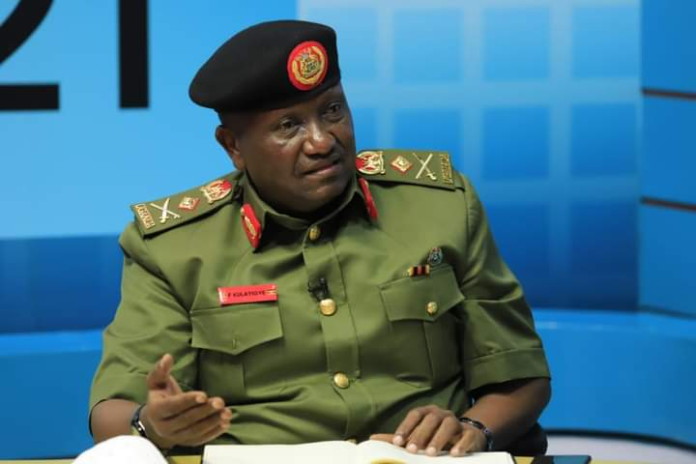
UPDF changes key offices titles following Establishment 2021 launch

Following the official launch of the Uganda Peoples’ Defence Forces (UPDF) Establishment 2021 by His Excellency the President of Uganda and Commander-in-Chief on February 17, 2024, the nomenclatures of some of the Offices at the UPDF Headquarters have changed.

Brig. Kulayigye, in a statement released on April 8, noted that the titles at the UPDF Headquarters are a direct result of the establishment’s formal commencement by the President and Commander-in-Chief.

“The restructuring in the titles of certain UPDF Headquarters offices aligns with the recent endorsement and implementation of the UPDF Establishment 2021,” Brig. Kulayigye explained.

He added, “This entails the retirement of old titles and the introduction of new ones, effective from April 5, 2024.”

The changes include a series of renamed positions: The Chief of Joint Staff (CJS), previously known as the Joint Chief of Staff (JCOS).

Joint Staff Human Resource Management (JS-HRM), has replaced the Chief of Personnel and Administration (CPA).

Defence Intelligence and Security (DIS), has replaced the Chief of Military Intelligence (CMI).

Joint Staff Logistics (JS-LOG), has taken over from the Chief of Logistics and Engineering (CLE).

Joint Staff Training and Doctrine (JS-TRADOC) has replaced the Chief of Training and Recruitment (CTR).

The role of Defence Public Information Officer (DPIO) is the new title for what was once the Defence Spokesperson (DSP), falling under the Department of Defence Public Information (DDPIO).

Brig. Kulayigye noted that additional updates on the new titles could be provided by the Defence Public Information Officer as deemed necessary in the public’s interest.

Stories Continues after ad

LoP Ssenyonyi criticizes gov’t proposal of new taxes

Ssenyonyi and Kyagulanyi at Parliament.

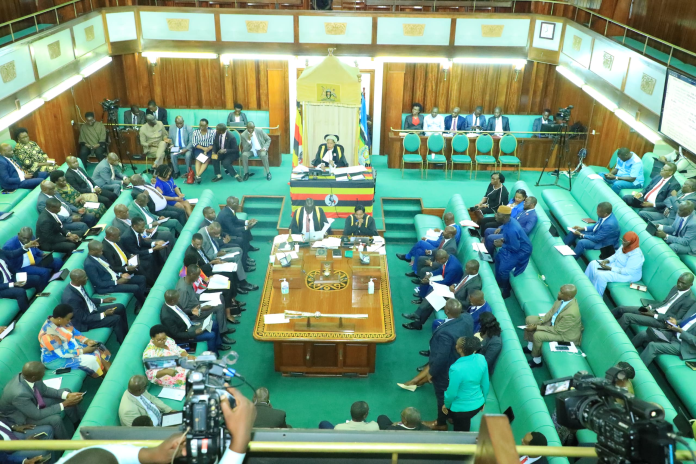
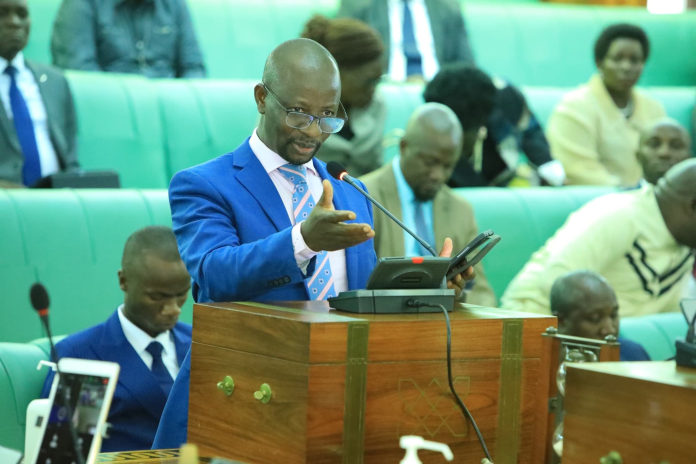
Leader of Opposition in Parliament, Joel Ssenyonyi has criticized the government for proposing new taxes without showing any service delivery for the taxes collected, saying it is not right for the government to put a chokehold on the citizenry like the traders protesting downtown Kampala over high taxes, yet the money ends up being stolen by thieves of the regime.

Ssenyonyi made the remarks during the presentation of the Alternative National Budget Priorities for 2024/25 at Parliament where he urged the government to listen to the cries of the traders.

“It is no wonder that the government is proposing to increase taxes on certain commodities and services, which are further going to burden the population that is already not seeing adequate service delivery for the tax money that they pay currently. We need to save this money that is stolen by the thieves, so that we don’t need to dig deeper into the pockets of the struggling citizenry. And yet they see this money they pay in taxes being stolen, and that is why the traders are saying no and that is why we want to encourage them as citizens of this country to speak out,” said Ssenyonyi.

Joel Ssenyonyi said that the opposition’s alternative budget is more than a financial plan, but rather, a document that is intended to illustrate the Opposition’s commitment to strengthen communities through effective service delivery as well as paint a picture to Ugandans of what ought to be done for the country.

“The human right based approach that we have adopted informs the foundation of our alternative budget, demonstrating our consistent commitment to defending the basic freedoms and rights of every citizen in Uganda. We hope that by adopting this approach, the budget process will become an effective instrument for social justice and equitable development. Therefore, in order to ensure that no one is left behind, it is imperative that the government allocates resources in a manner that promotes accountability and transparency,” Ssenyonyi added.

Robert Kyagulanyi, Principal of National Unity Platform warned that as much as these alternative policies might be attractive, it would be impossible to achieve them if the leaders in charge of Ugandans resources can’t rise above their petty selfishness.

“We must resist, we must reject, in fact, we must eject all forms of corruption in public administration otherwise, all this will be going to waste and our resources will continue sinking down the long drain of personal greed at the expense of our collective wellbeing and, at the lives of our people and children. As a National Unity Platform, we shall continue taking decisive action in that regard,” said Kyagulanyi.

Miria Matembe urged MPs to stand firm by their beliefs and principles, saying when she opposed removal of term limits, she was thrown out of Gov’t without pension and gratuity.

“Have you ever seen me shaken by anybody? I worked for a good 30 years for this country but when I said no, you can’t remove the term limits, I was thrown in the garbage. No pension, no gratuity. I don’t tell you to accuse those people, but I tell you how those people can rob you. I was robbed. Have you seen me lacking? But I continue to serve for a legacy that when I am long gone, and when you stand with the people of Uganda, God will stand with you,” said Matembe.

Stories Continues after ad

Victoria University VC launches East Africa’s first-ever book on AI, Chatbots, to boost education

Prof. Mpezamihigo of Kampala International University, Dr. Muganga (middle) and Prof Openjuru of Gulu University during the launch of the book.

Victoria University Vice Chancellor, Dr. Lawrence Muganga has launched East Africa’s first-ever book on Artificial Intelligence and its integration into today’s University Education.

Titled; “From Chalk to CHATBOTS: Discovering Authentic Education with AI,”, the book which has already attracted public attention was officially unveiled by Gulu University Vice Chancellor, Prof George Openjuru Ladaahon Friday, April 5, 2024, at the Uganda Vice Chancellors Forum Workshop in Entebbe.

“I am overjoyed to announce the release of my groundbreaking AI book, “From Chalk to CHATBOTS: Discovering Authentic Education with AI.” A heartfelt thank you to Prof. George Openjuru Ladaah, Vice Chancellor of Gulu Varsity for officially unveiling it at the Uganda Vice Chancellors Forum Workshop in Entebbe on April 5, 2024,” Dr. Lawrence Muganga posted over the weekend via his official X account.

Muganga says his book; ‘From Chalks to Chatbots’ aims at “Rediscovering Authentic Education with Al,” a trusty GPS for everyone trying to navigate the crossroads where education meets Al.

“Not to worry, this book is super reader-friendly. Think of it like sitting down for coffee with the author rather than sitting in some stuffy college lecture. Throughout these pages, we will explore how Al is not just about fancy robots taking over the classroom but how we as humans, can team up with tech to make learning more effective than ever before,” the transformative educationist notes in a synopsis of the book.

“This book is packed full of potential and ideas on how Al can jazz up how we learn, but it’s not all rosy; we won’t gloss over the hard stuff. We need to think about privacy, keeping things fair, and ensuring no one gets left behind. At its heart, education is still all about people. It’s about sparking creativity and nurturing empathy.” he adds.

The book, titled; “From Chalk to CHATBOTS: Discovering Authentic Education with AI,” was unveiled on Friday, April 05, 2024, at the Uganda Vice Chancellors Forum.

Whether you’re shaping young minds, deciding on the big policies, riding the school bus, or helping with homework after dinner, Dr. Muganga reaffirms that this book is the perfect choice for everyone and invites everyone “to join this big, exciting conversation as we figure out this new world together.”

The book whose grand launch will be coming will be available for purchase online through various eBook outlets, or by simply visiting Victoria University’s main campus for a soft and hard copy of the same.

Dr. Lawrence Muganga, a Ugandan-born Canadian, is an esteemed researcher, academic administrator, and award-winning author of best-sellers like “You Can’t Make Fish Climb Trees” and “Authentic University.”

Muganga is a dynamic educator who has dedicated his life to promoting authentic learning in education, and his contributions have had a monumental impact on the field. Through his innovative teaching methodologies, he has created a unique approach that emphasizes the real-world application of knowledge and skills.

As the Vice Chancellor of Victoria University in Kampala, Dr. Muganga has revolutionized the region’s education system by introducing Authentic Education which embeds technology and learning into real-world settings.

Stories Continues after ad

Gen Nabasa urges Jie, Dodoth to peacefully end cattle theft

Maj. Gen. Don Nabasa.

The Uganda Peoples’ Defence Forces 3 Division Commander, Major General Don William Nabasa, has implored the Jie and Dodoth communities of Kotido and Kaabong districts, respectively, in North Karamoja, to explore the formation of a meaningful and peaceful alliance to combat cattle theft and reduce tension.

Maj Gen Nabasa made remarks yesterday (Saturday, April 6) during an inter-district security community meeting held at Moruitit village, Sidok Sub-County in Kaabong district. 

“I implore the two communities to form a peaceful alliance to foster brotherhood, reduce counter-accusations and curb cattle theft in your locations,” Maj Gen Nabasa said.

The 3 Division Commander observed that the sub-region continues to witness relative peace with adherence to the existing Presidential Amnesty window, despite the accusations and counter-accusations between the Jie and Dodoth communities that prompted an inter-district security meeting in Moruitit in Sidok Sub County, Kaabong district.

Maj Gen Nabasa stressed that the Turkana pastoralists factor is being addressed to maintain relative peace along the Uganda-Kenya borderline.

He urged the local leaders to cooperate closely with the UPDF’s 405 Brigade Commander. He tasked Battalion Commanders to identify the reformed warriors who would be able to work alongside security forces.

He underscored that reformed warriors know the terrain, routes, hideouts and their networks and, therefore, can be used to curb criminality in Northern Karamoja.

Capt (Rtd) Chris Mike Okirya, the Resident District Commissioner (RDC) for Kaabong, appealed to communities and rustlers still possessing guns to peacefully hand them over to security to become beneficiaries of government incentives and services.

On their part, the two district Chairpersons, Hon. Meri Jino (Kaabong) and Hon Lotee Paul, known as Kacheri Boy (Kotido), agreed to spearhead the drilling of three boreholes along borderlines to solve water scarcity and facilitate deployment along the Uganda- Kenya board line.

Ms. Judith Nakut, the Karacuna mobiliser, pledged to intensify the mobilisation of targeted groups to voluntarily surrender illegal firearms, noting that some Karacuna had fled to the wilderness due to conflicts between the Jie and Dodoth communities.

Stories Continues after ad