Stanbic Bank
Stanbic Bank
23.9 C
Kampala
Stanbic Bank
Stanbic Bank
Home Blog Page 263

Mubende Hospital officials squeezed over CT scan charges

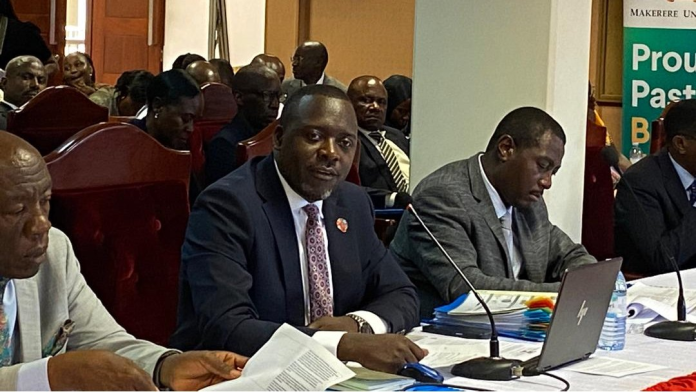
The Committee on Government Assurances and Implementation has questioned Mubende Regional Referral Hospital officials for charging patients Shs150, 000 for use of a CT Scan machine.

The members of the committee led by Luwero District Woman Representative, Brenda Nabukenya is following up on government assurances and promises in the health sector. Specifically, the committee is looking into the Intergovernmental Fiscal Transfers (UGIFT) Loan Programme of Shs552.2 billion approved by Parliament to support the upgrading of the health centre IIs to IIIs in sub counties that did not have them.

During their visit to Mubende District on Thursday, March 4, 2024, the team established that five sub counties of Kayebe, Kitenga, Kiruuma, Nabingoola, and East and West Division of Mubende Municipality did not have health centre IIIs.

The MPs also visited Mubende Regional Referral Hospital where they discovered that the facility was charging for the use of a CT scan machine that was provided by the Government.

Acrobert Kiiza (Indep., Bughendera County) tasked the hospital officials to explain who gave the guidelines that Shs150,000 for use of CT Scan be charged on patients and yet is a government facility.

He also sought to understand where the money that is collected or the excess is spent or sent to. He also asked the director to explain what they do with Ugandans who cannot afford the Shs150,000.

“During the delivery of the CT scan, did it come with guidelines? I would like the director to tell the committee whether the charge of Shs150,000 as cost sharing came with the guidelines, and was this the decision of the hospital board,” he asked.

Isingiro District Woman MP Clare Mugumya said she was happy that the CT scan was provided by the facility but was shocked about the price which she said was too high.

“The user fee is really so high; Shs150, 000 is not affordable to most of the people in Mubende. I was wondering if there is anything you can do to reduce the cost,” Mugumya said.

Dr Paul Batibwe, the Director of the hospital said that the cost sharing is meant to ensure that the machine does not get spoilt and keeps running.

He also told the committee that for those who cannot afford, the hospital gives a waiver.

The committee was also shocked to learn that the maternity section at Mubende Hospital still has mothers giving birth on the floor with at least 10 to 15 mothers sleeping on the floor.

The hospital has a bed capacity of only 49 clients of the required 80.

According to Sister Madelena Asedri, a midwife, the demand for beds is high with mothers flocking in from neighbouring districts to get services.

She added that the cases of mothers sleeping on the floor for lack of beds are a big challenge.

Dr Godfrey Malemeko, a gynecologist at the facility said that the lack of a health centre IV and a district hospital makes it difficult to handle cases who come in without referrals as this leads to overcrowding and limited sundries to support the work of medics.

Stories Continues after ad

China pledges unwavering support to Uganda’s Oil Pipeline Project

President Yoweri Museveni has received a letter from the President of China Xi Jinping, who expressed unwavering support for the East African Crude Oil Pipeline Project (EACOP).

Hand-delivered by Ambassador Xue Bing, the Special Envoy for the Horn of Africa Affairs of the Chinese Foreign Ministry, and read by the Chinese Ambassador to Uganda, Mr. Zhang Lizhong, on Thursday, April 4, 2024, at the Kisozi Farm, the message reaffirmed China’s commitment to collaborating with Uganda to ensure the success of the project.

“Your Excellency, I received your letter, and I am very happy to let you know that I am in full support of EACOP. I believe that it will enhance socio-economic development for the region. I am confident that with the strong cooperation between our nations, this project will be a success,” read the letter, in part.

The EACOP is a project spanning 1,443km from Kabaale, Hoima district in Uganda to the Chongoleani Peninsula near Tanga Port in Tanzania. Its aim is to transport oil from Uganda’s Lake Albert oilfields to global markets via the port of Tanga.

Acknowledging the support regarding the project, President Museveni underscored its significance and assured the Chinese delegation that all major concerns regarding the project are being addressed constructively.

His Excellency, Zhang Lizhong, informed the president that Chinese financial institutions are open to discussions on the project and extended an invitation to Hon. Ruth Nankabirwa, the Minister of Energy and Mineral Development, to visit China for further discussions.

Delivering his remarks, the special envoy, Ambassador Xue Bing, briefed the president on three areas of discussion: deepening bilateral relations between the two nations of Uganda and China, the Forum on China-Africa Cooperation (FOCAC), and the planned conference for peace in the Horn of Africa.

In response, the president thanked Chinese investors for their cooperation in various completed projects, such as the Isimba and Karuma Power dam projects, which generate over 800 megawatts. He also welcomed more ideas for cooperation between Uganda and China.

In particular, the president proposed collaborative efforts between China and Uganda to advance infrastructure development, specifically the establishment of a railway network. He emphasized the transformative impact such initiatives could have on Uganda’s progress and sought technical cooperation from China in this regard.

“We want to build a railway system that will connect Uganda to the coast. We are going to use the Engineering Brigade of the Army for construction. However, we need your technical and material support for this,” he informed the delegation.

“For the roads and electricity, we have, now my focus is on the railway system, which I believe will bring us immense development. That is where we want your support,” he further added.

The second area of bilateral cooperation the president highlighted was an appeal for the Chinese government to encourage their companies to invest in value addition at source. Recognizing the potential for mutual benefit, he urged Chinese companies to engage in processing raw materials locally in Uganda, thereby fostering employment and bolstering economic growth.

“We need you to come and add value to our products at the source so as to eliminate Africa’s dependency on exporting raw materials. We have a wide spectrum of raw materials, and what we need now is value addition,” said the president.

Mr. Xue Bing conveyed Chinese President Xi Jinping’s admiration for Uganda’s achievements and contributions to regional unity and cooperation, citing the successful hosting of international summits as examples.

“We congratulate you, Your Excellency, for assuming the chairmanship of the two big summits, the Non-Aligned Movement (NAM) and the G-77+ China Summit. We believe this will strengthen our cooperation and unity among all member states because we strongly believe in your wise leadership,” he said.

The Special Envoy also reaffirmed China’s commitment to supporting Uganda’s stability and development endeavors, highlighting the enduring friendship between the two nations.

“Your Excellency, our countries have had a great relationship for a very long time now, and we assure you of continuous bilateral relations through the Forum on China- Africa Cooperation (FOCAC) and the two big summits that you now chair,” he said. 

Stories Continues after ad

KCCA donates fire trucks to Uganda Police to boost firefighting capabilities

KCCA Executive Director Dorothy Kisaka and Director of Fire Services, AIGP Joseph Mugisa.

Kampala Capital City Authority (KCCA) has boosted the firefighting capabilities of the Uganda Police by donating two fire trucks.

The trucks were handed over to the Director of Fire Services, AIGP Joseph Mugisa, are set to significantly aid in managing fire and rescue incidents within the city.

The official handover ceremony took place at the city hall, where the KCCA Executive Director Dorothy Kisaka emphasized that this donation aligns with KCCA’s vision of creating a smart city and supporting the police force’s expertise in handling fire and rescue operations.

In her statement, Kisaka said, “We donated these trucks to the police to enhance their capacity as experts in fire and rescue services. While we are working towards building our own firefighting capacity in the future, we recognize the immediate need to support the police in their crucial role.”

Assistant General of Police (AIGP) Joseph Mugisa expressed gratitude on behalf of the Uganda Police for KCCA’s support, highlighting the operational advantages of the mid-sized trucks.

He mentioned, “These small-sized trucks will maneuver quickly and respond effectively, particularly in areas where our larger trucks encounter difficulties. They will play a crucial role in containing fires swiftly while larger units join the efforts.”

This marks the second time that KCCA has generously provided fire equipment to the Uganda Police, demonstrating a continued commitment to bolstering emergency response services.

The event was attended by several key figures, including AIGP Richard Edyegu, the Director of Logistics and Engineering, highlighting the importance of this collaboration between KCCA and the Uganda Police in bolstering emergency response capabilities.

The Uganda Police’s Directorate of Fire and Rescue Services plays a vital role in fire prevention, education, extinguishment, and actively participates in national disaster management efforts alongside other stakeholders.

This collaborative effort between KCCA and the Uganda Police underscores the commitment to ensuring the safety and well-being of the city’s residents and properties during emergencies.

Stories Continues after ad

UPDF briefs UN Military Staff Committee on Operation Shujaa progress in DRC

Uganda Peoples’ Defence Forces (UPDF) has updated the UN Military Staff Committee on the progress and situation of ‘Operation Shujaa’ in the Eastern Democratic Republic of Congo (DRC), saying that many gains have been attained.

The meeting was held yesterday at the Ministry of Defence and Veteran Affairs (MODVA) headquarters in Mbuya, Kampala.

 The Commander of the Mountain Division Maj Gen Dick Olum, that is part of the UPDF fighting ADF in Eastern DRC, briefed the visiting team about the circumstances that birthed the joint military mission operation between Uganda and DRC to fight a common enemy, the Allied Democratic Forces (ADF), the achievements so far made, the challenges the joint force faces and strategies to decisively degrade the ADF and pacify the inter-country border and the entire Great Lakes Region.

“The aim of this meeting is to acquaint you with the situation of the war against ADF, inform you of the progress so far made, the enemy situation and to discuss the challenges we still face as a joint force,” Maj Gen Olum explained.

 He recounted the achievements, which include: Successfully redeeming the population from slavery under the ADF spell, which ADF used to force the civilian population to grow crops that they (ADF) would later harvest for their survival and attack civilian settlements for food and medicine.

The joint military operation has also marked success in stopping the insurgents from making hit-and-run attacks, IED emplacement, and infiltration from the area, laying ambushes, attacking civilians and attacking motorists along public roads.

 He explained that the enemy situation was that the ADF was still carrying out deliberate activities to divert UPDF from pursuing the small groups they had clustered themselves into, ease the pressure from the joint operation, gain publicity as till formidable force, causing panic among civilians who are beginning to resettle in the villages they had previously run away from and discredit the efforts of the joint force.

He quoted the example of the ADF attack on Mpondwe Lhubiriha Secondary School on 16 June 2023, where 44 people were killed, 38 of them students and six civilians. 8 students were injured, and four others were abducted and later killed in the jungle.

 “The joint force has rescued, rehabilitated, and reintegrated a number of minor soldiers with their families and increased socio-economic activity owing to the peace and stability ushered in by the military operation. There has also been recorded an increase in the cross-border trade between the DRC and Uganda owing to the good roads and security. ADF has lost substantive weaponry, and a good number of the insurgents have been put out of action. Thousands of ammunition have been recovered, which has degraded their ability to fight,” Maj Gen Olum added.

Some of the challenges highlighted included bad weather, which majorly impedes air operations, collaborators facilitating ADF activities in Eastern DRC, a poor road network impairing swift movement, heavy rain that destroys and wipes away roads and social media propaganda alleging that the UPDF entered DR Congo to both fight the ADF and support the M23 rebel group fighting against the DRC government.

Maj Gen Olum expressed UPDFs’ Commitment to continue with the strategic military operation, reactivate operations in former ADF bases to stop the enemy from reverting to their former bases, intensify intelligence operations and decisively deal with the enemy in Sector 4, where remnant groups still regroup and reorganise. “The ADF is an international issue that stretches beyond the shared border between Uganda and the DRC. The entire Great Lakes Region ought to get interested in the annihilation of the Islamic extremist insurgent outfit before it spreads to all the other countries in the region,” Maj Gen Olum concluded.

The head of the UN Military Staff Committee, Col Carl Harris, expressed his gratitude for the immense update UPDF had given his committee en route to Eastern Congo. He explained that now the committee had a clear picture of the situation in Operation Shujaa in Eastern DRC.

 He further expounded that Members of the UN Military Staff Committee have come to Entebbe on their way to DRC to visit the United Nations Organization Stabilization Mission in the DRC (MONUSCO) and understand better the challenges that MONUSCO is facing in its current environment. “We have got a much better understanding of what Uganda and DRC forces are doing in Eastern DRC, the current operations they are undertaking and the fierce conditions in which they are fighting; the contribution they are making to establish more excellent stability and security in Eastern DRC,” he noted.

 According to Col Harris, there is no formal coordination between MONUSCO – (a UN peacekeeping force in DRC) and Uganda in this area because Uganda only deployed bilaterally with the DRC. It’s quite clear that they all have some common aims and will benefit from coordination and de-confliction to make sure they avoid casualties on both sides and fight towards the same aim which is a more secure and stable DRC.

Maj Gen Silver Moses Kayemba Uganda’s Permanent Representative to the UN, Deputy Chief of Personnel and Administration Brig Gen GK Kigozi, Mountain Division Intelligence Officer Lt Col George Amandi, Mountain Division Public Information Officer Maj Bilal Katamba, and Lt Emmanuel Ojok, the UPDF Liaison Officer to the UN, were present at the meeting.

Stories Continues after ad

Animal welfare charities react to South African gov’t’s report outlining end of cruel captive lion breeding

South Africa’s Minister of Forestry, Fisheries and the Environment, Barbara Creecy, has today confirmed Cabinet has approved the findings and recommendations of a new Ministerial report that supports calls to end the commercial captive lion industry.

The report acknowledges a voluntary exit should only be the first step in the longer-term government objectives of ultimately closing down the lion breeding facilities and to stop the commercial exploitation of lions and ‘canned’ hunts.   

Responding to the report, Dr Louise de Waal, Director at Blood Lions said:It was of vital importance for the MTT report to make it clear that voluntary exit should only be considered as the first step of a wider process and affirms the ultimate need for a mandatory end to the lion farming industry in South Africa.

“We need to ensure that the industry fully understands that at the end of the process the only acceptable types of lion facilities in South Africa should be ‘safe havens’ – spaces for healthy lions to be given lifetime care, where they are not used or traded for profit, and have a no breeding and no interaction with people, except for veterinary care.”

To halt the growth of the captive lion population, the report includes recommended protocols based on animal welfare criteria for lion euthanasia, carcass disposal, sterilisation, transport and keeping conditions. It also states the need to prevent the purchasing of new lions and re-entry into the industry.

The report also provides several recommendations that aim to safeguard and protect wild lion populations in South Africa, including the mass-incineration of lion bone stockpiles – and it rejects the idea of releasing captive bred lions back into the wild because of the unnecessary risks involved.

While the report recommends the international trade in lion skeletons and live lions should be prohibited, a “trade out exit” option cites captive hunting and the domestic trade in live lions and/or lion skeletons, parts and derivatives would be permitted during a phase out period.

Dr Neil D’Cruze, Head of Wildlife Research at World Animal Protection, added:World Animal Protection has been calling for a mandatory end to lion farming due to the cruelty and criminality involved and, in this regard, the report makes some great strides forward. In particular, the report’s recommendation for the mass-incineration of lion bone stockpiles is of great relief given concerns that a reintroduction of lion bone exports would risk stimulating demand among Asian consumers and act as a cover for illegally sourced lion parts.

“However, the opportunity for lion farmers to legally provide canned hunts and trade lion bones domestically during the phase out window underscores the need for urgent action. Until clear time-bound objectives are set, lions continue to suffer in inhumane conditions, legal trade will provide a cover for criminal activity, and farms continue to pose risk to public health and safety. The longer the industry continues, the more opportunity for harm endures.”

The MTT’s report has been released only days after the release of the Policy Position on the Conservation and Sustainable use of Elephant, Lion, Leopard, and Rhinoceros which shows the continued government’s commitment to the ultimate closure of the commercial captive lion industry.

However, World Animal Protection and Blood Lions would like to see firm and committed timelines for a staged approach to put an end to these unethical and cruel practices.

Notes to Editors

For more information and to arrange interviews, please contact Global Media Manager, Peter Simpson – (+44) (0) 7803 051 848 / petersimpson@worldanimalprotection.org

Read the full report here.

Q&A

Why are lions being farmed in South Africa?

African lions are extensively farmed for profit in South Africa where they have been legally sold and traded live both internationally and domestically.

Some are used as entertainment in attractions like cub petting and “walk with lions” experiences and voluntourism, or for “canned” trophy hunting where they are confined to an enclosed space, with no chance of escape, for hunters to pursue a guaranteed kill.

Up until 2019, some of these lions were also legally exploited for their body parts for traditional medicine both in South Africa and internationally, predominantly the export of their bones to Asia.

The exact number of lions currently on farms is unknown because a full and physical national audit has never been undertaken and the industry is in a continuous state of flux. However, the recent MTT findings estimated that just under 8,000 lions are kept across nearly 350 facilities.

Although lion farms have been operating in the country since the 1990s, they are laxly governed by a patchwork of legislation at national and provincial level, contributing to legal loopholes and non-compliance that have made transparency and enforcement difficult.

For more information watch the award-winning Blood Lions Documentary that premiered in 2015 and blew the lid off misleading claims made by the predator breeding and canned hunting industries in South Africa.

What was the remit of the MTT report?

In 2021, the Minister for the Department of Forestry, Fisheries, and the Environment (DFFE) announced their intention to immediately halt the “domestication and exploitation of lions, and to ultimately close all captive lion facilities in South Africa”.

In late 2022, a Ministerial Task Team (MTT) was formed to “identify and recommend voluntary exit options and pathways for the captive lion industry with win-win outcomes” through a process of engagement with all stakeholders involved.

Consequently, the release of the MTT’s report, which was approved by Cabinet at the end of March this year, marks a significant milestone and a pivotal juncture for the future of this controversial industry.

For further information contact:

Blood Lions

Dr Louise de Waal (Director)

Email: management@bloodlions.org

Cell: +27 76 148 1533

Stories Continues after ad

Oboth Oboth assumes office as Defence Minister, commits to implement army core values 

Minister Oboth receiving a report from Outgoing Defence Minister Ssempijja.

Jacob Markson Oboth Oboth has assumed office as the new Minister of Defence and Veterans Affairs (MODVA) and committed to implement the core values of the Defence Ministry.

The Hand/Take Over ceremony happened yesterday at the MODVA Headquarters in Mbuya, Kampala.

Oboth takes over the Defence Ministry Office from Vincent Bamulangaki Ssempijja while Sarah Nyirabashitsi Mateke assumes office from Oleru Huda as the new Minister of State for Defence and Veterans Affairs.

This follows the recent cabinet reshuffle by President Yoweri Museveni, who is also the commander-in-chief on March 21.

Speaking at the ceremony, Ssempijja congratulated Marksons Oboth upon his new appointment and wished him success. He thanked President Museveni for ensuring system continuity and the renewed impetus to continue with the struggle for social-economic transformation.

“I want to state that I am exceedingly honoured to have served as Minister of Defence and Veteran Affairs, which is indeed one of the strategic sectors for the survival of the Nation,” Ssempijja remarked.

Ssempijja’s legacy, among others, includes enhanced UPDF training and capacity building, welfare improvement, enhanced Defence Diplomacy and an improved Defence Strategy and Planning Unit that aims at developing contingency plans that enable UPDF to respond to all security emergencies.

In his acceptance speech, Oboth commended President Museveni for entrusting him with the new appointment and enhanced responsibility. He thanked his predecessor for mentoring him into a better nationalist and committed leader.

“We have a mandate to do the work under Article 208 and 209 of the UPDF Act, look at the Defence policy and more so, importantly, our role should be at all times to establish the Commander in Chief’s intent through the directives he gives and through consultations,” Oboth remarked. 

Oboth committed to implementing the core values of the Defence Ministry and promised to work as a team with the current TMCs, and other staff members. Previously, Oboth was serving as the State Minister for Defence (Defence).

He holds a degree in Law from Makerere University and a Master’s Degree in Election and Cyber Law from the University of Minnesota, USA. He has served as the Deputy Attorney General for Tieng Adhola Cultural Institution. He then worked as a state attorney in the Ministry of Justice and Constitutional Affairs, based in Mbale.

In 2007, he was elected as an Independent MP for West Budama South in 2011. Oboth-Oboth was re-elected in 2016, setting a record for being the first legislator to be elected for a second successive term in his constituency since 1996.

In the 10th Parliament, he chaired the Legal and Parliamentary Affairs Committee and is a member of the Committee on Rules, Discipline and Privileges and the Business Committee in the 10th Parliament.

At the same function, the Minister of State for Defence and Veterans Affairs Oleru Huda handed over office to Sarah Nyirabashitsi Mateke. Nyirabashitsi expressed her profound gratitude and thanked President Museveni for entrusting her with such responsibilities. She promised to continue working with others for the complete and effective execution of her ministerial duties.

Oleru Huda wished his successor well and pledged to continue serving the government in another capacity. The handover demonstrates MODVA’s legacy of resilience, discipline, honour and continuity given the Ministry’s mandate which extends beyond the military role to encompass the well-being of every Ugandan citizen.

Stories Continues after ad

Speaker Among preaches unity and development among Muslims 

Speaker Among ,Mbarara City South MP Mwine Mpaka and Mbarara District Khadith Sheikh Abdallah Mukwaya.

Speaker of Parliament Anita Among has urged religious leaders to champion unity within their communities. 

 Among condemned divisive forces that threaten to weaken the fabric of society. “We’ve seen divisions orchestrated by selfish individuals that is costing our people dearly,” she said.

In addition to fostering unity, Among encouraged religious leaders to play a proactive role in shaping the nation’s future by advocating for leaders who prioritize development. She criticized those who habitually oppose government initiatives without considering their potential benefits.

 “We’ve witnessed a trend where some leaders (just) oppose government efforts without offering constructive alternatives, which ultimately hinders progress,” Among said.

The religious leaders who were accompanied by the member of Parliament for Mbarara City South Mwine Mpaka, were led by led by the District Khadith Sheikh Abdallah Mukwaya.

They visited Speaker Among to provide updates on the construction progress of a mosque in the district, for which Among had contributed generously. This gesture underscored Among’s commitment to supporting community development initiatives and fostering collaboration between religious leaders and government authorities.

Speaker Anita Among’s call for unity and development reflects a concerted effort to address pressing societal issues and promote inclusive growth within Uganda’s diverse communities.

Stories Continues after ad

Gov’t targets to collect Shs1.9t from new taxes

Henry Musasizi

Henry Musasizi, the Minister of State for Finance (General Duties) has revealed that the government of Uganda intends to generate Shs1.902 trillion from the recently proposed taxes on cement, fuel, land transactions, mineral water, among others, in order to finance the Shs58.340 trillion budget for FY 2024/25.

Musasizi made the remarks on Wednesday while appearing before Parliament’s Budget Committee where he had been summoned to defend the proposed 2024/25 national budget.

“Following the consultations with stakeholders, we agreed that the budget for 2024/25 required implementing the above priorities amounts to Shs58.340 trillion from Shs52.722 trillion of the National Budget Framework Paper on account of additional Shs1.902 trillion which we expect through new tax policy and administrative measures,” said Minister Musasizi.

He also revealed that due to the skyrocketing interest rates within the global credit market, Uganda has backed off plans to borrow $414 million (Shs1.605 trillion) from the external lenders, in order to cover the gap that has been created by revenue collection shortfalls, as such borrowing would exert pressure on Uganda’s public debt sustainability.

“The approved budget for 2023/24 projected external borrowing of $414 million (Shs1.605 trillion) from external sources to cover the revenue gap, however, this hasn’t materialized, because interest rates are currently very high globally. We shall live within the available resources of FY2023/24,” he said.

“For example, the interest rate on dollar loans is about 10% per year and for Euro loans, they are between 8-9% annually. These aren’t affordable and would pose a significant risk for the debt sustainability. We will not therefore borrow externally on commercial terms for general budget financing until the global interest rates reduce to affordable levels. To finance the gap arising from the decision not to borrow the $414 million,” said Musasizi.

Stories Continues after ad

BoU misleading public over Crane Bank Limited deregistration move – Kampala lawyers

BoU Legal Counsel Ms Margaret Kasule whose accused of misleading on Crane Bank Limited legal status.

The Bank of Uganda on April 3, 2024, issued a misleading notice on the legal status of Crane Bank Limited, quoting Section 7(1) (a) of the Financial Institutions Act, 2004 [as amended]. In the notice BoU advises the Uganda Registration Services Bureau (URSB) to strike the word ‘Bank’ off the company name of Crane Bank Limited, meaning BoU wants URSB to remove CBL from its records as a registered company in Uganda.

According to official records at URSB, CBL, a member of the Ruparelia Group of Companies was registered on July 23, 1990 and whose registration number is 80010000221522 to do banking business although it was unfairly closed in October 2016 and sold in January 2017 by BoU, causing public outcry.

A top lawyer however, says BoU has no powers to direct URSB to deregister CBL, saying it is illegal and shows that BoU is in a desperate situation after Sudhir beating them in courts of law in the related cases.

He added: “BoU has now powers to deregister CBL. I think that the central bank’s legal department should seek the advice of the Attorney General/Solicitor General in this matter. I think that they are looking for more trouble.”

To deregister CBL, URSB will have to first listen to its shareholders. They cannot rely on BoU to take that decision, and I am sure URSB has good lawyers who can sense the legal trouble that BoU wants to cause them,” he added.

Another lawyer warned that should URSB take BoU’s advice and deregister CBL as a company in Uganda, they are likely to be sued by shareholders of CBL. However, he says CBL can seek a court order prohibiting URSB from deregistering it as a company in Uganda. The matter between BoU and CBL has never been settled, and I don’t think URSB can be all that stupid to do what BoU wants them to do [deregister CBL],” he said.

He said that CBL was registered as a company in Uganda about 34 years ago and that it would be hard for BoU to use the Financial Institutions Act, 2004, to deregister the bank. I don’t think BoU will succeed in deregistering CBL from URSB records,” he said.

He further said “First BoU must do what the Supreme Court has ordered that handover all the properties and asserts of Crane Bank Limited than talk about Supreme Court conclusion”

Background

Despite BoU trying to mislead the public through disinformation, it should be remembered that Sudhir Ruparelia, one of the shareholders of CBL in 2022 obtained a final Supreme court order allowing him to revert Crane Bank back to its shareholders. In January 2017, CBL was acquired controversially and irregularly by Dfcu Bank at Shs200 billion after the central bank claimed that it was undercapitalised.

The decision (reverting CBL) made on July 1, 2022, by Justice Prof Lillian Tibatemwa Ekirikubinza followed a disagreement that has been ongoing for over six months between BoU and Sudhir on whether the final order needs to be enforced should also reflect that the bank is reverted to the businessman.    

This ruling arose from an appeal filed by CBL in receivership (Bank of Uganda) on August 1, 2020, challenging the decision by the Court of Appeal to dismiss the case in which they accused Sudhir and his company Meera Investments Limited of withdrawing Shs397 billion from CBL fraudulently.

It all started on June 30, 2017, when Crane bank in receivership/Bank of Uganda sued Sudhir and his company Meera before the Commercial Division of the High court seeking to recover the said monies that had reportedly been siphoned by Sudhir.

They also sought to recover freehold certificates of title to 48 properties – together with duly executed transfer agreements and a refund of the monies for which they claimed were for invalid leases. However, in 2019, the then Commercial Court judge David Wangutusi dismissed the case with costs on grounds that the Crane Bank in receivership had no capacity to commence legal proceedings against Sudhir.  

Not happy with the decision of Wangutusi, Crane Bank under receivership challenged Wangutusi’s decision in the Court of Appeal claiming that the judge erred in law by holding that the bank had ceased to own property and its liabilities, and assets had all been exhausted.
The appeal by the BoU was however, dismissed with costs leading to an appeal in the Supreme Court. BoU on August 1, 2020, however, withdrew the appeal before it could be heard. But Sudhir, together with his company Meera, objected to the withdrawal, saying that they should be awarded costs.

The Supreme Court agreed with Sudhir and directed BoU to pay costs in its February 11, 2022 decision. The Supreme Court also ruled that receivership of CBL ended on January 20, 2018, and from that date, the management and control of Crane Bank returned to its shareholders.  

But when Sudhir and his company, who were the successful party, prepared a decree to be approved by the court for enforcement, BoU objected to the format of what the third order should state.

The third court order was that “the appellant’s receivership ended on January 20, 2018 and thereafter, its management reverted to the shareholders. BoU was not happy with the last part of the order to the effect that ”thereafter its (CBL) management reverted to the shareholders.”

BoU however, agreed with the rest of the orders that the appeal be dismissed with costs to be paid by BoU and that the dismissal is with effect from February 11, 2022. But it was not happy with reverting the management of CBL to its shareholders.

The BoU directive to URSB which legal minds have termed bogus.

BoU averred then that the Supreme Court had no jurisdiction to make an order reverting the management to the shareholders because when they withdrew their case, the contention was on who should pay costs and that the Court of Appeal had not ordered that it should be reverted.

But in her ruling, Tibatemwa indicated that under the Financial Institution’s Act, after the expiration of 12 months from the date of takeover by the receiver, the receivership must be deemed to have lapsed by operation of the law.

“It is a position at common law that where a legal relationship is terminated by effluxion of time then the rights accruing revert back to the owner,” stated the judge then.

The judge said  CBL existed as a legal entity before it was licensed to operate as a financial institution and that the return of management to the shareholders is a logical result of the fact that the central bank is no longer a receiver and no longer the manager.

As such, the court emphasised that the CBL receivership ended on January 20, 2018, and consequently, its management was reverted to its shareholders. However, it is now surprising that BoU wants to erase CBL from the records of URSB, illegally.

Stories Continues after ad

Tayebwa blocks Parliament debate on court’s Anti-Homosexuality Act ruling

Deputy Speaker Tayebwa.

Deputy Speaker, Thomas Tayebwa has declined to open up debate, for Members of Parliament to express their views on the Constitutional Court’s ruling on the Anti-Homosexuality Act 2023, saying there is need to give the Attorney General, Kiryowa Kiwanuka time to internalize the ruling and decide whether some of the provisions that have been nullified by Court can be reinstated.

“We have done our part and I believe this is not an issue where Members will come up to discuss. We have done our part; the courts have done their part. We need to give time to the Attorney General to internalize and see if the nullified sections can be reinstated or whether he is satisfied as our lead lawyer of the country,” Tayebwa said.

The Deputy Speaker also expressed gratitude towards the Judiciary for not interfering with the legislative mandate of Parliament.

“The Court found no fault in the process, procedure, though there are some sections of the law which the court nullified, but as leadership of Parliament, we are happy with the outcomes of the process. So, we want to thank the Attorney General, we want to thank the legal team from Parliament, MPs and Ugandans in general and we want to thank the Judiciary for not interfering with the work of Parliament and allowing us to execute our mandate as given to us by the people of Uganda,” Tayebwa applauded.

The Constitutional Court today has declined to nullify the Anti-Homosexuality Act enacted by Parliament in 2023 in its entirety having nullified four sections which criminalized the letting of premises for use for homosexual purposes, the failure by anyone to report acts of homosexuality to the Police for appropriate action, and the engagement in acts of homosexuality by anyone which results in the other person contracting a terminal illness.

Stories Continues after ad