Speaker Anitah Among has tasked the government to bring a statement to Parliament explaining why there are continued killings and violating human rights within fishing communities, despite the passing into law the Fisheries and Aquaculture Act 2022.
Her concern comes at the time a UPDF Officer, Moses Niwagira was accused of shooting dead Charles Wanya, a fisherman operating on the shores of Lake Kyoga recently.
“There is an outcry, much as we passed a law on fisheries, but the people have continued to be mistreated, I got a team that somebody was killed at a landing site. As Government, maybe you need to come in and see the enforceability of the law that was passed in this House because the people who are being killed are our people, those are the same people who will vote for us tomorrow. So, we need a response to that effect because it isn’t only in that island, it isn’t only in one fishing area,” said Among
It should be recalled that the government gave the mandate of keeping law and order within Ugandan waters to Uganda Police, but the UPDF had maintained its presence on the lakes, despite residents around fishing communities accusing the Army of inhumane treatment and murders while against the fishing community.
The government Chief Whip, Hamson Obua acknowledged receiving reports about human rights violations in fishing communities by the Fisheries Protection Unit and asked the Speaker to accord time to Hellen Adoa, Minister of State for Fisheries, to present a statement addressing issues in all fishing communities across the country.
“I have equally seen on social media, including Amolatar District, where on resident was reportedly shot dead by a Member of the Fisheries Protection Unit, may I request that you give the Minister in Charge of Fisheries an opportunity to come and present a Comprehensive statement covering all the fishing communities and what is transpiring within the country, generally but also with specific with regard to the incidences that we have read and seen in the media,” said Obua.
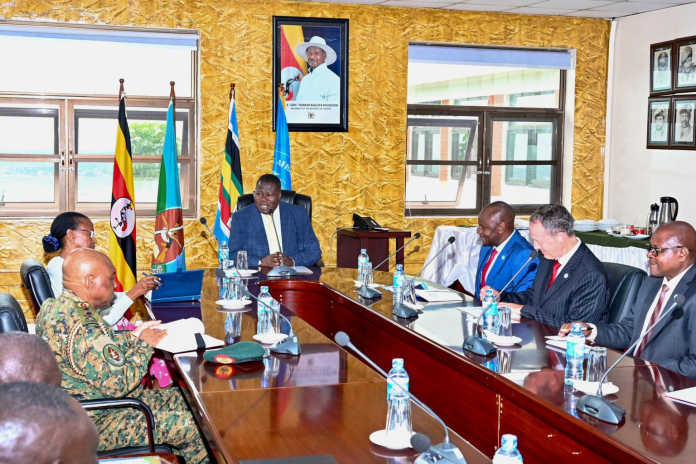
The Minister of Defence and Veteran Affairs, Jacob Marksons Oboth-Oboth, has reiterated Uganda’s commitment to supporting the Eastern Africa Standby Force in fulfilling its mandate.
Oboth stated, “As the Government of Uganda and the Ministry of Defence and Veteran Affairs, we are here to support and ensure that EASF fulfils its mandate.”
He made the remarks today as he met the Director of the Eastern Africa Standby Force, Brigadier General (Rtd) Paul Kahuria Njema, at the headquarters of the Ministry of Defence and Veteran Affairs (MODVA) in Mbuya.
Oboth commended the Force for its efforts in realising its mandate, which includes early warning, prevention, management, and resolution of conflicts.
The Minister lauded the development partners of EASF, represented by Mr. Jens Lindvig, the Danish Defence Attaché to Kenya, who chairs the Friends of EASF, especially in terms of funding.
Brigadier General (Rtd) Paul Kahuria Njema, on his part, acknowledged Uganda’s unwavering support towards EASF.
He said, “Uganda has been a valuable partner in EASF, and we appreciate your continuous support. Uganda stands for a united Africa, an Africa that is one, and it can only be one when we bring our resources to work together towards a common objective.”
The Minister and his guest urged the EASF Member States to fulfil their obligations to enhance African solutions for African problems.
The meeting was attended by Ms. Rossette Byengoma Permanent Secretary of the MODVA, Major General Jackson Bakasumba Chief of Joint Staff, Brigadier General Alex Olupot Joint Staff Training and Doctrine, and Brigadier General Gaetano Omola the Commandant Uganda Rapid Deployment Capability Centre (URDCC).
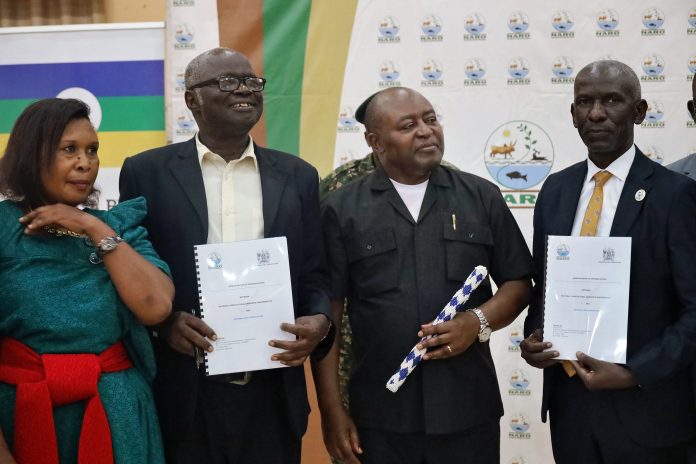
The NARO Director General, Dr. Yona Baguma andOmusinga (King) Charles Wesley Mumbere.
The National Agricultural Research Organisation (NARO) has signed a Memorandum of Understanding with the Kingdom of Rwenzururu to promote transformational agriculture, aimed at uplifting socio-economic communities in the Rwenzori region.
The partnership is a strategic alliance focused on enhancing the dissemination and adoption of technologies, innovations, and management practices (TIMPs) generated by NARO.
The Omusinga (King) Charles Wesley Mumbere, while witnessing the signing event held at the Rwenzori International Hotel in Kasese town, described the partnership as a significant milestone in the journey towards fostering collaboration, innovation, and development in the communities in the Rwenzori subregion and beyond.
“To NARO, thank you for recognising the potential and aspirations of our people. The Memorandum signifies a new chapter in our commitment to advancing knowledge, technology, and sustainable development in our region,” the King said.
He observed that the partnership was laying the groundwork for research, technological innovation, and capacity-building initiatives that will benefit the communities for generations to come.
“I am therefore filled with hope and optimism for the journey that lies ahead. Let us embark on this path together, with determination and unity of purpose, knowing that through our collective efforts, we can achieve transformative change,” he said.
Over the years, NARO has developed over 1,000 technologies, innovations, and management practices geared towards sustainable agricultural transformation, aligning with the agro- industrialization goal of increasing commercialization and competitiveness of agricultural production and agro-processing.
In his remarks, the Director General of NARO, Dr. Yona Baguma, observed that through the partnership, the two organizations commit to collaborating in mobilizing communities, facilitating technology uptake, and providing necessary support for implementation.
He emphasised that the endeavour aligns seamlessly with the directives of President Yoweri Kaguta Museveni, who has emphasised the importance of mobilising the masses for wealth creation in Uganda and ensuring that agriculture engages in the money economy.
“By working in synergy with the Ministry of Agriculture, Animal Industry, and Fisheries, other agencies of government, local governments, religious and cultural institutions, civil society, the private sector, and other stakeholders, NARO aims to amplify the impact of its initiatives and drive sustainable agricultural growth,” Dr. Baguma noted.
Under the partnership, the Kingdom of Rwenzururu will play a critical role in mobilising the masses to embrace these advancements, while also offering land for the establishment of demonstration sites and model farms. This approach is poised to accelerate the adoption and utilisation of improved technologies, fostering increased production and productivity throughout the region.
The partnership with the Kingdom of Rwenzururu adds to a host of other Memoranda of Understanding that NARO has with similar institutions, including Tooro, Buganda, and Bunyoro Kingdoms. Preparations are also underway to formalise partnerships with the Busoga Kingdom, the Inter-Religious Council of Uganda (URCU), and other institutions across the country.
Dr. Baguma said the partnerships allow the leveraging of each entity’s strengths to benefit farmers and all players along the agricultural value chain. He noted that the persistence of poverty among players in the agricultural sector is a result of the low uptake and utilisation of technologies that have been developed to support agriculture as an engine of economic growth.
“There is great potential to change the situation and improve livelihoods in the sector through the utilisation of the developed technologies, from improved seeds to value-added prototypes to machinery that reduces human drudgery. Transformation can be swift with adaptability,” he said.
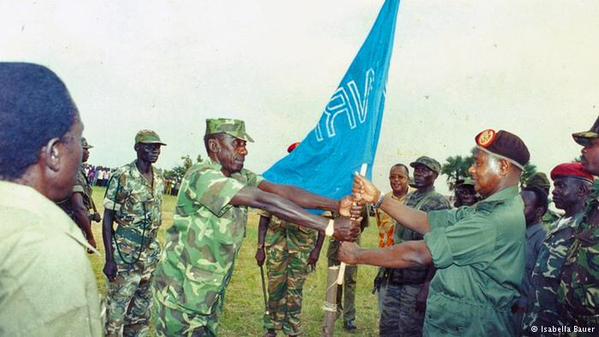
Gen. Ali Bamuze and his forces surrendering to Gen. Museveni.
Government is set to compensate 4,901 veterans of West Nile Bank Front (WNBF), a defunct rebel group in West Nile, EagleOnline has learnt.
The fall of the Amin regime in 1979 led to the rise of insurgencies, some of which spilled into the post-1986 liberation period. President Yoweri Kaguta Museveni’s signed peace agreements with the various defunct rebel groups in west Nile except the WNBF. An amicable end to the rebellion was reached with a pledge of Peace Dividend and combatants.
The groups include Uganda National Rescue Front (UNRFI), led by Gen. (Rtd) Moses Ali; Uganda National Rescue Front (UNRFII) led by Maj. Gen. Ali Bamuze; Uganda National Rescue Front (UNRFIII) led by Brig Nasuru Ezaga; National Resistance Army, West Nile Front, which was by Maj Muhamuddu Lambe and West Nile Bank Front (WNBF) led by Maj Gen Juma Oris Abdallah.
According to Huda Oleru Abason, the State for Defence and Veteran Affairs, with the exception of UNRFI, WNBF and a few remaining members of UNRFII, claims that in the west Nile sub-region, the cabinet of April 25, 2024, approved Shs21 billion to UNRFI and other residual individuals from UNRFII to be paid in the budget for fiscal year 2024/25.
The initial step in the process of effecting the payments commenced with the mobilisation of ex-combatants in the West Nile districts of Pakwach, Zombo,Nebbi, Madi-Okolo, Arua, Arua City, Maracha, Terego, Koboko, Yumbe, Obongi, Moyo and Adjumani.
The mobilisation was followed by the verification of the ex-combatants of the WNBF, which was completed through the security ministry. A verified schedule of 4901 ex-combatants was subsequently approved for payment to absorb a budget of Shs5.1 billion, which was raised from the budget of the defence in FY2023/2024.
“The commencement of the payment of Shs5.1 billion for the Peace Dividend of the WNBF is to be launched next week in Koboko District on May 8, 2024, and shall benefit 4,901 ex-combatants,” the minister said.
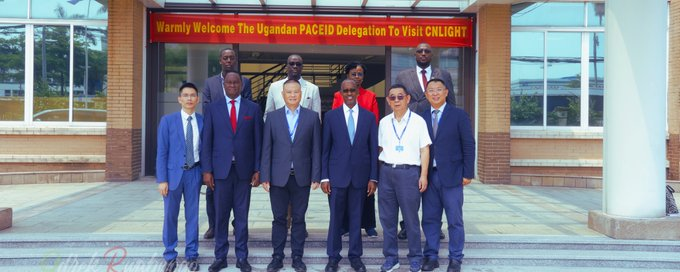
Odrek Rwabwogo, the chairman of the Presidential Advisory Committee on Exports and Industrial Development (PACEID), has rallied several Chinese agro-industrial companies that are product off-takers and investors in Guangzhou, Guangdong province of China, to focus on Uganda as a source of good agricultural products.
During a meeting at Oriental Resort Hotel just outside Shenzhen city, Rwabwogo, who presented the history of the trade relations with Asia from the year 1455 with Africa and the current changes Government of Uganda through PACEID has instituted to drive the target of USD6bn, assured the buyers of Uganda’s capacity to use export credit funding for firms that get orders.
He said: “We are improving the phytosanitary standards for our food products, modernizing our laws and regulations and their enforcement and also establishing trade representation in key markets. These are some of the new measures President Yoweri Museveni is applying to remove doubts from buyers of our food”.
He added: “We are creating critical awareness about Uganda as a good source of products because of the reforms we are making in infrastructure such as energy, roads and water to reduce production costs for firms and improve the business environment”. Uganda has lately experienced a surge in production of commodities such as coffee, dairy and beverages and Government is investing approximately USD400m annually in Parish development model (PDM) to spur more household production.
Rwabwogo also praised the leadership of China since 1949 for providing a good example to developing countries on how to restore a nation, make it rich and strong.
“The city of Shenzhen which began experimentation with the Free zones export idea in the 1990s has led China’s economic resurgence and growth in the last 40 years,” he said.
The event was co-hosted by the Institute of African studies of the Guangdong university of foreign studies and CN light technologies, manufacturers of LED screens, computers, electronics and household goods. The event coincided with the annual Canton trade fair in China which takes place from April in the city of Shenzhen.
Speaking at the event, Prof. Liu Jisen, head of the Institute of African studies challenged Ugandan producers to ensure sustainability of supplies they promise to China. “We are working with the importation of beef from Zambia. Why would we not try Ugandan beef? It is because we are not sure that even when you fulfill standards required in China, you will sustain the import demand here. China demands more food products and your consistency will be an issue if you do not plan ahead” he said.
Prof. Liu asked how many product entry protocols Uganda has signed with China and requested to sign an understanding with the Ministry of Education’s Department of Industrial Training (DIT) in order to improve skills for Ugandan exporters. Uganda has Quota free duty-free product entry into China for more than 90 percent of her agricultural products but few protocols on standards and compliance measures on food safety have been signed by the Ministry of Agriculture, Animal industry and fisheries.
China which exports more than USD1.3bn annually to Uganda has made a case for Uganda’s avocados, bananas, pineapples, mangoes, Sesame, coffee, dried chili peppers, macadamia, castor oil and seeds, sorghum, cocoa and many more products but few Ugandan firms have been able to supply them. Uganda last year sold less than USD100m to China. The airport of Baiyun in Guangzhou handles more than 26 million passengers and over 1.8million tones annually. The city and port of Guangzhou is one of the top ten import centers for China.
PACIED aims at connecting markets to Uganda and encourages young people to use new technological channels to trade in the external markets being opened”. PACEID which works as a catalyst for ministries and departments of government that deal with exports and manufacturing, is building export product consortiums at regional level in order to make it easier for aggregators, transporters, financiers and investors in Agri value addition to source easier from Uganda.
The Uganda Consul General to Guangzhou, Dr. Judith Nsababeera who attended the PACEID buyer-seller summit, said: “We are building our own headquarters here for the embassy and we will work with PACEID to have an information centre and Trade Hub for Uganda products”. Uganda sells through Hong Kong small volumes of meat products including Fish maws, casein (ingredient of milk), coffee and grains such as simsim and more. The meeting which was attended by packaging, mining and electrical companies also had firms such as the Guangdong import and export company, wire and cable manufacturers, Tourism related firms led by Kenten Structures Limited that specializes in large exhibitions, logistics and many others.
Earlier in the day, the Ugandan delegation met the provincial government officials of Guangdong and visited CN lights company, meeting with senior officials of the firm. The delegation was conducted around the manufacturing facility which makes LED lights and solar panels.
The company is investing more than USD30m in the next five years in an assembly and production plant for tablet computers, solar lights and other household appliances in Uganda. CN light, which began in 1992, is listed on the stock exchange in Shanghai. It is led by Mr. Watson Chai and Mr. Dai Jen Wei. It has subsidiaries in production of textiles and fabrics, electronics, data security and computing. The company signed a memorandum of Understanding with PACEID to pursue the search for off takers of Ugandan products and investors in mining and agriculture.
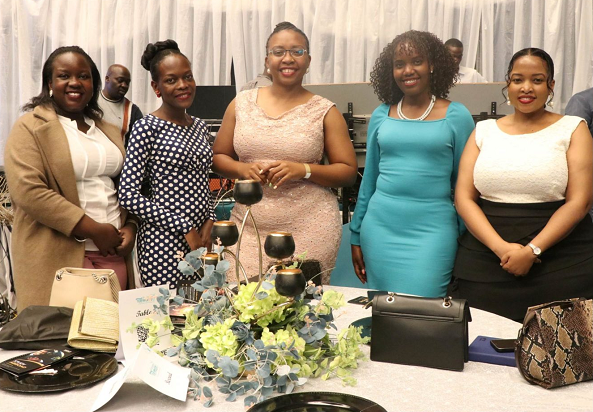
Uganda Revenue Authority (URA) recently partnered with Virtuous Woman, a women’s Ministry aimed at empowering women with the skills to live as independent and dignified individuals.
Hosted at the Serena Hotel in Kampala, this year’s theme, “Embracing Change in the Age of Artificial Intelligence,” attracted many businesswomen to learn how to integrate technology into their operations.
Diana Kisaka, the Assistant Commissioner of Finance at URA implored the ladies to continue embracing technology as a matter of urgency given its many benefits in improving efficiency.
“We cannot be mere spectators but active players in this era of cutting-edge technological advancements,” said Kisaka.
She also added that the world is changing and we must keep up with the trends as a revenue mobilization body.
Kisaka also urged businesswomen to take a more deliberate and proactive step to improve their competency in taxes for smoother and more predictable business operations.
The keynote speaker, Dr. Shogo Oyeniyi, a Nigerian Forbes coach, said that AI as a technology is a gift that must be meticulously employed to help man achieve more in less time.
He noted the areas where AI can have a great impact, including but not limited to finance and cyber security, where it eases transactions, threat detection and neutralization, fraud control, and chatbots, amongst others.
On URA’s part, the Assistant Commissioner of Public and Corporate Affairs, Ibrahim Bbosa, notes that the revenue has already integrated AI into its instantaneous client response structure for specific operational questions. He says that URA also has plans to introduce an AI-supported smart gate at the borders fitted with radiation monitors and face recognition for efficient customs management processes.
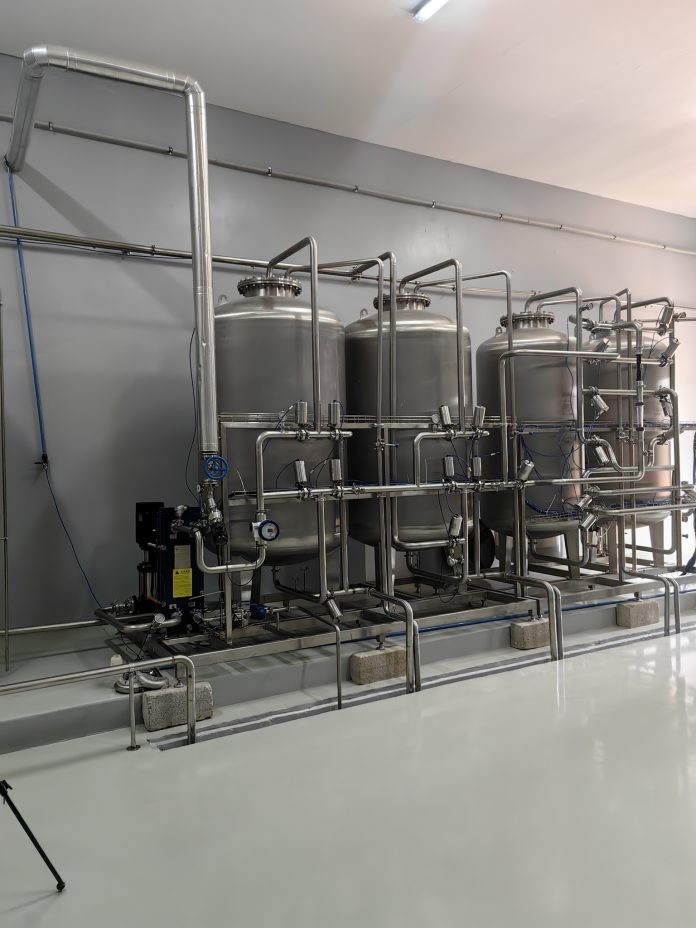
Some of the installed equipments at DEI Pharma Limited at Matugga. Photo by eagle.co.ug
Parliament has approved a supplementary expenditure budget worth Shs578.4 billion for settling the off-take arrangement between government and DEI Pharmaceuticals, wage and pension and gratuity shortfalls.
During plenary on Tuesday, April 30, 2023, the Deputy Chairperson of the Budget Committee, Remigio Achia presented the committee’s report approving the supplementary.
Achia said the government has initiated the process of acquiring equity in DEI BioPharma Ltd as a strategic intervention to increase the local production of pharmaceutical drugs.
DEI Pharma Limited is being allocated Shs578.4 billion to enable it complete business production and ensure it comfortably meets its debt obligations and operational requirements. DEI Pharma Limited had requested for Shs1.16 trillion from government.
“It should be noted that the Minister of Science, Technology and Innovation provided a written commitment to the committee, stating that ‘no funds would be disbursed to the company until the valuation process is completed and the government’s stake in the Company is formally established’,” the report reads in part.
Kira Municipality MP who is also the Shadow Minister of Finance, Ibrahim Ssemujju Nganda presented a minority report opposing the request stating that it did not comply with the law.
“We oppose donating Shs578 billion to Mr Mathias Magoola (DEI Pharma Ltd). All the activities and items the government is seeking to finance through the second supplementary do not meet the requirements of the Public Finance Management Act,” he said adding that, ’money for Magoola is being diverted from debt service; the government has diverted Shs666 billion from our debt servicing vote’.
Simon Peter Okwalinga (NRM, Kachumbala County) said he supported the majority report but objected to funding Magoola’s DEI Pharma Limited.
“I would like the government to come clean on this issue and tell us where this money is heading,” he said.
The Minister of State, Office of the Prime Minister (Northern Uganda), Dr Kenneth Omona supported the report of the committee indicating that the government is supporting local manufacturers as a measure to enhance import substitution.
“Uganda is already beginning to export pharmaceutical products which are good for our country,” Omona said.
He however, said that the government must be very serious and ensure that there is value for money in the investment.
Kampala Central MP, Muhammad Nsereko criticised the prioritisation of funding of a private investor DEI Pharma Limited amidst challenges in the health sector. He also said in order to seek a supplementary, it should be unforeseeable and unavoidable.
Muwanga Kivumbi (NUP, Butambala County) added that the government has an investment vehicle in Uganda Development Corporation (UDC) that they should use instead of Parliament directly giving money to Magoola.
The Minister of State for Finance (General Duties), Henry Musasizi told the House that when the valuation has been completed, they will now come to equity.
He said the company as it stands is “sick” and they do not want the company to “die”.
The Speaker Anita Among said that as much as there is a commitment on valuation, the government must do the valuation.
She instructed the Budget Committee to monitor and ensure that the valuation is done. She demanded a full valuation report of the assets and finances.
“No disbursement of this money before the valuation is done. Upon the valuation and this money is paid, the security must be kept with the treasury and not with the owner,” she ordered.
President Museveni during the International Labour day celebrations.
President Yoweri Kaguta Museveni has revealed that the current problem in Uganda is not jobs but rather attitude and lack of vision among citizens who don’t listen to the National Resistance Movement (NRM)’s message of wealth creation.
“Don’t tell me about the lack of jobs, talk about lack of vision. The jobs are there,” he said.
The President made the remarks yesterday during the International Labour Day celebrations held at Mukabura Grounds, Fort Portal City under the theme: “Improving Access to Labour Justice, A Prerequisite for Increased Productivity”.
According to the President, since 1996, he has been preaching about wealth creation especially through commercial agriculture with the right enterprise selection and if Ugandans religiously followed the message, the challenge of jobs would not be an issue.
“In 1996, Uganda had somehow stabilised and in our manifesto, we mobilised people on what to do to get out of poverty. We advised you on the four-acre model. In the first acre grow coffee, on the second acre grow fruits, then the third acre grow pasture for zero grazing, on another acre grow food crops. Then in the backyard do poultry and piggery for those who are not Muslims. Those near the swamps set up fishponds,” he said.
“If people utilised the arable land of Uganda well to create wealth through agriculture all those children who go out to work for the Arabs would not be going there. Jobs are here,” the President insisted.
President Museveni further cited an example of model farmer, Mr. Richard Nyakana of Rwengaju who listened to his message, and he now makes Shs180 million annually from dairy, poultry farming and value addition on one acre of land.
On the other hand, the President advised the labour union leaders that if they are to advocate for jobs, they should first ensure that they create an avenue for wealth creation.
“Jobs come from wealth; you cannot have jobs without wealth. Therefore, when you are talking, you people start with wealth creation. For more jobs, listen to the NRM guidelines where all the rural areas must be involved in the money economy through intensive and extensive agriculture. We need an organic approach to these problems. The problem here is not law but reality.”
He also cautioned farmers with limited land to desist from practising extensive agriculture, saying the enterprise can only be profitable if it’s practised on large scale.
On the tea crisis in the Tooro sub-region, President Museveni urged that from the start he knew that the crop has issues and that is why he never recommended it among the high value crops.
“In my four-acre model and seven activities, I have never talked about tea. I know the problems of tea that is why I never recommended it in my writings. I recommended coffee, fruits, dairy, food crops for the home, poultry for eggs, piggery and fish farming. This is what I recommended in writing.”
Furthermore, President Museveni noted that government officials and other stakeholders should work at ensuring low cost of electricity, transport, and low cost of money by putting more funds in the Uganda Development Bank (UDB) to lend manufacturers at a low interest rate. He said this will spur economic development in the country.
On the issue of markets which have been heinously taken over by the greedy rich people, President Museveni said they are going to investigate the matter and kick out the culprits from the facilities.
“The markets which we built have been taken over by the parasites and displaced the poor people. We are going to chase those corrupt people who use their powers to frustrate the poor people.”
President Museveni also reiterated that he will meet the traders on May 7, 2024 to discuss their challenges.
“I’m also looking forward to meeting the labour leaders.”
At the same event, a total of 53 distinguished Ugandans were awarded medals for their immense contribution towards the advocacy of the rights and welfare of the working class.
The Minister of State for Labour, Employment and Industrial Relations, Hon. Esther Davinia Anyakun, on behalf of the Minister for Gender, Labour and Social Development, Betty Amongi, commended President Museveni for always sparing time to attend the Labour Day celebrations, explaining that the gesture demonstrates his commitment towards the welfare of workers in Uganda.
She also noted that the Ministry acknowledges the challenges of unemployment among Ugandans, and it has numerous initiatives set in place to deal with the issue. She highlighted the GROW project, the apprenticeship scheme to skill the youth to embark on entrepreneurial journey, labour externalisation, among other initiatives.
The Minister also said the Ministry has come up with the Uganda National Employment Strategy which diagnoses the challenges of the labour force in the country, and it will be taken to Cabinet for approval.
“I wish to extend my appreciation to our social partners for your work towards promoting social and labour justice,” she added.
The Ambassador of Belgium to Uganda, Hugues Chantry thanked the Government of Uganda for putting in place a legal framework aimed at protecting the workers in the country.
He however raised concern over the numerous challenges that are still faced by the workers at their workplaces such as unfair wages, unfair dismissals, among others.
“The government of Belgium has been standing by the people of Uganda to improve the standards at the working places,” H.E Chantry.
The Chairperson of the Federation of Uganda Employers, Eng. Silver Mugisha thanked his fellow employers for creating jobs for Ugandans, a factor that has enabled the latter to sustain and improve their livelihoods.
“Employers play a pivotal role in the socio-economic transformation of our country,” Eng. Mugisha said.
“Your Excellency, we appreciate you for being a good listener. You always listen to our concerns,” he added.
Eng. Mugisha also thanked President Museveni for setting up the State House Investors Protection Unit and the CEO Forum, saying that the move clearly demonstrates the President’s resolve to fight corruption and accelerate investment in the country.
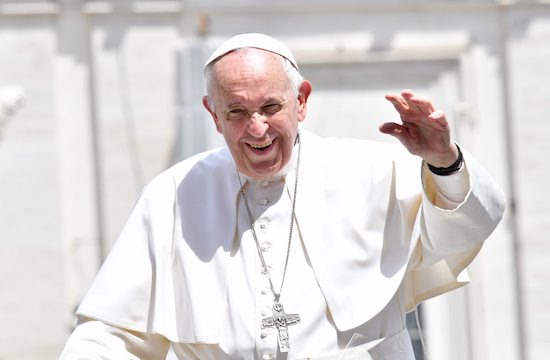
Pope Francis during Papal General Audience, Vatican City, Vatican City State (Holy See) on May 22, 2019. He will be represented at the conference.
Pope Francis has expressed closeness to all those affected by the severe floods that have devastated the East African country of Kenya causing at least 170 deaths, massive displacement and destruction.
Pope Francis on Wednesday asked for prayers from the many people who are suffering the effects of flooding in East Africa.
“I wish to convey to the people of Kenya my spiritual closeness at this time when a severe flood has tragically taken the lives of many of our brothers and sisters, injuring others and causing widespread destruction,” he said, speaking during the General Audience.
He urged Christians to join him in prayer for those suffering brothers and sisters. “I invite you to pray for all those who are suffering the effects of this natural disaster. Even in the midst of adversity, let us remember the joy of the risen Christ,” he said.
Atleast 170 people have died and 185,000 have been displaced since heavy rains battered the country since March. Kenyan authorities are discussing measures to tackle the disaster triggered by the unusually heavy monsoon rains, compounded by the El Nino weather pattern that has engulfed towns and rural areas in Kenya and in neighbouring Tanzania.
In the worst single incident, which killed nearly 50 villagers, a makeshift dam burst in the Rift Valley region before dawn on Monday, sending torrents of mud and water gushing down a hill and swallowing everything in its path.
I&M Bank Uganda has partnered with the Nnabagereka Fund for the inaugural Queen’s Ball, a prestigious dinner event aimed at supporting women, youth, and children in Uganda.
The Queen’s Ball, scheduled to take place on May 9, 2024 at the Kampala Serena Hotel’s Victoria Ballroom, aims to raise public awareness and funds dedicated to shining a light on mental health issues that are impacting the youth, women and children in the country.
Speaking to the media at the press briefing, I&M Bank CEO Robin Bairstow noted that the partnership between I&M Bank and the Nnabagereka Fund underscored the bank’s commitment to community development and social responsibility.
“As a socially responsible institution, I&M Bank Uganda is honoured to partner with the Nnabagereka Fund for the Queen’s Ball. Mental health is a critical issue facing our society, and through our collaboration with the Nnabagereka we aim to make a meaningful impact in the lives of women, youth, and children in Uganda,” said Bairstow.
“This year is particularly very special for us because as we celebrate our Golden Jubilee these are the causes and projects that make it special – effecting change and being part of those creating a real impact in the community,” Bairstow added.
Founded by Her Royal Highness, Nnaabagereka Sylvia Nagginda Luswata, Nnabagereka Fund has been a beacon of hope since its establishment in October 2022, providing essential assistance in areas such as mental health, education, healthcare, and economic empowerment.
“I have seen the transformative power of compassion, understanding and support, this spirit of empathy drives us forward today as we strive to have a community where no one suffers in silence. Let us recommit ourselves to the cause of mental health advocacy, let us pledge to be beacons of hope to those who are struggling, to be allies to in the fight against stigma, and to be agents of change in our communities,” said Her Royal Highness, Nnaabagereka Sylvia Nagginda Luswata.
“We are delighted to join forces with I&M Bank Uganda for the Queen’s Ball. Together, we can shine a light on mental wellness and create lasting legacies for future generations,” she added.
The Queen’s Ball promises to be a memorable occasion, bringing together entrepreneurs, executives, diplomats, corporate sponsors, Buganda Kingdom officials, and media personalities in support of a noble cause.
With a focus on culture, networking, and philanthropy, the event aims to unite influential individuals from diverse industries in Uganda, with Nnabagereka Fund serving as the binding force.