Stanbic Bank
Stanbic Bank
25.6 C
Kampala
Stanbic Bank
Stanbic Bank
Home Blog Page 284

Coca cola celebrates women in science and technology

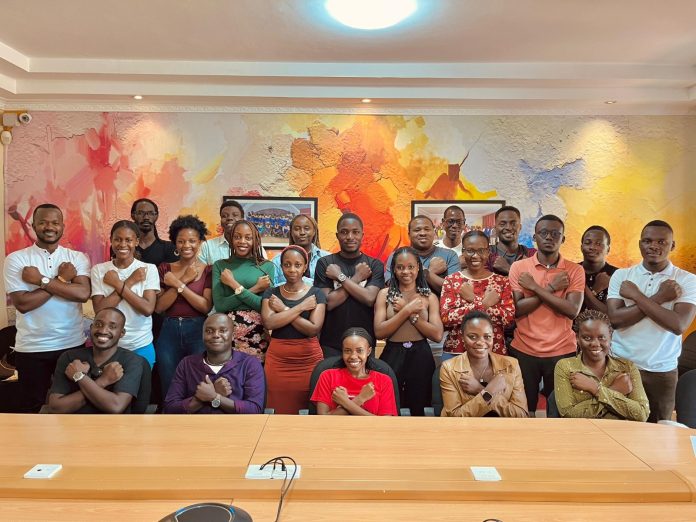
To mark International Day for Women and Girls in Science, Coca-Cola Beverages Uganda (CCBU) celebrates the achievements of women in Science, Technology, Engineering and Maths (STEM) by recognising leading women taking part in its Women in Leadership programme.

Commenting on the programme which aims to help talented women grow into leaders through training and support, Catherine Gita, CCBU People and Culture Director said, “As an organisation grounded in innovation and driven by a commitment to sustainability, CCBU recognises the crucial role that women play in shaping the future of STEM and is actively addressing this imbalance through various initiatives”.

A government report in 2014 showed that fewer girls in Uganda were passing biology and maths exams. The 2018 Gender in Education Policy aims to change this by getting more girls into science classes and training teachers to teach STEM subjects better. To support this, the aim of the programme is to close the gender gap and increase female representation in leadership roles, including STEM-related departments.

Some of the exceptional women whose accomplishments exemplify excellence and resilience in STEM include among others Doreen Namuyiga,Barbra Namanyi and Anisha Namugabo.

Doreen Namuyiga, a Quality Assurance Technologist, ensures CCBU’s products meet the highest standards, driven by her passion for understanding the science behind food and beverage production.

“Pursuing a career in STEM has not been without its challenges, but I am grateful for the opportunities to learn and grow, both personally and professionally. Through perseverance and determination, I have overcome obstacles and continuously struggle to expand my knowledge and expertise in the dynamic field of quality assurance.”

Barbra Namanyi, a Raw Materials Planner, coordinates procurement and inventory management, leveraging data analytics and supply chain principles. Barbra’s journey in STEM began with a curiosity for problem-solving, demonstrating the diverse opportunities within these fields.

“Young women and girls need to appreciate the different fields under STEM so they can embrace them boldly.

Anisha Namugabo, a Quality Controller, envisions a future where every girl has equal opportunities in STEM. She advocates for more female role models and mentors to inspire the next generation of women leaders and innovators.

“International Women in STEM Day serves as a call to action to advocate for gender equality and to empower young girls and women to pursue their dreams in STEM. It is a day to reflect on the progress made in creating a more inclusive and equitable world where every individual has the opportunity to thrive and make a meaningful impact, regardless of gender.”

Through their achievements, CCBU’s women in STEM embody innovation, resilience, and empowerment.

Stories Continues after ad

Federation of Uganda Employers calls for enforcement of pre-employment medicals

Dr. Silver Mugisha, President at the The Federation of Uganda Employers

The Federation of Uganda Employers (FUE) has called for enforcement of pre-employment medical tests to minimize workplace health and safety hazards. The suggestion comes in as Parliament processes the Occupational Safety and Health (Amendment) Bill, 2023.

The federation argued that employers have been dragged into endless court cases and the resultant court fines, for employing workers who are not fit for certain duties and end up with adverse health conditions.

“As it is with the military, the law should ensure that employers especially those in high-risk sectors such as the extraction, take on workers who are fit to work, otherwise employers will be subjected to unnecessary costs,” said Dan Okanya, Head of Policy and Research at FUE.

The federation made this recommendation while appearing before the Committee on Gender, Labour and Social Development on Tuesday, 13 February 2024 with Workers’ Representative, Hon. Charles Bakkabulindi, as acting chairperson.

FUE was concerned that the Bill does not adequately spell out what constitutes occupational and safety hazards, citing mental health as a critical health hazard that should not be left out.

“Mental health is a common emerging issue, our member organisations tell us that over 20 percent of staff has mental health challenges, some of them have best practices that we should pick from,” Okanya said.

The federation proposed that the Bill should prescribe mandatory training for all employees in safety issues such as first aid and that the employer should freely provide such training.

Henry Saaba, a specialist in occupational safety and health at FUE said the law should push for an increase in health inspectors on the ratio of one inspector per region.

According to Saaba, there are less than 20 occupational health inspectors who cannot ably supervise the entire country.

“Although the ideal is to have a health inspector per district, we are saying let government recruit an inspector for each region to enforce the law,” Saaba said.

Hon. Bakkabulindi was concerned with the federation’s position when it questioned the requirement in the Bill for all employers to have a safety committee, saying the law should be fair for all sizes of organisations.

“We are not going to protect those with 50 employees and leave those with two, the law should treat them equally,” said Bakkabulindi.

Bakkabulindi asked FUE whether its members were not affected by the emerging use of technology which he said, is likely to outcompete employees. He charged FUE to conduct a wider analysis of the Bill, observant that it is the national representative of employers.

Workers’ Representative, Hon. Margret Rwabushaija, warned that the Bill should cater for the interests of both workers and employers.

The Occupational Safety and Health (Amendment) Bill, 2023 seeks to expand the scope of the principal Act cognisant that since its enactment in 2006, there has been significant change in the workplace dynamics such as teleworking, virtual jobs outsourcing, and contracting.

The existing law does not address the rapidly evolving sectors such as extractive industry and telecommunication which the Bill intends to legislate for.

Stories Continues after ad
Police SACCO ordered to stop compulsory deductions of officers’ salaries as savings

Parliament has directed the Uganda Police Forces’ Exodus Savings and Credit Cooperative (SACCO) to stop mandatory deduction of personnel salaries as savings.

The Committee on Defence and Internal Affairs discovered that the SACCO’s management is violating the Cooperatives Societies Act by denying them the option of voluntary saving.

This was contained in the committee’s report on the inquiry into the operations of the Uganda Police Force Exodus SACCO that was presented by the chairperson, Hon. Wilson Kajwengye, during plenary sitting on Tuesday, 13 February 2024.

“The committee reiterates that the Registrar of Cooperatives Societies proceeds over the SACCO under Section 2 (2) of the Cooperatives Societies Act and immediately stops mandatory deductions on officers’ salaries and contributions for members’ savings until a comprehensive membership register is compiled on the condition that only willing members are registered,” said Kajwengye.

He added that the stopped deductions should only apply to savings and not loans, stating that all members with outstanding loan obligations should continue to pay the SACCO.

Kajwengye said that the SACCO’s financials are not being managed in adherence to sound accounting principles and standards.

“It is the committee’s considered opinion that inconsistencies in data compilation is the major cause of discrepancies and unreliable financial positions which has significantly affected the members’ savings,” Kajwengye said.

The committee also recommended that all deductions that were or are being made in the form of retirement benefits should be refunded with interest to the affected personnel, saying that the deductions are contrary to the Pensions Act.

The committee further urged Parliament to direct the Office of Registrar of Cooperatives and Bank of Uganda to institute an independent forensic audit on the Exodus SACCO, as mandated by law.

“Effectively, the Minister of Trade, Industry and Cooperatives should move the Registrar of Cooperatives to initiate the process,” read the report in part.

The report further discovered that the unchecked role of District Police Commanders outside Kampala in transmitting the membership returns to headquarters in Kampala was a severe risk.

“The SACCO had no systems to effect deductions from source. Due to the inadequate verification process of membership contributions and insufficient records from inception, the SACCO management could not comprehensively update the members’ register,” said Kajwengye.

As a result of this lapse, the committee observed that each member’s percentage shareholding and savings cannot be reliably established.

The report also recommended that the SACCO management should develop a policy on claiming the savings of a departed member after a discovery that the management of the SACCO savings, shares and loans of the deceased members are maintained as if the members are still active.

Busia Municipality MP, Hon. Geofrey Macho, who raised the matter, questioned the integrity of the Registrar in ensuring that the mandatory deductions that were made will be recovered.

“It is the same Registrar and ministry queried for disappearance of SACCO money,” he said.

Hon. Gilbert Olanya, (FDC, Kilak South County) said that the SACCO management goes as far as deducting the personnel’s salaries as soon as they start their initial training in the Force.

“You come from training and a percentage is taken from your salary. You will never withdraw this money but they keep saving,” said Olanya.

The Minister of State for Internal Affairs, Gen. David Muhoozi, justified the mandatory deductions, saying that it is aimed at improving the welfare of the officers, just like is the case with the Army’s SACCO.

“Granted, we had issues at the beginning of management, some of the issues still subsist but I want to urge members that rather than stampede a crash of this SACCO why we don’t, maybe, approach with caution and convince people to stay. I could see some sentiments – people saying, get your money and go,” said Muhoozi.

He agreed with the recommendation to institute a procedure on access of benefits of the deceased by their next of kin. “This money is theirs and they are entitled to it,” said Muhoozi.

Deputy Speaker Thomas Tayebwa, however, disagreed with the minister, saying that mandatory deductions of members’ salaries contravene the law.

“It is very imperative that immediately you stop mandatory deductions. It is supposed to be voluntary; you cannot do much about it unless you change the law. This money of theirs is hard earned,” Tayebwa said.

He directed the Minister of Internal Affairs to present an action taken report within three months.

Stories Continues after ad

COSASE orders for forensic audit into Shs500m gorilla permit fraud

The Parliament’s Committee on Commissions, Statutory Authorities and State Enterprises (COSASE) has ordered for a forensic audit into the Shs500 million gorilla permit fraud that occurred at Uganda Wildlife Authority (UWA) after the Auditor General reported that he was denied access to the chimpanzee and gorilla booking data during the audit process.

The Auditor General, John Muwanga noted that although UWA reported to have collected Shs22.461 billion as revenue from Gorilla and Chimpanzee tracking in 2022/23, but his request for data regarding financial transactions such as records of invoices, payment and reconciliation to the system was denied, a decision he said limits his audit work into verifying the correctness of the said earned revenue.

The directive was issued by Medard Lubega, Chairperson COSASE, during the meeting held between the Committee and officials of UWA who had appeared to respond to a number of audit queries raised in the December 2023 Auditor General’s report.

“You know that is an audit ordered by the Minister and by standards when the Minister orders for an audit, that one goes to him. Now, we are also ordering for a forensic audit. We are also ordering a forensic investigation into the same affairs,” said Lubega.

In October, 2023, the Auditor General picked interest in the ongoing saga in which the government lost huge sums of money after Uganda Wildlife Authority officials printed gorilla permits whose funds were diverted from the authority’s bank accounts.

The tourism ministry requested the Office of the Auditor General (AG) to undertake a comprehensive forensic audit covering the period between July 2020 and September 2023. The audit was meant to cover gorilla and chimpanzee bookings at Bwindi, Mgahinga and Kibale National Parks as well as Kyambura Gorge (Queen Elizabeth National Park) and findings be submitted to the ministry within one month, however the Auditor General reported that he was denied access to the chimpanzee and gorilla booking data

The fraud was detected internally by UWA, promoting the Executive Director to commission an internal that covered between June and August 2023 and “generated important insights” and preliminary findings pointing to possible fraud orchestrated by some staff from departments of reservations, finance and information technology at head office, with possible connivance of some field staff.

Stories Continues after ad

Man arrested after stealing millions from mobile money agents

The Criminal Investigations Department task team working together with Mukono Police have arrested a notorious hacker for allegedly breaking into mobile money systems and stealing millions of shillings from agents in different locations.

Kaporonyo Sabiiti, a 48-year-old, hacker from Namugongo in Wakiso is now in police custody and faces charges of cybercrime and theft according to Police Spokesperson, Fred Enanga.

Enanga said that by the time Kaporonyo was arrested, he had made millions from his hacking business with victims registered in Mukono, Jinja, Misindye, Kiira division, Kinoni and Nagalama, among other areas.

“The suspect made millions of shillings from hacking into mobile money systems by agents in Mukono, Jinja, Misindye, Kiira division, Kinoni and Nagalama, among others. He had also allegedly customized his car registration number plates, believing his car movements would not be detected,” Mr Enanga stated in Monday’s security briefing.

Upon his arrest, Enanga said “An immediate search was conducted which led to the recovery of four Airtel lines and a hacking machine. His motor vehicle, a Toyota Harrier, registration number UBD 612P, white in colour was also impounded.”

“As the Joint Security Agencies, we continue to locate and fight these kinds of criminals who steal and hurt innocent business persons. We shall investigate, expose and disrupt them,” Enanga emphasized.

Stories Continues after ad

US invested Shs3.8 trillion in various projects in 2023 

Ambassador William Popp and team during the launch.

The United States government has injected Shs3.8 trillion into various sectors of the country in 2023, the US report to the people of Uganda indicates.

The annual US Report to Uganda chronicles the United States’ enduring partnership with the Ugandan people and joint efforts in different sectors. 

The report shows that 1.1 million Ugandans benefitted from US food security programming. The U.S. added $20 million in private sector investment.

Released by Ambassador William Popp, the report indicates that PEPFAR has celebrated 20 years of preventing 600,000 HIV-related deaths and 500,000 HIV infections, including 230,000 babies born HIV-free.

The US and Uganda partnership helped to end Uganda’s 3rd largest Ebola outbreak. The U.S. supported 10+ regional referral hospitals—Kiruddu, Mulago Women’s, Naguru, Kawempe, Mubende, Kawempe, Kayunga, Lira, Kawolo, and Butabika—to transition to electronic medical records.

“With U.S. funding, 2.5 million mosquito nets were distributed and 5 million malaria testing and treatment kits were provided to health facilities. 2.1 million children and pregnant women benefited from U.S.-supported nutrition programmes,” the report indicates.

Ambassador Popp said the United States has a longstanding partnership with the Ugandan people. US assistance, implemented through local and international non-governmental and civil society partners, directly benefits Ugandans from all backgrounds and regions of the country.

“Millions are living healthier, learning better, earning more, and advocating for their civic and human rights thanks to our strong partnership. For more than six decades, the U.S.-Uganda partnership has resulted in the eradication of deadly diseases, saved lives, reduced poverty, advanced democratic values, prevented and resolved conflicts, promoted peace and inclusive citizen responsive governance, and promoted resilience in communities and small businesses,” he said.

Stories Continues after ad

Singer Adam Mulwana is dead

RIP Adam Mulwana.

Talented singer Adam Mulwana has passed on. Mulwana died earlier today at the Doctor’s Hospital in Seguku, Kampala Suburb, where he was admitted over abdominal-related complications.

Mulwana, who had been relatively inactive in the music industry and had previously expressed his struggles with health issues.

In one of his last public appearances, he said that he had been poisoned, though he remained uncertain about the identity of the perpetrator or when it occurred.

The singer has been battling the illness for a very long time. Last year, Kampala Central MP Mohammad Nsereko was tipped off about Adam Mulwana’s health situation. He reached out to the Speaker of Parliament, Anita Among, who extended Shs1 million to help him get treatment in Kenya.

At that time, fellow singer Hajji Haruna Mubiiru was taking care of him and most of his needs, from paying his rent to getting some treatment.

Following the release of “Toka Kwa Balabala,” Mulwana faced a wave of criticism and negativity, citing numerous people who targeted him. Despite the challenges he faced, he maintained optimism about his recovery and future endeavours.

“Toka kwa balabala” shot to fame during the presidential campaign in 2016, rallying support for four-time presidential candidate Dr. Kizza Besigye.

The song served as an anthem for Besigye’s campaign rallies, resonating with supporters across the country.

Stories Continues after ad

Over 90 women entrepreneurs graduate from Uganda’s Academy for Women Entrepreneurs program

In a significant boost to female economic empowerment, 99 women entrepreneurs from Kampala, Lira, and Fort Portal have successfully graduated from the seventh cohort of the Academy for Women Entrepreneurs (AWE) Program.

This remarkable achievement, supported by the US Embassy in partnership with SHONA Group, underscores our collective commitment to promoting women’s empowerment in the fields of education, agribusiness, healthcare, and tourism.

The AWE Program, an initiative of the Department of State’s Bureau of Educational and Cultural Affairs (ECA) and facilitated by the U.S. Embassy, is conducted in collaboration with Arizona State University’s Thunderbird School of Global Management and the global copper mining company Freeport-McMoRan. It aims to equip women entrepreneurs with the necessary resources, knowledge, and networks to initiate and expand their businesses.

The program participants learned from U.S. business development models and are now eligible for grant funding opportunities from the United States African Development Foundation (USADF) and business loans ranging from Shs3.5 million to Shs35 million through SHONA Capital. The graduates also join the prestigious network of U.S. government exchange program alumni, expanding their access to global opportunities and networks.

Speaking to the women graduates, Ellen Masi, the U.S. Embassy Public Affairs Counsellor, said: “I am inspired by the Uganda women entrepreneurs who are also AWE alumni. As the Embassy, we encourage the alumni to organize themselves and create opportunities so that we can support them beyond the training and the Dream Builder program.”

Joachim Ewechu, SHONA Group co-founder and CEO, reflected on the program’s success, stating: “By investing in their growth, we are contributing to the economic development of Uganda while impacting livelihoods in our communities. Our commitment to supporting women entrepreneurs remains steadfast, and we look forward to future collaborations with the U.S. Embassy in Uganda.”

Stories Continues after ad

EAC agricultural, pharmaceutical, and leather experts meet to boost regional trade

The East African Community (EAC) regional experts in the agricultural, pharmaceutical, and leather sectors have convened in Nairobi, Kenya, to review the progress achieved within their respective industries and to formulate recommendations aimed at enhancing growth and scaling up regional trade.

The two-day workshop dubbed ‘Regional Focal Persons Workshop to Monitor the Implementation of the EAC Fruits & Vegetables; Leather & Leather Products; and Pharmaceutical Sectors Strategies and Action Plans’ comprised of experts from EAC Partner States, the EAC Secretariat, East African Business Council and representatives from GIZ/GFA.

The workshop served as a platform for critical discussions and progress reporting, aiming to identify quick wins and streamline collaborative efforts across the region.

In the fruits and vegetables sector, the experts emphasised the importance of harmonizing agricultural and food safety standards within the region. They highlighted the need to support the development and adoption of a code of conduct for farmers and exporters, aiming to strengthen self-monitoring frameworks. Additionally, the experts stressed the significance of prioritising the development and improvement of quality planting seeds and seedlings.

They also advocated for enhanced data collection mechanisms, utilising digital technology. Recommendations included fast-tracking initiatives using digital and remote sensing for streamlined data collection and advocating for the inclusion of nuts in reports.

On the pharmaceuticals front, the experts noted significant ongoing projects, singling out the developments in Kenya where two Biovax vaccine manufacturing plans are being set up while in Rwanda, with a BioNTech Vaccines manufacturing plant set to go to production by end of 2024.

They underscored the urgent need for Partner States to expedite and streamline approval processes for pharmaceutical waste disposal, citing the potential risks associated with prolonged procedures. The meeting emphasised the importance of developing harmonised regulations and guidelines for pharmaceutical waste management across the EAC region, aiming to ensure consistent and effective waste management practices, thereby enhancing environmental sustainability and public safety.

In the leather sector, the experts highlighted the need for investment and adoption of modern processing technologies to address existing challenges. These challenges include the high cost of production and the production of low-quality leather products.

Notable issues identified included low volumes of locally produced leather products, limited capacity of tanneries, and insufficient technology and manpower. The experts also pointed out the unfavorable competition faced by the leather market from cheap imported products and the weak linkages between Micro, Small, and Medium Enterprises (MSMEs) and formal retail outlets.

Recommendations included the development of minimum acceptable standards for hides and skins, integration of quality leather requirements into animal husbandry practices, and implementation of subsidized exchange programs to address limited access to experts in the leather processing section.

Additionally, the experts highlighted the necessity of developing user-friendly tools and self-assessment toolkits to enhance the capacity of MSMEs to meet international requirements. The importance of fostering public-private partnerships to pool financial resources and support infrastructure development was also stressed.

Dr. Julius Otim, who spoke on behalf of the EAC Secretary General, Hon. (Dr.) Peter Mathuki, emphasised the progress made in implementing sectoral strategies noting that they are in alignment with Council Directives.

On her part, Ms. Purity Kamau, acting on behalf of Dr. Juma Mukhwana, the Principal Secretary for Industry in the Ministry of Investments, Trade, and Industry, Kenya, underscored the significance of regional collaboration. Ms. Kamau highlighted the EAC Industrialization Strategy (2012-2032) as a pivotal framework guiding regional development efforts, particularly through strategic value chain interventions.

Dr. Thomas Walter, representing GIZ and GFA, reiterated the organizations’ commitment to supporting sectoral development initiatives in addition to the importance of effective policy measures in enhancing regional trade and economic growth.

The report of the workshop is set to be presented to the Sectoral Committee on Industrialization and the Sectoral Council of Trade, Industry, Finance, and Investment (SCTIFI) in May 2024 for further consideration.

Stories Continues after ad

Fights erupt over PDM money as mafia target funds

Ramathan Ggoobi PSST.

The grand mafia plan to divert Parish Development Model cash from the known and tested channels (government financial Institutions – FIs) of disbursement to the use of Wendi (an infant mobile wallet platform developed by Post Bank) may cause the government to lose billions of taxpayers’ money.

Since Wendi was launched in July 2023 to purportedly bridge the gap between the banked and unbanked population in Uganda, it has never been tested and may cause a huge financial loss due to the loopholes which some technocrats have already poked in its implementation. To save the situation, some top National Resistance Movement honchos who are cognizant with the well calculated plan to frustrate the progress of PDM activities and dent NRM steady progress have petitioned President Museveni to weigh in and arrest the situation before it gets out of hand.

Genesis

Whereas the government previously used 13 banks to reach out to the PDM beneficiaries across the country, the architects of the new mobile Wallet have scaled down the second phase 2 transactions to only three banks. The letters generated from the Ministry of Finance Planning and Economic Development (MOFPED) on January 8, 2024 and February 7, 2024 contradict the previous letter which the ministry released on December 19, 2022.  The first letter directed the MOFPED to disburse PDM funds through recognized Financial Institutions. These financial institutions made investments in providing digital tools to SACCOs and trained PDM enterprises to ensure that all participating FIs did comply in liaison with the Chief Administrative Officers of the respective local governments.

However, the January 8, 2024 letter which was signed by Moses Kaggwa on behalf of the PSST allocated this task solely to the computer illiterate SACCO leaders and the selected so-called government owned FIs which are not part of local government structures and lack the capacity to identity and recommend beneficiaries. 

While the technocrats at the Ministry of Local Government were trying to analyze Kaggwa’s motive, another intimidating letter was issued by the Permanent Secretary and the Secretary to the Treasury (PSST) Ramathan Ggoobi surfaced.    

The February 7, 2024 letter which was signed by Ggobi to the three selected banks (Post Bank, Housing Finance Bank and Pride Microfinance), he directs them to release all funds received to SACCO Wendi Accounts which are controlled by SACCO leaders within 24hours of receipt of funds. By empowering the SACCO leaders to release funds under their Wendi Accounts, the FIs and the Local Government have no control over what actions or errors the SACCO leaders take and this is likely to put the government at a risk of incurring heavy losses.

Whereas the accounting officers, RDCs, OWC officers, DISOs, Parish Development Committee (PDC) members and elected leaders at all levels were supposed to work together and enforce compliance with the PDM conditions, the PSST’s letter that came out barely a month after Kaggwa’ on January 8, 2024 trashes their relevance and gives all the authority and responsivity to the less trained SACCO leaders.

Although it is clearly indicated that beneficiaries should be paid individually through their personal accounts or mobile wallets, this is not compliant with the new Wendi system.  The new Wendi system has ignored the interest that is supposed to be earned by the PDM SACCO in a revolving fund since the February 7, 2024 letter directs only 3 FIs to use Wendi which does not pay interest. Besides Wendi will charge Shs3750 net of taxes per transaction to the beneficiaries yet the same ministry had earlier asked the FIs to waive all charges under Phase 1 and only allowed a fee under Wendi. It should be noted that the Mobile telecom networks will still charge a separate withdrawal fee for customers to access cash.

It ought to be stressed that the selection of government owned FIs for onboarding the PDM SACCOs and the beneficiaries of Wendi mobile wallet ignores the existing local government structures yet the FIs have no capacity to determine the beneficiaries.

Enters Wendi platform

The three letters released by MOFPED contradict each other. Whereas the letter of December 19, 2022 requires participating FIs to use technology to reach the last mile beneficiary, the January 8, 2024 letter requires participating FIs to use Wendi to disburse funds and the letter of February 7, 2024 drops 10 FIs and retains only 3 to serve the PDM beneficiaries. This puts the MOFPED on spot for breaching key corporate governance principles. As the custodians of the funds, the MPFPED should desist from participating in determining who receives the funds. Their role is to ensure that the disbursements are made to the supervised FIs which were given the guidelines to follow. Once the ministry of local government is tasked to independently engage communities to form SACCOs and enterprise groups and guide the process of determining the beneficiaries, it allows segregation of duties between the ministry of local government and Ministry of Finance and provides checks, balances and accountability. The Ministry of Finance is the implementing ministry and by forcefully coercing SACCOs and local government leaders to use selected FIs and the disbursement method is a potential conflict of interest and could lead to huge financial losses. As per the PSST’s letter of February 7, the local government structures were quickly and completely ignored, abandoned and rubbished. Owing to the fact that the Wendi Wallet system is not fully tested and its security is not known, a security breach on the platform has the capacity to wipe away the entire PDM disbursement without a trace. This could result from the system manipulation by the users or the system failure. When the funds are deposited on the SACCOs wallet accounts, the FIs have no control and it will be up to the SACCO leaders or Wendi Wallet administrators to disburse the funds.

At this stage, any form of accountability given is correct because there is no single person that is guaranteed to get PDM funds and hence none can claim not to have received their portion. This may aid an open window to mercilessly swindle the taxpayers’ funds without remorse or traceability. In the situation where the ministry that was in charge of developing the PDMIS wants to have control of the wallet, it is therefore very easy and fast to create or distort the audit trail.

KCCA Executive Director Dorothy Kisaka and the representatives of the participating banks.

The irony is that the PSST or the ministry of finance that is supposed to create a conducive environment for businesses to thrive and encourage creation of jobs hence economic growth, is writing contradictory letters to stifle banking industry growth and job creation processes. This is not only self-defeating but raises questions about the patriotism and foresight on government programs. It is important to highlight that the dates of the cabinet meetings in which the purported directives were allegedly given are not mentioned and instead the ministry quotes references of other communications.

The proponents of the Wendi mobile wallet who want it as the only method of managing a nationwide government program do not appreciate the efforts president to lift Ugandans out of poverty. The financial scandals that are likely to come out of this monopoly of taxpayers’ funds are likely to be the biggest liability to the NRM government and may leave a huge dent on the fight against corruption. Some NRM cadres think that it may also turn out to be a political capital for the opposition leaders come 2026. The NRM cadres who have poked loopholes in the Wendi mobile wallet system call upon the government to carry out an independent investigation to satisfy itself that its own funds and taxpayers’ money is not being diverted by the elements within the ministry of finance to support opposition politicians and distabilise the successes of the NRM government in bringing prosperity to the people.

Stories Continues after ad