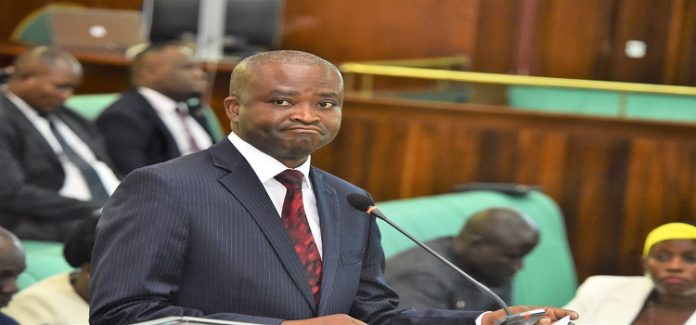
Kumi Municipality Member of Parliament Silas Aogon has thanked the private sector especially city tycoon Sudhir Ruparelia for delivering the venue for the Non-Aligned Movement (NAM) and G77+China Heads of State and Government Summits on time, adding that the wisdom President Museveni showed during the Summits is the kind that Africa needs because he is able to trace the history of Africa from 1500 AD without looking at any piece of paper.
“The private sector played a huge role, of course we must thank Sudhir Ruparelia, that group also did their part. Yes, we can have weaknesses but I can tell you for now, we must thank people. They have delivered within a short time, a marvelous conference centre and we are able to deliver without any quarrels, that is Uganda for you,” said Aogon.
“I have followed President Museveni for some time, he is somebody naturally gifted with wisdom, he can talk about African history starting from 1500 AD, and he brings you steadily up to today without looking at the papers. Africa needs a leader who can be able to understand the world, not just now, and that is the kind of person”
It took Mr. Sudhir’s group of companies, the Ruparelia Group, only one year and two days to complete the world class conference facility — the Speke Resort Convention Centre at Munyonyo in record time.
The convention centre has a multipurpose hall, 12 high-end conference/breakaway meeting rooms and a floating restaurant that can host more than 900 guests, with an extraordinary view of Africa’s largest freshwater lake⏤ Lake Victoria.
President, Y.K Museveni, as chairman of G-77 + China group of countries, has called on the international community to build global structures of finance, production and trade, including agricultural trade, based on fairness and equity.
Museveni stressed that the global interventions should be based on the developmental needs of peoples – a global system in which no one is left behind.
Museveni was represented by the Minister of Gender, Labour and Social Development, Amongi Betty.
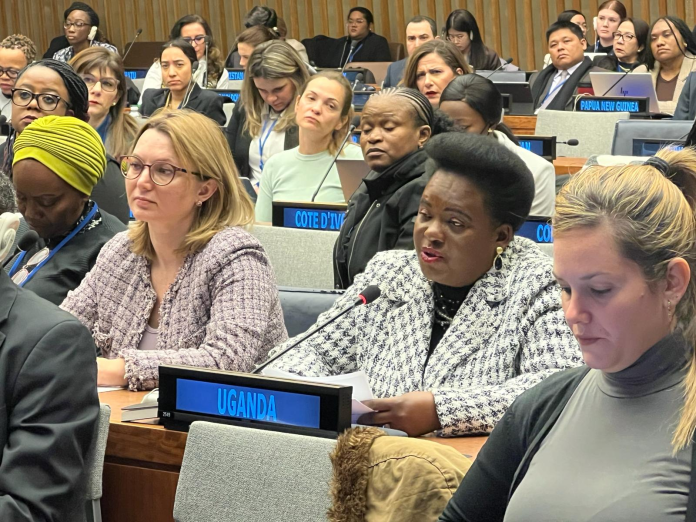
Uganda assumed the Chairmanship of the group of seventy-seven countries plus China (G-77+China) during the just concluded Kampala Summit in January. This requires that Uganda will be the spokesperson of the group at all global meetings. From 5th-14th February 2024, the UN Commission on Social Development will be meeting in New York to discuss progress in implementing SDGs and Agenda 2030. The Ugandan team is led by the Minister of Gender, Labour and Social Development Hon. Betty Amongi.
“At the onset, we congratulate you and members of the Bureau on your election. We welcome the convening of the 62nd Session of the Commission on Social Development under the priority theme:” Fostering social development and social justice through social policies to accelerate progress on the implementation of the 2030 Agenda for Sustainable Development and to achieve the overarching goal of poverty eradication,” Amongi said.
She added that the Group of 77 and China thanked the Secretary-General for his report under this agenda item and took note of the recommendations contained therein.
In his speech, Museveni revealed that poverty, hunger and malnutrition coupled with persistent socio- economic consequences and negative effects of #Covid-19 pandemic, geopolitical tensions, the adverse effects of climate change and biodiversity loss, financial crisis, growing global food insecurity, geopolitical tensions have been challenges faced by developing countries, which have reversed the progress towards the 2030 agenda and implementation of SDGs.
“We are confident that the deliberations of the Commission at this session will strengthen the international community’s response to these challenges,” Museveni assured.
In 1995, the World Summit for Social Development resolved to develop national strategies and to establish time-bound and specific targets to promote equality and social justice, eradicate poverty, promote full and productive employment and decent work for all and foster social integration to achieve stable, safe and just societies for all. Governments were called to focus their efforts and policies on addressing the root causes of poverty and to provide for the basic needs for all. #Covid-19 pandemic further aggravated the situation of the vulnerable as evidenced by the millions of people worldwide who are still suffering the consequences of the pandemic.
He noted that meager financial resources and weak health infrastructures continue to impact developing countries while severe food crises, effects of climate change and biodiversity loss and famine conditions make it impossible for developing countries to achieve the 2030 Agenda. Progress towards elimination of hunger and poverty which is only possible if we can turn our words into concrete actions: what do we need to achieve progress?
Museveni highlighted that first, the developing countries need financial support of at least $3.3 to $4.5 trillion annually to achieve SDGs by 2030. For this, resources must be mobilized from all possible sources: fulfillment of the 0.7 percent ODA target; redistribution of the $650 billion new SDRs; and concessional finance from the multilateral institutions and development banks.
“For an inclusive recovery of the global south economy, there is need for universal access to social protection as a priority. For this, developing countries need financial resources in the form of grants, and not loans, which over-burden the developing countries. These may be provided by the international community through multilateral mechanisms, among others by International Financial Institutions,” He said.
He added that second, 8.4 million people die yearly in low-and middle-income countries because of poor-quality health care. More than half of those deaths would have been averted in high-quality health-care systems, therefore (SG Report), developing countries require fiscal space to provide social protection and universal health coverage to their populations.
“We encourage the austerity measures and debt repayment plans mandated by International Financial Institutions, to safeguard millions of people in their respective countries from experiencing various forms of poverty and starvation. There is an imperative need for debt restructuring and review of austerity programmes.to support global efforts towards sustainable development, food security and debt long-term sustainability,” Museveni guided.
Third, the intersection of poverty, food insecurity and, climate change and environmental degradation call for a sustainable livelihood approach. This can be best realized by reaffirming the commitment of achieving sustainable development in its three dimensions – economic, social and environmental – in a balanced and integrated manner through, inter alia, the creation of employment opportunities for all and strengthened climate adaptation and mitigation capacities.
Fourth, equal access to quality education and lifelong learning opportunities including vocational and skills training, can help workers to be more resilient to shocks and can create sustainable employment opportunities. It is also important to recover learning losses during COVID-19, as distance learning is not an option for at least 80 million students in low- and middle-income countries. This reality reflects the urgent need to close the digital divide as a matter of priority. Investment in early childhood education and care contributes significantly to reducing child poverty and breaking intergenerational cycles of poverty.
Fifth, the international structures of finance, production and trade, including agricultural trade, must be made fairer and equitable.
Sixth, in humanitarian emergencies, vulnerable groups including minorities, migrants and refugees, face multiple challenges, including poverty and hunger. Millions of people are facing multidimensional
poverty and hunger starvation in conflict zones. The international community must demonstrate solidarity in line with the principle of burden and responsibility sharing.
Finally, the Group reaffirms its abiding commitment to fulfilling the goals and objectives in the World Summit for Social Development, especially poverty eradication, promotion of full and productive employment, and the fostering of social justice and inclusion.
Museveni further noted that unprecedented times call for an unprecedented response from the international community based on the principles of responsibility sharing and global solidarity. There is an imperative need for North-South, South-South and triangular cooperation, to support national efforts to eradicate poverty and hunger, and to realize the commitments made in the Copenhagen Declaration as well as those contained in the 2030 Agenda. To save the present and succeeding generations from the scourge of poverty and hunger, the international community should build a global architecture based on the developmental needs of peoples – a global system in which no one is left behind.
President Museveni posing for a group photo with the awardees.
President Yoweri Kaguta Museveni who is also the Commander in Chief of the Uganda Peoples’ Defence Forces (UPDF) has commended Ugandans for embracing the National Resistance Movement (NRM) ideas that have enabled the country to develop.
“I thank you very much the people of Uganda; when we brought our ideas, you accepted them because if you didn’t accept, we would have been isolated,” he said.
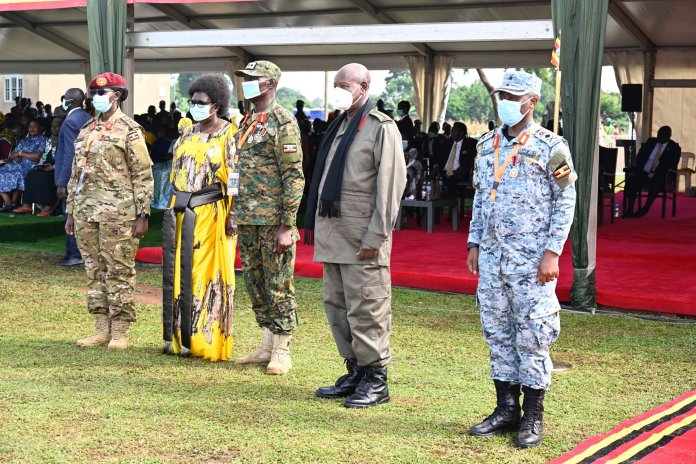
The President who was in the company of the First Lady and Minister of Education and Sports, Maama Janet Museveni, made the remarks today during the 43rd Tarehe Sita Anniversary Celebrations held at Busesa Grounds, Bugweri District. The celebrations ran under the theme: “Celebrating the People’s Struggle for Unity, Security and Peace for Socio-economic Transformation”.
According to President Museveni, due to the correct ideas of the NRM government, the economy of the country has progressively grown. “That is why the economy has grown so much but it could grow more if we get rid of corruption. You must fight the corrupt people and also fight the ones who don’t care,” he said.
“On the side of security, we are going to tighten it. We have a strong army, the police, Prisons and intelligence services as well as the Uganda Wildlife Authority; they are all very capable and educated. We started the culture of recruiting educated people in the army, now because of that these army people learn very quickly so it is very easy for us to build a strong force.”
President Museveni also disclosed that Uganda has a very good working relationship with the governments of Somalia, Kenya, Tanzania, Rwanda, Burundi and DRC, adding that as partners, they are working towards achieving a regional solution to deal with the regional security problems. “I’m glad the delegation of Algeria is here; these people have got very good technology. When I visited them, they gave me some samples? I want to buy more to simplify security. For instance, you have seen how cameras work, we are now going to introduce electronic vehicle number plates so that we don’t waste time with investigations.
President Museveni further lauded the people of Busoga for taking part in the NRA/M struggle that enabled the current government to come into power.
“I salute the people of Busoga who participated in our struggles and sacrifices. The people who were getting medals here today were some of the children of the people who were killed by Idi Amin. Idi Amin was executed in public; here in Jinja by firing squad,” he asserted.
“However, I want you Ugandans to know that our liberation was not by ourselves only and I’m very happy to have a delegation from Tanzania; Mwalimu Nyerere helped us a lot in training, and equipment, even he committed the Tanzanian army to fight Idi Amin. The other country which helped us was Mozambique so when you talk about history, talk about it properly,” he added.
The Vice President Jessica Alupo explained that the theme of this year’s celebrations challenges all Ugandans to safeguard the peace, unity, stability and democracy ushered in by the patriots who sacrificed their lives to liberate the country.
“Every February 6, is a special day for both the UPDF and all the people of Uganda where we converge to honour the contribution and sacrifices which were made by patriotic Ugandans led by you Your Excellency in the NRM struggle which set a new stage for Uganda we see today; indeed, it was a fundamental change,” the Vice President said.
“Your Excellency, the level of discipline and professionalism of the UPDF is one of the best in the world. Let me congratulate you, Your Excellency, for professionalising our national army to the global standards.”
The First Deputy Prime Minister and Minister of East African Community Affairs, Rebecca Kadaga requested President Museveni that following the discovery of rare earth minerals in Busoga, the government should start training the youth at Busitema University, Busoga University or the Marine School-Namasagali in minerals studies so that they can get employed. “We need scholarships for such studies so that our people can benefit,” Kadaga noted.
“She further requested that the UPDF Engineers Brigade complete the construction of the unfinished Bugweri District Headquarters whose initial construction was kickoff by the Late Second Deputy Prime Minister and Minister of East African Community Affairs, Alhajj Kirunda Kivejinja before his demise.”
On the issue of the Bugweri District Headquarters, President Museveni assured the people of Busoga that he would involve the UPDF Engineers Brigade to finish the work.
The Minister for Defence and Veteran Affairs, Vincent Bamulangaki Ssempijja thanked President Museveni for building a modern, disciplined and strong army. “Your Excellency, we sincerely thank you for your efforts and for making us proud as Ugandans that we have a People’s army,” he asserted.
The UPDF Chief of Defence Forces, Gen. Wilson Mbasu Mbadi said they decided to celebrate this year’s Tarehe Sita in Busoga as a way of thanking the people in the sub-region for their contribution towards the protracted struggle and also express UPDF’s solidarity with Busoga as well as giving back to the region through the many activities that have been conducted in the area. “We want to appreciate the support that Busoga gave to our forces. Coming here also enables the UPDF to closely conduct civil-military activities that may address the underlying factors that make this region vulnerable to the activities of the extremist groups such as the ADF who continue to recruit from this region,” the CDF said.
Gen. Mbadi also hailed President Museveni for building a modern, professional, effective and efficient force which is accountable to the people because it is anchored on a strong relationship and submits to the civil authority.
Maj. Gen. Henry Matsiko, Chief Political Commissar of the UPDF informed the President that this celebration was the climax of the busy defence forces activities which have been taking place in Busoga region namely in the districts of Bugiri, Bugweri, Buyende, Iganga, Jinja, Kaliro, Kamuli, Luuka, Mayuge, Namayingo, Namutumba and Jinja City. “Your Excellency, 43 years ago on February 5, 1981,41 patriots under your leadership started a journey from the suburbs of Kampala and attacked Kabamba barracks on the 6th February 1981 signaling the commencement of a determined resistance in a form of a popular and protracted struggle by the people against the undemocratic and unjust regime,” Gen. Matsiko said.
“The attack on Kabamba followed earlier efforts in the 1970s by FRONASA comrades who through their sacrifice laid the foundation for the People’s revolution that has significantly resulted in socio-economic transformation of our motherland-Uganda. Tarehe Sita celebrations, therefore, mark and recognize the heroism exhibited by the founders of this revolution and the 41 patriots who made a foundation upon which the UPDF rests today as a People’s army and a vanguard force in the struggle to achieve socio-economic transformation.”
At the same event, the Master of Ceremonies for the Chancery, Maj. Gen. George Igumba presented a total of 51 awardees for this year’s celebrations to the President. The awardees were recognized for their exceptional service to the country.
Earlier, President Museveni and the First Lady visited the family of the late Alhajj Kirunda Kivejinja in Bugweri and paid tribute to the former Second Deputy Prime Minister and Minister of East African Community Affairs.
The late Kivejinja died on December 19, 2020 from #Covid-19 at Mulago National Referral Hospital.
The President pledged to contribute Shs100 million to the family SACCO.
Justice Julia Sebutinde has been elected Vice President of the International Court of Justice (ICJ). She was elected by her peers for a term of three years.
Sebutinde has been a member of the court since February 2012. Before joining the Court, Vice President Sebutinde was a judge at the Special Court for Sierra Leone from 2005 to 2011.
The Presidency is entrusted with the responsibility of overseeing administration, judicial and legal matters, and external relations.
She holds a Doctorate of Laws, honoris causa, from the University of Edinburgh, U.K., for distinguished service in the field of international justice and human rights; a Master of Laws Degree with Distinction from the University of Edinburgh, U.K.; a Bachelor of Laws Degree from Makerere University, Uganda; and a Post-Graduate Diploma in Legal Practice from the Law Development Centre, Uganda.
Certificate in Legislative Drafting, University of Colombo, Sri Lanka, in conjunction with the Commonwealth Fund for Technical Co-operation; Certificate in Advanced Leadership Studies, Haggai Leadership Institute, Singapore; Certificate in Alternative Dispute Resolution (ADR) Skills, National Judicial College, University of Nevada, Reno, USA (1997).
She was Judge of the Special Court for Sierra Leone 2005–2011; Presiding Judge of Trial Chamber II of the SCSL (2007–2008, 2010–2011), handling several high-profile war crime trials, including the Prosecutor v. Charles Ghankay Taylor; and Judge of the High Court of Uganda with original and appellate jurisdiction in civil and criminal cases (1996–2011).
She was Chairperson of the Judicial Commission of Inquiry into Corruption in the Uganda Police Force (1999–2000); Chairperson of the Judicial Commission of Inquiry into Mismanagement in the Uganda People’s Defence Forces (2001); Chairperson of the Judicial Commission of Inquiry into Corruption in the Uganda Revenue Authority (URA) (2002); and Chairperson, Technology Planning Committee of the Uganda Judiciary (1998–2002).
She served as a Legislative Consultant seconded by the Commonwealth Secretariat to the Republic of Namibia responsible for the amendment and replacement of the country’s apartheid laws and training of Namibian legislative drafters (1991–1996); Principal State Attorney and Principal Parliamentary Counsel, Ministry of Justice, Uganda (1978–1990); and Legislative Consultant on the multilateral committees responsible for drafting and amending the treaties establishing the Common Market for Eastern and Southern Africa (COMESA) and the Intergovernmental Authority on Drought and Development (IGADD) (1980–1990); Member of the Uganda Bar and Advocate of the Courts of Judicature of Uganda since 1979.
Other positions include: Chancellor of the International Health Sciences University (IHSU), Uganda (2008–2011); Member, the Commonwealth Association of Legislative Drafters (1980–2011); Goodwill Ambassador for the United Nations Population Fund (UNFPA) (1996–2011); Member, National Association of Women Judges Uganda (NAWJU) (1996–2011); Member, International Association of Women Judges (IAWJ) (1996–2011); and Member, Advocates International (AI) (1980–2011).
She represented Uganda Women at the opening of the United Nations Decade for Women in Addis Ababa, Ethiopia (1975); Chairperson, Board of Directors of the Acid Survivors Foundation Uganda (2000–2004); Recipient of the “Good Samaritan Award” at the Congress of Advocates International (2004); the Lifetime Achievement Award of the Uganda British Alumni Association (UBAA) (2006); and a Special Award of the Uganda Law Society in recognition of her “courageous and exemplary contribution to the promotion of justice in Uganda” (2001).
King’s College Budo has cautioned parents against fraudsters posing as school officials to solicit money promising their children entry into the school.
Shortly after releasing the admission list of successful entrants, the Head Teacher, John Fred Kazibwe, said conmen are already calling and texting parents of the P.7 leavers asking for money for the placements, which he says is a total fraud move and parents should be aware.
“It has come to the knowledge of the administration that some unscrupulous people are calling and texting different parents of primary leavers, luring them to send money to them in the name of securing placements for their children at the school,” Kazibwe said.
According to the head teacher, placements at King’s College Budo are not for sale, and anyone doing so should be ignored or reported to the school authorities.
“We wish to inform the general public that placements at the school are not for sale. Any message or phone call from anyone asking for money on behalf of the school administration should be ignored and treated with the contempt it deserves,” Mr. Kazibwe said.
He added “For any admission into the school, Kazibwe says the only official admission processes are followed,” he added, assuring that the school has already handed over the matter to the police and they are investigating.
“We hope that sooner than later, these extortionists will be arrested and face the long arm of the law,” he said.
Admissions for S.1 students at Kings College Budo are closed, and those who were admitted on merit can collect their admission documents starting on Wednesday, February 7, 2024, upon submission of a copy of the payment slip for school fees.
Parents and guardians are also advised to carry the original PLE results slip and the identity card of the child’s former school.
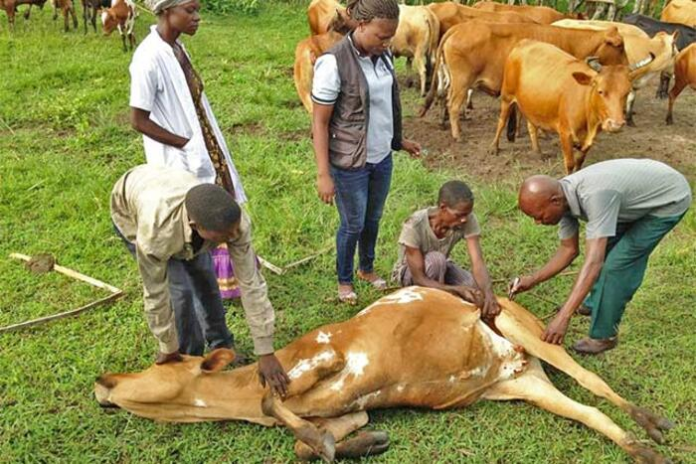
The Cabinet has approved sourcing ten million doses of Foot and Mouth Disease (FMD) vaccine to enable scaling up of ring vaccination in the affected districts.
Agriculture, Animal Industry, and Fisheries Minister, Frank Tumwebaze said in a statement that the decision to control and eradicate the disease was reached in a meeting chaired by President Yoweri Museveni at State House Entebbe on Monday.
The cabinet also approved a plan by the government to create a revolving fund to enable procurement of sufficient FMD vaccines periodically in the country to facilitate compulsory bi-annual vaccination of the susceptible domestic animal population.
“Cabinet approved a policy that requires farmers to be paying for the vaccines while the government pays for the cost of the vaccination administration, transportation, and storage,” the minister explained.
According to Tumwebaze, when the revolving fund has been created and adequate vaccine stocks have started coming into the country, vaccination of all susceptible domestic animals will be made compulsory and proof of vaccination will be a pre-condition for any farmer to sell any animal or animal products.
A total of 36 districts have been affected and under quarantine following the outbreak of Foot and Mouth Disease. These include; Budaka, Bukedea, Bukomansimbi, Bunyangabu, Butaleja, Fort Portal City, Gomba, and Ibanda, Isingiro, Kabarole, Kasanda, Kayunga, Kazo, Kiboga, Kibuku, Kiruhura, Kumi, Kyankwanzi, Kyegegwa, Kyotera, Luuka, Lwengo, Lyantonde, Mbarara, Mbarara City, Mityana, Mpigi, Mubende, Nakaseke, Nakasongola, Namisindwa, Ngora, Ntungamo, Rakai, Rwampara and Sembabule
“I appeal to the district veterinary authorities to ensure strict disease surveillance, timely reporting and ensure transparency and accountability in the administration of the government-provided vaccines,” the minister told Parliament last week.
The minister told Parliament on Thursday, February 1, 2024, that his ministry is seeking support for a supplementary budget to procure another 10 million doses to cover all the affected and high-risk districts.
“We need to support and equip district veterinary officials with disease surveillance tools. In the next one or two months, we expect to receive and dispatch 2.3m doses of the vaccine to these affected and susceptible districts for ring vaccination scale-up,” the minister submitted.
He explained that quarantines are unpopular and an inconvenience to people’s livelihoods but yet again inevitable as temporary measures to control further spread to alarming and uncontrollable epidemic levels.
The minister said that 44 million animals require vaccination against Foot and Mouth Disease.
“This requires an annual vaccine stock of 88 million doses for the bi-annual vaccination requirement for $2 per dose translating into $176 million. If the stakeholders can be disciplined and comply with the quarantine protocols, the disease will resolve/be contained in a very short time as we also wait for the vaccines,” he said.
According to Dr Abed Bwanika (Kimaanya-Kabonera), a trained veterinarian, two things account for recurrent FMD outbreaks in the country.
“Apart from animal control, the provision and availability of efficacious vaccines. National Research Organisation (NARO) which is an organisation for the Government has invested heavily in innovation and is ready to produce vaccines from this country,” Bwanika
“They need funds. I want to request that when the Minister is coming to Parliament, he should appraise Parliament on how far NARO has reached in ensuring that they produce vaccines in Uganda,” he added.
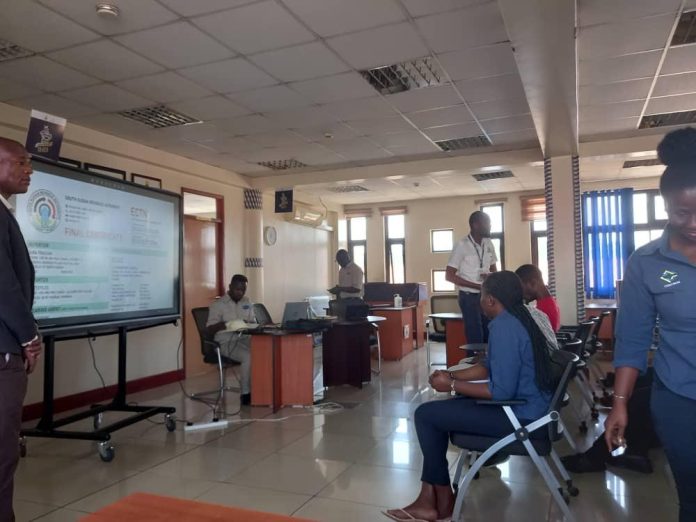
Invesco trainer training South Sudan Revenue Authority staff.
Invesco Electronic cargo tracking systems has kick started operations in South Sudan.
The entry of Invesco saw K-Polygon kicked out after failing to hit the targets given them by South Sudan Revenue Authority.
Last week government of South Sudan through its National Revenue authority (NRA) partnered with Uganda Revenue Authority to weed out smuggling and dumping.
Sources says the government of South Sudan wasn’t happy with the performance of implementation of K-Polygon as it failed to combat smugglers and economic saboteurs.
“Collections from customs have been low, pushing us to make tough decisions. Invesco’s services will help us improve collections said Africano Mande, Commissioner General of South Sudan Revenue Authority is quoted by The City Review newspapers.
However, in an article that appeared in the press recently, there appeared to be contestation by some ‘disgruntled elements’ doubting the development.
“We have noticed an article that seem to slander Invesco and making false allegations that Invesco doesn’t have a contract but to the contrary Invesco signed the contract with the government of South Sudan”.
In a December 2023, contract which EagleOnline has seen, Invesco has been given powers to train, operate and implement.
“Oegfrem’s grateful acknowledgement for the effective partnership in place between Invesco/Transcom OBO Ogefrem with URA for the purpose of enforcement of Ogefrem certification whose duties include the verification of all surface and airfreight Ogefrem certifications issued by Ogefrem appointed Agents and Ogefrem offices pertaining to exports distained to exports for DRC transiting and/or originating in Uganda” reads the letter.
Last week, Commissioner General of South Sudan Revenue Authority (SSRA) Africano Mande paid a visit to URA Commissioner General John Musinguzi to discuss his country’s plans to apply new cargo monitoring system.
Commissioner Mande announced the collaboration between SSRA and INVESCO, Ugandan company that will provide cargo-tracking technology.
Collections from customs have been low, pushing us to make tough decisions to improve. Invesco’s services will help us improve collections and even exceed our targets’ Commissioner Mande said.
However, as the development are progressing, an allegedly smear campaign is being propagated by a lady known as Winne whose husband works with URA and possibly aiding smugglers and benefiting from the racket.
Sources further allege that K-Polygon is suspected to be aiding a French intelligence on spying on business companies in the region and hence may countries in the region are dumping it
He further said that SSRA hope to learn from URA.
The Democratic Republic of Congo signed Invesco in 2021 when its revenue collections at border points were low. DRC was collecting $9 million per month but as per statistic from the revenue body in DRC, it is estimated that they collect approximately, $220 million per month as compared to $9 which represents 400% growth in revenue collection.
Previous efforts by South Sudan government and Revenue Authority to curb this revenue loss has failed through a company called K-Polygon and hence, they reverted to URA and Invesco to give them a solution like they did in Congo and this should help raise revenue for both URA and South Sudan Revenue Authority(SSRA) in a bid to raise revenue and help curb smuggling and dumping.
Uganda has been losing a lot of revenue on dumping which also causes inflation in the economy.
This will also reduce the VAT refund racket where people claimed to heading to South Sudan and leave goods on the market while claiming for VAT refund from URA. It is estimated that Uganda has been losing about Shs10 billion a day while South Sudan could have lost more.
Uganda has commenced the process of drafting the Netting Financial Agreements Bill, which will give the country a clean netting opinion, effectively reducing settlement and credit risks and hence enhancing investor confidence in Uganda’s financial markets.
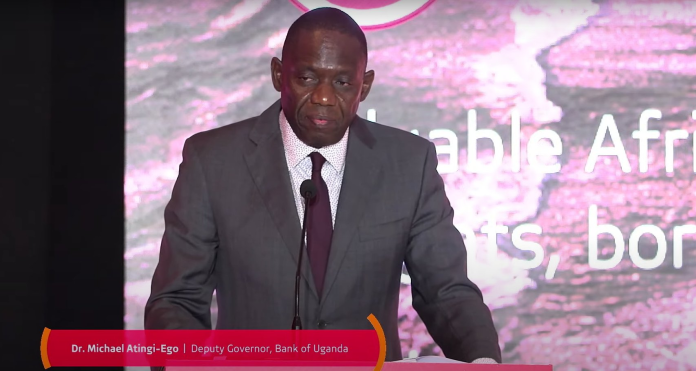
The Deputy Governor Bank of Uganda (BoU), Dr Michael Atingi-Ego said markets that have been granted a clean netting categorization have observed several-fold increases in investor participation in their markets and, hence, enhanced access to capital.
He was speaking in Kampala on Tuesday at the release of the 2023 Economic Outlook and Africa Financial Markets Index Report by Absa Bank.
Now in its seventh year, the Absa Africa Financial Markets Index has become an essential tool for investors and Policymakers, providing insights into the performance of financial markets across the continent.
The report ranks Uganda as the highest-growing financial market within the East African region and 4th on the continent. Uganda scored 63 percent, followed by Kenya at 59, Tanzania at 55 percent, and Rwanda at 44 percent.
Despite this, the Deputy Governor Bank of Uganda acknowledged that the country is still plagued by low capacity of local investors, characterized by pension assets per capita of only about $125.
“This has adversely affected our performance under Pillar 4: “Capacity of Local Investors”, with a score of just 14%. We, therefore, recognize the need for further pension sector reforms to ensure that pension assets are invested in the real sector of domestic economic growth,” he said.
But he said Uganda government securities have gained global visibility through international listing on the FTSE Frontier Emerging Market Index, effective July 2023.
“We are also in discussions to list on the ABABI Index of the AfDB and, thereafter, the JP Morgan Emerging Market Index. These indices provide global visibility for our government securities attracting more offshore investment which should in theory eventually lower government borrowing costs. The Ugandan market is also in the process of adopting the FX Global code of conduct to support ethical trading in the financial markets,” he said.
To build on this momentum, Dr Ego said the National Financial Inclusion Strategy 2023-2028 will focus on deepening savings and credit markets by expanding the usage of diversified financial products and services.
“One such product is “Project Okusevinga” by the Bank of Uganda, an initiative that will enable the buying and selling of government securities on mobile phones using mobile money balances. When rolled out, we anticipate that it will improve retail investment in bills and bonds. Additionally, the finalisation of the Islamic banking and regulatory framework and related tax laws in August 2023 will facilitate the emergence of Islamic banking services and financial products,” he explained.
Mr Dickson Ssembuya, the Director Research at the Capital Markets Authority (CMA) Uganda, said some of the issues that have affected the past public equity offers include valuation, timing (offering securities when the Fed rate is being hiked, speaking to capital flows) and misinformation and rumors from on the structuring of IPOs.
“The Authority is in the process of reviewing the regulatory framework to ensure it is facilitative enough to increase issuer access (companies looking to raise capital through the capital markets) and investor access,” he said.
Uganda has maintained its position in the 26 surveyed markets in Africa, the newly released 2023 Africa Financial Markets Index indicates.
Uganda’s overall score in the Absa Financial Markets Index decreased by one point from 64 in 2022 to 63 in 2023, but it maintained fourth place in the rankings.
The decline is alluded to lower foreign exchange reserves and market liquidity. Uganda’s score fell by 10 points to 67 due to relatively lower scores for interbank foreign exchange turnover and international reserve adequacy. Reserves declined by almost 18% to $3.6 billion (Shs 13.8 trillion) in 2022.
The report shows that South Africa and Egypt continue to score highest as their interbank forex liquidity remains much higher than elsewhere in Africa.
Uganda is currently rallying behind South Africa, Mauritius, and Nigeria. It is, however, ranked first in the East African region, followed by Kenya in the seventh position, Tanzania in the tenth, Rwanda dropping to the 17th position, and the DRC in the 25th position.
However, Uganda fared well in the macroeconomic environment with transparency rising by one point to 86. The improvement was driven by the fall in external debt to 26.8% of gross domestic product in 2022, from 27.7% in 2021. Meanwhile, the country continues to score highly for its policy transparency, macroeconomic data standards, and relatively low inflation rate.
Market transparency, taxes, and the regulatory environment remained unchanged at 79. The country scores well for its accounting standards and transparency, and progress has been driven by the development of environmental, social, and governance standards. Last year, the ministry of finance also expressed its intent to develop a framework for green bond issuance.
“Uganda’s lowest score was in the capacity of local investors. It fell by one point to 14, as pension fund assets per capita slipped to $119 in 2022 from $125 in 2021. They remain small compared to the index average of $847,” the report indicates.
The report shows that building liquidity in domestic markets is an area for improvement. Turnover across listed equities was just 0.3% of market capitalization in the year to June 2023.
“Limited liquidity in domestic bond markets also restrains Uganda’s market depth, where it ranks eighth. Initiatives to boost liquidity and local investor participation are underway, including a project to link the centralised securities depositories of the central bank and securities exchange, as well as the ‘Okusevinga’ initiative to improve retail investor access to government bonds,” the report indicates.
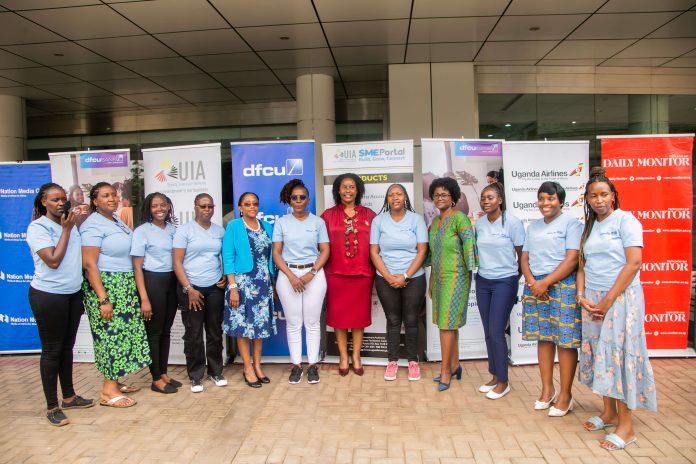
The Uganda Investment Authority, Uganda Airlines, Daily Monitor, and DFCU Bank have flagged off a women entrepreneurs study tour in Nairobi, Kenya.
The top 10 entrepreneurs were selected from over 200 participants who submitted business proposals to win business funding, business mentorship, and the study tour.
Rising Woman aims to recognize, celebrate, and promote a culture of mentorship among women in the business space in Uganda. It falls under DFCU’s Women in Business Program, which aims to create a business-enabling environment for women entrepreneurs, with a special focus on small and medium enterprises (SMEs).
Launched in 2018, Rising Woman has directly benefited more than 60,000 women and over 1, 000,000 more virtually through a range of programs that include regional power trainings, live TV talk shows, proposal writing competitions, and mentorship trips within the region.
Over Shs 120,000,000 of seed capital has been granted to winners of Rising Woman since 2018. The 6th season was launched in August 2023 under the theme ‘Empowering Entrepreneurs to Succeed’, attracting participation from hundreds of women across Uganda, with 20 of them making it to the business proposal-defense stage.
Kate Kizza, the Executive Director and Chief Financial Officer at dfcu Bank, described the flag-off as a ‘celebratory moment’ of the achievements and hard work of the women entrepreneurs. She reinforced DFCU’s commitment to supporting the skilling and financial literacy of Ugandan women entrepreneurs through various programs and partnerships.
“dfcu has a longstanding legacy of empowering women entrepreneurs, and we are proud of the achievements that have been realized through the Rising Woman Initiative and the dfcu Women in Business Program under which the initiative falls,” Kiiza noted. “As you embark on this trip, I encourage you to remain committed to finding new sources of motivation and to remember that your power lies in both your individual work and the collaborative efforts between you and other women entrepreneurs,” she concluded.
Making her remarks, Ruth Asasira, the Head of Women in Business at DFCU Bank, applauded the sponsoring partners of the Rising Woman Initiative for their continued commitment to investing in the development of women entrepreneurs. She also congratulated the winners, noting that the trip to Nairobi would be a knowledge-mining experience with the capacity to create business transformation.
Belinda Namutebi, a member of the DFCU Women in Business Advisory Council, congratulated the winners upon their milestone, urging them to focus on creating businesses that would create positive socioeconomic impact in their communities and the country at large.
Susan Nsibirwa, the Nation Media Group Managing Director, encouraged the winners to use their businesses as platforms to positively impact the lives around them through job creation and the design of much-needed products and services.
Representing the winners, Ms. Nandudu Meridah and Ms. Nabukenya Diana both thanked DFCU Bank and the sponsors for implementing the Rising Woman initiative. The 3-day trip will involve mentorship sessions with key Kenyan business entrepreneurs as well as factory visits to learn best practices.