Jumia Technologies- E-commerce retailer has resolved to close its food delivery business in all seven countries in which the unit operates by the end of 2023, it said on Wednesday.
The company said it will now focus on growing its core online retail business in its move to turn profitable by reducing delivery services not related to its e-commerce business.
“The move is in line with Jumia’s “strategy to optimize its capital and resource allocation and to continue its path to profitability,” the retailer said, adding that Jumia Food is not suitable to the current operating environment and macroeconomic conditions.
Jumia Food represents about 11% of Jumia’s general merchandise value for the nine months ended September 30, and has not been profitable since its inception.
“It’s a segment that’s very difficult across the world, with very challenging economics and big losses. It’s also a segment that is extremely competitive across the world and Africa,” Chief Executive Officer Francis Dufay was quoted as saying.
“The economics are tough in this market because the costs are very high and there is plenty of competition so there is downward pressure on the commissions that we make and upward pressure on marketing costs because everyone is fighting for customers.”
Jumia currently operates its food delivery business in Nigeria, Kenya, Uganda, Morocco, Tunisia, Algeria and Ivory Coast
Jumia said several employees currently dedicated to the food delivery business will transition to the core e-commerce business in these countries.
Jumia has been trimming its losses, with the latest figures showing that it reduced its third-quarter losses by 67% from a year earlier.
President Yoweri Museveni and the Omusinga of the Rwenzururu Kingdom, Charles Wesley Mumbere, have resolved to stop any regressive conflicts between government and kingdom. The two met at State House, Entebbe, where Mumbere outlined new objectives centered on peace, reconciliation, and socio-economic transformation. The meeting happened barely two months after Mumbere returned home after the 2016 mayhem, which led to his arrest. “These objectives were communicated to the Lukiiko during the restoration of kingdoms, emphasizing the importance of guiding our African people toward sustainable prosperity through business and strategic security. We won’t compromise on this path,” Museveni said. Museveni said during the meeting that they reached an understanding that we wouldn’t repeat any regressive conflicts. Cultural heritage should continue to play a vital role, highlighting the interconnectedness of our people. Mumbere was nabbed on November 27, 2016, after the army invaded the kingdom, killing over 150 people. His premier, Thembo Kitsumbire, would later, on December 15, 2016, be arrested alongside 202 kingdom pages. Following their arrest, in December 2016, a group of Members of Parliament from the Rwenzori sub-region petitioned the ICC, requesting investigations into the infamous Kasese killings. Over 100 civilians are alleged to have been killed during the assault, and scores were left injured. The group was produced before Jinja High Court by Eva Luswata and charged with murder, treason, and aggravated robbery. In January 2017, Mumbere was granted a non-cash bond of Shs100 million. His sureties will also sign a non-cash bond of Shs 100 million each. The court restricted his movements to the districts of Kampala, Wakiso, and Jinja during the period of his trial. Subsequently, on March 16, 2017, the court, Eva Luswata, granted Kitsumbire a non-cash bond of Shs 75 million, while his sureties were bonded for 100 million Shillings each. In 2019, Kasese leaders, including the former leader of opposition (LOP) in parliament, Winnie Kiiza, threatened to reconsider the dragging of President Museveni, Maj. Gen. Peter Elwelu, and Assistant Inspector General of Police Asuman Mugenyi to the International Criminal Court (ICC) over the attack on Rwenzururu Kingdom. In December 2022, six Rwenzururu kingdom royal guards were released on bail. The six were released by the International Crimes Division of the High Judge Alice Komuhangi Kaukha on the grounds that they are of advanced age and look frail and sickly, having spent over six years on remand at Jinja Main prison. They were part of 49 royal guards who were arrested together with King Mumbere. In June, the Director of Public Prosecutions (DPP), Jane Frances Abodo, dropped all charges against Omusinga Charles Wesley Mumbere of Rwenzururu and 217 others. According to Jaqueline OKui, the spokesperson for ODPP, the charges were dropped after the suspects applied for amnesty.
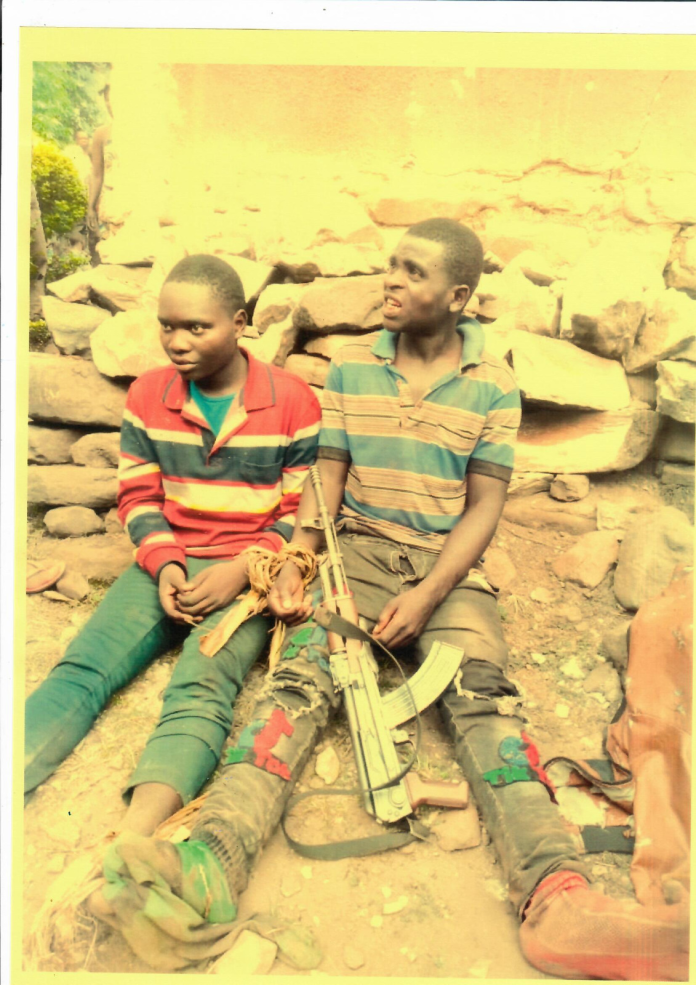
The Uganda Peoples Defence Forces (UPDF) has killed two ADF terrorists and severely injured their Commander, Kamusi who have been hiding in Kibale forest.
Brig. Felix Kulayigye, the UPDF Spokesperson has confirmed the incident and noted that two SMG rifles were recovered.
He added that the hunt to eliminate the remaining terrorists and their agents within the country continues.
Last week President Museveni informed the public that Kamusi hid in Kasese after surviving the Marines that wounded and captured Njovu on Lake Edward.
He reiterated that the main effort is to wipe out the ring-leaders in Congo – in the forests and in the Trading Centres.
Museveni said, “On account of the mistakes of the past Congo Governments and the international community (UN, SADDEC, etc.), those pigs have had the free use of big chunks of Eastern Congo for their criminal activities such as camping, training, mining gold, cutting timber, harvesting and selling for themselves the Wanainchi’s Cocoa, trading in vitenge and extorting money from the Wanainchi for the last 20 years, ever since UPDF withdrew from Bunia in 2003, under the International agreement of Lusaka.”
Museveni further noted that with these modern means, the rebels are now discovering that the forests are actually death traps.
Paulson Lutamaguzi Semakula (Nakaseke South MP) has denied being among the five noisy and talkative Opposition Members of Parliament (MPs) involved in the embezzlement of Shs164 billion Cooperatives compensation money, describing the allegations as vulgarity, especially to people who were never involved in the theft.
“Some of us see fellow MPs eat, but that doesn’t mean we all eat (bribes). I am not among those opposition MPs who ate Cooperatives money. I saw Minister Ntabazi make an ‘excited’ statement that those vocal MPs who make noise are part of the gang that ate cooperatives money, I am not part of them. I am sure my name isn’t on the list, unless someone took that money in my name,” Lutamaguzi said.
Lutamaguzi made that remarks responding to the Minister of State for Trade, Harriet Ntabaazi who revealed that 30 MPs are facing criminal investigation into their role in the embezzlement Shs164 billion meant for Cooperatives compensation, and among the culprits include five ‘talkative’ and ‘noisy’ opposition MPs. However, the minister never mentioned any name of the five opposition MPs.
He also urged Speaker Among to come out strongly and handle all MPs involved in the embezzlement of Cooperatives money, arguing that the money wasn’t meant for MPs but rather ordinary citizens because if these MPs aren’t named, the rest will carry the shame like was the case of Karamoja iron sheets.
“If you are a Member of Parliament, you are supposed to behave responsibly; you are supposed to be the example in society. We recently had the saga of iron sheets, the public kept on castigating Parliament as an institution, but I never took any iron sheets, if there is any culprit who took Cooperatives money, let that person be held responsible. I am not ready to carry any MP’s cross when I am having many crosses that I am carrying. It is becoming a norm that some individuals will be stealing and then Parliament as an institution will be responsible for stealing,” Lutamaguzi said.
The Uganda Bureau of Statistics (UBOS) yesterday launched the first-ever digital National Population and Housing Census aimed at greatly minimizing errors which have been related to paper-based data entries in the previous exercises.
The digitally conducted census is also expected to shorten the time of releasing the final data, expected out in December 2024.
Presenting the 2024 cense undertaking during the launch of the national population and housing census (NPHC) at Kololo independence grounds, the executive director of Uganda bureau of statistics, Dr Chris N. Mukiza said: “This is going to be the first digital census and the 11th Uganda census, sixth post-independence census and third census done by Uganda bureau of statistics.”
Dr Mukiza said preliminary results of the 2024 national population and housing census will be out in June 2024, provisional results will be in September 2024 and the final results will be released in December 2024 unlike in the past when the census result could take two to three years.
On funding, Dr Mukiza said this is the first time the government is funding 98 percent of national population and housing census 2024 with the shs320.9 billion and the have already spent shs 11 billion and they will have a deficit of shs13, where they development partners to come in and support.
“This is the first time the government is providing a large share of funding so we are becoming self-sufficient unlike in the past in 2014 the government provided 75 percent,” he said.
He said the enumeration period will be starting on May 10 to 20 May 2024 and requested that the ministry of Education and Supports ask schools to close during this period so that the students/pupils can get counted.
Meanwhile President Museveni who was the chief guest and also officially launched this first digital census, urged Ubos and other policy makers involved in the exercise to use clear and understandable language for the local citizens.
The head of the state also used the launch to clarify that the census is the night of May 9th, 2024 and not the night of May 9th and 10th as the statistics body had put it.
“Stop being other people, be yourself, the Europeans live in a maze. “He said
He went and urged the general public to stay at home on May 10, which has since been declared a public holiday to enable the enumerators to count each one of them. “The counting aims at knowing how many people, where do they live, how well off they are, what do they own,” he said.
The President added: “…We count people so that the government can plan for you better, when these figures come in, they will help us to plan. The purpose of counting is planning.”
Further, Mr Museveni said he is happy with the current population growth adding that Africa was 12 times below the population size of India but it has just overtaken India.
Delivering remarks of the UN resident coordinator, Ms Susan Ngongi Namondo, Ms gift Malunga, UNFPA country representative said globally, every 10 years, the UN announces a round of censuses, during which each country is expected to conduct a complete enumeration of its population.
Ms Ngongi Namondo said the current round, which started in 2015 and ends in 2024, is nearing its conclusion
“Your Excellency, it is only with adequate, timely and accurate data that we can be able to tell our development story and formulate policies that respond to the current and future development challenges, threats and opportunities,” she said.
Adding, “In today’s fast paced world with an ever-changing development context, multiple vulnerabilities and risks to sustainable development, the demand for reliable and up-to-date data to inform decision making at all levels can only grow stronger.”
Giving a live example, Ms Malunga said Uganda has a youthful, energetic and fairly educated population that is facing a myriad of challenges, but also with the potential to exploit the many opportunities in their communities and elsewhere.
“To make informed investments in this young demographic, we require accurate and timely information about their demographics, locations, and activities,” she said.
She said the census provides this vital data, empowering the government, development partners and private sector players to tap into this valuable human capital resource and unlock its potential for national development.
She further commended the government’s bold embrace of the power of technology and innovation and stated that by opting for digital censuses, Uganda joins a growing trend across Africa and globally in leveraging modern technology to generate data and evidence, including through the censuses, in the most efficient, accurate, and transparent manner.
She stressed that in countries that recently concluded their censuses preliminary results have been produced in less than two months-which is unimaginable with traditional paper-based methods.
“We, the United Nations system and the entire development partner community, are incredibly proud to walk this journey with the government in this endeavour. We have come together to offer our support and expertise ensuring that Uganda’s first digital censuses are conducted successfully, and we will continue to support the national statistical system in other endeavours,” she said.
“As part of our commitment, 12 UN agencies operating in Uganda have collaborated with the Uganda bureau of statistics to develop a three-year $42 million (approximately shs160 billion) joint programme for data and statistics that will be launched next month.
Partners are also supporting ongoing efforts to upgrade administrative data systems using cutting-edge technology to enhance data quality and utility in informing policy and planning processes,” she added.
She said these are just a few of the many initiatives through which development partners are supporting generation, dissemination, and use of data statistics in Uganda.
Speaking at the same launch, State Minister for planning, Amos Lugolobi said the 2024 census will be the sixth to be conducted since Uganda got independence in 1962, adding that in particular, it will be the third to conduct by Ubos, which was established by an act Parliament in 1998 and will be the first to be paperless.
“The census data is useful in determining how to appropriately allocate scare resources, informs policy formulation and the findings of a census help policy makers to measure how good policy decisions are, how sensible they are and the duration for which those decisions can be trusted,” he said.
In his remark, the chairperson of Ubos, Dr albert Byamugisha said: “your Excellency, the national population and housing census is one major programme that we at Uganda bureau of statistics look forward to conducting since it plays a critical role in guiding evidence based planning, policy formulation, and programme implementation as well as monitoring development progress in line with national goals and objectives and demands to reach to all our potential stakeholders so that together we deliver a quality and acceptable national product.”
Adding, “I am pleased to inform you that the forthcoming census will mark a historic milestone as the first-ever digital census in Uganda with substantial financial support from your NRM government. A total of 120,000 youth and other Ugandans will be employed directly and indirectly during the census exercise. The private sector will benefit directly from the exercise.”
The Standard Bank Group has named Francis Karuhanga as the new Chief Executive for Stanbic Uganda Holdings (SUHL), the listed entity under which Stanbic Bank is operated, alongside four other subsidiaries; Stanbic Properties Limited, SBG Securities, Stanbic Business Incubator, and FlyHub.
Patrick Mweheire, the Standard Bank Group Regional Chief Executive for East Africa says Mr. Karuhanga is succeeding Andrew Mashanda who will be taking on a new role within the Group after December 31, 2023.
“It is worth noting that Mr. Karuhanga has accepted to leave his current role as Group Chief Auditor—a top 15 position in the organisation’s Global Leadership hierarchy, to become our new Chief Executive for SUHL. The deployment of such an important member of the Group’s leadership is a sign of commitment to our purpose of driving Uganda’s growth,” said Mr. Mweheire.
Having joined the Standard Bank Group in 2001, Mr. Karuhanga has risen through the ranks, serving in various leadership positions including his current role as Group Chief Auditor based in Johannesburg South Africa.
Mr. Karuhanga is a Ugandan professional with a career spanning over two decades and has gained wide-ranging senior leadership experience spanning over 15 years, ten of which have been at executive management level.
He has deep risk management skills and experience covering Corporate, Investment, Commercial and Retail banking portfolios.
“We are confident that with his strong record of being a collaborative leader and an aptitude for building and leading teams, developing, and motivating people, Mr. Karuhanga will consolidate the growth of our franchise, building on the work of his predecessor to continue delivering exceptional value for our shareholders, and customers,” said Mweheire.
Mr. Karuhanga is a Fellow of the Association Chartered Certified Accountant (FCCA UK), and a Certified Financial Services Auditor (CFSA) who holds a master’s degree in accounting and finance as well as a Bachelor of Commerce degree (Accounting).
Harriet Ntabazi, State Minister for Trade has said that Uganda will abandon the US market if its participation is hinged on condition that the country accepts homosexuality, arguing that Uganda already has enough markets to sell its products.
“If America insists that we should marry woman to woman, then we shall do away with the market because what we are looking for in that market is political relationships, but real trade volumes, that have shaped Uganda to the Middle-income status, that (United States) is not one of them. We have enough markets for Uganda, we have the East African Community, we have Southern African Development Community (SADC), we have the European Union, we have markets in China and India,” Ntabazi said.
Ntabazi made the remarks during a media interview where she was clarifying on the latest move by President Museveni to send his son-in law, Odrek Rwabwogo to negotiate on Uganda’s behalf following pronouncement by US to drop Uganda out of the Africa Growth and Opportunity Act (AGOA), saying that Rwabwogo was chosen because he is the Special Presidential Advisor on Trade and Industry.
“The team was given powers to deliver the message of President Museveni, but of course, they will not push us to the wall because the President has been passionate about homosexuality and you can’t change his mind because that is the voice of Ugandans. Ugandans are saying, you can’t go homosexual and the President can’t come up and break that law because he is part of Ugandans. He is one of the indigenous Ugandans who have shaped it to what it is now,” said Minister Ntabazi.
The Minister also attacked the US Gov’t for mixing issues of trade and human rights, saying Uganda already had complaints about the US demanding Uganda to only export raw materials without adding value, saying such a move is disadvantageous to Uganda, thus calling for the need to conduct more negotiations to have such conditions changed.
“So, what we are waiting for is the US to understand that trade is different from human rights, these are quite divergent matters and the challenge we have is that the US doesn’t want us to add any value on anything. But of course, they brought in other issues to do with security, violation of human rights and they assumed as if Uganda is on fire and there is going to be a coup, there is no coup that is going to be in Uganda,” added Ntabazi.
HortiFresh Association the apex body of growers and exporters of Fresh Fruits and Vegetables (FFV), in partnership with Ministry of Agriculture Animal Industry and Fisheries and GIZ_ Uganda has organized a training of Farmers in Ntungamo district on safe handling and use of Agrochemical with an aim of reducing interception of Ugandan produce at both local and international market.
The training is facilitated by Agricultural inspectors from the Ministry of Agriculture, Animal Industry and Fisheries regarding the subject.
Mukisa Joseph, the HortiFresh project coordinator said that this project was scoped as a reason for the response received from ministry of agriculture and animal industries in response to the increased interceptions at that point of time where the European Union had sent warnings to the country that the interception had increased.
“We sat down as a private sector player to devise means and also come up with interventions on how we can support the farmers but also the exporters in terms of reducing the interception. So, it is the reason why we decided to scope this project and basically design what would be the intervention for us to ensure that we reduce the number of interceptions,” Mukisa said.
He added that they agreed with their partners, which are GIZ and the East African community, to basically ensure that there is the capacity of the farmers to get the services. Adding, “In the building capacity, we are looking at training, disseminating information, creating awareness on the current reasons why Ugandan products are intercepted. So, this is the reason why we started conducting this training.”
Mukisa noted that to solve the farmers’ problem, they needed to start from the grass root where the problem starts from because it is the farmers who are supposed to start up on the process of compliance after being equipped with practical knowledge on the good agriculture practices.
He further revealed that the project came in after so many cases were reported that farmers thought prolonging the life of any products required too much pesticides. Yet by the time that product is shipped to the international market, there are a lot of pesticides which are not good for human consumption.
“The international market is looking forward to ensuring that these pesticides are not in the product because they are dangerous and have increased cancer cases among the public,” Mukisa said.
Johnson Nuwagaba, Agricultural officer, Ntungamo said, “We are here trying to train the fresh fruits and vegetable farmers on the use of agrochemicals, because these fresh fruits and vegetables are exported in the outside countries, like in the UK. And you find that there are interceptions to find the fresh fruits and vegetables that are put there or that are exported, like hot pepper, it contains maximum high levels of chemicals. You find there are some pesticides and for that matter, they are rejected and banned. And that causes a great loss to the farmers, causes a great loss to the government and the whole country at large.”
The team explains to the farmers the right dosage while spraying, the right pre-harvest interval that should be followed, and the right post harvest handling procedures from harvesting, the way to store it, and transport it up to the end market, so that whatever is produced is sold to the outside market and beneficial to all parties.
“It has been found that during these days we cannot do without chemicals because the pests are increasing due to climate change. So, spraying cannot be avoided. But using the right chemicals, using the recommended dosage and using the right procedures is the way to go. Together with the Ministry of Agriculture, Animal Industry and Fisheries, working hand in hand with the local government, we are training these farmers of fresh fruits and vegetables to ensure that they use the chemicals very well for the safety of our fresh fruits and vegetables,” Nuwagaba said.
He added that it is the role of HortiFresh extension workers to continue without losing morale to explain and train these farmers and also continue monitoring and supervising them to ensure that they do the right thing.
It should be noted that Uganda holds substantial potential to enhance its FFV exports to regional and overseas markets, setting a target of exporting $1 billion by 2030. However, achieving this goal necessitates urgent and unified actions to address the issue of interceptions.
Furthermore, ensuring the provision of safe food, both for domestic consumption and international trade, is paramount. The training initiative is imperative to curb the increasing interceptions of Ugandan produce in the European market. Recent statistics from the
MAAIF FFV export trends report indicate a staggering rise in interceptions between 2021 and 2022 due to harmful organisms, exceeding maximum residue levels, and errors in documentation.
The first shipment of 100km of pipes needed for the construction of the East African Crude Oil Pipeline (EACOP) have arrived at the port of Dar es Salaam, signalling the initiation of the main construction phase for this cross-border project.
An event to welcome the pipes was held on Monday, December 11, 2023, between EACOP’s shareholders at the storage yard operated by EACOP’s Tanzania Logistics partner, SuperDoll.
EACOP will transport crude oil from the Lake Albert region of Uganda to the Chongoleani peninsula near Tanga in Tanzania, where it can access world markets. The project represents a major inward investment in Uganda and Tanzania.
According to EACOP managers, they are focused on ensuring that the project activities adhere to the most stringent social, environmental and safety standards.
“The onward transportation of pipes to their point of use will be conducted using new, high specification, trucks and trailers. The project has also invested in extensive driver training, focusing on defensive driving practices, route planning, and compliance with road regulations,” EACOP said in a statement.
They said the best available technology has been incorporated for line pipe lifting operations. Vacuum lifting and ‘robrigging’ are employed to ensure that personnel are kept out of the ‘line of fire’ during lifting operations.
“As the on the ground construction of this 1443 km pipeline progresses, EACOP remains committed to delivering this project with the utmost responsibility, contributing to the sustainable growth and prosperity of East Africa,” they added.
EACOP is a development project for a 1,443-kilometre heated, insulated, and buried crude oil export pipeline starting at Kabaale, Hoima District, in Uganda and terminating at a Marine Storage Terminal and Load Out Facility at Chongoleani, Tanga District in Tanzania, linking the Albertine Graben in Uganda to the international oil market. The pipeline is designed to transport 216,000 barrels of crude oil per day, with a ramp up of up to two hundred forty-six thousand (246,000) barrels of crude oil per day.
The EACOP project is being developed, and will be operated by EACOP Ltd, a company composed of TotalEnergies SE, UNOC, the Tanzania Petroleum Development Corporation (TPDC) and the China National Offshore Oil Company (CNOOC).
President Yoweri Museveni is set to launch the National Population and Housing Census, scheduled to take place next year. The launch will take place at Kololo ceremonial grounds.
The National Population and Housing Census was last conducted in 2014. At that time, Uganda had a population of 34 million people. The census is carried out every 10 years, and this year’s exercise was expected to take place on August 24 and 25, but it was postponed to next year due to the delayed procurement of tablets.
UBOS needs 120000 tablets costing Shs132 billion to carry out the national census. After the census, 30000 tablets will be given to the National Identification Registration Authority (NIRA) for mass registration of people and verification of voters by the Electoral Commission.
Local governments will retain others to pick up data for community information systems. This will later be picked up by UBOS for the generation of statistics for better planning for the country.
Currently, Uganda is estimated to have 45 million people. The figures can only be verified after the national census. Currently, the Uganda Bureau of Statistics (UBOS)
Recently, Chris Mukiza, the Executive Director of UBOS, said mapping involves getting area boundaries and moving on, but now we are mapping every household and giving it a geo-code, and the output of that is that we shall have an interactive map on the tablets.
The national census will be conducted between May 10 and 19, 2024.